Tuesday, July 14, 2009

Neil Young 32: Silver & Gold

Only after all the hubbub of the third CSNY album did Neil’s simple yet sublime Silver & Gold arrive. Many of the songs had been recorded solo, with subsequent contributions from the band (a couple of Stray Gators plus Donald “Duck” Dunn and Jim Keltner). The result was even quieter than Harvest Moon.

“Good To See You” is a nice way to start things off, a lovely hello to his wife who only occasionally toured with him. The title track had been around since the “country” days; after several tries this version was worth the wait. “Daddy Went Walkin’” is a near-bluegrass nursery rhyme, a wild-eyed child’s view of home and hearth with the cat and dog. “Buffalo Springfield Again” is exactly what it sounds like. The music doesn’t sound like them, but the lyrics are factual, as he states outright that he’d like to play with them again just for the fun they had, and isn’t that the point? “The Great Divide” has a pleasant melody holding together some ambiguously dangerous words.

“Horseshoe Man” takes him back to the piano to sing about love. (He could probably do a full-fledged kids album and folks of all ages would enjoy it.) Emmylou Harris and Linda Ronstadt add their voices to “Red Sun” to make the whole piece sound like Tucson. “Distant Camera” is another spooky love song, followed by the long but fascinating “Razor Love”. About as old as the title track and held back till it was ready, it has two chords all the way through, except for the “greedy hand” section. “Without Rings” seems to be another stream-of-consciousness tune in common with “Music Arcade” from Broken Arrow. Performed completely solo, it ends the album—ten songs in 40 minutes—with a sigh.

In a time when “artists” took twice the time he took (whether he’d wait nine months or 39 months), Neil consistently managed to turn up with quality. Dylan learned that lesson at the end of the century too—just wait till you have something to say, and don’t speak up sooner. There’s nary a clunker on Silver & Gold, and his tracks from Looking Forward are the missing pieces.

Neil Young Silver & Gold (2000)—3½

Monday, July 13, 2009

CSN 11: Looking Forward

Neil took the better part of a year off, amid rumblings of an imminent solo acoustic album that kept getting delayed. He got a call from Stephen Stills to discuss the upcoming Buffalo Springfield box set, which wouldn’t surface for a few years. (It would appear, much sooner than the Archives box, but we don’t feel like talking about that right now.) Stills mentioned that he plus Crosby and Nash were doing their own album even though they didn’t have a label. So Neil helped out on a few tracks, gave them three choice tunes from his own embryonic project, the whole thing turned into a full-fledged CSNY album and tour, and his old buddies made a mint. He’s pretty generous, Neil is.

Needless to say, his songs are easily the best on Looking Forward. The title track is nice, except for the chirpy harmonies. “Slowpoke” was heralded as the son of “Heart Of Gold”, but we get a little concerned when Neil doesn’t seem to realize he’s rewritten James Taylor’s version of “Handyman”. “Out Of Control” takes him back to the piano for a few poignant minutes, but by the middle he sounds like Kermit the Frog. “Queen Of Them All” is the only Neil song recorded amidst the project (as opposed to being imported from his stockpile) and it has a lively jawbone appeal.

On their own these tunes are fair to middling, whereas in the album context they illuminate the rest. Stills’ songs are hideous, Nash hadn’t written anything decent in over twenty years, and Crosby was saving his best songs for his CPR side-project. It’s a lot better than American Dream, or any other CSN project since 1977. (At least the resultant tour made the concept of CSNY2K a reality.)

Crosby, Stills, Nash & Young Looking Forward (1999)—2

Friday, July 10, 2009

Bob Dylan 21: Hard Rain

Released to coincide with a live-concert TV special, Hard Rain was recorded at the end of the Rolling Thunder era, when Bob and band alike were arguably burnt out from performing. By the time they’d reached these final shows, whatever fun had permeated the first leg of the tour hadn’t lasted, if this album is any indication.

The overall sound of the album is abrasive and chaotic; “Maggie’s Farm” in particular stops and starts too many times. Some tracks feature as many as five guitars, a sawing violin and ragged harmonies. “Lay Lady Lay” gets a startling makeover, a seduction without any romance, and the “songs about marriage” on side two—three of which come from Blood On The Tracks—are even more agitated than their originals. (“Idiot Wind” is especially nasty.)

As a last gasp of sorts, Hard Rain is not the best representative of the Rolling Thunder era—that was still a ways away—but certain moments rise up. This one has certainly improved with age, especially taken in the context of his other live albums. In typically perverse tradition, the album includes songs not on the broadcast, and vice versa.

Bob Dylan Hard Rain (1976)—3

Wednesday, July 8, 2009

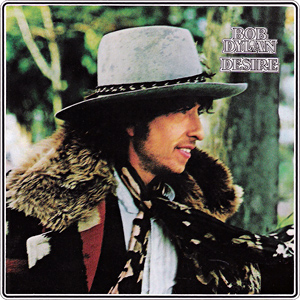
Bob Dylan 20: Desire

Having regained both self-confidence and critical approval, Bob spent the summer of 1975 trying to assemble a band that would best deliver the sounds he heard in his head. In another departure, he actively collaborated with another writer (New York theater fixture Jacques Levy) on his lyrics for the first time. By the time Desire was released, he had been playing the songs on a caravan-style tour dubbed the Rolling Thunder Revue. (Fueled by ego and cocaine, the tour’s participants included old friends like Joan Baez and Roger McGuinn and new friends like T Bone Burnett and Scarlet Rivera, whose violin is all over Desire.)

The surprising radio hit “Hurricane” opens the proceedings with a tentative acoustic guitar right out of “All Along The Watchtower”. Much of the “facts” presented about imprisoned boxer Rubin Carter have been disputed, but we can’t assume the clunkier lines are Levy’s work. Bob’s piano comes back for “Isis”, and it’s easy to get lost in whatever story he’s telling. “Mozambique” doesn’t do much, but “One More Cup Of Coffee (Valley Below)” and “Oh Sister” both get a boost from the golden throat of Emmylou Harris.

Apparently one questionable biography wasn’t enough, because “Joey” is eleven minutes of your life you’ll never get back. (Amazingly, Bob still plays this one onstage.) “Romance In Durango” and “Black Diamond Bay” are both enigmatic stories that fail to ignite, while “Sara”, a pretty overt song to his estranged wife, is a tad embarrassing. (One point: we really don’t think the lines about the Chelsea Hotel and writing “Sad-Eyed Lady Of The Lowlands” are meant to be connected.)

It may be considered sacrilege for some ears to hear, but Desire is one of Dylan’s most overrated albums. It starts out strong, then turns to mud. But critics loved it, people bought it, and Bob felt emboldened enough by the experience to stay on the road and even take another shot at making a film.

Bob Dylan Desire (1976)—2½

Monday, July 6, 2009

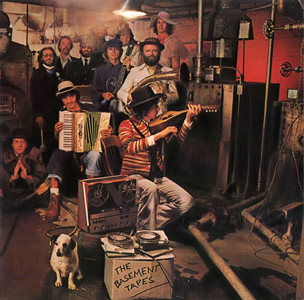
Bob Dylan 19: The Basement Tapes

Way back in 1967, when Dylan was hiding from all save his family and closest friends, the world feared he’d stopped writing. As a few bootlegs and constantly surfacing tapes attested, not only was he still writing, but having a ball in the process.

The Basement Tapes was the collective name given to the songs recorded that summer, mostly in the garage of the Band’s shared house near Bob’s own in Woodstock. The boys spent a lot of time working up versions of folk songs and improvisations, along with a couple of dozen new Dylan compositions that were farmed out for others to cover. As his own releases through the rest of the ‘60s and into the ‘70s failed to wow, the mystique of The Basement Tapes grew.

Sure enough, having raked in the bucks from Planet Waves and Before The Flood, Robbie Robertson got Dylan’s blessing in 1975 to compile an official Basement Tapes album. This was not a straight issue of the 14-song demo that had been bootlegged; instead, Robbie sought to rewrite history by overdubbing some parts and including several Bob-less Band recordings, some of which were actually recorded several years after and miles away from Woodstock. Some of those songs are pretty enjoyable, even if they don’t fit the theme of the original sessions. “Katie’s Been Gone” is wonderful, and “Orange Juice Blues” is a nice showcase for Richard Manuel. However, it’s safe to say most would prefer Dylan-sung versions of “Don’t Ya Tell Henry” and “Long Distance Operator”.

That said, Bob’s songs are great. Tracks like “Odds And Ends”, “Million Dollar Bash”, “Please Mrs. Henry” and “Lo And Behold!” are delivered with a grin. “Clothes Line Saga” and “Yea! Heavy And A Bottle Of Bread” are just plain absurd, while “Tears Of Rage” and “This Wheel’s On Fire” equally as good as the ones that were on the Band’s debut LP. “You Ain’t Goin’ Nowhere” and “Nothing Was Delivered” had also been highlights of the Byrds’ Sweetheart Of The Rodeo. Even fanatics familiar with the bootlegs got new (to them) surprises: “Goin’ To Acapulco” is full of mystery and longing, while the included take of “Too Much Of Nothing” has an much different chord structure.

This album was a nice gesture at the time, but in this age of archival reissues, a rethinking of The Basement Tapes was long overdue. Ideally we’d get at least one full CD of unadorned mixes of the Bob songs, with the occasional alternate take, the Basement tracks from Biograph and the Bootleg Series box, plus “I’m Not There”, “Sign On The Cross” and any of the other originals they felt like throwing in. Instead, the 2009 remaster merely replicated the original two-record set exactly, on two discs even, adding only a few extraneous photos from the cover shoot. And that, we thought, was that.

Bob Dylan & The Band The Basement Tapes (1975)—4

Friday, July 3, 2009

Bob Dylan 18: Blood On The Tracks

Lester Bangs called it a “crying towel” for people recovering from a breakup. Jakob Dylan says that while Nashville Skyline is the sound of his parents falling in love, this album reminds him of his parents fighting. Even the man himself, shortly after its release, expressed confusion as to how anyone could enjoy listening to something that was so obviously so rooted in pain. The facts are these: Dylan was back home on Columbia, and with an album full of the lyrical twists and turns worthy of a man at the peak of his powers.

To this day Blood On The Tracks still features in arguments over which is Dylan’s best album. It’s up there, certainly; it’s also a good way to convert those who can’t stand Dylan’s voice, since his delivery here isn’t as easily parodied. And if they’re nursing a broken heart, all the better.

A brief rundown of the tunes: “Tangled Up In Blue” is a perfect opener, and “Simple Twist Of Fate” follows nicely in a different atmosphere. “You’re A Big Girl Now” lacks the ache of the New York version (more about that later), but “Idiot Wind” is a nasty epic. “You’re Gonna Make Me Lonesome When You Go” turns out to be happier than it seems on the surface.

“Meet Me In The Morning” is a pretty different sound from the others, and is rare for its simpler blues structure. “Lily, Rosemary And The Jack Of Hearts” is an enticing story, but the carnival atmosphere can be distracting. “If You See Her, Say Hello” is a sad lament, if a bit overdone. “Shelter From The Storm” takes us back to the stark territory, and it’s welcome by this time. “Buckets Of Rain” is one of the oddest yet most effective ends to any album, much less Dylan’s. Each of the ten parts fits, not quite perfectly—but there’s more to the story.

Dylan recorded the album over four days in New York City, then went to visit his brother in Minnesota for Christmas. There it was suggested that the album was too low-key, that all the songs sounded too much alike, so he hired a local pickup band and redid half of the songs, drastically changing the lyrics of three. So the album as released was a mix of the upbeat sound of the (revised) “Tangled Up In Blue” and the mellower sound of “Simple Twist Of Fate”.

That would be fine, except a test pressing of the original lineup made the rounds, leading to countless bootlegs and speculation on what should have been released. Indeed, when the authorized Bootleg Series box came out in 1991, it included four tracks from the New York sessions, but three of those were different takes from the ones on the acetate. Luckily, the original “You’re A Big Girl Now” had already appeared on Biograph, alongside the outtake “Up To Me”, but we’re getting ahead of ourselves. To hear these after you’ve inhaled the album proper is a revelation; in the New York versions of these forlorn songs of unrequited or lost love, the hurt is more subdued, yet just as real.

During the crowdsourcing era, Columbia’s reissue division teased fans that Blood On The Tracks was due for a “Legacy Edition”, suggesting a double-disc expansion that would contain “both” versions of this album. Many years later, after a series of truly revelatory Bootleg Series volumes, prayers were pretty much answered.

The worst thing about More Blood, More Tracks was its title, which sounded like it had to be an April Fool’s joke. In keeping with all-or-nothing attitude of the times, it was available as a single-disc “alternate” album of all the songs plus “Up To Me”, or a limited six-CD set offering every single take from the New York sessions, and remastered versions of the five Minnesota remakes. That would be the way most fanatics would go, though hearing multiple takes of the same eleven songs spread over four days’ is a lesson in endurance. Now we finally have clean versions of the original “Lily, Rosemary” and “Idiot Wind”, the latter delivered more like the aftermath of the argument instead of the midst of it. We can hear him start the sessions solo, then a band arrives, to frankly limited success, before he pares it back to just him and a bass player. (Early discarded takes of “Simple Twist Of Fate” veer too close to ‘70s MOR territory, or at least the following year’s Paul Simon album, while a slow burn through “You’re Gonna Make Me Lonesome” has potential.) It can be fascinating to hear him try further takes on songs he’d already nailed, and to learn that it’s his heavy hands on the Hammond for the album version of “Idiot Wind”. And what Bootleg Series would be complete without yet another stab at “Spanish Is The Loving Tongue”?

Bob Dylan Blood On The Tracks (1975)—4½
Bob Dylan
More Blood, More Tracks: The Bootleg Series Vol. 14 (2018)—4

Wednesday, July 1, 2009

Bob Dylan 17: Before The Flood

The music industry reached the era of the arena tour, which was usually followed in turn by the double live album. And since Bob’s 1966 performances with the Band had become the stuff of legend (and bootleg), it only made sense to capitalize on the interest in his first major tour in eight years. And capitalize they did, with Before The Flood, a two-record set culled mostly from the last three shows of the run.

After nearly a minute of expectant crowd noise, “Most Likely You Go Your Way (And I’ll Go Mine)” gallops in, and we hear Bob’s new vocal technique of yelling the last syllable of each line in his songs. There are a few changes from the records we knew and loved, such as the new lyrics to “Rainy Day Women #12 & 35” and the rockin’ “It Ain’t Me Babe”. “All Along The Watchtower” is still close to its John Wesley Harding tempo, but there’s more than a hint of Hendrix in the delivery. The Band still knows how to support him, and they do, but this wasn’t 1966. The acoustic songs are probably the highlight, and you get to hear the first of many audiences who have been cheering every harmonica blast to this day. (And the top-speed run through “It’s Alright, Ma (I’m Only Bleeding)” is still exciting to those of us who don’t swoon at the Nixon connotations.)

Seeing as they got co-billing, there are also a side and a half of performances by just the Band, who’d released their own live album only two years before. The curious listener pulled in by their songs would be best advised to seek out their first two albums, as these renditions don’t add much to their oeuvre.

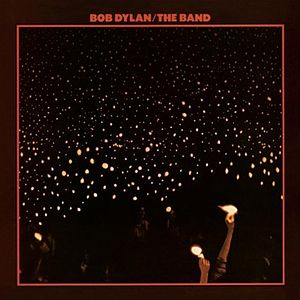
This was not the definitive live Dylan album—that was still a long way off after several attempts over the coming years. And even though the sequence doesn’t represent a typical night on Tour ’74, Before The Flood is a sharp snapshot in time, summed up well by the cover photo of an arena full of lighters held aloft. Oddly, the album included none of the songs from Planet Waves, the album it was promoting, nor any of the otherwise unreleased songs that turned up in setlists, which were tweaked every night. Perhaps his new label wanted to stick with the obvious tracks. (Originally released on Asylum, this too was reissued by Columbia in 1982.)

Undoubtedly, there were plenty of punters hoping that a future Bootleg Series volume would explore this period. By the time something happened, the scope had changed. Just in time for the tour’s 50th anniversary, The 1974 Live Recordings presented every available (professionally recorded) note played or sung by Bob from 26 of the shows on 27 discs, with none of the Band’s “solo” sections included. (Further audience recordings emerged briefly on Apple Music and Spotify as Live 1974 – The Copyright Collection.)

As insisted by those who’d cherished their bootlegs for decades, the players really were burnt out by the time they played the shows tapped for Before The Flood. We can now hear excellent renditions of songs from the new album, as well as its outtake “Nobody ‘Cept You”. His choices of solo acoustic songs are interesting (“Gates Of Eden”! “To Ramona”! “Mama, You Been On My Mind”!), as are the electric arrangements of “Mr. Tambourine Man”, “It Ain’t Me Babe”, and the obscure “Hero Blues”; there are also several examples of the Band helping him tear through “Ballad Of Hollis Brown”. Just as with similar boxes covering 1966 and 1975, there is a lot to ingest, but it’s further proof that Bob is best appreciated as a larger tapestry than a mere snapshot.

Bob Dylan/The Band Before The Flood (1974)—2½
Bob Dylan and The Band
The 1974 Live Recordings (2024)—3