Thursday, February 25, 2010

Byrne & Eno 1: My Life In The Bush Of Ghosts

With David Byrne and Brian Eno getting along like the proverbial house on fire, it was perhaps inevitable that they would go off in their own corner to create, while the other three Talking Heads bided their time (or rather, didn’t have to sit around waiting for them). The two were already fascinated with exotic rhythms and the blending of cultures, and so spent the better part of a year experimenting with tracks, other like-minded musicians, and trawling through Eno’s collection of off-air recordings from various American AM radio stations.

My Life In The Bush Of Ghosts was the result, released on Sire (the Heads’ label) in the US but on Eno’s label in the UK but with Eno’s name listed first; chances are more of the public was aware of it at the time due to Byrne’s name recognition. Even after the eclectic sounds of Remain In Light—which was recorded later but released first—what listeners heard would have been surprising.
“America Is Waiting” pretty much sums up the content of the album as a whole: a mildly danceable track with nutty percussion, something of a groove, and a repeated loop of a guy ranting on a radio talk show. Elsewhere, the voices range from evangelists to exorcists, Mideastern chanting and other non-Western sounds. “Regiment” stands out, a bass-heavy groove courtesy of Busta Jones and Chris Frantz, and the voice of a “Lebanese mountain singer” nicely juxtaposed with an uncredited guitar solo from Robert Fripp. “Mountain Of Needles”, which closes the album, is much closer to Eno’s archetypical music for films.

At the time, this was all considered very advanced, and the album gained notoriety over the decades as a “sampling” became more of a common thing across all genres of music. Which is great if you’re a musicologist or amateur snob, but if you were a Talking Heads fan who liked their catchy songs and wacky vocals, it may have left you cold.

Even though they took time to get clearances for all the borrowed sounds they could identify, not everyone was happy with the album. A track called “Qu’ran”, not surprisingly, raised the hackles of various Islamic organizations, so the track was soon replaced with the much more low-key “Very, Very Hungry”. “Qu’ran” reappeared on the first CD version of the album with “Very, Very Hungry” as a bonus track, only to revert to the second LP sequence for its second CD reissue in the early ‘90s. The Nonesuch label gave My Life In The Bush Of Ghosts a grand reboot in time for its 25th anniversary, adding liner notes, new artwork and photos, another “side” worth of bonus tracks, and even downloadable stems for people to make their own mixes, but no “Qu’ran”. Some of these tracks were cut from the original running for the album, and would have fit in well; we’re particularly fond of the pretty ambient “Solo Guitar With Tin Foil”.

Brian Eno—David Byrne My Life In The Bush Of Ghosts (1981)—3
2006 reissue: same as 1981, plus 8 extra tracks (and minus 1 track)

Wednesday, February 24, 2010

Brian Eno 9: The Plateaux Of Mirror

After creating the Ambient brand, Brian Eno spent the next few years collaborating closely with Talking Heads, being credited as producing their albums as well as performing and composing as fifth member. So when his next solo album arrived, it was perhaps not such a shock that it too was a collaboration of sorts.

The Plateaux Of Mirror is largely the work of so-called minimalist composer Harold Budd, who plays simple, pretty melodies on the piano while Eno “treats” the performances. There really isn’t much more to this album than that; Harold plays, Eno mixes. But part of Eno’s genius is his ability to both capture a moment on tape, and then create an entire atmosphere around it. That’s just what he does here. In a perfect illustration of such an indescribable album title, these ten tracks place the listener on another planet, in a desert, someplace indisputably solitary. This is music designed for independent ingestion; otherwise it would simply fade into the background, which it does quite well.

While there’s nothing in the title, nor even the typically topographic artwork, to suggest it, the overwhelming mood here is that of a dark, post-dusk landscape covered in snow, with no artificial light except whatever is already in the sky. Perhaps it’s cloudy; it’s certainly cold. Throughout, Harold Budd picks his way through the keys of his piano while Eno channels the output through his mixing board. Each track is distinct yet similar, with one notable exception.

The anomaly here, as well in their work together, is the piece that opens the second half of the album. “Not Yet Remembered” is built around block piano fifths, mixed more cleanly than on the rest of the album. The “verses” are played through twice, and then in the middle section, those trademark wordless Eno vocals are mixed in to provide a sad melodic counterpoint to the chords. Once this height is reached, the verse returns, as the vocals step back to prop up the chords rather than ride them. It’s a moment that stands tall on the album, following and preceding those other snowy pieces, and stands equally tall in Eno’s catalog.

While many would have wished he’d go back to rocking, The Plateaux Of Mirror is an illuminating detour for a man whose musical instrument is the recording studio. It doesn’t garner everyday listening, nor does it do the trick every time, but it is pretty special.

Budd and Eno would attempt to repeat the recipe four years later with The Pearl—outside of the Ambient trademark, but still in the same mold. With a slightly less hissy sound, possibly due to the production credit of one Daniel Lanois, the album follows much of the same pattern as its predecessor, except that it’s less icy, not as distinct, and doesn’t have anything as profound as “Not Yet Remembered”. And we would have been surprised if it did. If anything, it almost sounds “spacey”, for lack of a better word. There was probably a reason for that.

Harold Budd/Brian Eno Ambient 2: The Plateaux Of Mirror (1980)—3½
Harold Budd/Brian Eno
The Pearl (1984)—3

Monday, February 22, 2010

Brian Eno 8: Music For Films and Airports

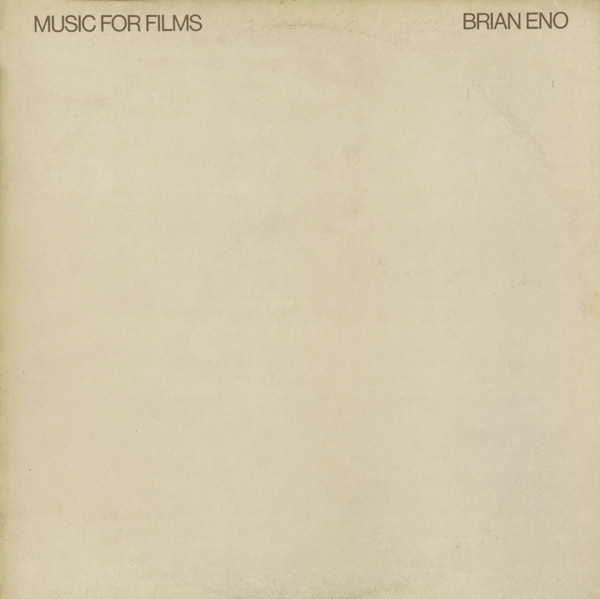
Eno’s experiments developing his last two solo albums led him further into truly electronic music, focusing more on keyboards and textures without vocals. A handful of these experiments were issued on a promotional record called Music For Films as “possible soundtracks” for use by directors.

An altered sequence was eventually released as an actual album with the same title, in a cover as stark as its mood. Many of the tracks are understated hums, with only a hint of melody. Most are performed by Eno alone, but some have contribution from such regulars as John Cale, Phil Collins and Percy Jones, suggesting that these could have been some of the alleged hundred or so ideas started for Before And After Science, or even some of the less developed ideas from Another Green World.

Much of the album is truly background music, to be half-ignored while something else commands your attention, but a few tracks stand out. “From The Same Hill” throws some guitar and melody into the mix. Robert Fripp is credited on “Slow Water” but we’ll be damned if we can pick him out. “Strange Light” is a nice finale in line with his work with Cluster before the more eerie and obvious “Final Sunset”. The three back-to-back versions of “Sparrowfall” provide a glimpse into his writing process, starting with a basic theme, introducing a counterpoint, and then culminating in a complete combined mini-symphony. Such moments, when they arrive, enliven a less-than-riveting listening experience. (A sequel called Music For Films Vol. 2 got a low-key release in 1983; much of this set consisted of prototypes that would be expanded on an album with his new collaborator Daniel Lanois. Many of these strays were conveniently reissued in the 21st century, along with various refugees from the original 1976 “director’s cut” of the first volume, on a disc called More Music For Films.)

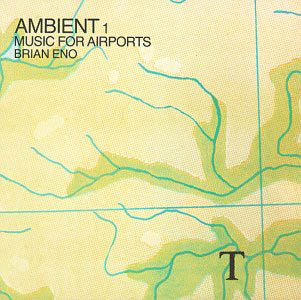
Music For Airports, and not just by comparison, is a triumph. Here Eno starts with simple melodic ideas and repeats them, with only the slightest variation, making for a soothing yet hypnotic listening experience. This was his first album to be dubbed “ambient”, and it set the tone for others who wanted to follow in the same new genre.

In this case, the music is almost pointedly subliminal, with the titles coming from their placement on the vinyl. “1/1” follows a simple descending major-key melody on the piano around until its resolution and repeated choruses, amid some synthesized counterpoints. It’s the longest track on the album, and arguably the most successful. The remainder of side one is taken up by vocal tracks faded in and out as on 10cc’s “I’m Not In Love”, albeit “played” here around a wistful minor key.

That idea is extended on the first track on side two. “1/2” supports the “vocals” with a piano accompaniment that sounds like two different hands following each other around the same minor scale. The result brings the idea to a similar fruition as “Sparrowfall”. The final piece includes neither acoustic piano nor voice, but rather some intertwining synth lines that occasionally resemble strings. It’s a long finale, but peaceful.

Music For Airports may or may not have been used in actual airports, but it certainly couldn’t hurt trying it today. It has, however, paved the way for lots of imitators three-plus decades on. (The album’s twentieth anniversary was celebrated by a live recording of the album performed on orchestral instruments by the avant-garde New York ensemble Bang On A Can All-Stars, bringing a human element to the project.)

Brian Eno Music For Films (1978)—3
Brian Eno
Ambient 1: Music For Airports (1978)—4
Brian Eno
More Music For Films (2005)—3

Friday, February 19, 2010

John Lennon 15: Anthology

After years of backpedaling and increasing bootlegs, the success of the Beatles Anthology convinced all parties involved that a similar box devoted to John would be a lucrative exercise. For the most part, the John Lennon Anthology is chronological, with the occasional inexplicable detour, neatly divided into four sections: “Ascot” covers Plastic Ono Band and Imagine, “New York City” takes us up until “The Lost Weekend”, with “Dakota” covering what would be the end.

As often happens, many of the tracks aren’t that different from the released versions. Case in point: the very first song, a redundant alternate of “Working Class Hero”. But every now and then a track surfaces that’s illuminating. An earlier take of “Isolation” shows how they came up with the best way to nail the middle section. There’s a hilarious run-though of “Remember” that shows him in a light-hearted mood. “God Save Us” and “Do The Oz” are included for completists’ sake, and the latter sounds a lot less hideous on the 2000 Plastic Ono Band reissue.

The second disc nicely includes some songs from various contemporary benefit concerts, as well as the better “stop the war” take of “Come Together” from the One-to-One shows. Two uncompleted home tapes from 1970 show how “Mind Games” was assembled, and we even get John’s guide vocals on a few Ringo tracks. “One Day (At A Time)” is included in an earlier, far superior take with the vocal in a lower register, giving it a much more relaxed and much less panicky approach that would have been improved Mind Games greatly. “Real Love” is on this disc for some reason, and we notice that “Free As A Bird” isn’t included at all.

The third disc expands on the material that went into Menlove Ave., reaching its apex with “Be My Baby” (finally!) and exposing the nadir in several shouting matches with Spector. “Stranger’s Room” is an early blueprint for “I’m Losing You”, and an effective transition to the final disc, which rises to the challenge of actually adding something to the hours upon hours of tapes already out there. High points include the Cheap Trick version of “I’m Losing You”, some dialogue with Sean and an edited “Dear John” which may have been his last recording. “Grow Old With Me” features a George Martin orchestration, recorded after the Threetles had passed on it their own Anthology. The “Something More” section of the fourth disc covers some of the skits and satires he tried while on hiatus, ending with a wistful “It’s Real” snippet. It inspires a sigh when it ends, a sad reminder that the buried treasure will always be finite.

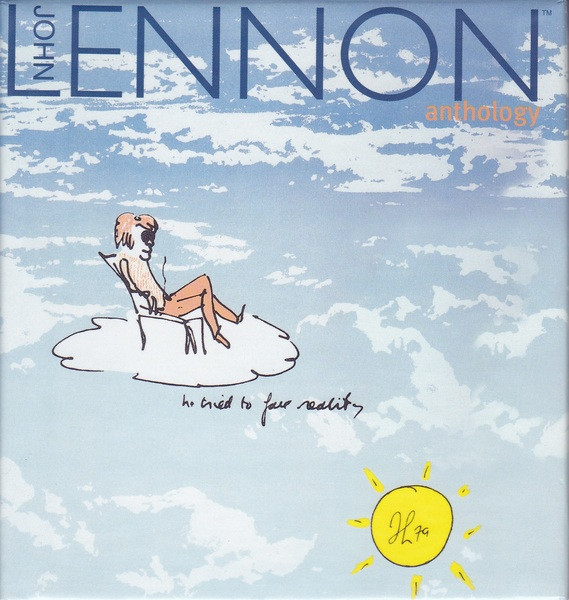
The packaging is certainly pretty, in a soothing light blue sky with clouds motif. The liner notes leave something to be desired, though Yoko’s essays on each period are pretty poignant and, combined with the man’s voice, one is reminded only too clearly that the world just hasn’t been the same since that December night.

As with most archival releases by anyone, Anthology is hardly the place to start if you don’t have anything and everything else. Luckily for the rest of us, not all of the tracks are straight repeats from the Lost Lennon Tapes series, so this is certainly a nice addendum to the bootlegs. (Wonsaponatime was a concurrently released single-disc distillation of the box, and is truly for collectors only.)

There are, again, hours upon hours of other pieces that could have gone on here, but Yoko always has the last word as to what goes into the official documents. Also, with the emphasis on music and enlightening the uninitiated, she didn’t bother with more studio patter and background that would be more insightful to us students. After all, she’s trying to run a business here.

John Lennon Anthology (1998)—3½

Thursday, February 18, 2010

Mike Campbell 1: Blue Stingrays

Surf music received something of a revival in the ‘90s thanks to Quentin Tarantino movies, and while it didn’t enjoy the massive sales windfall of the swing revival, it also didn’t tank as quickly. Bands like Shadowy Men On A Shadowy Planet, Laika & The Cosmonauts, and Man Or Astro-man? were just a few outfits who rode the trend and created new music, while independent labels searched for little-known practitioners from back in the day to reissue.

One such outfit was Blue Stingrays, whose Surf-N-Burn collection came with a mysterious bio and catalog listings for long-lost albums, but just one listen to the CD made it clear that these were not thirty-year-old tapes. In reality, it was a new album by Mike Campbell of Tom Petty’s Heartbreakers, heavy on the twang and whammy bar, with former Heartbreaker Ron Blair on bass and Mudcrutch drummer Randall Marsh. (Benmont Tench is mentioned as being involved as well, but we don’t hear any keyboards; it’s been suggested he ordered the pizza.)

A dropped needle on vinyl opens the album, and party noises are heard throughout “Monsoon”; thankfully they don’t persist, but both reappear on the closing “Super Hero”, which sounds a little like the Mighty Mouse theme. Speaking of which, the theme from Goldfinger had already featured in Petty live sets, and it was something of a surf song already anyway; “Russian Roulette” has a similar secret agent theme quality as well. Every now and then there’s a riff and chord sequence that’s just screaming for a Petty lyric, especially “Brave New World”, and we could swear we’ve heard “Blue Venus” somewhere else before. “Surfer’s Life” and “Zuma Sunset” have distinct Brian Wilson qualities, and help break up the tempo. Fifteen songs in 47 minutes make it longer than most actual surf albums. (Two outtakes from the sessions, the more rockabilly than surf “Grits And Eggs” and “Dawn Patrol”, were released as a 45rpm single in 2021 alongside the album’s reissue on three varieties of limited edition colored vinyl.)

Overall the album is pleasant, but occasionally emulates the period incidental music concocted for the previous year’s hit movie That Thing You Do!; if Mike was in Tom Hanks’ radar he likely wouldn’t have opted to score a movie soundtrack so close to She’s The One. Throughout his time in the Heartbreakers, and despite the occasional session gig, he never dared pursue a solo project, which is why this one was a badly kept secret for such a long time.

Blue Stingrays Surf-N-Burn (1997)—3

Wednesday, February 17, 2010

The Wallflowers: The Wallflowers

If you’re a struggling singer-songwriter, your journey to success can be pretty rough. It can be made even more so if you’re already related to a highly respected songwriter, thus raising both the public’s expectations as well as their hesitation. The leader of the Wallflowers knew this, and to his credit, Jakob Dylan has never capitalized on having Peter Himmelman as his brother-in-law.

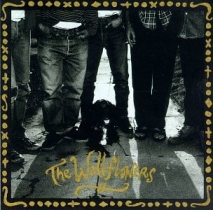
The band emerged in the wake of the “jam band” explosion of the late ‘80s and early ‘90s, where lots of long-haired, tie-dyed skinny white kids—like Edie Brickell and New Bohemians, Blues Traveler and the Spin Doctors—tried to recapture the Woodstock vibe. The Wallflowers were the only ones with an actual birthright to the hippy-dippy sound; naturally their self-titled debut album sold zero copies. Still, they toured like all hungry bands do, opening up for the likes of 10,000 Maniacs and, yes, the Spin Doctors. Their sets were peppered with such covers as Van Morrison’s “Crazy Love” and The Band’s “The Weight”, but the highlight was the then-unrecorded “6th Avenue Heartache”, which, lacking the mixed-too-loud harmonies by the guy from Counting Crows, sounded so much better than the version that would sell six million copies of their next album, four years later.

But back in 1992, they couldn’t get arrested, despite a CD with a fresh, live sound, and some pretty decent tunes that betray a distinct Springsteen influence. Piano and organ compete for space under mostly clean guitars in a live mix. One exception would be the single, a nasty little tune called “Ashes To Ashes” anchored by an insistent wah-wah and a lyric we hope isn’t about any actual person.

The other songs aren’t trifles either. Most pass the five-minute mark, and even the seven-, eight- and nine-minute songs are infused with such dynamics that they aren’t at all tedious. On the contrary; “Hollywood” follows a familiar yet fresh chord sequence, and both “Somebody Else’s Money” and “Honeybee” provide intriguing journeys.

The Wallflowers is still in print, though it seems to have been disowned by even its own creator. It may not have the corporate, calculated sound of their more successful albums, but it’s an unjustly overlooked gem that can be easily found on eBay for about a buck.

The Wallflowers The Wallflowers (1992)—3½

Tuesday, February 16, 2010

Who 19: Join Together

The vehicle chosen to promote Pete’s new album overshadowed it completely: a full-blown Who reunion tour, where the three surviving original members were augmented by an additional guitarist, stalwart keyboardist Rabbit, and a drummer, percussionist, horn section and backup singers handpicked by Pete. Naturally, it was A Big Deal, which in turn sparked a variety of tie-ins, including a pay-per-view show, radio broadcasts and an inflated live three-record/two-CD set. All featured a complete performance of Tommy—1989 being the twentieth anniversary and all—performed by the 15-piece ensemble.

To its credit, Join Together does include the song of the same name, though we had to check twice to make sure. What’s even more baffling is what was included. Tommy is faithfully reproduced, thankfully without the star turns from the pay-per-view, in mostly the order they played in 1970, with the addition of “Cousin Kevin” to give John two songs, and “Eyesight To The Blind” in the rejigged movie arrangement. It all fits neatly on the first CD, as if they planned it that way.

The second disc is the real head-scratcher. Pete dominates the first handful of tunes, from “Eminence Front” through “Face The Face”. Roger sings “Dig” from The Iron Man, and a sterile “I Can See For Miles” demonstrates why they rarely played it onstage. “A Little Is Enough” and “Rough Boys” are the best Who songs from his first solo album, while “Trick Of The Light” is a left-field showcase for John. Everything is faithfully reproduced, and the sound is admittedly better than that of Who’s Last, but it’s still an album worth playing exactly once.

By the time Join Together appeared in stores, the monetary nature of the tour was all too clear, and nobody was clamoring for a full-fledged reunion involving a new album and subsequent shows. If anything, the best reminder of what they once meant came with the release of their Monterey Pop set, buried within a 4-CD box released in 1992 on Rhino. It’s a good snapshot of a fair-to-middling yet historic performance, right on the verge of their exposure to the US. Still, that half-hour or so of music created before Tommy is more exciting than a 2-CD box designed to spotlight it.

The Who Join Together (1990)—2