Friday, July 16, 2010

Rolling Stones 28: Tattoo You

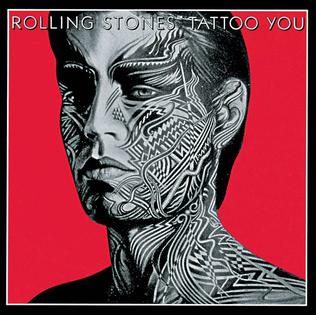
What is arguably the last great Stones album came about as a fluke. Tattoo You was largely compiled from leftovers, some from the recent Emotional Rescue sessions and others going back as far as Black And Blue and even Goats Head Soup, some given modern vocals by Mick. But if you didn’t know this, you’d think they’d gone into the studio and banged it out as is, a testament to co-producer Chris Kimsey, engineer Bob Clearmountain, and mastering guru Bob Ludwig.

It’s even divided into fast and slow sides, making for easy replaying depending on your mood. “Start Me Up” was the perfect single, anchored by that open-G tuning and happy vocals. “Hang Fire” is a joyful doo-wop song over words that make nearly no sense. Speaking of which, “Slave” is a five-minute jam (extended another two minutes on the eventual CD) left over from Black And Blue that sounds better in your speakers than it does on paper. Keith gets his moment to garble in “Little T&A”, which really is about what you think it is. “Black Limousine” is fairly straightforward R&B, while the noisy “Neighbours”, wherein poor Charlie’s snare sounds like someone smacking a basketball, got more notoriety for its video.

The slow side is stellar, but it didn’t get as much radio play—with one exception. “Worried About You” resurrects another idea as well as Mick’s dangerous falsetto from Black And Blue. “Tops” has a similar tempo with ordinary lyrics from the point of view of a casting couch, but still rises above it all. “Heaven” is more of an experimental track, and not very Stonesy at all, while “No Use In Crying” piles on the harmonies. But “Waiting On A Friend” is one of their gems. Dating from 1972, as did “Tops”, it features Billy Preston on piano (Nicky Hopkins was on “Tops”), an uncredited Mick Taylor on guitar, and jazz legend Sonny Rollins contributing a perfect sax solo, both on the bridge and over the fade.

Since they had a tour booked, Tattoo You did the job of keeping the Stones in high profile. Its concurrent appearance alongside MTV’s debut gave them reason to make some silly videos, exposing them to a new generation of fans. Four decades later, the album still brings a smile, despite the chintzy packaging. And to think it was all just a fluke.

Because they could, and because their M.O. in the 21st century was to overdub onto old tracks, the fortieth anniversary of Tattoo You was celebrated with an expanded edition that added another album’s worth of reworked leftovers to an album of reworked leftovers. The Lost And Found: Rarities disc offered tracks culled from the same basic ‘70s pile by engineer Chris Kimsey. But while 1981 Mick sounded enough like 1972 Mick, if anyone told him 2021 Mick didn’t sound like either, he didn’t care, so the songs don’t sound as vintage as they could be.

The emphasis is mostly on rock for these. “Living In The Heart Of Love” has a good “If You Can’t Rock Me” feel with lots of guitars, and “Fiji Jim” piledrives one chord into submission until the welcome choruses. The next three tunes are covers: the Chi-Lites’ “Troubles A’ Comin” doesn’t quite live up to its riff but it’s still fun; Jimmy Reed’s “Shame, Shame, Shame” links their earliest albums with Blue & Lonesome many years later; and, notoriously, Dobie Gray’s “Drift Away” is taken straight, but mixed with too much of Mick’s modern posturing drowning out Keith’s vintage harmony.

Even when you can overlook the vocals, the reference to “eBay” sinks the otherwise promising “It’s A Lie”, which was probably originally set aside for being too close to “Luxury”. A staccato intro belies the locomotive momentum of “Come To The Ball”, with Nicky Hopkins keeping up in there somewhere. There’s finally a slow one (not counting “Drift Away”) in the form of “Fast Talking, Walking”, a song that’s much better than its title—obviously taken from the first line. Along with lots of rolling Billy Preston piano driving the dynamics, there are wonderful guitar touches and the simple statement that should be the title: “I’m feeling lucky/‘cos I’ve got the dearest friends of all.” The key track is the closer, an early version of “Start Me Up” with hints of the reggae approach that still predict how the song would eventually turn out.

Despite the faults in the mixing, the “new” tracks don’t detract from the experience. But best of all, the booklet actually assigns musician credits where long overdue, and even includes more info about the album’s original lineup. (Those who shelled out the shekels for the Super Deluxe Edition got a nice book, a picture disc vinyl version of the original album, the two remastered CDs from the Deluxe Edition, and two further CDs confusingly titled Still Life: Wembley Stadium 1982, which not only had nothing to do with the live album of similar name, but was another show with nearly identical setlists to the two archival releases already released from the same tour. Outside of Mick’s exaggerated Cockney asides, the only real difference was rare version of “Chantilly Lace”, and for good reason.)

The Rolling Stones Tattoo You (1981)—4½
2021 40th Anniversary Deluxe Edition: same as 1981, plus 9 extra tracks (Super Deluxe Edition adds another 26 tracks)
Wednesday, July 14, 2010

Robyn Hitchcock 9: Queen Elvis

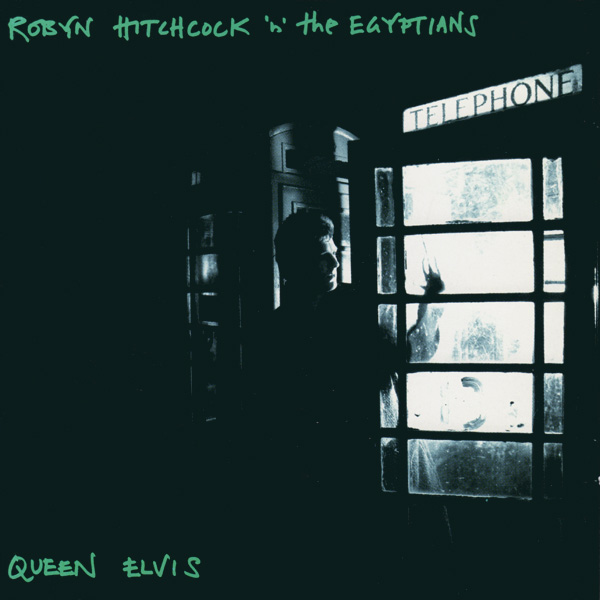
With Queen Elvis, Robyn fell into place with a consistent sound that was sure to please the new fans he picked up with Globe Of Frogs. It’s a bit slicker—it was, after all, the late ‘80s—but there are some great tunes here.

The dated-ness of the production is evident from the start. “Madonna Of The Wasps” is unfortunately introduced by a layered vocal section as opposed to the cod-Gregorian intro as played live and demonstrated in the video. Still, once the song proper kicks in it’s very catchy. “The Devil’s Coachman” would also work better live; it’s cluttered on the album, despite the string augmentation but still has some great lines. “Wax Doll” continues the chamber-pop sound; one intrepid observer pointed out that a wax doll would indeed look like it was crying had it melted in a fire. “Knife” is a (mostly) one-chord jam, redeemed very much by “Swirling”, but there are those ‘80s keyboards again.

In many ways the second side mirrors the first. “One Long Pair Of Eyes” was the other single off the album and it still has a soaring feel. “Veins Of The Queen” pushes us back to British chamber pop territory, but the unnecessary remix added to the end of the CD makes it worse. The same can be said of “Freeze” on both counts; it’s another one-chord song designed solely to enable Robyn to do one of his patented snakey guitar leads. “Autumn Sea” develops a good tension, but good luck trying to decipher the conversation between Messrs. Frobisher and Featherstonehaugh (pronounced “Fanshaw”) in the middle. And “Superman”—not the R.E.M. cover, but an original, in direct contrast to the continued appearance of Peter Buck on Robyn’s albums—is still great at demonstrating how the band were able to play different rhythms against and at each other.

Queen Elvis may not be great, but the album as a whole fits nicely on a Maxell 90-minute tape with Globe Of Frogs, which is awfully convenient. It doesn’t satisfy as much, but luckily, he was on a roll and the next album would make it all better.

Robyn Hitchcock ‘n The Egyptians Queen Elvis (1989)—3
Current CD availability: none

Monday, July 12, 2010

U2 11: Pop

U2 had possibly earned the luxury of taking their sweet time between releases, but as Peter Gabriel and Axl Rose can attest, spending too much time tweaking doesn’t always result in high quality. However, U2 at least had a desire to stay current, as demonstrated when Pop was boldly previewed around Christmas 1996 with the “Discotheque” single. From the souped-up techno sound of the song to the campy homage to the Village People in the video, folks were wondering if the boys hadn’t lost us for good.

Luckily, when the album was released the following March, we could exhale somewhat. They get the most “disco” songs out of the way with the first three tracks, and then move into a variety of styles with the remainder of the album. In the end, all of the songs have elements that sound like the U2 of old, with occasional echoes of such albums as October, War, and The Unforgettable Fire. And despite the contemporary themes, there are just as many references to God and Jesus as ever, if not more.

Starting with that crazy single, “Do You Feel Loved” and “Mofo” are more experimental dance numbers than memorable songs. With those out of the way, the album takes a more accessible turn. “If God Will Send His Angels” is much slower and a pleasant respite, while “Staring At The Sun” got unfairly compared to Oasis for its melodicism, in ignorance of history. “Last Night On Earth” finally sounds like the band we recognize. A solid side-ender.

“Gone” continues the anthemic vibe, with enough nods to their past, but “Miami” and “The Playboy Mansion” are detours into worlds that most of their longtime fans could only read about, much less care to visit. Bono puts on his obsessive cloak for the mysterious “If You Wear That Velvet Dress”, and gets suitably angry in “Please”. “Wake Up Dead Man” very effectively closes the proceedings by starting quietly, building steadily, and ending abruptly, to the point where the album doesn’t finish so much as simply stop playing.

Pop is one of those albums that takes a few listens for the shock of the different sound to wear off; indeed, it’s tough to get a reading on most of the songs by just listening to the first few seconds of each track. While at first listen it didn’t seem to be cohesive, it demands in the long run to be taken as a whole. Sonically, there is a lot to take in—thanks a bunch, Howie B—but there is enough acoustic guitar and piano scattered throughout to shake away the disco tag. Even Bono sounds like he’s neither taking himself too seriously, nor too unseriously; vocally, he’s developed quite a range.

So forget the big stupid tour and the bad haircuts and the disco ball—they went out of their way to sound futuristic, and still ended up with an album full of catchy songs just like they used to make. While they will never remake The Joshua Tree—nor should they—Pop is an obvious progression from their other ‘90s albums. And that’s all we can ask. It’s still a keeper.

U2 Pop (1997)—3½

Friday, July 9, 2010

Rolling Stones 27: Sucking In The Seventies

This album is an odd one in the Stones’ increasingly unwieldy discography. Sucking In The Seventies was released on the heels of two critically and commercially successful albums, leading one to think it was supposed to pick up where Made In The Shade left off. That assumption would be incorrect. Perversely—and in reflection of the title—it doesn’t even cover the hits, but it does have a B-side, an outtake and a live version.

The album is bookended by “Shattered” and “Beast Of Burden”, but ignores “Miss You”, the biggest hit from Some Girls. “Everything Is Turning To Gold” was originally the B-side to “Shattered”, and should have stayed that way. “Hot Stuff” and “Fool To Cry” both appear from Black And Blue, both severely edited, as is “Time Waits For No One”, which fades just before Mick Taylor’s majestic solo. (That’ll teach him to quit the band.) “Mannish Boy” from Love You Live provides something of a contrast to a previously unreleased live recording of “When The Whip Comes Down”. “If I Was A Dancer (Dance Pt. 2)” is a continuation of the opener to Emotional Rescue, as if anybody had really asked for it. And what the hell is “Crazy Mama” doing on this album?

Perhaps the best summation of Sucking In The Seventies as illustration of the Stones’ contempt for their audience comes from the late great Lester Bangs. He is quoted in both anthologies of his work, describing how he paid six of his own precious dollars to procure a copy of this album, knowing full well how little he’d enjoy it, and knowing just as well how much he had to have it anyway. After all, if you’re a fan, you’re a fan.

The Rolling Stones Sucking In The Seventies (1981)—3

Wednesday, July 7, 2010

Rolling Stones 26: Emotional Rescue

By the eighties, every rock ‘n roll fan knew that disco sucked. Unfortunately, Mick didn’t get the memo. Emotional Rescue, like its predecessor, was recorded in Paris, and runs the gamut between dance tracks and reggae, rockers and slow burners.

It’s something of a gamble to start off with “Dance”, sometimes subtitled “(Pt. 1)”. Charlie’s shackled to a suckatiss-suckatiss beat, but the chorus and saxes are undeniably catchy. Things improve with “Summer Romance”, something of a rewrite of “Respectable” and one of the best songs Tom Petty never wrote. “Send It To Me” is average reggae, and “Let Me Go” does the same for a rocker. But “Indian Girl”, with its pleasant lope and mariachi touches, is a nice departure, even if the lyrics get a little stupid.

“Where The Boys Go” is another rocker-by-numbers, featuring what sounds surprisingly like teenage female vocals near the end. They go back to the blues with “Down In The Hole”, which is slow but isn’t too plodding. The title track is another that divides fans, with its disco throb and piercing falsetto vocal. Mick’s spoken section reaches the pinnacle of unintentional hilarity. Luckily everybody likes “She’s So Cold”, which returns us to the clever comfort of straight guitars and strained metaphor. Keith gets the last word, however, on “All About You”, all backwards chords over a jazzy haze and layered vocals that refer either to Anita Pallenberg or Mick Jagger.

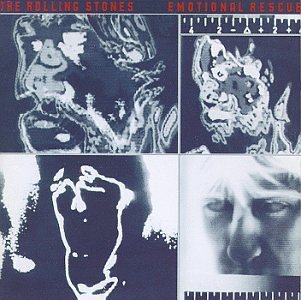
Emotional Rescue was a hit, if not a resounding one, and gets special points for having one of the most annoying packages ever. It came wrapped in a huge double-sided poster featuring dozens of “thermo-graphic” photos of the band members that was seemingly folded at random depending on which copy you bought, and was tougher to refold than any roadmap. The jacket, once revealed, contained more of these photos in less pleasing blue and white, but if you look closely, you can catch a few shots of Mick when he had a full, thick beard.

The Rolling Stones Emotional Rescue (1980)—3½

Monday, July 5, 2010

Rolling Stones 25: Some Girls

The punk scene threatened to bury the Stones along with The Who and all the other so-called boring old farts, and to their credit, the band rose to the challenge. Some Girls is about as straight a guitar album as they ever made, and has rightfully retained its status as a favorite since its release.

That being said, it’s not a punk album per se, but with its nod to disco, it is a New York album. In the aftermath of the Son of Sam, multiple blackouts and the Yankees winning streak, Some Girls evokes a sweaty summer in the city like few others. “Miss You” retains some of the funk from Black And Blue, stretching it into a cool strut. “When The Whip Comes Down” crams suggestive lyrics under the same two chords for four minutes before another Motown classic, “Just My Imagination”, gets a similar two-chord treatment. The title track ran into trouble with its lyrics, but at least Mick isn’t taking himself too seriously. “Lies” closes a strong side in a nod to the Knickerbockers, an American garage response to the British Invasion, right down to the harmonies.

As proof that Mick was having a good old time, “Far Away Eyes” is perhaps one of the funniest songs they’ve ever done, and one of their most effective country pastiches since Beggars Banquet. “Respectable” is the closest they come to punk, and a truly fun track. Keith steps up for his one vocal, and statement of purpose, “Before They Make Me Run”. He may have kicked heroin, but he had to relearn his singing style. “Beast Of Burden” and “Shattered” were both big radio hits, and are probably playing somewhere right now, the former a slow one, the latter a tough jam with a rapped vocal.

One’s enjoyment of Some Girls will probably depend on how sick one is of those last two songs. Rest assured they do sound much better taken in context. It’s a strong album recorded well, especially the guitars and Charlie’s drums. The Stones threatened to get silly as they approached their forties, but at least they stayed fresh—and in Keith’s case, alive and healthy.

Since it had worked to some success with the Exile On Main St. reissue, the album was expanded 33 years after the fact, with a mix of outtakes and newly finished tracks. Some of the better candidates, of course, had already ended up on Tattoo You, but big points were made by finally releasing “Claudine”, the legendary bootlegged song about the former Mrs. Andy Williams. “So Young” had been a B-side in the Voodoo Lounge era, but everything else was known only to collectors. Of the “new” songs, “No Spare Parts” was the key track, a simple country lope without a trace of New York. Along the same lines, Keith nails the weepie cover of “We Had It All”, much better than Mick’s raspy take on “Tallahassee Lassie”. Likewise, “You Win Again” deserves a smoother touch than given here, at the expense of Ron Wood’s pedal steel—one of the few compliments we’ll ever give him. “I Love You Too Much” crosses the 1978 vibe with today’s vocals pretty well, and the disc ends with another brief joke, Mick on piano and singing the “Petrol Blues”. All together, the new stuff shows a different side of the band than the original album. If this method was the only way we’d get outtakes, so be it: better than keeping them hidden.

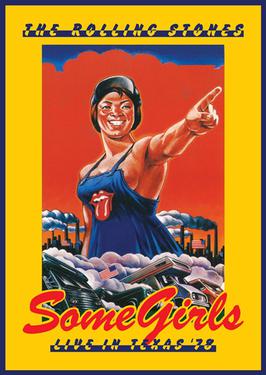
A Super Deluxe Edition added a DVD of promo clips, a book, and other ephemera, but left out an artifact that was instead released separately as a tie-in. Some Girls Live In Texas ‘78 presented just that—along with the band’s rough appearance on Saturday Night Live that year—on a DVD or Blu-ray, sometimes including a CD or LPs of the live portion; the CD was released on its own six years later. It’s a fun, trashy sounding show, the band supported only by Ian Stewart and Ian McLagan on keyboards, plus Doug Kershaw fiddles on “Far Away Eyes”. And boy, did they have a lot of songs with just two chords.

The Rolling Stones Some Girls (1978)—4
2011 Deluxe Edition: same as 1978, plus 12 extra tracks (Super Deluxe Edition also adds DVD)
The Rolling Stones Some Girls Live In Texas ‘78 (2017)—3½

Friday, July 2, 2010

Bob Dylan 42: Live 1966

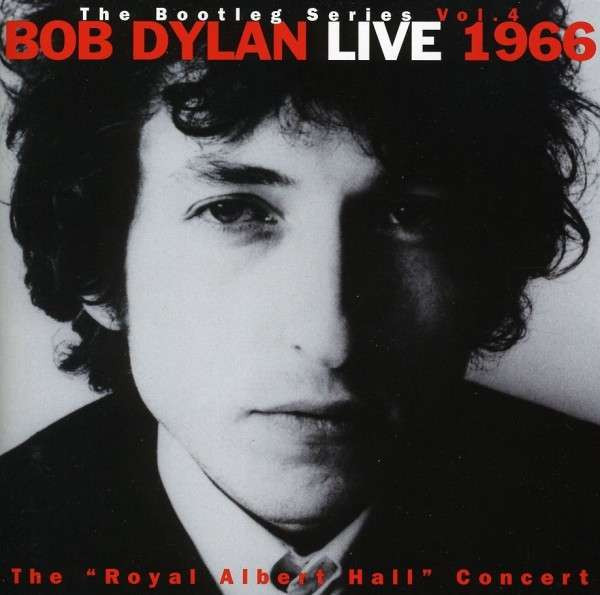
Live bootlegs as we now know them got their start when tapes of Bob Dylan’s controversial British tour in 1966 began circulating—particularly the one inaccurately known as the Royal Albert Hall show. For years, this concert gained notoriety both for its performance as well as the audience’s response, and Bob’s reaction therewith. In the wake of the major success of Time Out Of Mind, Dylan finally allowed its official release 32 years later as part of the dormant Bootleg Series.

Disc one consists of Bob, his harmonica, acoustic guitar and transcendent versions of seven classics, three of which would have been new to the audience. From “She Belongs To Me” through “4th Time Around” and “Visions Of Johanna”, past “It’s All Over Now, Baby Blue” and “Desolation Row” to “Just Like A Woman” and a lengthy “Mr. Tambourine Man”, it’s a positively hypnotic performance. His playing never falters, and his grasp on all those words he had to remember is spot on.

Disc two is where the trouble started: he was backed here by the guys who later became the Band (featuring this guy on drums), and they played hard, mean, and loud despite the angry protests of the folk purists in the crowd. The opener, the otherwise unreleased “Tell Me, Momma”, rumbles into place amid trebly guitars, an explosive snare and wheezy organ. “I Don’t Believe You” is transformed from something of a jaunty comedy number to a near-pop song, with a prominent riff and a fantastic guitar and organ solo section. “Baby Let Me Follow You Down” is similarly kicked up a notch, as is “One Too Many Mornings”, from folk to rock. “Just Like Tom Thumb’s Blues”, “Leopard-Skin Pill-Box Hat” and “Ballad Of A Thin Man” are delivered much as you’d expect from their album versions (and that’s Bob playing piano on the latter). But it’s “Like A Rolling Stone” that gets all the attention, starting with the cry of “Judas” from the crowd, Bob’s startled reaction and the defiant performance that follows.

The sound on Live 1966 is as good as it gets, and as a historical document, the general public can finally hear what caused all the fuss and fueled an industry of mysterious records, but spurred the release of later, lackluster Dylan live albums. The dynamic of the musicians’ influence can still be experienced today, and not just in bands like the Wallflowers. (Anytime you see electric guitars with piano and organ, it all started here.) Best of all, it gave us hope that the Bootleg Series wasn’t finite.

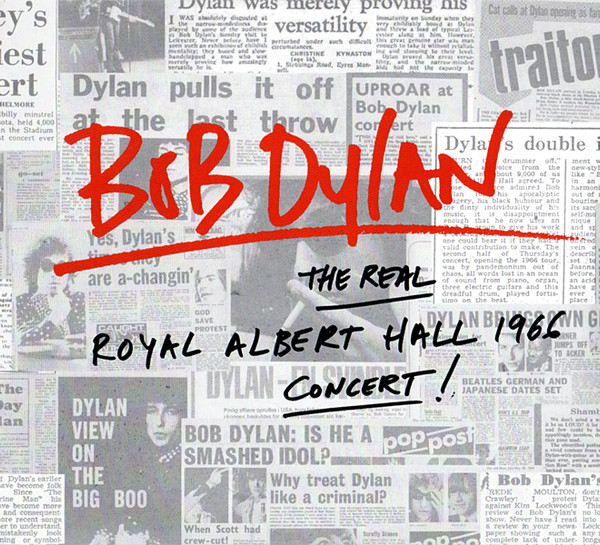
Fifty years after the occasion, the release of what was called The Real Royal Albert Hall 1966 Concert was a nice idea, except that it was actually the first of two shows played at that venue. While good, it’s the second one, the one that closed the tour, with extended monologues between songs that drip with both contempt and pharmaceuticals, that is more “historic”. That could now be got legally, but only as part of the 36-CD The 1966 Live Recordings, which gathered every known document of the shows on that chaotic tour. The cumulative effect is akin to listening to the same album 18 times, sometimes in pristine sound, other times through a broken drive-in speaker. Whether any of these are preferable to the “Judas” show is up to the listener with the patience to compare them all.

Still, some highlights of those other shows include: cough-free renditions of “Mr. Tambourine Man”, which spiral out to great lengths depending on the multi-minute harmonica breaks; variations of a long prologue to “Just Like Tom Thumb’s Blues” wherein the painter gets older each time; people actually chuckling at the lyrics of “4th Time Around”; commenting on extended tuning jags with remarks that he doesn’t have such issues with his electric guitar; and actual audience cheers of recognition, of even the electric songs. One can now track the evolving lyrics of “Tell Me, Momma”, which never approached a finished set, and hear Bob’s creeping exhaustion as the dates drag on, culminating in the introduction of the band members by name at the final Albert Hall show. And why was “Like A Rolling Stone” dedicated to the Taj Mahal, anyway?

Bob Dylan Live 1966: The “Royal Albert Hall” Concert—The Bootleg Series Vol. 4 (1998)—5
Bob Dylan
The Real Royal Albert Hall 1966 Concert (2016)—3½
Bob Dylan
The 1966 Live Recordings (2016)—3