Wednesday, January 26, 2011

David Gilmour 2: About Face

In the year following the last Floyd album, the band’s two creative leads took their own paths away from the band. Roger Waters recorded his first bona fide solo album, while David Gilmour’s own album was, as would be expected, much more accessible.

About Face is simply a collection of songs that resembled his band’s more radio-friendly moments. A variety of session cats provide the support, and Floydian touches persist, particularly on the intentionally overblown instrumental “Let’s Get Metaphysical”, where his distorto guitar is backed by the National Philharmonic Orchestra. (A glance at the inner sleeve will reveal the words “Fleudian slip” in the margin.)

In general, the songwriting is much more consistent than the alternating vocals and instrumentals of his first solo album. In fact, two tracks feature lyrics by Pete Townshend, just to be on the safe side. “Love On The Air” is almost romantic, with a pretty melody and typically obtuse concept, while “All Lovers Are Deranged” is an all-out rocker.

There’s a good deal of breadth on the album as well. “Murder” takes a plaintive English folk melody and extends it into one of the better songs about the death of John Lennon. Another highlight, “You Know I’m Right”, is a clever slap at Roger that eerily predicts his behavior by a few years. Just to show that Roger wasn’t the only one concerned about war and mortality, “Cruise”, “Near The End” and “Out Of The Blue” consider the futility of life from a variety of angles.

Unfortunately, About Face does suffer from the polish common to many ‘80s albums, particularly on the synth-heavy “Until We Sleep”, and “Blue Light”, which has way too many horns. But as a product, a listenable album that’s worth playing, fans wouldn’t be disappointed.

David Gilmour About Face (1984)—3½

Monday, January 24, 2011

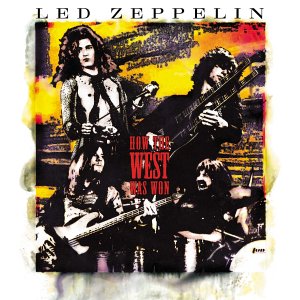
Led Zeppelin 13: How The West Was Won

Ever since The Song Remains The Same soundtrack was released, Jimmy Page had talked about possibly putting together a live album that he felt would better represent the band in concert. But for the longest time, there were only those 1973 performances, one song on Coda and one on the box set to demonstrate the band’s live show. Then, BBC Sessions filled in the gaps bigtime with recordings from 1969 and 1971.

Perhaps due to the daunting task of going through so many different tapes—as the plethora of bootlegs covering the band’s career certainly attests—Page decided to limit such an overview to filmed performances to make up a deluxe retrospective DVD package. While mixing the sound for those, he came across two shows recorded on the 1972 American tour, just after they’d finished recording Houses Of The Holy. The result was How The West Was Won.

While both shows are sourced over three CDs, the sequencing results in a much more enjoyable listening experience than The Song Remains The Same had. Starting with “LA Drone” as a kind of fanfare, the band kicks into “Immigrant Song” and doesn’t let up. “Stairway To Heaven” hadn’t worn out its welcome yet, and the acoustic songs that close the first disc are both intimate and fun. The second disc is dominated by a mammoth “Dazed And Confused”, which includes substantial explorations of “Walter’s Walk” and “The Crunge”, and a lengthy “Moby Dick”. “Whole Lotta Love” with an R&B medley starts the third disc, but three shorter songs end the proceedings.

How The West Was Won is a wonderful album, and a very pleasant surprise, if sparsely packaged, but a nice surprise (along with the DVD, which is just as essential for fanatics). The band sounds in mostly good spirits throughout, and sound especially enthusiastic about the new songs that would eventually appear on Houses Of The Holy the following year. Best of all, Page and Bonham had yet to be debilitated by the drugs and alcohol that affected later tours. If this is the only archival live recording Page will authorize, it will do just fine. (When the album was remastered and re-released 15 years later following the studio album expansions, two minutes of “Hello Mary Lou” from the “Whole Lotta Love” medley had been excised, likely because the historically stingy Page didn’t want to pay royalties.)

Led Zeppelin How The West Was Won (2003)—4

Friday, January 21, 2011

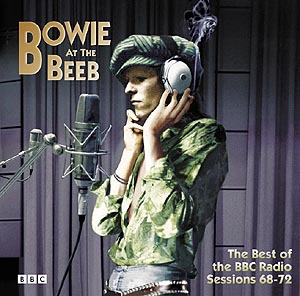
David Bowie 31: Bowie At The Beeb and All Saints

As many artists had seen their old BBC Radio performances repackaged for consumers throughout the ‘90s, Bowie was an obvious candidate for similar treatment, having made several appearances on the station on his way up to discovering himself. A sampler appeared earlier in the decade (right around the time of various issues of the Santa Monica radio simulcast from 1972), but it wasn’t until 2000 when the real thing appeared.

Bowie At The Beeb is an impressive collection, with two full discs offering selections from all his known (and available) radio appearances, starting from the pre-Ziggy era and moving all the way up to the heyday, with only a few omissions for contextual and timing’s sake. (There was a glitch on the first copies, which had the same version of “Ziggy Stardust” included twice; the label thoughtfully sent a single-track CD with the correct version to anyone who e-mailed a request for one.) If anything, it may give people reason to seek out some of those early albums, as well as exposing such early rarities as “Let Me Sleep Beside You”, “Karma Man”, and “In The Heat Of The Morning”. All of the first disc has since been surpassed by more complete recordings included in later archival sets, but that was two decades away.

In addition, most of an excellent fan-club performance from 2000 was included as a bonus of sorts in the set’s initial release. With his crackerjack band, here abetted by Earl Slick, helping cover his entire career, and even including some odd choices as “This Is Not America” and “Absolute Beginners”, it puts his work in a new light, even while still promoting ‘hours…’ (It’s also a mildly different set from the set from the two-hour show he performed two days earlier at the Glastonbury Festival, which was released in 2018. He laid on the Cockney accent thick for the crowd, despite a professed bout of laryngitis, and Earl Slick was at this show too, so we get even more material from Station To Station.)

Bowie also took the opportunity of a new century to look back in another way. Having already marketed separate hits collections roughly covering the periods previously summarized by the Changes albums, his more obscure instrumental work was highlighted on All Saints. This interesting idea stemmed from a Christmas gift the man himself gave to friends a few years earlier; while that was a two-disc set, the official version collected the key tracks from Low and “Heroes”, along with surprises from The Buddha Of Suburbia, bonus tracks from the Berlin era, and even one of the movements from the Low Symphony as interpreted by Philip Glass. The result was a disc full of background music, and that’s meant in a good way.

David Bowie Bowie At The Beeb (2000)—3½
David Bowie
All Saints (2001)—4
David Bowie
Glastonbury 2000 (2018)—3

Wednesday, January 19, 2011

Robyn Hitchcock 13: You & Oblivion

The Egyptians quietly disbanded following the tour supporting Respect. Something of a farewell snuck out as The Kershaw Sessions, a collection of performances for BBC Radio going back to the mid-‘80s. Some of these tunes are pleasant variations on the album versions, and many of the later ones incorporate the “acoustic techno” format of the ‘90s. Two unreleased covers—Bob Dylan’s “Open The Door, Homer” and an a cappella “Banana Boat Song”—plus the extended live intro on “Madonna Of The Wasps” make it nice to have.

Then, in 1995, Rhino embarked upon a daring program reissuing all of Robyn’s pre-A&M albums (plus Eye), fleshed out with bonus tracks, remixes and liner notes. In addition to cleaning up what had become an unwieldy catalog spread across various labels and editions, the most exciting and enduring development out of the reissue series was You & Oblivion, which presents 22 generally unknown songs, recorded mostly solo and acoustic, some as demos and some not, in the early to mid-‘80s. It doesn’t have a green cover, but it might as well, seeing as it fits alongside I Often Dream Of Trains and Eye for pleasant listening.

“You’ve Got” starts nice, with great lyrics, as does “Don’t You”. “Birdshead”, which had been heard previously as a live B-side, has Peter Buck’s guitar, while “She Reached For A Light” basically an experiment to write a song with one chord. “Victorian Squid” borders on hilarious, yet “Captain Dry” would be better presented as “Clean Steve”. “Mr. Rock ‘N’ Roll” has a foreboding melody surpassed by the lovely “August Hair”. “Take Your Knife Out Of My Back” is another in a long line of great titles, only this time the song lives up to it. “Surgery” was available occasionally as a magazine flexi-disc, but it still sounds unfinished.

While not credited as such “Polly On The Shore” is an old sea chantey, which finds a close relative in “Fiend Before The Shrine” two tracks later. Meanwhile, “Aether” starts a sequence of several weaker songs, though there’s a good line in “Keeping Still” about chickens wanting human soup, and the gorgeous “September Cones” and “Ghost Ship” (continuing the sea theme, and previously heard as a snippet on Globe Of Frogs) are two absolute gems.

Despite running out of steam at the end, there’s a plethora of riches here, all of which sound contemporary to each other, though that subliminal child’s voice, mixed low betwixt the tracks, can be unsettling at times.

When Yep Roc picked up the catalog twelve years later, You & Oblivion was not included, and all but nine of the tracks were farmed out as bonus tracks to various albums, making it something of a deleted collector’s item. Which was pretty much the opposite of what Rhino had tried to do with their reissue campaign.

Robyn Hitchcock and the Egyptians The Kershaw Sessions (1994)—3½
Robyn Hitchcock
You & Oblivion (1995)—4
Current CD availability: none

Monday, January 17, 2011

Tom Waits 4: Small Change

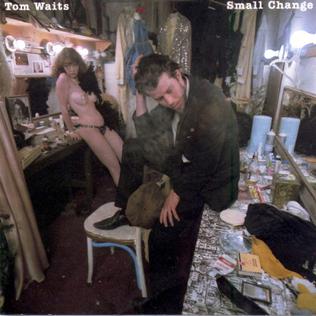
His confidence bolstered by a European tour and increasing accolades, the next Tom Waits album proved to be his best yet. Small Change continued the barroom feel, with a healthy supply of Beat references and, for the first time, full orchestration on some tracks.

Immediately, the sound on the opening track is a departure. “Tom Traubert’s Blues” is less commonly known by its subtitle (“Four Sheets To The Wind In Copenhagen”) than its chorus, which borrows from the Australian standard “Waltzing Matilda”. The song, with its gorgeous string accompaniment, wanders through vivid imagery thanks to the poetry of the lyrics. “Step Right Up” is a trip in the other direction, its content spat out like the late-night TV commercials from which the words are derived. It’s back to the bar for “Jitterbug Boy”, a rambling monologue of a braggart, before “I Wish I Was In New Orleans” brings back the dreamer from “San Diego Serenade”. All of the sides styles collide in the fabulous “The Piano Has Been Drinking (Not Me)”, juxtaposing the puns from Nighthawks At The Diner with a genius backing.

Side two mirrors the first slightly, beginning with the tearjerking “Invitation To The Blues”. Part conversation and part observation, it’s a perfect portrait of a loser falling in love with a waitress. Speaking of which, “Pasties And A G-String” follows the narrator out of the bar next door to the strip club, embodied by the type depicted on the album cover. Suitably rebuffed, he returns to the rail to boast of a “Bad Liver And A Broken Heart”, in between an odd quote from “As Time Goes By”, and “The One That Got Away” is lamented by a finger-snapping hipster. A murder scene leads to a vivid description of the surrounding neighborhood in the title track, but rather than end on such a down note, the hopeful “I Can’t Wait To Get Off Work” shows another side of the type of person who might be up in the pre-dawn hours.

The songs on Small Change may cover a lot of the same territory, but Waits makes up for it with enough variety in the arrangements. In the process he set himself a standard that would be tough to maintain for a career, but for now, he’d recorded his best album.

Tom Waits Small Change (1976)—4

Friday, January 14, 2011

U2 13: All That You Can’t Leave Behind

After a decade of dance experiments, All That You Can’t Leave Behind was hailed upon release for being something of a return to U2’s straight rock sound. That should have been a good thing for longtime fans tired of sifting through remixes in search of a decent song. But while the album definitely sounded like the U2 of old, unfortunately it sounds a little too much like the U2 of old.

The boys are still masters of track sequencing, starting off with “Beautiful Day”, an okay single that somehow got swept up into post-9/11 patriotism. Dangling preposition aside, “Stuck In A Moment You Can’t Get Out Of” is up there with their best, something of a “Don’t Give Up” for the new millennium. “Elevation” is a fun one, even though the delivery of the words (“a MOLE/digging in a HOLE”) reminds us of an old Bloom County strip we’ll link to as soon as we can find it online. “Walk On” and “Kite” reach for that big stadium sound, the former another statement of support, and the latter an acknowledgement of the passage of time.

They’ve often frontloaded their albums, and the rest of this one pretty much plummets from here. “In A Little While” takes a Hendrixian riff, the type Pearl Jam would use, and stretches it into little more than a demo. “Wild Honey” is another departure, a mostly acoustic duet for Bono and The Edge until it builds into something bigger. “Peace On Earth” might have made it as a Christmas song—there’s even a tree icon next to the song in the booklet—but the lyrics are too pointedly connected to a genocide to be a radio staple. Similarly, “When I Look At The World” is just too sappy, though it is catchy. “New York” should have been left to Lou Reed, while “Grace”, the quiet finale, sounds more like a Daniel Lanois track (after all, he coproduced the album with Brian Eno) than U2 proper. (Depending on the country, “The Ground Beneath Her Feet”, a collaboration with Daniel Lanois and Salman Rushdie for a movie soundtrack, was included as a bonus track; here in the U.S., the less-than-riveting B-side “Summer Rain” was included on its own disc in a “special edition”.)

Even if the boys were “normal” again, there’s still plenty of posing in everything that comes out of Bono’s mouth. His voice sounds weary on most of the tracks, and the lyrics just aren’t there. Maybe they were tired of trying to turn the music world on its ear. They certainly can’t be blamed for that. All That You Can’t Leave Behind fills the prescription just fine, and was rewarded with steady sales, sellout shows, multiple Grammy® awards, and raves from fans. But in the end, the album is just plain ordinary, and that’s something we never expected to say about U2.

The speed with which the new century flew by was rammed home two decades later with the release of three 20th anniversary editions. “The Ground Beneath Her Feet” was added to the main disc as the standard closer, completely throwing off the original mood; the Deluxe Edition added a disc of audio selections from their Elevation 2001: Live From Boston DVD; the Super Deluxe Edition spread the entire concert across two CDs, and added one disc of B-sides and (mostly) previously released outtakes plus another of remixes. For those wishing to carry it all in a suitcase as suggested by the icon used for the artwork, the vinyl version contained all that on eleven records.

Again, the Super Deluxe Edition was the only way to get the album’s worth of leftovers, which are actually not bad on their own, particularly when prefaced by “The Ground Beneath Her Feet”. “Stateless” is a song from the same soundtrack, and “Levitate” has mild electronica touches, and that’s probably why it was, well, left behind. At the other end of the sonic spectrum, “Summer Rain” and “Flower Child” are unfinished-sounding strums, but the acoustic mix of “Stuck In A Moment” still offers power. “Always” is basically the first draft of “Beautiful Day”, so it’s still catchy but not yet anthemic, just as “Love You Like Mad” tries too hard (and yes, the guitars sound like old Who) and “Big Girls Are Best” is just plain trashy. Then there’s “Don’t Take Your Guns To Town”, recorded for a Johnny Cash tribute but sounding like a stripped-down mix of “The Playboy Mansion” from the last album. These songs aren’t quite as album-worthy as the Joshua Tree B-sides, but they’re still nice to hear.

U2 All That You Can’t Leave Behind (2000)—3
2020 20th Anniversary Deluxe Edition: same as 2000, plus 14 extra tracks (Super Deluxe Edition adds another 26 tracks)
Wednesday, January 12, 2011

Pink Floyd 14: The Final Cut

Roger’s irritation over the way the film version of The Wall came out was soon trumped by his rage over the Falklands War. The pent-up emotions he had reliving his father’s death in World War II on the big screen had already spilled into the new music he’d provided for the film, which then expanded into a song cycle recorded and released as the next Pink Floyd album.

Or was it? The Final Cut is basically a Waters solo album featuring contributions by David Gilmour and Nick Mason, Rick Wright having been jettisoned as soon as they finished the Wall tour. Much of the music is slow and mournful, as one might expect from a requiem, Roger’s cutting vocals often supported simply by piano, an acoustic guitar and the National Philharmonic Orchestra. But there’s enough Gilmour on guitar scattered throughout to remind you whose name is on the spine of the jacket.

As happened with The Wall, the album uses lots of sound effects to help illustrate the story somewhat. “The Post War Dream” rumbles in over the news on a radio broadcast to indict “Maggie” Thatcher for both starting the war as well as allowing British warships to be built in Japan instead of at home. (Clearly, there’s no pleasing this guy.) “Your Possible Pasts”, “One Of The Few” and “The Hero’s Return” are sung from the point of view of the schoolmaster in The Wall, but that isn’t exactly clear until you’ve seen the promo clips for the album. Once that starts to sink in, it’s easier to appreciate “The Gunner’s Dream”, which documents the final thoughts of a soldier as he’s blown out of the sky. As the last notes fade and follow us into the pub round the corner, “Paranoid Eyes” only underscores the lingering pain.

An excellent demonstration of the sonic details on display comes in “Get Your Filthy Hands Off My Desert”, followed by a near-nursery rhyme, which leads into the horror of “The Fletcher Memorial Home”. In something of a twist on Dylan’s “Masters Of War”, Roger imagines all these corrupt leaders being housed in an old-folks’ home, before subjecting them to Hitler’s Final Solution. Besides being one of the more memorable songs on the album, Gilmour’s solo is suitably wrenching. “Southampton Dock” provides something of an interlude into the title track, wherein Roger talks directly to the audience (or his shrink, as the video would suggest) and suggests that tearing down the wall on the last album didn’t solve any of his neuroses. Then, quite rudely, “Not Now John” interrupts with Gilmour’s only vocal on the album, a hard Floydian rocker from the point of view of factory workers, with wonderfully out-of-place female backing vocals and ending with another Waters list. The comparatively pastoral “Two Suns In The Sunset” imagines the end coming in the form of a nuclear explosion.

The Final Cut is not easy listening in the slightest, dripping as it does with anger and tears, but it would arguably be the last time Roger came up with a concept so accessible while being so personal. Over time the strengths of the album emerge, as do the recurring musical themes that tie the songs together. And even if the other two guys in the band felt like afterthoughts, they certainly gave it their all.

While some may consider it tampering, the current CD version includes “When The Tigers Broke Free” from the film of The Wall inserted in the middle of what used to be side one. The song had finally appeared on the Echoes compilation, but its inclusion on The Final Cut is fitting, as it details the actual events surrounding the death of Roger’s “Daddy” on the beaches of Anzio. While very slow, the lyrics are as matter-of-fact as they are heartbreaking.

Pink Floyd The Final Cut (1983)—4
2004 CD rerelease: same as 1983, plus 1 extra track