Wednesday, February 9, 2011

David Bowie 32: Heathen

Another label change set up Bowie’s next album, but the big news on Heathen was the return to the fold of producer/creative foil Tony Visconti. Sure enough, the album was his strongest in years. Much of the content seemed to be influenced by the aftermath of 9/11, though Bowie insisted most of it was in the can before that. (Indeed, some was even left over from sessions for the aborted Toy project, which was to present new compositions alongside rerecorded songs he originally did back in the pre-“Space Oddity” days.)

Overall, the sound mixes nods to his Berlin era with a cold, claustrophobic atmosphere and ruminations on a world in turmoil. “Sunday” begins the album with a spooky synth and a slow vocal, reporting that “nothing remains” and “everything has changed”. Similarly, “5:15 The Angels Have Come” and “Heathen (The Rays)” follow each narrator through a city where the trains are late and the sky is made of glass. The demand for “A Better Future” gets an edge when you consider the song is sung from the point of view of his young daughter.

“Slip Away” is an odd tribute of sorts to the obscure cult favorite, the Uncle Floyd TV show, with a gorgeous chorus and arrangement to match, complete with Stylophone. “Slow Burn” turns up the volume, boasting a searing lead guitar literally phoned in by Pete Townshend. The success of “Afraid” and “I Would Be Your Slave” depends on our mood, while “Everyone Says ‘Hi’” revives the best elements of his mid-‘80s pop sound; we especially like the nod to “Absolute Beginners” on one of the bridges.

Of course, it wouldn’t be a Bowie album without weird covers, and Heathen offers three: “Cactus” by the Pixies, “I’ve Been Waiting For You” from the first Neil Young album, and “I Took A Trip On A Gemini Spaceship” is his long overdue nod to the Legendary Stardust Cowboy.

Heathen was a very pleasant surprise, and easily his most consistent collection since the first Tin Machine album. He successfully combined some of his recent “sounds”, from pensive to electronic, and it looked like the 21st century was going to be another fruitful period for him.

The first version came with a strange little bonus disc, with two contemporary remixes and two re-recordings—“Panic In Detroit” from 1979, which had already been on Ryko’s Lodger reissue, and “Conversation Piece”, an excellent early B-side redone during the Toy sessions. The SACD version, released a few months later, had marginally extended mixes of some of the songs, plus “Conversation Piece” and three other extras. Five years later, the expanded double CD included all those, plus there more songs from the Toy sessions. These curios don’t add or subtract from the main program at all.

David Bowie Heathen (2002)—3½
2007 limited 2CD edition: same as 2002, plus 10 extra tracks

Monday, February 7, 2011

Bob Dylan 51: The Witmark Demos

Perhaps not to follow any release pattern except to accompany the box set of the mono versions of his albums, the next Bootleg Series came from a specific yet fruitful early period in Bob’s career. Recorded largely as publishing demos to ensure proper royalty payments, The Witmark Demos presents a variety of Dylan originals played simply to get them copyrighted. And since he was coming out with new material faster than he could put them on his albums, this enabled other singers—fellow folkies, mostly—to borrow an otherwise unknown Dylan composition for their own releases.

With the exception of the handful of tracks that had appeared on previous Bootleg Series volumes, these are not merely carbon copies of songs on his albums. Words change and arrangements are simpler, to the point where they could be considered alternate takes. He throws in the occasional aside and isn’t careful about precise tuning, as these are performances, not sessions, and certainly up until the last 1964 recordings, were merely “official” versions of the latest additions to his coffeehouse setlists.

Obviously not everything was recorded for the express purpose of having people cover them. A song like “I Shall Be Free” (different from the version heard on Freewheelin’) was most likely laid down so that no other basket-passer could take the song and make it his or her own. (Bob knew all too well how easy it was to appropriate somebody else’s song.) “Boots Of Spanish Leather” shows how close he was to its inspiration, and “Girl From The North Country”, which immediately follows, demonstrates how he was able to dilute his true feelings into two different songs based on the same borrowed melody.

Many of these tracks had indeed snuck out as bootlegs over the years, so it’s nice to have some of them placed in the canon within context. But alternate takes of familiar songs aren’t enough to guarantee sales, so the inclusion of fifteen songs making their first official debut makes The Witmark Demos even more exciting. A few of these fall into the “protest” category, such as “The Death Of Emmett Till”, but it’s always interesting to hear “Tomorrow Is A Long Time” and “I’ll Keep It With Mine”, two songs that were never really captured in the studio to the composer’s taste. (Or maybe he was too close to them.) Even “Baby Let Me Follow You Down”, which he didn’t write, had evolved from its original recording to include new verses. One song that stands out is “Gypsy Lou”, simply because it’s the type of thing he’d already left behind. It could be that by recording it, he was hoping for some of that publishing bling. Which only confirms what people have said all along: he’s a pretty smart guy.

Bob Dylan The Witmark Demos: 1962-1964—The Bootleg Series Vol. 9 (2010)—3½

Friday, February 4, 2011

U2 14: Best Of 1990-2000

Following their ongoing success in the new century, The Best Of 1990-2000 did its best to bring the U2 story up to date. This time, the hits were a little less obvious, with only four real albums from which to choose. No matter the context, each of the hits from Achtung Baby still soar, alongside such other favorites as “Stay”, “Beautiful Day”, and “Stuck In A Moment”.

As part of their continual desire to remix everything in multiples, three tracks from Pop appear in new and unnecessary albeit decent mixes. Even “Numb” was updated for some reason, in a mix that brings Larry’s backing vocals up front. The album also collected such strays as “Hold Me, Thrill Me, Kiss Me, Kill Me” from a Batman movie, “The Hands That Built America” from a recent Scorsese film, and an edit of the majestic “Miss Sarajevo” from the Passengers project. And of course, there was the token “new song”, the underwhelming “Electrical Storm”, which appeared in two mixes. Put it this way: it’s no “Sweetest Thing”, in either case, but if forced to choose, we’d go with the straighter rock version. We’re not sure what “The First Time” from Zooropa is doing on here; it wasn’t a single, but it’s a nice enough song. Maybe they just wanted it to mirror the similar sounding “All I Want Is You”, which closed the first volume. (In the UK and Japan, “The Fly” ended the disc, so there goes that theory.)

As with its predecessor, a limited edition bonus disc of B-sides was included (along with a 4-track DVD promoting the companion video compilation) with initial pressings. Here the pool of possibilities was even stranger to navigate, with all the different mixes that had filled up so many CD singles since Achtung Baby. While such unique songs as “Lady With The Spinning Head”, “Salomé”, and “North And South Of The River” were welcome, whether we needed extended, occasionally unrecognizable versions of “Lemon”, “Discotheque”, “Mysterious Ways”—songs already on the main disc—and other dancefloor clearers was up to personal taste. (And the techno-rap version of “Happiness Is A Warm Gun”? From whom were they stealing that back?) Meanwhile, the Passengers track and eventual B-side “Your Blue Room” was included, but “Slow Dancing” and such one-offs as “Night And Day” and Bono’s crazy duet with Frank Sinatra on “I’ve Got You Under My Skin” were left aside. Even more mysterious was the absence of “Holy Joe”, a B-side that got lots of airings on the Pop promotional tour, in either of its two known mixes. Perhaps these will appear on any number of Deluxe Editions someday.

U2 The Best Of 1990-2000 (2002)—4

Wednesday, February 2, 2011

Paul McCartney 29: Memory Almost Full

In one of his fastest turnarounds in decades, Paul recorded another original classical piece, the churchy Ecce Cor Meum, then boldly left Capitol Records for the first time since 1979, choosing to let Starbucks promote his latest release worldwide. Memory Almost Full is an old/new affair of sorts, being that it completed some tracks he’d started before recording what turned out to be 2005’s excellent Chaos And Creation In The Backyard. The result isn’t bad, but it follows his tradition of including a few cringe-causing moments amidst some new potential classics.

“Dance Tonight” could be one of the latter, a simple happy song he wrote reportedly while watching his young daughter enjoy the noodling on his new mandolin. A little more elaborate is “Ever Present Past”, which always seems to be on the verge of saying something but never quite does. “See Your Sunshine” hearkens back to his early ‘80s pop sound, and for that alone, it seems more like a song for Linda than his current wife, no matter what he insists. A mournful piece for strings brackets “Only Mama Knows”, which seems mostly an excuse to rock and work the word “godforsaken” into the lyrics as much as possible. The gloomy “You Tell Me” acknowledges his age, as will another track to be discussed. “Mr. Bellamy” is downright odd, sung from the points of view of a man (or a cat?) on a ledge and the people watching below. The final minute of the track is given over to a wandering pastiche of piano, acoustic, and clarinet. “Gratitude” has a forced R&B delivery that isn’t very convincing.

Much was made at the time of the suite of songs—not snippets—that, while written and recorded as separate entities, were sequenced in the style of Abbey Road but come off more like those on Red Rose Speedway. (Unlike most of the album, which he played all by himself, four of the five were recorded with his touring band.) “Vintage Clothes” has a nice Beach Boys break in the middle. “That Was Me” is a look back that unfortunately comes off as a little pompous, but it’s replaced by the nicer “Feet In The Clouds”. Suddenly, however, “House Of Wax” revives the classic Wings sound for something of a detour into a horror movie. But it’s “The End Of The End” that’s the most striking song here, an actual rumination on his own funeral, beautiful and sad at the same time. “Nod Your Head” tries to diffuse the gloom with a loud, throwaway track. What most people didn’t realize was that, in the spirit of “Why Don’t We Do It In The Road?” via “Please Please Me”, it’s not so much a song as a blatant plea for oral sex.

Memory Almost Full got decent reviews, and the Starbucks connection helped it sell by the bucketful, but neither he nor his new record company were kind to the fans lining up to buy it. It was first issued as a single CD, and also in a deluxe package that wouldn’t fit alongside the other McCartney CDs in your rack and included a second disc with three extra songs—an instrumental, an actual song, and a mishmash that predicted his next move somewhat—and an interview about the album. Then, just in time for Xmas, a “special edition” in a standard-size case included the album plus the three extra songs on a CD, plus a DVD with video clips and whatnot. Had they just gone with that version, everything would have been fine.

Paul McCartney Memory Almost Full (2007)—3½

Monday, January 31, 2011

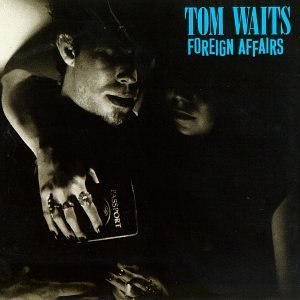
Tom Waits 5: Foreign Affairs

Tom Waits’ capabilities as a storyteller continued on Foreign Affairs, which follows many of the approaches of Small Change. Drunken stumbles alternate with sweet melodies and truly unique turns of phrase.

The simple “Cinny’s Waltz” is a nice instrumental before the barroom lament for “Muriel”. But whatever he felt for that girl doesn’t keep him from hitting on Bette Midler throughout “I Never Talk To Strangers”. The duet goes flat a few times, but it’s still a masterful stream of conversation. Something of a detour occurs with the evocation of On The Road in “Jack & Neal”, its story swaggering into a chorus from “California Here I Come”. But after all that he’s still stuck in the bar, raising a glass alongside “A Sight For Sore Eyes” who just walked in.

The truly cinematic “Potter’s Field” is a nearly nine-minute monologue scored like a movie, complete with dramatic pauses and crescendos. Not the easiest of listening, but truly fascinating. Even more successful is “Burma Shave”, a tale of two people escaping nowhere only to find their common doom, with a simple bluesy piano punctuated only at the end by a startling trumpet. The mood is unfortunately broken by “Barber Shop”, one of the few Waits songs that seems to take place in daylight. Instead of the bar, here the old-timers meet for a haircut. The closing near title track, however, is one of his greatest pieces of poetry, bearing little of the weight of slang, but evoking the wonder of wanderlust.

Ultimately, Foreign Affairs finds Waits beginning to repeat himself, just as it can be tiring to listen to the same old drunk. But such experiments as “Potter’s Field” and “Burma Shave” show that he had the potential to develop, and maybe he was meant to be in movies after all.

Tom Waits Foreign Affairs (1977)—3

Friday, January 28, 2011

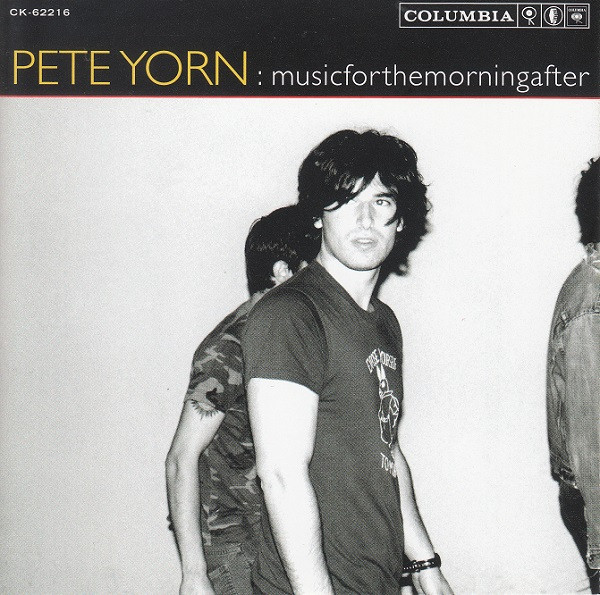
Pete Yorn: Music For The Morning After

Once college alternative stopped being either, it became harder to pigeonhole different bands by a catch-all label. So how can we describe Pete Yorn, a handsome singer-songwriter from New Jersey who doesn’t overtly sound like Bruce Springsteen (or John Bongiovi, for that matter)? It might be mainstream rock, if that existed anymore. He’s not whiny or histrionic enough to be considered emo. In another time he might have been considered to be folk-rock, with a pendulum that swings pretty deep into either camp.

Whatever you want to call him, there’s no denying that Musicforthemorningafter, his debut album, is damn catchy. Largely a one-man band affair, it was recorded with a handful of friends swapping the guitars, basses, drums and keyboards, but without sounding like a homemade job. Real drums mix with programmed sounds for a full spectrum of sound, and each of the tracks is as unique as the typefaces used for the lyrics of each of the songs.

The first three tracks alone deliver a solid beginning: the chugging “Life On A Chain”, “Strange Condition”, which goes through an early key modulation without rushing, and “Just Another” with its achy chorus guaranteed to make the girls swoon. Among the other highlights are the woozy “Lose You”, “On Your Side” (popular for scene changes on any number of MTV reality shows) and the closing “Simonize”, which manages to channel the ghost of Chris Bell, predicting his cover of “I Am The Cosmos” by eight years.

And those are the best ones—we haven’t even mentioned “Murray” or “For Nancy (‘Cos It Already Is)” or “June”. All the tunes are toe-tappingly memorable, with lyrics alternately obtuse and direct, so that to best demonstrate the appeal of this album, you’ll most likely reach for the play button once the silence kicks in at the CD’s end. But of course, there’s a hidden track, so if you’re not careful you could miss it. Or not.

As good as Musicforthemorningafter is, it’s possible he put all his best eggs in that first basket. 2003’s Day I Forgot had its moments, but the third part of the so-called trilogy, Nightcrawler, had nothing to offer outside a faithful cover of Warren Zevon’s “Splendid Isolation”. His subsequent albums have been largely ignored in favor of the collaboration with Scarlett Johansson, who’s a lot easier on the eyes than she is the ears.

A 10th Anniversary Edition of Musicforthemorningafter was released in 2011, with a second disc full of a radio performance and some rarities. These did not include the four covers (two by Springsteen) and the “rock version” of “Strange Condition” over dubbed by Peter Buck and Scott McCaughey included on a limited edition expansion of the album back in the day; they can, however, be heard on the streaming version. But as long as the original can be found in your local used CD bin, there’s really no need to go all out.

Pete Yorn Musicforthemorningafter (2001)—4

Thursday, January 27, 2011

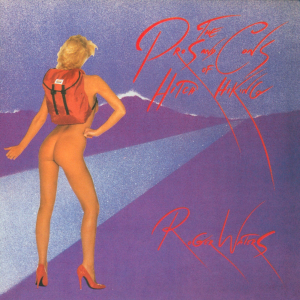
Roger Waters 1: The Pros And Cons Of Hitch Hiking

Immediately after unleashing The Final Cut, Roger Waters went back to the studio to record another, even more impenetrable song cycle, originally concocted back before The Wall. What eventually emerged as The Pros And Cons Of Hitch Hiking had been rejected by the other Floyds as “too personal”, and no matter how many times one listens to it, they were right.

At least the concept is intriguing: following the dream/nightmares of a man in the pre-dawn hours, presented in real time, and each of the songs is time-stamped. For roughly 42 minutes Roger muses over the same I-iv motif in 12/8 meter; sound effects and dialogue snippets abound, and if there’s a story in here, it’s not linear. He’s driving with his wife, they pick up a pair of hitchhikers and he attempts intercourse with one of them. His guilt is repaid by an attack by Arab terrorists who assault his wife, so he imagines himself away at Oktoberfest. He makes an attempt to save his marriage by moving out to the country, which soon goes awry. Then poof! He himself is a hitchhiker, eventually realizes that his problems aren’t that different from the rest of humanity, feels better, wakes up scared and is relieved to find his wife sleeping by his side.

With only a few exceptions, it’s one long song. Rolling Stone’s Kurt Loder said it best: “You could count the actual melodies here on Mickey Mouse’s fingers.” The ones that stand out are recycled from “Mother”, “The Final Cut”, “In The Flesh” and “The Fletcher Memorial Home”, and the effect isn’t so much clever self-reference but laziness and lack of inspiration. “Sexual Revolution” attempts to provide a beat, but it turns out this was a Wall reject. He delivers “Go Fishing” so histrionically it’s no wonder she left him in the country. The title track is catchy, but the cryptic references to Yoko Ono, Dick Tracy and Shane only make it seem like another dream. The song everyone likes is “Every Stranger’s Eyes”, which is mostly one of his litany lists, but has enough of a decent backing to make it soar.

At least the album is “Floydian” in its presentation. He uses most of the supporting players from The Final Cut, with the key additions of Eric Clapton (for a Strat tone, and a thumb of the nose to David Gilmour) and David Sanborn, whose squawking sax underscores his discomfort anytime thinks get dark. He took Clapton on the road to present the album and key songs from his past in a multimedia extravaganza. But ultimately, The Pros And Cons Of Hitch Hiking is just plain uncomfortable, leaving the listener in a bad mood and likely to lash out at unsuspecting friends and family. And if anyone can explain what exactly those pros and cons are, we’d love to know.

Roger Waters The Pros And Cons Of Hitch Hiking (1984)—2