Monday, February 21, 2011

Rolling Stones 36: Stripped

Since they’d just finished another world tour, obviously it was time for another live Stones album. In a not entirely original move, they stayed away from a typical arena-rock souvenir, choosing instead to use tracks from smaller club dates and live-in-the-studio recordings. (Perhaps this way they could also get away with the occasional overdub?) Stripped—not exactly Unplugged, but a more ribald title—turned out to be a surprisingly good album, leaning as it does on rarer songs and more intimate performances.

The album is mixed in such a way that all the disparate sources blend into one. A certainly in-concert “Street Fighting Man” leads into a faithful cover of “Like A Rolling Stone”, complete with harp solos. In fact, Mick’s harp helps drive “Not Fade Away”, which isn’t all that different from when they’d recorded it thirty years earlier. “Shine A Light” gets a response from some crowd somewhere, with Chuck Leavell’s piano dancing over the acoustic guitars. “The Spider And The Fly” and “I’m Free” are unexpected trips back to Swinging London, while another version of “Wild Horses” provides a shift in dynamics.

The idea of an acoustic strum whilst visiting the past continues on “Let It Bleed” and “Dead Flowers”, while “Slipping Away” (sung by Keith, from Steel Wheels) is the album’s only recent cut. “Angie” is taken pretty straight, with canned strings supporting Mick’s lack of range. A trio of bluesy numbers closes the set: “Love In Vain” (complete with audio-verité false start), “Sweet Virginia” and the return of saxman Bobby Keys, and the album’s other new song, Willie Dixon’s “Little Baby”.

Stripped provides a nice diversion for both the live album genre and the Stones live album category, portraying these aging geezers as masters of their craft, who knew the value and importance of shutting up and playing in an industry where music was becoming more processed and easier to manipulate. That said, it’s not the type of album that would rise above any of their other recent work.

Of course, other live recordings of the era would find their way to CD singles around the world, causing much gnashing of teeth among collectors. But that’s nothing compared to the strange revival of the project two decades later. Totally Stripped was made available in a dizzying array of formats, beginning with a revised documentary packaged with a CD (or double-LP) compiled from three of the concerts, repeating only one track, but not the only song, from the original album. Deluxe editions tacked on those three concerts (Amsterdam, Paris, London) on DVD or Blu-ray. This time the emphasis is more on the intimacy of the shows rather than rare material, and certainly not “unplugged”. Therefore we get cool renditions of “Gimme Shelter”, “Midnight Rambler”, “I Go Wild”, “Miss You”, and even “Rip This Joint” with a false start. (Because this is the best place to mention it, this set was followed two years later by Voodoo Lounge Uncut, which expanded a previous VHS and DVD with a complete show from the first lengthy leg of the tour, with scintillating cameos by Robert Cray, Bo Diddley, and Whoopi Goldberg.)

The Rolling Stones Stripped (1995)—3
The Rolling Stones Totally Stripped (2016)—3

Friday, February 18, 2011

Paul McCartney 30: Electric Arguments

Maybe passing the magical age of 64 inspired Paul to keep striking whenever the iron got hot. Whatever the secret, he managed to release new albums at his fastest pace in years. But of course, there was a twist, since his newest one would be released under the Fireman guise, his occasional collaboration with producer Youth. Yet where Strawberries Oceans Ships Forest was an indulgent remix exercise and Rushes was an ambient trance experiment undertaken during Linda’s final weeks, Electric Arguments actually sounds like a McCartney album, for the simple reasons that it has songs—you know, with vocals and lyrics and everything. That alone makes it worthwhile, and certainly a keeper.

Best of all, he nicely stacks the songs at the top of the order. “Nothing Too Much Just Out Of Sight” begins with a sampled harp riff before crashing through in stop time with a sound that fans said recalled “Helter Skelter”. Whether or not he’s as angry as he sounds (most people pointed at his ex-wife) will probably never be known. The brief “Two Magpies” recalls “3 Legs” from Ram, on its way to the glorious “Sing The Changes”. “Travelling Light” is a Mellotron-heavy piece that floats for about four minutes before the “chorus” arrives, and it’s worth the wait.

The mood is interrupted by “Highway”, an overt attempt to rock, and the canned harmonica effect can start to get annoying at this point, but the layered guitars form a strong base. “Light From Your Lighthouse” is another quickie like “Two Magpies”, with a few lines borrowed from “Midnight Special”. While it only goes to a second chord during the choruses, “Sun Is Shining” is still incredibly catchy, and the celebratory “Dance ‘Til We’re High” sounds like one of the best ‘80s songs he could have written.

From there, much of the remaining half is more on the ambient (read: one chord) side, occasionally punctuated by a vocal. “Lifelong Passion” and “Is This Love?” both have mild Indian influences and don’t sound all that different to stand out that much, but at least there’s an attempt to pick up the tempo with “Lovers In A Dream” and “Universal Here, Everlasting Now”. And while “Don’t Stop Running” is listed as being ten minutes, it’s really only five, with three minutes of silence before another Enoesque segment rumbles in from outer space.

He could have very easily gotten away with calling Electric Arguments a McCartney album rather than hiding it behind the Fireman pseudonym. But this way, because we didn’t expect much, we were very impressed, much more so than we might have been otherwise.

The Fireman Electric Arguments (2008)—3½

Wednesday, February 16, 2011

Robert Plant 8: Sixty Six To Timbuktu

Dreamland got more critical acclaim than huge sales, but was enough of a hit (in Europe) for Robert to compile his first solo career retrospective. Sixty Six To Timbuktu was a two-CD set, the first concentrating on hits and near-hits, while the second compiled pre-fame tracks, soundtrack contributions, rarities and more.

The average listener would be happy enough with the first disc, except that it ignores Pictures Of Eleven completely, and only includes “Big Log” from The Principle Of Moments. That means no “Burning Down One Side” or “In The Mood”. But a whopping five cuts from Fate Of Nations and a few from Dreamland mingle nicely with the likes of “Sea Of Love”, “Tall Cool One” and “Ship Of Fools”. Obviously, he’s going more for feel than ego.

His detailed liner notes, affectionate to both his journey and everyone he met along the way, help illustrate the choices on the second disc. This isn’t a mopping-up of all his rarities—“Far Post” would have been a great inclusion, though “Dirt In A Hole” from the international versions of Dreamland is welcome—but it does cover a wide swath of sounds as suggested by the title. Beginning with a handful of pre-Zeppelin recordings, including covers of “You Better Run”, “For What It’s Worth” and “Hey Joe” (the latter two in a band with young John Bonham on drums), we get to hear the development of his voice. Then it jumps ahead to the ‘80s and the so-called Phil Collins era, with a few oldies recorded for soundtracks and the big thing of the ‘90s, the tribute album. A couple of the experiments that led up to his late-‘80s sound help add to the story, for better or worse. After getting rockabilly out of his system, he took these opportunities to explore his interest in world music and several tracks related to Moby Grape and/or Skip Spence.

This is the stuff that he’s really proud of, and you can tell by his delivery. The thing is, the man has such a great voice, you can almost forgive the dated experiments for things like “21 Years” or “Life Begin Again” with the Afro Celt Sound System, where it’s just him and a backing. A long way from the 18-year-old kid doing covers, and pointedly away from the guy in the women’s blouses singing with Led Zeppelin.

So Sixty Six To Timbuktu is hardly a hits collection, and destined to only be of interest to diehard fans. And with about two-and-a-half hours to take in, it’s unlikely that either disc will stay in the rotation more than, say, the albums that spawned some of the hits. (To drive that particular point home, the Nine Lives box set arrived a couple years later, collecting each of his solo albums, including The Honeydrippers EP, each with bonus tracks, as well a DVD.)

Robert Plant Sixty Six To Timbuktu (2003)—3

Monday, February 14, 2011

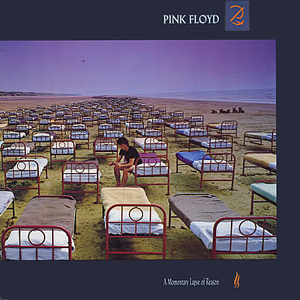
Pink Floyd 15: A Momentary Lapse Of Reason

While preparing his next solo album, Roger Waters declared that Pink Floyd was over, only to watch the bandmates he left behind carry on for another decade with two wildly successful albums and a handful of even more lucrative tours under the same moniker he tried to quash.

He had a point, of course, having felt that the brand had a high standard to upkeep, thanks to his megalomaniacal hold over the concepts driving their most recent albums and tours. But David Gilmour had ideas too, and once he hooked up with Nick Mason to help him record his third solo album, they decided that since Roger had “left the band”, in their view anyway, they were free to keep going. Knowing full well that a new Pink Floyd album would be a better, faster sell, they brought in Wall co-producer Bob Ezrin and orchestrated the conditional return of Rick Wright to help make it happen.

But putting a photo inside the gatefold and rejigging the credits aren’t enough to make A Momentary Lapse Of Reason sound anything like classic Floyd. Nick’s and Rick’s contributions are minimal, with the drums handled by the likes of Jim Keltner and Carmine Appice, and most of the keyboards having been finished by the time Rick came back. (Nick did tackle some of the sound effects, as he had on The Dark Side Of The Moon.)

The opening “Signs Of Life” is a spooky instrumental accompanied by the sound of a boat being rowed. Any calm is blasted away by the hit single “Learning To Fly”, supposedly an allegory for life without Roger but more specifically more literal than that. The canned percussion and keyboards sounded dated even for 1987. “The Dogs Of War” is even muddier, starting with a robotic beat and culminating in a sax solo, in an attempt to remind us of Dark Side and Wish You Were Here. The lyrics aren’t about to convert anyone to pacifism, either. “One Slip” has its moments, thanks to constantly rising melodies and changes, but the video game-like sounds at the beginning don’t fit at all, except to suggest a bomb about to go off. The concern for the state of the world on the slightly better “On The Turning Away” comes closest yet to the Floyd sound, but goes too far by including a mass choir on the final choruses.

The second side isn’t much better. “Yet Another Movie” takes forever to get going, and doesn’t do much when it does except give Gilmour a chance to solo over loud drums. The placeholder instrumental “Round And Around” pretty much does exactly that, but it would have been nicer to have more of that than the jarring “A New Machine”, which is split in two parts for unknown reasons. In the middle comes the lengthy instrumental “Terminal Frost”, which is fine until the saxophones take over. The big finale of “Sorrow” seems to have been written for the sole purpose of playing it in stadiums, starting from the opening guitar, which was actually recorded at top volume in one.

As Roger would ruefully point out, the title alone of A Momentary Lapse Of Reason illustrates what’s wrong with this album. Yet both Floyd-related albums sum up the blandness of the 1987 Classic Rock scene, soon to be overshadowed by hair metal. Perhaps if it had stayed a Gilmour solo album, David wouldn’t have felt so compelled to make it so overblown. But record-buyers didn’t care, and bought the album and concert seats by the millions, leading to the following year’s double live album Delicate Sound Of Thunder, which alternated new songs with predictable Floyd classics played blandly and impeccably by an eleven-piece band.

Some three decades later both albums were revisited as part of a box set, then each was released on its own with new artwork. (Naturally.) Momentary Lapse got a drastic remix, with alternate cover art and Rick Wright better represented in both the credits and the “band photo”, while Delicate Sound was not only remixed, but expanded to better represent an actual concert. Its cover was also rehauled. Their ratings below remain unchanged.

Pink Floyd A Momentary Lapse Of Reason (1987)—2
Pink Floyd
Delicate Sound Of Thunder (1988)—2
2020 Anniversary CD: “same” as 1988, plus 8 extra tracks

Sunday, February 13, 2011

Roger Waters 2: Radio K.A.O.S.

Roger’s biggest complaint (well, one of them, anyway) about the “new” Pink Floyd (read: performing without him) was the quality of the lyrics. While he was always good at coming up with overall concepts, just having a pile of words doesn’t make a song unless there’s music to match. Coming as it did just months before the reconstituted Floyd’s own album, his next Big Idea had barely a chance to compete anyway.

Radio K.A.O.S. tells the story of—surprise surprise!—a traumatized individual cut off from society, not unlike a certain deaf, dumb and blind kid or, say, a jaded rock star who’s built a symbolic wall around himself. This time out, the individual in question is a paraplegic vegetable, albeit one who can communicate via “radio waves” and a speech synthesizer. His concerns about his unemployed brother, Maggie Thatcher’s policies and the silenced Welsh Male Voice Choirs lead him to hack into certain computers to simulate a nuclear war (which you might recall from the movie War Games).

There are various themes running around here, though it’s impossible to take the album without the overarching story. What’s more, “Billy” converses in between the songs with legendary LA DJ Jim Ladd, turning the album into a faux-radio broadcast (much like another Who album). Sometimes the songs are sung by Billy, sometimes they’re about Billy.

The plot is spelled out in the album art, but there’s not enough within the songs to enhance it. That makes the last part of the album so anticlimactic: we know there’s “Four Minutes” until the world explodes, so the song of the same name is merely aural decoration, and not that frightening.

Enough complaints about the non-commerciality of The Pros And Cons Of Hitchhiking must’ve sunk in, because the majority of the songs are delivered in a slick but not wholly sterile contemporary rock style. He even includes the Japanese flute everyone was putting on their albums in those days. Unfortunately, while the songs have a wide variety of chord changes, he still didn’t write any melodies outside of a three-note range, rasping his list-style lyrics like Mark Knopfler with a head cold. “Who Needs Information” is one of the better songs; it’s just too bad that it’s shackled to the story. “Home” has a great middle eight that’s dwarfed by the lazy litany around it. “The Tide Is Turning” does offer something in the way of hope, and in the form of an actual song worth hearing again. (Written in the aftermath of Live Aid, it would also close his restaging of The Wall in Berlin following the unification of Germany.)

One does wonder how this stuff would possibly sound if played by his old band, or if it would be any better. Radio K.A.O.S. was supported by a tour, of course, that included some of the music left off the album for space considerations. One wonders why, since it seemed so important at the time, he hasn’t since bolstered the album with more of the music intended to tell the story. The album his nemeses put out may have been fake Floyd, but Roger’s insistence on working alone took him too far away from a sound that might have helped sell more than a handful of copies. He could only stew over the aftermath when his former partners did much better at the box office.

Roger Waters Radio K.A.O.S. (1987)—2

Saturday, February 12, 2011

Brian Eno 17: Drawn From Life

As might have been predicted from the largely action-devoid pieces he’d dabbled with throughout the ‘90s, Brian Eno wasn’t so much interested in composing music to be merely heard as he was creating the soundtrack to interactive experiences. But by the end of the decade the ambient brand had become an actual thing, with artists like Aphex Twin taking the lead on the charts, and others bringing in beats, of all things, for a new genre known as trip-hop.

His first album of the new century, then, was a collaboration with a German composer (deejay, actually) named J. Peter Schwalm, released on the same Astralwerks label that had been mining the territory he’d discovered. Eno and Schwalm had already collaborated on art installations, as well as an appearance at a museum in Bonn, Germany with Holger Czukay of Can in 1998, released a quarter-century later as Sushi. Roti. Reibekuchen.

But back to the album at hand. Some of the music on Drawn From Life recalls the recent “space jazz” of The Drop; at other times they could be more Music For Films. The percussion certainly keeps it contemporary. Regular collaborator Nell Catchpole adds violin here and there, while Laurie Anderson’s robotic voice fits right in on “Like Pictures #2”, as does somebody named Lynn Gerlach, credited with the disembodied contribution to “Rising Dust”. The original immersive intention of ambient music is reinforced on “Bloom”, where the sound of Eno’s young daughters at the kitchen table can be heard. (A mix without the voices is also included, but it’s redundant.)

Altogether, Drawn From Life is pleasant, mostly harmless, and not at all overbearing. It’s melodic in places, which makes it a little more interesting, but it’s hardly a buried treasure. If you want to chill out, chill out.

Brian Eno & J. Peter Schwalm Drawn From Life (2001)—3

Friday, February 11, 2011

Rolling Stones 35: Voodoo Lounge

In the five years since Steel Wheels the Stones had toured the world, lost their bass player and indulged in solo projects. They also signed with Virgin Records, who prepared to reissue their post-1971 albums with improved sound and better packaging. (For some reason they also issued the Jump Back compilation in late 1993 everywhere but America, which had to wait a decade for it. Basically an update of Rewind, it included some singles from Dirty Work and Steel Wheels, and—just in case you missed them—“Brown Sugar” and “Wild Horses”.)

When it came to recording their new album, the band turned to strangely dreadlocked producer Don Was to run the show. But while he is also a bass player, they contracted Darryl Jones to take the job onstage and on the album, with Charlie’s approval. Despite the changes, Voodoo Lounge still sounded more like a Stones album than Mick probably wanted.

Although recorded and marketed in the CD era, its 62-minute running time made it the equivalent of a double album, and while it’s no Exile On Main St., it still translates to four albeit short LP sides. The first part re-establishes them as a rock band, beginning with the smoky “Love Is Strong” and continuing through the trademark riffs of “You Got Me Rocking” and “Sparks Will Fly”. Then it’s something of a trip back in time, with four songs that echo past eras, but without sounding intentional or embarrassing. “The Worst” is a Keith country mumble, and “New Faces” features a prominent harpsichord. “Moon Is Up” pairs pounding drums with a Leslied guitar over some catchy changes. The big ballad is the piano-based “Out Of Tears”, which even has subtle strings and a nice slide solo from Ronnie.

Then it’s back to more basic, if silly rockers, starting with the archetypal “I Go Wild”. We can’t imagine Mick spent more than two minutes on the lyrics for “Brand New Car”, though the horns don’t get too much in the way. “Sweethearts Together” has a Tex-Mex feel that jars next to the James Brown-heavy “Suck On The Jugular”, which is the closest Mick gets to dancing. “Blinded By Rainbows” is another quiet one, juxtaposing lyrics that border on political with an ambiguous chorus, just like the similarly titled “Blinded By Love” from Steel Wheels, but “Baby Break It Down” happily brings back some midtempo rock. And since everybody loves Keith, he gets to warble another classic in “Thru And Thru”, recorded with just Darryl and Charlie. “Mean Disposition”, not included on the LP for some reason, returns us to the sound of the first three tracks.

While it runs out of steam towards the end, in Voodoo Lounge the Stones had an album that at least had some staying power. The production has not dated at all, and some of the songs still sound pretty good. A few songs could have been left off and they’d still have a decent set, but apparently that just wasn’t in the business plan.

Rolling Stones Voodoo Lounge (1994)—3½