Wednesday, June 15, 2011

Beach Boys 4: Little Deuce Coupe

Perhaps feeling he’d exhausted the songwriting potential surfing offered, Brian Wilson decided to focus more sharply on that other Californian teen sensation: cars. What’s more, their label had already used “Shut Down” as the title track of an album that repackaged “409” and other songs about cars by other bands, as well as Robert Mitchum. So they figured they might as well repackage themselves, which is why an album released only a month after their last one repeated four songs from previous albums, including the title track of this one. Confused yet?

That title track is still primo Beach Boys, but here it’s followed by “The Ballad Of Ole Betsy”, a maudlin plaint for an automobile on its way to the scrapyard. While it may not specifically mention cars, “Be True To Your School” is one of the better high school rah-rah songs despite itself; the music makes it more than the words, which come off as the rantings of “some loud braggart”. (Co-writer Roger Christian is responsible for most of the lyrics on the album, being Brian’s go-to car expert.) “Car Crazy Cutie” is dominated by Dion and the Belmonts-style do-run-runs, and while it’s about a girl for a change, it’s not any more exciting than “Cherry, Cherry Coupe”, which was a rewrite of an earlier track and piles on the technical references.

“Spirit Of America” was supposed to pay tribute to racecar driver Craig Breedlove and his eponymous jet-propelled trike; fittingly, Capitol Records used it a decade later as the title track of the less musically successful cash-in follow-up to Endless Summer. While three of the repeats may have been worthy of hearing again, we won’t say the same for “Our Car Club”, but “No-Go Showboat” shows Brian trying to work more complicated arrangements into their albums than the usual three chords. Somewhat along the same lines, “A Young Man Is Gone” puts new lyrics eulogizing James Dean—who, or course, died in a car crash—to the lush Four Freshman-style harmonies of “Their Hearts Were Full Of Spring”. Finally, “Custom Machine” is more grandstanding, again over some unexpected chord changes.

Musically and vocally, Little Deuce Coupe certainly stands out as competent, even influential. But with only twenty minutes’ worth of new material, it offered little except to push them as a novelty act. Luckily, it was paired with a better album for its two-fer CD, which also included the rerecorded single version of “Be True To Your School”, featuring a simulation of a high school marching band and even more cheerleader chants.

The Beach Boys Little Deuce Coupe (1963)—2
1990 CD reissue: same as 1963, plus All Summer Long album and 4 extra tracks

Monday, June 13, 2011

Joni Mitchell 7: Miles Of Aisles

A hit album enabled a concert tour with a dedicated road band, and Joni thought enough of the performances to make a double live album out of them. (It was, after all, the ‘70s.)

Most of Miles Of Aisles was recorded over four nights in L.A., to a crowd appreciative both of their old favorites along with some of the updated interpretations of same. For example, “You Turn Me On I’m A Radio” goes a little further to give her a chance to scat along with Robben Ford’s steel-like lead guitar. “Big Yellow Taxi” becomes contemporary pop, but while the lite-FM version of “Rainy Night House” may have sounded good in her head, it only makes us reach for the original piano-based track. And chances are CSNY’s hit arrangement of “Woodstock” influenced her heavier take here.

But some things should be left alone, and her performance of “Cactus Tree” is lovely. (She even delays the second line so people can finish clapping.) “Cold Blue Steel And Sweet Fire” and “Woman Of Heart And Mind” are also left close to the album versions. After commenting on the difference between artists and singers, “The Circle Game” tests the intimacy of the Universal Amphitheatre. Oddly, “People’s Parties” is the only song performed from Court And Spark, then her most recent album.

While she (wisely) doesn’t mess with Blue classics “A Case Of You” and “All I Want”, “Carey” is transformed into a fun-in-the-sun number that wouldn’t be out of place at a Jimmy Buffett show. “The Last Time I Saw Richard” gets only slightly embellished, but her impression of the waitress in the second verse is awkward.

There are two new songs to entice collectors, and she even provides lyrics her own hand. The moody “Jericho” would be rerecorded three albums down the road, but “Love Or Money” simply sounds too disco for these ears.

Miles Of Aisles remains a nice souvenir for those who like this particular Joni era—and lots of people do—but it’s not going to make our list of great live albums.


Joni Mitchell Miles Of Aisles (1974)—3

Friday, June 10, 2011

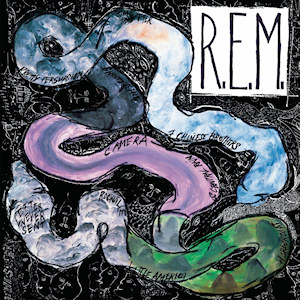
R.E.M. 2: Reckoning

Like all good bands hoping to overcome the sophomore jinx, R.E.M. went back to work with the same team (Mitch Easer and Don Dixon) who’d recorded Murmur. As striking as that album was, in many ways, Reckoning is better.

To further their mystique, they got a little artier, too; the sides were labeled “L” and “R”, the spine of the sleeve suggested listeners “file under water”, and the song titles played havoc with the traditions of capitalization. (For simplicity’s sake, we’ll not replicate those here.)

“Harborcoat” tumbles onto side one with strident guitar and Bill Berry’s trademark half-time drumming, effectively burying most of the words (up until Michael Stipe’s “react” spelling lesson). A simple riff drives “Seven Chinese Brothers”, which is only slightly related to the children’s story of a similar name. The closest thing to a hit single is “So. Central Rain”, better known by its unofficial subtitle “I’m Sorry”. It’s a beautiful melody, with a great vocal. If that wasn’t enough impetus, lots of college kids sought out Rickenbackers to better capture the intro of “Pretty Persuasion”. After four amazing rockers in a row, “Time After Time (AnnElise)” has a more baroque, almost medieval sound, providing more depth to the band.

It’s back to the rock on side two. “Second Guessing” has some clearer lyrics and nicely layered harmonies, while “Letter Never Sent” is a little less urgent. Then there’s a big switch to the moody “Camera”, a lengthy (for them) song of loss that rivals “Perfect Circle” for beauty. For the bulk of the verses, the bass is the backing, with slight color from a Leslie’d guitar, and for the chorus, hints of an organ help to confuse the listener whether Stipe is singing about a simple breakup or death. The simplest of guitar solos keeps the effect powerful. After another brief jam, then it’s a big switch to a country sound for “(Don’t Go Back To) Rockville”, another wonderful singalong (for the chorus anyway; the rest would be all guesswork for some time). “Little America” is a not-so-enigmatic reflection on the touring life, punctuated by the repeated reference to their manager (“Jefferson, I think we’re lost”).

Maybe it’s the economy of the tracks; Reckoning has ten while its predecessor had twelve. They do pack a lot of greatness into what’s there, coming in just under forty minutes. Or, it could be that the songs are just better. Whatever the reason, trying to justify a top rating isn’t always an easy thing to do. But Reckoning is simply a great album, ensuring that anything they did from here on out would be gobbled up by the fans. (As with Murmur, the 25th Anniversary Deluxe Edition includes a contemporary concert, with an eclectic setlist. It also restores the long-lost instrumental snippet that followed “Little America” on the original vinyl.)

R.E.M. Reckoning (1984)—5
2009 Deluxe Edition: same as 1984, plus 16 extra tracks

Wednesday, June 8, 2011

Joe Jackson 4: Jumpin’ Jive

As long as he was being ignored on the pop charts, Joe’s next move was to break away from his touring band (saving only Graham Maby) and put together a swing revue. Both band and album were christened Joe Jackson’s Jumpin’ Jive, and both album and setlist contained nothing but songs associated with the likes of Cab Calloway and Louis Jordan.

Despite his own prowess at the piano, he lets somebody else handle the keys, limiting himself to vibes, scatting and singing, although he does use a couple of cartoony voices on the parenthetical masterpieces “You Run Your Mouth (And I’ll Run My Business)” and “What’s The Use Of Getting Sober (When You’re Gonna Get Drunk Again)”. The three-man horn section doesn’t get too much in the way, and everyone gets to shout along.

Chances are that anyone but jazz aficionados would be familiar with any of these tunes, with the possible exception of “Tuxedo Junction”, the Glenn Miller standard, and “Is You Is Or Is You Ain’t My Baby”, which a certain generation would have beloved from a Tom & Jerry cartoon. “San Francisco Fan” is a nice slice of hi-de-ho, and if you don’t get a twitch of a smile at “Jack, You’re Dead” and “Five Guys Named Moe”, then there’s something wrong with you.

Okay, so maybe a swing album from an Angry Young Man wasn’t the best idea for the time, but once you get into the mood for it, Jumpin’ Jive is just plain fun. Amazingly, it even charted. (And, not that anyone was keeping score, but it also beat Elvis Costello’s country jaunt into stores by about six months.) Fast forward to the end of the century, when films like Swingers and The Brian Setzer Orchestra got the kids interested in the swing genre, the album was reissued with a new cover that aimed to be stylish but missed by using an anachronistic photo of the artiste. Nonetheless, it has remined essential.

Joe Jackson Joe Jackson’s Jumpin’ Jive (1981)—4

Monday, June 6, 2011

Lou Reed 1: Lou Reed

After a couple of years off, Lou Reed finally emerged with his first album after leaving the Velvet Underground. His self-titled debut was about as successful as his previous albums had been (read: barely a ripple) but becomes more interesting down the road when taken as part of the whole picture.

“I Can’t Stand It” has a nice fuzzy rhythm guitar, but the immediate switch to sensitive singer-songwriter in “Going Down” is jarring, considering how badly suited his voice is for the soft arrangement. Still, it’s a nice song, even if someone should have told the guitarist to take it easy. “Walk And Talk It” borrows the riff from “Brown Sugar” for another rocker. “Lisa Says” sounds like a VU song—because it was, having been played onstage throughout 1969. In addition to building nice dynamics for the bridge, it also features one of Lou’s occasional ragtime detours. A bigger departure happens in “Berlin”, which indeed sports something of a continental flair. It’s one of his more musically sophisticated tracks, and would itself become more important in a couple of years.

“I Love You” is fairly pedestrian, but “Wild Child” revives his interest in Dylanesque wordplay and wacky street characters. One of the more complicated songs is “Love Makes You Feel”, which goes through a variety of unresolved chords before settling into the incongruous chorus. “Ride Into The Sun” begins heavily before settling into a more straightforward backing. “Ocean” was always envisioned to be a magnum opus, with the rolling percussion and chords designed to emulate the sound of the sea. It’s unknown if it ever lived up to the vision in his head.

For all his conflicting emotions about “going commercial” for Loaded, it’s clear that he got over it by the time he finished recording Lou Reed. Every song features stylish female backing vocals, and very little of the album could be considered edgy. Even the presence of Steve Howe and Rick Wakeman in the band doesn’t venture far from the mainstream. In the long run the album should only be of interest to aficionados of the man’s career, considering that seven of the songs were recorded by the Velvets, and would eventually be available in multiple versions for archival study.

Lou Reed Lou Reed (1972)—2½

Friday, June 3, 2011

John Cale 3: The Academy In Peril

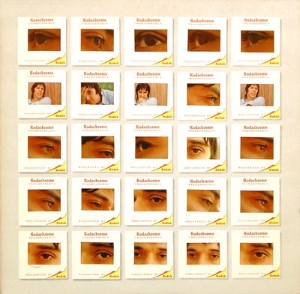
Somehow John Cale got a job as an A&R exec for the Reprise label, and his first album for them came loaded with lots of arty cachet. The very clever cut-out cover design via Andy Warhol is based on those good old Kodak slides, which don’t hint in the slightest at the predominantly classical contents, with only slight detours.

“The Philosopher” opens with a bluesy acoustic slide guitar while percussion thumps, an organ bleats, and horns blare, then a viola arrives. Ron Wood is thanked in the notes for the next track, but we suspect he’s playing the slide on this, because “Brahms” is simply solo piano in the classical style. Maybe he came up with the title? “Legs Larry At Television Centre” is named after the titular narrator, the drummer from the Bonzo Dog Band, here in the role of a director in an imaginary control room guiding the cameras supposedly filming the string quartet. Frankly, he’s distracting. The title track returns to the piano, starting quietly and eventually getting more frantic.

Layers of swirling piano make up the “Intro” to “Days Of Steam”, the most conventional track here, missing only a vocal and lyrics. The viola takes the melody, with a piano and vibraphone mostly doubling each other, before a recorder right out of “Ruby Tuesday” and a trumpet playing chromatic scales takes us out. The next “3 Orchestral Pieces” are banded as one track, and could be film soundtracks: “Faust” is lovely and haunting, “The Balance” begins regally and goes off-balance, and “Capt. Morgan’s Lament” is more stately. “King Harry” returns to the style of “The Philosopher” and “Days Of Steam” with percussion, plus demonic hissed vocals by Cale. Finally, “John Milton” is another piano piece with orchestral touches, and it’s quite moving.

One wonders how Reprise thought they were supposed to market this album. It’s not radio-friendly in the least, but when the guy whose name is on the cover works for the label, maybe that was enough for them. It’s tough to recommend The Academy In Peril, but for all its lovely moments, it still deserves to be heard. (The album was finally remastered in 2024, and included an extra track in “Temper”. This neo-classical piano exploration was an outtake from the sessions, and first emerged on an odd Warners sampler of punk and new wave music in 1980.)

John Cale The Academy In Peril (1972)—2½
2024 Version: same as 1972, plus 1 extra track

Wednesday, June 1, 2011

Joe Jackson 3: Beat Crazy

Barely a year after people first heard him on the radio, Joe was disillusioned with the music business. Three albums in two years was a tall order for anyone, but he could barely contain his disgust with a note on the inner sleeve of Beat Crazy that literally questioned why he bothered.

The album was a quest to “make some sense of rock and roll”, and for the most part, it’s a departure from the pogo-happy sound of his previous albums, embracing the more moody, piano-based pieces. The title track doesn’t fit into that category, beginning with a scream and placing the complaints of the previous generation squarely in the present. Bassist Graham Maby sings the verses, and Joe responds with the edgy choruses. There’s a split second before “One To One” takes over, a pretty lament about a modern relationship. Here the piano and organ answer each other nicely. This in turn switches to the moody dub of “In Every Dream Home (A Nightmare)”, a peek behind the curtains of a city neighborhood. “The Evil Eye” is closer what people wanted, continuing almost seamlessly in “Mad At You”, which at over six minutes almost seems like an extended remix. (The video features, along with a wonderful use of baked beans, the first-ever glimpse of Joe in drag.)

As evidenced on side one, part of Joe’s lyrical arsenal included studies of juxtapositions and paradoxes, where things aren’t what they seem and double standards are exposed. “Crime Don’t Pay”, which only includes about a minute of singing between its lengthy intro and outro, demonstrates one example of the unfairness of modern society, while “Biology” questions the loose fidelity of bands on the road versus the women they left at home. “Someone Up There” updates the old idea of boy-meets-girl-loses-girl. “Pretty Boys” is not an answer to “Pretty Girls” from his first album, but a rant against pop idols and talking heads on TV. Most people probably skipped over “Battleground”, a blatant imitation of Jamaican “dub poet” Linton Kwesi Johnson, but hopefully they stuck around for “Fit”, the best song on the album. For not the last time, Joe questions what makes a man a man, throwing in some racial issues, over a fantastic band performance that makes for a fine finale. (And not for the last time, his own sexuality would be subject to conjecture.) This would be the perfect soundtrack for a scene in an ‘80s coming-of-age film where the protagonist storms out of a house, slamming the screen door in time to the opening drum beat, and driving his car all night pondering his predicament.

Inevitably, Beat Crazy doesn’t quite satisfy, and much of this can probably be put down to having such a full recording and touring schedule. A change was in order, and he would soon make a striking one. (This album has been ignored in this century, after others were expanded. Should anyone decide to, it would behoove them to add the B-side “Enough Is Not Enough”, as well as the standalone “The Harder They Come” single—yes, the Jimmy Cliff song—and its B-sides, “Out Of Style” and “Tilt”. Each has made it to CD over the years, but they belong here, and would be welcome.)

Joe Jackson Band Beat Crazy (1980)—2