Friday, July 15, 2011

Joe Jackson 6: Body And Soul

Staying in New York City for the nonce, Joe’s next move was to make an album that embraced digital technology while staying true to the more organic elements of the instruments. Simultaneously looking forward and back, Body And Soul was even packaged like an old Blue Note album, complete with vintage typography and heady liner notes (most likely penned by the Artist).

“The Verdict” crashes out of the speakers with a grand horn theme; while it’s only tangentially related to the film of the same name, there’s a grandeur of sorts that infuses the narrator. “Cha Cha Loco” rehashes the Latin experiments of the last album over a piano line that doesn’t do much, but a nice big ballad comes in “Not Here, Not Now”. Over a sad melody, the lyrics detail a crumbling relationship kept afloat by a desire to not to “make a scene” amongst friends—the narcissism of the ‘80s made clear. With the unwieldy title “You Can't Get What You Want (Till You Know What You Want)”, that song wasn’t the most likely candidate for a hit single, but once you get past the horns and enjoy the bridge, even the bass and guitar solos start to make sense. The optimism continues on “Go For It”, an oddly encouraging sentiment coming from his mouth. Or maybe he was being ironic?

His fascination with the metropolitan melting pot culminates on “Loisaida”, its title a phonetic translation of Manhattan’s Lower East Side. It’s designed to be an impressionistic journey through the neighborhood, something of a cousin to “Harlem Nocturne”, and at that level it works, even if the sax part reminds us of “No Anchovies, Please” by the J. Geils Band. The liner notes helpfully point out the harmonic juxtapositions of “Happy Ending”; while the “Be My Baby” drum part is always welcome, the Night Court fan in us wishes backup singer Ellen Foley could have sung the female half of the duet. There’s time for another big ballad, the wondrous “Be My Number Two” that manages to sound romantic despite its undercurrent of selfishness. Predominantly voice and piano, it breaks through at the end by adding drums, violin and horns. Another tone poem of sorts, “Heart Of Ice”, is used to bookend the album. For the first part of it, it almost sounds like a Pat Metheny album, and that’s not meant as a slam.

Body And Soul was not a huge hit, but when heard back to back with Night And Day, it emerges as the superior album. The steps taken to provide optimal sound comes through on the vinyl, while the breadth of musical styles makes it excellent pop.

Joe Jackson Body And Soul (1984)—3½

Wednesday, July 13, 2011

Monkees 3: Headquarters

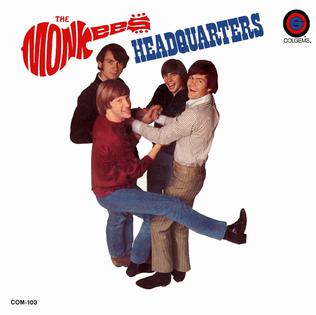
Following a successful tour of England, where they got to hang out with the real Fab Four, the Monkees managed to stage a coup, ousting Don Kirshner as supervisor of their music. Now they were determined to make their next album on their own, choosing the songs themselves and playing all the instruments. While it had all the potential of a massive train wreck, Headquarters turned out great, giving them the respect they felt they’d more than earned.

They didn’t just try to duplicate their on-screen image, either. While Micky proved to be a competent drummer, Mike expanded his expertise to learning pedal steel guitar. And Peter relinquished the bass duties to producer Chip Douglas, choosing instead to add a variety of tasteful keyboards throughout. (Davy, of course, played the hell of out his maracas.)

With a jokey count-in, “You Told Me” gallops in, complete with banjo, setting up what would soon be called country rock, continued on “I’ll Spend My Life With You” (a Tommy Boyce-Bobby Hart song, and an excellent choice). Their producer offered up “Forget That Girl”, Davy’s first vocal on the LP and a nice one. “Band 6” was probably not the best choice of a track to show off their instrumental prowess, but if you listen closely you can just hear Nesmith find his way through the Looney Toons theme. Another song first heard on the TV show, “You Just May Be The One”, is here given a better vocal and tighter all-around performance. “Shades Of Gray” is something of a serious song, splitting the vocal between Davy, Micky, and even Peter. And Davy does a tapdance routine on the still charming “I Can’t Get Her Off My Mind”.

Peter was definitely on a roll here, as “For Pete’s Sake” predicted the spirit of the Summer of Love, and was even tapped to be the closing theme of the TV show. Another Boyce-Hart song, the eerie “Mr. Webster”, takes a page from the Kinks, complete with surprise ending. Mike’s last and best contribution to the album proper is “Sunny Girlfriend”, so simple yet so catchy. As with side one, the middle position is taken by a novelty, in this case the superior round “Zilch”. The band gets to rock (and Micky gets to scat) on “No Time”, before the chilly suburban vibe of “Early Morning Blues And Greens”, a surprisingly cynical Davy vocal over Peter’s layered keyboards. Micky’s tympani drives “Randy Scouse Git”, a response to their British tour, as infectious as it is inscrutable.

In the tradition of the Beatles, no singles were released from the album, but those who bought the 45 of “A Little Bit Me, A Little Bit You” might have flipped it to experience “The Girl I Knew Somewhere”, their greatest song and performance. When Rhino released their expanded CD, however, an earlier take was included, along with other full band performances of lesser musical quality. The later Deluxe Edition did include the single, but unfortunately also gives too much attention to the pile of dreck that Davy, ever the company man, added vocals to in the last days before the Kirshner era ended.

These are most likely of interest only to the collectors who’d rued their exclusion from Headquarters Sessions, a bold step taken back at the turn of the century by Rhino’s Handmade division, which specialized in limited editions of albums that even Rhino geeks would consider extreme. Following in the pattern of the similar treatment of the Beach Boys’ Pet Sounds box, these three CDs follow the album’s (and the band’s) progression as the tracks developed from first takes to final mixes, with lots of time given to session outtakes and backing tracks, to demonstrate how well these guys actually managed to play together.

With that title available at hefty resale prices but also streaming, the album finally received a Super Deluxe Edition along the lines of the Monkees’ other megaboxes in the year of its 55th anniversary, albeit in ultra-limited quantities. This time compiler Andrew Sandoval attempted to tell the whole story, giving equal time to the tracks created without the foursome as well as those created with. The first disc is devoted to yet another new stereo mix of the album plus various singles and other completed tracks already known from reissues and compilations. Then we proceed chronologically, starting with the boys’ first attempts at a single, then going through a couple dozen backing tracks for the insipid songs Don Kirshner and Jeff Barry pushed. Even without vocals it’s staggering to think just how awful their third album could have been, as proven by the tracks Davy (and Micky, down the road) actually sang on. Halfway through the third disc the boys take over, with handpicked selections from the Sessions set alternating with previously unreleased takes, finally ending disc four with further mixes of some of the Jeff Barry tracks and two mixes of the TV theme song sung in Italian, which still sound like someone keeps bumping the turntable.

The Monkees Headquarters (1967)—4
1995 reissue CD: same as 1967, plus 6 extra tracks
2007 Deluxe Edition: same as 1994, plus 30 extra tracks
2022 Super Deluxe Edition: same as 2007, plus 65 extra tracks
The Monkees Headquarters Sessions (2000)—3

Monday, July 11, 2011

Lou Reed 3: Berlin

It’s trendy among rock snobs to champion Berlin as a masterpiece, and while we’re not about to go that far, we will attempt to defend it somewhat. Granted, we probably wouldn’t have paid any attention to the album if it weren’t for a certain anthology of the work of Lester Bangs, but even he wasn’t infallible.

Berlin is a vague song cycle about a doomed relationship in the then-divided city, marred by violence and drug addiction, pieced together from a variety of disparate songs, some of which had been germinating since the Velvet Underground days. Featuring an all-star cast and a grandiose Bob Ezrin production, it’s the source of Lou’s stereotypical laconic image, the barbiturate downside to his established amphetamine rush.

Beginning with a wobbly recording of a birthday party, the title track takes only a few elements of the original, sticking to the basic theme played on a cocktail piano. Suddenly “Lady Day” crashes in, with Steve Winwood’s nightmarish organ underpinning the unspoken dread in the lyrics. Likewise, “Men Of Good Fortune” is pinned by Jack Bruce’s overpowering bass. “Caroline Says I” is almost upbeat, complete with a closing string arrangement right off of any number of chamber-pop records, shifting abruptly into the swaggering “How Do You Think It Feels”. “Oh Jim”, grafted from two VU outtakes, provides a little more plot before descending into a basic doo-wop tune without the harmonies.

Side two is where things get really interesting, and it’s worth pointing out that the man known for his “metal machine music” exclusively plays acoustic guitar on this album. “Caroline Says II” is another VU outtake, taken heartbreakingly slow in its depiction of the fall of the relationship. The most notorious track remains “The Kids”, which begins like an Irish reel, but is given over to a long vamp punctuated by the actual sounds of children crying for their mother. It’s not easy to say that “The Bed” provides any respite with its deceptive gentleness. A chorus of disembodied voices ushers in the grandiose “Sad Song”, transformed from a so-so Loaded outtake into a biting dismissal of the leading lady, thanks to one of Lou’s greatest couplets (“I’m gonna stop wasting my time/Somebody else would have broken both of her arms”) and summed up by the matter-of-fact repetition of the song’s title.

Berlin is a truly depressing album, and therefore not for everyone. Legend has it that the album, already bursting the grooves at 49 minutes, was originally over an hour long, and various sections had to be edited so it would fit on two sides of vinyl without losing sound quality. However, neither of the album’s two reissues in the CD era has restored any of this lost music. Even 33 years later, when the album was performed in its entirety onstage for the first time, the arrangements stuck to the album as memorized by the faithful. It remains a powerful work of art, and nobody said every work of art had to be pretty.

Lou Reed Berlin (1973)—4

Friday, July 8, 2011

Beach Boys 5: Shut Down Volume 2

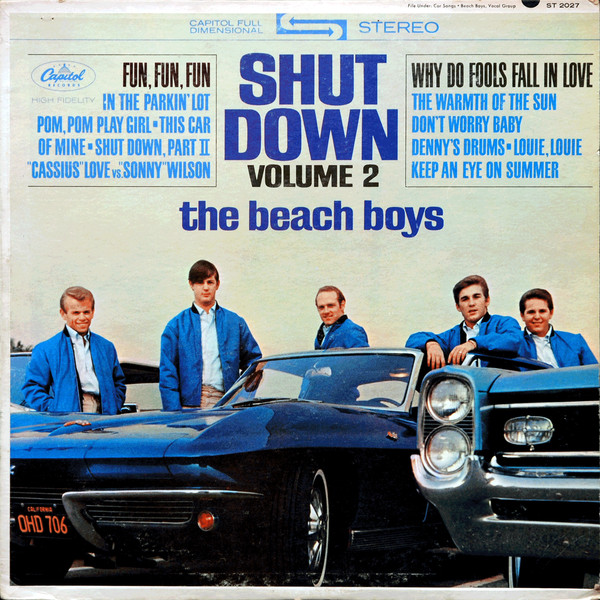
If you’ve been paying attention to the narrative, you might remember that the Beach Boys’ label—the ever resourceful Capitol Records—had put out a compilation against their wishes called Shut Down. So when it was time for their next album, somebody had the bright idea to name it Shut Down Volume 2. It did continue their tropes of surfin’ and drivin’, and the boys looked all clean and collegiate on the cover (except for Mike Love, who was already balding, and Brian Wilson, who can’t quite pull off a Beatle fringe in compensation). While they were under a lot of pressure to keep new product on the shelves and on the radio, Brian delivered some of his greatest works yet, and some of the band’s worst.

The hit single “Fun, Fun, Fun” starts us off with a bang. From Carl Wilson’s guitar intro through the story running through the verses, this is a wonderful Chuck Berry pastiche, and Brian can’t help throwing in some key changes. As good as it is, it’s immediately bettered by the Phil Spector pastiche that follows. “Don’t Worry Baby” is ostensibly about a guy nervous over an upcoming drag race, but is really a masterwork of a love song. Amazingly, it was released as a B-side.

And from there, the album sinks. “In The Parkin’ Lot” begins and ends with a lush display of harmonies, but in between is merely a lame rewrite of “Fun, Fun, Fun”, complete with the same “blue now/dew now” rhymes. Even worse, “‘Cassius’ Love Vs. ‘Sonny’ Wilson” purports to be a peek into their wacky recording sessions, with scripted insults between the band’s Clay and Liston stand-ins over their vocal idiosyncrasies, taking up three-and-a-half precious minutes where obviously there wasn’t a song available. Perhaps it was here because Brian was self-conscious about “The Warmth Of The Sun”, an astoundingly beautiful reverie with some of his most unique chord changes. “This Car Of Mine” exists solely to give Dennis Wilson a spotlight vocal.

While the remake of “Why Do Fools Fall In Love” has a Spector-style production and some interesting vocal inversion, it’s further proof that Brian was low on material. (A half-century later, an interesting, complex, and unused instrumental track emerged on Keep An Eye On Summer, a copyright dump release.) It made sense for Carl Wilson, who was still in high school, to take the lead on the horny “Pom, Pom Play Girl”, as Mike was already getting creepy, and “Keep An Eye On Summer” is another slow one like “Surfer Girl” and the like, but again, in both cases the harmonies and changes are let down by the lyrics. “Shut Down, Part II” brings back surf-style instrumentals; outside of some sax honking at the top, it’s notable for Carl and Al Jardine trading licks in different tones over more complicated modulations. But “Louie Louie” is a dull cover of the previous summer’s frat house hit by the Kingsmen, except that they try to get the words right, and Brian can’t help throwing in some key changes. Once again Dennis closes a side, this time with the competent stick work in “Denny’s Drums”.

The good songs on Shut Down Volume 2 stand so tall, but the clunkers overshadow them in the original context. But again, nobody was crafting albums as works of art in those days. That would change, and soon. (This album was paired out of order with Surfer Girl in the 1990 two-fer campaign to avoid that album’s song repetition with Little Deuce Coupe; the slightly longer single version of “Fun, Fun, Fun” and the big production outtake “I Do” were the bonus tracks related to this one.)

The Beach Boys Shut Down Volume 2 (1964)—2½
1990 CD reissue: same as 1964, plus Surfer Girl album and 3 extra tracks

Wednesday, July 6, 2011

Joe Jackson 5: Night And Day

A move to New York City invigorated Joe, and he recorded his next album of original material with a small group of players, not one of whom added a guitar to the recordings. On vinyl, Night And Day had two sides—“night” and “day”, naturally—but the designations didn’t necessarily apply to the music within, which could have easily taken place anywhere within a 24-hour cycle in the Big Apple.

From the beginning, he embraces the diverse ethnic culture of the city, with the Latin touches and percussion on “Another World”, followed by a search for “Chinatown”. There are no silences between the songs on this side; each fades into one another, just like the radio. But at least it’s not as abrupt as changing television channels, which would make “T.V. Age” even more irritating. “Target” wanders over the same Latin piano line for too long, but the side is redeemed by the hit single “Steppin’ Out”. Still catchy as ever, it was several years before we realized it, remarkably, has the same bass line throughout, except for the verses.

Ever a student of pop music history, “Breaking Us In Two” begins identically to Badfinger’s “Day After Day”, but he uses it to base a wonderful lovers’ lament. “Cancer” might be the best of the songs on the album with a Latin theme lambasting modern society; while that’s not saying much, at least the piano solo is more exploratory. The success of the album was such that the label even bankrolled a video for “Real Men”, which got lots of MTV airplay despite its easily misunderstood lyrics about machismo, racism, homosexuality and other stereotypes. It’s still a gorgeously sad song, an idea he expands on for the epic “A Slow Song”. This masterwork may as well be his theme song—indeed, he still closes his shows with it—a bold plea to cut through the disposable trends so that “real” music can transform our lives.

With its pop sound and attitude, exemplified by the cartoon on the front cover, Night And Day wasn’t about to please anyone who missed the edgy punk of his debut. But he was determined to be a working musician and composer, and enough people bought the album to keep his publisher happy. (It still cracks us up that drummer Larry Tolfree has the same look on his face as he did on Jumpin’ Jive. At least Graham Maby lost the beard.)

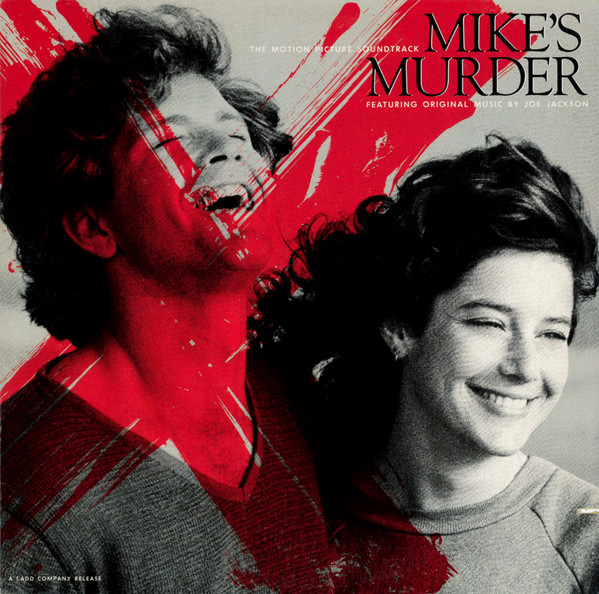
The album got a boost from its videos and a lengthy tour, yet Joe still found time to compose the music for the film Mike’s Murder. Despite starring Debra Winger at the peak of her popularity, the film had a lot of problems getting released, which meant the soundtrack album didn’t find much traction, and most of the music didn’t end up getting used in the film anyway. Probably just as well, as one side of tepid vocal tracks was remarkable only for “Memphis”, which ripped off the hook from the Spencer Davis Group’s “Gimme Some Lovin’” (over the bass line from “Steppin’ Out”), and side two’s instrumentals were just dull. These very New York sounds were an odd match for a film about LA, and he would find more focus on his next album.

Commercially, Joe had also peaked, yet Night And Day has remained popular since its release. The 2003 Deluxe Edition seemed promising—at the very least, to show that his old label still thought highly enough of him to bother. Six solo demos demonstrate how mapped out the songs were before the band was brought in, and the five vocals from side one of Mike’s Murder kept that music in circulation, for better or worse. While the inclusion of the entirety of side two of Live 1980/86 was all good and well in context, it took the idea of recycling a tad far.

Joe Jackson Night And Day (1982)—3
2003 Deluxe Edition: same as 1982, plus 16 extra tracks
Joe Jackson Mike’s Murder Soundtrack (1983)—2

Monday, July 4, 2011

Joni Mitchell 8: The Hissing Of Summer Lawns

She was enjoying her greatest commercial success to date, but for many consumers, this is where Joni seemed to go off the rails. With 35 years of hindsight, it seems the only beef people can have with The Hissing Of Summer Lawns is the use of synthesizers, which admittedly, stick out like two sore thumbs. Except for that, it’s a clear progression from the contemporary jazz she’d gotten such accolades for on Court And Spark, right down to yet another Annie Ross cover.

Something else to consider, as acknowledged in the liner notes, is that her words had become more poetic than lyrical, sometimes completely ignoring rhyme schemes for a pattern, like her guitar tunings, that make sense to only her. That’s not to say she stopped writing catchy songs. “In France They Kiss On Main Street” kicks it off with a straight jazz-rock backing and a few old boyfriends singing backup. “The Jungle Line” likely turned a lot of people off, driven by pounding African drums and dominated by a Moog synthesizer. (At the time such an instrument was still groundbreaking; these days it brings to mind the occasional video game.) More conventional sounds return for “Edith And The Kingpin”, an enigmatic film noir that gives a hint of her developing sound. “Don’t Interrupt The Sorrow” seems more abstract until you realize that it actually rhymes. A portrait of a Southern post-feminist is painted by piano and strings on “Shades Of Scarlet Conquering”.

Similarly, the title song was viewed by some as an indictment of a woman choosing to be symbolically imprisoned by an affluent husband, but as we’ve learned about suburbia, there seems to be a lot more going on than we can see. Another side of this theme is “The Boho Dance”, a somewhat guarded look (back) at compromises people make for their success. What sounds like a passing car horn ushers in “Harry’s House”, which juxtaposes the increasingly separate activities of a married couple with a memory illustrated by “Centerpiece”, a jazz standard shoehorned into the middle of the arrangement. “Sweet Bird” returns to the sound of For The Roses with slowly strummed yet slightly jittery guitars colored by piano. “Shadows And Light” is a daring closer, sung by layered voices and accompanied by a primitive string synthesizer.

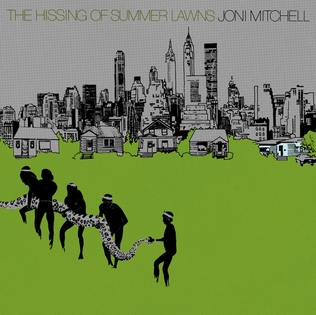
The Hissing Of Summer Lawns is a little challenging, so while the public may not have been quick to embrace it, it does get namechecked by some of music’s snobbier figures, like Prince and Elvis Costello. Maybe the cover art didn’t help; the gatefold shows a bikini-clad Joni floating in a swimming pool, which may not be the same one tucked behind the mansion on the back cover, several hills and a continent away from the bungalows and skyscrapers on the front, while dark figures help a snake through the grass.

Joni Mitchell The Hissing Of Summer Lawns (1975)—3

Friday, July 1, 2011

Monkees 2: More Of The Monkees

No matter what the actors themselves may have believed, the Monkees were a product first and foremost, and any responsible music organization in the mid-‘60s knew how essential it was to keep fresh merchandise on the shelves. So it was that, four months after the debut’s release and with half of a TV season still to be broadcast, More Of The Monkees was unleashed, to be undoubtedly snatched up by rabid teenyboppers.

Just as rabid, but for a different reason, was the band itself, who allegedly only heard of the album’s existence when they saw it advertised for sale. They hated the cover, and they especially hated the liner notes that gave all credit to the people behind the scenes, rather than the four boys being chased from hotel to stage to limo.

Their anger is a little misplaced, since it wasn’t like they hadn’t spent any time in the studio recording vocals for (and in Mike Nesmith’s case, writing and producing) a few albums’ worth of songs. A handful stretched back to the earliest sessions, while some were more recent, in search of their next hit single.

Still, despite the inclusion of some of those hits and TV favorites, there’s a distinct leftover feeling throughout the album. Peter finally gets to “sing” on “Your Auntie Grizelda”, but the absolute nadir is Davy’s wretched spoken performance on “The Day We Fall In Love”. (He pulled the same trick on the bridge of “Look Out (Here Comes Tomorrow)”, so obviously some genius thought it was a good idea.)

The inclusion of such head-scratchers makes it hard to fathom this is the same album that gave us “I’m A Believer” and “(I’m Not Your) Stepping Stone”. “Mary, Mary” had already been recorded by the Paul Butterfield Blues Band, but one hidden highlight is “Sometime In The Morning”, a Goffin-King nugget delivered nicely by Micky.

More Of The Monkees hasn’t aged as well as the first album, with its reliance on fuzztone guitars and harpsichords. But it didn’t have to be good, it just had to sell, which it did, by the bucketful. (As with the debut, Rhino’s first CD reissue was only slightly expanded, while the Deluxe Edition is loaded with timely outtakes, TV hits and alternate versions. And just because they could, the inevitable Super Deluxe Edition added plenty more mixes of songs not good enough to make the album in the first place, plus ten songs from a January 1967 concert.)

The Monkees More Of The Monkees (1967)—3
1994 reissue CD: same as 1967, plus 5 extra tracks
2006 Deluxe Edition: same as 1994, plus 25 extra tracks
2017 Super Deluxe Edition: same as 1994, plus 74 extra tracks