Wednesday, September 14, 2011

Lou Reed 11: Take No Prisoners

Arista knew that Lou’s live albums sold the best, so a residency at the Bottom Line led to Take No Prisoners, a two-record set with a fairly apt title. This album presents Lou as his generation’s Don Rickles, paying the barest attention to the songs, choosing instead to bark at or about whoever’s pissing him off at any given moment.

The biggest nose-thumb is “Walk On The Wild Side”. Rather than the snappy beat poetry that was a radio staple, here he begins by complaining about the sound crew, club management and promoter, moving on to his critics, and finally starting the song before distracting himself (and the crowd) with the intention to go into further details about how the song came to be and the people inside it. Even that’s barely accomplished, and for sixteen minutes he talks and talks, occasionally punctuated by an actual chorus. Like the best comedy albums, it’s actually pretty entertaining.

But in between the crowd-baiting and general ranting you can hear a patient band keeping up with him, and pulling out some truly amazing performances. He does inhabit each of the monologues on “Street Hassle” for a performance that rivals the original. (We could be wrong, but the band vamping around the six-minute mark does seem to be killing time while Lou beseeches Bruce Springsteen to come up and recite his part. A voice like Bruce’s guffaws nervously, to which Lou replies, “Damn! Close but no [intelligible].” Since Bruce is called out in the audience during “Walk On The Wild Side”, this may be what actually happened.) “Coney Island Baby”, so pretty in its gentle studio cut, is stretched even further here, complete with a few more lines taking about his high school intramural sports experience, getting completely worked up for each lead-in to “the glory of love”, and letting the band drive him for a slamming end. “Berlin” is patterned after the version on his debut, using the chorus but also tapping into the anger of the album the song inspired. And he slows “Satellite Of Love” down to a more leisurely pace, even strapping on a guitar for the distorted chords at the end. (Those last three tracks would comprise one side of 1985’s Arista “hits” collection City Lights, while “Coney Island Baby” was featured on the career-spanning Rock And Roll Diary a few years earlier.)

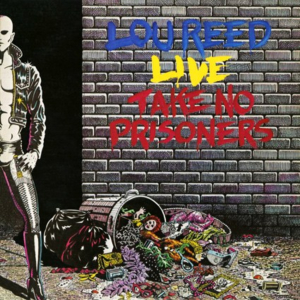
Take No Prisoners should only appeal to diehard fans, or at least those who like their Lou snarling. Even the packaging played up this side of him, with collages of “shocking” articles about the boy decorating the inner sleeves. If anything, looking at the actual vinyl makes for an interesting comparison with, say, Barry Manilow Live. (Addendum: one of our faithful readers informed us, in a comment since deleted, that the cover itself caused a bit of controversy, being stolen from the work of a Spanish comic book artist.)

Lou Reed Take No Prisoners (1978)—3

Tuesday, September 13, 2011

Lou Reed 10: Street Hassle

One of Lou’s constant obsessions was trying to translate his live sound onto a replayable medium. It became a given that each new album’s PR push would include his chirping about the latest technology that made this album his best sounding one yet, dashing all previous attempts to shame, and repeat.

Street Hassle was originally recorded live on tour in Germany, using a “binaural” system involving microphones placed inside a Styrofoam mannequin’s head. When Clive Davis supposedly balked at the result, Lou went ahead and overdubbed on top of the backing tracks, rendering the mix muddy, jarring, and a little sluggish. Compounding the effect was his latest vocal styling, a strangulated bleat used to illustrate both of his main emotions. Even with the standard rock combo, plus backing vocals and continual sax, the results were far from slick, occasionally vulgar, and fit well with the times.

“Gimme Some Good Times” begins with the first verse from “Sweet Jane” turned inside out, complete with Lou answering himself as a heckler, providing foreshadowing for his next truly live album. “Dirt” had been threatened for a few years; by now he was angry enough at his former manager to include it here, complete with discordant piano stabs and gunshot drums in between his bile, scatological accusations and Bobby Fuller reference. But smack dab in the middle of the album is the cinematic three-part title track, based around insistent bowed cellos. Here is proof positive that Lou Reed really was one of the literary greats of the century. “Waltzing Matilda” manages to make an encounter with a gigolo sound romantic, capped by angelic harmonies leading into the next section. “Street Hassle” is an in-character monologue by a lowlife giving advice on body disposal and ending with the perfect definition of “bad luck”. “Slip Away” is brought in by a bass solo played by the auteur(!) and upstaged by a vocal cameo by none other than Bruce Springsteen. When Lou returns to end the piece, he actually sounds vulnerable. Throughout it all, the same cello part weaves in and out of earshot, sometimes replicated on guitars, harmonium, and jangle piano.

Literary greatness is not something commonly ascribed to “I Wanna Be Black”, which attempts to torpedo the hypocrisy of stereotypes, but just becomes uncomfortable. As with most of the tracks on the album, we can just barely hear an audience cheering over the fade; perhaps it was best English wasn’t their first language. “Real Good Time Together” is the old Velvets tune, familiar to fans from 1969 Live, delivered here over a heavy tremolo, and with a vocal that doesn’t convey the sentiment of the lyric in the slightest. “Shooting Star” is delivered at a palatable pace, with a simple yet straightforward chorus, while “Leave Me Alone” states its demand with all the subtlety of a jackhammer. Finally, “Wait” is something of a dopey pop song, an exercise to see how many words rhyme with the title, and girl group vocals pushing him along.

Street Hassle is a messy yet ultimately satisfying album, a return to form without retreading, notwithstanding the mild recycling. In his case, one great song can make a big difference, and “Street Hassle” does that.

Lou Reed Street Hassle (1978)—3

Monday, September 12, 2011

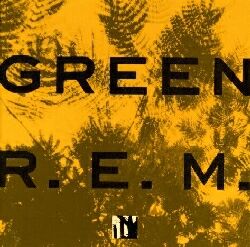
R.E.M. 7: Green

It was a fleeting, fascinating time when your favorite band would put out a new album, an eternal year after the last one, and full of anticipation at “what’ll they sound like this time?” you’d sit listening to it over and over again, digesting it, trying to figure where it fit in the pantheon of all that had gone before.

Particularly after the water-treading that was U2’s Rattle & Hum, this was what it was like to experience Green, the new R.E.M. album, released on Election Day 1988 on the verge of the third term of the Reagan administration. It was a big deal for the band, having graduated to Warner Bros. while retaining the producer from their last album. (Not to be outdone, their previous label put out the Eponymous “hits” collection a month in advance, complete with such rarities as the original indie single version of “Radio Free Europe”, a couple of alternate takes and a song used in a movie nobody saw but this commentator, though he’d be happy to be proved otherwise.)

Despite their growing accessibility, there was still a mystery about R.E.M., and as it was becoming easier to understand the words coming out of Stipe’s mouth, it was also easier to concoct wacky theories about their meaning. For the first few months of owning Green we were convinced that it was a concept album sung from the point of view of a disabled and/or retarded child, which only sounded dumber the more we expounded on it. But think about it: “Pop Song 89” is a collection of simple statements, followed by “Get Up”, an escape from dreaming complete with a musical box interlude. “You Are The Everything”—the first overt use of mandolin on an R.E.M. album—looks back to simpler times when you could stretch out in the back seat of a car. The near-nursery rhyme “Stand” would soon become everyone’s least favorite song. Stipe held “World Leader Pretend”, a view of war from a little green army men perspective, to be so important that he actually printed the lyrics in the packaging. And once you get to the competing vocals in “The Wrong Child”, it’s a little unsettling.

“Orange Crush” wasn’t the best choice for lead single, and its title doesn’t help; basically it’s a more mercenary approach to “World Leader Pretend”. Things get really loud on “Turn You Inside Out”, with Mike Mills yelling his harmony in the background. The real standout is “Hairshirt”, one of the band’s prettiest and simplest yet most baffling songs. “I Remember California” follows a doom-laden riff through a foreboding premonition of the end times. It’s the last song listed on the back of the CD case, but wait! Didn’t we see the number 11 on the disc itself, next to a blank space and a time listing? Why yes, there’s another song on the album. Based around the most basic of drum beats—played by Peter Buck, as Bill Berry insisted that it was impossible “to play that stupidly for that long”—the song is listed at the band’s website as “Untitled”, but copyrighted as “11”. It incorporates more intertwined lyrics, and one of the most tender benedictions ever, suitable for all formal occasions: “I made a list of things to say/But all I want to say/All I really want to say is/Hold her and keep him strong/While I’m away from here.”

Familiarity ate away at Green’s luster over time, and the ubiquity of the hits tends to keep it on the shelf. But when taken down for a spin, the better parts still emerge, and it’s hard to believe that it was so long ago. At the same time, it’s easy to see where they’d take themselves over the next few years.

First, however, they toured, and most of a concert from Greensboro—conveniently enough for the packaging—makes up the bonus disc in the 25th Anniversary Deluxe Edition (a further five issued as a Record Store Day vinyl exclusive). The band is tight and driven, showing that the new songs were made for the stage, but maybe it’s the months on the road that make some of the backing vocals a little rusty. He’s not credited anywhere, but Peter Holsapple did add some voice and instrumentation on that tour, so maybe we can blame him. Still, his presence makes it possible for them to play “Perfect Circle”. Also, to show they hadn’t been resting, we even get sneak previews in the form of “Belong” and “Low”.

R.E.M. Eponymous (1988)—4
R.E.M.
Green (1988)—3½
2013 25th Anniversary Deluxe Edition: same as 1988, plus 21 extra tracks

Wednesday, September 7, 2011

Van Morrison 4: Moondance

Having found a way to make the music he heard in his head, Van proceeded to record a collection of songs that covered all his interests: jazz, folk, country and even pop. Of all his records—and he’s got a lot—Moondance is still the best place for newbies to start.

In a departure from the esoteric jazz sound of Astral Weeks, the album is overtly catchy, with memorable choruses and hooks aplenty. None so more than “And It Stoned Me”, which seemingly describes a journey to a fishing hole with a stop off at a guy who offers the narrator and his friends a welcome drink of water or something stronger. Whether that something is to be considered sinister is moot for our purposes here; the singer is just happy to reveling in the day and what the moment has to offer. Maybe they’ll even catch something. A pointedly more adult journey is taken on the title track, still one of the most unique tracks ever recorded in the rock era, layered by a jazzy bassline, piano and flute backing. “Crazy Love” is an overt love song, complete with the Sweet Inspirations helping out, just like they would have had he stayed in the “Brown Eyed Girl” mode forever. “Caravan” manages to convey images of a gypsy troupe in the countryside along with the wonder of hearing amazing new and old sounds on American radio. But it’s “Into The Mystic” that crowns it all, a wondrous song about something and nothing, taking joy in whatever it is that’s rocking Van’s gypsy soul. These songs are perfect, and give another reason why the art of the album side must be preserved.

Side two is slightly straighter pop, less deep but still catchy. “Come Running” works in the saxophones that supported the songs on side one, but they were so unobtrusive that they didn’t overwhelm. They continue on “These Dreams Of You”, a nice loping fable that begins in Canada. The Sweet Inspirations return for “Brand New Day”, a wonderful celebration of the same. “Everyone” was famously used for the closing credits of The Royal Tenenbaums, and hearkens back again to his earlier image while hinting at the depth he’d decided to plumb. (That sure is a prominent harpsichord, isn’t it?) Which only makes the jumping bass of “Glad Tidings”, an early clue to the new direction, all the more welcome.

Again, Moondance is a solid pop album. If anything, its relationship with its predecessor can be compared to John Lennon’s Plastic Ono Band and Imagine, wherein the latter softened the delivery to make the message more palatable. Even if that was his intention, he wouldn’t admit it, but he would rarely attempt to be so universally accessible going forward. (And if you’re looking for further distraction from his longtime image, take a gander at the liner notes, written by his then-wife with the alliterative hippie name. It’s quite a leap from the Van who’s best known for being grumpy and lonesome.)

A good 43 years after its original release, with virtually no warning or seeming tie-in, Warner Bros. created something of a Moondance Sessions set, adding 50 tracks on three discs to the original LP (plus a surround mix). Along with multiple working takes of half of the album’s songs, there are also lengthy, raucous takes of “I’ve Been Working”, 13 takes of the ultimately unreleased Van-goes-to-Rio “I Shall Sing” eventually pawned off on Art Garfunkel, and alternate mixes aplenty. (A cheaper two-disc option offered 11 of these. Van, who did not authorize the project, condemned it in all formats.)

As with any jazz performer, Van constantly modified arrangements until he was satisfied with them, so hearing the directions these songs might have taken is fascinating. While the band is certainly tight on “Caravan”, we can be grateful he dropped the “buttercup” rhyme for the album version. “Glad Tidings” began in the tempo we know, but was also tried and abandoned in slower takes. (Take 9 is a keeper, however.) Sadly, he did not end “Into The Mystic” with “it’s too late to stop now” every time.

Van Morrison Moondance (1970)—4
2013 Expanded Edition: same as 1970, plus 11 extra tracks (Deluxe Edition adds another 39 tracks and Blu-ray disc)

Monday, September 5, 2011

Television 2: Adventure

Once upon a time, record labels weren’t as quick to dump people from their rosters if they hadn’t sold millions of copies of their records. This was certainly the case of a smaller label like Elektra, which, despite having the distribution power of the Warner conglomerate, still maintained a lean but choice stable of performers. So it was that Television recorded and released their second album to even less of a ripple than their first.

Chances are, even the handful of people who were excited to have another Television album might have been disappointed at first, as Adventure doesn’t seem as groundbreaking as Marquee Moon. And how could it be? Instead, Tom Verlaine concocted some relatively tame compositions, yet still loaded with melody and interlocking guitar parts. “Glory” is a rocking opener, but things immediately get softer for “Days”. “Foxhole” follows along in the tradition of “Friction”, a little harder and loaded with war metaphors. “Careful” is a misleading title for a song whose main motif is “I don’t care”; likewise, the production buffs a lot of potential edge off it. The shimmering “Carried Away” adds piano and organ into the mix, and one suspects the Patti Smith Group might have enjoyed this one.

The second side is dominated by two “epics”, with a classic in the middle. “The Fire” sports a whistling intro right out of a horror movie, which both accentuates and deflates the drama of the song. The chords of the chorus elevate the song past the rather ordinary verses. “Ain’t That Nothin’” is the album’s masterpiece, a compact distillation of the best parts of Marquee Moon, with a great lyric on top. (It was also the album’s single, which nobody bought either.) “The Dream’s Dream” fades in on a flourish, plays without vocals for a couple of minutes, then turns left for the verse before continuing on the theme prior for the last half of the track, building and building, then hushing again for a more meditative vamp through the fade. (It took hundreds of listens before we realized Verlaine is playing the music from the intro of “The Fire” here.)

There’s nothing wrong with Adventure; it simply doesn’t deliver the excitement of its predecessor. Still, for anyone who loves Marquee Moon—and you know who you are—the album deserves a place in the rack next to its brother. And with Rhino’s upgraded version of the album, you get liner notes and bonus tracks, such as the long-lost title track, an early take of “Glory” and two alternates of “Ain’t That Nothin’”—the single mix and a nearly ten-minute instrumental take not listed in the packaging.

Television Adventure (1978)—3½
2003 expanded CD: same as 1978, plus 4 extra tracks

Saturday, September 3, 2011

Lou Reed 9: Walk On The Wild Side

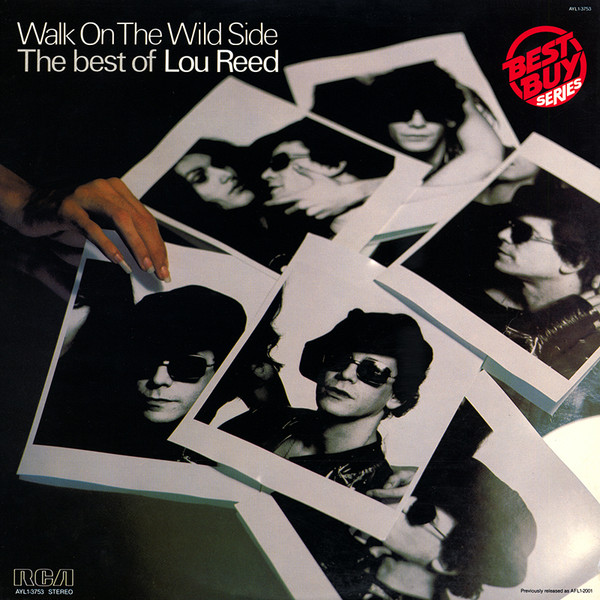
RCA had their faults as a label, but had pioneered the concept of repackaging via their association with Elvis Presley. So even after they dropped Lou Reed from their roster, they made sure to get him to curate a compilation. Wisely again, the set subtitled “The Best Of Lou Reed” was called Walk On The Wild Side after the most famous song, and the one likely to attract newcomers in the bin. (Rachel, Lou’s stubbled soulmate, appears among the Polaroids strewn about the cover art.)

Of course, “best of” is an objective opinion, and Walk On The Wild Side goes all over the place. Each of his RCA albums is sampled save Metal Machine Music. “Sweet Jane” from Rock ‘N Roll Animal is severely truncated to remove the intro and fade early (to make room for “White Light/White Heat”, which doesn’t belong here?) and it’s not even the single version. Maybe “How Do You Think It Feels” was the most commercial track from Berlin, but just to force even established fans to buy it, there is one “new” track, the trashy “Nowhere At All” B-side from the Coney Island Baby sessions.

As an introduction, the album works, and there are probably many people who still revere the album for that reason. Two decades later, when he’d had a career renaissance and was making decent albums on another label, RCA dipped into the same pile for a similar but different compilation, in disregard of the fact that the first disc of the box set from five years before would have sufficed. Different Times: Lou Reed In The ‘70s shares only four tracks with Walk On The Wild Side, but takes advantage of CD capacity to include the complete live “Sweet Jane” and more songs from each of the albums sampled. By then, “Perfect Day” had become a cult favorite, more so than “New York Telephone Conversation”, so that made sense, and Berlin maybe wasn’t quite so scary anymore. Even for a cash-in, Different Times ably displaces its much older brother, and nobody missed “Nowhere At All”.

Lou Reed Walk On The Wild Side: The Best Of Lou Reed (1977)—3
Lou Reed
Different Times: Lou Reed In The ‘70s (1996)—3½

Friday, September 2, 2011

Monkees 6: Head

The Monkees’ feature film Head was designed to explode and obliterate their image, and on that level it was successful. Throughout its 85 minutes the Pre-Fab Four skewer their caricatures, get sucked into a giant vacuum cleaner, are trapped in a variety of boxes, get torn limb from limb, and even attempt suicide off a bridge. Despite having no real plot, it can be considered an extended version of the TV show, right down to the same lettering on the credits. But there are teenage musical interludes, just like on the show, and because it was the law, there was a soundtrack album.

Head can be considered the last real Monkees album, as it was the last to feature all four members for the better part of thirty years. However, it’s a stretch to call it a Monkees album at all, since the handful of actual songs are interspersed with incidental music, dialogue, and effects from the film (sometimes repeated), making for a very disjointed listening experience even if you had watched the film ahead of time.

Like said film, the album starts promisingly enough with a montage leading into the exquisite “Porpoise Song”, with its majestic psychedelic swirl, about something and nothing all at the same time. A spoken nursery rhyme parodies the “hey hey we’re the Monkees” theme song, before giving way to Mike’s “Circle Sky”. While it was performed live by the Monkees themselves for the movie, the studio version was recorded with session guys, and it’s a little tighter, as can be imagined.

Unfortunately, this is where the good part ends. “As We Go Along” is a Goffin/King composition chirped by Micky, while Davy gets to tap-dance all over “Daddy’s Song”, another uncomfortably personal Nilsson song. (To be fair, this sequence in the film is mesmerizing, provided you can ignore his mugging in the closeups.) Peter finally gets two songs on an album, but they’re the quasi-mystical “Can You Dig It?” (accompanied by an embarrassing sequence in the film featuring Micky as a sheik) and the fitting “Long Title: Do I Have To Do This All Over Again?”, both leftovers from the sessions for the album before. Neil Young’s buried in there somewhere, too.

Peter would leave the band soon after filming the band’s phenomenally hideous 33⅓ Revolutions Per Monkee TV spectacular, leaving the other three (and then, just two) to continue making albums and touring. It’s a shame that Head is the end of the line, considering the promise they showed only a year before. Still, Monkeemaniacs hold their entire catalog in high esteem, and likely are still drooling about Rhino’s Deluxe Edition, expanded to three CDs, and possibly the most elaborate re-packaging of seven songs that weren’t that good to begin with.

The Monkees Head (1968)—2½
1994 reissue CD: same as 1966, plus 6 extra tracks
2010 Deluxe Edition: same as 1994, plus 38 extra tracks