Sunday, September 25, 2011

Lou Reed 15: Legendary Hearts

Having apparently remembered less is more, Lou kept to mostly the same formula on Legendary Hearts, but with two key changes. Fred Maher joined on drums, and would go on to anchor several of Lou’s better albums going forward. Also, while Robert Quine is credited on guitar, he would go to his grave insisting that much of his lead work was minimized out of spite, jealousy, or some unforgivable indiscretion. Whatever the truth, the album is missing an edge, forcing us (once again) to focus on the auteur’s words, vocals, and melodies, mostly concerned with sobriety and marital bliss.

An atmospheric wash belies the basic combo backing on the title track, a strong meditation at the wonder of the glory of love with an original view on what might have befallen Romeo. The rant “Don’t Talk To Me About Work” may be defended as a monologue in character, but it only works when one considers that Lou actually did have a few office jobs in his time. “Make Up My Mind” (spoiler alert: he can’t) wanders along, a decent set of changes seeking a better subject. Another character emerges in “Martial Law”, a mildly funky track that brings something of an ironic solution to domestic violence. “The Last Shot” refers mostly to drink, but could also be drugs or a metaphor in general. The chords, though simple and familiar, make the song memorable. (Likewise, “Bottoming Out” on the other side uses the old I-vi-ii-V change and doubles the title in terms of both drink and motorcycles.) With a simple sleepy groove, “Turn Out The Light” has a welcome change in delivery, closer to his ‘70s slur but more assured somehow.

While the main message is “I wanna dance with you,” “Powwow” is just plain strange, lyrically. Only years after he skewered racial stereotypes in “I Wanna Be Black”, what we to make of a romantic song that references fire water, teepees, arrows and scalping? “Betrayed” could use a little more development, seeming to portray a man in a relationship with a woman with severe daddy issues, unless we’re missing something really obvious. “Home Of The Brave” is long and slow, a tribute to various friends who’ve either settled down or died as he contemplates his own happy life. While it comes to a grand close, and would be a fine ending, the slight “Rooftop Garden” is seemingly tacked on to underscore the point.

At this point in an arduous career, Lou could be commended for releasing an album that wasn’t pointedly bad, and Legendary Hearts can’t be called that. It’s not as strong as The Blue Mask, but it remains one of his better unknown albums.

Lou Reed Legendary Hearts (1983)—3

Friday, September 23, 2011

R.E.M. 8: Out Of Time

After their longest absence yet, Out Of Time sent R.E.M. thoroughly in to the stratosphere. It still had its weird moments, but concentrated more on straight pop with lighter touches—like chamber string arrangements—to truly appeal to the masses.

That’s not to suggest it would be confused with anything else on the pop charts. The very first sound we hear is KRS-One’s spoken intro to “Radio Song”, which blasts the current state of the broadcast medium. The song alternates between a standard arpeggiated section and a funky organ-based rant, with more KRS-One. The striking first single was “Losing My Religion”, and it’s easier to maintain one’s interest by continually embellishing it with different lyrics (“It’s bigger than you and you’re not that big… that’s me in the bathroom, that’s me in the driveway… consider this, consider this a divorce… every waking hour I’m flossing my bicuspids, brushing my incisors… I thought I heard you sing, I tawt I taw a puddy tat…”) “Low” provides the old swampy R.E.M. sound, though we still scratch our heads to the repeated lines about “love”. Contemporary interviews said this was their first album that dealt with the topic of romantic relationships, but if that’s the case, what the hell was Reckoning about? Anyway, “Near Wild Heaven” brings back the sunshine on a song led by Mike Mills; one can’t see Stipe contributing much to this beyond the “ba-ba-ba-bah-bah-bah” chorus. The nearly instrumental “Endgame” resembles nothing too far removed from “please stand by” music on PBS.

Even the band never wants to hear “Shiny Happy People” again. This album’s equivalent to “Stand”, it has been only slightly redeemed by Sesame Street’s revision. “Belong” is an extended jam started on the last tour, a distant cousin of “Superman” giving Stipe a reason to think he could recite his poetry without having to worry about melody. “Half A World Away” reprises the organ and mandolins in something of a retread of “Losing My Religion”. Mike Mills takes the lead again on “Texarkana”, which sports a strong resemblance to latter-day Moody Blues. “Country Feedback” is one of those songs that divides people, and rightfully so. It’s a simple four-chord sequence, repeated with distortion and feedback, layered with pedal steel guitar and Stipe’s stream-of-consciousness vocals, the latter of which would become a growing trend. Our favorite is still “Me In Honey”, a simple strum with a catchy beat, Kate Pierson’s moaning counterpart and an unresolved lyric about a life choice. With all their talk of “progression”, this song is classic R.E.M. just like we want them: guitar, bass and drums with vocals.

As with anything that became hugely popular in the early ‘90s, familiarity has lessened Out Of Time’s excitement over the past two decades (good Lord), but boy, did it sound great when it came out. The boys also didn’t tour behind it, so we were left to scramble to watch any TV appearances, which probably heightened the excitement. These days it seems a little too sunny, and we can forgive that. It didn’t emerge in the friendliest of atmospheres.

It was another one of those albums that made us feel very old once its 25th Anniversary Edition came out. The bonus disc was filled up with what the packaging called demos, but are better described as early versions, mostly without lyrics. That means two more versions of “Losing My Religion”, “Shiny Happy People”, “Near Wild Heaven”, and “Texarkana” (one of which has Stipe singing a completely different set of lyrics) and three of “Radio Song” (one of which has Bill Berry singing the other parts). There is one otherwise unfinished “rocker”, but slightly more interesting, and less tedious, is the expensive package, which adds most of their appearance on the Mountain Stage radio show plus the obligatory 5.1 surround mixes and video artifacts.

R.E.M. Out Of Time (1991)—3½
2016 25th Anniversary Edition: same as 1991, plus 19 extra tracks (Deluxe adds another 15 tracks and Blu-ray)

Wednesday, September 21, 2011

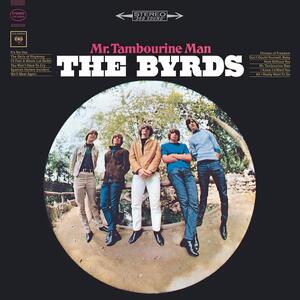
Byrds 1: Mr. Tambourine Man

In hindsight, it was highly improbable that the Byrds would have left such an indelible stamp on rock history. They were basically a bunch of folkies who, after seeing A Hard Day’s Night, realized they could make more money by emulating the sounds of the British Invasion. Jim McGuinn (as he was then known) took a shine to the 12-string Rickenbacker he saw George Harrison playing in the movie, so that was different. David Crosby got himself a 12-string too, but chose to concentrate on rhythm and high harmonies. Gene Clark wrote a bunch of songs but was relegated to tambourine onstage. Chris Hillman, previously a mandolinist, learned the bass quickly enough, and Michael Clarke’s haircut got him in the band as long as he learned his way around a drumkit.

Another marketing angle that would have backfired on anyone else was their access and interpretation of Bob Dylan’s songs. While the Byrds weren’t explicitly responsible for his going electric, their amplified renditions certainly proved that his appeal went far beyond the coffeehouse. As a result, folk-rock was invented.

In addition to the title track—which artfully chopped the song down from its four verses into a simple, catchy chorus-verse-chorus format—Mr. Tambourine Man offers three other Dylan classics previously known in their acoustic renditions on Another Side Of Bob Dylan. “Chimes Of Freedom”, “All I Really Want To Do” and “Spanish Harlem Incident” each gain a little something from the blend of electricity and harmonies.

To prove they were more than a jukebox, half of the album was devoted to the boy-meets-girl-loses-girl songs written by Gene Clark. The most famous is still probably “I’ll Feel A Whole Lot Better”, noticeable from its opening suspended-A strum and its carbon-copy cover by Tom Petty. That said, “Here Without You”, “It’s No Use” and the others prove that he (and the band) were capable of creating commercial pop. Another nod to their folk routes came in their stellar arrangement of Pete Seeger’s “The Bells Of Rhymney”, which itself foreshadowed a later hit. And for another strike for the counterculture, the set closes with a cover of Vera Lynn’s “We’ll Meet Again”, riding the irony of its status as a wartime lament.

If there’s a clunker on the album, it’s “Don’t Doubt Yourself, Babe”, which they didn’t write but cheerfully recorded as a favor. But thanks to those great singles, the chiming Rickenbacker and those stellar harmonies, Mr. Tambourine Man remains a solid album. When their catalog was revamped in the mid-‘90s, there wasn’t much to add outside a few alternate takes. But Gene Clark’s “She Has A Way” deserved better than to be left in the vault, and to prove that these guys could play (despite the studio musicians used on the single) the updated CD now ends with an instrumental backing track to a song never finished.

The Byrds Mr. Tambourine Man (1965)—3½
1996 CD reissue: same as 1965, plus 6 extra tracks

Tuesday, September 20, 2011

Lou Reed 14: The Blue Mask

The ‘80s brought some changes in music, while others ignored them. Lou Reed was more concerned with getting sober than anything else, but in the process worked to make his albums more literary. (We’ll leave it to others to say whether they’re poetic.)

For whatever reason—and it couldn’t have been blockbuster record sales—he went back to RCA for The Blue Mask, which works as both a new beginning as well as a continuation of his life’s work. He sounds like he’s trying to bring it back to basics, from the borrowing of the cover photo from Transformer to the basic two guitars, bass and drums (you know, just like the Velvet Underground).

Lou saw each of his albums as chapters in his ongoing Great American Novel, often blurring the line between fiction and autobiography, and here the album is bookended by odes to his then wife Sylvia. “My House” references both his recent marriage and his attempts to contact the spirit of his mentor Delmore Schwartz. The problem is his attempt to apply a melody to his lyrics, almost as an afterthought. “Heavenly Arms” is a doo-wop song in all but arrangement, complete with the use of his wife’s name as the chorus.

More sentimentality is upfront on “The Day John Kennedy Died”, a surprising recount of that event, balanced with an expression of hope for good in a dark world. “Women” opens with a beautifully gentle guitar piece, before turning into an ode to the gender that rides the line between sarcasm and apology for much of his earlier misogynistic work.

His alcoholic ways are explored in “Underneath The Bottle”, but one would hope that the scarier imagery in “The Gun” isn’t from personal experience. “Waves Of Fear” has a great band sound, and while “Average Guy” tries to rise above its jokey punk vocal, its snotty portrait is best left to actual comedians. A little better is “The Heroine”, a solo performance that has only a cosmetic lyrical relation to “Heroin” from the first VU album. The blistering title track is a journey back to the depths of decadence.

If anything, The Blue Mask is a very cohesive album, helped by the band and anchored by the fretless bass of Fernando Saunders (an acquired taste to be sure) and featuring Reed disciple Robert Quine of the Voidoids on the other guitar. It was better than most of his recent work, hardly a masterpiece, but a welcome reaffirmation of his worth.

Lou Reed The Blue Mask (1982)—3

Sunday, September 18, 2011

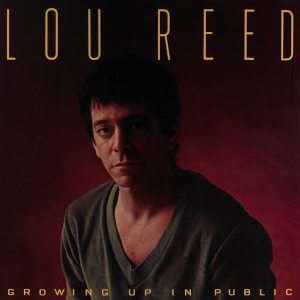
Lou Reed 13: Growing Up In Public

Something very odd happened on the cusp of the new decade: Lou Reed sobered up, fell in love. With a woman. Whom he married. With his parents in attendance. These events affected his life affected his life and writing, possibly leading to the honest (on the surface, anyway) monologues throughout Growing Up In Public.

He still sounds desperate and gargling on “How Do You Speak To An Angel”, to the effect that he’s almost tongue-tied, while the tight New York backing adds some doo-wop echoes. He’s a little more in control but still tense on “My Old Man”, wherein he accuses his father of continually beating his mother. “Keep Away” is a mildly humorous look at a dysfunctional relationship with some terrific rhymes. For the title track he relies on the same basic chords, repeated, with an annoying fretless bass part that resembles an elephant, while “Standing On Ceremony” is pure new wave, with menacing verses and an incongruous chorus that merely repeats the title awkwardly.

While not exactly an epic, “So Alone” is a one-sided conversation well illustrated by the accompaniment, with a “get up and dance” section that’s actually funny. By contrast, “Love Is Here To Stay” has potential, but the he-said-she-said content of the verses is underdeveloped. The momentum slides further on “The Power Of Positive Drinking”, something of a novelty track, complete with a dopey faux-reggae beat and a quote from “Please Please Me”, of all things. In “Smiles”, he blames his permanently sour puss on his mother, with so many lyrics crammed in they’d make a better poem than a song, even with an odd reference to “Walk On The Wild Side” at the end. We seem to be a fly on the wall for his marriage proposal in “Think It Over”, a surprisingly tender and effective song. That would be a great place to end the album, but instead we close with a plea to “Teach The Gifted Children” that quotes from “Take Me To The River” for some reason; whether this is a nod to Al Green or Talking Heads is unknown.

Growing Up In Public would appear to be an accurate description of the overall thematic effect. That’s not to say, as he’d mocked a couple of years earlier, “Lou Reed’s mellowed, he’s older,” but all the conflicting references to his parents come off like notes taken after an hour on the shrink’s couch. He may have been maddening, but at least he was interesting.

Lou Reed Growing Up In Public (1980)—2½

Saturday, September 17, 2011

Lou Reed 12: The Bells

In an anomaly for his catalog, The Bells found Lou Reed sharing songwriting credits. While the lyrics were all his, the music was developed with band members, jazzman Don Cherry, and Nils Lofgren of all people. Like his last two albums, it was recorded in that German binaural system that was supposed to be the most authentic you-are-there reproduction. That may have been necessary considering his continued reliance on a guitar synthesizer that created sheets of sound, which might even have been just fine if Lou didn’t go out of his way to make it such a chore to listen to not what he had to say, but how he said it.

On “Stupid Man”, he crams a whole lot of lyrics into a decent template that goes too fast for him to get the words out. By contrast, the perverted three-word groove of “Disco Mystic” even makes it into his published anthology of complete lyrics. The dense doo-wop of “I Wanna Boogie With You” seems to successfully match mood and message, but then he’s back to the obnoxious bleating in “With You”, not even bothering to separate the tracks. “Looking For Love” has an insistent catchy melody over the pounding rhythm section and piano—plus Marty Fogel, who honks a sax that would be in place on a Graham Parker album—that Lou barely attempts to match. A shame, because not only is it the only song he wrote alone, but it could’ve been a decent hit if performed right. “City Lights” returns him to a deep bass near-croon, over a track smothered in whistles, bells, and similar noisemakers.

The longest songs take up side two, and while each is challenging, they’re superior. “All Through The Night” works a lyric about futility and desperation over a simple boogie groove while (just like in “Kicks”) drinks rattle, dishes clinks, and conversations go on in the background, occasionally rising to drown out the band—a clever audio effect, but frustrating. Despite its strange samba rhythm, “Families” is the most arresting lyric, depicting a conversation between a grown man estranged from his home, studying how the disconnection that causes teens to leave home continues into adulthood, and underscores it. Finally, there’s the title track, a long dirge of an improvisation that pits sax against Don Cherry’s trumpet while Lou mumbles indiscernibly for five minutes. After several threats, the voice finally comes to dominate, in a lyric Lou swears he made up on the spot. Ultimately, it’s hypnotic.

While it was his hallmark, Lou’s seeming insistence on spending the least amount of time perfecting his vocals often worked against his obsession with getting the words and accompaniment absolutely perfect. If he didn’t have a melody, he didn’t bother trying to find one, and that makes The Bells, for all its unique offerings, frustratingly inconsistent.

Lou Reed The Bells (1979)—2½

Friday, September 16, 2011

Ben Folds 6: Ben Folds Live

Whether he’s playing with a band or on his own, every Ben Folds concert offers something different from the previous performance. His encyclopedic knowledge of his own catalog, as well as others, means every setlist is a coin toss, and his love for new and old cheese can lead to any number of improvisations.

So when he puts out a live album culled from a variety of concerts, the selection can almost seem arbitrary, leading one to suspect such a move as being merely financial while he takes his sweet time between new studio albums. But fans should have plenty to appreciate with the simply titled Ben Folds Live, beginning with the sly distortion of his first band’s first album title in the artwork, and continuing with the cover photo itself (documented in a hilarious clip on the accompanying DVD).

It’s just him and a piano, but such is his style that he’s still able to make the rockier songs move. And since the audiences are all devoted fans, it’s easy enough for them to pick up his instructions to emulate some of the arrangements, like the horns on “Army” and the harmonies on “Not The Same”. (The guy from Cake even walks on to add his part to “Fred Jones Part 2”, just like on the album.)

A few rarities are included, like the rarely heard “Silver Street” and the jokey B-side about B-sides, “One Down”. His debt to Elton John is paid on a faithful “Tiny Dancer”, while “Philosophy” is extended to incorporate all kinds of themes for the coda, including Dick Dale’s surf classic “Miserlou”, which the crowd likely knew from watching Pulp Fiction.

As enjoyable as it is for fans, there’s still something incomplete about Ben Folds Live. It’s best illustrated by the inclusion of “Rock This Bitch”, which is kind of his own “Drums In Space” improvisation, and which has been different every time he’s done it. So how could he possibly pick one?

Ben Folds Ben Folds Live (2002)—3