Wednesday, October 12, 2011

Byrds 3: Fifth Dimension

On only their third album, the Byrds were down to a quartet. Gene Clark, whose superior songwriting was resented by the others, left the band under the excuse that he was afraid to fly and couldn’t tour. As a result, Fifth Dimension suffers from his absence. The hits are there, of course, and the band’s blend of stellar harmonies and improved playing holds them together, but something’s missing, and it’s Gene.

“5D (Fifth Dimension)” shows Jim McGuinn already getting out there in terms of science fiction, and approaching psychedelia. Its dense lyrics are nicely matched to a folk melody, which is echoed in their pretty arrangement of “Wild Mountain Thyme”. Then it’s back to sci-fi with the jaunty “Mr. Spaceman”, which is much easier to sing despite the forcibly Dylanesque imagery. “I See You” demonstrates some of McGuinn and Crosby’s interest in Coltrane free jazz, which would improve elsewhere. “What’s Happening?!?!” is a much better Crosby song, and very indicative of the questioning types of lyrics he’d continue to write. Side one concludes with the striking “I Come And Stand At Every Door”, sung from the point of view of a young Hiroshima victim.

Side two starts strong, but runs immediately out of steam. “Eight Miles High” more than delivers on what they picked up from Coltrane, and it’s still quite a striking song today. Contrast this with Crosby’s version of “Hey Joe”; while they were the last of the LA bands to record it, they were among the first to play it, and unfortunately for them, others did it much better. Then there’s “Captain Soul”, a plodding instrumental jam featuring the return of Gene Clark on harmonica. “John Riley” is another Byrds take on a folk song, but this album’s version of the gag finale is given over to “2-4-2 Fox Trot (The Lear Jet Song)”. While it attempts to be “groundbreaking” in its use of sound effects, here the sound of an airplane taking off comes off more like a vacuum cleaner, and the music isn’t much more inspired than “Captain Soul”.

The whole of Fifth Dimension does equal more than the parts, but it’s clear that the pressure to create product without relying on Dylan or Gene Clark songs was a bit much. The bonuses on the updated CD include the B-side “Why”, plus alternates of that and “Eight Miles High” that are pretty intense. “Psychodrama City” is an okay Crosby song that uses too much improvised 12-string, and it’s just as well they didn’t finish “I Know You Rider” for a single. The token instrumental to close out the CD is a chaotic “jazz” take on “John Riley”, and the bulk of the remainder is a hidden vintage open-ended interview with McGuinn and Crosby discussing the hip influences on the album.

The Byrds Fifth Dimension (1966)—3
1996 CD reissue: same as 1966, plus 6 extra tracks

Tuesday, October 11, 2011

Lou Reed 18: Mistrial

After a mild hit single with “I Love You Suzanne” and even a track on the fairly commercial White Nights soundtrack (the just-okay-but-still-cool “My Love Is Chemical”), compounded by the mild increase of interest in the Velvet Underground, one would think Lou Reed would be poised for a smash hit album. But that’s just not how Lou rolled.

Mistrial had a funky-fresh sound for 1986, with big programmed drums, popping bass and yes, lots of guitar. The title track is promising, but it foretells the sameness in most of the arrangements, compounded by his failure to find melodies for each of the songs. “No Money Down” was a single, not helped by a Godley & Crème video depicting an animatronic Lou tearing his face off. (I mean, we always suspected he was a robot, but…) “Outside” is merely a list of conditions contrasted with those on the “inside”, and could use some editing, a melody, and less monotony. The sentiment of “Don’t Hurt A Woman” is sincere, but it comes off as an assignment for an anger management class; the same could be said for the much more aggressive “Spit It Out”.

“Video Violence” and “The Original Wrapper” are early stabs at what would one day be astute comments on the state of America eventually, but that was a way’s away. The former is as ugly as the scenes he describes, while the latter, besides beating the joke to death, simply goes by to fast for us to comprehend what the hell he’s saying. “Mama’s Got A Lover” is a clever scenario for a change, and deserves a more sympathetic arrangement. “I Remember You” is even less convincing than Bob Dylan’s underwhelming song of a year before, and the quasi-“Sweet Jane” chords that don’t change at all don’t help.

Not until the last track is the album nearly redeemed. “Tell It To Your Heart” is a tender love song, with vocal help from new buddy Rúben Blades. But ultimately, Mistrial is a misfire. He kept his profile high by joining Amnesty International’s Conspiracy of Hope tour, alongside the likes of U2, Sting, and Peter Gabriel, but he was about to take his longest vacation yet.

Lou Reed Mistrial (1986)—2

Monday, October 10, 2011

Robert Plant 11: Band Of Joy

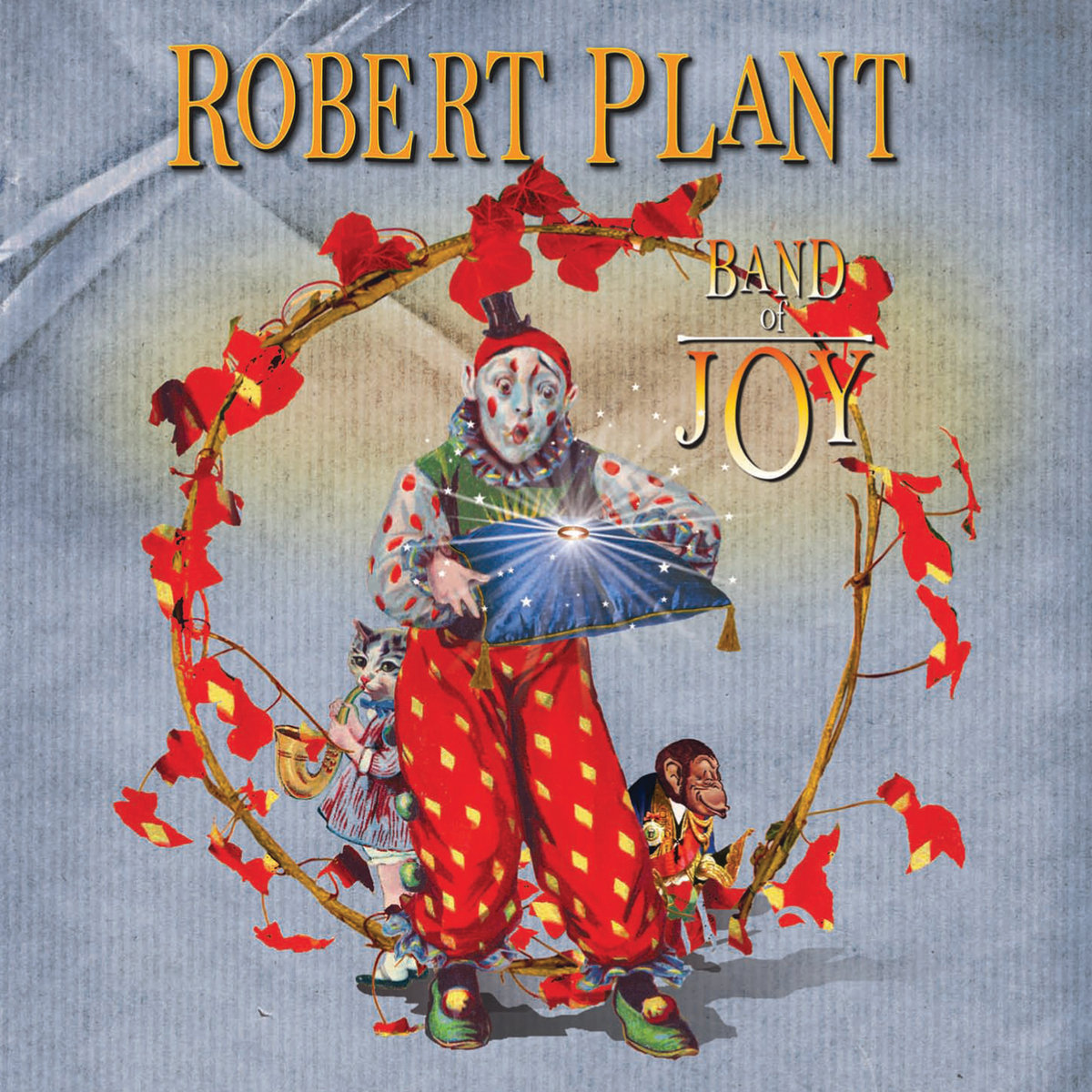
Never one to go for a surefire cash cow, Robert didn’t push a second collaboration with Alison Krauss, but kept his interest in Americana fresh with an album named after one of his pre-Zeppelin bands. Band Of Joy even keeps his old Es Paranza imprint afloat; has anyone else had that label? Such luminaries as Patty Griffin and Buddy Miller round out the band for a sound closer to Dreamland than Raising Sand.

For the most part, he’s content to reinterpret other people’s material here, starting with Los Lobos’ “Angel Dance” and an older Richard Thompson songsong, “House Of Cards”. “Central Two-O-Nine” continues the Americana fascination, but while it’s credited as an original, it sounds awfully derivative. There are two, count ‘em, two songs by Minnesota slowcore pioneers Low—“Silver Rider” features Patty cooing just like Alison might have, and “Monkey” is even more brooding and scary. “You Can’t Buy My Love” has a nice Merseybeat guitar part in between all the drums, which makes sense since the song dates from about 1964, while “Falling In Love Again” manages to straddle country, gospel and doo-wop.

“The Only Sound That Matters” is a recent tune by the defunct Dallas band Milton Mapes, and good for Robert for finding it. If somebody’s watching out for Townes Van Zandt’s estate, they’ll likely be pleased by the rendition of “Harm’s Swift Way” here. The balance of the tracks are new arrangements of traditional songs, and with titles to match: “Cindy I’ll Marry You Someday” and “Satan Your Kingdom Must Come Down” are fairly swampy, but “Even This Shall Pass Away” is given a trip-hop treatment.

Once again Robert made a decent album, and even got critical kudos for it. Band Of Joy isn’t remotely annoying, but it doesn’t exactly leap out of the speakers. It can be enjoyed, and filed.

Robert Plant Band Of Joy (2010)—3

Sunday, October 9, 2011

John Lennon 17: Signature Box

While it seemed we had been through this already, Yoko and an eager EMI decided to celebrate what would have been John Lennon’s 70th birthday with a small pile of new catalog items. Power To The People: The Hits was supposed to replace Lennon Legend, apparently, while offering a more affordable option to 2005’s Working Class Hero: The Definitive Lennon double-CD package. Those who wanted to tread a little further were invited to enjoy Gimme Some Truth, which evenly divided 72 songs across four thematic CDs. And Double Fantasy Stripped Down applied the “naked” philosophy to the last album he released in his lifetime.

The big deal of the program was Signature Box which offered up the eight studio albums from Plastic Ono Band through Milk And Honey, remastered from the original mixes (unlike the batch everyone had picked up over the previous decade) with new liner notes but no extras that weren’t on the original LPs. A six-track CD entitled “Singles” covers “Give Peace A Chance”, “Cold Turkey”, “Instant Karma”, “Power To The People”, “Happy Xmas” and “Move Over Ms. L”, and to further entice the completist, “Home Tapes” presents 13 demos and outtakes, some familiar but legally purchasable for the first time ever. Most of the studio alternates come from Plastic Ono Band, except for a radically different “I Don’t Wanna Be A Soldier”. Of the demos, it’s nice to have clean copies of “One Of The Boys”, “India” and another “Serve Yourself” variation.

Since we’re fans of (most of) the original albums, we’re always happy to have an excuse to listen to them. The packaging is slim and sleek, with full lyrics and extra photos (though Yoko seemed to think Some Time In New York City needed more mid-1969 shots). Naturally, the biggest complaints concerned what was left out of the set. Besides ignoring most of the bonus tracks from the earlier CDs, previous Yoko-approved sets, like Menlove Ave. and Live In New York City were missing in action, although a handful of songs from those albums (as well as Live Peace In Toronto) did find their way to Gimme Some Truth. And if you wanted the Stripped Down version of Double Fantasy, that meant you ended up with two copies of that album.

If it were truly all-encompassing, we might be more inclined to rate it higher, yet at the same time, we don’t know if we’d be able to stand having (to buy) everything all over again. We wouldn’t have put it past them to have something will emerge to commemorate his 75th birthday in 2015, and therefore inspire further gnashing of teeth. But we’d also much rather have had the opportunity to hear what other music he might have created beyond that ten-year window.

John Lennon Signature Box (2010)—3½

Saturday, October 8, 2011

Velvet Underground 7: VU and Another View

In an early clue to the reissue trend of the CD era, Bill Levenson at PolyGram started taking advantage of the latest remastering technology to explore some of the lost treasures in the company’s vaults. Having acquired the rights to the Verve and MGM labels, he was able to coordinate the reissues of the first three Velvet Underground albums, which had long been out of print. (Loaded was still owned by Atlantic, and had stayed in their catalog on the strength of “Sweet Jane” and “Rock & Roll”.) Glowing press items and the budget price helped push each album, but just as interesting to newcomers and old fans alike was the cool collection of unreleased tracks Levenson found in the same vaults and spruced up nicely, even adding a more contemporary snap to the drums.

While most of the tracks were recorded in the space between the third album and Loaded, the notes took pains to insist that VU was in no way a rumored lost album; it was still a testament to Lou Reed’s ability to write great songs and the band’s ability to deliver them. “I Can’t Stand It”, “Ocean” and “Lisa Says” were of course familiar to the seven people who’d bought Lou’s first solo album. These versions rock as good as any; “Lisa Says” in particular benefits from not having the “why am I so shy” interlude. Likewise, “She’s My Best Friend” and “Andy’s Chest” are run at faster paces than Lou’s sluggish solo takes. Just as revelatory is “Stephanie Says”, which would be redone on Berlin and here features a wonderful arpeggiated guitar part plus John Cale’s fittingly sympathetic viola.

Then there are the completely new tracks. “Foggy Notion” chugs along like a train (particularly on the LP version, which has a false start available nowhere else), but the more ordinary “One Of These Days” was best left aside. “Temptation Inside Your Heart” sounds like they didn’t want to bother mixing the vocal parts, but it’s still nice to hear the boys banter in the booth. And good old Moe Tucker gets the last word with the exceptionally sweet “I’m Sticking With You”.

VU must have been something of a success, as nothing else could explain how a second volume, with the phonetically clever title Another View, snuck into stores with no fanfare and the same inner sleeve that had graced its brother reissues. This one was definitely for obsessives, as the multiple takes and backing tracks are more indicative of a bootleg. While the sound is excellent and up to major-label standards, one longs to hear the lyrics that would have graced such songs as “Guess I’m Falling In Love” and “Ride Into The Sun”; at the same time, “I’m Gonna Move Right In” isn’t much more than a jam. “We’re Gonna Have A Real Good Time Together” was familiar to longtime fans, though “Ferryboat Bill” and “Coney Island Steeplechase” could have spent more time being honed before recording. The first recorded version of “Rock & Roll” is nice from a historical standpoint, but you’d be hard-pressed to decide which version of “Hey Mr. Rain” is better. Both feature John Cale, and both are stunning. If you like that sort of thing.

The Velvet Underground VU (1985)—3½
The Velvet Underground Another View (1986)—3

Friday, October 7, 2011

R.E.M. 9: Automatic For The People

It arrived on one of those crisp October days, without a hint of Indian summer in the air. It was still exciting to hear a new album by a band you liked, especially one as unpredictable as R.E.M. Not only we were pretty happy it came relatively quickly after their last one—one of the plusses of not touring—but Automatic For The People delivered a listening experience that nicely contrasted the huge pop sound that made Out Of Time so ubiquitous.

“Drive” had already made it to the radio, with its menacing acoustic-with-strings echo of the previous album. And we still couldn’t understand a damn word he was saying. “Try Not To Breathe” sets the mortality theme, lifted a hair by the goofiness in “The Sidewinder Sleeps Tonite”. “Everybody Hurts” wore out its welcome pretty quick, though the video and its nod to the recent film Falling Down (itself a nod to the more obscure film The Swimmer) is still a great visual artifact. “New Orleans Instrumental No. 1” is suitably daring yet slight, and an odd choice for the middle of the side, but “Sweetness Follows” ends the first half on a pretty and elegant note.

“Monty Got A Raw Deal” starts side two in a somewhat reminiscent echo of “Drive” on side one; it’s supposed to be about Montgomery Clift, whom the Clash had already covered in “The Right Profile”. “Ignoreland” crashes through with its Neil Young tuning and angry diatribe against the Bush regime (which would be gone within a month, thanks in part to Stipe and his friends on MTV). This song has unfortunately not been any less relevant over the years. “Star Me Kitten” is built around the same vocals-as-machine effect as “I’m Not In Love” by 10cc. “Man In The Moon” follows, a tribute to a “comedian” not everyone thinks was funny since he’d first done the Mighty Mouse gag about 17 years earlier, but it’s still pretty catchy. “Nightswimming” still haunts, even for those who haven’t gone skinnydipping at any hour. It evokes a memory of summers long gone, and the carefree nights of youth. “Find The River” brings it all to a close with lyrics alternately hopeful and hopeless. (“I have got to find the river!” we’d declare emphatically as we listened to it for the fifth straight time on the bar jukebox.)

As autumn descended and the year drew to a close, Automatic For The People became a pleasant comfort. Little did we know it would be their last great album. It’s also the one we’ve listened to most when preparing for whatever the next album would be. While not above their first four, it’s still a remarkable collection of music. (Kurt Cobain said he’d wanted to record an album with the same acoustic approach. Instead, he shot himself. We still wonder what that album would have sounded like had he completed it.) Again, this was their last great album, and we might as well consider it their last album. It would have been a good way to go out.

Most pundits held the album in high regard years later on the occasion of its 25th anniversary, boosting the hype for the expanded editions. The cheaper double disc added their sole live performance from that year—and it’s excellent—captured approximately six weeks after the album’s release. Several of these tracks had been farmed out on various CD singles, so having it all in one place in sequence is more than welcome. The deluxe version added the usual visual component and a Blu-ray disc, plus another CD full of demos for the album, some of which were the basis for the finished songs. While many of the given song titles seem obscure at first glance, without being a complete spoiler the listener will hear working versions of the songs on the album, with only a few completely unreleased ideas. “Mike’s Pop Song” is a full-fledged Mike Mills composition, while “Devil Rides Backwards” is a curious set of lyrics even sleepier than the rest of the album. Another track of interest is “Photograph”, in a version before Natalie Merchant added her vocals for a various artists comp.

R.E.M. Automatic For The People (1992)—4½
2017 25th Anniversary Edition: same as 1992, plus 13 extra tracks (Deluxe adds another 20 tracks and Blu-ray)

Wednesday, October 5, 2011

Van Morrison 5: His Band And The Street Choir

Van’s further flirtation with mainstream appeal continued with His Band And The Street Choir, an acoustic R&B album that’s even happier than Moondance. There’s only one song in a minor key, and even that’s a romantic one.

The best songs still endure—“Domino” is a wonderful opener, with interesting interplay between the guitar and the horn section. We still have no idea what “Crazy Face” is about, even if it’s just a setup for his squawking two-note sax solo. “Give Me A Kiss” is about as light as things get, though he summons his inner James Brown for “I’ve Been Working”. “Call Me Up In Dreamland” is another ode to the magic of radio, and the equally devotional “I’ll Be Your Lover, Too” recalls the quieter sound of Astral Weeks. (At the end he asks, “How was that?” We don’t hear the answer.)

“Blue Money” was a mild hit, but the nonsense chorus and falsetto chirping of somebody in the choir gets a little grating. The simple strum of “Virgo Clowns” epitomizes the nicely relaxed feel of the album, even if the laughter filling the room at the end is a little gratuitous. A celeste introduces “Gypsy Queen”, something of a falsetto lullabye. “Sweet Jannie” is fairly basic, but “If I Ever Needed Someone” is a wonderful gospel original. The closing “Street Choir” is a little confusing; as a virtual title track (supposedly against Van’s wishes) it doesn’t really sum up the album, and we wonder who’s left America.

His Band And The Street Choir is wonderfully lighthearted throughout, and another satisfier overall. It’s not too deep, and it’s just plain catchy. (As are the five alternate takes included on the album’s eventual reissue, particularly an even punchier “I’ve Been Working”.) The cover art depicts the artist as hippie troubadour, surrounded by happy families of musicians undoubtedly enjoying life without a care in the world. And again, there are some lovely pleading liner notes from the wife. It fits nicely with other homespun albums of the period, from such contemporaries as The Band and James Taylor, and even stretching to Paul McCartney and Bob Dylan. It was almost as if the Sixties were still in bloom.

Van Morrison His Band And The Street Choir (1970)—3½
2015 Expanded & Remastered CD: same as 1970, plus 5 extra tracks