Wednesday, November 16, 2011

Rolling Stones 41: Live Licks

In an amazing turn of events, the Stones broke pattern somewhat by issuing a live album as a follow-up to a hits collection, which itself had followed a live album! They’re nothing if not innovative.

Live Licks gets its title from the tour supporting the Forty Licks collection, and it’s to their credit that it’s not simply all the songs from that album played live. That would be silly, of course. They only pulled that trick for the first disc, which serves up eleven of their Classic Rock radio staples, the newest of which was over twenty years old, with the key addition of Sheryl Crow on “Honky Tonk Women”. (We’ll pause while you try to contain your excitement.) And the man who said he wouldn’t be singing “Satisfaction” in his forties is doing it at 60.

The second disc is slightly more interesting, with three—three!—solo vocals by Keith, some deeper catalog selections, a few choice covers and a guest appearance by gargantuan legend Solomon Burke on “Everybody Needs Somebody To Love”, to which most people will respond, “Hey, they’re doing a Blues Brothers song.” It’s still the more surprising, if anything, of the two discs.

Live Licks sounds good, of course, with technology helping Chuck Leavell and Bobby Keys replicate the sounds of the records. The boys sound great and the band is tight. But by now we’ve been used to seeing the “post-production” credit in the liner notes of a live Stones album, so who knows how much tweaking happened between the performances and the CD pressing? It remains just another souvenir, and one that certainly wasn’t purchased by everyone who’d bought a ticket on this crazy 14-month tour. If you were there, you probably had a great time. If not, the excitement doesn’t likely surface.

And what’s a Stones album without a little controversy? To ensure their stature as the world’s favorite dirty old men next to Hugh Hefner, Live Licks was released in some of the more liberated countries worldwide with an uncensored cover, showing the lovely lady riding the tongue topless. In the US we were left to wonder what was under the bikini. Hot-cha!

This wasn’t the only souvenir of this particular jaunt, as a year before a DVD box set called Four Flicks sold exclusively through the Best Buy chain contained three different concerts in three separate venues—an arena, a stadium, and a theatre, which was the other gimmick of the tour. Two decades on, after they’d begun regularly repackaging concert video from the post-Wyman years as live albums, Licked Live In NYC offered the audio from the set’s Madison Square Garden portion, as originally broadcast on HBO, which also happens to include the aforementioned Sheryl Crow cameo. Coming soon after the very welcome release of the El Mocambo set from 1977, this was not only overkill, but a big step back in the creativity department. Even more maddening is that it’s pretty good, set-wise and performance-wise.
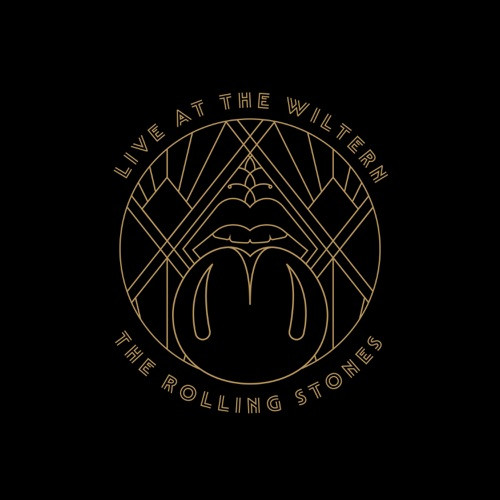
Two years after that, Live At The Wiltern presented a theater-sized show from a couple months before that had also been sourced for Live Licks. The thrust of this selection from the vaults was that it sported deeper dives into the catalog, which was one of the more unique aspects of the tour. Some of these so-called rarities included “Live With Me”, “Hand Of Fate”, “Dance Part 1”, “Stray Cat Blues”, “No Expectations”, “Going To A Go-Go” by a thin margin, and others that were already represented on the other two albums above. (Solomon Burke’s guest appearance is here as well.) Being a more intimate venue, with excellent separation of Woody’s guitar on the left and Keith on the right—albeit with backup singers and a full horn section—it might be the keeper of the three.

Rolling Stones Live Licks (2004)—3
Rolling Stones
Licked Live In NYC (2022)—3
The Rolling Stones
Live At The Wiltern (2024)—3

Monday, November 14, 2011

Willis Alan Ramsey: Willis Alan Ramsey

Considering the billions of albums that have been released over the years, it’s safe to say that the ones that have endured and sustained the artists’ careers are in the minority, while the rest have languished in obscurity since their release. Of that majority are performers that came and went, sometimes achieving one-hit wonder status and currently residing in the “where are they now” file.

Some of those one-hit wonders are due to external circumstances; Jeff Buckley only had one album out before he drowned, while Robert Johnson was already dead before anyone had heard of him. There’s the hypothesis that if Elvis Presley had disappeared after only recording the Sun sessions, we’d be talking of him in much different tones today.

Then there’s Willis Alan Ramsey, a Texas singer-songwriter who recorded exactly one eponymous album nearly forty years ago, and hasn’t been in much of a rush to do another one, despite continual rumors and pleas. (Allegedly anytime anyone asks him when he’s gonna put out a second, he replies, “What was wrong with the first one?”) The album straddles the lines between country, folk and bluegrass; you can hear Leon Russell (who plays on the album and signed him to his Shelter label) in his twangy croon, and Lyle Lovett (who idolized him and eventually collaborated with him) in his alternately wry and tender songwriting.

“Ballad Of Spider John” follows the tradition of “young guy writing as an old man” while staying original. “Muskrat Candlelight” likely kept him flush for several years, thanks to the hit versions by America and Captain & Tennille. It doesn’t induce as much wincing here, with a nice touch on the vibraphone. The jaunty “Geraldine And The Honeybee” and “Wishbone” simmer with Okie charm, followed up by “Satin Sheets”, sly and ironic considering his eventual shunning of the spotlight (best line: “Praise the Lord and pass the mescaline”). But “Goodbye Old Missoula” is the one you’ll be humming long after the side ends.

Side two is more overtly country, with the fiddle sawing through “Painted Lady”, the swampy “Watermelon Man” and the tribute to Woody Guthrie in “Boy From Oklahoma”. The super-sweet “Angel Eyes” is probably the best song ever written with that title, and to leave things on a high note, “Northeast Texas Women” puts you amidst a front porch hoe-down.

A track-by-track synopsis doesn’t suffice here, mostly because we feel we haven’t been able to do them justice. Each of the songs are striking in their own way, and Willis Alan Ramsey remains an album that any singer-songwriter would be proud of were it the only physical evidence of their work.

Willis Alan Ramsey Willis Alan Ramsey (1972)—4

Friday, November 11, 2011

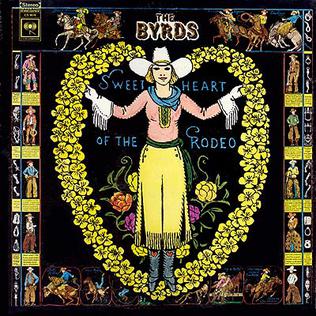
Byrds 6: Sweetheart Of The Rodeo

The original Byrds were now down to two: McGuinn and Hillman. Still saddled with a record contract, they regrouped with a couple of new members and some grand ideas. Instead, they followed the post-psychedelic hangover of 1968 by going back to basics. Anchored by multi-instrumentalist trust fund brat Gram Parsons, the band more or less invented country-rock with Sweetheart Of The Rodeo.

Neither veteran brought an original composition to the album, but being the Byrds, they do frame the set with two Bob Dylan songs (“You Ain’t Goin’ Nowhere” and “Nothing Was Delivered”) recently unearthed from the Basement Tapes. The rest are straight arrangements of traditional songs, bluegrass favorites and even an R&B cover, a wonderfully pretty “You Don’t Miss Your Water”. Throughout, the songs are colored by rolling piano, banjo, pedal steel guitar and not a single Rickenbacker. McGuinn still took center stage as the leader, and even without his old granny glasses he could still carry a tune—so much so that for either legal or personal reasons he overdubbed his lead vocal on a few tracks that were originally cut with Gram Parsons singing.

That Parsons guy tended to make a pretty big impression on everyone he met; supposedly he was the one who turned the Byrds ship into this particular harbor. “You’re Still On My Mind” is a good drinkin’ song, and “Life In Prison” fits the same stereotype. His best moments on the album are on his own songs; “Hickory Wind” and “One Hundred Years From Now” (even sung by McGuinn) became immediate genre classics. And although mostly relegated to bass and mandolin duties, Hillman indulges his bluegrass roots with strongly sung performances of “I Am A Pilgrim” and “Blue Canadian Rockies”.

Sweetheart Of The Rodeo was not an immediate hit, but became a touchstone once more rock musicians began incorporating country sounds into their work. Its importance in the history of the Byrds was underscored by the inclusion of the original Gram Parsons vocals on the three songs McGuinn tinkered with on the band’s 1990 box set. It’s also the only one of their albums to be given its own “deluxe” expansion past a single CD. The Legacy Edition includes the three Parsons vocals originally featured on the box set, along with the standard outtakes, a bunch of early Parsons tracks and a whole pile of rehearsal takes on a second disc, but ignores five of the bonus rehearsals on the 1997 CD, so completists have to have both.

The album does show something of a progression through their first five, and while the Byrds continued as a band for another five years, they really weren’t the same band. Only Roger McGuinn was left, and he built a new unit around the amazing speedy picking of a kid named Clarence White. There would be some definite highlights over the next handful of albums—“Ballad Of Easy Rider” and “Chestnut Mare” to name two—and they still maintained a rabid fan base, but people seeking the jingle-jangle sound of the original band would be disappointed. (Besides, David Crosby was doing pretty well with his new friends anyway.)

The Byrds Sweetheart Of The Rodeo (1968)—4
1997 CD reissue: same as 1968, plus 8 extra tracks
2003 Legacy Edition: same as 1968, plus 28 extra tracks

Wednesday, November 9, 2011

Badfinger 2: No Dice

Having added the photogenic Joey Molland on lead guitar, Badfinger became a rock band (as opposed to a pop group). They weren’t able to escape the Beatle comparisons, especially being the only rock band on the Apple label, which had to promote No Dice alongside the other five Beatle solo projects that had been released in 1970. It also didn’t help when one of their songs was called “Love Me Do”, and another (“Believe Me”) is a dead ringer for “Oh! Darling”.

But they do benefit from the jolt of electricity, with “I Can’t Take It” leaping from the speakers, and the stellar power pop of “No Matter What”, one of the greatest rock songs of all time, as the first single. Pete Ham starts to emerge as the hidden genius in the band, thanks to the sentimental “Midnight Caller” and the verse portion of “Without You”; the chorus was added by Tom Evans, and soon became a worldwide hit in a syrupy arrangement under Harry Nilsson’s added ache. “Blodwyn” is a nice dose of Welsh folk, and “We’re For The Dark” gets a touch of strings to help it along.

Not to be outdone, drummer Mike Gibbins was responsible for the riveting “It Had To Be”, sung well by Pete that we keep forgetting he didn’t write it himself. Joey collaborated, mostly with Tom, on the dynamic “I Don’t Mind”, while “Better Days” chugs along amid an excellent guitar frame. (He alone was responsible for “Love Me Do”.) “Watford John” is a rollicking boogie-woogie credited to each member.

No Dice is a decent album, and holds together as one, which is why it gets an edge in its rating. It was a moderate hit as well, partially from the Beatle connection and mostly because of “No Matter What”, and was one of the most anticipated reissues of the initial CD era. Of course, only one of the bonus tracks on that ended up on the 2010 CD, and another was only available henceforth digitally, the balance of both taken up by demos and alternate versions, but that doesn’t detract from the quality of the 12-track album proper.

Badfinger No Dice (1970)—3½
1992 CD reissue: same as 1970, plus 5 extra tracks
2010 CD reissue: same as 1970, plus 5 extra tracks

Monday, November 7, 2011

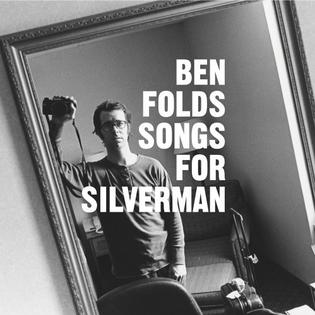
Ben Folds 7: Songs For Silverman

It was a longish time before his second solo album. There had been a few EPs (which we’ll get to soon enough), a live album and a project for William Shatner, but a real Ben Folds album gained the stature of a grand statement in its absence. To make things even wackier, there was a core band of bass and drums on every track. So why had the Five disbanded if that was Ben’s preferred sound?

Most of the Songs For Silverman veer towards the more serious side, as opposed to the snarky geek rock that had been his hallmark for the previous decade. He gets most of the comedy out of the way early; “Bastard” might have been a self-portrait, if not a more biting portrait of Stan from the last album. Its trips through various time signatures keep you guessing. “You To Thank” is another biting portrait, this time of a marriage that perhaps shouldn’t have been celebrated. A trip through America’s heartland inspired “Jesusland”, which he soon performed with an “arena rock” arrangement on tour, but that only distracted from the song’s message, as wonderful as the sound was. The Elton John homage “Landed” is a good barometer for the sound of this album; one of his best songs, it’s basically a phone call from someone who’s just escaped a stifling relationship. Before things get too heavy, he sings “Gracie” for his daughter, a charming lullabye with a childlike hook.

The anti-love songs continue with “Trusted”, a blunt portrait of division, and “Give Judy My Notice”, a gorgeous kiss-off. “Late” is a tribute to recently deceased songwriter Elliot Smith, and works only because of that knowledge. The remainder of the album is dedicated to some very vague songs, thick with possibility of interpretation. “Sentimental Guy” is a slight self-portrait (maybe) and “Time” gets a boost from lovely harmonies, including the voice of one Al Yankovic. The big enigma is “Prison Food”, with lyrics presumably about another impending breakup without illuminating the title; here the harmonies on the bridge resemble those of Pink Floyd (thanks to his British drummer).

Songs For Silverman takes a while to sink in, and as good as some of the individual tracks are, it does work best as a whole. Hindsight has explained a lot, as despite the loving dedication and photos of the woman, Ben was on the verge of divorcing his third(!) wife. This knowledge only makes the subject matter more uncomfortable to consider, but it’s doubtful he was trying to make his own Blood On The Tracks or Here, My Dear.

Ben Folds Songs For Silverman (2005)—3½

Friday, November 4, 2011

Tom Waits 12: Big Time

Despite the theatrical genesis of Franks Wild Years, it was never made into a narrative movie. Instead, Tom’s tour behind the album was filmed and cut with a few performance art pieces, and released as Big Time. With the band basically crowded around the industrial light bulb hung from his mike stand, it makes for a straining watch.

At least the music is entertaining. A smattering of selections were included on the companion soundtrack album, and provides a nice sampler of songs culled mostly from his Island tenure. In the live format, Tom’s able to emote a little more, giving some life to things like “Way Down In The Hole”, while infusing “Cold Cold Ground” and “Time” with the tenderness they deserve. Even with its jokey non sequitur prelude, “Train Song” is just as sad as its album version.

There are some departures to keep things interesting. “Red Shoes” is rescued from ‘70s obscurity, and “Strange Weather” makes its Waits debut, having already been covered by Marianne Faithfull, deep into her own Kurt Weill phase. “Falling Down” is a studio recording; nearly a pop song, we can’t help wondering if the demolished hotel mentioned in the lyrics is a reference to his old home in the Tropicana. “Telephone Call From Istanbul” is sped up, and runs away from the chorus to quote “Chantilly Lace”. Throughout, his crackerjack junkyard ensemble keeps up with his every spit and gargle.

It’s not the best representation of a Waits concert, but given that he was about to take a ten-year sabbatical from the stage, Big Time had to suffice.

Tom Waits Big Time (1988)—3
1988 CD version: same as LP, plus 6 extra tracks

Wednesday, November 2, 2011

Van Morrison 6: Tupelo Honey

Life in the sticks was certainly agreeing with Van, based on the sunny, bucolic photos adorning the sleeve of Tupelo Honey. Here we see the country squire, long-haired, bearded and developing a gut, wandering along wooded lanes with horses, his lady and a cat.

His R&B approach gets a little country color, thanks to the occasional appearance of a pedal steel guitar, but it still has to cut through the Caledonia soul. “Wild Night” was the big hit, with its percolating bass line, but it’s “Straight To Your Heart (Like A Cannonball)” that grabs your ears. “Old Old Woodstock” and “Starting A New Life” celebrate home and family, and “You’re My Woman” is an overt love song, building from basic verses to the repetitive cadences that would pepper his live performances.

The lovely title track is a high point, and it’s a credit to its simplicity that we only just noticed that it’s melodically identical to “Crazy Love” from Moondance (Van’s “conceptual continuity” rivaling that of Frank Zappa). “I Wanna Roo You (Scottish Derivative)” is even happier still, while “When That Evening Sun Goes Down” manages to distill Nashville Skyline into three minutes. There’s even something of an epic finale in “Moonshine Whiskey”, which alternates between a barn dance waltz and an uptempo jig, revving up for the big finish.

Listening to the album, one doesn’t hear any echoes of the discomfort that began to set in following the end of the Sixties. Instead, life seemed pretty good. As happy as Tupelo Honey is, Van apparently didn’t enjoy making the album, as he had just moved to Marin County, leaving Old Old Woodstock to the hippies who didn’t have a map to Max Yasgur’s farm. He doth protest too much, because he certainly sounds in the mood for love here, even more so on the alternate of “Wild Night” and a rollicking version of “Down By The Riverside” that emerged on an expanded CD.

Van Morrison Tupelo Honey (1971)—3
2008 CD reissue: same as 1971, plus 2 extra tracks