Monday, November 28, 2011

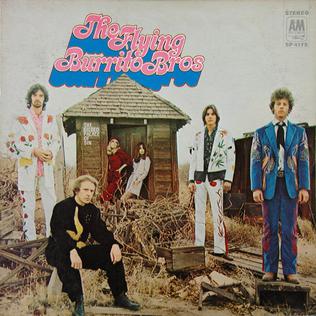
Flying Burrito Bros 1: The Gilded Palace Of Sin

Gram Parsons was only in the “new” Byrds long enough to spearhead the recording of Sweetheart Of The Rodeo. Even before that album was released, he had left the band, soon to be followed by Chris Hillman, and together they formed the Flying Burrito Brothers.

This outfit expanded on the country tendencies of the Byrds by infusing it with a distinct rock sound, best summed up by the fuzz tone used by pedal steel guitarist “Sneeky Pete” Kleinow, which cuts through even the corniest tracks like a saw. On top of it all, Parsons and Hillman croon like the Everly Brothers. This blend appears at the top of The Gilded Palace Of Sin on “Christine’s Tune” (later retitled “Devil In Disguise”).

Their approach to country was anything but orthodox, as even the straighter sounding songs can be deceptive. The wonderfully melodic “Sin City” skewers the LA music scene, while the jaunty “My Uncle” concerns draft evasion while a mandolin trills away. “Wheels” and “Juanita” celebrate, respectively, the open road and the redemption of a teenage girl. “Do You Know How It Feels?” is relatively straight, setting us up for the closing, slightly surreal monologue about a “Hippie Boy”, complete with a chorus of “Peace In The Valley”.

Each side gets its own unique centerpiece as well. On the first, there’s a pair of Memphis R&B covers, “Do Right Woman” and “The Dark End Of The Street”, which had been hits just a few years before and would later feature in The Commitments. Side two has two songs that were apparently written so fast that they barely got titles. “Hot Burrito #1” is a lovelorn lament later claimed by Elvis Costello as “I’m Your Toy”. “Hot Burrito #2” isn’t as easy to sum up except for the insistence on love and the exasperated “Jesus Christ!” at the end of each chorus.

The Gilded Palace Of Sin is one of those albums that gets better with each listen, coming across as so effortless and easy. And as with most things involving Gram Parsons, it wouldn’t last.

The Flying Burrito Bros The Gilded Palace Of Sin (1969)—4

Sunday, November 27, 2011

Gene Clark 2: Fantastic Expedition Of Dillard & Clark

Having seen zero success with his solo debut, Columbia dropped Gene Clark, who found his way over to A&M Records, which would pick up on another Byrds offshoot ere long. This time he hooked up with another country iconoclast. Doug Dillard had been part of a family-based bluegrass band that were semi-regulars on The Andy Griffith Show before he started doing sessions, playing banjo for the likes of the Monkees. Having shared management with the Byrds, he and Gene teamed up as Dillard & Clark, eventually recording another short yet worthy album.

The Fantastic Expedition Of Dillard & Clark is an intriguing stew of traditional country, without drums, and mild psychedelia, thanks to an occasionally prominent electric harpsichord. Chris Hillman adds mandolin to two tracks, but the most prominent contributor outside of Dillard & Clark themselves is one Bernie Leadon, who added banjo and guitar and co-wrote several of the songs.

Gene comes off strong with another hidden gem, the mildly brooding “Out On The Side”, then “She Darked The Sun” is pure porch music, at least up until the mildly atonal finish. His honking harmonica opens “Don’t Come Rollin’”, which tumbles into stacked rhymes and warnings, while “Train Leaves Here This Morning” would one day feature on the debut Eagles album, but once again we’re getting ahead of ourselves.

“With Care For Someone” is stuck between a hoedown and descending minor key mystery, but the upbeat chorus wins the battle. Not so for “The Radio Song”, which has a dusty lyric but is beholden to that harpsichord, providing an out-of-body experience. The hoedown returns on a cover of Lester Flatt’s “Git It On Brother” and “In The Plan”, and “Something’s Wrong” nicely bookends the set.

Coming so soon after Sweetheart Of The Rodeo, The Fantastic Expedition Of Dillard & Clark got decent reviews from critics who still remembered who they were, but once again didn’t move any copies (Gene still not into touring by airplane). It’s gone in and out of print over the years, but the version to find adds three non-album singles, including the lost masterpiece “Why Not Your Baby”.

Dillard & Clark The Fantastic Expedition Of Dillard & Clark (1968)—3

Friday, November 25, 2011

Big Star 5: Columbia

Thanks largely to Rykodisc—and the rest of the world catching up—Big Star was suddenly a big deal. Just in time to ride the nostalgic wave, some enterprising organizers of a college “springfest” in Missouri managed to convince the touring Alex Chilton to bring drummer Jody Stephens in for a gig, supplemented by two of the Posies, who were one of the grunge era’s most devout Big Star disciples. Released within six months of this “reunion show”, which took place in the afternoon and in a tent, Columbia is nearly as sloppy as the other live album, but the energy coming from the Posies (who likely knew the songs backwards and forwards) makes for one hot recording.

It’s hard to tell which guitar is which, since both go awry at one point or another, but Jody is positively solid behind his kit, as well as on the two songs he sings. The Posies handle some of the tougher vocals, along with a reverent “I Am The Cosmos” in honor of Chris. A couple of songs from Third add variety, as do a couple of standby covers from the old days, T.Rex’s “Baby Strange” and Todd Rundgren’s “Slut”. Still, the focus is on the most rockin’, toe-tappin’ crowd-pleasers. This was not the time or place to drag Alex through “Big Black Car”.

Alex would continue to release the occasional quirky solo album, and reunite with the Box Tops a few times. Jody Stephens went back to managing Ardent Studios and playing the occasional session for the likes of Matthew Sweet (signed to the same label that released Columbia) and Golden Smog. And from time to time, they’d call the guys from the Posies and play a few shows as Big Star. (One of these, from October 1994, was professionally filmed, recorded, and vaulted for 20 years. Captured at the end of a tour, Live In Memphis is a better-performed version of the Missouri show, with the addition of “Jesus Christ”, “The Girl From Ipanema”, and even “Big Black Car”.)

So although it wasn’t a once-in-a-lifetime event, Columbia made for a neat souvenir. But it didn’t present the entire show, as evidenced by the photo of the set list inside the packaging. Dumber still, BMG Special Products put out a CD with five of the released tracks as part of their “Extended Versions” bargain bin series. When Record Store Day became a thing, some bright bulb decided to press the complete concert on vinyl as Complete Columbia, as well as make it available for streaming. Now fans whose parents hadn’t even met at time of the show could truly hear it all, from the stumble through “Thirteen” to the ramshackle encores of “Jeepster”, “Kansas City” and “Duke Of Earl”.

Big Star Columbia: Live At Missouri University 4/25/93 (1993)—3½
2016 Complete Columbia vinyl reissue: same as 1993, plus 7 extra tracks
Big Star Live In Memphis (2014)—3

Thursday, November 24, 2011

Brian Eno 19: Small Craft On A Milk Sea

If anyone understands the power of branding in packaging modern music, it’s Brian Eno. Case in point: Jon Hopkins and Leo Abrahams were already busy musicians in the electronic field before meeting Eno, and worked with him on various projects throughout the first decade of the century, for such artists as Paul Simon and Coldplay. Yet when their first full-length collaboration was released as Small Craft On A Milk Sea, Eno’s name came first. Meanwhile, the liner notes show the other two as contributing keyboards and guitars, while Eno is credited with “computers”. Granted, that’s not to suggest he didn’t do anything musical with said machines, but still.

This would be more of a big deal if the album was wholly somebody else’s work, or worse, not very good. But somehow these relatively short pieces, designed with the familiar idea of creating imaginary soundtracks, hang together very well. Some cuts, such as “Complex Heaven”, “Calcium Needles”, and the title track, recall the spacescapes of Apollo; others, like “Flint March”, “Bone Jump”, and “Dust Shuffle”, bring to mind the “juju space jazz” of The Drop, but with more purpose than noodling. A guitar finally shows up in “Horse”, which sounds like a remix of certain Music For Films and the Passengers project, while “2 Forms Of Anger” bashes out a single chord right out of Joy Division.

Overall, there’s enough variety in between that makes it easy to sink into it as ambient music, or even put on shuffle and enjoy from a completely random standpoint. Again, the brevity and purpose of each of the tracks on Small Craft On A Milk Sea combine for success. (The Japanese pressing got an extra track in the closing, near-ambient “Invisible”, while a pricey limited collector’s edition added a bonus disc with four more tracks, plus an exclusive silkscreen print. All these, save the print, were eventually made available for streaming.)

Brian Eno with Jon Hopkins & Leo Abrahams Small Craft On A Milk Sea (2010)—3

Wednesday, November 23, 2011

Police 1: Outlandos d’Amour

The Police were an odd lot, even for a power trio. American drummer Stewart Copeland and a singer/bassist named Sting seemed to stand much taller than guitarist Andy Summers, who’s about ten years older than the other two. All three came from jazz fusion backgrounds, but the times dictated a punk attitude and approach. That’s one reason why Outlandos d’Amour has something of a DIY vibe, in the cover art anyway.

The music isn’t that complicated either, even given the members’ prog-rock credentials. “Next To You” is tailor-made for pogoing, before “So Lonely” veers between a reggae verse and double-time chorus. With Sting’s high-pitched vocal and those odd guitar chords, “Roxanne” was likely most people’s introduction to the band. “Hole In My Life” and “Can’t Stand Losing You” became anthems for lovelorn kids everywhere.

One thing that comes to mind listening to the album after all these years—after Sting spent all that time being concerned about rainforests and whatnot—was that the Police once recorded “silly” songs. The Sting we know today would never have a song like “Peanuts” on one of his solo albums, much less sing it. In that light, songs like “Truth Hits Everybody” and even “Born In The 50s” gave them the image of a smart band. Such a label is hard to stick in light of “Be My Girl – Sally”, in which a simple pop chant frames the nursery rhyme-style ode to a blowup doll. (The novelty gets thinner considering that Roxy Music had already covered that subject five years earlier, but at least this ode is happier.)

While the band would evolve over time, much of their typical sound is in place on Outlandos d’Amour, almost encapsulated by “Masoko Tanga”, a near-instrumental jam for slashing guitar, melodic bass, reggae-tinged drums and nonsense vocals. Because of its quality and simplicity, it’s still a fine debut, and a nice diversion from some of the comparatively heavier things to come from the band.

The Police Outlandos d’Amour (1978)—3½

Friday, November 18, 2011

Badfinger 3: Straight Up

Perhaps it’s because he didn’t live long enough for people to say otherwise, but the general consensus is that Pete Ham was a pretty nice guy. Maybe too nice, since history has shown that you’ve pretty much gotta be something of a prick to make it in the music business.

His image has always been that of an extremely talented man who loved making music, and loyal to a fault. These qualities are best exhibited by the opening track on Straight Up, “Take It All”. The song came about after the Concert for Bangla Desh; Badfinger was part of the onstage band, strumming along on acoustics and percussion. Then, when George Harrison stepped forward to play “Here Comes The Sun”, he asked Pete to play the song alongside him. Apparently Tom and Joey (incidentally, both Liverpudlians) were extremely jealous that Pete got his own moment in the spotlight, and gave him crap for it. Pete’s response was “Take It All”, an absolutely gracious statement, free of ego. It’s a wonderful song, and just another moment that makes his story so heartbreaking.

It’s also a great opener for a fantastic album. Straight Up had a difficult birth, starting with a pile of scrapped sessions, continuing with George Harrison as producer. When the Concert for Bangla Desh took up his time, the album was completed with Todd Rundgren. There’s not a clunker in the set. It goes right from “Take It All” to the power pop classic “Baby Blue” and its wonderful interlocking guitars. A mini-suite of “Money” and “Flying” displays their talent for piecing together fragments into a cohesive production. “I’d Die Babe” is sneakily Beatlesque, and the majestic “Name Of The Game” gets a big sound out of only a few instruments, with Pete’s simple piano solo buried in the mix before the fade.

Joey dominates the credits on side two with three excellent songs, depicting life on the road in “Suitcase”, fingerpicking folk on “Sweet Tuesday Morning” and straight up (sorry) rock on “Sometimes”. Pete’s “Perfection” and Tommy’s “It’s Over” show off the band’s versatility, but the real centerpiece is “Day After Day”, another Pete Ham masterpiece, right down to the angelic harmonies, twin slide leads and nice piano touches from Leon Russell.

Reviews of Straight Up were mixed at the time, which is astounding considering that the same album led several wish lists until its eventual CD release in the ‘90s. The new power pop generation could finally hear the roots of Teenage Fanclub and Jellyfish in pristine quality, and the band gained even more overdue praise. Even the requisite bonus tracks were interesting, including some early alternate takes and the shimmering single mix of “Baby Blue”. Some of those bonuses were carried over to the next CD, while others were relegated to download-only status in favor of other outtakes. (At least the “missing” bonuses from the 1992 No Dice reissue turned up, this time in context.) Taken all together, it’s now possible to compile the earlier version of the album, and it’s clear that redoing it was the smart move. Straight Up was a four-star album when we began typing this, but has since been upgraded. Justifiably.

Badfinger Straight Up (1972)—4½
1993 CD reissue: same as 1972, plus 6 extra tracks
2010 CD reissue: same as 1972, plus 6 extra tracks

Wednesday, November 16, 2011

Rolling Stones 41: Live Licks

In an amazing turn of events, the Stones broke pattern somewhat by issuing a live album as a follow-up to a hits collection, which itself had followed a live album! They’re nothing if not innovative.

Live Licks gets its title from the tour supporting the Forty Licks collection, and it’s to their credit that it’s not simply all the songs from that album played live. That would be silly, of course. They only pulled that trick for the first disc, which serves up eleven of their Classic Rock radio staples, the newest of which was over twenty years old, with the key addition of Sheryl Crow on “Honky Tonk Women”. (We’ll pause while you try to contain your excitement.) And the man who said he wouldn’t be singing “Satisfaction” in his forties is doing it at 60.

The second disc is slightly more interesting, with three—three!—solo vocals by Keith, some deeper catalog selections, a few choice covers and a guest appearance by gargantuan legend Solomon Burke on “Everybody Needs Somebody To Love”, to which most people will respond, “Hey, they’re doing a Blues Brothers song.” It’s still the more surprising, if anything, of the two discs.

Live Licks sounds good, of course, with technology helping Chuck Leavell and Bobby Keys replicate the sounds of the records. The boys sound great and the band is tight. But by now we’ve been used to seeing the “post-production” credit in the liner notes of a live Stones album, so who knows how much tweaking happened between the performances and the CD pressing? It remains just another souvenir, and one that certainly wasn’t purchased by everyone who’d bought a ticket on this crazy 14-month tour. If you were there, you probably had a great time. If not, the excitement doesn’t likely surface.

And what’s a Stones album without a little controversy? To ensure their stature as the world’s favorite dirty old men next to Hugh Hefner, Live Licks was released in some of the more liberated countries worldwide with an uncensored cover, showing the lovely lady riding the tongue topless. In the US we were left to wonder what was under the bikini. Hot-cha!

This wasn’t the only souvenir of this particular jaunt, as a year before a DVD box set called Four Flicks sold exclusively through the Best Buy chain contained three different concerts in three separate venues—an arena, a stadium, and a theatre, which was the other gimmick of the tour. Two decades on, after they’d begun regularly repackaging concert video from the post-Wyman years as live albums, Licked Live In NYC offered the audio from the set’s Madison Square Garden portion, as originally broadcast on HBO, which also happens to include the aforementioned Sheryl Crow cameo. Coming soon after the very welcome release of the El Mocambo set from 1977, this was not only overkill, but a big step back in the creativity department. Even more maddening is that it’s pretty good, set-wise and performance-wise.

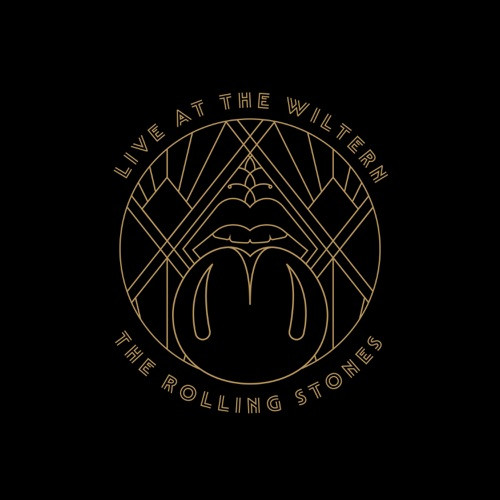
Two years after that, Live At The Wiltern presented a theater-sized show from a couple months before that had also been sourced for Live Licks. The thrust of this selection from the vaults was that it sported deeper dives into the catalog, which was one of the more unique aspects of the tour. Some of these so-called rarities included “Live With Me”, “Hand Of Fate”, “Dance Part 1”, “Stray Cat Blues”, “No Expectations”, “Going To A Go-Go” by a thin margin, and others that were already represented on the other two albums above. (Solomon Burke’s guest appearance is here as well.) Being a more intimate venue, with excellent separation of Woody’s guitar on the left and Keith on the right—albeit with backup singers and a full horn section—it might be the keeper of the three.

Rolling Stones Live Licks (2004)—3
Rolling Stones
Licked Live In NYC (2022)—3
The Rolling Stones
Live At The Wiltern (2024)—3