Monday, December 12, 2011

R.E.M. 11: New Adventures In Hi-Fi

The band undertook a massive tour in support of their worst album to date, during which three of the four members had to be hospitalized, none of whom were Peter Buck. Still, having enjoyed a long absence for a once heavy-traveled combo, they made the most of their time by recording new songs in dressing rooms and at soundchecks. This method had been deployed in the past to some success by Jackson Browne and Lou Reed, but for New Adventures In Hi-Fi, which arrived just short of a year after Monster, the band was quick to cite hipper references like Radiohead and Neil Young’s Time Fades Away.

At just over an hour, it’s too long for a single album, and too short for a double, suggesting that it should have been trimmed by about a third. The opening track, “How The West Was Won And Where It Got Us” doesn’t live up to its title, and how could it? “The Wake-Up Bomb” returns to the glam sound of Monster, “New Test Leper” doesn’t catch hold, and “Undertow” is a noisy jam with lyrics. “E-Bow The Letter” gets its title from the gizmo Peter Buck uses to get the drone sound on his guitar, and a big deal was made by having their idol Patti Smith bleat over the chorus. Despite its melancholy intro, “Leave” is driven by a persistent siren that wears out its welcome as soon as the vocal starts. Unfortunately, it goes for another six minutes, until you’re sick of the riff too.

Things improve slightly on the second half of the album, beginning with “Departure”. One of the first good tracks, it’s also one of the few songs on the album that evokes the feeling of a band on tour, with its expansive riffing and backing vocals taken from “Me In Honey”, and a chorus not too far removed from one of the extended hooks in ELO’s “Do Ya”. “Bittersweet Me” is also very well developed, and made for a good single, even though people weren’t buying those anymore. Like everything else here, “Be Mine” ends up going a little too long, but rumbles around its basic format with enough muffled vocals to be enticing. “Binky The Doormat” has something of a circus sound to it, fitting for a song supposedly inspired by the movie Shakes The Clown. The “choruses” get louder, with a nice balance of Stipe mumbling his words and Mills repeating “go away”. They’d had some decent instrumentals on their albums in the past, but “Zither” should have been left as a B-side. “So Fast, So Numb” seems to be more finger-pointing at either the slacker generation or celebrity casualties, and “Low Desert” brings us back to the water-treading of the first part of the album. At least we end on a high point, with the familiar piano sound of “Electrolite”.

New Adventures In Hi-Fi was a valiant effort to start and finish an album quickly, but it’s hardly a triumph. Besides being too long as a whole, half of the tracks break the five-minute mark. Many of the songs sound unfinished, as if Stipe spewed a bunch of lyrics on top of existing jams after the fact. That might have worked for R.E.M. at one time, but it doesn’t always here. However, they were starting to remember how they used to make records, but we had no way of knowing we’d suspect their best work was behind them.

Since much of the album was recorded live anyway, the eventual expanded edition simply added every track that had been what we still call B-sides from the CD singles, including the surf instrumental “Tricycle”, covers of “Wichita Lineman”, Richard Thompson’s “Wall Of Death”, and the Troggs’ “Love Is All Around” (a perennial Mike Mills favorite), alternate versions of some album tracks, and a few songs that had been parsed out for movie soundtracks. (A more expensive version was housed in a book-style package with a Blu-ray featuring audio-visual extras.)

R.E.M. New Adventures in Hi-Fi (1996)—2½
2021 25th Anniversary Edition: same as 1996, plus 13 extra tracks (Deluxe adds Blu-ray)
Friday, December 9, 2011

Badfinger 5: Badfinger

Having said goodbye to Apple, the label that introduced them to the world at large, Badfinger found themselves shackled to a punishing recording schedule on a new label. While they were eager to do whatever it took to “make it”, they were in the position of having to come up with a brand new album mere months after completing Ass.

Given this background, it’s surprising that Badfinger is as good as it is. It’s evenly balanced between the three main singers, all of whom contribute superior, tuneful tracks. Pete Ham is back in his element, and his songs here are as good as any in his arsenal. “I Miss You” borders on the too sweet, but “Shine On” evokes a Wellie-shod ride through the green hills of the UK. Joey Molland’s “Love Is Easy” fulfills the boogie quotient, and he’s supposedly the subject of “Song For A Lost Friend”, a title that can’t help but be suggestive. A minute of audio-verité bridges “Why Don’t We Talk?”, and the first side closes with “Island”, a toughly played love song from Joey.

Maybe it was because they were trying for a fresh start, but there’s something completely alien about “Matted Spam”, from the title to the prominent horn section. Tom Evans continues his questioning in “Where Do We Go From Here?”, and with Mike Gibbins’ excellent “My Heart Goes Out”, it’s obvious that the band was obsessed with the uncertainty in their lives, and justifiably so. But leave it to Pete to take that knotted brow and turn it into something as genuinely loving as “Lonely You”. Joey’s frustration closes the album, first with the slow-burning “Give It Up”, then with the frenetic snapshot of “Andy Norris”.

As good as Badfinger is, it wasn’t going to change their fortunes any. Which is too bad, since it was a decent album. Its limited availability over the years was certainly a hindrance, and even CD versions have been rare, but it became available as a legal download in time from the usual sources, and finally got an expansion in 2018. Outside of an unreleased Tom Evans song, the additions are rough mixes of album tracks with mostly mild differences, but at least it’s easier to find.

Badfinger Badfinger (1974)—3½
2018 expanded edition: same as 1974, plus 10 extra tracks

Wednesday, December 7, 2011

Ben Folds 8: Supersunnyspeedgraphic

Way back in the lull following the live album, Ben started issuing a series of five-song CD EPs available via direct mail order or digital download, in the spirit of how bands used to put out singles. These were said to be contenders for what would eventually be his next album, but while a few would soon get regular rotation on stage, only one would turn up on his next real album.

Of the three, the first EP is still the most satisfying. Speed Graphic kicks off with a fantastic cover of “In Between Days”, to the point where we think an whole album’s worth of “Ben Plays The Cure” could make that band’s catalog more palatable. “Give Judy My Notice” appears in a piano-and-voice version that’s just as nice as the one that made it to Songs For Silverman. “Protection” has a jazzy, Steely Dan feel; this escalates for “Dog”, mostly notable for the phone conversation with his wife at the end of the song. And “Wandering” is likely to be on anyone’s list of sappy Folds favorites.

Sunny 16 arrived on schedule a few months later. This time the cover was “Songs Of Love” by the Divine Comedy, and the other songs were, well, okay. “There’s Always Someone Cooler Than You” is the upbeat snide song; “You’ve Got To Learn To Live With What You Are” goes for Elton John territory; “All You Can Eat” puts a four-letter word in the chorus for shock effect; and “Rock Star” combines elements of all three.

It was almost a year before Super D completed the trilogy, and it’s the weakest of the series. Maybe the extra time convinced him to save the good stuff for the album proper, so this was merely the leftovers? Two covers frame the set: a faithful recreation of “Get Your Hands Off My Woman” by glam-rockers The Darkness, and a two-year-old live version of “Them That Got” by Ray Charles. “Kalamazoo” wanders along until a “disco string section” interrupts the middle, “Adelaide” seems an odd tribute to the city, while “Rent A Cop” is an obvious joke song.

After finishing the promotion for Silverman, it was time for another stopgap. He did come through somewhat on the original promise by compiling a sampler from the EPs, with the incentive that most were remixed and/or augmented slightly. From the fifteen contenders, Supersunnyspeedgraphic, The LP includes two songs from Speed Graphic, four from Sunny 16 and three from Super D. In addition, one song from his collaboration with Ben Lee and Ben Kweller, a track from his soundtrack to Over The Hedge and best of all, his uniquely melodic cover of Dr. Dre’s “Bitches Ain’t Shit” round out the set. (He did not, however, include anything from 2005’s Songs For Goldfish, a collection of live tracks and oddities released via the same channels as the EPs.) It’s still geared towards diehard fans anyway, most of whom were more excited about a real followup album. And then they could tread water while the next distraction came along.

Footnote: Supersunnyspeedgraphic was “promoted” by the first live concert streamed on the Myspace social network, released the following year on DVD and a dozen years later as a CD. Much of the humor is lost without the visuals, and he triggers the same effect from his new old-school synth far too many times. An interlude by cross-dressing comedian Titler is a distraction, but the all-request format does dig deep into his repertoire. (Five songs from an iTunes-exclusive performance fill up the space.)

Ben Folds Speed Graphic (2003)—4
Ben Folds
Sunny 16 (2003)—3
Ben Folds
Super D (2004)—2½
Ben Folds
Songs For Goldfish (2005)—3
Ben Folds
Supersunnyspeedgraphic, The LP (2006)—3
Ben Folds
Live At Myspace (2019)—3

Tuesday, December 6, 2011

Frank Zappa: General Disclaimer

In the coming weeks, Everybody’s Dummy will begin a series of reviews involving the music of Frank Zappa. In the interests of full disclosure, we submit the following.

We are not Zappa-expert, nor do we pretend to be, nor do we plan to be. There are lots of places on the Interwebs where people can argue about which touring band did the best version of “Pound For A Brown” or whether Scott Thunes isn’t fit to tie Arthur Barrow’s shoes or that the Flo & Eddie years were the best. Prior to his death, our knowledge of the man was limited to:

• a few Saturday Night Live performances;
• the rare occasions when FM radio played a track but it was usually “Valley Girl”, “Dancin’ Fool”, “Joe’s Garage”, “Montana”, or “Don’t Eat The Yellow Snow”;
• his testimony in Congress during the PMRC hearings; and
• The Real Frank Zappa Book. That said...
We have listened to every commercially-available-through-the-year-2000 Zappa album at least once, and some way more than that. These include everything from Freak Out! past The Yellow Shark up to the Rykodisc releases of Läther and Mystery Disc. Such things became possible when one managed a CD store in a suburban town with a rabid Zappa fan base even before the sad events of December 1993, after which, in an attempt to educate ourself, so began the journey. In the process we heard a lot of music we came to love, and a lot that just plain irritated us. Not all of his best stuff is limited to the early stuff, just as not all of it takes overt detours into shock value and songs about oral and/or anal sex. Some of it is obnoxious crap. Much of it is original and inimitable.

Everybody’s Dummy will not commit to chronicling each of the 62 or so albums he saw released, nor all 29 and counting of the posthumous vault dispatches thus far. We will, as ever, simply try to put some of these albums and/or collections into perspective for those who, maybe like us back in the mid-‘90s, simply wanted to know what the fuss was about. How far we’ll get is yet to be known.

So if you’re a Zappa expert (translated: anyone who knows these albums better than we do, which isn’t tough to achieve) and you think we’re full of it, consider the above. And by all means, please comment or complain about any of the posts where you see fit. We are eager to learn.

If that doesn’t work for you, then consider this dialogue exchange from Uncle Meat:

“I can’t tell when you’re telling the truth—”
“I’m not.”
“How do I know anything you’ve said to me is—”
“You don’t.”
As always, thanks for reading. Hopefully you’ll find it to be an interesting ride. And don’t forget: Music is the best.

Monday, December 5, 2011

Police 2: Reggatta de Blanc

In keeping with the brand image, the second album by the Police didn’t deviate much from their established standard. However, as often happens with a second album, it’s clear that Reggatta de Blanc required a little more work to be complete. Circumstances dictated that the band be fairly democratic, with several compositions credited to Stewart Copeland and the one-in-all disclaimer “all noises by the Police”.

Despite trawling the clichéd theme of an isolated individual following some kind of disaster, “Message In A Bottle” was catchy enough to be a bit, and added another guitar riff to be passed along like a cherished secret code among listeners. The title track—another made-up foreign-sounding phrase meaning “white reggae” but still conveying a seabound image—is another excellent distillation of the band’s sound, complete with wordless vocals. “It’s Alright For You” retains some of the snottiness from the first album, just as “Bring On The Night” expresses a level of nihilism. Unfortunately, “Deathwish” doesn’t really take off at all.

The promise of the album title is reinforced on side two. “Walking On The Moon” provides another singalong, much more cheerful than “The Bed’s Too Big Without You”. In between there’s “On Any Other Day”, written and sung by the band’s monotonic drummer, and not the last time the band would present a suburban nightmare. He’s also responsible for “Contact”, which is nearly as musically interesting as “Does Everyone Stare”, a truly hidden gem based around a broken-finger piano part. The mix changes in time for a repeat of the first verse, expanding the sound without doubling it. However, the closing “No Time This Time”, while a good tune, deserves a better vocal than it got.

There’s enough quality on Reggatta de Blanc to make it worthwhile as a whole, but the Police were basically treading water. Some stretching would be necessary for the band to keep from repeating themselves.

The Police Reggatta de Blanc (1979)—3

Friday, December 2, 2011

Badfinger 4: Ass

Outside of the former Beatles (and Yoko Ono), Badfinger stayed on Apple Records longer than anyone else. Their loyalty even extended to recording at the Apple Studio in the basement of 3 Savile Row, something only George bothered to do in the ‘70s.

Of the band, Pete Ham was always the most loyal, and he wears his emotion on the sleeve of “Apple Of My Eye”, the sweetly sad farewell that opens Ass and would be the last non-Beatle single on the label. It’s a promising start to an ultimately disjointed album, pulled together from several sessions and one where Joey Molland dominates. The most rockin’ member of the group, his contributions lean toward heavier sounds and plenty of lead guitars, right out front on “Constitution”. “Get Away” and “The Winner” are rather pedestrian boogie numbers with lazy lyrics, but “Icicles” stands out with its infectious melody and anachronistic backwards guitar. Oddly, “I Can Love You” sounds more like the type of song Pete Ham would write; Pete’s only other contribution is the moody “Timeless”, which builds slowly from a piano piece to a grand finale along the lines of “I Want You (She’s So Heavy)”.

Tom Evans is equally quiet on the album, but his two contributions are gems. “Blind Owl” is a toe-tapping rocker made for the stage, while “When I Say” is as sweet as any of his love songs. Mike Gibbins contributed his first song in a while, but any chance “Cowboy” had is sunk by the annoying wobble-board sound effect in the front of the mix, and the square-dance asides in the break.

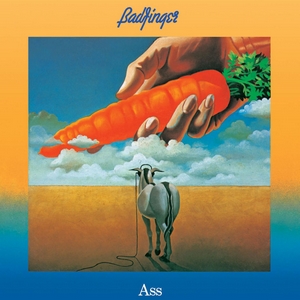
Led away by the giant carrot on the cover, Badfinger would resurface soon enough. But that’s another chapter in their sad story. Ass is merely adequate, overlooked upon release and usually only mentioned in passing. It only got limited release on CD in the ‘90s, with only one bonus track (Joey’s “Do You Mind”) but thorough liner notes. The 2010 reissue included more outtakes, plus others made available for download only, consisting mostly of alternate versions of album tracks (and, strangely, “I Don’t Mind”) plus Joey’s heavy-Scouse “Regular” and Pete’s odd blues parody “Piano Red”.

Badfinger Ass (1973)—3
1996 CD reissue: same as 1973, plus 1 extra track
2010 CD reissue: same as 1973, plus 5 extra tracks

Wednesday, November 30, 2011

Lou Reed 20: Songs For Drella

Lou was on a career high with New York from the year before, so a reunion with John Cale was certain to get attention. The excuse was a piece commissioned to celebrate the life of Andy Warhol, so they jumped at it. Songs For Drella got excellent reviews from the usual arty quarters, but would it translate to an album? More to the point, how would it be received as a Lou album, since Cale wasn’t exactly a sales magnet?

The album is a song cycle, mostly sung from “Andy’s” point of view. He starts out trying to escape his “Small Town”, then going to The Big City to establish an “Open House” policy. “Style It Takes” is sung by John, with sympathetic vocals from Lou at the very end, and it’s one of the more successful descriptions of Andy’s approach. The two of them battle on guitar and piano to demonstrate “Work”, wherein Lou recounts some of their conversations. “Trouble With Classicists” frames a quiet rant, and Lou follows it with the more obvious “Starlight”, wherein he delivers an intensity we wouldn’t expect from Andy. “Faces And Names” is much quieter, and we’re starting to think John understood Andy better than Lou.

Indeed, “Images” is relentless, to express the idea of repetition, but “Slip Away” (helpfully subtitled “A Warning”) demonstrates the foreboding that is explained away in “It Wasn’t Me”, where the blame is pushed to others. Something of a plot arrives in “I Believe”, a fairly frank description of Andy getting shot (an event overshadowed in the news by the same thing happening to Bobby Kennedy). This is also where Lou’s guilt over not visiting him in the hospital begins to dominate the lyrics. “Nobody But You” features Lou on acoustic for the first time in a long while, but it’s a three-chord song with Cale playing a percolating bassline on the keyboard. The abrupt ending is an excellent a setup for “A Dream”, a monologue composed by Lou and recited by John in an emulation of Andy’s infamous diaries. This piece is mesmerizing, as the longer it goes the more it perfectly expresses his perceived loneliness, particularly in his anger at Lou. The despair intensifies as the piece comes to a close, so it’s a jarring switch to “Forever Changed”, based around the metaphor of a train, one that actually appears to slow down at the song’s end. After all that, “Hello It’s Me” seems more like the kind of song that would sit by itself on an album. Some of the rhymes seem a little forced, but the closing “goodbye Andy” never fails to catch in your throat.

The idea of these two guys working together for the first time in over twenty years was very enticing, and Songs For Drella delivers very stark listening, with a few great songs amidst some real cringers. But if you’re expecting a Velvet Underground album, you’ll be disappointed. It really is an art piece, conceived as a theater presentation. It’s the sound of a guy with a guitar looking at a guy on keyboards talking about a guy they knew. Lou gets to shred here and there, but even he knows that his chops are merely window dressing to Cale’s fingers. It’s a curio, not likely to be appreciated outside the fan base. (To appeal to them a limited edition was packaged like a jewel case-sized book with a fuzzy cover. Like velvet. Get it?) At least Lou lost the mullet in the process.

Lou Reed & John Cale Songs For Drella (1990)—3½