Monday, December 26, 2011

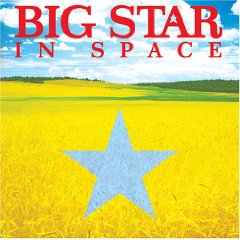
Big Star 6: In Space

After a decade of sporadic gigs (fueling continued interest in their tiny catalog) the reconstituted Big Star put out a new album in the middle of the second Bush administration. In Space is a Big Star album in name only, in that the players are the two Posies who joined Alex and Jody in 1993. In fact, Alex does not dominate the proceedings, and on the handful of songs that are certainly his, the sound is more like the schizophrenic R&B of his post-‘70s solo work. (Not that there’s anything wrong with that, if you like that sort of thing.)

The album is frontloaded with a handful of songs that do conjure the spirit of the band as people would like to remember them. “Dony” has a ragged edge and is catchy despite itself. “Lady Sweet” is the Posies version of the sound they’d like to hear. They harmonize with Jody on “Best Chance We’ve Ever Had”, and do a Beach Boys homage for “Turn My Back On The Sun”. Then Alex takes over for six minutes of silly funk in “Love Revolution”, a re-write of “Tighten Up” complete with calls to his “brothers and sisters” and a horn section. Thankfully, the old sound returns to Jody for “February’s Quiet”.

Alex wants the crowd to dance, which is obvious on his delivery of “Mine Exclusively”, a song that pre-dates even the Box Tops. The sound (and attitude) continues of “A Whole New Thing”, which pushes the irony in its beat-combo arrangement. “Aria, Largo” is hamfisted arrangement of a 400-year-old classical piece played on stiff guitar and bored drums. “Hung Up With Summer” sounds like it was recorded immediately afterwards, with a lot of the same guitar tones. “Do You Wanna Make It” is lyrically minimalist, conjuring memories of the Wonders as they toured the country’s finest state fairs. And it all comes to a sloppy end on “Makeover”, a jam with rambling “lyrics” cribbed from beauty ads. (It’s probably Paul Westerberg’s favorite track.)

In Space is not going to satisfy anyone’s dream of a fourth Big Star album, and the jury’s out as to whether anyone would care if not for the brand name on the label. At less than forty minutes, it delivers for about half. The Posies sound thrilled to be involved, but the real joy of the album comes from Jody Stephens, an exceptional and highly underrated rock drummer. His fills never fail to raise an eyebrow.

Big Star In Space (2005)—2½

Sunday, December 25, 2011

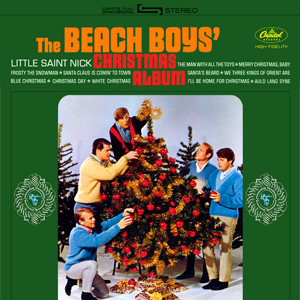
Beach Boys 8: Christmas Album

Like any red-blooded American boy, Brian Wilson loved Christmas. Likely influenced by Phil Spector’s album as well as their own “Little Saint Nick” from the year before (think a thematic cross between a little Deuce Coupe and a certain sleigh), The Beach Boys' Christmas Album was released a month after their live album, Capitol having zero qualms about loading up the shelves with their artists.

Five of the songs are Brian Wilson originals, played (most likely) by the band themselves. “Little Saint Nick” is still the best meld of the holiday spirit and the band’s brand. “The Man With All The Toys” has a jarring hiccup of a supporting part, “Santa’s Beard” and “Merry Christmas Baby” present Mike at his most nasal, while Al is credited with lead on “Christmas Day”. Outside of the occasional quote in a guitar solo, these are pop tunes with specific lyrics. Based on these it’s just as well that Brian didn’t try to write a whole album of Christmas songs, else his nervous breakdown might’ve been sooner or more severe.

To complete the album, the rest of the program consists of holiday favorites given lush, Four Freshman-style arrangements, much more typical of Johnny Mathis. Brian sings a couple of the prettier ones alone, but they all come together for the likes of “Frosty The Snowman” and “Santa Claus Is Coming To Town”, the latter with an unfortunate “circus” motif in between verses. They give their best blend to “I’ll Be Home For Christmas”, and bury some harmonic gymnastics under brother Dennis’s “special” spoken message over “Auld Lang Syne”.

Despite the promise of side one, this is not a rockin’ Christmas album, yet it does provide an interesting transition to the more advanced music Brian would create in 1965. The album never really went out of print, and even appeared on CD a few times, once with bonus tracks, including the single version of “Little Saint Nick”, an odd alternate of the same but sung over the backing track for “Drive-In”, and an a cappella mix of “Auld Lang Syne”.

At the end of the ‘90s, Ultimate Christmas more than doubled the original lineup with further extras, most notably an interview with Brian from a 1964 promo, the clumsy “Child Of Winter” standalone single from 1974, and selections from the band’s aborted 1977 Christmas album. These are just plain odd, as many of them were either holiday-tinged remakes of unfinished tracks. For one, “Santa’s Got An Airplane” updated the mode of travel with help of the unfinished late-‘60s track “Loop De Loop”, while “Melekalikimaka” and “Bells Of Christmas” would be reworked for the M.I.U. Album. Al Jardine’s kids narrate “(I Saw Santa) Rockin’ Around The Christmas Tree”, which rips off two separate songs, but “Winter Symphony” is a promising Brian tune that could stand to be slower and not as busy. There’s even a rare Dennis Wilson recording, the moving “Morning Christmas”, for that cult base. As with most Beach Boys music post-Endless Summer, these later tracks are simply not as strong as the prime material from the original era. (This too went out of print, superseded by 2004’s Christmas With The Beach Boys, which repackaged the tracks but left out “Christmas Time Is Here Again”, which was basically “Peggy Sue” with new words. Five years later, Christmas Harmonies offered a very strange 15-song distillation of the music. Meanwhile, their a cappella rendition of “The Lord’s Prayer”, the B-side to “Little Saint Nick”, hasn’t been included on any of these CDs since 1991, but has turned up elsewhere.)

The Beach Boys The Beach Boys’ Christmas Album (1964)—3
1991 CD reissue: same as 1964, plus 4 extra tracks
The Beach Boys Ultimate Christmas (1998)—2

Friday, December 23, 2011

Frank Zappa 1: Freak Out!

Something to consider about Frank Zappa’s first album is how much of his eventual career can be traced to it. It’s all here: influences from classical and avant-garde to doo-wop, extended guitar solos, “shocking” subject matter, and contempt for his audience, based on the assumption that they only care about commercial fluff and teenage heartbreak. Freak Out! was an incredibly bold debut for its time, as double albums were not common in 1966, even for established artists, and certainly not for a rock band’s debut.

The spine may have credited the album to The Mothers Of Invention, but a glance at the credits make it all too clear that Frank was in charge, especially from his “helpful” liner notes. “Hungry Freaks, Daddy” should have been proof that this wasn’t your average band, even when followed by the kiss-off in “I Ain’t Got No Heart”. “Who Are The Brain Police?” ushers in the weird, questioning authority and fixating on plastic and chrome. “Go Cry On Somebody Else’s Shoulder” is greasy doo-wop, which we’ll hear again and again, and “Motherly Love” is a more catchy come-on from the band. “How Could I Be Such A Fool” may have been another example of Frank trying to write trite ‘50s teenage lyrics, but he wisely gives the mic over to main vocalist Ray Collins.

“Wowie Zowie” goes out of its way to be dumb, complete with xylophone—another one of Frank’s favorite instruments. Another trio of “safe songs” attempts to appeal to the masses: “You Didn't Try To Call Me” and “Any Way The Wind Blows” are more by-the-numbers snappy yet forlorn love laments, and “I’m Not Satisfied” is all teen angst before we called it that; all would have easily made it on radio. “You’re Probably Wondering Why I’m Here” deflates it all with a wide smirk.

The first two sides on their own straddled the way-in and the way-out, but the second disc in the set makes a solid left turn. While a pretty standard riff, “Trouble Every Day” is his first major work of political commentary, as well as a chance to stretch on the guitar. Then he calls on the rest of the band to get crazy for “Help, I’m A Rock” (and its virtual coda, “It Can’t Happen Here”). The craziness continues for the entirety of side four with a free jam (which Frank always maintained was unfinished) called “Return Of The Son Of Monster Magnet”. Consisting of even more random percussion, freeform piano, moaning and groaning, sped-up and backwards voices, and random chanting, for most people this was the audio equivalent of a freak out. (It’s also the first of three consecutive album references to one Suzy Creamcheese.)

Zappa freaks may not agree on everything, but they probably like Freak Out! It’s generally everyone’s introduction, whether they bought it in 1966 or came across it later. And since Frank was so concerned with continuity and historical context, it’s still a good place to start. In between the “weird” stuff, the arrangements—some with contracted horns and strings—and radio-friendly mixes put it right in line with a lot of things coming out of L.A. recording studios at the time.
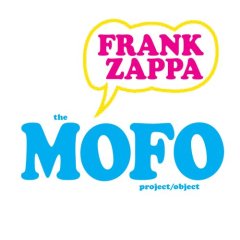
The album’s importance to his estate (a rather controlling outfit called the Zappa Family Trust, or ZFT) was underscored by the release of an archival entity called The MOFO Project/Object, “MOFO” being a handy acronym for “Making Of Freak Out”. Typical of the ZFT, it was available in two configurations, both featuring music not heard on the other, forcing fans to buy both (or procure them by nefarious means). The big one had four discs, while the one subtitled fazedooh was whittled to two.

Both featured the “original stereo vinyl mix” of the album on disc one, and filled the balance of space with a variety of basic tracks and vocal takes that illuminate some elements of the instruments and utterances hidden after the original fades. His ability with an Xacto knife shows in the various mixes and edits of “Help I’m A Rock” and “Monster Magnet”, but the outtake “Groupie Bang Bang” would never have passed muster back then. Besides being a fairly pedestrian Bo Diddley homage, the lyrics are a little too pointed, but for conceptual continuity purposes, they point the way to both the Flo & Eddie era and one of the subplots of Joe’s Garage. Interview snippets and later mixes fulfill the promise of being an “audio documentary”, while segments of a live performance at the Fillmore Auditorium the week the album came out prove that despite the use of studio musicians, including Carol Kaye on 12-string and various horns and strings on the album proper, the Mothers were actually a decent R&B combo. (At one point Frank says they’ve got copies of the album for sale in the back because “We’re in this for the money.”)

Two decades after that, once the ZFT had figured out how to load up anniversary box sets of albums, Freak Out! got yet another unveiling. This time, for its 60th anniversary, the original stereo mix, mono mix, and “pre-master reference” mix each got their own CD, and two shows from the Fillmore took up a fourth and part of a fifth, the balance of that disc filled out with an early rehearsal, demos, more alternate mixes, and outtakes. Some of this had been scattered throughout other archival digs, but now they were all together in better context. (The Blu-ray, which included all the expected high-resolution mixes, was where they decided to stick “Groupie Bang Bang”.)

The live material is very interesting because not only was there a lot of it, but we hear them play more standard R&B songs along with their more challenging original material. Not only does Ray double the melodies of “Wedding Dress Song” and “Handsome Cabin Boy” on harmonica, but they lead to longer guitar explorations, also heard on segments helpfully titled “Mothers Rock Out”. The packaging was in line with the other recent anniversary sets, and even included a full size reproduction of the “hot spots” map originally available by mail order for a buck. (The box was preceded by a few months by the first-ever release of Live At TTG Studios, an in-studio freak out that was filmed for television. There are a lot of “Help, I’m A Rock”-style jams, but Don Preston had just joined the band, and we hear early versions of “Duke Of Prunes” and “Absolutely Free”, the latter under a different title.)

The Mothers Of Invention Freak Out! (1966)—4
2026 60th Anniversary Super Deluxe Edition: same as 1966, plus 74 extra tracks (and Blu-ray)
Frank Zappa
The MOFO Project/Object (fazedooh) (2006)—3½
Frank Zappa
The MOFO Project/Object (2006)—3½
Zappa
Zappa ‘66 Vol. 1: Live At TTG Studios (2026)—3
Wednesday, December 21, 2011

Lou Reed 21: Magic And Loss

Following on from the elegy for Andy Warhol, Lou began to be more consumed by thoughts of death. This was nothing new to a man who chronicled drug disasters his entire career, but now people he loved were succumbing to the vagaries of age. The main impetuses for Magic And Loss were songwriter Doc Pomus and someone named Rita. (It has been suggested that the latter was Rotten Rita, one of the Warhol crowd, except that she was still alive; more likely it was actually Rachel, the transgender woman who was Lou’s partner for much of the ‘70s, who even graced some of his album covers.) Rob Wasserman (bass) and Mike Rathke (guitar) return from New York, but here the drums are supplied by Michael Blair, who’s better known as a percussionist and a noisy one at that, as evidenced by his work with Tom Waits and Elvis Costello. Still, that minimal approach keeps the sound clean and direct.

“Dorita” provides something of an overture before “What’s Good” provides a litany of observations of life and the lack thereof. “Power And Glory” appears twice—first as a lowkey track featuring the voice of the Legendary Little Jimmy Scott, and again as an out-and-out rocker. Both songs provide strange allegories and the horror at watching the effects of chemotherapy. “Magician” provides something of a contrast, sung from the point of view of the patient. Lou’s perspective returns on “Sword Of Damocles”, but he didn’t figure out what the melody was supposed to be before singing it, which is probably why Billy Corgan thought he could steal it for “Disarm”. “Goodby Mass” is pretty straightforward, capturing the sadness and futility one might feel at a funeral, while “Cremation” reiterates the usual metaphors about death.

“Dreamin’” sports one of his better developed melodies, to the point where the simple chorus doesn’t deflate the emotion of the memories within the words. Using all three chords, “No Chance” is another song from the hospital waiting room, but “Warrior King” needs only two chords to wish for the power to choose who lives and who dies. The most striking track is “Harry’s Circumcision”, a black monologue in the vein of “The Gift”, this one detailing a failed suicide. “Gassed And Stoked” takes the music down to one chord with the quickest change to A, only the title doesn’t match with the idea in the lyrics. By the time the title track closes the program, we’re just a little weary.

Lou saw Magic And Loss as a major work, giving each song title a descriptive literary subtitle (“The Thesis”, “Regret”, “Revenge” etc.) and promoting the album with performances of the songs in order. It’s not as catchy as New York, which is understandable considering the subject matter, nor is it a go-to party album, but at the cusp of the grunge era, it stands out as a cerebral effort in an otherwise non-cerebral field.

Lou Reed Magic And Loss (1992)—3

Monday, December 19, 2011

Badfinger 6: Wish You Were Here

For any other band, the prospect of creating three full-length albums to be released within a twelve-month period would be daunting, if not impossible, but most bands weren’t Badfinger. What’s even more amazing is that not only did they accomplish this Sisyphean feat, but they got better with each new LP.

Wish You Were Here is the peak of a busy period, an album where all cylinders were firing at maximum. It delivers on the power-pop promise of No Dice and Straight Up, without getting too sentimental, and letting Joey Molland shred on lead throughout.

“Just A Chance” is classic Pete Ham, and “Your So Fine” (just one example of their grammatical anarchy) is a catchy Mike Gibbins song sung by Joey, with excellent harmonies. Joey’s concerns with the future of the band drive “Got To Get Out Of Here”. But the one-two punch of shimmering gem “Know One Knows” and the multi-layered “Dennis”—the closest thing to an emotional piano ballad here, sung to a mischievous child—proves that Pete Ham was the living amalgam of Lennon and McCartney. (The final minute-and-a-half is exhilarating, in the way the bass walks over the piano, and subtly mixed harmonies support the lead vocal.)

The band’s skill at combining ideas frames the second side of the album, with a pair of “medleys” unfairly compared to those on Abbey Road. True, “In The Meantime/Some Other Time” does fade in on a discordant orchestra, but soon develops into a driving minor-key rocker. (Credit producer Chris Thomas for the fantastic sound throughout the album.) “Love Time” is a little on the wimpy side for Joey, but at least it’s heartfelt. Tom Evans’ only songwriting contribution is “King Of The Load (T)”, which sounds like another song we can’t place, is firmly entrenched in the ‘70s by the electric piano, and doesn’t explain what the letter T is for, unless that’s the first initial of the roadie in question. “Meanwhile Back At The Ranch/Should I Smoke” is constructed as a grand finale, with frustrations over the state of the band still managing to convey a sense of triumph over adversity.

So as great as it is, how has this album managed to be so overlooked all these years? Well, not only was it released a full eight months before the Pink Floyd album of the same name, Wish You Were Here was also pulled from distribution before said Floyd album came out. The wheeling and dealing that had brought the band to Warner Bros. caught up with their crooked management, leaving the boys in the middle with the most to lose. They were already rushed back into the studio to record yet another album, to be titled Head First. And that April, at the magical age of 27, Pete Ham took his own life.

The prospect of an expanded edition of Wish You Were Here in 2018 faded a little once the bonuses were revealed to be an unreleased version of Tommy’s “Queen Of Darkness” followed by “alternate” mixes of eight of the nine album tracks. Most of these exposed horn parts and orchestral flourishes left out of the final product, which only underscore how solid the album was in the first place.

Badfinger Wish You Were Here (1974)—4
2018 expanded edition: same as 1974, plus 9 extra tracks

Friday, December 16, 2011

Tom Verlaine 1: Tom Verlaine

Given that he was Television’s main songwriter and lead singer, it should be no surprise that Tom Verlaine bounced back from the demise of that band with a solo album. For the most part, the songs on Tom Verlaine follow right along where they left off on Adventure—tuneful, more along the lines of constructed pop songs than intricate guitar duels, mostly because he’s the only guitar player. (Fred Smith is the main bassist, however, and Jay Dee Daugherty from the Patti Smith Group drums on most tracks.)

“The Grip Of Love” sounds like recent Television, with its strangulated riff and stop-start rhythm, and it turns out to be a tune going back to the early days. “Souvenir From A Dream” has a little new wave mystery, but the additional piano after the choruses makes the track stand out. “Kingdom Come” would get wider exposure a year later when David Bowie covered it in a near carbon copy, so familiarity with that will fuel its enjoyment here. Outside a reason to stretch on the guitar, “Mr. Bingo” is on the goofy side, but it’s got nothing on “Yonki Time”, which sounds like it was made up on the spot and overdubbed immediately afterwards.

The poppy “Flash Lightning” gets things mostly back to normal, while “Red Leaves” gets an odd boost via breathy vocals credited to “Deerfrance”, who turns out to be a woman connected with Zelig-like frequency to Max’s Kansas City and CBGB’s, John Cale, and other movers and shakers of the time. (Those in the know will likely scoff at this brief summation, but there you are.) “Last Night” is nice and moody with a prominent piano by Bruce Brody and Mark Abel on chiming 12-string. Finally, the chugging “Breakin’ In My Heart” is another old TV song finally committed to vinyl, with extra rhythm guitar from Ricky Wilson of the B-52’s in that tuning of his.

Just like Television, Tom Verlaine grows on the listener, especially if one is already a fan. His voice is still an acquired taste, and the heavy reverb in the mix is relic of the era, but it all holds together well.

Tom Verlaine Tom Verlaine (1979)—3

Wednesday, December 14, 2011

Tom Waits 13: The Early Years

There had been something of a lull since “the Island trilogy”, during which Our Hero made a few movies and started some lawsuits but produced precious little music. Meanwhile, his first manager reactivated his old Bizarre label and started licensing things via Rhino Records. That’s how two CDs of early recordings by Tom Waits, which predated even Closing Time, managed to sneak into reputable shops before the artist turned his attorneys on the case like so many rabid dogs. (It may well have been one of the few cases he’s lost, as the music is still in print today.)

These are not all demos, as might be imagined. There’s a band on some of the tracks, but time has lost their names. At this point (1971), he’s sticking to guitar half the time and staying within the confines of the real folk blues. That’s where otherwise lost-to-the ages songs like “Goin’ Down Slow”, “Rockin’ Chair” and “Poncho’s Lament” fit. “Had Me A Girl” was obviously designed to make people in the coffeehouses chuckle, as would the more pointed “I’m Your Late Night Evening Prostitute”, a fairly accurate portrait of the average entertainer.

For familiar fans, it’s interesting to hear “Ice Cream Man” taken at its slower pace, while “Virginia Ave.” and “Midnight Lullabye” come fully formed. The version of “Little Trip To Heaven” is even lovelier than the “official” take, even considering the whistled solo. Historians will gravitate towards the first appearance of a protagonist named Frank, but this is more than likely coincidental. And proof that he was ahead of his time comes in the form of “Looks Like I’m Up Shit Creek Again”.

Whoever compiled these collections put the best tracks on the first volume, as the follow-up, while obviously dictated by sales, grasps at straws. This is illustrated by the preponderance of more familiar song titles. That said, it’s doubtful anyone will gravitate towards these versions of “Ol’ ‘55” or “I Hope That I Don’t Fall In Love With You”. “Shiver Me Timbers” hasn’t yet gained the melancholy so heavy. “Mockin’ Bird” has promise, but can’t get past the first two lines. But “So It Goes” puts him firmly in the realm of other New Dylans of the John Prine cloth, and “Diamonds On My Windshield” shows his grasp of beatnik music at this primitive phase. And the appearance of a solo acoustic “Blue Skies” only makes us wish the lush B-side was more readily available.

Taken together, the two volumes of The Early Years provide an alternate view of Tom Waits, showing where he came from. Perhaps he finds these preliminary sketches to be embarrassing—neither are listed on his official website—but really, there’s been a lot worse stuff magnetted to refrigerators over the years.

Tom Waits The Early Years Volume One (1991)—3
Tom Waits
The Early Years Vol. 2 (1993)—2½