Monday, January 16, 2012

Lou Reed 22: Between Thought And Expression

Now that Lou was making money for another label, his former homes took the opportunity to cash in. Conveniently, RCA and Arista were both under the same corporate umbrella, so compiling a box set was a fairly complication-free process, as long as they only went up to 1986.

Between Thought And Expression gets its title from a Velvet Underground song, and was also the title of a recent collection of Lou’s lyrics in book form. Here it simply traces his solo career from the first album up through Mistrial, with a sampling from each album along the way. This was a big deal in 1992, because many of his lesser-selling albums wouldn’t make it to CD for some time. Even Metal Machine Music is represented, in a 90-second snippet.

Most of the “hits” are here—“Walk On The Wild Side”, “Coney Island Baby”, the live “Sweet Jane”—though such singles as “I Love You Suzanne” and “No Money Down” aren’t. As for rarities, there are only a few: a live version of “Heroin” with Don Cherry on trumpet; a dull rave-up of the national anthem; a couple of early versions of later songs.

Lou was actually involved with compiling the set, and his reticence to open the vaults never jibes with his complaints about how the labels tampered with his work over the years. Here was a perfect opportunity to reveal his original intentions, and he passed.

As an introduction, Between Thought And Expression does the job of most box sets, so it succeeds on that level. But in an era when everybody was getting boxed, its usefulness would soon wane. Those seeking an introduction to the man’s work would have even more compilations to ponder in the racks as time went on.

Lou Reed Between Thought And Expression: The Lou Reed Anthology (1992)—

Friday, January 13, 2012

Police 4: Ghost In The Machine

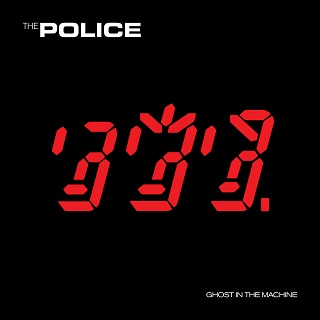
The Police began to break out of a rut, somewhat, on Ghost In The Machine. For one thing, it had a pronounceable title that wasn’t remotely gibberish. The cover itself was a stark subtle portrait of the band in LED—apparently Sting is the poofy digit in the middle, and the advent of MTV helped perpetuate the idea that his ego was in charge.

But while he may have been running the show, that wasn’t successful for the whole album. Many of the songs are nothing more than one-chord jams based around saxophone riffs. Apparently he’d just taught himself the instrument, so he toots incessantly, all over the album.

Synthesizers play a big role as well, starting with the jumpy “Spirits In The Material World”. “Every Little Thing She Does Is Magic” was a huge hit, and it’s still an incredibly happy song with just a hint of Caribbean influence. “Invisible Sun” meanders against its meter, but at least we finally hear a guitar. “Hungry For You” has a French subtitle, which is fitting since the song is yelled in that language. “Demolition Man” is a loud jam that was probably more fun to play than it is to listen to, even for six minutes.

Side two starts with another jam, and “Too Much Information” is fittingly crammed with too many saxophones. The same could be said for “Rehumanize Yourself”, but at least the lyrics are clever. “One World (Not Three)” beats the same idea into the ground over a reggae beat. By the time “Ωmegaman” (written by Andy Summers) arrives halfway though the side we’re aching to hear an actual song, with dynamics and everything, and it delivers. “Secret Journey” is something of a throwback to Zenyatta Mondatta, being prefaced by a full minute of guitar synthesizer. Stewart Copeland’s melancholy “Darkness” still manages to keep the album from ending dull.

Outside of “Every Little Thing She Does Is Magic”, the best songs on the album are the two Sting didn’t write. Taken as a whole, Ghost In The Machine is fairly boring, but that didn’t keep it from becoming a huge hit. Perhaps the tropical climate of the sessions permeated the cold exterior of the album for the majority of consumers.

A year after what would have been its 40th anniversary, an “alternate sequence edition” of the album was released on vinyl picture disc, as well as streaming. The tracks were in a completely different order, with half of side two now on the first and the biggest hit toward the end. Plus, “I Burn For You” appears in a shorter mix than the Brimstone & Treacle soundtrack), and side two closes with “Once Upon A Daydream” and “Shambelle”, which had been originally relegated to B-sides. (“Invisible Sun” has alternate vocals as well, and Stewart’s count-ins can be heard occasionally.) Hearing the album in a context shuffled from what we were used to for decades is intriguing, if not necessarily an improvement, but at 53 minutes it would have been considered too long, picture disc or not. And “Darkness” sounds just plain wrong anywhere but the end.

The Police Ghost In The Machine (1981)—

Wednesday, January 11, 2012

R.E.M. 12: Up

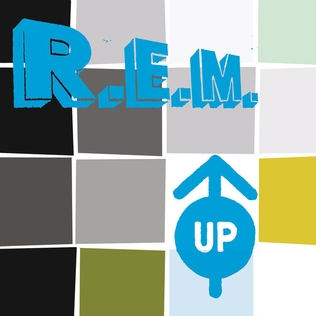
The boys of R.E.M. didn’t quite make it to their alleged goal of breaking up at the stroke of midnight on the millennium, as drummer Bill Berry quit before they got there. He left on the condition that doing so wouldn’t break up the band, so it was with heavy hearts and not a small amount of pressure that the remaining trio forged ahead with the recording of a new album. And when it’s time to change, you’ve got to rearrange, so they parted with co-producer Scott Litt after ten years and six albums. They even tried to simplify, going back to the one-word title. The packaging also included full lyrics for the first time ever on an R.E.M. album. (Up arrived with the blessing of Peter Gabriel, who was planning to use the same title for his own album, which wouldn’t surface for another four years.)

Knowing full well that whatever they did next would be under intense scrutiny, they went out of their way not to sound like themselves, relying on lots of wacky sounding (for R.E.M.) keyboards, using primitive old-school synthesizers and programmed drums. Up is full of contradictions, from the hopeful yet unfulfilled prophecy of the album title to the reliance on “old” sounds in order to sound “new”. This is immediately evident on the opener, the very Eno-esque “Airportman”. “Lotus” sounds more like standard R.E.M., with an electric piano for a New Adventures In Hi-Fi vibe. “Suspicion” is long but not boring, which is a plus. One of the most talked about songs was “Hope”, built around a distorted riff that could be described as Eno-esque (we really are going to try to stop using that term) and a lyrical/melodic structure borrowed from Leonard Cohen’s “Suzanne”, with subject matter that seems to entail a hospital. The highlight of the album is “At My Most Beautiful”, their first and best Beach Boys homage, built around a lovely Mike Mills piano piece. The melody isn’t much—another cousin of “Hairshirt”, “Radio Song”, and “Nightswimming”—but the moment where the harmonies make their chromatic lift proves that they have indeed found a way to make us smile.

Unfortunately the album starts to slide from there. “The Apologist” sports an okay organ part and a nice Coral sitar effect, but the “I’m sorry/so sorry” chorus was done better on Reckoning, and the closing “goodbye” just sounds wrong in the middle of the album. “Sad Professor” adds more guitar for something of a step up and “You’re In The Air” has a nice string part, but by now listeners would be excused for falling asleep. “Walk Unafraid” is a rewrite of both “The Apologist” and “Bang And Blame”, and should have been honed into one better track.

However, “Why Not Smile” gains momentum nicely over harpsichord, and Peter gets to layer a bunch of guitars, for a better display of the album’s potential. “Daysleeper” is a slow “Midnight Cowboy”, but Stipe’s lyrics work best when they’re not so literal. “Diminished” seems a more developed “Country Feedback”, but that’s probably just the pedal steel. A fragment of Stipe singing “I’m Not Over You” on acoustic is unlisted but included in the lyrics. The unsettling “Parakeet” snakes around a haunting prepared piano, and “Falls To Climb” returns the canned Eno-esque synth sound, very sterile and cold. (We really did try, honest.)

Up was a step in the right direction, with their most memorable melodies in a good while. At first listen it seemed an improvement over the autopilot of the last couple of albums, but the novelty wears off pretty quickly. (It’s tough when your first four albums are great, because when you put out something that’s merely “good”, that translates as “not great”.) Low-key but not as autumnal as Automatic For The People, it ultimately makes you want to go back and try to decipher what Bill brought to the table, because he is missed. Maybe he might have helped them cut it down to under an hour, for instance. We recommend chopping out the middle four songs, for a shorter, if not necessarily superior listen.

The 25th Anniversary Edition included a bonus CD containing a live performance, presented as a rehearsal, recorded for an appearance on the onetime hit TV show Party Of Five with the expanded six-man lineup and a very chatty Stipe. Oddly, the performance of “At My Most Beautiful” used on the show is not included, but he does stumble through a solo performance of “I’m Not Over You”, explaining how he kinda stole it from Smashing Pumpkins’ “Disarm”. (A pricier edition added a Blu-ray disc with the requisite hi-res audio, plus some videos.)

R.E.M. Up (1998)—3
2023 25th Anniversary Edition: same as 1998, plus 12 extra tracks (Deluxe adds Blu-ray)

Monday, January 9, 2012

Crowded House 1: Crowded House

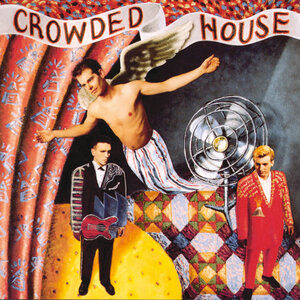
As ABBA was to Sweden, so Split Enz was to New Zealand, but without the multi-millions. Most Americans would have heard of the band thanks to MTV, when such songs as “I Got You”, “One Step Ahead” and “History Never Repeats” were in heavy rotation. (In fact, the honors for first-ever MTV world premiere video went to the band’s “Six Months In A Leaky Boat”.) These songs were written and sung by the band’s junior member Neil Finn, and when the band finally split, he formed a new one with a couple of Australians. That was Crowded House, who saw even greater success than their quirkier forefathers, but precious little in the US of A past their first album.

Neil’s pop sensibilities came across as tuneful as McCartney’s, if slightly more neurotic. Crowded House was arguably his show, but he fully relied on the harmonies and humor of Nick Seymour and Paul Hester in the rhythm section. Those who saw the band live insist that their concerts were just plain fun.

Their albums were another matter. With producer Mitchell Froom adding his brand of keyboards to the mix, the band’s style always seemed just a little outside what sold records in America. Their eponymous debut didn’t sell at all until the fourth single release, the exquisite ballad “Don’t Dream It’s Over”, one of the greatest songs of the 20th century. Its simple chords and “hey now” hook gave them a #2 single, and finally convinced people to check out the whole album.

Side one is terrific. “World Where You Live” and “Mean To Me” eventually got airplay, while “Now We’re Getting Somewhere” and “Love You ‘Til The Day I Die” offered two sides of romance with some humor. (We’re pretty sure that’s Paul shrieking the count-in to the latter.) Side two begins with “Something So Strong”, the next big single supported by another wacky video, but the rest of the album isn’t quite as, well, strong. Part of its effectiveness can be ascribed to the times, when glossy synths and horn sections were used to decorate scenery that could have better stood on its own. We’re still not sure why someone’s aunt lies in a “Hole In The River”, though we’re pretty sure that’s not why we should roll back the “Tombstone”. “That’s What I Call Love” has a lot of production for something that would have been a B-side in another time.

But money talks, and the album sold enough copies to keep their record label interested for a follow-up. However, as an album, Crowded House may not be their best. But as a collection of singles, it more than delivers. (The current 11-song CD is slightly different from the original 10-track American release, which for some reason moved “Mean To Me” down to the fourth song on the first side; it was the opener elsewhere. Also, a remake of “I Walk Away” from the last Enz album appeared in place of “Can’t Carry On”.)

Three decades later, the Deluxe Edition of the album proved just how well crafted the songs were by the time the record was mastered, by including a bonus disc full of writing demos and band demos, both detailing how some of those hooks found their way to other songs, and just how wincingly ‘80s the album might have turned out. (To wit, the wacky arrangement of “Walking On The Spot”, a gorgeous song from their fourth album, truly jars the time-space continuum.) There even a few live recordings from the era before they decided on the band name, of songs that never made it to albums proper.

Crowded House Crowded House (1986)—3
2016 Deluxe Edition: same as 1986, plus 17 extra tracks

Friday, January 6, 2012

CSN 1: Crosby, Stills & Nash

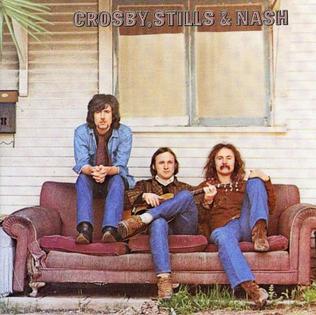
The unlikeliest supergroup in an era full of them hit the ground running, and what a wonderful blend it was. David Crosby had been bounced from the Byrds, Stephen Stills stood in the debris of Buffalo Springfield, and Graham Nash left the Hollies back in England. Despite the equal-ish billing on Crosby, Stills & Nash, it was Stills who ran the show by producing, playing multiple guitars, bass and organ, and writing half of the songs. Luckily he also knew when to let the other two shine on their own.

“Suite: Judy Blue Eyes” is still their quintessential performance, a basic drop-D strum with harmonies aplenty, tension bolstered by the multiple sections, and not even the Ricky Ricardo detour can deflate it. “Marrakesh Express” could pass for a Simon & Garfunkel song, but “Guinnevere” is pure Crosby, mysterious and spooky. The trio’s blend shines on “You Don’t Have To Cry”, despite consisting of the same verse sung twice. (Crosby oddly calls it “In The Morning When You Rise” in his first autobiography.) Backwards guitar was still in vogue in 1969, so that’s what we hear all over “Pre-Road Downs”. Be sure to hide the roaches indeed.

The band finally, truly rocks on “Wooden Ships”, a vivid apocalyptic vision and excellent dialogue. Nash turns things way, way down for “Lady Of The Island”, and we’re not the first to note the resemblance to Joni Mitchell. “Helplessly Hoping” is a high school poem set to music, an exercise in alliteration that rises above the obvious “one, two, three” effect on the chorus. “Long Time Gone” recaptures the gloomy rock sound, and Crosby finds his inner yodel. That vocal effect appears briefly before “49 Bye-Byes”, one of Stills’ better tracks, building in an excellent crescendo for a fine ending.

Crosby, Stills & Nash has become such a part of the fabric that any summation seems redundant. The fact of the matter is that they got it right, and seemed capable of just about anything. However, the band would struggle to balance the harmonic blend of their music with the ego struggle behind the scenes. We should be happy that they were able to create this. (An expanded version adds four demos slash outtakes, songs which would end up on future albums, with the exception of Fred Neil’s “Everybody’s Talkin’”.)

Crosby, Stills & Nash Crosby, Stills & Nash (1969)—4
2006 remastered CD: same as 1969, plus 4 extra tracks

Wednesday, January 4, 2012

Badfinger 7: After Pete

The tragedy of Badfinger has been only slightly redeemed by the recognition that has multiplied in the years since Pete Ham’s suicide. For most of the ‘70s and ‘80s, one could still hear at least “No Matter What” and “Come And Get It” on the right radio stations, and even AM radio continued to embrace Nilsson’s version of “Without You”. But thanks to the “businessman” who arguably sent Pete to his early grave, the people responsible for creating that music saw barely a penny for their talent. The surviving members attempted to carry on in a variety of combinations; Joey Molland and Tom Evans even put out a couple of albums under the Badfinger moniker, but even they couldn’t get along. In 1983, apparently never having gotten over what happened to Pete, Tommy also chose suicide via hanging.

From time to time an act called Badfinger could be found playing a state fair or amusement park; most likely the only original member was Joey (oddly, the last to join the band and first to walk). The Apple catalog remained in legal limbo, but the Warner Bros. material was mined in the CD reissue era. The UK-only Shine On offered eight songs from Badfinger and four from Wish You Were Here, while in the US, Rhino Records went even deeper on the hopefully titled (for 1990) The Best Of Badfinger Volume II, with a different yet more balanced sampling from the two Warner albums, bolstered by four unreleased tracks from Head First and two songs from one of the Joey-and-Tommy albums. (Joey also spearheaded the audio sweetening and release of Day After Day, a vintage 1974 concert, on Rykodisc.)

Once EMI and Apple settled their litigation, Badfinger’s albums were finally made available on CD, along with the requisite bonus material. Meanwhile, an enterprising engineer named Dan Matovina wrote a book about the band, and ingratiated himself so much to the surviving members and estates to include CDs of demos and whatnot with each printing. Rykodisc got into the act with two CDs of Pete Ham demos, shepherded by Matovina, but including dubious (again) overdubs by original Ivey Ron Griffiths and latter-day Badfinger keyboardist Bob Jackson in an attempt to be contemporary yet “authentic”. Of the two, 7 Park Avenue is more listenable, though Golders Green boasts sketches of songs people would recognize. (A double-CD set of Pete’s Iveys demos appeared in 2013, followed a decade later by three more sets, this time compiled by the keeper of the long-running Badfinger Library website.)

Motavina was also responsible for the first official release in 2000 of Head First, which presented the band’s final recordings with Pete but without Joey. VH-1’s Behind The Music special appeared the same year, along with a new compilation. The Very Best Of Badfinger gets points for including tracks from the two Warner Bros. albums, but at the expense of some of the better songs on the positively solid 1995 compilation simply titled The Best Of Badfinger.

The Apple albums were made available again with the digital relaunch of the catalog in 2010, and the two Warner titles followed some time later. Then the finale of the TV show Breaking Bad used “Baby Blue”, which spurred yet another compilation. Timeless… The Musical Legacy shuffled the familiar Apple songs once again, with a few substitutions, adding only “Dennis” from the Warner albums and one of Joey’s songs from a post-Pete album. For years, only Joey was left to reap any rewards due the band; yet the fact that these albums are in circulation is triumph enough.

Badfinger The Best Of Badfinger Volume II (1990)—
Badfinger
The Best Of Badfinger (1995)—5
Badfinger
The Very Best Of Badfinger (2000)—4
Badfinger
Timeless… The Musical Legacy (2013)—

Monday, January 2, 2012

Ben Folds 9: Way To Normal

Ben Folds’ detractors have easy targets for their criticism. He’s either too snarky or wimpy for their tastes; yet at the same time, anyone who hoped he’d do more “funny songs” as he did on the first album by the Five would have a field day with Way To Normal. And those detractors would have plenty of reasons to say “I told you so.”

The opening track, “Hiroshima (B B B Benny Hit His Head)” gets its genesis from an actual falling-down-onstage incident, and outside of the obvious Elton John reference in the title and arrangement, it’s also musically close to “Landed”, which is a better song, and less of a made-up novelty like this. Maybe “Dr. Yang” was the guy who tended to him after the fact, but it’s hard to follow without lyrics. “The Frown Song” makes two wacky sounding songs in a row (because someone bought a Moog) and we’re still waiting for the album to start. The first single, “You Don’t Know Me”, is something of a duet with sensitive breathy female artist du jour Regina Spektor, with an annoying video to match. The “Before Cologne” interlude, however, is just lovely, and we wish there was both more of it, and more like it. “Cologne” itself is sad and pretty.

“Errant Dog” pretty much deflates the somber mood, though it does sounds like a Ben Folds Five outtake. “Free Coffee” is based around the sound of Altoids on piano strings, and that’s the most interesting thing to say about it. There’s an annoying spoken “prelude” to the next track, which only conjures images of The Love Guru. Luckily it’s indexed before the song proper, which explains how the “Bitch Went Nuts”. The high-school vocabulary notwithstanding, the choruses are great. Similarly, “Brainwascht” is a little better than the other “wacky” songs thus far. “Effington” would inspire an album full of college a cappella songs, stemming from the “Please Please Me” cop at the start. The final word comes in “Kylie From Connecticut”, a vague portrait of a failed marriage and a pretty depressing way to go out.

Maybe this was a defiant riposte to the news that he was on his third divorce and fourth wife, but that only put the Songs For Silverman in sharper hindsight. As it is, he takes much too long between albums than fans would prefer, and with Way To Normal he should have worked a little longer on the quality. Most of the songs seem jokey for the sake of being vulgar, and while we like cheap laffs as much as anyone, these don’t work. Coming on the heels of Supersunnyspeedgraphic, The LP, it was even more of a disappointment. What made matters worse is that he purposely leaked “fake” versions of some of the songs before the album’s proper release, most of which were better than the real thing. (Of course, that only torpedoes the argument that he needs time to ensure better output.)

Perhaps to boost interest in the album—or even an acknowledgement that it wasn’t that good—the following year Ben put out an expanded version under the title Stems And Seeds. One disc featured downloadable files of the Way To Normal songs for people to remix in such programs as GarageBand, while the other included an already rejigged version of the album, plus the leaked fakes. If you don’t mind buying the album twice, that’s the way to go, if only because it’s easier than trying to dig up the tracks online.

Ben Folds Way To Normal (2008)—2
Ben Folds
Stems And Seeds (2009)—3