Friday, June 14, 2013

Bruce Springsteen 6: Nebraska

To plan for his next album, Bruce began the practice of preparing demos of his new songs for the E Street Band to study from, rather than teaching them to the guys in the studio while the meter ticked. This time, however, the songs he wrote demanded to be heard as stark sketches rather than big productions, and that’s how Nebraska happened.

Allegedly the band tried full arrangements of all the songs, and all would be performed on future tours. “Open All Night” is a breathless rockabilly tune begging for a rhythm section, and “Johnny 99” chugs along amiably. “Atlantic City” got some local airplay and even a Bruce-less video; beyond those, it’s easy to see the appeal in these simple recordings with their simple acoustics and subtle overdubs. (Also, being first drafts, the lyrics have yet to get the polish they’d likely gain from multiple studio takes.)

Many of the songs are character-driven, an extension of the stories he began to tell on The River. As has come to be expected, a lot of the narrators are driving, from the serial killer in the title track to the unhinged individual trying to avoid the “State Trooper”. That song follows the tale narrated by a “Highway Patrolman”, caught between family honor and civic duty.

Some of the more interesting songs suggest a look back at his childhood. The starry-eyed vision of the “Mansion On The Hill” makes an excellent balance for “My Father’s House”, where things apparently aren’t so opulent. The dichotomy of the class system portrayed in “Used Cars” gives some perspective on where his automotive fascination may have stemmed.

While each of his albums thus far boasted some kind of “epic”, here we only have “Reason To Believe” to sum up the program. Its suggestion of a rhythm supports snapshots of struggling individuals, giving a more universal spin to a title borrowed from Tim Hardin by way of Rod Stewart and countless others. (In a pointed example of programming, the sides aren’t balanced time-wise; the first six songs make side one 25 minutes long, while the last four equal 15 minutes.)

Nebraska wasn’t a huge hit, seeing as the songs weren’t exactly radio-friendly. It’s an album that demands attention, sometimes getting so quiet you can barely hear it, only to leap out of the speakers with a whoop and scare you to death. It’s tempting to give it a higher rating for its daring step outside what was then considered his standard sound. But it certainly helped him gain some credibility as a guy who put art before commerce, and boy, would he need it going forward.

For decades afterwards, there were rumblings of an Electric Nebraska, or versions of the songs recorded with the E Street Band that were shelved in favor of the demos that made the album. After more than forty years and two box sets that yielded no such thing, Bruce magically happened to find tape reels that fit the category, enabling the compilation of Nebraska ‘82: Expanded Edition. (It also conveniently appeared alongside a major motion picture biopic about this era.)

The first disc contained a half-hour’s worth of outtakes from the demo sessions, including the previously released acoustic “Born In The U.S.A.” and the B-side “The Big Payback”. The haunted “Losin’ Kind” is part of the throughline from “Stolen Car” to “State Trooper”, while “Child Bride” is an early, not at all raucous version of “Working On The Highway” without that chorus; a version of the latter song is very close to its eventual album version. “Downtown Train” had yet to develop a melody or more than two chord changes, and “Pink Cadillac” is a slow blues, the polar opposite of its boomy studio version, whereas “On The Prowl” is upbeat, half-finished rockabilly, and “Gun In Every Home” is a paranoid glimpse of suburbia.

The second disc consisted of another half-hour of music, presented as the fabled Electric Nebraska. Six songs from the album appear in alternate versions; the title track and “Mansion On The Hill” have the barest accompaniment, keeping them close to the solo takes, and “Open All Night” gains a rhythm section. “Downbound Train” still doesn’t have a melody or changes, but he also yells it near the top of his register. “Born In The U.S.A.” is powerful and angry, still closer to the acoustic version and more direct. “Atlantic City”, “Johnny 99”, and “Reason To Believe” are familiar from the arrangements in the live box set.

Nice as they are to have, this music could easily have been combined on one disc, but Bruce stopped offering fans value for a dollar once he became eligible for Medicare. Tape logs prove that there was more where this came from, but this is all he was willing to share. Instead, a 2025 live performance of the album with Larry Campbell and Charlie Giordano—but without an audience—made up the third disc, with the visuals on a Blu-ray, and the remastered album took up a fourth.

Bruce Springsteen Nebraska (1982)—
2025 Nebraska ‘82: Expanded Edition: same as 1982, plus 27 extra tracks

Wednesday, June 12, 2013

Who 24: Live At Hull

On the assumption that readers are tired of incessant complaints about commerce-driven repackagings, we’re going to try the constructive criticism angle. Certainly, we enjoy peeking into the vaults of our favorite performers and falling in sway to the buried treasure therein. But surely they don’t need to charge a premium for the first gullible wave of fanatics to view it through a keyhole, only to throw the door wide open later?

Recorded the day after the performance that resulted in Live At Leeds, the band’s similarly sequenced concert in Hull was left unreleased for decades due to what was assumed to be a faulty tape. Those intervening decades saw advances in technology that made the concert listenable without completely compromising its authenticity (namely, bass tracks transposed from the Leeds show on a few songs, plus other sections used to eliminate other gaps). The restored show was first made available in the 40th anniversary limited edition Leeds box set, which originally listed for $80 and now changes hands at three to four times that amount. So there was much gnashing of teeth and throwing up of hands when Live At Hull 1970 was released on its own for a lot less than before.

While it has the same setlist as Leeds with the exception of “Magic Bus”, it’s not an identical concert. Some songs are tighter than the day before (i.e. “Fortune Teller”) and some are sloppier (“Do You Think It’s Alright”). Pete’s improvisations on the likes of “Young Man Blues” and “My Generation” aren’t carbon copies either; we can even detect a nod to “I Can See For Miles” at the 15-minute mark of “Generation”. Between-song patter is at a minimum, so we can concentrate on the music; still, Pete’s prediction that this would be the last time they’d play “Summertime Blues” and “Shakin’ All Over” is pretty hilarious seeing as how it didn’t happen, and Keith always enjoyed yelling at the audience to shut up and have a little respect for their “fookin’ opera”. “Spoonful” makes an appearance in “Shakin’ All Over”, an aside that usually gets deleted from other releases for copyright reasons.

The packaging isn’t all that exciting, but it is to be commended for not simply aping its twin, going instead for the tape box approach to show off the historical value. Apparently nobody took pictures at these shows, as the photos used here are the same ones used for every modern incarnation of Leeds.

Who freaks will have to have this, of course. Now if they’d only put it out this way first, instead of fanning the complaints over that Super Deluxe Edition…

The Who Live At Hull 1970 (2012)—3

Monday, June 10, 2013

Van Morrison 17: Live At The Grand Opera House Belfast

Van Morrison’s first album with his new label was an odd move—a live album, which would inevitably raise comparisons with the lauded It’s Too Late To Stop Now, recorded in the city of his birth, suggesting that it was a grand homecoming. It wasn’t.

Van always considered himself a performer in the tradition of his jazz and blues heroes, and Live At The Grand Opera House Belfast presents the latest incarnation of his show band and revue. It fades in on an instrumental overture of “Into The Mystic”, shifting abruptly into “Inarticulate Speech Of The Heart No. 2”, and then even more abruptly into “Dweller On The Threshold”, which is presumably where the star of the evening makes his entrance. The extrapolation of “It’s All The Game”, part of the grand finale of Into The Music, comes next, slowing things down right away, but feature some truly clumsy electric piano playing from the guy whose name is on the marquee. That contribution also colors “Vanlose Stairway”, which otherwise gets an excellent vocal. Luckily he sticks to the saxophone, to which he’s much better suited, in the middle of a nine-minute “Rave On John Donne”. The rest of the album is pretty faithful to the records, though “Full Force Gale” tones back the horns, and Chris Michie leans a little heavy on the whammy bar for “Beautiful Vision”.

As a representation of where he was at, it’s good. He was never about the hits, preferring to embrace the moment; therefore the set is heavy on recent songs. He does give plenty of solo time to the players in the band, and the backing vocals are well rehearsed. That said, whether Live At The Grand Opera House Belfast succeeds as a snapshot of that moment is up to the listener, whether or not he or she was there.

Van Morrison Live At The Grand Opera House Belfast (1984)—3

Sunday, June 9, 2013

Eric Clapton 1: Blues Breakers

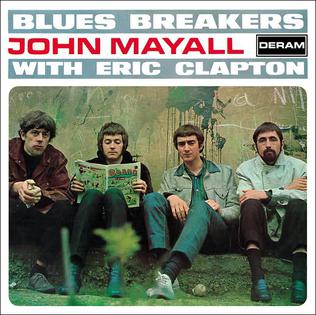
John Mayall was responsible for launching the careers of countless blues guitarists and bands, mostly because the people he found kept taking off on him and forming other outfits. He himself wasn’t blessed with the best voice, but made up for it with his organ and harmonica playing, and gave his sidemen room to shine. Blues Breakers was his second album, on which he gave co-billing in the same size type to the lead guitarist who’d bolted from the Yardbirds for being too poppy.

This is a solid electric blues album, wherein Eric Clapton displays his prowess and tone on a Les Paul, and a good argument that the Brits played it better than any other imitators. And they weren’t stuck in the past, either; through this album disciples were turned on to the likes of Otis Rush, Freddie King, Memphis Slim, and Little Walter. Respectively, “All Your Love”, “Hideaway”, “Steppin’ Out”, and “It Ain’t Right” were only a few years old at the time. “Parchman Farm” is based on Mose Allison’s arrangement, and features no guitar we can discern. Ray Charles’ “What’d I Say” is mostly a setup for a Hughie Flint drum solo; when the band comes back in, Clapton quotes “Day Tripper”. The kid also takes his first lead vocal on Robert Johnson’s “Ramblin’ On My Mind”.

Of the originals, “Little Girl” is tight and tense, while “Another Man” recycles older lyrics as Mayall’s own (tsk tsk) for a harmonica showcase. “Double Crossing Time” is a Mayall-Clapton cowrite, providing a slower change of pace, just as “Have You Heard” does on the other side. That one’s got a prominent saxophone; “Key To Love” uses a horn section well in the mix too. (That bass player, by the way, is the perennially unsung John McVie.)

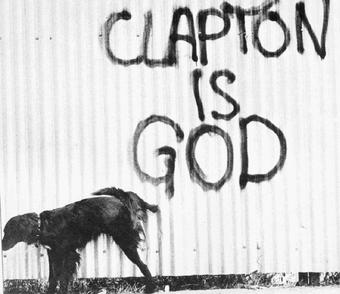
When it first came out on CD, the only extra content was the now-famous photo of graffiti with canine commentary. An eventual remaster added a one-off duet single and its B-side, while the eventual Deluxe Edition put the mono and (later) stereo mixes on one disc, with a variety of BBC sessions and previously scattered live tracks, some of which have Jack Bruce on bass. But the original 12-track lineup will be enough to show why some thought Clapton was God.

John Mayall With Eric Clapton Blues Breakers (1966)—4
2001 remastered CD: same as 1966, plus 2 extra tracks
2009 Deluxe Edition: same as 2001, plus 29 extra tracks

Saturday, June 8, 2013

Lou Reed 26: The Raven

The idea that Lou Reed might be a fan of the work of Edgar Allen Poe isn’t such a stretch. Whether or not Lou saw himself in the same caliber as a writer is open to debate, but when occasional collaborator Robert Wilson approached him with the idea of a theater piece based on Poe’s work, he took the bold step of adapting some of it to music, rewriting other pieces, adding his own scatological touches, and even weaving in two of his own songs. Just to be extreme, The Raven was an ambitious double-CD set, released simultaneously as a single-CD condensation that’s heavier on the musical portions. It is not a fun listen in either incarnation.

It’s recorded well, of course, with support from trusty sidekicks Mike Rathke, Fernando Saunders, and Tony “Thunder” Smith, with a beefy horn section and Jane Scarpantoni on cello. Much of the program is spoken, sometimes effectively, usually overacted, from such stereotypical creepy voices as Willem Dafoe, Steve Buscemi, Elizabeth Ashley, and Amanda Plummer, among others. Various famous musicians turn up too. (Incidentally, co-producer Hal Willner had spearheaded a similar star-studded tribute to Poe a few years earlier.)

Musically, it’s so-so. The “Overture” is a blast of guitar and drums a la “Dorita” from Magic And Loss, but “Edgar Allan Poe” (said to be “not exactly the boy next do’”) sounds like a parody. “A Thousand Departed Friends” pits a distorted guitar against a honking sax over a martial drumbeat for five minutes, which is approximately when a melody surfaces. “Change” is barked from the point of view of Death, while “Blind Rage” is used to illustrate the old man in “The Tell-Tale Heart”. “Balloon” is an a cappella duet by the McGarrigle Sisters, though if you wanted to hear Steve Buscemi do a Sinatra impression, listen no further than “Broadway Song”. Lou himself unwisely changes his voice to take on a character in “Burning Embers”; a version sung straight might actually be worth it. After the unsettling dialogue of “Guilty”, Lou sings it again while Ornette Coleman improvises. “I Wanna Know” is supposed to illustrate “The Pit And The Pendulum”, but merely has Lou emoting a monologue with the Blind Boys of Alabama. The too-brief “Hop-Frog” barely delivers the promise of another collaboration with David Bowie, but the feedback and electronics that illustrate “Fire Music” are frighteningly vivid.

It’s not all horrible. “The Bed” from Berlin is used to comment on “The Fall Of The House Of Usher”, while “Perfect Day” (sung by Anohni, when she was still known as Antony Hegarty) sets up his rewrite of “The Raven”. “Call On Me” is a very pretty dialogue of sorts, Lou singing a mournful part and Laurie Anderson responding in prose before adding her own unaccompanied melody at the end. “Vanishing Act” is a lovely reverie set over the barest piano followed by beautiful strings, and “Science Of The Mind” is even more stark, with Anohni harmonizing just right. “Who Am I? (Tripetina’s Song)” builds from a simple set of chords to a wonderfully orchestrated epic, and “Guardian Angel” manages to quietly close the proceedings with something akin to peace. Taken together, these highlights present more of Lou’s softer, more vulnerable side.

If The Raven brings the work of Poe to modern audiences, then that mostly fulfills Lou’s hope for it. As an album, it’s a vanity project and should be approached with caution. The better musical moments are on the single disc, if that helps.

Lou Reed The Raven (2003)—2

Friday, June 7, 2013

Jimi Hendrix 19: First Rays Of The New Rising Sun

Jimi’s aging father and the stepsister he never knew wrested control of the Hendrix catalog away from the record labels, and took over distribution of same. Thus began a lengthy and lucrative campaign to preserve his legacy via repackagings, archival digs and tchotchkes.

Their determination to rectify all wrongs meant that the catalogs were pared back to the basics: the original three Experience albums, newly remastered (again) and supervised by Jimi’s preferred engineer Eddie Kramer. Band Of Gypsys would remain in print, having been approved by Jimi in his lifetime, but anything released after that (with the exception of the excellent Blues compilation) was deleted so the Estate could start fresh. Their first strike was replacing the controversial Voodoo Soup with what is now the final accepted version of his fourth album.

Based on a handwritten sketch of three possible album sides out of four, First Rays Of The New Rising Sun reverts for the most part to the original Cry Of Love concept, using all of that album’s songs and mixes. Interspersed are four tracks from Rainbow Bridge and three from War Heroes, making for a more inclusive view of those leftovers.

Still, just as with Cry Of Love, the similarity of a lot of these songs makes it tough to tell them apart at first, especially when tracks like “Freedom” and “Izabella” are placed back to back. Likewise, “Room Full Of Mirrors”, “Dolly Dagger” and “Ezy Ryder” should satisfy anyone seeking more cowbell. It’s nice when things like “Angel”, “Drifting” and “Hey Baby (New Rising Sun)” shift the tempo, and ending with “Belly Button Window” is the smart move.

We state all this in full recognition that the learned Hendrix scholar can’t fathom how anybody could confuse these songs with each other. To counter, we also doubt that anyone would prefer any permutation of a possible fourth album over any of the three Experience albums. The point is, it’s all conjecture, and anything Jimi might have finished, had he got around to it instead of filling up tape after tape, would likely trump anyone else’s best guess, however educated.

Unlike its stepsibling of two years before, there’s nothing “new” on First Rays Of The New Rising Sun; rather, it’s yet again somebody’s mix tape version of the best of the official leftovers. Everyone’s version would be different, and we’ve yet to see a decent defense of “My Friend”. Since they used all of it anyway, a simple two-fer of Cry Of Love and Rainbow Bridge would have been ideal, but wouldn’t fit on a single CD, so that solution doesn’t work for the industry. With the Estate firmly in control, they decreed that this sequence would become the accepted standard into this century—though even their speculation would continue in other ways.

Jimi Hendrix First Rays Of The New Rising Sun (1997)—

Wednesday, June 5, 2013

Jimi Hendrix 18: Voodoo Soup

Because Jimi never finished his fourth studio album, anything purporting to be exactly that is subject to speculation. Therefore, the possibilities are endless. But because The Cry Of Love had been around for over twenty years, for good or bad it was something of an accepted standard. It took that long for something else to be presented as a possible alternative, and sparks flew.

Once again the culprit was Alan Douglas, who’d already “tampered” with the archives. Now he attempted to present another possible sequence for a fourth Hendrix album, with the wacky title of Voodoo Soup and anachronistic cover art to match. Seven songs from Cry Of Love join two each from Rainbow Bridge and War Heroes, plus three other “new” tracks.

Naturally, being the ‘90s, the songs had slightly different mixes from the originals, with two glaring exceptions. On “Stepping Stone” and “Room Full Of Mirrors”, Buddy Miles’ original drum tracks were replaced by a new accompaniment supplied personally by one of the album’s coordinators, whose previous claim to fame is that he also was the drummer for The Knack. Whether or not he was competent is moot, of course; once you know he’s there it’s tough to ignore the fact.

The album seems to want to turn Cry Of Love on its head, beginning with something of an overture in “The New Rising Sun”, a three-minute instrumental segment of a larger unfinished piece. It’s pretty dreamy, in the positive sense of the word, but fades into “Belly Button Window”, the song that previously closed Cry Of Love. The altered “Stepping Stone” comes next, adding another alternate to the pile of mixes Jimi discarded in his lifetime; the new, galloping drums threaten to run away with the track. “Freedom” is fairly similar, but “Angel” has a less processed vocal than before, and doesn’t fade, making for a nice variation. “Room Full Of Mirrors” already had a dizzying mix, and this new version (with 1995 drums) provides another trip through the fun house. While “Midnight” and “Peace In Mississippi” are great jams, being earlier Experience recordings puts them somewhat outside of that “fourth album” idea.

“Night Bird Flying”, “Drifting” and “Ezy Ryder” each tone down the congas that were so prominent on the earlier mixes; “Pali Gap” is slightly edited to sound less like the improv’d jam it was. “Message To Love” is a studio take of the song familiar from Band Of Gypsys, and somehow sounds out of sync mixwise with the rest of the era. “In From The Storm” was the penultimate track on Cry Of Love, and here it’s allowed to close the set.

Except that it’s a purely speculative compilation, there really isn’t anything “wrong” with Voodoo Soup, making it a fairly enjoyable mix tape, and a worthy candidate for whatever his next album might have been. Still, enough people couldn’t get past the whole Knack connection, and since several previously released contenders were excluded from the hour-long sequence, nobody was happy. Least of all the Estate, which deleted it as soon as they could, thus guaranteeing Voodoo Soup collector’s item status.

Jimi Hendrix Voodoo Soup (1995)—4
Current CD equivalent: none