Monday, July 1, 2013

Robyn Hitchcock 20: Spooked

Having basically ceased to matter in the business outside of his miniscule fan base, Robyn found a new home on Yep Roc, a label that specialized in indie rock perpetuated by such older codgers as Nick Lowe, The Reverend Horton Heat and the guy from the Blasters. For his first missive on the label, Robyn hooked up with David Rawlings and Gillian Welch, darlings of the alt.country movement. Their influence isn’t immediately overt, but they prove to be inspired collaborators.

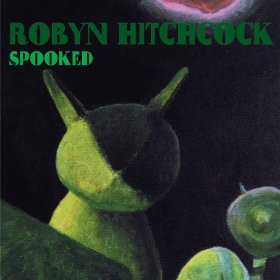
Spooked is another acoustic album with a green cover, mostly, many of the songs coming across as demos. “Television” is sadly not about the band but the appliance, yet rates a devoted vocal. “If You Know Time” is based around what sounds like a dulcimer, evoking something like a more tuneful Incredible String Band. But around where “Everybody Needs Love” comes in, the album threatens to sound like endless variations on “The Cheese Alarm”.

People who’ve followed Robyn this long want desperately to like him, and therefore ache for an album to thrill as much as its older siblings did in earlier decades. We wanted to root for Spooked, and display it as proof that he’s just as inventive as ever. Yet songs like “Creeped Out” come across as something he’s making up on the spot, with the barest of chords, the immediate effect is that of forced whimsy, where once he sounded more natural. Meanwhile, the lengthy cover of Dylan’s “Trying To Get To Heaven”, here given its full title with the tag “Before They Close The Door”, seems like a Major Statement, coming only a couple of years after his double-Dylan tribute set, and in full acknowledgement of his mortality. (Of course, the unique modification referring to “the dinosaur’s waiting room” shows he just has to be him.)

There are enough moments throughout, like the first couple of tracks and a few near the end (like “Full Moon In My Soul” and “Flanagan’s Song”) that actually possess melodies capable of adhering to your brain. It’s hard to imagine how Spooked might have developed from first idea through composition, refinement and recording. It seems a very arbitrary album, especially considering that the two-song bonus CD that accompanied initial orders is as good as the album it accompanied. We didn’t come around ourselves for over a decade, but when heard within the context of a decade’s worth of a lot of one-shots, the album does emerge as recommendable.

Robyn Hitchcock Spooked (2004)—3

Friday, June 28, 2013

Frank Zappa 18: Apostrophe

At this point, whether an album was credited to Zappa alone or some permutation of the word “Mothers” was moot. For whatever reason, Apostrophe—or more accurately, Apostrophe (’)—features a big up-close photo of the man and his name alone on the cover and spine, despite the presence of several of the players who’d contributed to Over-Nite Sensation right around the same time. (Such conjecture may seem pointless, except that Zappaphiles spend a good deal of time pondering such questions, since everything is significant, somehow. Isn’t it?)

Apostrophe is one of the better Zappa albums for newcomers, since it features a palatable mix of humor and proficiency, with a lot of the innuendo not becoming apparent until the umpteenth listen. The first ten minutes encompasses four tracks, strung together as a suite. “Don’t Eat The Yellow Snow” sets up the confrontation between the Eskimo and a fur trapper (“Nanook Rubs It”). The trapper runs off to “St. Alphonzo’s Pancake Breakfast”, presumably presided over by “Father O’Blivion”. Another Dr. Demento favorite, “Cosmik Debris”, finishes the side.

Side two, for the most part, highlights some pretty tasty sparring. “Excentrifugal Forz” allegedly began in the Hot Rats era, shifting wildly into the title track, a fuzzy jam with Jack Bruce and Jim Gordon. The hidden gem of the album is “Uncle Remus”, based around a terrific George Duke melody, with a compact solo and pointed lyrics about lawn jockeys. Unfortunately that splendor is overtaken by “Stink-Foot”, which is about what you think it is, complete with more wacky voices, poodle abuse, and a loping shuffle a la “Stuff Up The Cracks” for Frank to wah-wah another solo.

Apostrophe is short and sweet, not too challenging nor annoying. Since it goes by so quickly, the modern-day listener will lunge for the play button after each go-through, which is the sign of a keeper. And after wading through the morass of LPs that he’d put out since the dawn on the decade, it’s nice to have something consistent again.

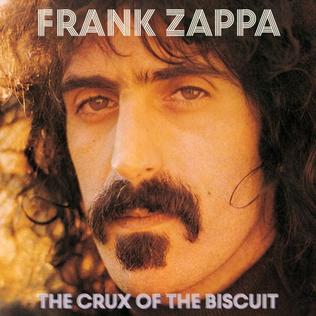
Four decades later, the Zappa Family Trust released a companion disc of sorts, along the lines of the “Project/Object” explorations of Freak Out! and Ruben & The Jets. The Crux Of The Biscuit offers an early sequence for side one of the album, including longer alternate mixes of “Cosmik Debris” and “Uncle Remus”, plus different segments of what would turn into “Excentrifugal Forz”, “Apostrophe”, and “Down In De Dew”, other session excerpts, and a 20-minute live performance of the “Yellow Snow/Pancake Breakfast” suite. Again, more testimony to his skill with a razor blade. (Some of those alternates were included on the Apostrophe 50th anniversary expansion, along with the complete master of the title track, a new piano/vocal mix of “Uncle Remus”, the single mix of “Don’t Eat The Yellow Snow”, and other oddities. Four more discs offered two complete 1974 concerts, and a Blu-ray had the expected hi-res mixes as well as the original quad mix.)

Frank Zappa Apostrophe (’) (1974)—4
2024 50th Anniversary Edition: same as 1974, plus 56 extra tracks (and Blu-ray)
Frank Zappa The Crux Of The Biscuit (2016)—

Wednesday, June 26, 2013

Ben Folds 12: The Sound Of The Life Of The Mind

It remains to be explained what exactly differentiates a Ben Folds Five album from a Ben Folds solo album, other than the rhythm section. Each of his “solo” albums has been based around the piano with snarky lyrics, snappy drums, distorto bass and harmonies aplenty. So perhaps it’s a good thing that The Sound Of The Life Of The Mind is not a complete retread back to the juvenile wisecracks that irritated haters so much about the Five. This album is slightly more contemplative—dare we say “mature”—to match the growth over the last decade (Way To Normal notwithstanding). Every now and then he leaps on the opportunity to use a naughty word, but it’s more of a rarity than a rule.

The album was initially funded via crowdsourcing; hence the packaging includes two booklets full of the names of everyone who apparently helped contribute to the cause. These take the place of lyrics, forcing the listener to decipher the lyrics without prompting. That’s not always easy to do, since not everything is as blatant as “Erase Me”, which blasts out of the speakers with full power, and uses some clever metaphors to describe a breakup, which should be fairly familiar ground for the guy by now. “Michael Praytor, Five Years Later” would appear to be one of those direct-hit character assassinations, but unlike earlier exercises, it doesn’t seem like the subject is meant to be ridiculed. The first great song comes from drummer Darren Jessee; “Sky High” wafts in on a layer of wordless harmonies, and is a perfect example of their softer side. The title track is a leftover from the project Ben did with novelist Nick Hornby, and it sounds like that album (even if it is a portrait of writer and occasional voice artiste Sarah Vowell). It gets a big heavy attack of an arrangement, balanced by the monologue by Frank Sinatra’s valet in “On Being Frank” (we hear a few hints of “Wandering”, from those EPs and one Kevin Smith movie).

“Draw A Crowd” sums up his career somewhat (“if you can’t draw a crowd, draw dicks on the wall”) in an acknowledgement that his talent is often heard or ignored through his cleverness. For the most annoying track on the album, “Do It Anyway” is something of a motivational speech about personal choice, and how it changes over time. “Hold That Thought” presents another relationship in doubt, nicely colored by an organ at all the right moments. What sounds like a frank admission of disappointment in dead parent in “Away When You Were Here” is tempered by the fact that Ben’s dad is still alive, but it only shows his capabilities at crafting characters. “Thank You For Breaking My Heart” is predominantly quiet piano, with a couple of well-timed bursts of rhythm, but it mostly presents a haunting melody only a few steps away from “Still” from the Over The Hedge soundtrack. It does fill a similar role to the closers of previous BFF albums, so there’s that.

The Sound Of The Life Of The Mind doesn’t so much pick up where The Unauthorized Biography Of Reinhold Messner left off as it continues the Ben Folds story in general. If the other two guys are happy to follow the guy whose name is in the title, maybe this won’t be the last we hear from the Five. Considering that every other rhythm section he’s had has done what they did, what’s the problem?

Ben Folds Five The Sound Of The Life Of The Mind (2012)—3

Monday, June 24, 2013

Rolling Stones 48: GRRR!

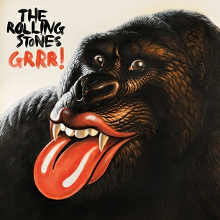
With their usual impeccable timing, the Stones took the easy bait of celebrating fifty years as a commercial commodity by commencing a variety of anniversary celebrations. Only ten years after their previous career retrospective—with just one studio album in between to add to the pantheon, unless you count the completed songs added to Exile and Some Girls, which we don’t—the band’s catalog was anthologized again in the form of GRRR! We still can’t decide what’s worse, the title or the cover, though we’re tempted to call it ZZZZ… instead.

Of course, it was made available in several configurations—a double-disc with 40 tracks, a triple-disc with 50, and a super deluxe version with 80 tracks on four discs, plus a bonus disc with the five songs from their first demo session, sounding identical to the bootleg that’s been out there, complete with pops and speed fluctuations. (And because it was considered the cool thing to do, a vinyl EP offered four songs from a BBC session. Here’s a stupid idea—why not offer the two new tracks, the demo tracks and the BBC tracks on their own as a single disc? Anyone?)

Because Forty Licks did a pretty decent job of summarizing the band already, it’s our duty to inform that the two-disc version lacks eight songs, the three-disc five, and the five-disc three from that collection, the common three being the three of the four 2002 songs. Of course, GRRR! in all its permutations offers two, count ‘em, two new songs. “Doom And Gloom” makes some clumsy rhymes and references to foreign wars, but it’s tough to worry over Mick “eating dirt [and] living on the side of the road” when you’ve shelled out $125 for the super deluxe edition of his band’s eleventh hits collection. “One More Shot” is a little better, since it sounds more like a stock Keith riff and you can actually hear Charlie’s drums.

GRRR! rates as high as it does because of the quality of the music, some of the best rock ‘n roll, really, of the last fifty years. Any of the three versions should satisfy anyone looking to add a pile of Stones to their CD racks if they don’t have any yet. But the mind reels as to what might happen come 2022…

…And as it turned out, they did release a few more archival live albums that year, one of which was excellent. Maybe that’s why they chose to wait a year to celebrate the tenth anniversary of the 50th anniversary tour with GRRR Live!, which presented the audio (and DVD or Blu-ray if you bought one of the CD versions but not the vinyl) of a show originally broadcast on pay-per-view. It’s no better or worse than any of the seemingly endless live souvenirs from this century, except that the focus seems to be on various celebrity guests. Lady Gaga mewls all over “Gimme Shelter”, John Mayer and Gary Clark Jr. muddy up an already sludgy version of Freddie King’s “Going Down” (the only song here not on any other live Stones album, unless you count “Doom And Gloom” and “One More Shot”), the Black Keys join on “Who Do You Love”, and Bruce Springsteen happily growls his way through “Tumbling Dice”. Unless you’re a big fan of the Choir of Trinity Wall Street, which augments “You Can’t Always Get What You Want”, the highlight would be Mick Taylor coming back for a 12-minute “Midnight Rambler”, except that he’s competing with two other guitarists in the mix and Jagger enjoys baiting the crowd on the slow break too much.

The Rolling Stones GRRR! (2012)—4
The Rolling Stones
GRRR Live! (2023)—3

Friday, June 21, 2013

Beach Boys 19: Carl And The Passions

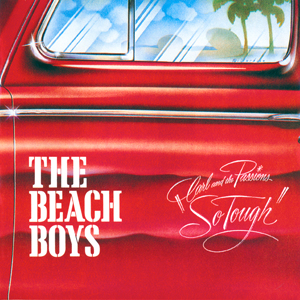
Maybe as a recognition that that they weren’t the same band, the next Beach Boys album sported the unwieldy title of Carl And The Passions – “So Tough”—Carl of course being the most stable of the Wilson brothers. Bruce Johnston was ousted, and they brought in Blondie Chaplin and future Rutle Rikki Fataar to boost the guitar and drums respectively. They happened to be decent singers and songwriters to boot, which would help them on record as well as on stage. But their label clearly showed they weren’t completely behind the album by packaging it as a double, with Pet Sounds in the same jacket. It’s too bad, because the album is good enough to stand on its own.

Speaking of which, “You Need A Mess Of Help To Stand Alone” is an unwieldy title that unfortunately fits in the long line of “therapeutic” songs that Brian was obsessed with from about 1967 on, whether it be raw vegetables or jogging, when all he had to do was cut out the pot, pills and cheeseburgers. It’s got something of a “Wild Honey” feel, serving the same purpose to kick off side one. The new guys take over with “Here She Comes”, a generic title of its own, but decent ‘70s rock nonetheless. “He Come Down” has a terrific production, with plenty of soulful piano, Hammond organ and harmonies, but is ultimately another Mike Love advertisement for the Maharishi. But the “classic” Beach Boys sound returns on “Marcella”. This is the one people tend to cite as the best on the album, and while that’s a matter of taste, it does sound the most like a Brian Wilson creation.

The new guys emerge again on “Hold On Dear Brother”, with its prominent pedal steel and confusing time signature taking it far from the brand. Then there’s “Make It Good”, the return of Dennis, his voice already cracked and aged, full of the character for which he’d become a cult figure. It’s more like a lengthy interlude, rising up from nowhere and hanging in the air until it’s over, suddenly. It makes a nice setup for “All This Is That”, another mildly spacey number trading lead vocals between Carl and Mike, then returns the spotlight to Dennis for “Cuddle Up”, a lengthy ballad largely the product of the guy who would one day gain fame as half of Captain & Tennille.

So Carl And The Passions isn’t a bad album at all, since it doesn’t really sound like the stereotypical Beach Boys. It wasn’t an easy album to make, considering that each track sports different producers, eventually giving most of the credit to Carl. (And if eight songs seems short, the eventual session peek proved they didn’t have a lot of other ideas lying around.) Since we hadn’t expected much by now, and having been burned by the unfulfilled hype of its predecessors, it’s a recommended listen. Imagine that.

The Beach Boys Carl And The Passions – “So Tough” (1972)—3

Wednesday, June 19, 2013

Billy Joel 8: Glass Houses

Now that he had graduated to the level of superstar, Billy Joel chafed at every non-complimentary review, many of which insisted that he didn’t “rock”. Naturally, the more he complained, the dumber he sounded, which didn’t help his case any. And as long as his albums and songs were keyboard-inspired and driven, he had a steep climb ahead of him.

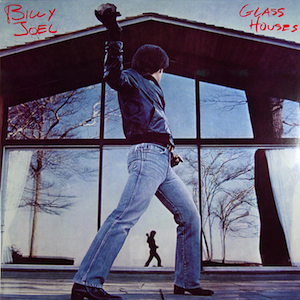
So there was some suggestion that Glass Houses was a response to those detractors, with its provocative cover of the leather-clad artiste poised to toss a rock at what some assumed was his own expansive Long Island manse. On the back, broken glass frames his portrait in skinny tie. Inside, the handwritten lyrics and credits suggested a DIY ethic, carried over onto the band photo. (It was a nice try; a couple of the guys can’t help but look slick, but the lead guitarist has a Clem Burke vibe with his hair and loose tie, and Liberty DeVitto has removed his Buddy Holly specs but has his wristwatch around his ankle! What a crazy nut!)

The sound of breaking glass, already a punk staple, opens “You May Be Right”, a competent relationship song in his established vein. “Sometimes A Fantasy” begins with the mod effect of a touch-tone phone, a good setup for an early ode to phone sex, which is kinda edgy, even for 1980. However, the trilling acoustics and island sound of “Don’t Ask Me Why” return us to the middle of the road, only to have the stuttering near-rockabilly of “It’s Still Rock And Roll To Me” restate his case. That’s four hit singles right there; the side ends with “All For Leyna”, a track we remember being a lot more edgy then than it sounds now, but it’s still pretty good.

The songs on the second side aren’t as well known because, again, they weren’t singles. “I Don’t Want To Be Alone” is a mild pastiche of Southside Johnny, presented as a conversation with an opportunistic woman, while “Sleeping With The Television On” presents something of a riposte to that situation, complete with cheesy organ solo. “C’Etait Toi (You Were The One)” also wasn’t about to confuse anyone into thinking Billy Joel personified street cred, but perhaps his insistence on splitting the verses between French and English inspired Sting to do the same again and again. “Close To The Borderline” is a lyric-heavy rant possibly influenced by Elvis Costello subject matter-wise, and something of a harbinger for a future hit single. Along the same lines, “Through The Long Night” is a mellow closer with tons of layered harmonies right out of McCartney’s Wings arsenal.

Glass Houses had everything his audience wanted; after all, they didn’t care if their boy rocked as long as he kept putting out albums and touring behind them. But of his catalog to date, this one’s songs lost their luster soonest.

Billy Joel Glass Houses (1980)—3

Monday, June 17, 2013

Joe Jackson 12: Heaven & Hell

Another three years passed before Joe resurfaced, and he wasn’t any closer to compromising his musical path for anybody. Now he was on Sony Classical, and after the trend of “symphonic” reinterpretations of classic rock staples had somewhat plateaued, he was still determined to meld classical music with rock elements. This would be no mere orchestration, however; being Joe Jackson, his big project would be an exploration of the seven deadly sins.

Thus, Heaven & Hell was cast with a variety of singers to support his work. Onetime labelmate Suzanne Vega appears as the voice of the “fallen angel” seducing Joe’s “soul in torment” on “Angel”, while acclaimed soprano Dawn Upshaw provides the Latin counterpoint. Upshaw appears again on the next track, “Tuzla”, to trade lines with Joe and his occasional singing partner Joe Askew. Later on, Jane Siberry decorates “The Bridge”, with a nice jazzy string arrangement.

There are some fine instrumental moments, such as in the “Prelude” and the “Passacaglia” portion of “A Bud And A Slice” (until the bassoon is taken over by the guy from Crash Test Dummies, well past his expiration date). But because the subject matter is “dark” by nature, that almost dictates that the music be ugly. This culminates in “Right”, illustrating the “anger” portion of the program, wherein our hero shouts a litany of four-letter words and phrase over fists pounding on the piano, while three drummers (one in each speaker, plus another playing plastic buckets) pound away.

Most of the tracks on Heaven & Hell are on the lengthy side, and demand a lot of attention. One wishes he had either done a completely instrumental album, letting the music speak for itself, or maybe toned down the gravitas of the vocal portions and sung them himself. Catchy melodies used to come so easy for him, so it’s a shame that he overworks his ideas to the point of dullness. It didn’t work on Night Music, and it doesn’t work here.

Joe Jackson & Friends Heaven & Hell (1997)—2