Monday, July 15, 2013

CSN 4: CSN

Barely a year after a Stills-Young collaboration took on Crosby and Nash, then let them go, resulting in an album apiece by each duo, as well as solo albums from Stills and Young, three of the protagonists managed to forget all that ugliness, with the speed and productivity unique to recreational cocaine users, and give the world CSN. This was only the second album proper by Crosby, Stills & Nash, and while it isn’t remotely as excellent as their modest little debut, each of the boys rises to the occasion.

To underscore the unity, every track credits vocals to “Crosby, Stills, Nash”, as if there was any doubt. Beyond that, each man contributes instrumentally to his own compositions, with Stills more often than not playing lead guitar wherever one calls for it. The rest of the backing is courtesy of various regulars from their work apart, such as Russ Kunkel, Craig Doerge, George Perry and Joe Vitale—Miami meets L.A., if you will.

Crosby was still pulling his weight at this stage, as the excellent “Shadow Captain” demonstrates atop side one. “Anything At All” seems a tad dramatic, but “In My Dreams” is more along the lines of his ruminations. Nash’s high harmony is everywhere, and his songs vary from tedious to striking. “Carried Away”, with its piano and harmonica, almost suggests Neil Young. Like “Cold Rain”, it’s slow and depressing; the same could almost be said of “Cathedral”, but here he manages to nail the dynamics and near-psychedelia. The one everybody remembers is “Just A Song Before I Go”, famously written in ten minutes.

There were five slots open for the rest of the LP, and Stills comes through fairly well. “See The Changes” was left over from three CSNY attempts previous, and has the simplest performance. “Fair Game” and “Dark Star” have just enough of those Latin touches he was starting to put on everything, but both stand out—the former for rhyming “watch” with “crotch”, and the latter for its chorus. “Run From Tears” sports a guitar intro right out of a Neil Young album, with a simple riff that sticks. Finally, “I Give You Give Blind” is stuck underneath a way-too-tense string arrangement.

CSN is a demonstration of the sum being greater than the parts, which they already kind of knew anyway. More so than anything any of them had done in a while, it’s a good album, worth revisiting.

Crosby, Stills & Nash CSN (1977)—

Friday, July 12, 2013

Ben Folds 13: Live

Not long after their reunion failed to set anything outside the hearts of diehard fans afire, Ben Folds Five continued their tradition of stopgap souvenirs with their (but not his) first live album. Live is taken from the tour supporting The Sound Of The Life Of The Mind; four of that album’s songs appear here, fitting well with the grab bag of older songs. (“Do It Anyway”, for example, transcends its irritating studio version by revealing itself as an expansion of the opening number from Jesus Christ Superstar.)

The album is compiled from several different shows, leaning heavily on San Francisco’s Warfield Theater, so the track selection seems almost random. Songs from their ‘90s heyday get plenty of response, and the boys play all with enthusiasm (“Narcolepsy” is extended to nine and a half minutes with a lengthy jazz odyssey). If there’s a dud, that would be “One Chord Blues/Billie’s Bounce”, yet another variation on “Rock This Bitch”. However, “Landed”, the only original here from the “solo” years, is a wonderful performance.

Mostly it’s a straight trio performance, with only one discernable appearance of a non-piano keyboard. And the piano isn’t so much attacked, as before (except on the closing “Song For The Dumped”); instead Ben throws his energy into wildly inventive explorations, proving that they’re more than a potty-mouthed novelty act. Or so it would seem from the performances sampled here.

Ben Folds Five Live (2013)—3

Wednesday, July 10, 2013

Calexico: Spiritoso

In this day and age, there is just so much music out there that it’s nearly impossible to hear it all, making it a full-time task to stay current. Besides the handful of “artists” who are actively funded by the major labels, who are the ones pushing their product to the dwindling shelves at your local Target store, there are those performers who rely on their devoted fan bases to purchase enough of their product and see their shows to keep them stocked up on Starbucks and lentils. Their overhead is lower, so their product is manufactured in smaller quantities. (Which is then shared over the Internet anyway.)

But because they usually have, at the very least, a modicum of integrity, critics love them, so if you’re one of those people who thrives on hearing the latest best-kept secret, you’re probably not reading this blog, but you can easily find your way to a band that hasn’t been spoiled yet.

Calexico sounds like nobody else we can imagine. They’re what used to be called alternative, with strong Tex-Mex overtones, and usually accompanied by mariachi horns. Being well-rounded musicians, they’re adept at several instruments, so the horns are often swapped with various keyboards and stringed instruments. The songs are well-written and melodic, passionately sung, so while they could easily be played in other styles, but their mariachi sound is so fitting that these are probably the best way to hear them.

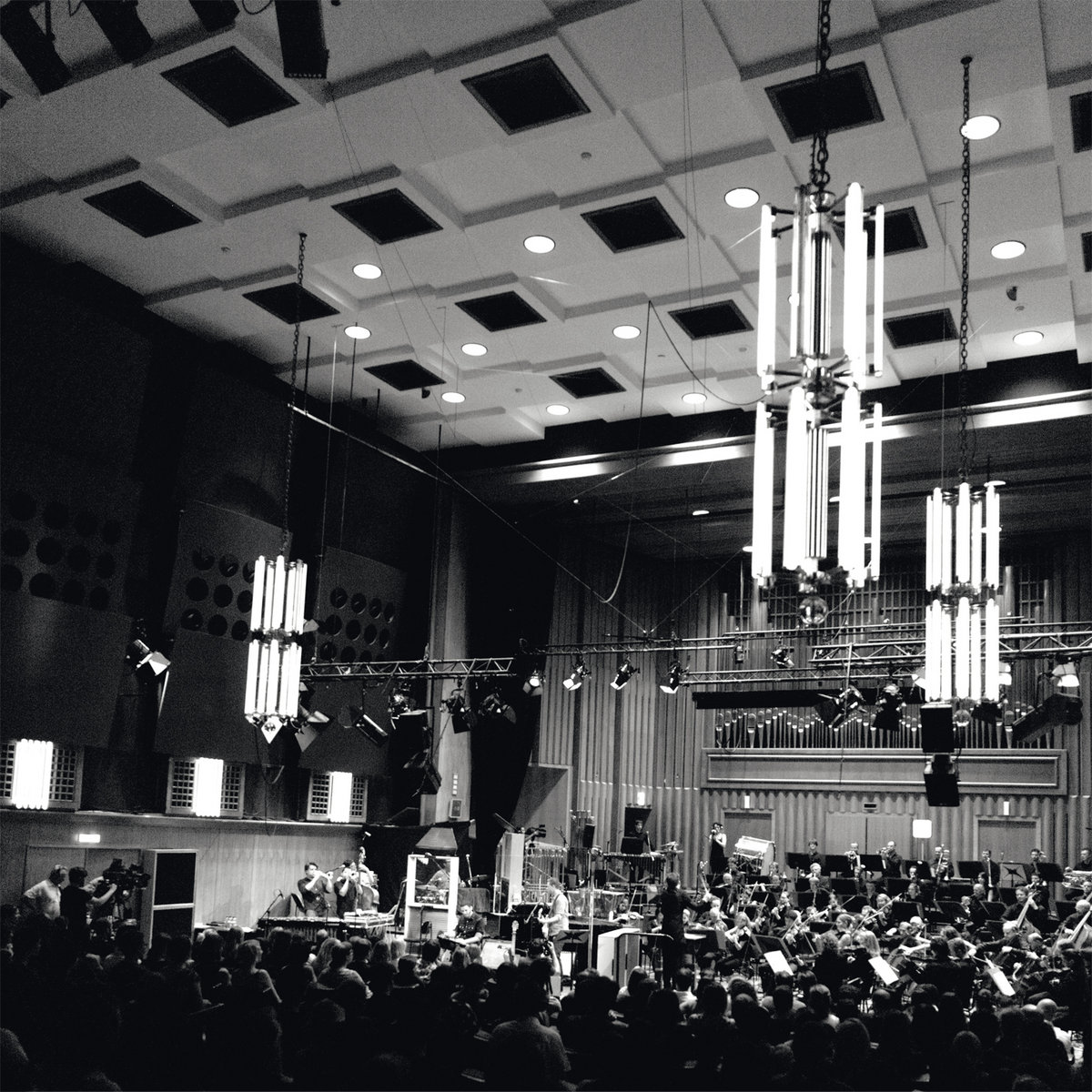
With big, sweeping arrangements, they’ve got a sound that could be described as “cinematic”. This is very well demonstrated on Spiritoso, a live album recorded with two different orchestras, in front of very German enthusiastic audiences. Its release was extremely limited—originally only on vinyl for the most recent Record Store Day, followed two months later with a digital download. Despite that, it’s an excellent overview of what the band does, working well within its mood. Superior samples include “Frontera/Trigger”, “The News About William”, “Quattro” and “The Vanishing Mind”; if you like those, definitely seek out others from their catalog.

Calexico Spiritoso (2013)—
Current CD availability: none; vinyl and download only

Monday, July 8, 2013

Jam 7: Dig The New Breed and Live Jam

Paul Weller finished The Jam with a farewell tour of sorts, accompanied by a live compilation. Dig The New Breed begins in 1977 with a tight version of “In The City”, then jumps to December 1979 for a trio of songs from their stint at London’s Rainbow. The bulk of the balance comes from shows in late ’81 and early ’82, when they had a horn section onstage with them.

Still, even with all the different venues and eras in their short five years, it holds together as an album. It is sequenced somewhat chronologically, but the emphasis is on songs as opposed to “live greatest hits”. While a few singles are played, many of the songs are deep album tracks, with the exception of the cover of Eddie Floyd’s “Big Bird”, an obscure Stax cut.

The original LP issue of Dig The New Breed had a unique design, with a hole in the cover to show off the special labels. It was a decent gesture, but hardly compensation for fans who were mourning the loss of their favorite band. At least the horn section doesn’t get too much in the way.

Ten years later, after Weller started releasing albums under his own name in a more guitar-based style, Polydor dug into the vaults for a few archival releases. One of these was Live Jam, not to be confused with the “Pearl” version then fascinating American youth. Half again as long as Dig The New Breed, it also doesn’t duplicate any of that album. The Rainbow in 1979 is again the source for several tracks, providing a relentless sampling from the Setting Sons era. Most of the second half includes that later horn section (and female backup singers), though Bruce gets to sing “David Watts” and they gamely inject some life into the usually robotic “Precious”. The set closes with their arrangement of “Heat Wave”, providing a nice compromise between their soul influences and the direction Weller was about to take without them.

Both albums are essential for the fan, and educational for those wondering what all the fuss about. Thankfully, the BBC had saved a few of the band’s performances, so the now-hard-to-find The Jam At The BBC delivers three discs worth of radio performances, including lengthy sets from 1978 and 1981, plus a full hour-long show from—where else?—the Rainbow in 1979.

The Jam Dig The New Breed (1982)—
The Jam
Live Jam (1993)—
The Jam
The Jam At The BBC (2002)—

Friday, July 5, 2013

Billy Joel 9: Songs In The Attic

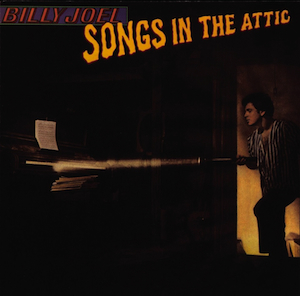
Here was an excellent idea—a live album of pre-Stranger songs performed by his loyal band. With eleven songs chosen from concerts in clubs and hockey arenas, Songs In The Attic provides cohesion to some unwieldy tracks and illuminates some otherwise lost gems.

These aren’t drastic reinterpretations, but simply “better” versions of songs that had, for the most part, originally been comprised of studio musician contributions. His full-time band had been beating the crap out of these songs for several tours now; Phil Ramone’s production, of course, brings out the best in each of them. And by sticking with the original arrangements, curious concert-goers wouldn’t be disappointed when they went back and bought up the albums with the songs they hadn’t heard before the show. (It’s good to have catalog, although Cold Spring Harbor wasn’t widely available at the time.)

“Say Goodbye To Hollywood” certainly sounds better here, but even with that extra push, he still sings with a Ronnie Spector vibrato. Songs like “Miami 2017” and “Captain Jack” (with a nice new intro) always worked well in the concert environment, so it’s surprising for something as comparatively intricate as “Streetlife Serenader” to succeed as well as it does. Wisely, the chosen performances of “She’s Got A Way” and “You’re My Home” come from smaller clubs, but then again, so do “Everybody Loves You Now” and “Summer, Highland Falls”.

Being a live album and a quasi-hits collection, Songs In The Attic is something of a transitional stopgap, even though there was no indication he was about to change anything. As an improvement on the albums it sampled, it provides value. The original LP was a nice package, too—plenty of old photos in the gatefold, along with lyrics and extensive liner notes, paying lengthy tribute to all the guys on the road crew. Maybe he was a nice guy after all. (Over the years other period recordings have emerged in the guise of outtakes, suggesting that the album was supposed to be a double, encompassing a full setlist equivalent including the all the hits, too. Keeping it simple was the wise choice.)

Billy Joel Songs In The Attic (1981)—

Wednesday, July 3, 2013

Bruce Springsteen 7: Born In The USA

More than a couple of years in the making, Born In The U.S.A. was an album designed to please, with each side front-loaded with upbeat rockers, only letting up for the moodier pieces that close them. Even though lyrics were included, even in the cassette that was most likely the format purchased most that year, their miniscule size made them easy to ignore, so the less-than-rosy message of such clapalongs as “Darlington County”, “Working On The Highway” and “Downbound Train” was obscured. The title track was notoriously misinterpreted, helped along by a bagpipe-like arrangement that made the words seem more defiant than the defeated tone of the demo’s Vietnam vet narrator.

Granted, a lot of these songs weren’t the ones selling the album. A whopping seven of the album’s dozen tracks were released as singles, all reaching the Billboard top ten. (In fact, if you bought each of the 45s from this album, you could have bought the album twice for the same money, but then you’d’ve missed out on the B-sides, ranging from the radio favorites “Pink Cadillac” and “Janey Don’t You Lose Heart” to the live covers of “Santa Claus Is Coming To Town” and Tom Waits’ “Jersey Girl”.)

The first of those singles was “Dancing In The Dark”, the last song written (under protest) for the album, and drenched in the synthesizers that threatened to replace the piano and organ on the other album tracks. “Cover Me” followed, accompanied by a (gasp!) dance remix. The title track sold itself, while “I’m On Fire” had the help of a moody video to match the edgy desire in the lyrics. “Glory Days” and “I’m Goin’ Down” came from the less covert second side, a couple of bar-friendly rockers, though only the former got a video. By the time “My Hometown” was released—amid a wave of singles that celebrated a “Small Town” and “Life In A Northern Town”, even though “We Built This City” and “You Belong To The City”—the album had pretty much reached saturation. The album’s low-key closer, it sounds the closest to the tone of Nebraska, which of course was the album that happened in the process of recording this one.

Of course, stations like WNEW-FM in New York City had already spent several years serving up your weekly double dose of Bruce Juice every Two-for-Tuesday, so it was inevitable that they’d wear Born In The U.S.A. out. And boy, did they. The singles and B-sides weren’t enough, so it wasn’t uncommon to pick up “No Surrender” in their rotation. But the album’s true home run is “Bobby Jean”, one of the best send-offs to a former lover or bandmate, take your pick. (Clarence’s closing sax solo is a particular favorite.)

Today much of the album betrays that ‘80s sheen so common to mixes in those days, but it should surprise no listener that Born In The U.S.A. was massively popular, not just within driving distance of the Jersey shore, but all the way across the country and then some. It was packaged to sell, just as America was surfing a wave of patriotism of a height not seen since, arguably, the end of World War II. Its cover screamed red, white and blue, with the camera focused on Springsteen’s denim-clad ass, a red ball cap stuffed in a pocket and a white T-shirt roughly stuffed under his belt, with the stripes of Old Glory in the background. Gung-ho Reaganites didn’t even wonder if his hand was posed to suggest he might have been urinating on the flag.

Bruce Springsteen Born In The U.S.A. (1984)—

Monday, July 1, 2013

Robyn Hitchcock 20: Spooked

Having basically ceased to matter in the business outside of his miniscule fan base, Robyn found a new home on Yep Roc, a label that specialized in indie rock perpetuated by such older codgers as Nick Lowe, The Reverend Horton Heat and the guy from the Blasters. For his first missive on the label, Robyn hooked up with David Rawlings and Gillian Welch, darlings of the alt.country movement. Their influence isn’t immediately overt, but they prove to be inspired collaborators.

Spooked is another acoustic album with a green cover, mostly, many of the songs coming across as demos. “Television” is sadly not about the band but the appliance, yet rates a devoted vocal. “If You Know Time” is based around what sounds like a dulcimer, evoking something like a more tuneful Incredible String Band. But around where “Everybody Needs Love” comes in, the album threatens to sound like endless variations on “The Cheese Alarm”.

People who’ve followed Robyn this long want desperately to like him, and therefore ache for an album to thrill as much as its older siblings did in earlier decades. We wanted to root for Spooked, and display it as proof that he’s just as inventive as ever. Yet songs like “Creeped Out” come across as something he’s making up on the spot, with the barest of chords, the immediate effect is that of forced whimsy, where once he sounded more natural. Meanwhile, the lengthy cover of Dylan’s “Trying To Get To Heaven”, here given its full title with the tag “Before They Close The Door”, seems like a Major Statement, coming only a couple of years after his double-Dylan tribute set, and in full acknowledgement of his mortality. (Of course, the unique modification referring to “the dinosaur’s waiting room” shows he just has to be him.)

There are enough moments throughout, like the first couple of tracks and a few near the end (like “Full Moon In My Soul” and “Flanagan’s Song”) that actually possess melodies capable of adhering to your brain. It’s hard to imagine how Spooked might have developed from first idea through composition, refinement and recording. It seems a very arbitrary album, especially considering that the two-song bonus CD that accompanied initial orders is as good as the album it accompanied. We didn’t come around ourselves for over a decade, but when heard within the context of a decade’s worth of a lot of one-shots, the album does emerge as recommendable.

Robyn Hitchcock Spooked (2004)—3