Monday, October 14, 2013

Robyn Hitchcock 23: Bad Case Of History

The second retrospective Robyn box from Yep Roc was devoted to his mid-‘80s work with the Egyptians, from before their stint on A&M (now only available illegally or on eBay). Luminous Groove presented Fegmania!, Gotta Let This Hen Out! and Element Of Light! (okay, we added the exclamation point to that one) rijigged for the third time, with the usual suspect bonus tracks and positively hideous photos. But that wasn’t all.

This time, the carrot was another two-CD set of rarities, all featuring the Egyptians, most of which had never, ever been heard before. Bad Case Of History is split between studio and live tracks, providing a wealth of new music for fans hoarding their muddy dubs. The studio half is especially intriguing, as it presents a half hour’s worth of music that could have gone onto Globe Of Frogs or Queen Elvis, including the “title track”, a full band version of “Agony Of Pleasure” and the live favorite “Evil Guy”. Much of the balance comes from after Respect, providing a glimpse into the last sessions before the band stopped, including such future solo cuts as “I Am Not Me”, “Beautiful Queen” and “Zipper In My Spine”, rounded out by the holy grail among Hitchcock heads, “Surfer Ghost”.

The live disc is equally wonderful, again compiled from the A&M years, showing what a trio perfectly in sync could accomplish given the space to try it out. Along with a pile of songs from that limbo period, there are covers of “Eight Miles High” and “Chimes Of Freedom”, plus an otherwise unavailable song called “The Living Years” one place in the packaging and “The Live-In Years” elsewhere. (Either way, it’s not the Mike + The Mechanics song.)

While it does mess with the chronology somewhat, and forces completists to hold onto their Rhino reissues, Luminous Groove does deliver a wealth of new music for those of us who consider the Egyptians to be his best band—certainly inventive, and whimsically patient, at least on the surface. And it was already a long time ago.

Robyn Hitchcock & The Egyptians Luminous Groove (2008)—4

Sunday, October 13, 2013

CSN 8: Live It Up

Just when you thought they couldn’t get any worse, Crosby, Stills & Nash managed to underperform to the least of their senses, if not their abilities. The embarrassment of Live It Up begins with the cover art, depicting giant hot dogs being roasted on the moon. That should be enough to keep the album far from the cash register, but people bought it anyway. Whether they enjoyed the noisy, unsuited production values remains an equal mystery.

The liner notes helpfully pinpoint the dates each of the songs were committed to posterity; for the most part the recordings came immediately in the wake of the underwhelming release of American Dream, proving that they didn’t pay attention to their own bad reviews. The hideous title track was contributed by constant sideman Joe Vitale and recorded as far back as 1986, which is only part of the problem, but it’s followed “If Anybody Had A Heart”, penned by buddies J.D. Souther and Danny Kortchmar, supposedly featuring Roger McGuinn on 12-string, and first heard over the closing credits of that same year’s About Last Night (aka Demi Moore’s finest nude scenes before the implants). Stills steps forward with two polar opposites. “Tomboy” is another Latin-tinged drag, while “Haven’t We Lost Enough” is a very appealing and welcome acoustic tune, even though it was written with the singer from REO Speedwagon. Crosby and Nash team up on “Yours And Mine”, which pleads for someone, someone to think of the children. (Guest star: Branford Marsalis on sax, what else?)

After that downer, Stills and Nash bring back the “carnivále!” atmosphere for the unnecessarily parenthesed “(Got To Keep) Open”, with Bruce Hornsby on piano and accordion somewhere in there. Nash thought well enough of the drummer from Go West to spearhead the inclusion of “Straight Line” (guest star: Peter Frampton!), followed by his own “House Of Broken Dreams”. “Arrows” is a Crosby collaboration with buddy Michael Hedges, who plays keyboards and not guitar on the track, perhaps to make room for Branford Marsalis again. This tune would have been a low light on any Hedges album, which might explain how it got here instead. Finally, there’s “After The Dolphin”, which is not about the endangered mammal for once, but refers to a pub destroyed during World War I. A different angle for an anti-war statement, but badly tied to a synth program that jars with the canned radio reports.

So that’s one decent song out of ten, and surprisingly, the best thing Stills did all decade. The rest of Live It Up is beyond defense, and deserves to be buried.

Crosby, Stills & Nash Live It Up (1990)—1

Friday, October 11, 2013

Brian Wilson 1: Brian Wilson

At a time when some veterans were stepping out with new material, one of the least likely was Brian Wilson. While he’d contributed, albeit minimally, to the increasingly sporadic Beach Boys albums of recent years, the Rock and Roll Hall of Fame school of fandom was coming around to hail him as a forgotten genius, and one who’d managed to not only survive but overcome the pharmaceutical dependencies that had derailed him. So it was that his first solo album—if you don’t count Pet Sounds, of course—was something of an event, accompanied by a PR push featuring photos of a trim, tan, rested and ready Brian.

Much of Brian Wilson’s success—and the fact that it was even completed—is due to Andy Paley, who did so much work to craft completed tracks around Brian’s ideas. Key producers Russ Titleman and Lenny Waronker helped ensure that the label (Sire, and by extension Warner Bros.) was getting their money’s worth. The original pressing also gave a lot of credit to Eugene Landy, the since-discredited psychologist who exploited his doctor-patient privilege to turn Brian into a petrified kept boy.

Modern recording trends (and Brian’s own attention span) didn’t allow for the contracting of the Wrecking Crew at Gold Star Studios, which had burned down anyway. Instead, Brian was encouraged to create his pocket symphonies using synthesizers and other machines. These days, the pinging effects distract from the melodies, which is too bad, because most of the songs are really good.

“Love And Mercy” would be Brian’s salutation for many years, and it’s a wonderful summation of his fragile innocence and sensitivity to the suffering of others. From that sublime beginning we go to “Walkin’ The Line”, a little throwaway mysteriously co-written with the guy from The Dream Academy and featuring not only the sound of marching feet (get it?) but Terence Trent D’Arby on backing vocals. Much better is “Melt Away”, which melds a sweet melody to an arrangement where every other note is a different chord, both tune and lyrics recalling the low self-esteem of Pet Sounds. Speaking of which, “Baby Let Your Hair Grow Long” updates “Caroline No” with a central message that, as several have pointed out, could be a pep talk to himself. “Little Children” introduces two kids whom the world would soon know as two-thirds of Wilson Phillips, and is over pretty quickly. Another overt family reference is “One For The Boys”, all amazing a cappella, demonstrating that nobody arranges voices like Brian Wilson. “There’s So Many” is a little underdeveloped, more of a record than a song, with too many “spacey” effects covering up what’s missing.

Those wacky space noises are all over “Night Time”, which gets pretty annoying, except during the sections between the incessant choruses. “Let It Shine” gets far enough away from Jeff Lynne’s production for a near-Dion/doo-wop pastiche. It’s a wonderful song, even despite rhyming “fire” with “desire”. With an opening like a music box lullaby, “Meet Me In My Dreams Tonight” is possibly the greatest ripoff of “Santa Claus Is Coming To Town” ever attempted. To prove that he wasn’t all pop of circumstance, the daring “Rio Grande” was the closest we’d get to Smile for some time, with little fragments poking through here and there. It’s not his best extended work, but boy, is it picturesque, particularly in hindsight, evoking images of the old America in his mind.

As good as the album was, it just didn’t fit with what was happening on either AM or FM radio. To add further insult to injury, the band he left behind managed to get their first #1 hit in decades with the truly hideous “Kokomo”, released right around the same time. As the years have gone by, this little album has risked being forgotten, even as interest in the man’s classic creations has been stoked by continual reissues and further solo albums. Thankfully, Rhino gave Brian Wilson the expanded treatment at the turn of the century, adding timely B-sides and even demos, and removing all songwriting credits for Landy.

Brian Wilson Brian Wilson (1988)—4
2000 CD reissue: same as 1988, plus 15 extra tracks

Wednesday, October 9, 2013

Billy Joel 12: Greatest Hits

Firmly established as a superstar, the time was ripe for a bona fide Billy best-of. The helpfully titled Greatest Hits Volume I & Volume II reflected its existence as a two-record set, arranged in rough chronological order, each volume helpfully subtitled with the relevant years.

Beginning with “Piano Man”, it pretty much has everything the casual top 40 radio fan would have heard already. A whopping five songs from The Stranger dominate the first record, with only three hits from the still-recent An Innocent Man on the second. (“Goodnight Saigon” anchors side three, suggesting his own input into the sequencing.)

To entice fans who already had all the albums already, two brand new songs were included, both designed to be counted among their brothers as true greatest hits. “You’re Only Human (Second Wind)” is a jarringly bouncy track assuring the listener that it’s okay to make mistakes, since they’re part of life and everything—and just to prove it, he even flubs one of the choruses! What a silly goose. If this song actually helped prevent a suicide, that’s a good thing, but the knee-jerk critic’s response is to suggest that it probably drove more people nuts. All the way into the top ten.

The other new song was more of a production, and wasn’t as big of a hit. But “The Night Is Still Young” is a much more palatable track, with a vocal approach that echoes the Righteous Brothers, and gently layered keyboards that nudge the melody along. It’s one of those songs that’s rarely played anymore, but is welcome when it is.

The release history of the album has become somewhat confusing over the years. First, overseas markets swapped “Honesty” for “Don’t Ask Me Why”, while some tracks were the shorter (or live) single versions. The compact disc medium was a relatively new novelty, and the CD version of Greatest Hits took advantage of the extended capacity to add more songs (and long ones, too, including “Captain Jack” and “Scenes From An Italian Restaurant”). The current CD you can buy or download now has everything in their full lengths, both “Honesty” and “Don’t Ask Me Why”, and the studio version of “Say Goodbye To Hollywood”.

Billy Joel Greatest Hits Volume I & Volume II (1985)—4
1985 CD: same as LP, plus 4 extra tracks

Monday, October 7, 2013

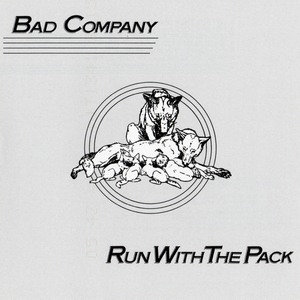
Bad Company 3: Run With The Pack

The good thing about Bad Company is that they provided a healthy dose of stupid when you just didn’t want to think. That would have been pretty obvious on their last album, but if you’re gonna be stupid, it’s best to disguise it within an album that might suggest there’s more under that surface. If that’s the formula, and why wouldn’t it be, Run With The Pack delivers, and mostly bounces back from the sophomore slump.

For whatever deepness they wanted to portray, “Live For The Music” states the purpose pretty well, explaining the recipe that just might “rock and roll” one’s blues away, complete with a prominent Boz Burrell bass line that underscores (or at least suggests) his importance to the equation. Still, while The Music was key to what made them what they were, “Simple Man” takes a familiar theme and marries it to a nice drop-D motif, so Paul Rodgers can declare that “freedom is the only thing that means a damn to me.” Well, it was the ‘70s. Such freedom would allow him to sidle up next to “Honey Child”, who had driven him wild since she was only 17. She must not have bought it, since the simple piano exercise of “Love Me Somebody” sets us up for the pounding title track. There have been some rockers so far, but that piano is tough to beat. Its relentless pace must have been tough on the band, as it moves into an extended coda that does not fail to stir.

In case you didn’t get enough piano, “Silver Blue & Gold” is another departure, a midtempo pop song that makes good use of harmony vocals. Lest you think they’re getting too full of themselves, it’s followed by a nice romp though “Young Blood”. This one might have been familiar to any young kids who’d seen (or heard) the Concert for Bangla Desh, but the distinctly British response vocals are hysterical. “Do Right By Your Woman” is a lovely sentiment over a campfire strum, but the real emotion is clear in “Sweet Lil’ Sister”, which cranks it up a couple of notches. Finally, “Fade Away” marries a mournful piano to a suitable string arrangement, providing a somber finale to the record.

Run With The Pack gets the recipe right, as long as you skip track one. There’s enough variety to keep it from being as much of a carbon copy as Straight Shooter was to the debut, making it more of an album you’d want to play again. And the band must have known it was worth something, since they had to pay all that money to have Bugs Bunny in the gatefold. (The eventual expanded edition presented most of the album in early mixes, showing how much the string arrangements added to the songs that had them. The acoustic B-side version of “Do Right By Your Woman” is nice to have in context, though the otherwise unreleased “Let There Be Love” and the jam on “(I Know) I’m Losing You” aren’t any great shakes.)

Bad Company Run With The Pack (1976)—
2017 Deluxe Edition: same as 1976, plus 14 extra tracks

Friday, October 4, 2013

Tom Waits 19: Blood Money

While it hadn’t been waiting as long as Alice, Blood Money came from the same general source: a pre-industrial tale dramatized by Robert Wilson with songs by Tom Waits, with yet another complicated plot. At first it seems like a more challenging listen than its counterpart, but that’s not to elevate Alice any higher than it deserves.

“Misery’s The River Of The World” sports a lovely chromatic descent and return to accompany his Beefheart bark, and “Everything Goes To Hell” is just as bleak a message. “Coney Island Baby” brings a piano ballad just in time; not the Lou Reed song, but still has some allusions to “Innocent When You Dream” at the end. The marimbas and clarinets return for “All The World Is Green”, but then we go back to the demented circus for “God’s Away On Business”. “Another Man’s Vine” should appeal to fans of Bone Machine, reminiscent as it is of “Dirt In The Ground”. But the true antecedent here is The Black Rider, as demonstrated by the instrumental “Knife Chase”.

A very tender “Lullaby” provides a nice break, again, but then it’s back to nightmare territory with “Starving In The Belly Of A Whale”. “The Part You Throw Away” has the potential to be something profound, but the understated delivery and Night On Earth arrangement make it seem more of a passing phase. “Woe” is a brief, bronchial song of devotion swallowed up by the more dissonant “Calliope”, which brings to mind some of the interludes from the earlier Island years. An old 78 winds up for “A Good Man Is Hard To Find”, which plays over the credits of the imaginary movie.

Just like Alice, there are a lot of interesting textures on Blood Money, but it’s unlikely that Waits would be comfortable with this becoming background music, in the way that another artist famous for his textures (i.e. Brian Eno) would be. The music is striking, for certain, but without an outside producer to edit him (and the writing co-credited to his wife) one wonders what could have been whittled down to something simple and thus even more striking.

Tom Waits Blood Money (2002)—2

Wednesday, October 2, 2013

Tom Waits 18: Alice

He’d come back in such a resounding way with Mule Variations, so it was with relative speed that Tom Waits resurfaced yet again with not one but two albums released on the same day. Both were derived from stage productions he’d mounted with Robert Wilson, the playwright behind The Black Rider. Alice comes first alphabetically, so we’ll deal with that one here.

It’s also a good place to start, because the title track is a smoky lounge piano ballad that sounds equally at home on a Waits album from the ‘70s, ‘80s or ‘90s. It would be a wonderful torch song if it weren’t written from the point of view of an opiated adult towards an adolescent. A canned train whistle heralds the death march of “Everything You Can Think”, but while the nightmare seems to pass for “Flower’s Grave” and “No One Knows I’m Gone”, the mournful lyrics say otherwise. The CD booklet provides no lyrics for “Kommienezuspadt”, an exercise in gutteral fake German, but one might assume they would tie into the freaks the populate the next songs. “Poor Edward” is somehow afflicted with a woman’s face (“or a young girl”) on the back of his head, but perhaps he wasn’t as bad off as “Tabletop Joe”, a distant relation of the Eyeball Kid, “born without a body” but still possessing hands, so he could make music.

But “Lost In The Harbour” is the last gasp of a dying man, illustrated by what sounds like the water in the harmonium about to swallow him up, but he surfaces long enough for another verse. “We’re All Mad Here” turns the nightmare back on, followed by the monologue in “Watch Her Disappear”. One would think there’s some kind of connection to Germany, since the next track takes place in the “Reeperbahn”, unless he’s referring to the more literal translation of “rope walk”. Another respite emerges in “I’m Still Here”, which could qualify as a reconciliation, and “Fish & Bird” and “Barcarolle” are just as pretty (though the latter threatens to descend into discord in the instrumental middle). “Fawn” is a closing instrumental with a violin that sounds more like a saw.

Unlike The Black Rider, no synopsis is supplied to help us discern whatever story these songs on Alice are supposed to illustrate. The songs had sat around for ten years before this official recording was released, so fanatics already had something for comparison. For those of us entering the party with this invitation, we were less inclined to sample the food laid out. Chances are others that happened to wander in might not have stayed to see what the fuss was about, but no matter; there was the other album to consider while this one marinated.

Tom Waits Alice (2002)—