Friday, September 12, 2014

Mark Knopfler 6: Shangri-La

The new century was already seeing an upswing in Knopfler solo albums, but perhaps a motorcycle accident spurred him into more frequent releases. Whatever the real story, Shangri-La presented another hour’s worth of generic Knopfler noodling, most of the songs interchangeable with each other.

His penchant for storytelling is to be admired, but the music doesn’t always seem to match whatever the tale is, whether it’s an elegy for Elvis Presley’s movie career (“Back To Tupelo”) or the genius of McDonald’s entrepreneur Ray Kroc (“Boom, Like That”). “Donegan’s Gone” pays tribute to the recently departed skiffle king Lonnie Donegan, and no points for guessing the subject matter of “Song For Sonny Liston”.

Still, a few tracks stand out. “Our Shangri-La” and “Postcards From Paraguay” do successfully evoke a tropical scene, just as “The Trawlerman’s Song” sounds like a sea shanty. The late-night saloon setting of “Stand Up Guy” makes reference to a doctor, while the why “Don’t Crash The Ambulance” would seem to come from a personal place as well. The ironic country lament “Whoop De Doo” and the tender lullaby of “All That Matters” are easily the best songs here.

Sure, Shangri-La is nice, but we’re tired of using that adjective to describe a Mark Knopfler album. The near-title track does have a good extended ending, but it barely comes halfway into the program, making even the sequencing seem arbitrary. There was a time when his music truly stirred and painted pictures; this is just going through the motions.

Mark Knopfler Shangri-La (2004)—2

Tuesday, September 9, 2014

Joe Jackson 18: The Duke

Well, that didn’t last long. Maybe he‘d gotten songwriting out of his system, as Joe’s next major work was a tribute to the music of Duke Ellington, with new arrangements, complete with an all-star cast of special guests. Cue crickets.

While there’s no questioning the importance of the music examined on The Duke, it’s almost as if Joe is determined to prove to the world that they, not he, were wrong to dismiss such earlier celebrity-studded train wrecks as Night Music and Heaven & Hell. Having already proven his talent with jazz throughout his career, and specifically on Jumpin’ Jive, did he really think the world wanted to hear what could do with Steve Vai and Iggy Pop at his disposal?

Stylistically, it’s all over the map. The opener is smooth jazz punctuated by Vai’s noodlings. Several tracks are driven by the rhythm section of Christian McBride on bass and ?uestlove on drums (in addition to other Roots here and there) with JJ favorite Sue Hadjopolous on percussion. Vocals appear, sometimes from Joe, once from Sharon Jones, but also from Sufi and Brazilian singers for authenticity if not comprehension. Some tracks combine different pieces into one, and much of it sounds like Steely Dan, and not in a good way either.

And two decades into the new century, he’s still using canned synthesizer sounds over more progressive sounds. The big closer of “It Don’t Mean A Thing” samples Ellington’s own voice and flatulent effects, with Iggy Pop bringing nothing to the table, but not taking over the stage, thankfully. One wishes Joe had kept it simple, but he didn’t. “Mood Indigo”, for example, is way more labored than his earlier rendition. Yet there’s a wonderful moment of a “Satin Doll” medley where it’s just his piano striding through the melody.

The lesson to be learned? Go dig up the originals and marvel at the genius of the real thing. That’s a much better tribute.

Joe Jackson The Duke (2012)—2

Friday, September 5, 2014

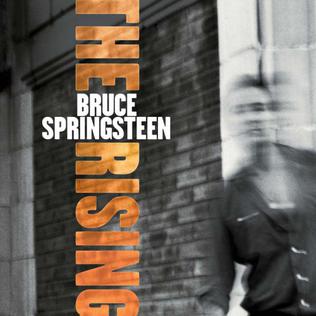
Bruce Springsteen 15: The Rising

Purportedly, within weeks of the attacks on September 11, Bruce Springsteen was driving down by the Jersey shore when a guy in the car next to him rolled down his window and called out, “We need you!”

While Bruce has never had the level of hubris of, say, Bono, he did still mean something to the people of New York who grew up on his music, and likely only enjoyed a handful of songs he put out in the ‘90s. Now it was a new century and the world had changed, and as he’d already put the E Street Band back together for a tour following Tracks (documented on the obligatory live album and DVD), it was time to rock out again.

The songs on The Rising resonate with the multitude of emotions following 9/11, and work best when they use the E Street Band, which now included both Steve Van Zandt and Nils Lofgren, and of course Patti Scialfa. Also prominent is violinist Soozie Tyrell, and because it’s a Brendan O’Brien production, it’s not so much live-sounding as it is decorated.

The first six songs are all solid, one after another, well paced and contrasted. The harpsichord and strings at the start of “Lonesome Day” are a red herring, as it soon turns into exactly what the guy on the shore wanted. It takes a lot of balls to put a song called “Nothing Man” on an album produced by the guy who worked with Pearl Jam, but he pulls it off. “Into The Fire” and “Empty Sky” seem overtly related to current events, but not blatantly, while “Countin’ On A Miracle” and “Waitin’ On A Sunny Day” are just the type of apostrophed rockers that fill stadiums. You have to listen for Clarence Clemons, but he’s in there, just not blasting over every fade.

The wheels come off 25 minutes in, on track 7. “Worlds Apart” has a melody and chord structure right out of his late ‘70s songbook, but we can handle only so much Middle Eastern effects and choirs when Sting uses them, and they sound just out of place here. Even worse is “Let’s Be Friends (Skin To Skin)”, heavy on hip-hop loops and modern R&B. “Further On (Up The Road)” is ordinary rock by numbers and “The Fuse” is little more than a spruced-up demo.

Things do get back on track on “Mary’s Place”, with another red herring of a Mellencamp intro; while it’s about twice as long as it should be, the song’s “let’s have a party” sentiment provides the same relief as similar songs on The River, needed here more than ever. “You’re Missing” is moving but not mawkish, while the title track still stirs chills and thrills, even without delving into the lyrics. “Paradise” is a dour detour into Ghost Of Tom Joad territory. And finally, “My City Of Ruins”, completed before the attacks but a fitting end, borrows liberally from Van Morrison’s “Crazy Love”, but most people will think of “The Weight”.

Bruce has always written about struggle, hope, despair, and persevering despite it all, so even outside of the context of the times, The Rising for the most part succeeds. Take out the chunk of misses in the middle and tighten a few of the fades—the songs are all longer than they need be anyway—and it would rank with his best. It was still his best album in 15 years.

Bruce Springsteen The Rising (2002)—3½

Tuesday, September 2, 2014

Billy Joel 17: Greatest Hits Vol. III

Seemingly retired from the pop scene, the final Billy Joel release of the ‘90s was a compilation. Being a single-disc sequel to the double set from 1985, it got the imaginative title of Greatest Hits Vol. III, cleverly allowing Sony to repackage both together in a box with a fourth “music and conversation” disc. But anyway.

Two of the songs (“Keeping The Faith” and “An Innocent Man”) predate the previous hits collection, but as they were actual hits, we’ll allow it. But the rest of the program isn’t as obvious. We move chronologically through the three studio albums yet to be anthologized, with eyebrow raisers like “Baby Grand” and “Leningrad” among the more expected radio fodder. “Shameless” is included, most likely as a nod to the Garth Brooks version. Similarly, we suspect “The Downeaster ‘Alexa’”, “And So It Goes”, and “Lullabye (Goodnight, My Angel)” made the cut for more personal or sentimental reasons than commercial ones. (Really, would you call any song that missed the top 40 a “hit”?)

The album did offer something new to fans who already had the albums: three new songs, all covers, all on the slow side. “To Make You Feel My Love” was the debut of a new Dylan song, a whole month ahead of Bob’s own version, complete with harmonica solo. (And of course, Garth Brooks had to go ahead and record his own version the following year.) “Hey Girl” is a Goffin/King tune, given a lush blue-eyed soul arrangement. Finally, “Light As The Breeze” recasts a Leonard Cohen song as an R&B showstopper, investing it with way more melody than Leonard could’ve.

If anything, Greatest Hits Vol. III proves that even if Billy Joel didn’t write any more songs himself, he could easily build a cash cow out of covers. (Hey, it worked for Rod Stewart and Barry Manilow, to name two.) That he hasn’t done so is a big point in the integrity column. We know now that those last three albums basically happened because he was caught up in the industry machine, which took him away from his family. He didn’t have the same fire to succeed, since he already had, but personal struggles combined with comparable financial ruin kept him on the road much longer than he would have liked. So we can cut the guy some slack.

Billy Joel Greatest Hits Vol. III (1997)—3

Friday, August 29, 2014

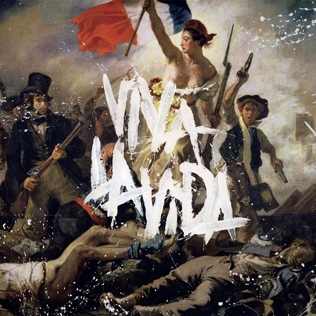
Coldplay 4: Viva La Vida

With the world at their disposal, Coldplay made the smart move with their fourth album, employing Brian Eno as full-fledged producer. Therefore, Viva La Vida Or Death And All His Friends is their Unforgettable Fire, wherein the band attempts to stretch their fans’ expectations with different soundscapes from those that filled their first three albums. (They even changed their font, breaking from the Albertus typeface familiar from The Prisoner.)

Viva La Vida flows like a true album, to be heard in sequence. Ten tracks are listed, but many of them have distinct or even unlisted sections, showing off the variety and keeping the tedium at a minimum. It’s immediately more satisfying than X&Y, and remains so.

Floating in on a soothing loop, “Life In Technicolor” is something of a rousing overture before the darker, mysterious “Cemeteries Of London”. A brief piano piece provides a bridge to “Lost!”, heavy on organ and handclaps but still catchy. In other words, typical Coldplay, but not a retread. “42” is three songs in one, none of which seem to illuminate any kind of Douglas Adams reference. A “Scientist”-like opening section threatens to turn into one of their “big” numbers until giving way to a treated guitar section à la Radiohead, which turns into a more straightforward tune, then reverting to a variation on the opening part. But the feeling stays up on the driving “Lovers In Japan”, which shares its track with the much quieter “Reign Of Love”, treated very much in the manner of Eno.

The most exhilarating moment of the album is unlisted, but “Chinese Sleep Chant” is three minutes of shoe-gazing splendor with muffled vocals that reminds one of Echo and the Bunnymen. Because it arrives at the four-minute mark of “Yes”, children of the digital age will be forced to (gasp!) rewind. Despite its melodic similarity to too many songs from the history of composition, “Viva La Vida” still inspires, its combination of tympani, strings and hammer-on-church-bell providing the big single the band needed to sell the album. “Violet Hill” fades in on a Blue Nile hum, before crashing through topical verses at odds with their “if you love me” tags. A moment of studio verité sets up the lilting “Strawberry Swing”, processed guitar loops dominating tribal drums. Finally, “Death And All His Friends” moves from a quiet piano meditation to a more typical arena rocker, and ending with a lengthy version of the loop that began the album, another hidden song called “The Escapist”.

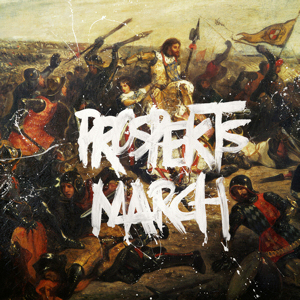
In true U2 style, there were leftovers, which were duly added to a re-release of the album by year’s end. However, in a nice gesture to those who didn’t want to buy the whole thing again, Prospekt's March was made available as a separate, attractively priced EP. More of a supplement than a side three, it underscores how wise they were to make Viva La Vida as compact as it is.
“Life In Technicolor II” appears with lyrics, including the omnipresent phrase “now my feet won’t touch the ground”, which is also the title of the EP’s acoustic closer. “Postcards From Far Away” is 45 seconds of piano (oddly not shoehorned within another track), giving way to the more mainstream “Glass Of Water” and “Rainy Day”, both redeemed by their choruses and tricky rhythms. Somewhat lost in all the energy is the title track, a pretty song tagged at the end with a piece called “Poppyfields”. Two of the tracks are retreads: “Lovers In Japan” is remixed without the “Reign Of Love” section, while “Lost+” answers the prayers of those who thought the album track needed a Jay-Z rap to make it truly exceptional. (For the rest of us, it’s a harbinger of doom. A solo piano version, dubbed “Lost?”, closed the iTunes version of Viva La Vida, and would have been welcome here.)

Coldplay Viva La Vida Or Death And All His Friends (2008)—4
Coldplay
Prospekt's March (2008)—3

Tuesday, August 26, 2014

Suzanne Vega 8: Tales From The Realm Of The Queen Of Pentacles

After nearly thirty years and eight albums, Suzanne Vega still has the same clear alto. Clean living is most likely the reason, but taking lengthy breaks between releases most likely helps. Tales From The Realm Of The Queen Of Pentacles follows a seven-year absence of new material, finding her in familiar territory, parables and medieval imagery, with several songs hinting at a Tarot influence.

The album starts strong and stays strong, if brief. “Crack In The Wall” is loaded with poetic metaphors, while the poppier “Fool’s Complaint” is of a musical piece with “When Heroes Go Down” and “(I’ll Never Be) Your Maggie May”. “I Never Wear White” melds a bold statement with a punk riff lifted from “(I’m Not Your) Stepping Stone”. Things finally go quiet for “Portrait Of The Knight Of Wands”, its delicate finger-picking turning to waltz-time in the bridge but not repeating it over the coda. The one everybody talks about is “Don’t Uncork What You Can’t Contain”, thanks to its 50 Cent sample, nod to Macklamore and hip-hop rhythm. We can excuse the Arabian strings, but hearing Our Heroine bust rhymes and exclaim “for real” is just plain jarring.

Syncopated handclaps make “Jacob And The Angel” a continuation of the Eastern theme, but only for a couple of minutes. “Silver Bridge” would appear to be an elegy for her father-in-law, though that’s only an assumption from the dedication and a Google search for the name. (A better, more universal tribute ends in the album in the form of “Horizon (There Is A Road)”, written for Vaclev Havel.) Two songs about stoicism appear back to back; “Song Of The Stoic” is called out as an update of “Luka”, being a monologue by a now-adult victim of abuse, while “Laying On Of Hands” ponders the healing power of Mother Teresa, switching neatly into a faster “Stoic 2” section.

For the first time in a long time, she’s gone back to letting the songs speak for themselves. For the most part, they steer clear of gimmicks, keeping the arrangements simple and clear. Her main collaborator is Gerry Leonard, who brought with him a few other alumni of David Bowie sessions. That’s not to say the album sounds like Bowie, but that Leonard does know a thing or two about sonics, and Tales From The Realm Of The Queen Of Pentacles will not disappoint fans.

Suzanne Vega Tales From The Realm Of The Queen Of Pentacles (2014)—3

Friday, August 22, 2014

Jethro Tull 5: Thick As A Brick

We’ve tried to maintain something of a style and approach here, so when something like Thick As A Brick comes out of the bullpen, it’s a challenge to discuss it in our usual fashion. The reason is the obvious one: the album consists of a single “song” over two sides of an LP.

It’s a pretty clever idea, and presented well: an epic poem penned by a precocious youngster, forming the centerpiece of a local newspaper folded into the record’s packaging (complete with crossword puzzle, obituaries, classified ads, and even a review of the album itself). That alone begs comparisons to Monty Python, but then the band went ahead and set said poem to music, then took it on tour, perpetuating the in-joke to those seeking a concept album.

Taken all together, Thick As A Brick is an archetypal Jethro Tull album, encompassing folk and jazz, bombast and the deflation thereof, but nothing in the way of blues. And to call it a 42-minute song isn’t entirely correct; it’s several themes linked and repeated. One wonders if any of the repeats involved any Bitches Brew-style loop editing.

The beginning states the central theme, a fingerpicked acoustic and flute supporting the vocal, which says, “Really don’t mind if you sit this one out”. Okay then, we’ll just lift the needle, hit the stop button, whatever. But we like this little piece, so we’ll leave it on. Two verses and choruses make the song familiar, setting up the inevitable bridge. Were this a standard rock song, a third verse would follow a solo, but instead the theme reverts to a minor key, there’s a slight fade, and then everything scatters. “See there a son is born,” and he will be again and again.

For the rest of side one the music shifts between heavy riffing like any prog album (which was the idea) and madrigal-type strumming that began the side. The Hammond organ and piano are prominent, so fans of Aqualung will feel right at home. The acoustic guitar is incredibly crisp. And of course, there’s the flute. Lots of flute.

Because it was designed to be heard as two sides, the first half ends with an echo effect on a theme. The second half comes in on a sinister wind, that effected theme peeks through, then the son is born, again, just in time for… the drum solo! This was a nice gesture for Barriemore Barlow, their newest band member, but they throw in some more riffs and muffled conversation to keep the spotlight from shining too brightly. (A phone even rings a few times, which would feature on stage. And the symphony orchestra does show up before time runs out.) The established themes follow and intertwine, marching to the end. Which it does, finally, just as it began.

One thing that leaps out, and we’ve said this before, if not every time we’ve discussed a prog-rock album, is just how tight and precise the band is. The different themes do fit and flow without ever seeming tacked on. Because of this, Thick As A Brick does sustain itself for the entire program, making it a successful concept album. (We’ll also aver that Tubular Bells wouldn’t have happened without it.) That said, it’s easy to tune out unless you’re sitting with the paper in your lap reading along, which is tough to do if you’ve got a cassette or one of the first CDs. The 25th Anniversary CD made the newspaper available again, and added a 1978 live distillation plus a retrospective interview. When the 40th anniversary came around, they stuck with the original two-part sequence, plus a radio ad and various mixes on a DVD. And, of course, the newspaper.

Jethro Tull Thick As A Brick (1972)—3
1997 remastered CD: same as 1972, plus 2 extra tracks
2012 40th Anniversary Edition: same as 1972, plus 1 extra track (and DVD)