Friday, October 3, 2014

Traffic 8: When The Eagle Flies

Of all the Traffic albums, When The Eagle Flies has always been the most obscure. Coming as it did at the end of their tenure, and with no real standout track, it’s often been overlooked. It’s a depressing, even spooky album, partially due to the line drawings, reminiscent of children’s illustrator Garth Williams. And as with every one of their other releases of the decade, there was another lineup, stripped to a quartet. Jim Capaldi went back to the drumkit, turning in an excellent performance, while band newcomer Rosko Gee took over on bass. Reebop plays a few of his congas, but wouldn’t make the cover art.

It gets off to a snappy start with “Something New”, which sounds a lot bigger than it is thanks to all the overdubbed guitars and horns. Lest we get too comfortable, “Dream Gerrard” is eleven minutes of noodling under a repeated sax riff, Mellotron off a King Crimson record, and some very primitive synth bloops and bleeps. The extended jazzy end is quite Crim-like as well. The bloops continue on “Graveyard People”, which probably made for a nice effect in 1974, but now only distract from the funk.

If anyone knows any song from this album, it’s probably “Walking In The Wind”, which fades in on obvious effects to a catchy bass and piano duo; therefore sounding more like the band we’d come to know. “Memories Of A Rock N’ Rolla” is another lament of the traveling lifestyle, tackled better by other songs. This one lopes along glumly until shifting abruptly into an upbeat groove reminiscent of Chicago. It’s been said that the basic tracks of the album were recorded live on a short tour before being embellished in the studio; this is most apparent on “Love”, which meanders amid questions about the key before finding its way to an actual tune and disappearing. Finally, the agitated title track doubles the piano with the organ for an ecological lament, mixing in what sounds like radio transmission and fading away.

When The Eagle Flies didn’t make much of a splash, and the band—or what was left of it this time—split soon after. Capaldi and Winwood would collaborate on each other’s albums, Stevie eventually having more success than anyone else. Chris Wood died in 1983, not long after Reebop. There would be another Traffic album in twenty years’ time, but it was Traffic in name only. Various compilations over the years attempted to distill the band to a single set, Smiling Phases and Gold arguably the most successful, being double CDs, but aren’t identical, and skew either side of early and late. Their legacy shouldn’t end here, yet their constantly evolving nature always made them seem fleeting anyway.

Traffic When The Eagle Flies (1974)—2½

Thursday, October 2, 2014

Blue Nile 2: Hats

A Walk Across The Rooftops was intriguing, but not immediately stunning. When their second album came out at the end of the decade, that did the trick.

Hats follows the template of the first album closely: seven tracks, mostly around the five- to six-minute range, alternating upbeat tracks with slower numbers. All feature yearning lyrics and aching melodies, and it’s really hard to put into words the emotions they convey. The basic instrumentation consists of synthesizers, guitar, bass, trumpet, percussion and the soaring vocals of Paul Buchanan.

“Over The Hillside” creeps in with electronic drums and (fake?) strings, but the effect isn’t as cold as on their first album. By the time the song winds up you’ve got the sensation of riding a train going home (more on that later). “The Downtown Lights” was a moderate hit in the UK, and got even more notice when covered by Annie Lennox and Rod Stewart, both of whom followed the impressionistic arrangement to the letter. Just when the song seems to be winding down, an extended coda kicks in with incredibly picturesque imagery. “Let’s Go Out Tonight” closes what was once considered side one on a melancholy note, with a slow, ticking beat and stairstep guitar over sad piano accents. There’s an undercurrent of tension, accented by the repeat of the first verse an octave higher.

“Headlights On The Parade” has elements of the techno-pop sound that was all the rage in the ‘80s, but transcends it (again) with the vocal. While all these songs are stunners, “From A Late Night Train” is probably the album’s high point. It’s quite evocative of the scenery one could see south of Boston from the window of the Amtrak—to suggest just one mind movie of the thousands of candidates available worldwide—the streetlights shining on waterways and wet pavements. The entire lyric bleeds regret, leading right up to the breakdown of the last line. The switch from the minor to the major-seventh at the end is one of the oldest tricks in the book, but they pull it off.

After all that, “Seven A.M.” is a little monotonous; they must have known this when sequencing the album, as there’s several seconds of silence before it stumbles in. And while “Saturday Night” doesn’t live up to the potential of what has come before, the last minute or so, while repetitive, always leaves one wanting more.

Hats is truly one of the hidden gems of the ‘80s, arriving in what turned out to be a pretty good year for albums that have endured. It’s also another wonderful album for quiet evenings and rainy mornings, and it can be enjoyed even if one hasn’t been wallowing in self-pity. As with many classic albums, the eventual expanded remaster didn’t uncover any real gold, save a few alternate takes, one unreleased song (the underwhelming “Christmas”), a live version of “Headlights” and the okay B-side “The Wires Are Down”.

The Blue Nile Hats (1989)—5
2012 Remastered Collector's Edition: same as 1989, plus 6 extra tracks

Tuesday, September 30, 2014

Rush 2: Fly By Night

The second album from Rush offered several slight changes that would shape if not improve the band. First and foremost, their new drummer was also a lyricist, and the other two would soon learn to let Neil Peart throw his weight around. Just as important was the arrival of producer Terry Brown, who would oversee their next ten albums. Fly By Night immediately sounds better than the debut, but it’s not necessarily a leap forward.

Heavy riffing drives “Anthem”, which shares a title with an Ayn Rand novella that would figure again in the band’s development. Lyrically, it is an anthem, a celebration of the self, with delay effects on both vocals and guitar to set it apart. “Best I Can” sounds like Kiss to these ears, and not just in its determination to rock at all costs. Then, “Beneath, Between & Behind” evokes the spirit of Led Zeppelin in a veiled indictment of the “failed promise” of America, right on the cusp of the Bicentennial. Side one ends with the lengthy prog workout “By-Tor And The Snow Dog”, with labeled sections and sub-sections, and the musical depiction of the battle at hand, which would be a lot easier to handle if not for the guitar effects that end up signifying intestinal problems on the part of the dog. Still, it’s fun to try to keep up with the syncopated middle section.

The title track returns to the basic rock sound, with a basic riff to thrill budding guitarists, and is one of the better “gotta travel on” songs of the decade. “Making Memories” has a jarring acoustic riff used later by Bad Company, and is one of their more generic sounding tracks. Things get very quiet on “Rivendell”, an overt tribute to haven of the same place from J.R.R. Tolkien’s work. They stay that way for the first part of “In The End”, and while it’s musically up to snuff, the words are pretty basic, demonstrating that the new guy should be the one to handle them from now on.

The boys are settling into their comfort zone on Fly By Night, and all the parts were in place, but as we’ve said, they still had a ways to go. While a little better than the debut, it’s only a bit better.

Rush Fly By Night (1975)—2½

Friday, September 26, 2014

Robyn Hitchcock 27: Propellor Time

Robyn’s work with the collective dubbed the Venus 3 was productive, in that a short amount of time together spawned three complete albums over a period of five years. As is usual with following the guy, the third (and to date, final) installment was released on the same tiny British label, run by a guy from the Higsons, that put out Shadow Cat.

Of the three, Propellor Time is the least interesting, despite who’s on it—Nick Lowe and John Paul Jones being just two of the contributors. It doesn’t help that Robyn is still trying to write songs with as few chords as possible, letting his quirky two-liners carry interest from one stanza to the next. But he still manages, usually, to make them sound pleasing, and he does right off with “Star Of Venus”. With Morris Windsor on harmonies, one drools at how it could have sounded as an Egyptians track. “The Afterlight” previously appeared on a live EP; here its studio version mostly seesaws between two chords in an inadvertent stylistic homage to Dylan’s “Tiny Montgomery”, lifting for the bridge. “Luckiness” trots along under a prominent mandolin, ending with applause, but the first real eyebrow-raiser is “Ordinary Millionaire”, featuring contributions from Johnny Marr, who is also credited with composing the music. What the CD still calls side one (and indeed, it was available in a limited release on cassette) ends with “John In The Air”, a somewhat psychedelic sea chant that truly grows.

The title track provides further inspiration for our hero, with an excellent arrangement of music composed by Peter Buck that reminds us of Eno’s “Julie With...” Contrarily, “Primitive” goes back to a three-chord vamp, but the set culminates in “Sickie Boy”, whjch (like the title track) ranks up with the best of his career, catchy and joyful, ending with recited credits and, again, applause. A lengthy pause precedes the harmonica-heavy “Born On The Wind”, which is a pale shadow of “Serpent At The Gates Of Wisdom”, just as “Evolove” seems like another tacked-on bonus.

In what’s become a trend, Propellor Time is worth playing a few times, and it certainly isn’t bad, but we still get the feeling these are leftovers. Sometimes those are worth sweeping up, but not all of these are.

Robyn Hitchcock & The Venus 3 Propellor Time (2010)—2½

Tuesday, September 23, 2014

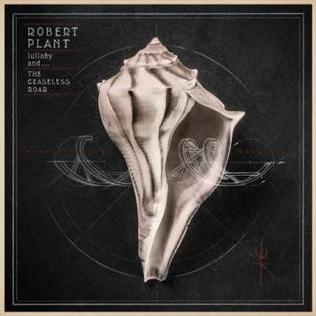
Robert Plant 12: Lullaby And The Ceaseless Roar

Whether by design of Page or his own doing, in the midst of yet another Led Zeppelin catalog overhaul came a new Robert Plant album of mostly original material. With the unwieldy title of lullaby and… The Ceaseless Roar, he and his evolving band of eclectics, now called the Sensational Space Shifters, work within that processed, “spacey” sound picture, heavy on drones and exotic acoustic instruments. Like Peter Gabriel, back when he made albums, these unique sounds combine to sound familiar. They sound like music.

It begins with, no surprise here, a new interpretation of an old folk song, in this case “Little Maggie”, in an afro-beat style. “Rainbow” starts with a similar feel, but turns into an actual song, which helps. “Pocketful Of Golden” dares to begin with “and if the sun refused to shine” and hearkens back to “In The Mood”, for a very commercial sound. With its tribal beat, lush strings and vocals in another language (Arabic? No! Welsh!), the haunting “Embrace Another Fall” conjures images of misty green landscapes. Throw in the mention of a “shire” and it could well be from the soundtrack to a Peter Jackson movie. The NPR stream compared “Turn It Up” to U2’s “Bad”, and we can’t figure out where the hell they got that idea; rather, it’s a celebration of the American South on an album that mostly avoids that. And for the first time ever, Robert sings a solo voice and piano ballad in “A Stolen Kiss”, with some subtle guitar and bass atmospherics, approaching a spiritual at some points and 21st century Bowie at others.

“Somebody There” is a conventional rock song, complete with guitar solo, and possibly the best track on the album. “Poor Howard” updates another blues song, somewhere between Appalachia and the Sahara, with a great reference to “four little kids who’ll drive me crazy”. Speaking of borrowings, “House Of Love” takes one lyric from his own song with Jimmy Page and builds it into a much more accessible song with a galloping rhythm. Between “Up On The Hollow Hill” (with the baffling subtitle “Understanding Arthur”, unless that’s the once and future king) and the closing “Little Maggie” alternate with African vocals, the album ends tensely but well prepared for another spin.

We’ve said this before, but Robert is certainly aging well, on the ears, anyway. His hushed, intimate yet inimitable delivery suggests the lullaby, but even the heavier songs don’t convey a ceaseless roar, and that’s fine. The album is a comfortable listen for fall, and one of his better efforts.

Robert Plant and the Sensational Space Shifters lullaby and… The Ceaseless Roar (2014)—3½

Friday, September 19, 2014

Frank Zappa 23: Zappa In New York

At this point the Zappa catalog becomes even tougher to navigate. A break in the release schedule was precipitated by various lawsuits, which also affected what he put out and how. Four records’ worth of material were prepared, then combined into a single package, then supposedly split up again. (The actual chronology is moot for the time being.)

The first of these related (or not) albums was Zappa In New York, a live two-record set culled from a set of concerts that closed out 1976. The album was further “tampered with” against Frank’s wishes, deleting one entire song and editing another. But anyway.

Only a couple of years on from his last live album, Zappa’s band had evolved yet again, with basically only Ruth Underwood still hanging on. He had several vocalists who could also play instruments to his satisfaction, including guitarist Ray White; drummer Terry Bozzio was put forth as the teenage heartthrob star, but his singing is only slightly less grating than Flo & Eddie, since there’s only one of him. He gets the spotlight early on, voicing the parts of the devil in the puerile parable “Titties & Beer”. This transitions abruptly to the so-called “sensitive instrumental ballad for late-nite easy listening”, the unfortunately named “I Promise Not To Come In Your Mouth”, a title to which Warner Bros. somehow didn’t object. (And therein lies the problem with post-‘60s Zappa: anytime you want to admire him as a composer, he has to go and deflate it with “humor”, under the concocted defense that such activity was what his audience demanded and therefore it was the only way he could sustain a living.) Then it’s another 180 to a performance of the rare (for then, anyway) B-side “Big Leg Emma”. Outside of Frank’s commentary, side two is all instrumental, and fascinating. This version of “Sofa” sounds like the closing theme from Saturday Night Live, which makes sense since some of that band makes up the horn section. The faux-sci-fi soundtrack “Manx Needs Women” segues neatly into the complicated drum solo section of “The Black Page”, so named for the anxiety dream session guys have of being faced with sheet music absolutely crammed with notes. The melodic portion is another showcase for Ruth Underwood on percussion; an alternate arrangement follows after.

High comedy returns on “Honey, Don’t You Want A Man Like Me?”, which is funky but not too taxing before taking time out to spew a variety of chauvinistic epithets. Guest MC Don Pardo introduces “The Illinois Enema Bandit”, the fresh-as-that-day’s-headlines story of an armed robber who provided an extra “service” for his female victims. Naturally, Frank finds it hilarious, else he wouldn’t have written, arranged, performed, recorded and released a song about it. Again, the guitar solo is far preferable to deciding whether, as the song suggests, the women enjoyed it. “The Purple Lagoon” takes up side four of the album, and features some very jazzy solos from the Brecker Brothers and bass player Patrick O’Hearn (as well as Frank).

Ultimately, it’s the music that puts Zappa In New York solidly in the plus column. Whether truly live or enhanced later with guitar and other overdubs, the performances on the album stand out much better than the humor.

The eventual Zappa-approved CD editions not only rescued the edited portions, but expanded the original by about 40 minutes. The running order is different too, basically pairing sides one and three on one disc and the other two on the other, with “Big Leg Emma” stuck between “The Black Page #1” and “Sofa”, where it was supposed to be originally. After a restored “Titties & Beer”, a lengthy instrumental extrapolation on “Cruisin’ For Burgers” shows off his compositional prowess. The major deletion from the original LP, “Punky’s Whips” begins with a setup from Don Pardo, explaining how Bozzio became entranced by a photo of a guitarist from an otherwise forgettable band. The drummer duly sings of his predicament, in a voice ranging from raspy to nasal, in between excellent interplay between horn section and guitar (and a well-timed quote from “Isn’t It Romantic”). Starting the second disc, “I’m The Slime” gets a welcome, enthusiastic performance from Mr. Pardo, before abruptly shifting to “Pound For A Brown”, with traded solos. “The Torture Never Stops” is well played, without the distraction of the “recreational activities” from the studio version.

The album’s stature was high enough that it was reissued a year late for its 40th anniversary in a deluxe package resembling a manhole, containing the original LP mix on one CD, plus three discs of more music from the same shows (including even more Don Pardo and swipes at the record label) and a fourth with alternate mixes and related music. While there are repeated songs from the original album and CDs, we also get unique performances of “Peaches En Regalia”, “Penis Dimension”, “Montana”, “Find Her Finer”, “Dinah-Moe-Hum”, and a “Black Napkins” that runs nearly half an hour. For historical purposes, “Titties & Beer” appears a couple times under its original title, “Chrissy Puked Twice”. Thanks to the horn section, “America Drinks” gets a wonderful arrangement in the style of the “Johnny Carson” theme. Also, an alternate “Purple Lagoon” features the instrumental chorus from “Any Kind Of Pain”, which wouldn’t end up on an album until 1988.

Frank Zappa Zappa In New York (1978)—3
1991 Barking Pumpkin CD: “same” as 1978, plus 5 extra tracks
2019 40th Anniversary Deluxe Edition: same as 1978, plus 40 extra tracks

Tuesday, September 16, 2014

U2 17: Songs Of Innocence

What a surprise—after five years’ worth of red herrings, U2 “released” their next album via an iTunes event, essentially giving it free of charge to half a billion accounts worldwide, six weeks before its official release date. Songs Of Innocence was available to anyone with access to the iCloud; reactions ranged from ecstatic, particularly among the band’s champions, to offended, in the view of those who felt such an “imposition” was an invasion of privacy. (Apple even devised an app that would remove the album from one’s music library; meanwhile, we can’t get the Zappos app off our Droid, but we’re not about to sue anybody over it.)

Despite the initially artless cover, the “digital booklet” offered copious song credits and lyrics, several pages of “thanks to”, and a kind of stream-of-consciousness liner note about the album’s influences. Seeing such names as Joey Ramone and Joe Strummer raises a red flag along the lines of Rattle And Hum’s evocation of other icons, but the songs are better than that, and thankfully, don’t include anything that can be associated with the Spiderman musical.

“The Miracle (Of Joey Ramone)” would be just fine without its dedication in the subtitle, particularly because the song doesn’t resemble the Ramones in any way (in fact, the clicking sticks remind us more of “Antmusic”). Ending with a decisive power chord slash, it sets up the comparatively quieter “Every Breaking Wave”, which soon builds into a classic U2 anthem, and it’s a keeper. “California (There Is No End To Love)” is possibly their most effective ode to an American city yet, mostly because it dwells more on the subtitle. Even the “vocal chorale” at the start only hints at the Beach Boys rather than emulating them directly, unless you count the cello flourish here and there. “Song For Someone” wins over the listener with, again, the “classic” sound and welcome Edge harmonies. “Iris (Hold Me Close)” is not the first time Bono’s written about his mother, but the knowledge makes some of the sentiment Oedipal. Too similar-sounding to tracks from the more recent albums, it could have used some more work, as does “Volcano”, a “dumb” song along the lines of “Vertigo” or “Get On Your Boots”.

The anti-terrorism tirade “Raised By Wolves” is the most experimental sounding track. We could do without the “vocal effects”, and the title phrase doesn’t sound so natural coming out of his mouth, but the track does evoke an earlier decade. Another throwback of sorts is “Cedarwood Road”, both lyrically and in the glockenspiel that suggests a musical rewrite of “Electrical Storm”, one of their least notable singles. One reviewer called “Sleep Like A Baby Tonight” a portrait of a pedophilic priest, which isn’t obvious in the lyrics, but it’s still an unsettling listen. While dedicated to Joe Strummer, “This Is Where You Can Reach Me Now” doesn’t sound like any Clash song we’ve ever heard, except in its seeming evocation of street violence. Consequently, “The Troubles” isn’t about Ireland, but inner conflict. A female vocalist is prominent, reminding us of a latter-day Duran Duran hit or a movie soundtrack bid. (Hey, at least it wasn’t Rihanna or somebody trendy like that.)

U2 was of the stature now that any new album gets the “best work since” tag that the Stones have held for three decades, and have long been stuck, if not a moment they can’t get out of, then in the uncomfortable position of having to compete with their own legacy. By not laboring too much over the presentation—though we can’t figure out why it takes so many producers to create an album that sounds like a unified distillation of the band’s entire career—they seem to have been more concerned with “writing songs” than “creating sonics”. While Songs Of Innocence is not necessarily a triumph, it succeeds, it’s not too long, and besides… it was free.

Sure enough, a physical release happened, complete with a new cover depicting a shirtless Larry embracing his shirtless son. A more deluxe edition came with a bonus disc that begins with two more songs—the trashy, B-side caliber “Lucifer’s Hands”, and “The Crystal Ballroom”, which rips off its disco backing from “Love Is The Drug”. A 22-minute “acoustic medley” of six of the main album’s songs didn’t need horns and strings. An alternate mix of “The Troubles” tones down the female voice, though the alternate mix of “Sleep Like A Baby Tonight” isn’t an improvement. Hidden at the very end is “Invisible”, which had already been given away earlier in the year. It’s a much better song than its techno arrangement would suggest, once again begging the question why they have to labor over things so damn much.

U2 Songs Of Innocence (2014)—3