Friday, August 7, 2015

Meat Loaf: Bat Out Of Hell

In between his own albums and touring behind them, Todd Rundgren got quite a bit of work producing other people’s albums. Wide-ranging examples from a five-year period include The Band, Badfinger, Hall & Oates, New York Dolls and Grand Funk Railroad. But if the money was there, it can be assumed that he’d work with anyone, which is how he ended up with a guy whose claim to fame thus far had been in The Rocky Horror Picture Show, and a songwriter with designs to be the rock version of Richard Wagner. Though he says he doesn’t get royalties for it anymore, Bat Out Of Hell is easily the most successful album Todd ever produced.

Meat Loaf’s persona was that of a sweaty fat guy with long hair in a ruffled tux without a tie, clutching a handkerchief. His size and voice were about as overblown as Jim Steinman’s music and ego; therefore they were made for each other. Steinman’s hair was about as long, and his propensity for mirrored shades shouldn’t be construed as a desire to stay in the background. While not as prominent as that of the artist, his name does feature on the cover, directly above the fantasy porn image of a motorcycle emerging from a grave.

To this day it’s easy to recognize a Jim Steinman song on first listen: the title is either lengthy, a corrupted expression or both; the lyrics include at least one repeated phrase that could well be the song title but isn’t; each line of the verse is about 35 syllables and painstakingly rhymed; the musicians feature singer Rory Dodd and members of the E Street Band and Utopia. These elements aren’t limited to this album; “Total Eclipse Of The Heart”, “It’s All Coming Back To Me Now”, “Making Love Out Of Nothing At All” and the two gems from Streets Of Fire (“Tonight Is What It Means To Be Young” and “Nowhere Fast”) all have different singers but might as well have the voice of Meat, who would end up recording some of them anyway.

Nearly forty years on, Bat Out Of Hell reminds us of rainy days during the very hot summer of ’78 at camp, where we failed to learn to swim. In time we’ve learned to appreciate it for its camp value; part of this was helped by the early days of MTV, where the limited playlist included promo clips for this album, featuring backup singer Karla DeVito in that tight white halter top (even though it was Night Court’s Ellen Foley on the recordings themselves). That likely kept boys interested through the ‘80s, and the album’s continual budget pricing meant you could get the cassette for about five bucks and the inevitable CD for as low as ten.

Rundgren’s touch is all over, particularly in the guitars and layered harmonies. On the biggest and longest numbers, the songs ape Bruce Springsteen, from the arpeggiated piano to the saxophone. Did we mention that the songs are long? The title track is nearly ten minutes, with a lengthy overture-like intro and guitars that sound like motorcycles and their eventual crashes. “You Took The Words Right Out Of Mouth” uses the “Be My Baby” beat and Spector percussion, but only after a goofy spoken prologue. “Heaven Can Wait” is a string-soaked clunker that sounds nothing like Springsteen, unlike “All Revved Up With No Place To Go”, which oozes Asbury Park.

What sold the album on AM radio was “Two Out Of Three Ain’t Bad”, a ballad that gets more depressing the more you hear it, but FM was all over “Paradise By The Dashboard Light”. The cleverest track on the album by far, this three-part epic sports named sections and the pushed metaphor of Phil Rizzuto (of The Money Store) calling the action. The “let me sleep on it” section is well balanced, and the turnaround where he’s “praying for the end of time” is hilarious. The album should have ended there, leaving off the nearly nine minutes of “For Crying Out Loud”, where all the orchestral stops are pulled out.

One of the managers at the first record store where we worked took offense at our scoffing about this album. We said we had no problem with anyone enjoying it, but rather with anyone championing it. When its “sequel” arrived in 1993, consisting mostly of older Steinman songs yet to be recorded by Meat Loaf, its success was not entirely unexpected, while the initial sales of the second sequel only speak to the state of the record industry in 2006. As long as the perpetrators were around to flog it, Bat Out Of Hell would not be limited to a mere trilogy.

Meat Loaf Bat Out Of Hell (1977)—3

Tuesday, August 4, 2015

Todd Rundgren 12: Oops! Wrong Planet

Except for the held-over pyramid motif on the front cover and suggestion of sci-fi in the (albeit clever) title, Utopia stepped further away from prog on Oops! Wrong Planet. However, the quartet remained intact, and remained an equal partnership, though Todd, who produced, took the lion’s share of the songwriting credits.

For the most part, it’s contemporary pop-rock, with the latest synthesizers filling out the arrangements. It works best on the bids for the singles chart: the rocking “Love In Action” and the more sensitive “Love Is The Answer”, which England Dan and John Ford Coley took to the top ten two years later. “Crazy Lady Blue”, written and sung by Willie Wilcox but otherwise reminiscent of another project on the burner, gets a boost from Todd’s guitar solo, while “The Martyr” begins with wonderfully crisp acoustic chords, and it helps that Kasim Sulton has a decent voice. Elsewhere, there seems to be a concern about environmental issues and the corruption of power, particularly on “Back On The Streets”, “Gangrene”, “Rape Of The Young” and “The Marriage Of Heaven And Hell”. If there’s a concept, that’s it, and all around only four minutes.

Oops! Wrong Planet is a harmless late-‘70s rock album, with few of the mental demands of the last few Rundgren projects, and therefore worthwhile if not exactly stunning. It does bear mentioning that the individual musician portraits on the back cover are among the least flattering of anyone ever.

Utopia Oops! Wrong Planet (1977)—3

Friday, July 31, 2015

Cat Stevens 3: Tea For The Tillerman

Keeping it simple meant he could move fast, and the second Cat Stevens album in a calendar year showed him to improve with time. Tea For The Tillerman includes several enduring, sensitive favorites, as well as some less well-known but still excellent songs.

“Where Do The Children Play?” is a naïve but strong argument defending the planet, simple enough for budding guitarists to master. “Hard Headed Woman” is more complicated and darker, but for backhanded compliments in the form of a breakup speech, it’s tough to beat “Wild World” and its downward scale runs. “Sad Lisa” is a more sensitive portrait of a woman, with a neat Leslie effect on the piano fading in and out of the mix. Even more so, “Miles From Nowhere” teeters between meditative verses and insistent bridges.

Musically, “But I Might Die Tonight” is a little too close to the other three-chord songs on the album, but the lyrics, while list-like, are through provoking and it’s a short tune. Beginning with ambient effects and a catchy chant, “Longer Boats” seems pastoral, but there’s a hint of menace in there (slavery perhaps?). “Into White” runs the gamut of the color spectrum, helped out by the initial-caps on the back cover. “On The Road To Find Out” is one of the best songs about searching to listen to when you’re questioning yourself, just as “Father And Son” explores the generation gap with sympathy. That leaves the title track, a minute-long piano piece that explodes into a big choral part for two words, assuring that the children have indeed found a place to play.

Besides the songwriting, Cat Stevens demonstrates equal skill on the guitar and keyboards throughout Tea For The Tillerman. Plus, he proves that an album doesn’t have to have an electric guitar to rock, as the rhythm section drives the arrangements when called for. He was getting better, and would continue to do so. (The obligatory Deluxe Edition is an odd assortment of demos mixed betwixt both contemporary and later live tracks.)

For its golden anniversary, Yusuf took the bold step of re-recording the entire album, and releasing it as Tea For The Tillerman2. Some of the songs are in lower keys, some have tweaked lyrics, and it seems a little slower; the new version runs about three minutes longer than the original. (The nice man on the cover now sits under a moonlit sky in a spacesuit.) For the most part it’s the same, though “Miles From Nowhere” rocks a little harder. “But I Might Die Tonight” gets extended and a Mideastern influence, as does “On The Road To Find Out”. “Longer Boats” didn’t need a rap interlude and the French jazz take on “Wild World” simply misses, but “Father And Son” just gets more touching as the years go by. For this version, the “son” parts are sung by a younger Cat Stevens, flown in from the Troubadour in 1970. (These recordings were also included in the 50th Anniversary Super Deluxe Edition of the album, along with the original mix and a new mix each on their own discs, a disc of demos, alternates, and outtakes—including the songs from Harold And Maude and a rare duet with Elton John—and a fifth disc loaded with live material from the period, plus a Blu-ray and both the new mix and some of the live tracks on vinyl. The similar two-CD Deluxe Edition limited the extras to a handful of demos and live recordings.)

Cat Stevens Tea For The Tillerman (1970)—3½
2008 Deluxe Edition: same as 1970, plus 11 extra tracks
2020 50th Anniversary Deluxe Edition: same as 1970, plus 14 extra tracks (Super Deluxe Edition adds another 36 tracks plus Blu-ray)
Yusuf/Cat Stevens Tea For The Tillerman2 (2020)—3

Tuesday, July 28, 2015

Van Morrison 29: Days Like This

Having long given up on artistic statements, Van settled into the role of working musician he’d preferred to tout since he started out. When he did put out a new album, it was with fanfare, but increasingly there wasn’t anything on them that could stand out as a modern classic.

So it was with Days Like This, an hour’s worth of safe adult contemporary fare with horns. Whether by design or because Van knew it would bother people, Brian Kennedy was allowed to echo every other line Van sings throughout the album. We’re spared this on “You Don’t Know Me” and “I’ll Never Be Free”, odd choices of romantic covers sung as duets with his daughter Shana. (Hindsight reminds one of the “Red Ships Of Spain” sketch with the Goulet family on Saturday Night Live.)

The lyrical content of his own songs is alternately predictable and inscrutable. He’s a “Songwriter”, in case you didn’t know, suffering at different times from “Underlying Depression” and “Melancholia”. “Perfect Fit” is an upbeat love song that says nothing new, just like the title track. “Raincheck” is sung over a complicated rhythm with no real indication as to why the narrator goes by the name of the title. “Ancient Highway” wants to badly to be one of his lengthy epics, except that Brian Kennedy’s on it, and once again Van forgets to take the harmonica out of his mouth before he starts singing. Georgie Fame is nowhere to be heard, so that must be Van himself on the Hammond organ solo.

It’s tough to recommend Days Like This except that it’s relatively harmless. If you actually like Brian Kennedy, then this is the album for you. Otherwise, tread carefully.

Van Morrison Days Like This (1995)—3

Friday, July 24, 2015

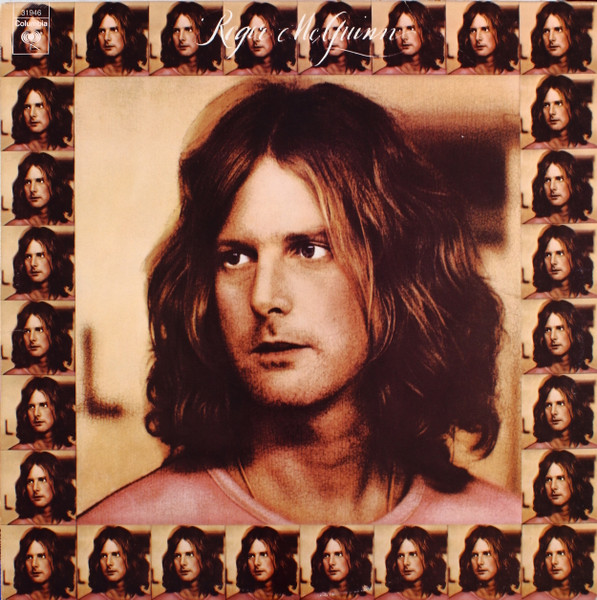
Roger McGuinn 1: Roger McGuinn

Maybe Roger McGuinn knew the Big Byrds Reunion wasn’t going to amount to much, as he didn’t seem to contribute much in the way of songwriting to that collective. After all, he had a solo career to kick off, and he did so mere months later with his self-titled debut. More to the point, he made sure to include all the music styles he insisted were of interest to him.

The folkie plaint of “I’m So Restless” is sheer parody, wherein he asks Bob Dylan, John Lennon, and Mick Jagger (in that order) how he should comport himself. He even got Dylan to blow harmonica on the track. For severe musical whiplash, it’s tough to beat “My New Woman”, which is basically a full Byrds reunion in a strange meter with jazz sax man Charles Lloyd honking freestyle throughout. Roger likely found “Lost My Drivin’ Wheel” on a Tom Rush album, but he did try it first with the Clarence-era Byrds. Charles Lloyd returns for “Draggin’”, which is about a drag race—complete with Bruce Johnston adding Beach Boys-style “oohs”—but upgrades it to airplanes, to the passengers’ collective horror. “Time Cube” continues the Moog experiment left dormant at the end of The Notorious Byrd Brothers, but these days it just jars against the banjo, and we always think a kettle is boiling in the background.

A timely tribute to hijacker D.B. Cooper, “Bag Full Of Money” sounds the most like countrified Byrds, and also dates from as far back as Farther Along. “Hanoi Hannah” tries to be a cutting blues about a soldier in Vietnam, but has a lot of timing issues. A children’s choir is almost never a good idea on any album, and it mars the cover of Spooner Oldham’s “Stone”, featuring the man himself on piano. Spanky MacFarlane (the singer, not the Little Rascal) joins in on the sea chanty “Heave Away”, and we stay in the islands for “M’Linda”, which sounds like something Stephen Stills would try to ape on his albums. His arrangement of “The Water Is Wide” turns the melody inside out, but David Crosby’s harmony keeps it just this side of adult contemporary.

Ultimately, Roger McGuinn is too all over the map to really impress, though there are some good parts. Occasional collaborator Jacques Levy is credited throughout, so some of the credit and blame can be shared. Like most of Roger’s ‘70s output, the album was largely ignored in the digital era, though several tracks were included on a 1991 compilation. Predictably, it was the Sundazed retro label that finally gave it a CD upgrade, complete with liner notes and two extra tracks: a solo strum through the traditional “John, John” and a full band version of Jackson Browne’s “Jamaica Say You Will”, this time where he sings it himself.

Roger McGuinn Roger McGuinn (1973)—3
2004 Sundazed reissue: same as 1973, plus 2 extra tracks

Tuesday, July 21, 2015

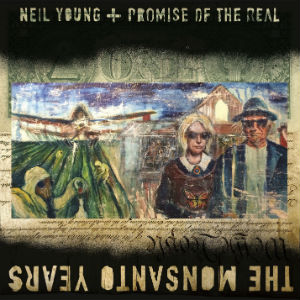
Neil Young 50: The Monsanto Years

Without fail, Neil managed to find things to do instead of releasing the next big box installment of his Archives. Between writing books and chasing his other hobbies, he was still writing songs, recording them and releasing them. But once he gets obsessed with something, we’re going to hear about it, such as when he’s extended his concern for the family farmer into contempt for corporate greed in general. Ecological concerns are nothing new for him, nor is naming names (“Ohio”, anyone?), but in his life phase as a cranky old man he’s focused on complaining.

On the surface, The Monsanto Years looks like another concept album nobody asked for, like Living With War or Fork In The Road. Whatever the subject matter, it’s only going to work if the music can rise to the occasion. For the most part, the album does. His co-conspirators this time are Promise Of The Real, a combo featuring two of Willie Nelson’s sons, who provide a sloppy, Crazy Horse-style backing. (Think Mirror Ball, which was recorded with Pearl Jam, but with more musical variety.) Lukas Nelson takes most of the lead guitar breaks, and he’s definitely been influenced by his frontman, while brother Micah occasionally puts a bow to the neck of his own Gibson.

Wisely, the album starts with a more universal message in “A New Day For Love”, followed by the Harvest Moon-style strum of “Wolf Moon”. Neil’s voice is more cracked than ever, trying to hit notes he’ll never get. “People Want To Hear About Love” acknowledges the resistance he’ll likely face for these songs, and here’s where the brand names start to pile up. “Big Box” doesn’t feel like eight minutes here, balanced as it is with cool changes and a few hooks.

“A Rock Star Bucks A Coffee Shop” is a happily stupid stomp with a whistled theme, while “Workin’ Man” comes from another part of the same barn. “Rules Of Change” breaks up the tirade with some welcome poetic metaphors, Neil harmonizing against his own creaky voice. “Monsanto Years” is played in two keys, both too high for Neil to sing, and this is likely where dissenting ears will have had enough. Which would be their loss, as “If I Don’t Know” closes the program with a more personal, less political rumination, framing the album nicely.

The best thing about The Monsanto Years is the band, who support him ably, but one gets the impression they’re pretty tickled to be smoking weed with their grandpa. Neil’s stable of go-to musicians had been fighting losing battles with mortality lately, and while we’re still waiting for our phone to ring, it’s good that he’s looking for a musical spark outside of his norm. However, a little condensing, time to polish, and much less repetition would have helped keep it from being written off as another distraction.

Neil Young + Promise Of The Real The Monsanto Years (2015)—2½

Friday, July 17, 2015

Billy Joel 19: My Lives

While he wasn’t writing new songs, Billy Joel did tour on a regular basis, and his old label was determined to milk the catalog as best they could. Naturally, 2001’s The Essential Billy Joel and 2004’s Piano Man: The Very Best Of Billy Joel didn’t really offer anything not already covered by the other two Greatest Hits volumes, so it was surprising that a box set would be primarily devoted to rarities. You know, like the sets already covering Bob Dylan, Bruce Springsteen, the Beatles, and other letters from the alphabet.

My Lives begins at the beginning, with a couple of demos from his early band The Lost Souls. “My Journey’s End” apes the Beatles, while “Time And Time Again” is Dylan via the Byrds, and both prove why they didn’t make it. The Hassles, a more soul-influenced combo, are represented by two tracks; his uncomfortable moaning on “You Got Me Hummin’” should never have made the cut. Attila—the organ-drums duo depicted on their only album cover standing in a meat locker—is acknowledged by an excerpt of “Amplifier Fire”. All that out of the way, the first disc moves through various recordings labeled as demos, some of which would be recognized as future hits, and a few album tracks to present a wider view of the hitmaker. Some are band performances, some are solo at the piano; standouts include “Oyster Bay”, an early lament that the road to superstardom wasn’t easy, and a simple sketch of “Miami 2017”. A reggae arrangement of “Only The Good Die Young” is a good showcase for the late Doug Stegmeyer on bass, while the full take of “Zanzibar” lets Freddie Hubbard solo longer.

The second disc continues chronologically with fewer demos, but more in the way of rarities and straight album tracks. A decent club performance of “Captain Jack” leads into a demo of “The End Of The World”, a cousin of “Don’t Ask Me Why”, on its way to “Elvis Presley Blvd.”, a Nylon Curtain B-side. “The Prime Of Your Life” is an unfinished full-band sketch of an idea that would come to fruition as “The Longest Time”. A piano-driven live cover of “I’ll Cry Instead” leads into an unfortunate dance remix of “Keeping The Faith” and “Modern Woman”, the worst song from The Bridge. Along the way we hear the original 1983 piano demo of “And So It Goes” (more interesting than the Storm Front B-side “House Of Blue Light”) and the kids’ song “Nobody Knows But Me”.

By the third disc, it’s clear he’s running out of original ideas; hence the pile of covers, both live and contributed to soundtracks throughout the ‘90s. Performing “Shout” at Yankee Stadium, after about three minutes of baiting the audience with local references and call-and-response “whoos”, is just about the definition of pandering, and changing the chorus of a certain hit to “I don’t know why I go for ice cream” is cute the first time. The three covers from Greatest Hits Volume III may be contextually important, but they’re hardly rare. Still, there’s no questioning how well his voice is suited to “When You Wish Upon A Star” and “In A Sentimental Mood”. An early version of “River Of Dreams” has the music from “Lullabye (Goodnight My Angel)” as a bridge, followed by “A Hard Day’s Night” live with an inaudible Elton John on vocals and piano. And it took us until hearing “Motorcycle Song” (an early version of “All About Soul”) to realize that the “na-na-na” part is the same as the bridge to “Just The Way You Are”. And truly helps illustrate that the well was dry.

The disc that covers the new millennium is therefore dominated by live versions and 24 minutes’ worth of music from Fantasies & Delusions (which, again, he composed but did not perform). There is, however, a new piece in the form of “Elegy: The Great Peconic”, an orchestral/symphonic/whatever composition that’s lush and familiar. Hidden at the end of the disc is a curious nine-minute conversation at the piano between Billy and Phil Ramone discussing possible promotional exercises for the Glass Houses album. While the included DVD could have boasted any number of promo videos or, say, 1982’s Live From Long Island concert for HBO, instead it offered only performances from the River Of Dreams tour.

One has to be a Joel fanatic to appreciate My Lives, so it can be only recommended to that handful of diehards. Anybody else can content themselves with any of the hits collections or live albums that came before or since.

Billy Joel My Lives (2005)—2½