Friday, September 11, 2015

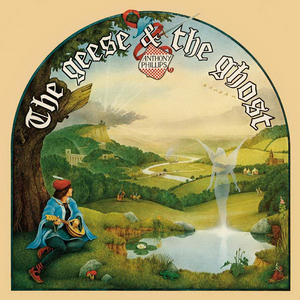
Anthony Phillips: The Geese & The Ghost

Because he left after the second album, and was replaced and eclipsed by the flashier Steve Hackett, Anthony Phillips is often overlooked in the Genesis story. This is unfair, because he was one of the founders of the band, and its first guitarist when Mike Rutherford concentrated on bass. But leave the band he did, and watched them from afar as they became, well, Genesis. Meanwhile, he studied classical music.

Still, he stayed on good terms with his old schoolmates, particularly Rutherford, who was happy to help him develop ideas and co-write for what was supposed to be a full 50/50 collaboration, but would instead become Phillips’ first solo album. The Geese & The Ghost should already be of mild interest to Genesis fans, and even more so because Phil Collins sings lead on two songs. That said, much of the album is pastoral, classically influenced acoustic music, mostly played on stringed and other instruments by Phillips and Rutherford, not unlike how Mike Oldfield built Tubular Bells, which it resembles at times.

The opening “Wind: Tales” sets the scene for the first minute, fading in and out before “Which Way The Wind Blows”, sung by Phil over gently strummed and picked electrics, fitting right in with his earliest vocal appearances on Genesis records. The six-part “Henry: Portraits From Tudor Times” is a Rutherford collaboration that tries to pretend Rick Wakeman never happened for thirteen minutes. For the most part it’s pleasant and low-key, with oboes and flutes, but gets a little overwrought during the “Henry Goes To War” section, and “Triumphant Return” actually includes cannons and a chorale. “God If I Saw Her Now” is sung sweetly by one Viv McAuliffe, answered by Phil.

“Chinese Mushroom Cloud” is the barest acoustic duet, floating in and out before the 15-minute title suite. This is in two parts, separated by the organ blast eight minutes in, but the second half is also in unindexed segments. Throughout, classic and rock are blended. Phillips himself sings “Collections”, a somewhat maudlin but pretty piece accompanied by flutes and an orchestral arrangement. This flows seamlessly into “Sleepfall: The Geese Fly West”, a lovely finale that starts on just piano but slowly expands to a full sound, then out on flute and oboe playing a theme similar to where we started.

While some might find it too sweet, The Geese & The Ghost is a pleasing alternative to the more challenging solo albums other band members put out in the ‘70s, and certainly more rewarding than most of Mike + The Mechanics, and anything Tony Banks did on his own. It certainly helps that it sounds more like early Genesis, and in a good way. (Later reissues restored one of the parts to the “Henry” suite on the main disc, and included another with demos and basic tracks, plus another Collins vocal, this one for “Silver Song”, which was supposedly planned as a standalone single but didn’t happen.)

Anthony Phillips The Geese & The Ghost (1977)—3

Tuesday, September 8, 2015

Tears For Fears 3: The Seeds Of Love

After two albums that had come out relatively close to each other, it took Tears For Fears four full years to complete their follow-up. Roland Orzabal had come down with a severe case of studio-itis, recording and re-recording tracks, with seemingly little input from Curt Smith. (Keyboardist Nicky Holland became Orzabal’s key collaborator in the interim.) By the time The Seeds Of Love finally came out, the music scene had changed from the synth-pop that helped launched the band; as a result their sound was less experimental, but still elaborate pop.

The opening track, “Woman In Chains”, is notable as a near-duet with Oleta Adams, who got a nice boost for her career thanks to this album, as well as from its production, which very much resembles the recent hit work by Peter Gabriel. At over six minutes, the track is given time to breathe and expand, and is quite stirring. (Also, that’s Phil Collins pounding the skins for the second half of the track.) “Badman’s Song” is even longer, beginning with a frantic Latin jazz solo, and continuing with gospel overtones. “Sowing The Seeds Of Love” was a late entry into the psychedelic revival of two years before, but because Beatles nostalgia was still in vogue, the song became a hit. What’s more, Curt Smith’s voice was heard for the first time on the album. He’s also prominent on the slightly wimpy “Advice For The Young At Heart”, a little too adult contemporary for these ears.

Side two’s songs are just as lengthy, a little more demanding and not always as catchy. “Standing On The Corner Of The Third World” mostly rumbles along at a medium tempo, with occasional melodies borrowed from “I Believe”. “Swords And Knives” is a little more involved but just as meandering. As if one song about knives wasn't enough, “Year Of The Knife” beings inexplicably with the sound of a live audience cheering, though there’s been no indication that it was actually recorded at a concert. Maybe they were going for a “Broken” vibe? Anyway, there’s a return to the “sun and the moon, wind and the rain” motif from “Women In Chains”. “Famous Last Words” is the shortest song, has hints of the Blue Nile and more “sun and the moon”, and leaves the listener feeling depressed about the end of the world.

While not a triumph—few albums that take so long to make are—The Seeds Of Love does show the band progressing. The best songs still sound good today, and that’s always appreciated.

The eventual reissue added four contemporary B-sides, one of which would eventually be reworked for their next single, which we’ll get to, and the sterile jazz of “Music For Tables”. Two decades later, these were accompanied by a pile of other single mixes and B-sides on the Deluxe Edition’s bonus disc (called “The Sun”), while two further discs (called “The Moon” and “The Wind”) in the Super Deluxe Edition offered even more alternate mixes, demos, jams, and the like. Plus a Blu-ray (called “The Rain”). Clever boys, they.

Tears For Fears The Seeds Of Love (1989)—3
1999 remastered CD: same as 1989, plus 4 extra tracks
2020 Deluxe Edition: same as 1999, plus 12 extra tracks (Super Deluxe Edition adds another 26 tracks plus Blu-ray)

Friday, September 4, 2015

Smithereens 3: 11

The cover suggests a nod to the film Ocean’s Eleven (the Rat Pack one, years before the 21st century reboot) while most rock fans would take the title as a Spinal Tap reference. With 11, the Smithereens were able to keep up their track record three albums running.

As ever, it’s all about riffs, volume and melody, so “A Girl Like You” and “Blues Before And After” are pinned to muscular hooks. “Blue Period” sports a chamber pop string quartet, a harpsichord solo influenced by “In My Life” and—wait for it—Belinda Carlisle on harmonies. But good as they are, “Baby Be Good” and “Room Without A View” already sound like other Smithereens songs—“Listen To Me Girl” and “House We Used To Live In” respectively—a trend that becomes more apparent for the duration of the album.

“Yesterday Girl” is pretty snappy, even if it does share several elements with the Beach Boys’ “Girl Don’t Tell Me”, which they already covered on their first EP. “Cut Flowers” is the only song on the album with a co-writing credit, and perhaps Jim Babjak’s input is what helps make the song so good. Some would suggest it’s the backing vocals by the Honeys, a group better known as Brian Wilson’s ex-wife, ex-sister-in-law and ex-cousin-in-law. Speaking of which, the name “William Wilson” is a cross between the California auteur and an Edgar Allen Poe protagonist, and it’s a pretty busy song for such an obscure narrative. Keeping with the retro references, “Maria Elena” was also the name of Buddy Holly’s wife, and while it references a few song titles, the catchiness is more Pat DiNizio than Holly. Despite the Beatles ‘65-style intro, “Kiss Your Tears Away” is a midtempo lullaby with a prominent Coral sitar.

There’s a lot to like on 11, but it’s not as strong as the first two, and not just because those had all the good ideas. Consumers thought differently, and bought enough copies of the album to keep the band on the road for another year.

The Smithereens 11 (1989)—3

Tuesday, September 1, 2015

Replacements 3: Hootenanny

The Replacements were ever determined to wipe their noses in the direction of anyone who’d take them seriously. The cover graphics and liner notes on Hootenanny are a diversion tactic, demonstrated immediately by the shambolic title track, wherein the band members swap instruments.

From there it’s another see-saw ride between punk thrash and tuneful attempts at pop. “Run It” is about the joys of ignoring traffic signals, but “Color Me Impressed” is Paul Westerberg’s first great rock song, and “Willpower” demonstrates how they’d figured out dynamics in the studio (as demonstrated by “Go” on the Stink EP). And then there’s “Take Me Down To The Hospital”, a boogie shuffle with actual cries of pain. There’s a reference to blisters on fingers at the end, a good setup for the last song on the side. The credit for “Mr. Whirly” reads “mostly stolen”, and indeed, it begins with the intro of “Strawberry Fields Forever”, devotes a verse to “The Twist”, and finishes with an extemporaneous section devoted to the title sung to the tune of “Oh! Darling”.

Side two tries to cover more ground. Westerberg’s solo-with-drum-machine “Within Your Reach” was hailed at the time for its depth, but now it just sounds as dated as that drum machine. (And reminds one of the less wincey moments of Say Anything.) “Buck Hill” is a fairly competent instrumental, while “Lovelines” consists of Westerberg reading the personals, harmonized, over a cool groove. “You Lose” and “Hayday” straddle that see-saw, while the unamplified “Treatment Bound” comes closest to an actual hootenanny.

With just a little more polish, Hootenanny would be more than obnoxious, but they weren’t there yet. That’s why we can’t give it a passing grade. (The expanded CD gets points for adding “Lookin’ For Ya”, plus a fast remake of “Johnny’s Gonna Die” and a better rehearsed “Treatment Bound”.)

The Replacements Hootenanny (1983)—2½
2008 CD reissue: same as 1983, plus 7 extra tracks

Friday, August 28, 2015

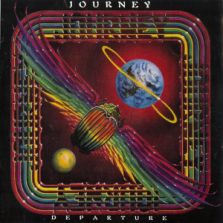
Journey 4: Departure

In the tradition of one-word titles that meant nothing, Departure continued the successful Journey formula, even retaining the same lineup (for now anyway).

“Any Way You Want It” will be familiar to anyone who’s seen Caddyshack more than once; its arena bombast is taken down by “Walks Like A Lady”, a much more subdued track in an R&B shuffle, Neal Schon playing tastier licks than his usual high-speed flurries. Lest anybody forgot about him, Gregg Rolie sings lead on “Someday Soon”, with Steve Perry providing the counterpart, just like on Infinity. It’s a better mix than “People And Places”, where Neal takes the verse against Steve, while the Hammond organ conjures memories of Joe Cocker and Led Zeppelin. “Precious Time” pits “Ain’t Seen Nothin’ Yet” guitar against harmonica, and nearly redeems the side.

Just as side one exploded from the first second, side two gets a great boost from the power-hitting “Where Were You”, which is needed before “I’m Crying”, an overwrought stomping weeper nicely elbowed out of the way by “Line Of Fire”. Here, all the instruments play the same melody as the vocal, in unison, but without sounding ponderous. The bridge still reminds us of “Lido Shuffle”, and we could do without the gunshot effect. The only real departure on the album is the title track, 38 seconds of ambient guitar layers in a different key to the similarly brief track it sets up, the orchestrated after-the-lovin’ plaint of “Good Morning Girl”. Presumably she heard this and determined to take off without eating breakfast, as it’s followed by “Stay Awhile”, shouted from the balcony of his pad at the back of her screeching car. Maybe she came back or he got over her long enough to string together the uncomfortable food metaphors in “Homemade Love”.

Despite having only one real hit single, Departure delivers equal doses of boogie and crooning to please the fans, with plenty of songs they’d take on tour. For its third CD reissue, there were two bonus tracks: “Natural Thing”, a wonderful leftover from the sessions featuring Steve’s best Sam Cooke impression later used as a B-side, and “Little Girl”, the most accessible song from Dream, After Dream, a 1980 soundtrack to a Japanese film nobody has ever seen, ever. Both had appeared on other compilations, but they fit very well here, both contextually and chronologically.

Journey Departure (1980)—3
2006 CD reissue: same as 1980, plus 2 extra tracks

Tuesday, August 25, 2015

Grateful Dead 2: Anthem Of The Sun

As the Dead gained notoriety for their free-form live performances, they faced the challenge of translating that energy to albums. Apparently they didn’t have the pull at the label to just release a live album, nor the technical ability to record something of releasable quality. Therefore, Anthem Of The Sun consisted of various live recordings edited and embellished in the studio, with all the locations dutifully listed on the back cover.

While the album can seem random at points, there is structure within. “That’s It For The Other One” begins with a plaintive Garcia melody, eventually exploding into a jam that leads into another melody led by Bob Weir, back to the Garcia part and ending with a very avant-garde collage of prepared piano and percussion. Because the track is listed as having four parts, the listener can have fun trying to guess where each one lies. The seamless transition to “New Potato Caboose”, another lengthy jam, might be hard to spot, while the shorter “Born Cross-Eyed” had been a single. Either way, without clear breaks between tracks, the listener might be surprised when the side ends.

Side two lists only two tracks, which were often played together anyway. “Alligator” sports a prominent kazoo at the start, which is gratefully retired not too far into the song. Piano from new member Tom Constanten better fills out the first half of the song, before the switch to a live performance, exhortations for audience members to clap their hands, instrumental solos and more consolidated boogie. Sharp ears will recognize the melody from Donovan’s “There Is A Mountain”, soon to be appropriated by the Allman Brothers. Despite its title, “Caution (Do Not Stop On Tracks)” is possibly closest to the blues influences on the first album, being an extensive exploration on the single idea of something a gypsy woman said. It ends the album with extensive feedback, which would be a feature of future live albums, often listed as a separate track.

While ramshackle, Anthem Of The Sun does hold together as an album, hinting at how they really sounded in their true element. These songs would only develop further in performance, as the bonus tracks on the expanded CD demonstrate. None of those were included on the inevitable 50th anniversary set, which combined the album’s original mix with its early ‘70s remix, along with a previously unreleased Winterland show from October 1967, and the earliest known recording with Mickey Hart known to date. (For those seeking the original shows that were used to make up the album, some of those have become officially available, among those listed below.)

The Grateful Dead Anthem Of The Sun (1968)—3
2003 CD reissue: same as 1967, plus 4 extra tracks
2018 50th Anniversary Deluxe Edition: same as 1968, plus 12 extra tracks
     Archival releases of same vintage:
     • Dick's Picks Volume Twenty-Two (2001)
     • Download Series Vol. 6 (2005)
     • Road Trips Vol. 2, No. 2 (2009)
     • 30 Trips Around The Sun: The Definitive Live Story 1965-1995 (2015)
     • Carousel Ballroom, San Francisco, CA, 2/14/68 (2026)

Sunday, August 23, 2015

Roger McGuinn 2: Peace On You

Whatever charms his first solo album had didn’t translate to sales, so his label dictated that Roger McGuinn submit to someone else producing his follow-up, and probably bring in some ringers too. In addition to Al Kooper, Dan Fogelberg—who contributed a song apiece—and Flo & Eddie (the latter’s last name spelt wrong), the musicians on Peace On You included Paul Harris and Al Perkins (most recently found in Manassas), Donnie Dacus (who’d soon be found around Stephen Stills himself), and the rhythm section of Russ Kunkel and Lee Sklar (next stop: Crosby & Nash), with the whole proceedings helmed by Bill Halverson (who’d already been associated with CSN). Even the back cover included hype-style liner notes reminding the consumer who he was and what he did, basically saying his name wasn’t enough anymore.

The joke in Charlie Rich’s “Peace On You” gets lost in its arrangement, and more so because it’s the title track. The lonesome “Without You” puts a drag on the proceedings, even with Donnie Dacus soloing constantly. Dacus himself contributed “Going To The Country”, which has promise in its picking, but he didn’t bother to write a chorus. Al Kooper’s “(Please Not) One More Time” is slathered in adult contemporary pop touches, but “Same Old Sound” is mostly notable because we finally hear the trademark 12-string play a solo.

“Do What You Want To Do” is a slightly better Allman Brothers homage from Dacus, but “Together” is more lovelorn moping that seesaws between downbeat picking and ill-advised double-time choruses. “Better Change” is the Fogelberg contribution, and a lot tougher than we expected it would be. “Gate Of Horn” is a tribute to the storied Chicago folk club where he fell in love with the genre, sadly shackled to a vaudeville-style arrangement that speeds up and slows down at various points. “The Lady” finally sounds like classic McGuinn, and about time as it’s the last track.

The problem with loading the deck with all-star talent is that they swamp the tracks, so that if not for his trademark nasal twang—which does become tiresome after a while—one might not know Peace On You was a Roger McGuinn album, even on the songs he did write, usually with Jacques Levy. Instead, it resembles Stephen Stills once he started to run out of gas, and maybe the same players had something to do with it. (The eventual Sundazed reissue added a bonus track in an earlier version of “Rock & Roll Time”, which would be redone two albums later.)

Roger McGuinn Peace On You (1974)—2
2004 Sundazed reissue: same as 1974, plus 1 extra track