Tuesday, May 17, 2016

Smithereens 5: A Date With The Smithereens

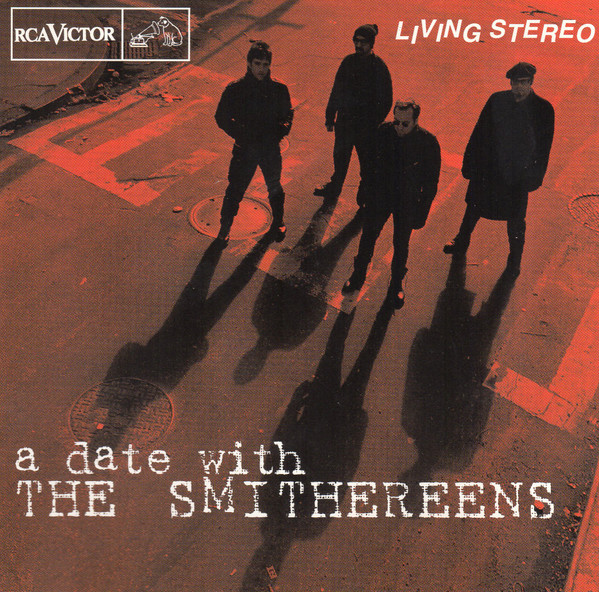
By the ‘90s, RCA Records long since figured out how to break bands, and tried to stay solvent by offering contracts to bands whose heydays were past. So it was that the Smithereens, who likely felt honored to be a part of the label that once distributed Elvis Presley, ended up with the Record Cemetery of America. A Date With The Smithereens alluded to one of the King’s album titles, touted “Living Stereo” on the front cover, and was even available as a set of 45s, but failed to do much for the band’s fortunes.

Part of the problem was the times, and Pat DiNizio’s mood. Lovelorn is one thing, but here he’s just inconsolable. “War For My Mind” and “Everything I Have Is Blue” aren’t exactly grunge, yet even at a fast tempo they plod. “Miles From Nowhere” was the single, and a good one, but “Afternoon Tea” doesn’t meet its potential by the same chord played on every beat despite the actual modulations in the song. At least “Point Of No Return” and “Sleep The Night Away” (a rewrite of “Cigarette” from the first album) finally provide some of their trademark bite.

“Love Is Gone” and “Long Way Back Again” keep up the energy, and then we come to the misfire of the album, if not the band’s career. The overt Revolver-style arrangement and production belie the misguided op-ed statement of “Gotti”. Their fans don’t listen to the Smithereens for politics, and if the band really felt this way about the situation, you’d think they’d have the balls to extend the title to encompass the message of “free John Gotti”. This isn’t Bob Dylan painting Joey Gallo as a modern-day Western outlaw. While it might’ve made a swell B-side, “Sick Of Seattle” is too clever for its own good, besides repeating the meter from “Sleep The Night Away”. “Can’t Go Home Anymore” drags the proceedings back to normal with a snotty harmonica to boot, which keeps wheezing on “Life Is So Beautiful”.

Ultimately, A Date With The Smithereens turned out to be a one-shot deal; the label didn’t stick with them, and a year later their original label marketed a best-of collection that covered everything they’d done to date, including only “Miles From Nowhere” from this album, and rarities in the way of “Beauty And Sadness” and a cover of “Time Won’t Let Me”. Blown To Smithereens became a perennial catalog piece, both selling the band to newbies and reminding longtime fans of what once was. (For the real geeks out there, Attack Of The Smithereens was loaded with rarities, covers, B-sides and demos, while a decade later, From Jersey It Came! tried to accomplish both hits and rarities in a two-disc package.)

The Smithereens A Date With The Smithereens (1994)—2½
The Smithereens
Blown To Smithereens: The Best Of The Smithereens (1995)—4½
The Smithereens
Attack Of The Smithereens (1995)—3
The Smithereens
From Jersey It Came! The Smithereens Anthology (2004)—3½

Friday, May 13, 2016

Pretenders 5: The Singles

Chrissie Hynde was a student of pop music first and foremost, and in the decade in which she finally made her mark on the music business, singles were still important in the UK, and had made something of a resurgence in the US. So even after the debacle that was Get Close, the brand still had legs, so a hits album made sense.

The Singles offers just that, a chronological ride through the band’s most recognizable songs, starting with “Stop Your Sobbing” before the first album, moving through the run-up to the second, the intermediate statement of “Back On The Chain Gang” before the return of the third, and finally the most worthy selections from the fourth. As an added bonus for those who already owned these songs in some format, “Day After Day” appears in its single mix (with a fade instead of the plane-crash ending) and Chrissie’s recent duet on UB40’s cover of “I Got You Babe” closes the set.

Taken together, all of the songs on The Singles flow well, from ballad to rocker to punk to soul, despite being played by different bands. And anything that gives the consumer reason to avoid Get Close is a good thing.

Pretenders The Singles (1987)—4

Tuesday, May 10, 2016

Jethro Tull 9: Minstrel In The Gallery

Clearly, the sound that defines Jethro Tull is the rapidly strummed acoustic, powerful bursts of electric, that flute and that voice, with heavy strings and keyboards. It worked on Aqualung and Thick As A Brick, and nobody else was doing it to such commercial success, so the albums that followed those will always be compared, and dare we say, fall short.

Minstrel In The Gallery sports a wonderful cover, and even sets up the title track to suggest we’re in some castle some centuries back. For the first verses, all we hear are Ian Anderson’s voice(s), guitar and flute, all at once, leaving us to wonder where the rest of the band is. But they do arrive, following a flourish, providing all the pow the kids demand. “Cold Wind To Valhalla” begins the same way, building and impressing, with some scary strings and well-syncopated intervals. “Black Satin Dancer” is doubtlessly set in this century, its descending riff of doom escalating the unease until its prettier coda. The sensitive “Requiem” is nicely closes the side, sad strumming and sympathetic strings.

Side two is dominated by a 16-minute suite, but is bookended by two tracks that might as well be part of it. Despite its redundant math, “One White Duck/010=Nothing At All” is another song of lovelorn depression before we get to “Baker St. Muse” proper, which follows the narrator through his day in labeled sections. That’s nothing new to this band, nor is putting Elizabethan folk touches to a lyrical setting that is certainly present-day. When the singer gets out of the way for Martin Barre to lay down a solo, or another section introduces itself, ears prick up. After he’s seemingly locked in the studio, “Grace” is a 37-second coda given lush ornamentation that might have gone better unlisted or left off.

It’s a dangerous business, navigating a dense catalog by a band with such a fervent fan base. If you’re not normally inclined to prog, there simply isn’t enough time in the day to play catch-up forty years after the fact, so while Tull (or more specifically, Ian) obviously put in a lot of time creating and crafting their albums, Minstrel In The Gallery is like much of their catalog in that it won’t get the same amount of play as their earlier albums. “Accessible” doesn’t have to mean “pandering”, and more bands should try it sometime. (The first expanded CD added five tracks previously available on a now-deleted box set; the deluxe 40th anniversary version included three of those, plus other outtakes, a July 1975 concert, and DVDs of the audiophile material.)

Jethro Tull Minstrel In The Gallery (1975)—3
2002 remastered CD: same as 1975, plus 5 extra tracks
2015 La Grande Edition: same as 1975, plus 18 extra tracks (and 2 DVDs)

Friday, May 6, 2016

Joni Mitchell 13: Wild Things Run Fast

With few exceptions, any major artist’s “Geffen years” have since been considered not their best. Some of this had to do with musical trends in the early ‘80s, compounded in Elton John’s and Neil Young’s cases by personal turmoil. (John Lennon is another matter altogether.) Don Henley started okay, but would sue David Geffen (again) in time, and most of the label’s acts would move on the first chance they got.

Therefore we approached Joni Mitchell’s Geffen years with some trepidation. She released four albums for the label in the space of ten years, each defined by the sub-era in which they appeared. A common thread is bassist, co-producer and then-husband Larry Klein, so maybe these albums should be considered more the Klein years than the Geffen years.

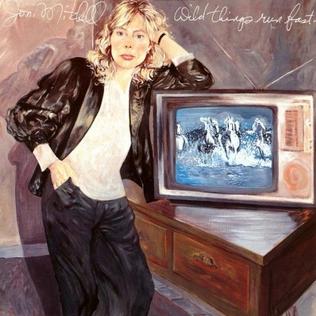
Some familiar names grace the credits of Wild Things Run Fast, like John Guerin, Larry Carlton and Wayne Shorter, alongside newer, younger guns like Steve Lukather and Vinnie Colaiuta. Add the painted self-portrait, and the listener might expect an easier ride after the experiments of her last couple of albums. But this is the ‘80s, so drums will sound more processed, synthesizers will abound, and the mix will be very, very clean. Thankfully, Joni has never been trendy, so technology does not rule the day.

Just as she once mixed “Centerpiece” into one of her own songs, “Chinese CafĂ©” works “Unchained Melody” into the plot as well as the music, making for a lush, minor classic. The most aggressive guitar yet on any of her albums defines the title track, somewhat distracting while she’s harmonizing with herself. “Ladies’ Man” is, as its own title might suggest, more subtle, fitting in with the contemporary jazz of the time. Larry Klein is no Jaco Pastorius, but his bass style on this album, and especially “Moon At The Window”, will remind one’s ear of Hejira. History will also tell us that he’s the inspiration behind “Solid Love”, one of the happiest love songs she’s ever written and recorded.

“Be Cool” sounds like one expects it should, missing only finger snaps in the place of the drums. The big misstep is a cover of “(You’re So Square) Baby I Don’t Care” that sounds as processed as it can be, with a guitar part designed to appeal to Van Halen fans. The only redeeming factor is the major-seventh chords over the fade. The loud guitars continue on “You Dream Flat Tires”, still a strange sound on a Joni album; the other voice on the track is Lionel Richie, who also isn’t normally associated with fusion. “Man To Man” has many guitar and synth touches similar to the Police influences she said went into the album, and maybe they’re also in “Underneath The Streetlight”. This track’s repeated hook (“Yes I do I love you!”, the exclamation point printed in the lyrics every time) and “Love”, adapted from Corinthians, seal the album’s portrait of Little Joni, happy at last.

Indeed, one must forget about the girl with the guitar and the piano beloved from those first albums, just as she’d demand you would. Wild Things Run Fast takes time, and an open mind to appreciate.

Joni Mitchell Wild Things Run Fast (1982)—3

Tuesday, May 3, 2016

Mott The Hoople 2: Mad Shadows

Producer Guy Stevens was still in charge on Mott The Hoople’s second album, beginning with a title already rejected by Steve Winwood. The cover—something of a cross between a Rorschach and an X-ray—hints at the darkness within, and indeed, Mad Shadows is an unsettling listen at points.

If the spooky beginning of “Thunderbuck Ram” sounds familiar, that’s because it’s the sound Mick Ralphs would bring to Bad Company four years later. Here, he shows why he wasn’t the lead singer in that band either. “No Wheels To Ride” begins as another lengthy, directionless Ian Hunter lament, but when the “chorus” kicks in, the song gains purpose and power. “You Are One Of Us” gets to the point a lot faster, and sets up the stomp of “Walking With A Mountain”. Mick alternates Chuck Berry riffs with Keith Richard copies while the track pounds away, and they even go so far as to chant the tag from “Jumpin’ Jack Flash” over the end.

Slow and sad, “I Can Feel” is more Ian feeling sorry for himself, but it’s still pretty, with a gospel choir counterpart and a flute effect that might be a guitar, we can’t tell. On “Threads Of Iron”, Ian sings the verses, while Mick takes the darker choruses, soloing like Ron Wood all the way. After two passes, the band beats the riff into the ground for another three minutes. Just when you think they’re going to calm down to a resolved ending, they pick it back up and beat it harder into hamburger and chaos, Ian screaming like he’s been stabbed. Maybe it sounded too much like the end of the first album, so Guy sent Ian back to the piano and told him to play something or else. The result was “When My Mind’s Gone”, a simple (there’s that word again) mediation for block chords with organ and bass underneath. If it really was as spontaneous as legend says, it’s an even more impressive summation of the turmoil Ian sang over the rest of the album.

Most sophomore aren’t as good as debuts, and Mad Shadows does seem like both a retread and a reaction. But given a little time, songs emerge from the murk.

Mott The Hoople Mad Shadows (1970)—3

Friday, April 29, 2016

Genesis 11: Duke

Epic songs were becoming a thing of the past for a lot of bands, and Genesis found a way to rely on their pop sensibilities in order to stay fluid. Some prog tendencies bled over onto Duke, their second full album as a trio—the first three songs are segued musically, and the closing instrumentals reprise earlier themes—but now they’re writing songs that only seem to mean something, and keeping an ear on the pop charts. Nearly all of the songs deal with heartbreak, loneliness or isolation in general.

“Behind The Lines” is a wonderful fanfare, sporting the grand keyboards and dominant bass drone familiar from “Watcher Of The Skies”, with some nice guitar wailing too. The verse could be called funky, and some have, but notice how Phil doubles his voice with a falsetto, and get used to it. A drum machine tinkles out of the song’s fade, leaving Tony’s new digital piano to find its way to a main theme for “Duchess”, and real drums join in to drive the before, during and after story of a onetime singing star. The music’s better than the lyrics, and as the star fades, the drum machine keeps ticking, setting up the brief, sad “Guide Vocal”. Mike Rutherford’s penchant for odd rhythms makes “Man Of Our Times” sound more complicated than it is. Here also is the first instance of Phil singing “tonight, tonight”, as he would for the rest of the century. The chorus makes the song work. “Misunderstanding” was the catchy hit single, but nobody has pointed out that not only is the subject matter nearly identical to that of Led Zeppelin’s “Fool In The Rain”, but even the main chord progression is a minor variation on the same tune. “Heathaze” is pretty in parts, but goes on too long and is hard to understand.

Almost like a reset button, “Turn It On Again” is a side-starter of power, providing enough weirdness from the old days with an unavoidable hook. “Alone Tonight”, one of the few woe-is-me tracks here not written by Phil, is a little too direct; “Please Don’t Ask” two songs later is even more so, but the music matches the pathos. “Cul-De-Sac” provides some pompous pomp, but the big guns are reserved for the closing not-really-a-suite. With a wash of cymbals and phased guitars not heard since 1974, “Duke’s Travels” then moves to a third-world pattern and then a more straight rhythm that manages to reprise the sole verse of “Guide Vocal” and then an adaptation of “Behind The Lines” suggested by the “Dance Of The Puppets” section of “The Court Of The Crimson King”. (How’s that for carrying the prog torch?) Finally, “Duke’s End” takes us all the way back to that initial fanfare.

With Duke, Genesis was approaching the mainstream. Never really wild men anyway, they’d soon find their way even closer to worldwide domination. The ‘80s were about to change a lot of things.

Genesis Duke (1980)—3½

Tuesday, April 26, 2016

Prince 1: For You

It took a while for Prince to prove himself as the musical genius he knew he was, but he makes a bold statement with his debut album. For You begins with the lush chorale of a title track, several voices layered, all him. In fact, as it would be going forward, he “produced, arranged, composed and performed” the entire contents of the album, at the age of only 19. The original inner sleeve even went ahead and detailed the instruments used on each track.

One-man bands always inspire at least an eyebrow raise, and sometimes they even impress. With its late-‘70s studio production, it’s far from a glorified demo. Much of the album is right in line with disco-funk, dominated by a falsetto voice. “In Love” is heavily synth-driven, with an almost puppy love lyric; maybe he wanted to get that out of the way before the more provocative “Soft And Wet”. The one time he displays a deep voice leaps out of the track. “Crazy You” is brief, smooth and jazzy, and a good diversion before the danceable “Just As Long As We’re Together” is extended to a six-minute jam.

The kid knew how to program albums, so “Baby” kicks off the second side with a strong intro before moving into more of a romantic slow jam with swirling string parts. “My Love Is Forever” covers the same lyrical territory, and is back in line with the dance tracks on side one, but lets a few guitar solos through. Which brings us to “So Blue”, with a hammered bass and acoustic harmonics intro that seems to predict some of the more upbeat Windham Hill albums, and turns into another jazzy piece. He turns the guitars back up for “I’m Yours”, making the track much more aggressive than the lyrics suggest. (“Never have I ever made love before.” Good to know.)

For You is competent, though not striking. Outside of “Soft And Wet”, there’s nothing really “decadent” here, none of the words R abbreviated, and God is the 1st 2 B thanked. (Sorry.) Beyond that, variety would make a difference, and he’d get going on that soon enough.

Prince For You (1978)—2½