Friday, October 31, 2008

Led Zeppelin 8: The Song Remains The Same

Though it’s called the soundtrack for the film, The Song Remains The Same isn’t. There’s an entire website dedicated to picking apart all the edits on the album and whether or not they match the ones in the movie; plus there are songs on the album that aren’t in the film and vice versa. As a representation of live Zeppelin—and the only band-sanctioned live release for over two decades—it’s just okay, and not great.

Side one is easily the most listenable, since it has four songs—the opening “Rock And Roll”, the odd choice of “Celebration Day” and the twin delight of the title track and “The Rain Song”. The 27-minute version of “Dazed And Confused” makes more sense in the context of the film, but without that it’s noise, and a whole side’s worth to boot. (Although, lo and behold, one of the tangents shows off one of the key riffs that would become “Achilles Last Stand”.) On side three, “No Quarter” is okay, but the live “Stairway” is pretentious. “Moby Dick” is dull even for a drum solo and “Whole Lotta Love” serves mostly as a springboard for a medley.

Having been filmed and recorded three years previously, it was already out of date upon its release, but at least the movie gave audiences a chance to actually see the band. Also, since the band had fallen into a period of inactivity, the album kept them on the charts. But as an official document designed to stop the bootleggers, it only spurred further production. Nonetheless, if you had everything else, you had to have this too.

The band ignored The Song Remains The Same for a full thirty years, not including any of it in the box sets or updated CD reissues until Jimmy Page finally prepared a remastered CD version (alongside an upgraded DVD of the film) in 2007. Resequenced to match the film—and original setlist, for the most part—the new version added excellent versions of “Black Dog”, “Over The Hills And Far Away”, “Misty Mountain Hop”, “Since I’ve Been Loving You”, “The Ocean”, and “Heartbreaker” to a whole new soundtrack, combining to provide a much better flow all around. It’s not the same album as before, and it’s still not the definitive live document, and still full of edits, but at least the reissue earned repeat, loud listens. (As for the film, it defies any consensus of an essential document, guilty pleasure, embarrassing indulgence, or stoner’s delight. In true alignment with the album title, some things will never change.)

Led Zeppelin The Song Remains The Same (1976)—2½
2007 CD reissue: “same” as 1976, plus 6 extra tracks

Wednesday, October 29, 2008

Who 9: Quadrophenia

As before, the Who worked their way through a number of possible concepts for the next release, even going so far as to record an album’s worth of tracks in 1972. That project was aborted, though a few singles surfaced, and somehow Pete was able to take a couple of the leftovers and work them into what finally emerged as the epic Quadrophenia. The story within is basically impenetrable—it’s not so much of a plot as a portrait of a Mod kid named Jimmy—and while Pete’s idea of using a different musical theme to represent each member of the band as a different facet of Jimmy’s personality was daring, it doesn’t quite take.

Despite that, the album is excellent. While the Mod fashion may not have made sense to anyone who wasn’t around at the time, Quadrophenia retains a universal appeal, simply because Pete managed to convey the desperation and confusion of post-adolescence in his music and lyrics. (Kids aren’t supposed to be this sensitive, but sadly, they are.) Just as the ‘70s began to take over the music business, the album looks back to the period before the British Invasion but keeps its sound contemporary yet timeless, and not a little symphonic. Even the synthesizers—and there are a lot of them—don’t sound at all dated. Because of that, the story can resonate with any mixed-up kid, regardless of gender, and not just those living in that city at that particular time.

“I Am The Sea” is kind of an overture, with the four themes poking through the rain and surf. “The Real Me” crashes through just as the rain stops. Roger’s angry right away, and John’s bass work here is right out of his performances on their covers of “Baby Don’t You Do It”. The title track is more of a true overture, and plays the four themes we’ll be hearing from time to time, with advanced synthesizers, establishing melodies that will stick in your head. “Cut My Hair” has two themes that will rise soon enough, with Pete taking the verse and bridge while Roger shouts the “zoot suit” chorus. A favorite moment is when the opening chords (over C major) are repeated at the end (over A minor). Described as a “mini-opera” within the album, “The Punk And The Godfather” (or “The Punk Meets The Godfather”, depending on which pressing you have) piles on the angst and desperation. In this song Jimmy confronts a musician idol, with Pete taking the midsection to respond with a meditation on the meaning of stardom better than Roger Waters ever could.

“I’m One” is all Pete again, voicing doubts awhile remaining determined to stand out. “The Dirty Jobs” returns us to Roger, even though the concept of “karma” doesn’t belong in the lyrics. (We still love hearing Keith scream through his fills.) For some reason a marching band and circus appear at the end, but that takes us right into “Helpless Dancer”, supposedly Roger’s theme. The messages isn’t clear, and frankly the tune works much better better as an instrumental in the two overtures. “Is It In My Head” was from the 1972 sessions, but fits so well within the concept, and is impossible to hear in any other context but this. “I’ve Had Enough” definitely sounds like it’s leading to some kind of decision, particularly with the lyrical detour about how Jimmy’s going to have his jacket cut. The end of the song always sounds like he jumped, in front of a train perhaps? But then…

Side three starts in a train station, reprises the “why should I care” theme from “Cut My Hair”, and starts Jimmy hallucinating on the “5:15”. “Sea And Sand” is a wistful reverie about his lost love, with the jacket detour fitting well. (You can hear “I’m The Face”, their first single, just over the fade.) “Drowned” would never be performed this way again, but it’s still one of Pete’s finest pleas for redemption—another older song amazingly finding a proper home. “Bell Boy” is Keith’s theme, even though it describes another character altogether, yet his tender vocal in the middle is heartbreaking.

John’s theme (“Is It Me”) is shoehorned in the middle of “Dr. Jimmy”’s psychotic episode—a shame really, since the melody for it is so pretty. Roger really does a fair job of straddling all those moods. “The Rock” is basically another arrangement of the title track, but extends each of the themes so they can all come together at the end. And just when they do, the thunder breaks for “Love Reign O’er Me”. Pete saved his own achingly beautiful theme for last, but Roger sings it in a tour de force. The final seconds of the track, all crashing chords and every piece of percussion Keith could throw, are fantastic.

The album is one of those that takes a while to sink in, mostly because there’s not an obvious, linear narrative. And while Roger’s approach to the vocal is always going to be tougher than Pete’s, it still conveys the horror of trying to be that age. Keith expanded well on the basic drum parts in Pete’s demos, and John’s painstakingly arranged horn parts—all played by him—are masterful.

Six years later, the film version of Quadrophenia tried to put the story together, and used the music in odd ways to illustrate various points. The soundtrack was drastically remixed, and not necessarily improved: “I’m One” gets a piano, “Love Reign O’er Me” gets a flute and strings, “I’ve Had Enough” also gets strings (and it’s the climax of the film) and “Helpless Dancer” is cut to 22 seconds. Plus, a lot of songs are taken out of order and other songs were left out entirely. The rest of the album consisted of a pile of non-Who oldies (left off the original mid-‘90s CD, but reinstated for the 2000 remaster) and what was the first album appearance of “Zoot Suit” (included with “I’m The Face” on both CDs). Three “new” songs were added—the too-long throwaway “Get Out And Stay Out”, “Four Faces” and “Joker James”, which was actually as old as 1967.

Unlike Tommy, and probably because the songs don’t really tell a story, the film doesn’t detract from the album. But even if you like the film, a justified cult classic, you’ll want to stick with the original.

The 1996 reissue caused a lot of controversy among people who insisted the CDs were mastered wrong. With no bonus tracks, the album was split onto two CDs, as the four sides couldn’t fit onto a single disc without editing any precious seconds. To these ears it sounds fine. (For some time there were rumblings about a Deluxe Edition along the lines of Tommy, with surround sound as befitting a quadrophonic experience and an SACD layer. Several years after it was first mentioned—and abandoned—a Deluxe Edition did appear, which had the album up to “Drowned” on one disc, and from “Bell Boy” on on the second, plus eleven of Pete’s demos at the end. Those were borrowed from a package that took on an even larger scale.)

The Who Quadrophenia (1973)—5
2011 Deluxe Edition: same as 1973, plus 11 extra tracks (Director’s Cut adds 14 further tracks and one DVD)
The Who Quadrophenia Original Soundtrack (1979)—2½

Monday, October 27, 2008

Neil Young 14: Rust Never Sleeps

By the time Comes A Time came out, Neil was already touring with Crazy Horse and recording the songs that would fill up his next two albums. In this age of single-play CDs, it’s easy to forget the importance of album sides, and Rust Never Sleeps is the quintessential yin and yang, acoustic and electric. (Also, like Time Fades Away, much of it was recorded live in front of audiences unfamiliar with the songs.)

“My My, Hey Hey (Out Of The Blue)” starts out spookily enough, and fades just as it’s getting interesting. (But it will return.) “Thrasher” has a pretty melody and lilting vocal that don’t explain the involved lyrics, which may or may not be about CSNY. “Ride My Llama” also makes no sense but is still enjoyable. You can just hear the audience clapping along in the middle. “Pocahontas” is another one of his best. A continuation of his exploration of the Native American, this was the original lead track from the unreleased Chrome Dreams album, while it’s been given some overdubs here (such as the “yi-yi-yi” backing vocals). It doesn’t really fit with the Cortez/Inca idea, but it’s still a nice look at a lost time. “Sail Away” started out in a bar setting with shuffled lyrics, and was left over from Comes A Time, but it works best here.

After you’ve enjoyed the acoustic side, here comes the fuzz. “Powderfinger” is an absolute classic. Also on Chrome Dreams in a stark, acoustic, paranoid version, Crazy Horse does the best job of all on this take. Fans are still trying to figure this song out. “Welfare Mothers” and “Sedan Delivery” are true thrashers (as opposed to the “Thrasher” on side one). “Welfare Mothers” would work best live, but “Sedan Delivery” has weird sound effects and stop-start sections that makes it the better of the two. (It had also been recorded with a radically different arrangement for Chrome Dreams.) It all gets slammed home with the hard version of the opening track, called “Hey Hey, My My (Into The Black)” to differentiate it.

When Rust Never Sleeps was still a new album, a certain New York FM station used to play the opening and closing songs back to back, but that’s not to say the rest of the tracks are filler. With this album, Neil capped a rollercoaster of a decade. He wouldn’t reach this height again for some time.

That fall, the Rust Never Sleeps concert film hit theaters, with the requisite soundtrack album. Though Neil intended to give it the same title, cooler heads convinced him to call it Live Rust. While the performances are enjoyable, this album is for those who think live greatest hits albums are the be-all and end-all. For song selection, Decade is preferred source for the superior studio versions. (This album does, however, offer a nice version of “Comes A Time” that you can enjoy without the sawing fiddle.)

Neil Young & Crazy Horse Rust Never Sleeps (1979)—4½
Neil Young & Crazy Horse
Live Rust (1979)—3½

Friday, October 24, 2008

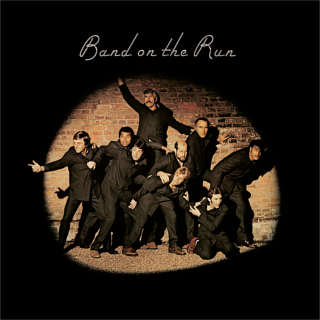
Paul McCartney 5: Band On The Run

By now fans weren’t expecting much from Paul. Moreover, two Wings flew the coop, having had enough of the democracy that never was. With his back against the wall, he took the challenge and, as John would say, was scared into doing something good for a change. Band On The Run comes off like a concept album, in a time when that sort of thing was expected, but luckily transcends that straightjacket.

The title track was the most Beatlesque track he’d done in years, with a ton of hooks and all those different parts coming together. The movement from the “if we ever get out of here” into “the rain exploded” is almost cinematic. When he can fit the jigsaw puzzle together like this, no one else comes close to McCartney. (However, this is the first tune of many to come that reference silly names like Sailor Sam.) “Jet” regurgitates the “Satisfaction” riff, made even snottier by the horns, and is a worthy rocker. And those drums again—Paulie was getting pretty good at them! “Bluebird” is a close cousin to “Blackbird”, with more references to flying and being free. This fit nicely on the radio with soft rock from the Eagles, America and so on. The midsections with the interlocking guitars and layered harmonies are exquisite. “Mrs. Vandebilt” makes no sense, but what’s the use of worrying? Others have pointed to John’s “Let Me Roll It” as his response to “How Do You Sleep?”, the connection being the bathroom vocal style and plodding bass line. This is one of those recordings in his catalog where one wouldn’t be surprised if he played all the instruments. It sounds very much like the experiments on McCartney (and has a close cousin on McCartney II, but we’re getting ahead of ourselves).

“Mamunia” would be pleasant if it wasn’t so long. This is the only track that seems to have an African influence (the album having been recorded in Nigeria) and not much of one. “No Words” is an updated Everly Brothers song co-written with Denny Laine; great guitars at the end. “Helen Wheels” was on the American LP, and occasional CDs from time to time. It’s a good “on-the-road” stomper, even if it should be faded earlier so we don’t have to hear Linda counting to four again and again. “Picasso’s Last Words” was written on a dare from Dustin Hoffman (really, Paul, you shouldn’t have) that only serves to have earlier album melodies woven in and out. “Nineteen Hundred And Eighty-Five” was odd to have on the radio right around the same time as Bowie’s “1984”; the sinister melody belied the rather simple subject, but in the wake of his James Bond work it’s still pretty cool. It comes crashing to the climax, and then the title track fades in for a few moments for a nice finale right out of the movies.

Paul had an inkling he needed to prove himself too, and he rose to the occasion. And his drumming was better as well—there’s not a moment on Band On The Run that makes you cringe like his previous visits behind the kit. While it was definitely a step up, history has dimmed its luster. But he got his confidence back (and John and George’s fading reputations didn’t hurt) so now he could go back to being Mr. Showbiz, with varying results. Besides, there were only three of them, plus the sax player, and he could indulge us with a poster of Polaroids from the studio depicting cases of Guinness and even a toilet.

Decades on, it was still considered one of his best works. 1999 brought an “anniversary” edition in a handsome cardboard box, complete with an expanded booklet and a documentary-style bonus disc that told the story of the album, from recording to artwork and marketing. The few rare tracks were predominantly live rehearsals from the late ‘80s and more recent buskings. (Still, it was more interesting than the 1993 UK remaster, which added only “Helen Wheels” and the B-side “Country Dreamer” as bonuses. By that time collectors also got to shell out for a gold disc licensed to the DCC label, and likely still held onto their original Columbia CD because why not.)

It was also the debut release in the projected Paul McCartney Archive Collection, re-released in several permutations. The standard CD did not include “Helen Wheels”; that was part of the bonus disc on the so-called Special Edition, alongside the B-sides “Country Dreamer” and “Zoo Gang” and several performances from the unreleased One Hand Clapping film, which was included on a DVD. (The Deluxe Edition came with a thick book, and contained all of the above plus the bonus disc from the 25th Anniversary CD.)

It was a bold but expected start to this particular reissue program, which over the next ten years saw a dozen more albums expanded and enhanced in various teeth-gnashing ways, seemingly at random, before going frustratingly quiet. By that time the industry—as well as his fellow former Beatles’ catalogs—had gotten caught up in so-called “50th Anniversary” marketing, and Band On The Run was tapped yet again for its seventh CD incarnation to celebrate it. This time the album (with “Helen Wheels”) was paired with a disc of “underdubbed mixes”—basically rough mixes without orchestra or other touches—in a different sequence (and not including “Helen Wheels”). It’s an interesting listen in places, if you like that sort of thing, highlighting different sonics. “Picasso’s Last Words” is even stranger in its earlier form, and “Nineteen Hundred And Eighty-Five” has no vocals. One wonders how they’ll celebrate the 55th anniversary.

Paul McCartney & Wings Band On The Run (1973)—3½
1999 25th Anniversary CD reissue: same as 1973, plus 21 extra tracks
2010 Archive Collection Special Edition: same as 1973, plus 8 extra tracks and 1 DVD (Deluxe Edition adds 21 extra tracks from 1999)
2024 50th Anniversary Edition: same as 1973, plus 9 extra tracks

Wednesday, October 22, 2008

John Lennon 5: Mind Games

After the political nonsense of the previous year, Mind Games was a step back to melodies and tunefulness, but once you paid attention it seemed as if John was also running out of steam. There are great tunes and catchy numbers on this album, but it seems kinda ordinary, which is one of the last adjectives one would use to describe John Lennon.

The title track still has a soaring quality that makes it a great track to this day. (That’s not an orchestra, it’s just a bunch of guys! But they sound so big…) Had he ever toured again, this would have been a showstopper. “Tight A$” is boogie with nothing else to hold it up, which unfortunately doesn’t pass for art. This would not be the only example of water-treading on this album. “Aisumasen (I’m Sorry)” has some interesting chord changes and a cool arrangement, but lines like “all that I know is just what you tell me” come off more pathetic than romantic. It’s heartfelt, but much too Yoko-centric for mass enjoyment. “One Day (At A Time)” is a good example of why John shouldn’t sing falsetto for an entire song; perhaps he was going for a Stylistics feel on this? Whatever the motivation, it grates. “Bring On The Lucie (Freda Peeple)” is a lot of fun, before you realize how maddeningly repetitive it is. And it seems pointless to spend more than three seconds on the side closer. (That’s an in-joke.)

Side two starts off with as close as a potboiler as we’ll get, the funky “Intuition”, showing John was listening to the radio from time to time. This would have been another good choice for a single, or even one for Ringo to cover. “Out The Blue” is the best on the album next to “Mind Games”, mostly because of the clever chord changes, but also because of the bare honesty in the lyrics and delivery. “Only People” is harmless if lightweight; a whole lotta so what with too much “right on, brother”. It’s much improved by the John Denverisms of “I Know (I Know)” (that’s not meant as a bad thing), yet by this point it’s become tiresome to hear John apologize to Yoko continuously. This tune has some fantastic folky harmonies right off of Rubber Soul. He may have lost the passion, but his craftsmanship is strongly in evidence on this underrated song. While the title track was an extension of the unfinished “Make Love Not War”, “You Are Here” takes another old slogan and adds an “East is East” sentiment to it, but it just doesn’t lift itself up at all. “Meat City” is a rocking way to blow out the album, which, now that you can look back on it, doesn’t say much, does it?

Mind Games is not a bad album; it just isn’t as great as Plastic Ono Band or Imagine. Many of these songs seem slight because they are merely pleasant, when his earlier work, while still incredibly personal, was more moving. Luckily his voice is as good as ever, and even the slimmest songs benefit from it. This was the best he could come up with at the time; meanwhile Yoko had become incredibly prolific, having completed two albums—one of them a double—since Some Time In New York City, and apparently getting tired of him. Once his album was mastered, he scampered off to the West Coast for an adventure with Phil Spector.

The 2002 reissue brought out sonic surprises in the mix, a lot more exciting than the demos tacked at the end. At least there were a few drawings in the booklet we hadn’t seen before. When the Ultimate Collection of the album arrived a year after its 50th anniversary—after skipping Some Time In New York City, likely because people would have been up in arms over the title of that album’s lead track—box producer Sean Lennon took the album title literally.

Following the template of the Plastic Ono Band and Imagine sets, the 12 tracks—yes, even “Nutopian International Anthem”—were presented six different ways in the Deluxe Edition, four of those simply variations on the same source. The Ultimate Mixes widened the original mixes somewhat, giving the tracks room to breathe and generally an improvement, though we wonder what happened to the sax at the end of “One Day (At A Time)”. The Elemental Mixes were stripped down to favor John’s voice, while the Elements Mixes focused on isolated instruments, generally omitting the drums in the former case, highlighting keyboards or Sneaky Pete on pedal steel in both. We can also appreciate Gordon Edwards’ bass that much more, and enjoy the reggae influence on “Intuition”. The Raw Studio Mixes purported to present the takes without embellishment, but only a few were extended past their familiar fades. The customary Evolution Documentaries presented journeys from demos to final masters, and the Outtakes were just that. (A two-CD version consisted of the Ultimate Mixes and the Outtakes.)

Most of the fanfare went toward the Super Deluxe Box, a giant Perspex cube that offered everything from the six-CD-two-Blu-ray package along with all the stated music on vinyl, reproductions of vintage John and/or Yoko art pieces, and a variety of puzzles each requiring unique solutions to find any hidden content within. In addition to being extremely limited and extremely expensive, it became a deterrent for those of us who wanted the extra music we’d come to expect by now, such as standalone demos (previously released or otherwise, such as the tantalizing peek at a very different “You Are Here” in that Evolution Documentary) and key adjacent tracks like “I’m The Greatest” and “Rock ‘N Roll People”. Those two were included as Ultimate Mixes, as was the single version of “Meat City”, but they weren’t prominently labeled. Mind games indeed.

John Lennon Mind Games (1973)—3
2002 CD reissue: same as 1973, plus 3 extra tracks
2024 The Ultimate Collection: “same” as 1973, plus 60 extra tracks (and 2 Blu-ray discs)

Tuesday, October 21, 2008

Ringo Starr 3: Ringo

Following two long shots in 1970, Ringo limited himself to the occasional session between small parts in films for the better part of two years. He did release two singles, both of which were mid-wifed by George Harrison, but it wasn’t until early 1973 that he aimed again for the top of the pop charts. With Ringo, he was finally getting somewhere: a Richard Perry production that lived up to the support underneath, with help from the ex-Beatles (and all their solo studio friends, like Billy Preston, Nicky Hopkins, Jim Keltner, and Klaus Voormann), most of The Band, Marc Bolan, Harry Nilsson, Jack Nitzsche, and anyone else who happened to be in LA that week. The album spawned several hits, as the songs were finally worthy of an ex-Beatle.

The perfect opener came from John Lennon, and it’s the closest we got to a reunion in his lifetime, with George and Billy on the track too. “I’m The Greatest” would have sounded pompous in his mouth, but Ringo gives it precisely the ironic reading it needs. “Have You Seen My Baby” (or “Hold On”, according to the label) was from an older Randy Newman album, but it’s smacked aside by “Photograph”, co-written with George and possibly the greatest solo Beatles single ever. George himself contributed the jaunty “Sunshine Life For Me (Sail Away Raymond)”, where the backing is provided by everyone in The Band save Richard Manuel, plus David Bromberg on banjo and the other fiddle. The rockabilly favorite “You’re Sixteen” was another chart-topper, with a prominent Nicky Hopkins piano, Nilsson on several backing vocals, and Paul McCartney on “mouth sax”.

That’s a fairly solid album side, and side two starts strong with the guilty-pleasure infectious “Oh My My”, written by Ringo with new collaborator Vini Poncia and another hit single. However, he takes sole credit for “Step Lightly”, which is little more than an excuse to tap-dance. McCartney donated “Six O’Clock”, a lush production that’s musically and instrumentally better than just about everything on Red Rose Speedway. The synthesizer solo is still charming, and it’s nice to hear Paul singing with him again. Even Linda doesn’t get in the way. Unfortunately, “Devil Woman” is just plain noisy, and not to be confused with the Cliff Richard hit a few years away. (There’s even a reference to Sexy Sadie halfway through.) The big closer “You And Me (Babe)” is credited to George—those are definitely his chords—and Mal Evans, but it’s not very interesting until Ringo’s monologue thanking everybody.

The packaging for Ringo was also elaborate, from the Sgt. Pepper-style cover to the scary illustrated booklet and custom labels. All together, an extravaganza that proved Ringo could carry an album on his own, provided he had the right help. He would repeat the template over the coming decades, even using the all-star format for countless tours in the years that didn’t have an album to promote. (The CD adds to the value by including 1971’s “It Don’t Come Easy”, his second-greatest single, along with its flipside, the topical lament “Early 1970”, and “Photograph”’s B-side “Down And Out” for the completist.)

Ringo Starr Ringo (1973)—3½
1991 CD reissue: same as 1973, plus 3 extra tracks

Monday, October 20, 2008

Elvis Costello 20: Painted From Memory

New wavers everywhere were hanging themselves by their skinny ties over the news that Elvis Costello made an entire album with pop schlockmeister Burt Bacharach. Elvis had never made a secret of his affection for the man, consummated with a collaboration for Alison Anders’ Brill Building homage Grace Of My Heart. (The song in question, the emotional “God Give Me Strength”, took a similar role in the film as a far-reaching flop along the lines of “River Deep—Mountain High”.) Rather than leave it buried on a soundtrack, the new dynamic duo continued to collaborate by fax, and the song was given pole position as the closer on the resultant album.

It was suggested that Elvis and Burt would simply revisit songs from their own careers, but instead they came up with twelve new tracks that sounded like they came from either Burt’s ‘60s heyday or Elvis’ own catalog. Painted From Memory is lushly orchestrated, performed by stellar players, and does not include a single song that could be classified as fast, yet fans of EC’s slower, prettier songs will enjoy having their heartstrings tugged.

“In The Darkest Place” is a good way to start the album, with its late-night mood and just enough female backing vocals to set a standard for the rest. “Toledo” begins with those trademark Bacharach flugelhorns, and we wonder how Ohioans reacted to the slam in the choruses. (Actually, the city alluded to here is the one in Spain, a citadel not far from Escorial, which contains the staircase that inspired “13 Steps Lead Down” on Brutal Youth.) “I Still Have That Other Girl” is very pretty and infectious, if overwrought, and he nails the key change. “This House Is Empty Now” is familiar subject matter for an Elvis song, but the lyrics are really developed, both metaphorically and literally. Even the guitar solo is succinct and to the point, if his vibrato starts to get a little tiring. The saxophone at the start of “Tears At The Birthday Party”, which may or may not involve the same cake from “Alison”, leads into the more trying part of the album, wherein Elvis gets to flaunt his most pop tendencies, but listen to Jim Keltner’s drums and marvel at how he colors the song. “Such Unlikely Lovers” recalls Steely Dan at their most sterile, and one of the rare songs here that seems to celebrate the start of a love affair rather than ruing the end of one. The mention of violins and their appearance is very clever, and the song also features the most fitting line to sum up the project: “Can you believe it’s happening?”

“My Thief” is an absolute marvel, soaked in melancholy, and one of his best-ever vocals. There are three parts to the song, basically; the verse musically recalls mid-‘70s Tom Waits, the chorus breaks into another dimension, and the subdued coda, with its heartbreaking female response, reminds us of Joe Jackson’s more “serious” compositions. After that, “The Long Division”, which is very reminiscent of parts of Punch The Clock, vocally and arrangement-wise, is the least of the album, but it’s a momentary distraction before the run of top-notch tunes to come. Elvis’s love of Sinatra’s late-night concept albums shines on the haunting title track; this one is unique in that it’s arranged not by Burt but Johnny Mandel. “The Sweetest Punch” brings some well-appreciated tempo back to the proceedings, and we especially like how the bells echo the melody in the choruses. The haunting drama of “What’s Her Name Today?” is incredibly vivid, matched by the emotional dynamics—a truly remarkable song. And again, the inclusion of “God Give Me Strength”, in all its pleading and emotion, works as an excellent epilogue to remind us how it all started.

For those who gave it a chance, Painted From Memory quickly overcame the danger of being truly awful. This is well-crafted pop worthy of the Great American Songbook, with just the right amount of syrup to break your heart. If you put any of these songs onto any of his other, punkier albums, they would still make perfect sense. We could almost forgive the hat.

The album was a surprise success, and likely led to his hit cover of “She” for the Notting Hill soundtrack a year later. By that time, jazz guitarist Bill Frisell released The Sweetest Punch, which presented instrumental arrangements of the songs on the album, plus Elvis singing on “Toledo”, Cassandra Wilson on “Painted From Memory”, and the pair duetting on “I Still Have That Other Girl”. The packaging even included full lyrics for every song, which were not included with the main album.

The album’s 25th anniversary was celebrated by expanded packages announced prior to but released shortly after Bacharach’s death in 2023. The two-disc version of The Songs Of Bacharach & Costello offered the remastered album plus Taken From Life, something of a continuation of the concept, including additional songs designed for a possible stage version. Two alternate versions were from The Sweetest Punch and four further collaborations were repeated from 2018’s Look Now, plus “Everybody’s Playing House” had been hidden on a 2019 Record Store Day EP. Of the rest, Elvis sings three; the pomped-up and pompous “You Can Have Her” doesn’t really work outside of staging, “Taken From Life” is a nice try for an “answer” song, with an uncomfortable mental image in the chorus, and the mournful “Look Up Again” comes closest to the standard of the original album. Audra Mae, who we’re sure we’ve heard on TV commercials, contributes positively stunning readings of “In The Darkest Place” and “What’s Her Name Today?” that possibly best the originals, plus the otherwise new, mesmerizing “I Looked Away”. Jenni Muldaur does the intentionally shocking and profane “Shameless”, which sadly sounds like Gwen Stefani trying to sing like angry Elvis, and redoes “Stripping Paper” from Look Now. Burt himself sings “Lie Back & Think Of England” from a proposed—and mercifully not pursued—Austin Powers musical.

A deluxe edition added two more discs. Because It’s A Lonely World consisted mostly of live versions of seven songs from the album (plus “I’ll Never Fall In Love Again”), exquisitely performed by Elvis and Steve Nieve on piano, sometimes alone and sometimes with an orchestra, along with “This House Is Empty Now” with Burt on Conan O’Brien’s show. (Some but not all of these had already appeared on an Australian “tour edition” expansion of the album, which included other tracks not included here.) The Costello Sings Bacharach And David disc collected three covers that had already appeared on Costello albums or collections, plus “I’ll Never Fall In Love Again” from an Austin Powers soundtrack, and four other songs performed with Burt on a tour in support of the album: “Make It Easy On Yourself”, “My Little Red Book”, “Anyone Who Had A Heart”, and another “I Just Don’t Know What To Do With Myself”.

Not only could these two discs have been combined into one, but the package also had two LPs comprising Painted From Memory and six selections from Taken From Life, driving the cost way out of proportion. All the repeated recordings scattered throughout added insult to injury.

Elvis Costello With Burt Bacharach Painted From Memory (1998)—4
Elvis Costello With Burt Bacharach
The Songs Of Bacharach & Costello (2023)—3½