Friday, May 29, 2009

David Bowie 10: Young Americans

In love with Philly soul, Bowie’s next album was recorded rather quickly, and largely in the center of the action at Philadelphia’s Sigma Sound. David Sanborn came over from the tour, but the key addition to the band was guitarist Carlos Alomar, who would be the silent weapon on many Bowie albums and tours henceforth.

Young Americans was a popular album, thanks to its breathless title track. The rest of the first side explores different soul styles of one word each: “Win” is smooth and silky; “Fascination” is fat and funky; and “Right” gets into the groove with a minimalist contrast to the patter utilized throughout.

That’s a good start, but side two is pretty schizophrenic. “Somebody Up There Likes Me” is another long one that tries but doesn’t always hold. His love of obscure covers is further demonstrated by “Across The Universe”, which John Lennon himself endorsed, but it doesn’t really go anywhere until the end once he switches the croon to a shout. “Can You Hear Me” slows things down to distraction, and “Fame” became another unlikely #1 hit. Lennon got credit for the riff, and the lyrics (when you can decipher them) are pretty pointed. The song takes the soul we’ve been hearing upside down, leaving a clue to his next stop.

Bowie was so excited by the two Lennon-oriented tracks that he bumped three originals from the album; all would appear as bonus tracks in the CD age. Two of them are lost Bowie classics; “Who Can I Be Now?” would have been a welcome highlight, and “It’s Gonna Be Me” is another effective torch song. (An alternate mix took its place this century.) However, the pointless disco retread “John I’m Only Dancing (Again) 1975” had originally sat in the can for a few years, came out on a single once he was two styles past the original recording, and took up space on the otherwise worthy Changestwobowie compilation. Those not familiar with the original would have been confused. But Bowie had certainly succeeded in confounding expectations more than once, and each time, no sooner had he found a hit style, he turned on it.

A previous version of this review rated the album half a star lower than it is now; maybe it’s nostalgia, or maybe it really isn’t as disappointing as we recalled. But for further perspective on Young Americans, 2016’s retrospective Who Can I Be Now? box set included the album alongside its original Lennon-free sequence, when it was known as The Gouster. This version begins with “John, I’m Only Dancing (Again)”, continuing side one with “Somebody Up There” and “It’s Gonna Be Me”; side two has “Who Can I Be Now?”, “Can You Hear Me”, “Young Americans” and “Right”. All of the songs that made the eventual album, save the title track, appear in earlier mixes. It doesn’t replace the album we’ve known all these years, but is informative.

David Bowie Young Americans (1975)—3
1991 Rykodisc: same as 1975, plus 3 extra tracks
2007 Collector’s Edition: same as 1991, plus DVD

Wednesday, May 27, 2009

Bob Dylan 12: New Morning

This was a little more like it. At the time people thought it was a white flag due to the bad reaction to Self Portrait but the studio logs say otherwise. Dylan went into this album intending to cut even more covers he wanted to play—along with a voice halfway between rasp and croon—but managed to come up with an album’s worth of originals before too long. (Some of those covers would surface soon enough, unfortunately.)

“If Not For You” starts us off with a nice idea, but George Harrison’s version, out a few months later, is still the best. “Day Of The Locusts” introduces the piano to the proceedings, on a song taken from his own recent headlines. “Time Passes Slowly” is very pleasant, and a hidden classic. “Went To See The Gypsy” seems to continue from the fables of John Wesley Harding, while “Winterlude” goes back to the Nashville Skyline sound. The side ends with the all-out hep-cat jazz of “If Dogs Run Free”. You’ll either hate this one or find it pretty funny.

The title track starts side two with one of the better ones, but “Sign On The Window” is the most telling song, with his overt wish for the simplicity of family life. As slight as it is “One More Weekend” would have also fit on Skyline, but “The Man In Me” takes a more mature view of the situation. (This song was basically ignored until The Big Lebowski brought it to the mainstream, or somewhere on one of its sidestreets.) “Three Angels” seems to want to be about something, and then “Father Of Night” ends it all on an unsettling note—a prayer almost.

Critics haven’t been as kind to New Morning over the years, but as with many things, if you’re not expecting much, you can be pleasantly surprised. (Even after the in-joke painting on the previous album, the cover for this one is just as startling, with its almost come-hither leer. In other photos of the time he almost looks like Richard Dreyfuss.) Taken all together the album does seem to be something of a cross between John Wesley Harding and Nashville Skyline, which is meant in a good way. Four decades would pass before we could better understand where he was at. And it would be a long time before he’d depend so much on the piano. But was he really “back”? Time would tell.

Bob Dylan New Morning (1970)—3½

Monday, May 25, 2009

Bob Dylan 11: Self Portrait

They dealt with John Wesley Harding. They endured Nashville Skyline. Now, with Self Portrait, diehard Dylan fans were at the end of their collective ropes. Roughly four years after one of the greatest double albums ever issued, here was another two-record set, filled not with that thin, wild mercury music and advanced prose worthy of the Summer of Love, but rather a cross between some old folk tunes and other tracks that sat squarely in the middle of the road.

That’s not to say that what was contained within wasn’t pleasant. But whether or not you liked the smooth sound of Nashville Skyline, chances are you weren’t ready for what came next. If you haven’t been prepared, strap yourself in for this one.
Some of the tracks came from the “crooner” aftermath of Nashville Skyline, a few were included from his appearance (with The Band) at the British version of Woodstock in the Isle of Wight, and others came from further sessions from the new decade. In many cases, he recorded basic tracks, and let the producer embellish them at will and at length.

Even though it’s probably the best song in the set, “All The Tired Horses” consists of the same two lines repeated by a bunch of women over a gentle acoustic and string backing. No Dylan nowhere. “Alberta #1” is a lazy rendition of a blues song, then “I Forgot More Than You’ll Ever Know” ladles on the syrup. “Days Of 49” is a little raspier, but you’re allowed to be confused. (Oh my goodness indeed.) “Early Mornin’ Rain” is a Gordon Lightfoot song, and would have been fine if he’d written it himself. But then “In Search Of Little Sadie” loses her trail through every key imaginable, which should be proof enough he was doing it all on purpose.

“Let It Be Me” sucks the life out of the Everly Brothers song, then he pulls out the mandolins for a straight rendition of “Little Sadie” that somehow isn’t as much fun as the first side’s closer. “Woogie Boogie” is another instrumental that can’t have taken too much time to write. “Belle Isle” tries very hard to stay pretty, but “Living The Blues” is a boring Skyline refugee. The worst is yet to come: a lousy take of “Like A Rolling Stone” from the Isle of Wight, complete with flubbed words. The crowd cheers, amazingly.

“Copper Kettle” is a sweet moonshine ballad, but “Gotta Travel On” sounds too much like Elvis trying to be hip. To prove the point, “Blue Moon” sends the song back to Bing Crosby. “The Boxer” is a daring experiment, with its dueling vocals—the crooner with the raspy, not at all like Garfunkel and Garfunkel—and proof he could turn on that voice whenever he felt like it. “The Mighty Quinn (Quinn The Eskimo)” is his nod to the Manfred Mann hit version of his own song; too bad the Band couldn’t remember how to play it. “Take Me As I Am” ends side three with a tempting dare.

“Take A Message To Mary” relies too much on the women singing backup. In a foreboding of the 21st century, “It Hurts Me Too” is basically the old Elmore James song, but he takes full credit. “Minstrel Boy” is another experiment from the Isle Of Wight, and he hasn’t played it since. “She Belongs To Me” is the rousing opener from that set, the one that nearly got him killed by the crowd. “Wigwam” has a melody he didn’t bother to write words for, and it all comes screeching home with “Alberta #2”, only marginally better than the first all those sides ago.

So what’s it all about? Self Portrait endures as the first major middle finger from a major artist, except that it’s obvious that the perpetrator actually gave a crap about what he was laying down on tape. Given what else emerged at the time, Dylan was obviously amidst some kind of writers’ block. At the same time, it appeared he wanted to put something out to keep atop of the marketplace. By this time what would soon be known as “bootlegs” had become commonplace, complete with the same lack of chronological thematics as demonstrated here.

The question remains: how much did Dylan care about these tracks? As time went on, he insisted that it was all a ploy to get the fanatics off his trail (“Why was it a double album?” Kurt Loder asked; “If you’re gonna put a lot of crap on it, you might as well load it up!” replied Dylan), but there’s no mistaking the passion that he actually puts into (some of) these performances, especially considering that he’d still be performing a few of them twenty, thirty and forty years on. If you’re not expecting much, you won’t be disappointed. But if you’re expecting something truly lackluster, you won’t be disappointed either. Here in the modern CD age, some of these songs might be best served as bonus tracks on other albums, but it is what it is, and Bob wanted to it to stand. So he did. And it does. So much so that of all the albums he would go on to release over the next forty-plus years, this was the first to get an archeological treatment all its own. That actually helped the cause, but it’s another story for later.

Bob Dylan Self Portrait (1970)—2½

Friday, May 22, 2009

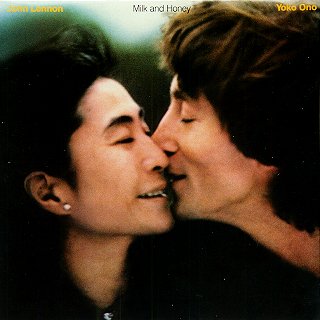
John Lennon 11: Milk And Honey

As far back as the autumn of 1980, upon the release of Double Fantasy, we heard that there would shortly be another album from John and Yoko, to be called Milk And Honey. Was this it? We’ll never know. Still, it’s intriguing to see that the songs John left off of Double Fantasy weren’t any worse than the ones he did choose.

With the fun kablam of “I’m Stepping Out”, you’re nodding your head and enjoying the ride. This is slowed down by Yoko’s herky-jerky “Sleepless Night”, as the album is also sequenced with the call-and-response that defined its predecessor. The lackluster “I Don’t Wanna Face It” is another hint that perhaps househusbandry wasn’t all it was cracked up to be, and “Don’t Be Scared” does little to diffuse that. But man, “Nobody Told Me” was great on the radio, and still cool today. (We heard “there’s nappies in the bathroom” instead of the British pronunciation of “Nazis”, which still makes more sense.) “O’ Sanity” is inoffensive, and luckily stops short.

“Borrowed Time” was the third single, and the one everybody pounced on as “prophetic”. (John sure liked reggae, even if he couldn’t play it.) “Your Hands” is a Japanese lesson, and we’re still not sure whose hands Yoko’s singing about. John comes crawling back with the hideous “Forgive Me (My Little Flower Princess)”, which does nothing to erase any stereotypes. “Let Me Count The Ways” may or may not have been written in 1980; nonetheless “Grow Old With Me” is very much the wedding song John wanted it to be. Since he didn’t have the chance to record it all big and lush like he heard it in his head, this voice-piano-and-rhythm-box demo will have to do. The spooky “You’re The One” ends the album with a mournful sigh for what might have been.

While it’s nice to have these John songs, they work much better on their own rather than interrupted by Yoko. There is still some question whether Milk And Honey would have been released in this form had he lived; additionally, were Yoko’s songs also left over from 1980 or added on to make this as close to Double Fantasy as possible? Either way, this was the first tantalizing peek into the vaults, which would continue in spurts from time to time and illuminate much better material. (The 2002 CD reissue included an increasingly common mix of Yoko’s “Every Man Has A Woman” with John’s harmony brought to the front, along with home demos of “I’m Stepping Out”, “I’m Moving On” and several minutes from a December 8th interview.)

John Lennon & Yoko Ono Milk And Honey (1984)—3
2002 reissue: same as 1984, plus 4 extra tracks

Wednesday, May 20, 2009

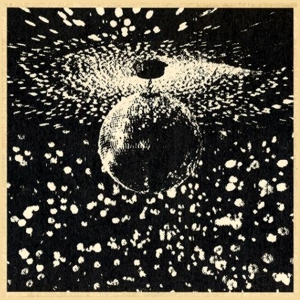
Neil Young 29: Mirror Ball

With the ghost of Kurt Cobain hovering, Neil spent a bit of time playing with Pearl Jam for one-offs and eventually a full-fledged tour. Mirror Ball was recorded quickly in two short spurts, and was released less than a year after Sleeps With Angels. He wanted the band to be credited on the spine but record companies got in the way. But the kids knew who the band was, and as a result it was one of his highest charting albums in a while.

“Song X” gets us rolling with a mysterious sea-chantey feel, dripping with foreboding. “Act Of Love” refers to either an abortion or a prostitute; it isn’t clear. “I’m The Ocean” shouldn’t be as good as it is, but it truly churns along like waves in a storm. Both piano (not played by Neil) and pump organ figure prominently in the mix. “Big Green Country” has a tumbling change, with a vivid portrait of a “cancer cowboy”. “Truth Be Known” is the slowest tune yet, and doesn’t really go anywhere.

“Downtown” seems to be a perversely affectionate song of praise for kids who weren’t born during the Woodstock era yet embraced the heroes of that time. Hendrix and Jimmy Page get name-checked, and it sounds almost like he’s describing a place where he’d actually like to hang out. “What Happened Yesterday” is only 45 seconds long, and uses the same melody as the bridge in “Big Green Country” but with just the organ. By the time the ambiguous “Peace And Love” starts, a lot of these songs have starts to sound too much alike. Eddie Vedder sings his own lyrics here, and John Lennon is mentioned, but why? “Throw Your Hatred Down” has that piano again, and sounds automatic at first, but manages to emerge in the choruses. “Scenery” continues the vague theme with a slow, plodding change over repetitions about the land of the free and the home of the brave, and tells us the album’s almost over. “Fallen Angel” is another organ snippet, this time sung to the tune of “I’m The Ocean”.

Mirror Ball is basically a faster Crazy Horse album, and gave the world a chance to hear Pearl Jam without Eddie singing (though he did turn up all right). It’s a decent album, but something’s missing; it doesn’t excite like others of his albums with the same attitudes. The first handful of songs has promise, but that’s about it. Luckily for us, though, he was on a roll, and there was more music on the way.

Neil Young Mirror Ball (1995)—3

Monday, May 18, 2009

Bob Dylan 10: Nashville Skyline

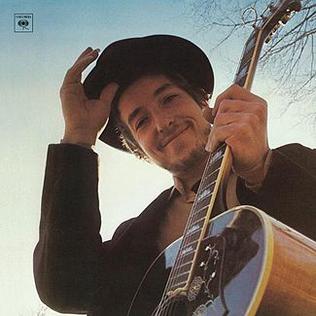
Even those who’d been patient with John Wesley Harding had to admit this was pretty weird. The cover of Nashville Skyline suggested something of a three card monte con, and then that voice: a sweet croon unlike anything heard to date on an official album. Was this the same guy who wished horrible things on masters of war and predicted hard rain?

The only excuse he’d give for the voice was that he’d quit smoking. Considering how he’s sounded since then it’s safe to say the American Heart Association wouldn’t be using him as a sponsor anytime soon. But not only did The Voice provide a character of sorts for the album, but it brought him his first hit single in a good while.

The cover shot seemed like enough of a gag (check one of the props on the front cover of Bringing It All Back Home while you’re at it) but from the first minute of the album you know there will be no thin wild mercury here. A remake of “Girl From The North Country” shows off that sweet voice, complete with Johnny Cash trading verses. They sound a little tentative, yet made for each other. “Nashville Skyline Rag” is an instrumental that began five years earlier as “Suze”, and everyone in the room gets to take a lead. “To Be Alone With You” is the first real song, starting from “is it rolling, Bob?”; it’s not much, but it will have to do. “I Threw It All Away” is a lament, and a sad one, then “Peggy Day” takes the worst Tin Pan Alley clichés and runs them into the ground.

Side two starts out strong with “Lay Lady Lay”—still a classic, and it still doesn’t sound like him at all. “One More Night” could have been written by anyone hanging around Music Row. “Tell Me That It Isn’t True” is something of a companion to “I Threw It All Away”, made better by the Hee Haw-hokiness of “Country Pie”. “Tonight I’ll Be Staying Here With You” is the grand finale, and worthy of the town where it was recorded.

Dylan going country caused about as much of a stir as it did when he went electric. Most people found reason to enjoy this album, and those who didn’t only lost 27 minutes off their lives. There’s still something charming about Nashville Skyline forty years on; Jakob Dylan describes it as the sound of his parents falling in love. And what’s not to like about that?

Bob Dylan Nashville Skyline (1969)—3½

Friday, May 15, 2009

Bob Dylan 9: John Wesley Harding

If you’re reading this you’re probably aware that 1967 was the year of psychedelia, when even bands who should have known better took the example set by Sgt. Pepper and experimented with new sounds to see who could sound the most out there. And with Dylan staying quiet most of the year, whatever he had to say when he got around to it would be really out there, right?

Not quite. Unbeknownst to the public for some time yet, he’d been quietly raising his family, reading the Bible and jamming with the band soon to be known as The Band at their house while the kids were at school. Finally, at year’s end he emerged with his first new statement since the groundbreaking Blonde On Blonde. The short story on the back cover gently poked fun at his messianic status, and the twelve songs on John Wesley Harding—none of which had been tested in the Band’s basement over the summer, as far as we can tell—were as understated as anything he’d ever put out.

In a sign of things to come, his voice already sounds different, with less whine and more croon. And instead of the swirling chaotic imagery of late, he delivered a set of simple three-verse songs that could almost be hymns, most of which have their first line as the title. The eponymous track sets the tone fairly quickly, a tribute to a misunderstood outlaw. “As I Went Out One Morning” tells an apocryphal tale of Thomas Paine, with a suitably mysterious ending. “I Dreamed I Saw St. Augustine” seems to be Biblical, except that the saint in question lived centuries after the Bible was written. The original version “All Along The Watchtower” is a nice change for those sick of the Hendrix take, which really is the definitive one. It’s a circular tale, beginning in the third verse. “The Ballad Of Frankie Lee And Judas Priest” tells a tale almost as misleading as the parable on the back cover. Once again he leads us to a seemingly profound message that turns out to be as paradoxical as “Nothing is revealed.” “Drifter’s Escape” is far too charming for a one-chord song; this would also be covered by Hendrix.

“Dear Landlord” is the best track, based around the piano and his own circumstances. It’s a nice change of pace, especially when followed by “I Pity The Poor Immigrant”, which is pretty, and “I Am A Lonesome Hobo”, which is too nondescript. Things pick up with “The Wicked Messenger”, a sharp tune that sports some lines that seem to mean more than they say. The hymns are over by the time “Down Along The Cove” comes around (there’s that piano again), and “I’ll Be Your Baby Tonight” is a wonderful send-off, and an early clue to the new direction.

John Wesley Harding is understated but excellent. He recorded the songs accompanied only by bass and drums, leading us to wonder if he’d completely ruled out a bigger sound that the Band might have been able to provide. Perhaps he was content to let the songs speak for themselves, and give the “experts” plenty of material to work with, to see where he was at.

Bob Dylan John Wesley Harding (1967)—4