Friday, July 31, 2009

Bob Dylan 26: Shot Of Love

While he’d started playing both older and new secular songs live, when Bob put out a new album in 1981, it was automatically labeled as a Christian album. This wasn’t a fair assessment, because although Shot Of Love covers some of the more recent territory on the surface, the album doesn’t sound anything like Slow Train Coming or Saved. For that, purists should have been grateful. At the time, they weren’t.

However, based on some of the new material that he’d tried out onstage, along with a few tracks that have been officially reprieved from the vaults, the album could have been so, so much better. A few of those songs (“Angelina” and “Caribbean Wind”, to name two) would have vaulted this album to classic status; as it is we can only wonder and argue over the sequence that could have been.

So what about it? The opening title track sounds too much like another song (okay, we’re talking about “Gotta Serve Somebody”) to stand out, but at least there’s a good live sound to start us off. “Heart Of Mine” had some nice lyrics at first, but the arrangement doesn’t work. Maybe it was the three drummers? “Property Of Jesus” is much better than its title would suggest, with a nice piano part and Jim Keltner driving it. “Lenny Bruce” seems like an odd choice for a eulogy at this late date, but it’s no worse a tribute than “Joey”. “Watered-Down Love” would be nice if it didn’t sound so much like “Property Of Jesus”.

Side two doesn’t always gel. “Dead Man, Dead Man” thumps along with a slight reggae beat; “In The Summertime” adds some wistful romance; “Trouble” benefits from a trashy backing and introduces his soon-to-be-consistent whine. But the closer, “Every Grain Of Sand”, is one of his best ever, a gaze at the wonder of creation that transcends any creed or denomination.

Sometime after the Biograph set came out, consumers noticed that Shot Of Love now included an additional song at the start of side two: the excellent B-side “Groom’s Still Waiting At The Altar”, which certainly enhanced the listening experience. (It was added to the cassette and eventual CD as well.) The overall sound of the album is enough to make it worth several revisits. The band combined some of his tour companions, plus a few ringers like Benmont Tench and Danny Kortchmar, so the playing’s more than competent. But he needed to hit the ball a lot further if he was going to stay relevant in the ‘80s.

Bob Dylan Shot Of Love (1981)—2½
Current CD: same as 1981, plus 1 extra track

Wednesday, July 29, 2009

U2 2: October

A band’s second album is always a challenge, particular when its first is such a success. In U2’s case, the challenge became more daunting when Bono lost the notebook where he’d kept his lyrical ideas before the recording sessions began.

That could be the main reason why October doesn’t quite reach the heights of Boy. The lyrics Bono ended up singing may have been concocted under duress, but the most obvious theme through the album as that of the Christian spirituality with which the band soon became equated. Right from the get-go “Gloria” is not a nod to that other song by an Irishman, but rather an evocation of Latin from Sunday mass. “Rejoice” can’t help but evoke the same liturgical source, as does “Scarlet”, which is an atmospheric rumination on the same word over a track that predicts their future work with Brian Eno. Biblical references abound elsewhere, even on tracks not as overt.

Still, the album has some definite high points. “Gloria” is still a great single, and “Tomorrow” is an unsettling remembrance of a death in the family. The Edge’s usual guitar work has developed further, as has his use of piano, used so well on “I Fall Down” and the suitably autumnal title track. “Fire” was another hit single, but unfortunately, “I Threw A Brick Through A Window”, “With A Shout”, and “Stranger In A Strange Land” are just too cold. By the end of the closing “Is That All?”, listeners may be asking the same question.

The band hasn’t remained fond of October, undoubtedly remembering the tension that went into making it. In proof that they’d given their all during the sessions, the bulk of the bonus disc on the remastered edition is taken up by live versions from BBC sessions and contemporary B-sides. While a few songs are repeated, they show how much they were able to improve upon the songs on the road. (Some of these are from an excellent Boston show from 1981 that’s been bootlegged for years, and has only seen official release in the Complete U2 download set.) The CD also includes the first CD appearance of “A Celebration”, a standalone single the band also disowned for most of their career, along with the B-sides “J. Swallow” and “Party Girl”, plus a 1996 re-recording of “Tomorrow” with Irish musicians.

Still, one can’t help but wonder if the album would have been better had Bono not lost the lyrics. Amazingly, the briefcase containing them was returned in 2004, but to date there hasn’t been any suggestion that he’d do anything with them.

U2 October (1981)—3
2008 Deluxe Edition: same as 1981, plus 17 extra tracks

Monday, July 27, 2009

U2 1: Boy

Like a clarion, a song leapt from American radio speakers in 1981. It would soon inspire basements of budding guitarists to detune a half-step and purchase delay pedals trying to replicate the riff just so.

The song was “I Will Follow”, and the band was U2. While they were soon embraced by both their native Dublin and college radio, it was clear the band wanted to be the biggest thing around. With their first full-length LP, they made a pretty good stab at accomplishing that.

Boy begins with that striking single, as it should, the riff pulsating over the thundering rhythm section and glockenspiel accents. The side continues with “Twilight”, a rerecording of an earlier single side and a continuation of the dark mood. The next three songs are listed as separate pieces, and while two are an acknowledged medley, they deserve to be heard as a single unit. “An Cat Dubh” sports another menacing riff, with a tease of a major key in the verse before winding down at the end of each back to that riff (over the omnipresent glockenspiel). Bono’s lyrics are already fairly obtuse, trying to say a lot more than he may mean, but a key component here is The Edge on backing vocals, mirroring Bono’s leads as well as the guitar fills the frame. That riff gets more insistent and builds before easing off into gentle harmonics, before a drone and a simple thudding bass line heralds the next movement. An absurdly simple yet beautiful two-note phrase repeats in variations and extensions before finding its way into the chord sequence of “Into The Heart”. This time the vocal section is more of a repeated chorus, and after its apex it steps aside for the band to gently take it out, with a few piano chords added to the mix. The end of the piece barely has room to breathe before—just as they might onstage—the band kicks into “Out Of Control”, another superior rerecording of an earlier single. After two powerful verses and choruses, and a guitar solo that betrays the influence of Tom Verlaine, there’s another patented hush before the final chorus and a repeat of the intro on the outro. And that is what you call a perfect album side.

Side two, while excellent, is simply not as strong as the first. Part of it comes from the over-reliance on the repeated harmonics Edge plays on too many harmonics (on the twelfth, seventh and fifth frets, as discovered by all those budding guitarists). Also, to these ears anyway, some of the songs just aren’t as strong. “Stories For Boys” was a lesser single, though “The Ocean” would make a nice stage entrance (as many times as they needed to replace songs in the early days before they’d written enough.) The “bwleahhhh” guitar sound all over “A Day Without Me” was as ill-advised an effect as the sped-up vocals at the end. Likewise, Bono’s gruff accent on the last verse of “Another Time, Another Place” still makes one uneasy. However, all is redeemed by “The Electric Co.”, which returns to the winning formula of “Out Of Control” without copying it completely. This time the end segues into a quieter ending with “Shadows And Tall Trees”, a successful experiment over odd meters and acoustic guitars.

In hindsight, Boy immediately put U2 in the running for “best band of the ‘80s”, a title for which their closest competitors—in Athens, Georgia, of all places—were still a few years off from attempting to claim. It’s still a favorite for any fan of the band no matter where they discovered it, and was a popular catalog title throughout the CD era.

The CD was finally upgraded in 2008, and was also issued in a deluxe edition with the by-now arbitrary expanded packaging and bonus disc. This is essential, as it’s packed with the early singles, including “Boy/Girl”, “11 O-Clock Tick Tock”, “Touch”, “Things To Make And Do”, “Another Day”, and alternate versions of songs that would be rerecorded for the album. Two outtakes from the album sessions (including an early version of “Fire” called “Saturday Night”) and three live recordings (including the otherwise unknown “Cartoon World”) round out the disc. The album essay doesn’t reveal much, but Edge’s notes on the extras are certainly worth the glance. Although American fans will miss seeing that old album cover they’d always known.

U2 Boy (1980)—4½
2008 Deluxe Edition: same as 1980, plus 14 extra tracks

Sunday, July 26, 2009

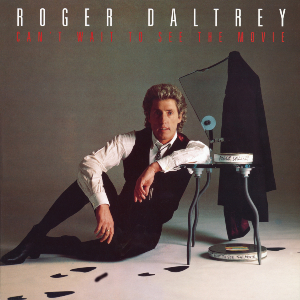
Roger Daltrey 8: Can’t Wait To See The Movie

While we can’t find the exact quote, we distinctly recall hearing an interview with Roger Daltrey around the time this album came out, saying that hearing the songs made him think, “I can’t wait to see the movie they’re from,” as if that were a good thing. Can’t Wait To See The Movie sounds like a stereotypically bad ‘80s movie soundtrack, all programmed drums, power chords, slapped and/or synth bass, and screaming saxes. As usual, he relied on outside songwriters for material, starting with his go-tos Russ Ballard and the otherwise unknown Kit Hain, and apparently Pete Townshend didn’t leave anything lying around for him, which is a shame.

Thinking back it seems like there were approximately a couple dozen different songs called “Hearts Of Fire” in those days, none of them very good. This one came very soon after a legendarily bad Bob Dylan cinematic vehicle, so at least there’s something of a tangential relation. “When The Thunder Comes” is overwrought with battlefield metaphors, while “Ready For Love” is nearly drowned out by a loud gospel-style choir. He wrote “Balance On Wires” himself with Don Snow, best known as the guy who replaced Paul Carrack in Squeeze; as one of the more understated tracks here it stands out, and in a good way, but it’s still too long at over six minutes. The choir returns to belt out the chorus of the sappy “Miracle Of Love” alongside him, but while he’s a decent actor, he simply can’t pull off the role of a sentimental fool.

Along the same basic theme, “The Price Of Love” is the long-awaited collaboration between schlockmeister tyrant David Foster and Night Ranger’s Jack Blades, who was a couple years away from Damn Yankees. (This was included on the soundtrack for that year’s Michael J. Fox vehicle The Secret Of My Success, which had a theme song written by the same pair, and performed by Night Ranger.) And while it may be that “The Heart Has Its Reasons”, that’s no excuse for aping the arpeggios of “Every Breath You Take” and its innumerable clones. Four writers are credited for “Alone In The Night”, one of whom wrote the lyrics for most of the songs from the Top Gun soundtrack. “Lover’s Storm” sports some good harmonies, but we can’t tell if those are by Roger or one of the ten people listed in bulk on the sleeve. Most curious is “Take Me Home”, a remake of a French song called “Cargo” from a few years before, with new lyrics.

The album was a sales dud, and rightfully so. Ironically, it did not include his cover version of Elton John’s “Don’t Let The Sun Go Down On Me”, as featured in the summer’s hit film The Lost Boys and on its soundtrack album—conveniently issued by the same label—which might have helped. Nor did it have “Quicksilver Lightning” from the year before, the theme for a Kevin Bacon movie nobody liked. These would have been prime candidates for inclusion when Can’t Wait To See The Movie was expanded in 2004 by the Wounded Bird label, which even fewer people needed.

Roger Daltrey Can’t Wait To See The Movie (1987)—1½

Friday, July 24, 2009

Bob Dylan 25: Saved

Anyone who saw the tour following Slow Train Coming knew that Bob’s new-found Christianity wasn’t a passing phase. In addition to the familiar songs from that album, he had a pile of new ones with similar themes, recorded quickly with the touring band, and thrust upon an increasingly dubious public.

Saved is not as strong as its predecessor, which isn’t fair to either. Much of the immediate criticism stemmed from the cover art, which was replaced on a later pressing with a more benign painting from the inner sleeve. “A Satisfied Mind” is a good warmup of a gospel song (known to anyone who had the second Byrds album), followed by the insistent title track. “Covenant Woman” is one of the better ones, something of an extension of “Precious Angel”. Unfortunately, “What Can I Do For You?” isn’t as successful. But the side closes with “Solid Rock”, a powerful number that keeps its evangelistic message beneath the groove. It’s a grower.

“Pressing On” doesn’t quite find its way over the lopsided rhythm, but he gives it a strong vocal delivery that encourages a growing dynamic sound. “In The Garden” could be sung by kids at Sunday school, provided they could get their heads around the verses; he wouldn’t truly nail it until he hooked up with Tom Petty and the Heartbreakers. “Saving Grace” is another contender for a gospel standard for anyone inclined to cover it. It would work very well outside of this album’s context, particularly since “Are You Ready?” doesn’t do much but repeat itself.

There are those that maintain that the recordings on Saved don’t do anywhere near as much justice to the songs as some of his live performances of the era. Indeed, Bob had allegedly compiled a live album around this time, to be called Solid Rock, but even his label was getting impatient for him to stick to rocking. It would take a future volume of The Bootleg Series to bring that music to light, including some of the other original songs he only performed on stage during that period. Beond that, the curious have these two albums to reconsider, or they can try 2003’s Dylan-endorsed tribute album that marketed the songs squarely at the contemporary Christian market.

Bob Dylan Saved (1980)—2½

Wednesday, July 22, 2009

Roxy Music 2: For Your Pleasure

Even when you’re trying to stand out from a multicolored crowd, it’s important not to shake things up too much. Bryan Ferry knew that, so most of the elements that made Roxy Music’s debut so startling are still in place on For Your Pleasure, right down to the model on the cover and the band’s own poses in the gatefold.

A terrific opener, “Do The Strand” exhorts the listener to try the latest dance craze for a variety of bizarre reasons, the most compelling being that “rhododendron is a nice flower.” If you think “Beauty Queen” has a menacing undercurrent, you ain’t heard nothing yet, especially since it evens out once the song proper starts. Plus, that cool double-time section is lotsa fun (cute reference to “sea breezes” too). “Strictly Confidential” also seesaws between drama and lilting falsetto, dragging things somewhat. Luckily, “Editions Of You” revives the better moments of the first album, ponding away at the riff with Eno finally getting a chance to unleash his beeps and whoops. It provides something of a sorbet before the debauched horror of “In Every Dream Home A Heartache”, wherein the ladies’ man expresses his devotion to vinyl. It’s worth sticking around once Phil Manzanera lets loose on guitar, even through the fake fade. (The subject was tackled with a little more humor a few years on by the Police.)

Eno has more room to wander on “The Bogus Man”, a nine-minute groove on one note that still manages to stay interesting due to everybody’s input. Once that sputters away, “Gray Lagoons” sounds almost carefree, reviving some ‘50s elements and even breaking down for a harmonica solo. The title track brings the mood back to dark, first taking its sweet time to get rolling, then wandering around the piano for far too long to the end, culminating in Mellotron and Judi Dench.

For Your Pleasure has to compete with the first album, and while it’s not as striking, it’s still worthwhile. We want to like it, if that helps. Eno’s own opinion was clear when he said “tarah tarah” to the band for his own feathered path, yet the others would soldier on.

Roxy Music For Your Pleasure (1973)—3

Tuesday, July 21, 2009

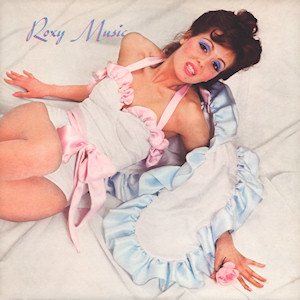
Roxy Music 1: Roxy Music

When they emerged, they were just plain goofy looking, and it’s hard to disagree today. Roxy Music was part greasy pompadour, part progressive, part glam, part outer space, and damn catchy. Looks weren’t everything; they had to sound good, and they did.

“Re-Make/Re-Model”, which opens their eponymous debut, might as well be the theme song to their imaginary TV series. After the sounds of a cocktail party, a piano establishes the rhythm before the band pounds it into submission. You can hear Bryan Ferry posing through his vocals, while Phil Manzanera solos like he’s trying to hit every fret on the neck at least five times. Andy Mackay honks his saxophone, and Brian Eno adds wacky synth effects seemingly at random. Everybody gets two bars to solo, including drummer Paul Thompson and bass player Graham Simpson, who would set a standard by leaving the band before the album was released.

The rest of the side does well to live up to the promise. “Ladytron” begins with a space landing and continues with an oboe solo before Ferry starts singing in a different key. Whether or not he’s trying to seduce a robot is just part of the fun, which continues big time on “If There Is Something”. Here the simple piano chording gets processed through a mildly country-western filter, then takes a darker turn through a descending riff wherein Ferry lists all the ways he’d show his affection, from climbing mountains to “growing potatoes by the score.” The music finds its way to a more comfortable resolution, and if you got the album in the US, the wondrous single “Virginia Plain” comes over the hill into Whoville like sleighbells. Elsewhere, “2HB” bubbles in next, with Casablanca references underscoring the actor’s initials in the title.

Side two isn’t quite as classic, and works a little too hard to be as epic. “The Bob (Medley)” is indeed a series of vignettes stuck together, with only the effects strewn throughout seeming to refer to the Battle of Britain (again, a pun of a title). A punk dirge makes up the first part, a heck of a chorus (“Too many times beautiful”) peeks out from somewhere, and peek from the other side of the window to a party we’re not invited to returns us to the dirge, and big tympani to end the suite. The lecherous creep in Ferry returns on “Chance Meeting”, his pitch leering over the piano while Manzanera unrolls sheets of distortion and feedback. “Would You Believe?” is a little more pleasant, a sweeter approach to seduction, even through the rave-up sax solo straight from the car hop. It’s a nice change of pace, since “Sea Breezes” is very slow and spare, Ferry sounding like a cross between Tiny Tim and Jeremy Hilary Boob. Another decent guitar solo sets up the middle section sung over the slowest drum solo you’ll ever hear. And just like closing credits, “Bitters End” sums up the cocktail party, our narrator sadly, drearily alone. Or something.

Until we can think of another word for it, Roxy Music is just plain goofy fun, particularly side one, which gets a major boost from “Virginia Plain”. That tune has gone on and off different reissues of the album, but sits squarely in sequence for the most recent super deluxe edition overseas, along with demos, outtakes, BBC performances, and a DVD with video clips and the obligatory 5.1 surround mix by Steven Wilson.

Roxy Music Roxy Music (1972)—3½
2018 Deluxe Edition: same as 1972, plus 15 extra tracks (Super Deluxe Edition adds another 14 tracks plus DVD)