Monday, May 31, 2010

Rolling Stones 20: Goats Head Soup

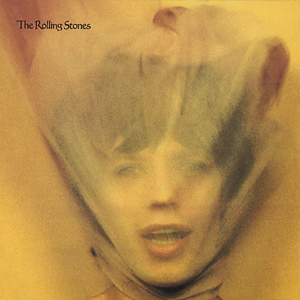
Goats Head Soup seems like a hangover, the dark side of the decadence so celebrated on the last couple of Stones albums. There’s an evil undercurrent here, and it doesn’t make for easy listening. Perhaps it’s the shrouded cover art; perhaps it’s the insistence that the album was recorded in Jamaica but there’s hardly any influence to be detected. That incongruousness is no more blatant than in “Winter”, which conjures mental images of snow, Christmas trees and harsh winds—hardly the stuff of a week spent recording in Kingston.

The darkness is apparent from the start, as “Dancing With Mr. D” takes place in a graveyard. “100 Years Ago” is a little schizophrenic, starting with a funky clavinet and changing gears halfway through with a slower section before delving back into the darkness. The tender “Coming Down Again” is a showcase for Keith and Nicky Hopkins, a lament over either infidelity, drug abuse or both. “Doo Doo Doo Doo Doo (Heartbreaker)” turns it back up, bringing in the funk, heavy on the keyboards and full of anger. Not content to let Keith tug the heartstrings all by himself, Mick delivers “Angie”, all tenderness and strings, with a whispered section that gets creepier every year.

“Silver Train” brings back the boogie, but “Hide Your Love” sounds like it was recorded on the spot. “Winter” takes over the center of the album, just as “Coming Down Again” did on side one; it transcends its few chords and perfectly captures an ache better than “Angie”. Even the strings work. “Can You Hear The Music?” was probably the only way to follow this, with its finger cymbals and faux-mystical lyrics. And just to prove they could still push buttons, “Star Star” relies on a certain four-letter word repeated about 97 times over a standard Chuck Berry riff to cause controversy.

Ultimately, Goats Head Soup is something of a disappointment, since it had to follow the stellar track record of all the amazing albums that have gone before. It’s still good, and highly recommended, but we can start to see the laziness that would be the brand’s trademark going forward.

With their usual strange idea of when albums should be upgraded, the 47th birthday of Goats Head Soup was commemorated with a new stereo mix by Giles Martin, seemingly on a break from all his work on Beatles box sets. A disc of “rarities and alternate mixes” in the Deluxe Edition delivered exactly that, including instrumental runthroughs and negligible alternates of “Dancing With Mr. D” and “Heartbreaker”, alternates of “Silver Train” and “Hide Your Love”, and a demo of “100 Years Ago”. Two of the best outtakes had long been part of Tattoo You, so only three unreleased songs are added to the program. Naturally “Scarlet”, featuring Jimmy Page on lead guitar, is of wide interest, but it was recorded by only Mick and Keith with Ric Grech on bass and another drummer in late 1974, nearly two years after the original Goats Head Soup album sessions, and over a year after the album had been released. “All The Rage” is a decent rocker with obviously brand-new vocals, and while Mick says he didn’t touch “Criss Cross”, it appears to have new percussion from Jim Keltner. (The pricey Super Deluxe Edition also offered, among artwork and a thick book, another CD containing Brussels Affair, the official bootleg of a 1973 concert previously only available via download or in an even more expensive box set.)

The Rolling Stones Goats Head Soup (1973)—3½
2020 Deluxe Edition: same as 1973, plus 10 extra tracks (Super Deluxe Edition adds another 15 tracks plus Blu-ray)

Friday, May 28, 2010

Rolling Stones 19: More Hot Rocks

The success of Hot Rocks—along with the Stones’ continued commercial viability—paved the way for its inevitable sequel a year later. More Hot Rocks took a different approach to the catalog, and not just by digging deeper. This is the set that separates the men from the boys, if you will. Casual fans may be happy with Hot Rocks in their racks, but when you see this one in someone’s collection, you know you’re dealing with an absolute Stones fanatic.

It starts out pretty straightforward. Side one features five singles that had already been included on Big Hits but left off Hot Rocks, anchored by “I’m Free”, which the band was still playing on tour in 1969. Side two is where the fun starts. “Out Of Time” gives way to “Lady Jane”, “Sittin’ On A Fence”, and “Have You Seen Your Mother, Baby”. Granted, these were all on Flowers, but they’re still some of the most underrated songs from their middle period. The side closes with the back-to-back psychedelic punch of “Dandelion” and the absolutely diabolical “We Love You”.

Back in the days of the record changer, sides one and four were on the same disc, paired with sides two and three. That made it easy to keep flipping back and forth between the middle of the More Hot Rocks program, for a non-stop trip. “She’s A Rainbow” and “2,000 Light Years From Home” continue the nightmare, but the absolute peak of the set is “Child Of The Moon”, a positively stellar track previously banished to a B-side. “No Expectations” and “Let It Bleed” close the circle acoustically.

Andrew Loog Oldham’s obtuse liner notes kinda explain side four, which consists of eight early tracks making their first US LP appearances. Most are from the very early days, and a few are surprising covers. This sequence is likely left over from the original idea to release an album of outtakes, which would turn into another unauthorized release a few years later. (Decades on, we’re still waiting for more unreleased material from this period.)

More Hot Rocks is pointedly not a hits compilation, but still a worthy addition to a Stones collection. The current CD sounds great, and even adds three further rarities, but if you want to enjoy that continuous flow from side two to three, you’ll have to burn your own.

Rolling Stones More Hot Rocks (Big Hits & Fazed Cookies) (1972)—4
2002 SACD remaster: same as 1972, plus 3 extra tracks

Wednesday, May 26, 2010

David Bowie 25: Tin Machine II

What little momentum Tin Machine had—and really, there wasn’t much, commercially anyway—was derailed by two factors: EMI dumped him for decreasing sales, and somehow he got talked into a tour under his own name to “promote” the Ryko rollout.

Tin Machine II emerged the following year on a Polygram subsidiary. It’s not as consistent as the first album, with tracks that go all over the place and two songs sung by the drummer. But it’s still not as bad as everyone said.

“Baby Universal” kicks everything off with shouted call-and-response vocals that don’t match. It’s a good start, but “One Shot” was the first single, and not a wise choice for promotional purposes. “You Belong In Rock ‘N Roll” brings back the classic brooding Bowie sound. He uses his voice to his advantage on “If There Was Something”, a strangely timed cover of a Roxy Music song. “Amlapura” is on the dreamy side, but doesn’t sink in; neither does “Betty Wrong”. Both sound more like ‘80s Bowie than the first Tin Machine album.

“You Can’t Talk” starts the second side, but is forgotten when “Stateside” kicks in. Sung by drummer Hunt Sales, it’s been lambasted for its inclusion, but its continual chord changes and Reeves’ surprisingly understated soloing (compared to the rest of the album, where he uses a marital aid) keep it interesting. “Shopping For Girls” adds some mystery, but “A Big Hurt” is just loud, and has nothing to do with Frank Thomas. “Sorry” is the other Hunt Sales song here, which most people hated even more than “Stateside”. “Goodbye Mr. Ed” is a very enigmatic end, not counting the instrumental burst after the song fades.

Tin Machine II was barely given a chance by critics or consumers. It wasn’t a great album by non-Bowie standards, but at least it made an attempt to rock. The band was on its last legs anyway, and limped through a final tour to promote an album nobody wanted. The largely pointless but still enjoyable Oy Vey, Baby live album followed a year later to universal apathy, not helped when the label went out of business. (If anything, it shows how well the other three navigated Hunt’s tempo issues.) And that was the end of Tin Machine—sad, really, considering the promise they once showed.

Tin Machine Tin Machine II (1991)—3
Tin Machine
Live: Oy Vey, Baby (1992)—3

Monday, May 24, 2010

Todd Rundgren 7: Todd Rundgren’s Utopia

Being a student of popular music, Todd noticed that for all its bombast and pretension, prog-rock had structure. After all, it wasn’t enough that ELP, Genesis, Yes and their ilk had to play those songs for hours on end; somebody had to write them first, right?At any rate, he’d already indulged in LSD during the writing/recording of his last three solo albums, and in doing that he saw a vision of a perfect world—a Utopia, if you will. He proceeded to recruit a regular backing band, with three keyboard players (although one, the improbably named M. Frog Labat, didn’t seem to do much more than add Eno-esque whoops and hollers to the proceedings) and a tight rhythm section for a project he named after his vision.

In true Todd fashion their first album ran over an hour on two sides. Todd Rundgren’s Utopia—the title made sure rack jobbers knew what they were selling—is tough going, but there are melodies to be found within the interminable movements.

“Utopia” begins part-way through a live performance and soon escalates into a jazzy shuffle with lots of wah-wah keyboards and guitar flourishes. And just when you think they’re going to wank themselves into a crescendo, a vocal section comes in, a lovely song within a song with a guitar solo to match. A return to the original theme closes the piece, complete with more wanking. “Freak Parade” is tightly constructed, with a stop-time intro and Zappa-style vocal punctuation, followed by a “pretty” section, a return to the intro and more verses that sound like Zappa distilled through, well, Todd Rundgren. “Freedom Fighters” is the most straightforward (read: radio-friendly) song here, and the one that sounds most like what people would expect—and come to expect—from him.

Of course, it wouldn’t be a prog album without a sidelong track, and “The Ikon” delivers thirty minutes crammed onto side two. Many of the same styles exhibited in “Freak Parade” are repeated here, with several rotating solos before the words begin. While the lyrical content is a bit obtuse, there’s no questioning the tightness of this band. A long jam turns into a jazz-funk extension not too far removed from Steely Dan, and there’s even a short burst played on woodblocks that Neil Peart must have heard before recording “Xanadu” with Rush.

Todd Rundgren’s Utopia isn’t a bad album, but it requires a lot of time and several listens to appreciate. He was at least providing lots of value for his fans’ money; only a certain breed would be willing to stick it out.

Todd Rundgren’s Utopia Todd Rundgren’s Utopia (1974)—2½

Friday, May 21, 2010

Rolling Stones 18: Exile On Main St.

For all the eternal debate among vinyl vs. CD, there’s no denying the convenience factor that the digital medium has brought us. An album like Exile On Main St. may sound better on a turntable, some say, but on a CD, you can leave it in for just over an hour’s worth of entertainment. On vinyl, you have to change or replay the sides every 15 minutes or so. Mick Jagger has suggested this was on purpose, that it’s not supposed to be digested all at once. It’s not the first time we’ve disagreed with him.

Exile On Main St. is testimony that Charlie Watts should be knighted. Even for the songs he didn’t play on. (It also reminds us to pester the Rock and Roll Hall of Fame about inducting Nicky Hopkins already.) It’s also the album that gets mentioned as a hallmark whenever the Stones put out a new album that’s supposed to recapture their old classic sound. It’s not necessarily their last “good” album (for instance, Tattoo You still holds up) but it certainly closes out a series that began four years earlier. Until the digital era it was their only double album, and while it may be a lot to take in at once, there isn’t much filler. Each of the sides are sequenced just right, even if that’s lost in the CD experience.

“Rocks Off” appropriately opens side one with a bang, which continues on “Rip This Joint”. The dirty blues take over for a cover of “Shake Your Hips” and “Casino Boogie”, before closing with “Tumbling Dice”. Linda Ronstadt’s version may cloud your opinion of the song, but the way the drums come back in for the fadeout is one of the most exhilarating moments on wax. (We had hoped it was Charlie, but sources insist it was producer Jimmy Miller, no slouch on the skins, he.) Side two is more or less country, starting with the acoustic “Sweet Virginia”. “Torn And Frayed” picks it up, “Sweet Black Angel” is an unnecessary tribute to Angela Davis, and “Loving Cup” brings Nicky up front where he should be.

Side three is the one to leave on the turntable for the most consecutive plays. Keith yells “Happy” (Jimmy Miller on the kit again), “Turd On The Run” and “Ventilator Blues” are incomprehensible, “I Just Want To See His Face” is a voodoo chant, and it all comes down to “Let It Loose”, possibly the most underrated Stones track. You’d think side four would be anticlimactic after all that, but “All Down The Line” brings another quintessential Stones riff to the table. “Stop Breaking Down” is one of the better Robert Johnson interpretations out there. “Shine A Light” swaps Billy Preston for Nicky and we’ll allow it, as the gospel feel truly benefits from his touch. (Supposedly this was written in memory of Brian Jones, which is a very sweet gesture, but the music was supposedly written by the uncredited Leon Russell, the omission of which tarnishes it.) “Soul Survivor” slams the door on the proceedings with a backwards riff.

The album’s 38th (?) anniversary was celebrated with a deluxe reissue, including ten unreleased tracks. Some were merely alternate takes—“Loving Cup” is slower, “Soul Survivor” is sung by Keith and “Good Time Women” is an early stab at “Tumbling Dice”—but the rest were vintage takes newly finished. The concept of Mick singing over old tracks is a little jarring, and none of the tracks are likely to supplant anyone’s least favorites from the original LP, but the spirit of the original sessions comes through, thanks mostly to Charlie and good old Nicky. “Pass The Wine” sounds just a little too new, but the horns help. “Plundered My Soul” captures the “Tumbling Dice” vibe nicely; it includes new parts by both Micks, yet “I’m Not Signifying” may well have been left untouched. “Following The River” is a nice piano tune derailed by strings. The flat vocals on “Dancing In The Light” pretty much prove they’re new, but we almost wish they’d been Auto-Tuned. We also can’t decide if the “Paint It Black” intro to “So Divine” should be excused, but the vibes and phased drums make it work. And it all ends with a brief instrumental featuring just Keith, Bill and Charlie, just the way it should be. (Except that most reports say it dates from 1967, so…)

At any rate, Exile On Main St. falls just short of five stars, but just writing about it makes us want to throw it on. It really is that good. Mick Taylor would stick around for two more albums, and then Ron Wood came in and never left. They’ve had their moments here and there since then, but rarely have they clicked so well. These days they’re a cash cow, and eccentric as ever. They’ll certainly never tour as a five-piece again, without all the horns and backup singers and big expensive sets, but for once, this album benefits from all the other people who helped out.

The Rolling Stones Exile On Main St. (1972)—4½
2010 Deluxe Edition: same as 1972, plus 10 extra tracks

Wednesday, May 19, 2010

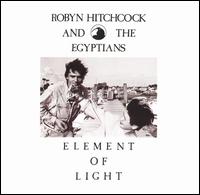
Robyn Hitchcock 6: Element Of Light

Element Of Light was Robyn’s most accessible album yet. The Egyptians still numbered four, but Andy Metcalfe was taking on a growing role by providing both production and the type of keyboards that Robyn liked.

“If You Were A Priest” starts off with a bang; this one got a bit of play on the alternative college stations. “Winchester” shows off a lot of the fluid bass sound on the album—some by Robyn, some by Andy. “Somewhere Apart” brings back the driving piano—this time bummed from John Lennon’s “Remember”, and vocally, it’s fairly Beatly too. “Ted, Woody And Junior” is one the most sympathetic portraits of the love that dare not speak its name. “The President” is an angry indictment of Reagan, and politicians in general.

“Raymond Chandler Evening” harkens back to the acoustic experiments on Trains and stays short before it gets tedious. “Bass” celebrates, not for the last time, fish (as opposed to the instrument). It fits nicely with “Airscape”, which uses a chord sequence that’s right at home on his Rickenbacker. “Never Stop Bleeding” has some clumsy lines, particularly the one about the sailor lashed before the mast. But he follows that with a modern interpretation of an Olde English folk song, the epic “Lady Waters And The Hooded One”.

The original Element Of Light CD included extra tracks, as was the style at the time. Of the four, “Tell Me About Your Drugs” is the best, with its shifting of band members on instruments. The Rhino reissue included all these, plus some demos and the hilarious four-part spoken-word piece “The Can Opener”; Yep Roc kept the four bonus tracks but substituted a new set of demos for the Rhino additions. It’s still a pretty solid album, but his best was still in him.

Robyn Hitchcock and The Egyptians Element Of Light (1986)—3½
1986 CD: same as above, plus 4 extra tracks
1995 Rhino reissue: same as 1986 CD, plus 5 extra tracks
2008 Yep Roc: same as 1986 CD, plus 6 extra tracks

Monday, May 17, 2010

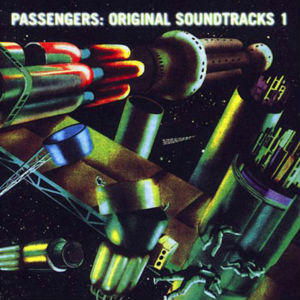
U2 10: Passengers

Following on from the idea of creating music for imagined films, this U2 side project could just as well be filed under Brian Eno, depending on the personal opinions of the handful of people who still own it. Instead of the more thematic title Music For Films 4, this highly experimental album was given the hopeful moniker of Original Soundtracks 1 and credited to a collective called Passengers. In reality it’s a full-on collaboration of Eno and U2, with the band appearing on all tracks and Bono singing wherever there are vocals, or just under half of the album.

“United Colors” bubbles in, an extended piece punctuated by turntable/tape effects and the occasional guitar. Bono’s voice emerges on “Slug”, and dominates on “Your Blue Room”—complete with the second-ever vocal appearance by Adam Clayton!—which would have been perfectly at home on Zooropa. “Always Forever Now” isn’t much lyrically, but luckily builds enough to surpass its similarity to Steve Miller’s “Swingtown”. “A Different Kind Of Blue” is a mostly Eno interlude before the almost romantic “Beach Sequence”.

Bono even gets out of the way to let Luciano Pavarotti to put his inimitable stamp on “Miss Sarajevo”. The song builds and builds to perfection, and the moment when the maestro takes over is just plain exhilarating. But from here, it’s a slow decline. “Ito Okashi” and “Two Minute Warning” sound more like Eno experiments, complete with Japanese vocals. Edge takes over for the plodding “Corpse”, which otherwise nicely evokes spy TV shows of the sixties. Then we come to possibly the most annoying track in their catalog: “Elvis Ate America”, something of a rapped duet with a guy named Howie B, and we’ll hear from him again, unfortunately. The three instrumentals that close the album seem almost unfinished, though “Plot 180” sounds like a Daniel Lanois track, “Theme From The Swan” could have come from Eno in Berlin, and listeners will spend most of “Theme From Let’s Go Native” waiting for the vocals to kick in.

To date there has not been a sequel to Original Soundtracks 1. While it was nice to have some new U2 material to ponder, fans looking for the next blockbuster were confused. They shouldn’t have been, unless they took the liner notes seriously.

Passengers Original Soundtracks 1 (1995)—3½