Friday, July 30, 2010

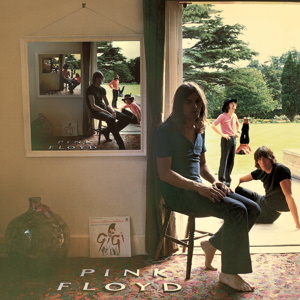
Pink Floyd 4: Ummagumma

Still somewhat trying to find out how to best transfer their sound to vinyl, Ummagumma shows Pink Floyd grasping at three well-served straws common to big acts: the live album, the double album, and the individual-statement-by-each-member.

The live portion is the most consistent, starting with an excellent version of “Astronomy Domine”. Even without Syd, the band takes the song into the stratosphere, with extended organ and guitar solos. “Careful With That Axe, Eugene” makes its first LP appearance, all one chord over bass octaves and a couple of screams. “Set The Controls For The Heart Of The Sun” and “A Saucerful Of Secrets” continue the band’s reputation as spacey freak-out improvisers, although the latter does get the gift of subtitles for each of the sections.

The success of each member’s solo spot comes largely from where you’d expect. Rick Wright’s “Sysyphus” is presented in four parts, beginning and ending with a blast of Mellotron. Rather than give us something pretty on the piano in between, he chooses to create musique concrète, banging the keys and hitting the strings cacophonically. Roger Waters takes over with the highly soothing “Grantchester Meadows”, an acoustic piece with pastoral lyrics and sound effects to match, right up until he starts chasing the fly around the studio. Having not had enough fun with tape experiments, he offers “Several Species Of Small Furry Animals Gathered Together In A Cave And Grooving With A Pict”, a showcase for bird imitations and thick Scottish ranting.

David Gilmour’s spotlight, “The Narrow Way”, is in three parts, consisting mostly of overdubbed guitars, but with more of an effort to be accessible, as might be expected. Part 1 is based around an acoustic strum in D with some tape effects, then Part 2 builds on a sinister electric riff. Part 3 is the keeper, a well-constructed song with buried lyrics that bring to mind the Rivendell scenes from The Hobbit and The Lord Of The Rings. Nick Mason gets the last word with “The Grand Vizier’s Garden Party”, a trying eight-minute piece for percussion and tape edits framed by some flute.

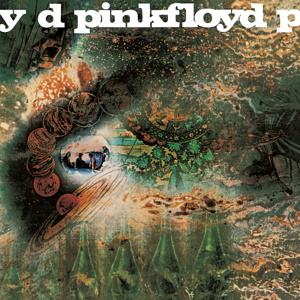
The best music on the two LPs can easily be distilled into a single set: side one, “Grantchester Meadows”, and “The Narrow Way”. Instead, Ummagumma would either convert the skeptical, or convince critics that this band was just too pretentious for their own good. Its sheer length keeps it expensive to this day, and if the band ever wanted to add more live material to a future reissue, it’s doubtful anyone would complain. The cover’s pretty cool, though.

Pink Floyd Ummagumma (1969)—3

Wednesday, July 28, 2010

Dire Straits 1: Dire Straits

There are certain songs that make a hell of an impression the first time you hear them on the radio. Sometimes it’s not that the musicians are doing anything new per se, but just that they’ve got a certain combination that sets them apart. One such example would be “Sultans Of Swing” by Dire Straits.

The song itself is pretty basic: a pub-rock song about a pub-rock band, namechecking all the alleged members, held together by a standard chord sequence, but embellished with a familiar yet original guitar sound. This infectious song was the first most people heard of Mark Knopfler, and his little band would soon carve themselves out a niche that took them from pubs to arenas in a relatively short amount of time. (And yes, it was his band.)

“Sultans” is the anchor of their eponymous debut, and chances are anyone who bought the album on the basis of that song were pretty pleased with the rest of it. In the midst of punk and on the cusp of New Wave, here was a band standing happily knee-deep in country influences with their own brand of what used to be called rock ‘n roll.

If there’s a complaint about the album, it’s that there isn’t much breadth between the songs. Once you get past that intro that takes you straight to the docks, “Down To The Waterline” is incredibly close to “Sultans”, right down to the little flourish amidst the guitar solo. “Water Of Love” is somewhat interchangeable with “Six Blade Knife”, as are “Setting Me Up” and “Southbound Again” with each other. (Maybe it’s the bass player’s fault, but someone in the studio should have noticed.)

Luckily, they’re all catchy tunes, with excellent lyrics providing a very British bent on country and blues sentiments that made Dire Straits one of the more “literate” bands of the era. (And like all good authors, certain themes and imagery would turn up again down the road.) If the first half of the album seems repetitive, side two compensates. “In The Gallery” sways close to reggae with a great switch of timing, “Wild West End” provides more wonderful imagery of a place we’d love to visit, and “Lions” is an inscrutable closer.

Dire Straits is an impressive debut, setting a standard upon which they could build. The production is crisp, clean and uncluttered, a nice live sound, letting the bass and drums lay down a foundation for that distinctive lead guitar. Their best work was still ahead of them, and proceeded directly from here. And isn’t it nice to hear a band that doesn’t blow it all the first chance they get?

Dire Straits Dire Straits (1978)—4

Tuesday, July 27, 2010

David Bowie 27: The Buddha Of Suburbia

With a sudden obligation to nobody, Bowie kept working, and something called The Buddha Of Suburbia snuck out at year’s end. Derived from work on the soundtrack to a TV adaptation of the novel of the same title, Bowie used it as an opportunity to explore and experiment over various musical themes, and ended up with one of the more satisfying if mysterious releases of his career.

Much of the album is instrumental, performed by himself with occasional collaborator Erdil Kizilcay. It also heralds the return of Mike Garson, who adds his distinctive piano style to two tracks. “The Mysteries” ranks with side two of both Low and “Heroes”, while “South Horizon” is jazzy and dynamic, and the extremely ambient (save the sound of vinyl surface noise) “Ian Fish U.K. Heir” is easy to tune out, quiet as it is.

But there are actual songs here, too. The title track appears twice—the second time embellished with superfluous guitar by Lenny Kravitz—and includes some pointed lyrical and melodic references to earlier Bowie tunes. “Strangers When We Meet” and “Dead Against It” are infectious, accessible pop tunes among his best, while the otherwise unintelligible “Untitled No. 1” comes closest to the dance groove of Black Tie White Noise without overdoing it. Even those with few lyrics past the ones in their titles (“Sex And The Church” and “Bleed Like A Craze, Dad”) capture the attention and bear repeat listening.

Even with only tangential connection to the film, The Buddha Of Suburbia was marketed in the UK as a soundtrack, which it wasn’t. The album wasn’t released in America for two years, until Virgin picked up his ‘80s catalog and lobbed it on the market with zero fanfare around the time of what was then his next Big Project. Even then, with a new cover but absolutely no context or explanation, it was mostly ignored, to everyone’s detriment. It remains truly worth seeking out, especially as proof that he wasn’t that lost at the time after all.

David Bowie The Buddha Of Suburbia (1993)—

Monday, July 26, 2010

David Bowie 26: Black Tie White Noise

Part of Bowie’s frustration with EMI was that they kept hoping he’d do another Let’s Dance. Considering the next two albums he’d given them both tried to be commercial and failed, they should have known it was unlikely to happen. (Tin Machine didn’t help either, apparently.)

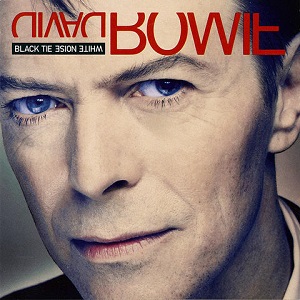
So it was somewhat alarming that ten years after Let’s Dance, he inaugurated his signing to a new label by reuniting with that album’s producer, Nile Rodgers, for Black Tie White Noise, a disjointed collection of barely-there songs with odd connotations. Bookended by music written for his wedding to the model Iman, much of the album veered close to the R&B dance remix scene, even in such misguided covers as Cream’s “I Feel Free”. (He must not have heard Belinda Carlisle’s version.) At least Morrissey’s “I Know It’s Gonna Happen Someday” was tackled somewhat straight, if winkingly, and “Nite Flights” was an uncanny and reverent interpretation of the obscure Scott Walker original. Sung with a weird accent, “Don’t Let Me Down And Down” was apparently a song by an Indonesian singer that was introduced to Bowie’s ears by his new bride, so there’s another sentimental aspect.

Mick Ronson put in one of his last appearances before his death, playing inaudible lead guitar on “I Feel Free”, as did Al B. Sure!, duetting on the title track (supposedly inspired by the previous year’s riots in LA) before his career went the same way. Another special guest was jazz trumpeter Lester Bowie, likely chosen for his prowess as for his name, who features throughout the album, and most pointedly on the instrumental “Looking For Lester”.

“You’ve Been Around” stands out as okay, possibly due to its placement near the start of the disc, but “Pallas Athena” is a mindless groove based around the same beats as every other track and the repeated sampled assertion that “God is on top of it.” With an annoying horn riff, “Miracle Goodnight” sounds like something Prince would reject. With the possible exception of the ultra-catchy “Jump They Say” (said to be a tribute to his schizophrenic half-brother who had committed suicide eight years previous) and the two versions of “The Wedding” (one instrumental, one vocal), the album is simply unmemorable at best, but grating if you’re not into dance music.

But even the people who were barely cared, and then the label that released it—his second in as many years—went under too, sending Black Tie White Noise out of print. It was re-released ten years later with a bonus CD including “Lucy Can’t Dance”, which was a bonus track on the original CD, “Real Cool World” from a forgotten movie soundtrack, and a pile of remixes, as if the album itself didn’t have enough beats on it, plus a bonus DVD documentary. Hindsight has not improved it in the slightest.

David Bowie Black Tie White Noise (1993)—2
2003 10th Anniversary Edition: same as 1993, plus 11 extra tracks (and minus 1 track) and DVD

Saturday, July 24, 2010

Who 21: Isle Of Wight and BBC Sessions

Following the box set, The Who’s labels got down to redoing the catalog, improving the sound and adding extra tracks. Live At Leeds was the first remaster, followed by second and third chances for most of the albums. In the middle appeared My Generation—The Very Best Of The Who, a single-disc replacement for what should have been Meaty Beaty Big And Bouncy, adding to a growing list of missing tunes. (Its rating below reflects the music therein, and doesn’t take into account the dozens of similar compilations that would appear over the decades to come.)

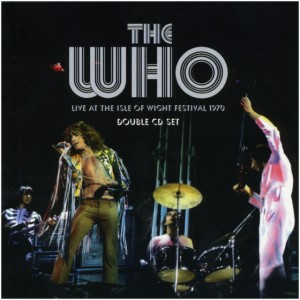
Surprisingly, Live At The Isle Of Wight Festival 1970 came out on another label in 1996, thanks to a legal hurdle that had been jumped. This was the Who six months after Leeds, with a cache of new songs that were supposed to be the next album. “I Don’t Even Know Myself” and “Water” are lengthy expansions, and “Naked Eye” has developed into a full-fledged song out of the “My Generation” improvisations. “Shakin’ All Over” goes into “Twist And Shout”, yelled by John. More importantly, it includes Tommy in sequence, but split across two CDs. It’s a more confident show, if a little muddy, and still no substitute for Leeds.

By the end of the decade, most of the catalog rejigging had been completed, with the exception of My Generation, held up in litigation with the original producer, who wasn’t going to let the tapes go for less than a fortune. While waiting for that mess to pan out, the record industry’s BBC fixation took over.

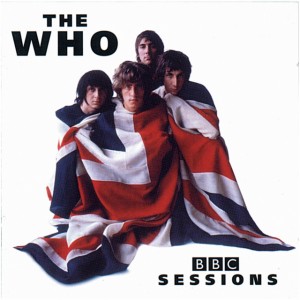
Like all struggling British bands, The Who made several appearances early in their career on the BBC’s pop radio programs. Many—but not all—of those recordings are included on BBC Sessions, which had already been beaten to certain shelves by some very comprehensive bootlegs. Still, there are some exclusive songs and some powerful versions of familiar songs before spinning to an abrupt end. “Good Lovin’” appears nine months before the hit version by the Young Rascals, while “Just You And Me, Darling” is another homage to James Brown. Even stranger, “Dancing In The Street”—yes, the Motown classic—gets a runthrough as well. Two versions of “Substitute” are here, one in the original single arrangement, and a later one in the shorter Leeds style. The disc ends with a pair of performances from BBC television, a funky take on “Relay” (a current single) and the then-unreleased “Long Live Rock”, where Pete blows the third verse. (The Best Buy chain had an exclusive bonus CD, containing an interview and some more BBC recordings of dubious origin, including a take of “I Can See For Miles” with a new bass line mixed up high.)

The Who My Generation—The Very Best Of The Who (1996)—4
The Who
Live At The Isle Of Wight Festival 1970 (1996)—3
The Who
BBC Sessions (2000)—3

Friday, July 23, 2010

Pink Floyd 3: More

Somehow, despite nothing suggesting blockbuster record sales, Pink Floyd managed to get the attention of a French director who wanted them to compose the soundtrack to his latest film. More is generally described as a “cautionary tale” about the perils of heroin addiction, and it’s highly likely that the only people who’ve bothered to watch it in the past forty years are Floyd fanatics.

“That’s to be expected,” you remark, “but what about the music?” Well, on this album the band (identified on the cover as The Pink Floyd) are still finding their way. “Cirrus Minor” opens with bird sound effects and a spooky melody sung over acoustic guitar and a squeaky organ, before “The Nile Song” comes blasting in. It’s a very rocking song, with a great guitar sound and a powerful vocal; it’s just too bad that the lyrics are so stupid. “Crying Song”, by contrast, is very gentle, built around another acoustic guitar and vibes, and with a subtle slide solo. It points the way to their patented style, as does “Green Is The Colour”. Unfortunately, the two are separated by “Up The Khyber”, a two-minute drum solo decorated with dissonant keyboards. The very well constructed “Cymbaline” shows Roger Waters growing as a songwriter, matched by David Gilmour’s voice.

The remainder of the album—starting from the bongo-driven “Party Sequence”, which closes side one—is mostly instrumental, with just one real song. “Main Theme” goes nowhere for the most part, rambling over a spy riff. “Ibiza Bar” is a variation on “The Nile Song”, with some interesting Beatlesque harmonies buried underneath. The aptly titled “More Blues” is a slow distraction, mostly led by Gilmour while the band joins in from time to time. Rick Wright’s “Turkish delight” organ approach takes up the bulk of “Quicksilver” (subtitled “Water-Pipe” on the label), a meandering nightmare along the lines of “A Saucerful Of Secrets”. The album’s nadir is “A Spanish Piece”, wherein what could be a showcase for gut-string guitar is torpedoed by an ethnically offensive vocal. At least it’s short, and you can always skip to “Dramatic Theme”, which is an extension of “Main Theme” but with more guitar.

It was, after all, a soundtrack, so they were concentrating more on moods than songs, and More remains one of the lesser Pink Floyd releases. Which is too bad, since some of the tracks, especially those on side one, are perfect for laid-back listening. The band was concentrating more on live performances anyway, and had constructed a few suites built from old and new songs that showed off their musicality much better than their albums could. Their dominance of the format was still a ways off.

Pink Floyd Original Motion Picture Soundtrack From The Film “More” (1969)—

Wednesday, July 21, 2010

Pink Floyd 2: A Saucerful Of Secrets

Syd was on the way out, figuratively and literally, by the time the Floyd’s second album was completed. A Saucerful Of Secrets suffers in comparison to its predecessor, if only because he’s not really there—with one key exception.
Rick Wright seems to dominate the album, with two of the better songs—“Remember A Day”, which was a single, and “See-Saw”, which wasn’t. Both seem to reflect nostalgia for childhood, or at least the past.

Roger’s songwriting hasn’t really caught fire yet. “Let There Be More Light” is an attempt at being spacey, contrasting the quiet but foreboding verse section with the louder chorus sung by newcomer David Gilmour. “Set The Controls For The Heart Of The Sun” is a better experiment, its minimalist structure giving the band plenty of room to improvise, and did they. The title track is even more free-form, giving everyone a chance to stretch. “Corporal Clegg” is the first instance of his lifelong obsession with the casualties of war.

The highlight of the album, however, is all Syd’s. “Jugband Blues” is his farewell, with sardonic lyrics about his station in the band and uncertainty about his future. The structure of the song is typically stilted, winding up into a Salvation Army band solo that gets sucked into emptiness, leaving only Syd and his acoustic. It’s a remarkable recording.

A Saucerful Of Secrets shows Pink Floyd finding their way, both between old and new guitarists and trying to figure out just what kind of band they were. Its inclusion in 1973’s A Nice Pair guaranteed well-deserved exposure, but ultimately kept it in competition with The Piper At The Gates Of Dawn. While there are some great moments, it remains a transitional work.

Pink Floyd A Saucerful Of Secrets (1968)—3