Friday, September 30, 2011

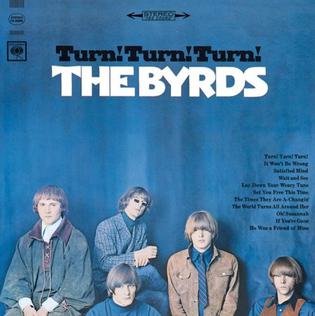
Byrds 2: Turn! Turn! Turn!

Back when bands used to put out two albums a year—the luxury! Can you imagine?—it wasn’t common for said bands to screw with the formula too much. That’s how the Byrds’ second album gave the kids what they wanted: 12-string guitars, pristine harmonies and a couple of Dylan covers.

But they were smart guys, so Turn! Turn! Turn! wasn’t a complete retread of their debut. It helped that the title track was a huge hit, borrowed from a Pete Seeger arrangement of some Bible verses. “It Won’t Be Wrong” was left over from their earliest days trying to get a record deal, but “Set You Free This Time” stands out with Gene Clark’s rugged yet right lament on lost love. Listen for his mournful harmonica on the fade. It’s to the band’s credit that they managed to cover a previously unheard Bob Dylan song, the majestic ode to music of “Lay Down Your Weary Tune”. The boys do a nice job finding harmonies for it, and somebody thought it was a good idea to bring Chris Hillman’s bass all the way up in the mix. Another stretch comes with the updated adaptation of the old folk song “He Was A Friend Of Mine”, which directly references the Kennedy assassination.

Another Gene Clark classic starts off side two in “The World Turns All Around Her”, framed by all those interlocking 12-strings. There’s a detour into a cover of another folk chestnut, “Satisfied Mind”, before we go back way left field for “If You’re Gone”. This song is, yes, another masterpiece by Gene Clark, a sad goodbye over unresolved harmonies that add an other-worldly air to the Eastern-sounding guitar. Unfortunately the effect is killed by a rather tepid run through “The Times They Are A-Changin’”, and “Wait And See”, the first David Crosby song credit on a Byrds album, is just okay. In keeping with tradition, they end with a gag: this time it’s a folk-rock rendition of “Oh! Susannah”.

Turn! Turn! Turn! is still a good album, and shows off their progress as a tight band, but it still amounts to some water-treading. What was missing is apparent on the upgraded CD. First, there’s “The Day Walk”, occasionally subtitled “Never Before”, an incredible song surpassed in its untimely sophistication by the wondrous “She Don’t Care About Time”, which had been relegated to a B-side. It should come as no surprise by now that both of these songs were written by Gene Clark, whose quality of work was obviously starting to intimidate the more headstrong full-time guitar players in the band. It’s a matter of taste whether McGuinn’s Bach-flavored solo on the latter song was a good idea or just him trying to steal some limelight. A different arrangement of “The Times They Are A-Changin’”, an unreleased take of Dylan’s “It’s All Over Now, Baby Blue”, a couple of alternate takes and a song that never got vocals, “Stranger In A Strange Land”, round out the bonuses, bringing up the disc’s value greatly.

The Byrds Turn! Turn! Turn! (1965)—3
1996 CD reissue: same as 1965, plus 7 extra tracks

Wednesday, September 28, 2011

Lou Reed 17: New Sensations

There’s something so joyous about an incredibly stupid song, particularly when it comes from someone with loftier ambitions. (Think “Happy Jack” and “Bang On The Drum All Day”.) That’s why, after years of preaching to a small choir, Lou Reed suddenly had a huge radio hit with a three-chord trifle called “I Love You, Suzanne”, with an opening couplet that stole the hook from “Do You Love Me” by the Contours and even spawned a music video complete with stunt double.

The tune opened New Sensations, a somewhat modern-sounding album that actually charted. Backup singers, some part of Jim Steinman’s go-to crew, add touches, making it sound a little too modern. The production is bright, as are the guitars, all but a few of which are played by Lou. The rhythm section of Fernando Saunders and Fred Maher remain in place, but Robert Quine was long gone.

The simplicity of the band keeps the album fresh, even if it doesn’t break much ground. “Endlessly Jealous” follows “Suzanne”, making up in chords what it repeats in the lyrics. “My Red Joystick” ties in with his strange pose on the cover, though it doesn’t mesh in the kiss-off to an ex-lover and various postulations about Adam and Eve; better to concentrate on the continual soloing over the single chord. “Turn To Me” is built on an archetypical Lou riff, and stacks a series of odd verses pledging devotion to unnamed individuals going through all kinds of unfortunate events. The title track ends up an homage to his motorcycle, which was also reflected in his endorsement deal for Honda scooters all over TV that year.

L. Shankar’s violin provides an exotic bent to “Doin’ The Things That We Want To”, which forces rhymes out of his appreciation for Sam Shepard plays and Martin Scorsese movies. The New York theme continues on “What Becomes A Legend Most”, pairing the tagline from a well-known pro-fur coat campaign with the type of chamber pop recalled from Transformer and Berlin. “Fly Into The Sun” embraces nihilism, while “My Friend George” discusses a friend who apparently did the same to violent ends. “High In The City” goes back to celebrating the simple pleasures of Manhattan, as does “Down At The Arcade” (or “The Great Defender”, depending on which pressing you have) in its own way. We can get Lou being fascinated by video games, but the delivery here comes off as pointedly cartoonish.

So while “I Love You, Suzanne” is definitely the high point to which the other songs fail to match, New Sensations still sounds like he put some effort into it. Again, not a classic, but not embarrassing.

Lou Reed New Sensations (1984)—3

Tuesday, September 27, 2011

Lou Reed 16: Live In Italy

RCA Records had history on its side, but promotion and art direction weren’t always their strengths. Their budget reissues looked cheaper than the cardboard they came in, and annotations tended to be at a minimum. Yet for all the ways they’ve repackaged Lou Reed’s catalog over the decades, it’s odd that one of his most acclaimed albums worldwide has never been properly released in the U.S.

Live In Italy captures the band that had just recorded Legendary Hearts, a straightforward, tight combo with Robert Quine on guitar alongside the boss, Fernando Saunders on bass, and Fred Maher on drums. The set leans heavily on the standards, from “Sweet Jane” to “Walk On The Wild Side”—most of which had already been on one or two previous live Lou albums—with songs from the new album and The Blue Mask, and even a few from Sally Can’t Dance. Quine apparently insisted that they play more obscure (for the time) Velvet Underground material, and since he was still in Lou’s good graces, that’s how we get a lengthy amalgamation of “Some Kinda Love” and “Sister Ray”. The band’s tight and Lou’s in good voice; he even manages throw in a couple of lines from Stevie Wonder’s “Uptight” at the end of “Rock & Roll”.

The album did make it over here as an import, under different covers and alternate titles that sometimes came off like bootlegs. But even when the digital era dug all kinds of things out of the backs of closets, and Lou became even more of a commercial icon, Live In Italy remained a foreign pressing only. It can now be streamed from the usual places, which is how we finally got around to hearing it, just as all Lou fans should.

Lou Reed Live In Italy (1983)—3

Monday, September 26, 2011

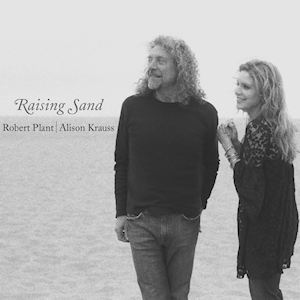
Robert Plant 10: Raising Sand

To the astonishment of everyone, Robert Plant managed his biggest critical success in years—if not ever—for his collaboration with Alison Krauss on Raising Sand. Much of the success can be attributed to hip roots music producer T Bone Burnett, who’d already sold millions and got a Grammy for his work on the O Brother, Where Art Thou? soundtrack. The sound sits somewhere between that, a Daniel Lanois production, and a Tom Waits album, and not just from using some of the same musicians.

Alison Krauss has one of the sweetest, clearest voices in music, not to mention that she’s a cute as a box full of buttons. She’s also a great fiddle player, which takes a back seat to the songs. The selections run the gamut from bluegrass standards to newer folk nuggets. One exception, amazingly, is “Please Read The Letter”, a song first heard on the Page/Plant album and here taken at a much more contemplative pace. “Trampled Rose” is a more recent Waits tune, and “Sister Rosetta Goes Before Us” sounds like one, but it was written by Sam Phillips, the former Mrs. Burnett. (Alison nails both.) Her gender-bent take on “Let Your Loss Be Your Lesson” shows a hot R&B streak.

Two Gene Clark songs come from the second Dillard & Clark album, and they’re exceptional, though we can do without yet another version of “Fortune Teller”. The track that got the most exposure was the chugging “Gone Gone Gone (Done Me Wrong)”, which sounded the most like something like Robert might have sung earlier in his solo career. Most of the songs are duets, starting with “Rich Woman”, and they blend nicely. “Stick With Me Baby” is another tender one.

What’s especially impressive is the development of Robert’s voice as he’s aged. For a tangential comparison, consider the recent sounds of Bob Dylan, who finally stopped yelling like he did through most of the ‘80s and got more comfortable in the lower register. That kept his voice from getting worse until just recently. Robert’s done that too; he doesn’t go for the high notes at all, and instead has made the most of the notes he can reach. His near-whispered take on Townes Van Zandt’s “Nothin’”, for instance, is well matched to the stark horror of the arrangement.

Raising Sand is the culmination of his work since the turn of the century, immersing himself in older folk and country songs and reinterpreting them in fresh ways. Not only did it win five Grammys, but it kept him interested in doing absolutely anything besides heeding the inevitable calls for a Zeppelin reunion. It’s a special album; not about to replace the band that spawned him, and far from embarrassment.

Robert Plant | Alison Krauss Raising Sand (2007)—4

Sunday, September 25, 2011

Lou Reed 15: Legendary Hearts

Having apparently remembered less is more, Lou kept to mostly the same formula on Legendary Hearts, but with two key changes. Fred Maher joined on drums, and would go on to anchor several of Lou’s better albums going forward. Also, while Robert Quine is credited on guitar, he would go to his grave insisting that much of his lead work was minimized out of spite, jealousy, or some unforgivable indiscretion. Whatever the truth, the album is missing an edge, forcing us (once again) to focus on the auteur’s words, vocals, and melodies, mostly concerned with sobriety and marital bliss.

An atmospheric wash belies the basic combo backing on the title track, a strong meditation at the wonder of the glory of love with an original view on what might have befallen Romeo. The rant “Don’t Talk To Me About Work” may be defended as a monologue in character, but it only works when one considers that Lou actually did have a few office jobs in his time. “Make Up My Mind” (spoiler alert: he can’t) wanders along, a decent set of changes seeking a better subject. Another character emerges in “Martial Law”, a mildly funky track that brings something of an ironic solution to domestic violence. “The Last Shot” refers mostly to drink, but could also be drugs or a metaphor in general. The chords, though simple and familiar, make the song memorable. (Likewise, “Bottoming Out” on the other side uses the old I-vi-ii-V change and doubles the title in terms of both drink and motorcycles.) With a simple sleepy groove, “Turn Out The Light” has a welcome change in delivery, closer to his ‘70s slur but more assured somehow.

While the main message is “I wanna dance with you,” “Powwow” is just plain strange, lyrically. Only years after he skewered racial stereotypes in “I Wanna Be Black”, what we to make of a romantic song that references fire water, teepees, arrows and scalping? “Betrayed” could use a little more development, seeming to portray a man in a relationship with a woman with severe daddy issues, unless we’re missing something really obvious. “Home Of The Brave” is long and slow, a tribute to various friends who’ve either settled down or died as he contemplates his own happy life. While it comes to a grand close, and would be a fine ending, the slight “Rooftop Garden” is seemingly tacked on to underscore the point.

At this point in an arduous career, Lou could be commended for releasing an album that wasn’t pointedly bad, and Legendary Hearts can’t be called that. It’s not as strong as The Blue Mask, but it remains one of his better unknown albums.

Lou Reed Legendary Hearts (1983)—3

Friday, September 23, 2011

R.E.M. 8: Out Of Time

After their longest absence yet, Out Of Time sent R.E.M. thoroughly in to the stratosphere. It still had its weird moments, but concentrated more on straight pop with lighter touches—like chamber string arrangements—to truly appeal to the masses.

That’s not to suggest it would be confused with anything else on the pop charts. The very first sound we hear is KRS-One’s spoken intro to “Radio Song”, which blasts the current state of the broadcast medium. The song alternates between a standard arpeggiated section and a funky organ-based rant, with more KRS-One. The striking first single was “Losing My Religion”, and it’s easier to maintain one’s interest by continually embellishing it with different lyrics (“It’s bigger than you and you’re not that big… that’s me in the bathroom, that’s me in the driveway… consider this, consider this a divorce… every waking hour I’m flossing my bicuspids, brushing my incisors… I thought I heard you sing, I tawt I taw a puddy tat…”) “Low” provides the old swampy R.E.M. sound, though we still scratch our heads to the repeated lines about “love”. Contemporary interviews said this was their first album that dealt with the topic of romantic relationships, but if that’s the case, what the hell was Reckoning about? Anyway, “Near Wild Heaven” brings back the sunshine on a song led by Mike Mills; one can’t see Stipe contributing much to this beyond the “ba-ba-ba-bah-bah-bah” chorus. The nearly instrumental “Endgame” resembles nothing too far removed from “please stand by” music on PBS.

Even the band never wants to hear “Shiny Happy People” again. This album’s equivalent to “Stand”, it has been only slightly redeemed by Sesame Street’s revision. “Belong” is an extended jam started on the last tour, a distant cousin of “Superman” giving Stipe a reason to think he could recite his poetry without having to worry about melody. “Half A World Away” reprises the organ and mandolins in something of a retread of “Losing My Religion”. Mike Mills takes the lead again on “Texarkana”, which sports a strong resemblance to latter-day Moody Blues. “Country Feedback” is one of those songs that divides people, and rightfully so. It’s a simple four-chord sequence, repeated with distortion and feedback, layered with pedal steel guitar and Stipe’s stream-of-consciousness vocals, the latter of which would become a growing trend. Our favorite is still “Me In Honey”, a simple strum with a catchy beat, Kate Pierson’s moaning counterpart and an unresolved lyric about a life choice. With all their talk of “progression”, this song is classic R.E.M. just like we want them: guitar, bass and drums with vocals.

As with anything that became hugely popular in the early ‘90s, familiarity has lessened Out Of Time’s excitement over the past two decades (good Lord), but boy, did it sound great when it came out. The boys also didn’t tour behind it, so we were left to scramble to watch any TV appearances, which probably heightened the excitement. These days it seems a little too sunny, and we can forgive that. It didn’t emerge in the friendliest of atmospheres.

It was another one of those albums that made us feel very old once its 25th Anniversary Edition came out. The bonus disc was filled up with what the packaging called demos, but are better described as early versions, mostly without lyrics. That means two more versions of “Losing My Religion”, “Shiny Happy People”, “Near Wild Heaven”, and “Texarkana” (one of which has Stipe singing a completely different set of lyrics) and three of “Radio Song” (one of which has Bill Berry singing the other parts). There is one otherwise unfinished “rocker”, but slightly more interesting, and less tedious, is the expensive package, which adds most of their appearance on the Mountain Stage radio show plus the obligatory 5.1 surround mixes and video artifacts.

R.E.M. Out Of Time (1991)—
2016 25th Anniversary Edition: same as 1991, plus 19 extra tracks (Deluxe adds another 15 tracks and Blu-ray)

Wednesday, September 21, 2011

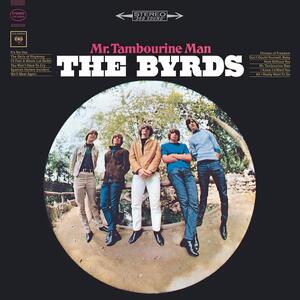
Byrds 1: Mr. Tambourine Man

In hindsight, it was highly improbable that the Byrds would have left such an indelible stamp on rock history. They were basically a bunch of folkies who, after seeing A Hard Day’s Night, realized they could make more money by emulating the sounds of the British Invasion. Jim McGuinn (as he was then known) took a shine to the 12-string Rickenbacker he saw George Harrison playing in the movie, so that was different. David Crosby got himself a 12-string too, but chose to concentrate on rhythm and high harmonies. Gene Clark wrote a bunch of songs but was relegated to tambourine onstage. Chris Hillman, previously a mandolinist, learned the bass quickly enough, and Michael Clarke’s haircut got him in the band as long as he learned his way around a drumkit.

Another marketing angle that would have backfired on anyone else was their access and interpretation of Bob Dylan’s songs. While the Byrds weren’t explicitly responsible for his going electric, their amplified renditions certainly proved that his appeal went far beyond the coffeehouse. As a result, folk-rock was invented.

In addition to the title track—which artfully chopped the song down from its four verses into a simple, catchy chorus-verse-chorus format—Mr. Tambourine Man offers three other Dylan classics previously known in their acoustic renditions on Another Side Of Bob Dylan. “Chimes Of Freedom”, “All I Really Want To Do” and “Spanish Harlem Incident” each gain a little something from the blend of electricity and harmonies.

To prove they were more than a jukebox, half of the album was devoted to the boy-meets-girl-loses-girl songs written by Gene Clark. The most famous is still probably “I’ll Feel A Whole Lot Better”, noticeable from its opening suspended-A strum and its carbon-copy cover by Tom Petty. That said, “Here Without You”, “It’s No Use” and the others prove that he (and the band) were capable of creating commercial pop. Another nod to their folk routes came in their stellar arrangement of Pete Seeger’s “The Bells Of Rhymney”, which itself foreshadowed a later hit. And for another strike for the counterculture, the set closes with a cover of Vera Lynn’s “We’ll Meet Again”, riding the irony of its status as a wartime lament.

If there’s a clunker on the album, it’s “Don’t Doubt Yourself, Babe”, which they didn’t write but cheerfully recorded as a favor. But thanks to those great singles, the chiming Rickenbacker and those stellar harmonies, Mr. Tambourine Man remains a solid album. When their catalog was revamped in the mid-‘90s, there wasn’t much to add outside a few alternate takes. But Gene Clark’s “She Has A Way” deserved better than to be left in the vault, and to prove that these guys could play (despite the studio musicians used on the single) the updated CD now ends with an instrumental backing track to a song never finished.

The Byrds Mr. Tambourine Man (1965)—
1996 CD reissue: same as 1965, plus 6 extra tracks