Monday, October 31, 2011

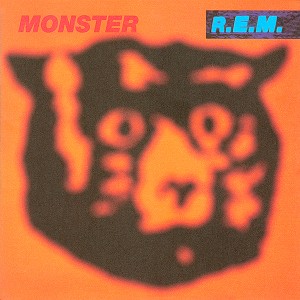
R.E.M. 10: Monster

Their audience was growing up, and that sometimes means things get left behind. Looking back we really do think that R.E.M.’s rot set in when Michael Stipe started shaving his head—sometime between the last video filmed for Automatic For The People and the first video filmed for its highly anticipated and ultimately disappointing follow-up.

Full disclosure: the first thing we heard from this album was catching the last few seconds of “What’s The Frequency, Kenneth?” on MTV, back when they used to play music videos in between Rocking the Vote and Real World marathons. The thing is, we didn’t know it was R.E.M; we saw the bald guy and just assumed it was Midnight Oil.

It was, and still is a pretty good tune, complete with garbled lyrics and a backwards guitar solo. It certainly rocks, setting the tone for the rest of the album. Monster is a striking contrast to its mostly acoustic predecessor, and it’s been suggested that the deaths of friends Kurt Cobain and River Phoenix fueled the anger that inspired them to turn up the volume. Whatever the truth is, the album is an assault, and it hurts.

The same tremolo guitar continues throughout the album, starting with “Crush With Eyeliner” and its unfortunate cameo by Thurston Moore, itself a gesture that if you don’t get it, you’re just not cool. “King Of Comedy” sputters along with a monotonic vocal and flat drumming. “I Don’t Sleep, I Dream” sounds like a work in progress, with typical arpeggios and a lack of melody. “Star 69” is a step in the right direction, a straight-ahead punk rocker with a title that too many people get, lessening any mystery. Critics pointed to “Strange Currencies” as a relative of “Everybody Hurts”, which is lazy. It appears to be something of a love song.

The same can be said for “Tongue”, sung in an unfortunate falsetto over piano and organ. It wanders along before finally petering out. “Bang And Blame” is the bastard child of “Losing My Religion” and “Orange Crush”, which is probably why it’s catchy. (Actually, we wouldn’t mind hearing more of the snippet that appears before the next song, “I Took Your Name”, which sounds too much like everything else on the album.) “Let Me In” is supposed to be the Cobain tribute, but relies on pure loudness and no drums. “Circus Envy” might benefit from a mix that reduces the snottiness quotient on the guitars, and “You” is a decent closer (they were always good at those) but again, the pulsating fuzz is a distraction.

We’re not alone in our disdain of Monster; you can find several duplicate copies of it in any used CD rack. We have tried to like this album and have failed miserably. It’s possible that these songs would stand out better if they weren’t all on the same album; taken all together they make a noisy mess. There are people who still stand behind this album, but we can’t.

This conundrum was addressed for the album’s 25th anniversary by pairing the original Monster mix with a brand new remix by producer Scott Litt. For the most part, the album is an easier listen, with a lot of the abrasion sanded off. Some of the overhauls are striking; Thurston Moore is way down the mix on “Crush With Eyeliner”, “Strange Currencies” has room to breathe, “Let Me In” is stripped of all reverb. Overall, the mix helps the songs stand out on their own; the lyrics are discernible and the drums sound terrific. However, it doesn’t make us dislike the album less. (The Deluxe Edition added a complete Chicago show from 1995 dotted by off-key vocals on two discs, a Blu-ray with the album in hi-res and surround plus the Road Movie concert film and all the music videos, and a disc of demos of ideas that didn’t make it to the final lineup of the album. Many of these are instrumental and sound very promising, somewhere between the jangle of Reckoning and the open sound of Lifes Rich Pageant, busting the mythology that they began the sessions armed with distortion pedals. That the ideas went unused—with the exception of one song finished ten years later and another four years after that—is just as frustrating as the album that resulted.)

R.E.M. Monster (1994)—2
2019 25th Anniversary Edition: same as 1994, plus 12 extra tracks (Deluxe adds another 40 tracks and Blu-ray)
Friday, October 28, 2011

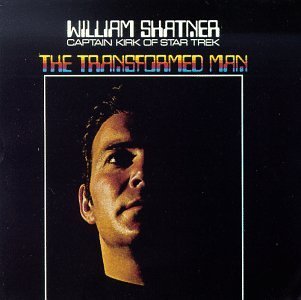
William Shatner: The Transformed Man and Has Been

There are several theories as to how it happened, but whatever the real story, William Shatner did indeed record an album at the height of Star Trek’s original prime-time run. Unlike other TV stars, he didn’t attempt to sing on the album, instead using his theater-trained voice to recite words over a not-so-hip backing. (By contrast, Leonard Nimoy put out five albums in the late ‘60s, and sang on each one of them.)

Shatner intended The Transformed Man to explain a journey of sorts, illustrated by juxtapositions of poetry and Shakespeare soliloquys with modern pop lyrics. The theater pieces are pompous enough, but he sounds a little drunk on “It Was A Very Good Year” and “How Insensitive”, and downright crazed on “Lucy In The Sky With Diamonds” and “Mr. Tambourine Man” (still the greatest-ever version of that song, if only for the final three seconds).

The album wasn’t a hit in the slightest, but gained notoriety over the years as an example of what ego and possible proximity to hallucinogenics can achieve. Once Rhino Records included a couple of tracks on their first Golden Throats album of actors singing badly, it was plucked from obscurity, much to its creator’s chagrin.

So is it really a bad album? That’s a matter of opinion. We feel that it belongs in the “so bad it’s good” category, and used to enjoy playing it on late nights at the CD store to see what customers would stay and who would leave. (The same experiment was performed using Bob Dylan, Neil Young and Frank Zappa.)

Once Bill decided to embrace his camp status, he started making the rounds of snarky comedy shows working his monologue magic, and used his status as the Priceline spokesman to do a series of ads in a faux-coffeehouse setting with Ben Folds in the band behind him. When he was approached by a Rhino offshoot to do another album, Shatner turned the tables by not only agreeing, but embracing the chance to make a sequel of sorts.

Has Been once again features the man on the microphone, but speaking mostly his own words. Ben Folds produced the album, wrote the music, and fostered the other selections—like the opening track, a hilarious cover of Pulp’s “Common People” that turns into a duet with Joe Jackson halfway through. Brad Paisley stopped writing songs about fishing long enough to contribute “Real”, a profound meditation on public image. And novelist Nick Hornby provided the lyric for the melancholy “That’s Me Trying”, one side of a conversation with an estranged daughter with choruses filled out by Folds and Aimee Mann.

In fact, most of Shatner’s lyrics reflect his thoughts about aging and his own fame, particularly on “It Hasn’t Happened Yet”, “You’ll Have Time” and the goofy title track. A trio of songs about romance follow the harrowing “What Have You Done?”, wherein he recounts discovering his wife’s drowned corpse in their swimming pool. “I Can’t Get Behind That”, a rant shouted with Henry Rollins, provides excellent comic relief.

Half of Has Been is great, and the rest not so, but where else can you hear Joe Jackson, Aimee Mann, Henry Rollins and Bill Shatner in the same place? Best of all, it gives the man a chance to rise above the caricatures and actually move the listener.

William Shatner The Transformed Man (1968)—3
William Shatner
Has Been (2004)—3

Wednesday, October 26, 2011

Byrds 5: The Notorious Byrd Brothers

The band’s fifth album in three years shows the Byrds to be something of a parallel to the Rolling Stones at the time. (Wait just a second and we’ll explain.) Just as Younger Than Yesterday and Between The Buttons came out in that netherland of 1967 before Sgt. Pepper, The Notorious Byrd Brothers documents the down side of the Summer of Love, as did Their Satanic Majesties Request. (See? That wasn’t such a stretch, was it?)

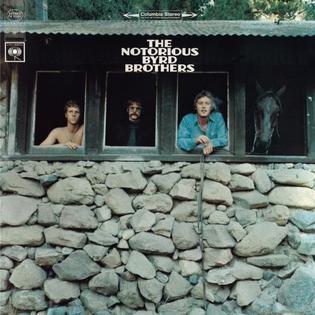
One truly notorious aspect of this album even has its own page on Snopes, the urban legend debunking website. David Crosby was fired from the band before the album was finished, and while he does appear on it, the cover only shows Hillman, McGuinn, Clarke and a horse. Crosby insists the horse was there deliberately to represent him, but we have to agree with McGuinn, who said that if it was really intentional, the other end of the horse would have been depicted.

But even more notorious is that while many pundits have gone out of their way to praise this album as a masterpiece, we’re not going to do that. The album is forced and disjointed, and too many of the songs sound too much alike for them to stand out, with a few exceptions that only underscore the shakiness of the set.

“Artificial Energy” sports acidic horns and a sped-up vocal for a song explicitly about drugs, but the real Byrds-like emerges in “Goin’ Back”, a wistful wish for the simplicity of childhood from the pens of Goffin and King. Chris Hillman’s “Natural Harmony” ends up sounding more like the Crosby songs on the album, which we’ll get to soon. “Draft Morning” is a better contrast to “Goin’ Back”, in its explicit glimpse of a soldier in the trenches; the sound effects are a matter of personal taste. The defiant stance continues in “Wasn’t Born To Follow”, another Goffin/King song and one that would become something of a hippie anthem. After the sound of a slamming door, McGuinn comes in to sing a baroque ode to London in “Get To You”.

Many of the songs on the first side are cross-faded, and that continues on the second. “Change Is Now” is a basic drone around the 12-string, with a double-time detour through a pedal-steel. “Old John Robertson” is included in a different mix than on the single, and it only underscores the exclusion of “Lady Friend”, for no other reason than to spite Crosby. Instead, he’s represented by “Tribal Gathering”, a pale rewrite of “Renaissance Fair”, and “Dolphin’s Smile”, the brevity of which doesn’t hint at the struggles they had recording it. (Seven minutes of an argument among the band members while they were trying to figure out how to play the damn thing are hidden at the end of the expanded CD. They all end up sounding like a-holes, and Mike Clarke’s ambivalence explains why Hal Blaine and Jim Gordon are credited with drums on the album.) And of course, McGuinn had to include another sci-fi song in the form of “Space Odyssey”, which beat out the Kubrick film by about three months, and sported the prominent use of a Moog synthesizer.

Considering how much struggle went into recording the album, it’s a shame there aren’t more interesting outtakes on the expanded CD. Beyond a Moog instrumental and a take of a song Chris Hillman would use in a later collaboration, plus a couple of alternate takes, the biggest revelation is Crosby’s classic “Triad”, which would never make it to one of his own albums until a live recording with his next band. But that’s another story. We still can’t point to The Notorious Byrd Brothers as the Byrds’ best, especially considering what was coming next. It remains a shaky collection of stubborn songs, and therefore recommended only with a caveat.

The Byrds The Notorious Byrd Brothers (1968)—3
1997 CD reissue: same as 1968, plus 6 extra tracks

Monday, October 24, 2011

Tom Waits 11: Franks Wild Years

Soon after releasing Rain Dogs, Tom threw himself into a new form of expression. In between a couple of arty film roles, he worked on expanding one transitional track from Swordfishtrombones into a full-fledged musical play—with actors and everything—telling the story of the rise and fall of a shifty guy named Frank. By the time it became an album, Franks Wild Years had evolved from the story as seen briefly on a Chicago stage to a hard-to-follow album that relied more on sound than narrative.

A key part of his arsenal now included a miniature bullhorn, which combined with his falsetto to make the lyrics even raspier. “Hang On St. Christopher” opens the album in another automobile, giving way to the first of two versions of “Straight To The Top”. “Blow Wind Blow” has a clean production for a change, but the Captain Beefheart influence turns “Temptation” into a nightmare. The first thing approaching a classic is “Innocent When You Dream”, first heard in a “barroom” arrangement to accent its singalong quality. “I’ll Be Gone” relies too much on a rooster for its percussion. “Yesterday Is Here” is nice and simple, mostly around his own reverbed guitar, but then he wanders around the flute setting on a Mellotron for about a minute to bury the melody of “Please Wake Me Up”, eventually giving way to a much dreamier organ solo. “Franks Theme” (for some reason he doesn’t rate an apostrophe) ends the first act with a prayer for a decent night’s sleep.

“More Than Rain” has been more effectively covered by others; here it sounds like he’s singing along to an acetate. “Way Down In The Hole” is a preacher’s rant over a single bass line and the same two saxophone notes, but with wonderfully typical Marc Ribot guitar solos. He does a wonderful attempt at Sinatra phrasing, and nearly the tone, on the “Vegas” version of “Straight To The Top”, which builds up to a grand crescendo before the nightmare returns on the organ and the Ethel Mermanisms of “I’ll Take New York”. It’s never been clear what “Telephone Call From Istanbul” has to do with anything, but it wins points for the following couplets: “Will you sell me one of those if I shave my head/Get me out of town is what Fireball said/Never trust a man in a blue trench coat/Never drive a car when you're dead”. We also like the too-short organ solo. “Cold Cold Ground” seems like a title he would have used already, but here it’s a nice little country song. He finally returns to the piano for the hapless “Train Song”, and “Innocent When You Dream” returns on a 78 to remind us of all that’s been lost.

It could be that the parts of Franks Wild Years are greater than the whole, but coming after the excellence of his last two albums, it was something of a letdown. We were told there was a story in between the songs, but how Frank went from burning his house down to bragging of fame and fortune before dying on a park bench doesn’t come through. (Plus, he’d already summed up the whole arc better and briefer in “Christmas Card From A Hooker In Minneapolis”.)

Tom Waits Franks Wild Years (1987)—2½

Friday, October 21, 2011

Lou Reed 19: New York

Lou had spent much of the ‘80s mostly underwhelming listeners with so-so albums, to the point where by the end of the decade, the average person would have best associated him with a TV ad for Honda scooters.

Therefore, it was easy to be skeptical of New York—until you heard it. It was an especially big deal on a radio station like the late great WNEW-FM, who played it cut by cut with the man in the studio one night, even taking calls from listeners. (The lucky few who tuned in for the whole broadcast may recall hearing the last caller they took on the air, nervously gushing about Lou’s work, stumbling through a question about Lester Bangs and thanking him for writing “Sad Song”. “Oh, thanks, that’s one I like too,” said Lou.)

Following the lead of previous returns to form, the music consisted of his guitar in one speaker, another in the other, plus bass and drums. The lyrics read like the Op-Ed page of The New York Times and are still as clever as they were timely. It’s allegedly sequenced in the order the songs were recorded, and designed to be listened to in one sitting. It helps, of course, that the songs are so good that they don’t merely combine for an onslaught of negativity. Much of it sports the grime and grit of the city’s streets, but there’s some tenderness in there too.

With a couple of chords captured mid-strum, “Romeo Had Juliette” mixes a street romance with criminal commentary, then it’s off to the “Halloween Parade”, which explicitly points out the effects of AIDS on the city. “Dirty Blvd.” was the single, and includes the album’s first reference to “the Statue of Bigotry”; the poetry is continued on the metronomic “Endless Cycle”. He finally turns it up for “There Is No Time”, a call for revolution. (Another highlight of his radio visit was his suggestion that reviving public hangings in Central Park would be an excellent crime deterrent.) Environmental concerns dominate the quieter “Last Great American Whale”, complete with Moe Tucker on percussion. And the frightening concept of Lou as a dad is broached for “Beginning Of A Great Adventure”.

Generally a list is a lazy lyric, but “Busload Of Faith” works as both a song and a message. “Sick Of You” is a twisted look at the news that’s not as outlandish as it could be, particularly in comparison to the tensions chronicled in “Hold On”. “Good Evening Mr. Waldheim” covers the hypocrisy of racism, not only from the gentleman in the title but from the Pope and Jesse Jackson. The plight of the homeless Vietnam vet is raised for “Xmas In February”, and he summons all his anger for “Strawman”. “Dime Store Mystery” provides a striking finale, comparing the last thoughts of Andy Warhol to those of Jesus Christ as depicted in a recent Scorsese film.

Any summary of the album will fall short of the sensory experience, of course. A lot of rock legends put out albums in 1989 that re-established them commercially and critically, but not only was New York one of the first albums released that year, it was also one of the best. He kept it simple and he kept it real. Amazingly—and sadly—the lyrical content doesn’t seem dated at all. His new label was pretty pleased with it too; maybe he just needed to get away from RCA.

Over two decades later, the first commercial project to arise from the Lou Reed Archive team (housed at the New York Public Library, and containing documents covering his entire musical career and beyond) was a deluxe expansion of New York, and rightfully so. Alongside a fresh remastering of the original CD, two further discs offered “works in progress”, rough mixes, single mixes, the instrumental B-side “The Room”, and live performances of every track on the album. The latter were all transferred from good old Maxell XL-II 90-minute cassettes mixed live by the sound crew on the tour supporting the album. These are strong versions, stretched out and enhanced by backing vocals. Maureen Tucker, who was the opener for part of the tour, joins on drums for “Dime Store Mystery”. Because the tapes would occasionally run out mid-song, this one fades at the end. Despite the subject matter—which again, includes namedrops of people still making headlines in this century—Lou sounds confident, even cordial. (The live VHS and laserdisc of one of the concerts was included on a DVD, with bad graphics and worse mullets intact, as well as the audio from a promo interview and the album in hi-res. Also, because it had become the trend, the album appeared split over two vinyl LPs—the original was crammed onto a single disc—for maximum sound quality.)

Lou Reed New York (1989)—5
2020 Deluxe Edition: same as 1989, plus 28 extra tracks (plus DVD)

Thursday, October 20, 2011

Gene Clark 1: With The Gosdin Brothers

The contributions Gene Clark made to the Byrds are often undermined by the image he built while with the band. Roger McGuinn had the glasses and the 12-string, David Crosby had the big mouth, and Gene stood at his microphone with a tambourine in one hand. However, he wrote their best songs not written by Bob Dylan, and was key to their harmonic blend. With his good looks, McGuinn and Crosby were united against him, and he eventually quit, leaving them to isolate each other. But we digress.

Songwriting superiority doesn’t always translate to a strong personality, and when Gene finally got around to putting out a solo album, it was lost in the promotion of the Byrds’ Younger Than Yesterday, only months before the country went psychedelic. Gene Clark With The Gosdin Brothers gives co-billing to the duo who sing background harmonies on many songs, all of which were written by Gene. The other musicians include Wrecking Crewmen Leon Russell and Glen Campbell, Van Dyke Parks, current and future Byrds Chris Hillman, Michael Clarke, and Clarence White, and Doug Dillard, who will become more important soon enough. Pretty promising recipe for an album, huh?

And it is a good album, if a little unfocused at times. “Echoes” is an ambitious lyric with chamber-pop piece strings arranged by Leon Russell, almost predicting Scott Walker. “Think I’m Gonna Feel Better” is very close title to a previous song, lasting barely a minute and a half, while “Tried So Hard” and “Is Yours Is Mine” would fit right in on the latest and previous Byrds LPs respectively. “Keep On Pushin’” is even more country-tinged, showing he was on to something well before Roger McGuinn met Gram Parsons. “I Found You” has a lopey strut that belies its moodiness.

While more straightforward than “Echoes”, “So You Say You Lost Your Baby” gets another Leon Russell treatment, and might have made an interesting single. “Elevator Operator” uses a standard riff we know we’ve heard before for some strained puns, as does “Couldn’t Believe Her” without the puns, while “The Same One” is a sneaky gem in between. “Needing Someone” brings it all back to the standard Byrds sound.

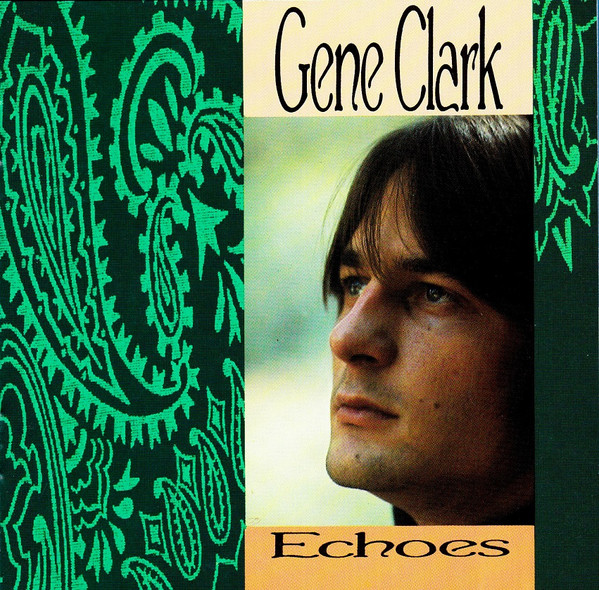
This already short album was made shorter when re-released five years later as Collector’s Series: Early L.A. Sessions, which not only dropped “Elevator Operator” but remixed the other tracks with newly recorded vocals. After the Byrds were inducted into the Rock and Roll Hall of Fame and got their own box set, Columbia/Legacy released Echoes, which presented yet another remixed and rejigged sequence of the album, framed by six Byrds tunes (two of which predated “Mr. Tambourine Man”) and the unreleased “Only Colombe”/ “The French Girl” single plus a demo of “So You Say You Lost Your Baby”. In this century, the Sundazed label—always determined to preserve things as they were—restored Gene Clark With The Gosdin Brothers as it was, adding the extra single and a variety of unreleased tracks at the end. Any version deserves to be heard by even the most casual Byrd watcher.

Gene Clark With The Gosdin Brothers Gene Clark With The Gosdin Brothers (1967)—3
2007 Sundazed reissue: same as 1967, plus 6 extra tracks

Wednesday, October 19, 2011

Byrds 4: Younger Than Yesterday

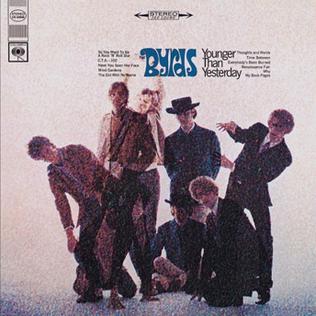
The biggest surprise for the Byrds’ fourth album was a welcome one. While each of the singers stepped up the quality of their songwriting, it was Chris Hillman who managed to provide the balance so needed in the band, and made Younger Than Yesterday an improvement on its predecessor.

They were still a quartet, but had begun to play with their image. McGuinn lost the granny glasses, and started experimenting with facial hair. Crosby grew the mustache he wouldn’t shave for twenty years—and only then at the behest of federal prison wardens—and began wearing hats to hide his receding hairline. And Chris stopped ironing his own hair, letting it blossom into its natural ‘fro. (These things were important at the time.)

The lead track on the album, “So You Want To Be A Rock ‘N’ Roll Star”, is a wonderful blend of the potential of the Rickenbacker 12-string with harmonies pushing a lyric that could either be taken as a swipe at the Monkees or their own image. “Have You Seen Her Face” is the first Hillman offering, a great power-pop nugget with chunky guitar. But it was still the ‘60s and McGuinn’s fascination with sci-fi led to “C.T.A.-102”, another plea for alien intervention torpedoed by a lengthy funny-voice section. Crosby’s “Renaissance Fair” is short but sweet, a nice premonition of the Summer of Love. Chris comes back with “Time Between”, another country-flavored number with future Byrd Clarence White bending his B-string all over the place. And Crosby responds with “Everybody’s Been Burned”, his best yet contribution to the band, layered in droning finger-picking and pensive lyrics.

Lest you think he was just a bumpkin, “Thoughts And Words” gives Chris a little touch of psychedelia in the way of a backwards 12-string. If you like that sound, you’ll love “Mind Gardens”, a phenomenally self-indulgent Crosby exercise in avoiding melody to sound deep. Luckily “My Back Pages” comes next, wherein the Byrds once again take a Dylan song, turn it inside out, and make it a classic. “The Girl With No Name” is a nice distillation of the other Hillman songs on the album, and this time the last word is given to a re-recording of “Why”, an alternate of the B-side from the year before.

While the progression to psychedelia wouldn’t be smooth, Younger Than Yesterday shows that the Byrds had a knack for finding a hit song in between all their experiments. Only hindsight would illuminate that their chances of keeping it together in that volatile environment were slim. The tension is only slightly hinted at in the bonuses on the upgraded CD, in the Crosby outtake “It Happens Each Day” and the pointless B-side movie theme “Don’t Make Waves”. A couple of alternates would interest collectors, but in the interest of context, we also get the criminally unappreciated “Lady Friend” and its lesser B-side “Old John Robertson”. And if you’re paying attention, you may be intrigued to hear that the closing instrumental is unlisted, but is revealed to be the backwards guitar track from “Mind Gardens” run forward.

The Byrds Younger Than Yesterday (1967)—4
1996 CD reissue: same as 1967, plus 6 extra tracks