Friday, November 30, 2012

Robyn Hitchcock 19: Luxor

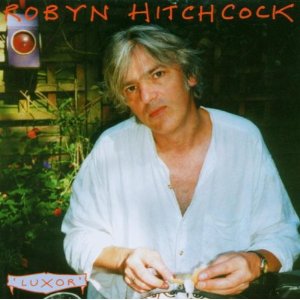
The direct approach suited Robyn, and continued with the next installment in his discography. Originally distributed to attendees of his 50th birthday concert, Luxor begins with promise, being completely solo and mostly acoustic, just like the best albums of his heyday.

Indeed, “The Sound Of Sound” crawls along at a lovely slow pace, but is pushed aside by “One L”, a tribute to his wife that’s a little too personal to succeed. “Penelope’s Angles” follows a plucked pattern similar to “Autumn Is Your Last Chance”, but wanders off to repeatedly insist that “I am not a yam.” There’s something of a juxtaposition in the not-quite-there-ness of “The Idea Of You” and the much superior “You Remind Me Of You”. The title track is instrumental, and happily doesn’t evoke mental images of Vegas casinos, Egyptian relics or computer games. “Keep Finding Me” beings with an enticing melody that unfortunately loses its way in the bridges (“Be true to your drum/be true to your drummer/this summer is gonna be hot—hot!”).

“Maria Lyn” has some excellent lyrics, but the one-chord blues style has never been his most comfortable approach, no matter how many times he tries it (though “Solpadeine”, which closes the program does much better in the format, mostly because it offers more chords). “Round Song” is an improvement, its ringing 12-string and vocal effects sounding very much like the English psychedelic folk we imagine him loving without having heard it ourselves. The jumpy “Ant Corridor” seems more like a demo than anything else here, making little sense. The same could be said of “Idonia”, but somehow this particular mix of sea shanty and 1966 Dylan clicks. “The Wolf House” is another pretty instrumental staying just this side of revealing its structure.

Presented with little fanfare, Luxor re-establishes the trend of Robyn Hitchcock albums that are pleasant but not very exciting. Because of the perfection of I Often Dream Of Trains and Eye—not to mention the sheer entertainment his solo shows always provided—we desperately want to like this album more than we do. The rating should therefore be taken well within context, and we’d be surprised, albeit pleasantly, if anyone fell in love with his work based on this particular album.

Robyn Hitchcock Luxor (2003)—

Wednesday, November 28, 2012

Van Morrison 12: Wavelength

Right off the bat, Wavelength seems to be a step in the right direction. Only a year after his return to the business, Van seems to have come to grips with the expectation of the marketplace. Even the cover was stylish, giving the consumer another crotch shot below an almost relaxed, confident stare captured in soft focus by the same guy who’d photographed Joni for the Hejira cover.

Of course, what translated as current in 1978 doesn’t always work after the fact, and it’s been said that Wavelength is just a little too slick; whatever anyone’s opinion, the overall sound is an improvement over A Period In Transition. For one, it’s longer. Also, the use of a larger band more suited to his own whims lends a consistency that keeps it together. (Even if the synthesizer sounds out of place, but then again, Garth Hudson was always more effective when he used more organic tones.)

The album isn’t immediately memorable. “Kingdom Hall” might suggest a conversion to the Jehovah’s Witnesses, but overall it’s just a simple celebration of dancing and having fun. “Checkin’ It Out” sounds a bit muffled, but with only three chords it’s not supposed to stand out much. We’re not sure who “Natalia” is, but she should be pleased Van wrote such a happy song for her. “Venice U.S.A.” is much better if you don’t read the lyric sheet (with the chorus “Dum derra dum dum diddy diddy dah dah” repeated six times each, and Lester Bangs called it first). “Lifelines” has potential, but suffers from underdeveloped keyboard effects; one wonders how it would sound with just Van’s electric piano, as listed in the credits.

What makes the album worth the price of purchase is the title track, another joyous celebration of the spirit of radio. Here the keyboards don’t get in the way, instead conveying the idea of radio waves shimmering through the air, and the guitar solo, not a common touch on a Van album, is perfect. (This wasn’t included on either of his early-‘90s hits collections, a crime not rectified until 2007 with the release of a fourth.) “Santa Fe” isn’t much, but in a premonition of the future, it morphs into “Beautiful Obsession”, which would appear to be an extemporaneous composition in the studio, with a few exhortations near the fade that perhaps influenced Bob Seger on “Against The Wind”. “Hungry For Your Love” doesn’t generate enough energy to make the sentiment convincing, leaving “Take It Where You Find It” as the last stab at an epic, but a sleepy one.

It seems that Van is more into it on Wavelength, but outside of that title track, the album just seems a little bland. It was hoped he would do better going forward. (He could still bring it onstage, however, as evidenced by the performances of “Kingdom Hall” and “Wavelength” included on a later CD expansion.)

Van Morrison Wavelength (1978)—
2008 CD reissue: same as 1978, plus 2 extra tracks

Monday, November 26, 2012

They Might Be Giants 4: Miscellaneous T and Then

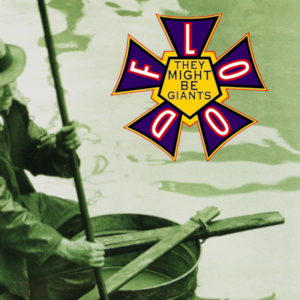
To cash in on the marginal success TMBG had with Flood, their old distributor collected a bunch of tracks from the EPs originally released to promote the singles from the debut and Lincoln. With the somewhat inspired title of Miscellaneous T, it presented in more or less a reverse chronological order to that of the original EPs.

As with most B-sides and whatnot, they’re not all zingers, else one would think they’d’ve made it to the albums proper. Highlights include “We’re The Replacements”, a silly tribute to the Minnesota band (no matter what the fatter John says), “The Famous Polka”, the original version of “Kiss Me, Son Of God”, “It’s Not My Birthday”, the scandalous commentary in “Hey Mr. DJ I Thought You Said We Had A Deal” and, possibly, the so-called “Joshua Fried Remix” of “The World’s Address”. Beyond that, well, you gotta be a fan.

Some years later, after the band had returned to obscurity, the quest to remaster and reissue things led to Then, a repackaging of the first two albums, bolstered by the various EP tracks, along with another 19 tracks heard only on Dial-A-Song or before shows. All the EP tracks had of course been reissued once on Miscellaneous T, so fans old and new could marvel at those extras. The “intros” are fairly entertaining, and earlier versions of “Don’t Let’s Start”, “Which Describes How You’re Feeling” and “Hope That I Get Old Before I Die” contrast how those songs began with how they started out. “Number Three” sung entirely in Greek will scratch a few heads, but the track titled “Schoolchildren Singing ‘Particle Man’” offers just that, and is just plain charming.

Then, therefore, is the way to go if you don’t have anything prior to Flood. But if you do, you might as well upgrade.

They Might Be Giants Miscellaneous T (1991)—
They Might Be Giants
Then: The Earlier Years (1997)—4

Friday, November 23, 2012

Frank Zappa 11: Chunga’s Revenge

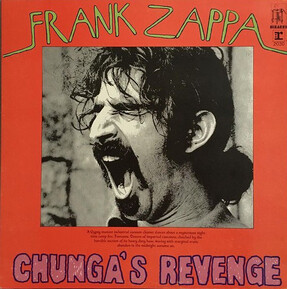
With only his name and gaping maw on the cover, one might assume that Chunga’s Revenge would be another “solo” album and therefore not at all like the same year’s Mothers output. That assumption would not be entirely correct.

By the time he recorded this album, he’d put together a new Mothers, retaining only Ian Underwood from the old band, but adding more seasoned players, including British drummer Aynsley Dunbar (who would one day anchor Journey) and jazzman George Duke on keys. This gave him a more solid base upon which he could do his thing, as demonstrated on “Transylvania Boogie”, “Twenty Small Cigars” (a Hot Rats outtake, previewed on Jean-Luc Ponty’s album of Zappa interpretations earlier that year), and the title track. Arguably, the highlight of the album is “Sharleena”, one of his best songs from both a lyrical and musical standpoint.

However—and this is a big, big however—he also recruited two singers from the Turtles to sing and add harmonies. These would be Mark Volman and Howard Kaylan, a.k.a. Flo & Eddie. While only in the Zappa employ for eighteen months, their sycophantic stain would be felt on every album and concert tour for the balance of his career. From here on out, instrumental virtuosity would be pitted against or alongside scatological lyrical content.

Luckily for Chunga’s Revenge, they’re more of a decoration than the focal point, really only taking over on side two. They’re first heard helping out with “Road Ladies”, an actually enjoyable blues until one of them gets to mewl a verse on their own. “Rudy Wants To Buy Yez A Drink” is another novelty in-joke that wouldn’t have been out of place on Absolutely Free. “Tell Me You Love Me” is a loud parody of contemporary rock, while “Would You Go All The Way?” makes odd references to both the U.S.O. and the U.S.A.

Even when they’re not singing, Frank’s fascination with groupies and “bands on the road” is still pretty obvious. (Some say this is a key example of “conceptual continuity”, or maybe it’s proof of a one-track mind.) The album was, as he was wont to do, presented as a “preview” of music from an in-progress film—in this case, 200 Motels. We might assume that “The Nancy & Mary Music”, a live improvisation, was supposed to accompany something featuring groupie characters. Even “The Clap”, otherwise a multi-tracked percussion piece (the drums being his first musical love) edited next to the title track, refers to a social disease common to touring bands.

Taken on its own, Chunga’s Revenge is a perfectly harmless album. It is, however, the fine line after which one’s tolerance for shock value will be tested. Proceed accordingly. 1970 was a transitional year for Zappa, and obviously neither he nor anyone could envision the events that would follow.

A half-century later, once the industry had fallen in love with anniversary repackages and the Zappa Family Trust started issuing comprehensive expansions of various albums, more of the music from the year would be revealed. The Super Deluxe Edition of the 200 Motels soundtrack included further music from the Chunga sessions that would end up in the film, but more interesting musically was the hour’s worth of music from Trident Studios in London that made up the first disc of The Mothers 1970. Highlights include Frank’s original vocal on “Wonderful Wino”, a few instrumentals with just Frank and Aynsley Dunbar, and an early run through “Envelopes”. Three further discs in the set are dedicated to live performances featuring Flo & Eddie, which gradually devolve from renditions of Mothers catalog tunes on a Dutch TV show to the “routines” the group would undertake mere months later, interspersed with various field recordings of conversations Frank captured to fuel his inspiration.

Much of this fatuous material is presented in sub-bootleg sound quality, adding insult to injury, but does lift anytime the vocalists stick to their tambourines while Frank rips off a solo, as on the otherwise unknown “Portuguese Fenders” and an early draft of “Easy Meat”, or for any of the renditions of “King Kong”, each of which includes a detour through “Igor’s Boogie”. The band, for all the hijinks, was tight. (In fact, a few years earlier the third installment in the Estate’s occasional Road Tapes series of low-fidelity shows presented two from July 1970, one of which was the source of “The Nancy & Mary Music” on Chunga’s Revenge—turns out it was mostly from “King Kong”, which in those days had an “Igor’s Boogie” interlude.)

Frank Zappa Chunga’s Revenge (1970)—3
Frank Zappa
Road Tapes, Venue #3 (2016)—
The Mothers
The Mothers 1970 (2020)—

Wednesday, November 21, 2012

Kate Rusby: Hourglass

Back in the ‘90s, I managed a CD store where the only other employee was the owner. While our musical tastes would occasionally clash in the no man’s land between hair metal and Bob Dylan, we did our best to remain open-minded, and even learned a few things in the process.

Being an independent store, one of the only ways we could fend off competition from the chains was by maintaining a “lean but choice” inventory of music that wasn’t always representative of that week’s copy of Billboard. Even The Artist One Day Known As John Mayer would credit us, begrudgingly, for widening his peripheral vision past Stevie Ray Vaughan and Dave Matthews. (We tried, anyway.)

Such hands-on customer service went both ways, and often we’d heed the advice of our patrons, and discover an obscure treasure. This was the case with Hourglass by Kate Rusby, which apparently was a huge hit in England a full year before a customer asked about it in time for its American distribution. Figuring she must be on to something, we ordered a copy for her and one for the store.

When it arrived, and with not much else released that particular Tuesday in August, we opened a copy and put it on. We were immediately entranced, and even misty-eyed, from beginning to end. It’s an absolutely lovely collection of traditional Celtic songs and adaptations framed by Ms. Rusby’s angelic voice and gentle acoustic guitar, plus other accompaniment.

It really does wow on first listen—the cheerful “fa la lanky down dilly” of “Sir Eglamore” leads into the hardly hackneyed “As I Roved Out”. “Jolly Ploughboys” gains momentum as any good work song should, and the sea tale of “Annan Waters” uses pipes and piano to mask the sadness beneath. “Stananivy” is a charming jig paired with a dancing lyric about “Jack & Jill”.

The centerpiece of the album is an original, the heartbreaking “A Rose In April”. Delivered as a dialogue-style ballad, the tragedy unfolds slowly and vividly. As moving as it is, the happier portrait of “Radio Sweethearts” provides a nice lift. If there’s a clunker on the album, it would be “I Am Stretched On Your Grave”, a traditional song given a new melody but partially credited to Sinead O’Connor. “Old Man Time” is another original, and a striking observation from someone so young. “Drowned Lovers” begins with the unmistakable sound of someone tuning their E-string, neatly folded into the rest of the tune. An accordion, not usually our favorite instrument, accompanies “Bold Riley” to the end of the album.

It’s probably not possible to convey just what a pleasant surprise this album was at the time, but even years later it still has the power to move. Hourglass is simply lovely, and in the spirit of Thanksgiving, I will always be indebted to that customer—whoever she was—who’d special-ordered this.

Kate Rusby Hourglass (1997)—

Monday, November 19, 2012

R.E.M. 19: Live At The Olympia

It’s fairly odd that only two years after their first-ever live album—with only one studio album in between—that R.E.M. would release another. Lest we think they were turning into the Rolling Stones, Live At The Olympia isn’t your typical post-tour souvenir. These two CDs are culled from the series of “live rehearsals” the boys—the three main members, plus drums and another guitar—played in Dublin as they were preparing for the album that would become Accelerate.

Of course, the performances didn’t consist solely of all-new, untried material; the bulk of the CD—two-thirds from the Bill Berry years—provides fresh takes on some of the deeper recesses of their catalog. Ecstatic fans in the audience (and now, listening on their player of choice) are treated to six songs from Reckoning, five from Fables and all but one from the Chronic Town EP. Only Green, Out Of Time and Up go unrepresented. But they’re not carbon copies either—there’s energy behind each song, whether introduced by Stipe with an anecdote or described lovingly in Peter Buck’s liner notes. The sharp-eared will notice a changed family dynamic, with “Gardening At Night” played at the request of longtime advisor Bertis Downs, while all references to “Jefferson” have been removed from “Little America”.

Of course, it’s an album for fans, so while there’s no need to into detail for each old song, a few other details are worth mentioning. “Harborcoat” makes it most of the way unscathed, until the tuneless harmonica sets up a purposely sloppy ending. “Circus Envy” is even a lot of fun, more so than surrounded by all the noise on Monster. And whose idea was it to revive “Romance”?

Considering the songs that did end up on Accelerate, it’s interesting to consider the other surviving contenders. “Staring Down The Barrel Of The Middle Distance”, fine as it is, wouldn’t have added anything to the album, and “Disguised” turns out to be a an early version of “Supernatural Superserious”, somehow not as tight as the recorded version. The slow and sad “On The Fly” comes from the same cloth as “Country Feedback”, but a little more melodic. There’s a middle interlude that threatens to go somewhere else entirely, but instead folds back to the song. It’s a hidden gem all right, but would have been out of place on the album they completed.

Live At The Olympia ends up a nice little surprise, with 39 songs filling up two-and-a-half hours of music, it’s a preferred listen to the other live album. It also provides a nice setup for the live recordings they’d begun including in the anniversary editions of their back catalog.

R.E.M. Live At The Olympia (2009)—

Friday, November 16, 2012

They Might Be Giants 3: Flood

By the advent of the CD era, Elektra Records had developed into one of those labels that wisely kept releases to a minimum, maintaining a lean roster that kept an eye on the past while taking a few chances on what could be considered college rock (before it evolved into adult alternative). Having seen success with 10,000 Maniacs, the Cure and Tracy Chapman, they signed They Might Be Giants and gave a big push to their third album.

That big-budget backing made Flood something of a hit, a deserved result considering the quality therein. Despite some production assistance and even the use of—gasp!—a real drummer, it’s still a quirky TMBG album, slathered in accordion and wacky samples. Just the way we like it.

After the brief fanfare of an actual theme song, “Birdhouse In Your Soul” is a simple song sung by a nightlight. Some discord occurs in the bridge, but it’s redeemed by the lyrical comparison to a picture of a lighthouse (“I’d be fired if that were my job/After killing Jason off and countless screaming Argonauts”). “Lucky Ball & Chain” is related to Led Zeppelin’s “Hot Dog” both thematically and musically, another lost love song, countered by “Istanbul (Not Constantinople)”, a combination cover and history lesson, here given a very appropriate Eastern accompaniment. “Dead” is another favorite, a rumination on reincarnation or the lack thereof loaded with great rhymes. “Your Racist Friend” is a fairly straight narrative, with any tension deflated by “Particle Man”, a hilarious comparison of fictional superheroes. “Twisting” takes its title from the suggestion in the Farfisa organ riff, and is probably the only end-of-romance song to reference the dBs and the Young Fresh Fellows. The title of “We Want A Rock” would appear to be a pun on a certain Twisted Sister song, but instead becomes a universal yearning for pieces of string and prosthetic foreheads.

“Someone Keeps Moving My Chair” remains an enigma, but no more so than “Hearing Aid”, the longest track at three-and-a-half minutes and a continuation of some of the more experimental moments on their first two albums. “Minimum Wage” provides an interlude and a sorbet in its silliness, and the rest of the album follows suit. “Letterbox” is sung at top speed and in close harmony. “Whistling In The Dark” has something of a martial feel with a touch of motivational speaking. “Hot Cha” goes by quickly enough to make way for the twisted sea chantey of “Women & Men”. “Sapphire Bullets Of Pure Love” turns out to share a title with a song by the Mahavishnu Orchestra, and also gets out of the way for the almost closing theme of “They Might Be Giants”. Instead, the final scene of the audio movie is “Road Movie To Berlin”, starting nice and quiet, going through a big middle section, and ending anticlimactically.

Flood has become so popular over the years that TMBG has occasionally performed it in concert in order, to the delight of fans. And even though it was “a brand new record for 1990”, it still sounds fresh and fun today. While Lincoln is still the better album, Flood deserves the rating below.

They Might Be Giants Flood (1990)—4