Thursday, January 31, 2013

Stephen Stills 6: Live

Even though everybody in Crosby, Stills & Nash had taken off for other labels, Atlantic was still determined to make money off of them. Recorded early in 1974, before that summer’s CSNY stadium tour, Stephen Stills Live neatly presents both sides of the axeman.

The electric side, so labeled, gives him plenty of chances to wail, beginning with “Wooden Ships”, then getting moody for “Four Days Gone”, a hidden gem from the last Buffalo Springfield album. He neatly melds his own “Jet Set (Sigh)” with Joe Walsh’s “Rocky Mountain Way”, which shares a riff and tendency to wah-wah. There’s even an excellent segue into “Special Care”, from the same Springfield album. The band is tight, as to be expected, and while Joe Lala’s in the mix, he’s not prominent.

Proof that less is more, the pointedly labeled acoustic side consists of Stills alone, but still showing off his flash. A medley of “Crossroads” and “You Can’t Catch Me” gives him an excuse to fly around in an open tuning, which he does to lesser extent in “Word Game”. In contrast, “Change Partners” is a simple strum, “4 + 20” nicely restrained and the cover of “Everybody’s Talkin’” a nice surprise.

Stephen Stills Live is short, typical of a label cash-in, and likely not to be expanded anytime soon. It’s still a better overview than Still Stills, a “best-of” released late in 1976 that leaned heavily on his first solo album and Manassas.

Stephen Stills Stephen Stills Live (1975)—

Wednesday, January 30, 2013

Frank Zappa 13: 200 Motels

After at least two tries and failures, Frank finally managed to complete a film that was actually released in theaters. 200 Motels was supposed to be a culmination of Zappa’s grand theories, melding rock instruments with an orchestra. If you like the Flo & Eddie brand of Zappa bathroom humor, now you’ve got even more of it. Otherwise, you’re really not missing anything.

The movie itself is tough to watch, being a mix of live performance, skits and animation. For the most part, a large soundstage contains the Royal Philharmonic Orchestra and the current version of the Mothers, with a few additional singers. The “plot” revolves around a bunch of inside jokes about touring and groupies, with much of the dialogue either improvised or excerpted from prior conversations. As dull as that sounds, the bass player quit halfway through filming, and was eventually replaced by Ringo Starr’s driver, who happened to both play bass and exude a ton of teen sex appeal. (We’re not sure if his haircut can be called a mullet, but it is awful.) This change arguably gave the movie more of a story than it otherwise would have had.

A little Web research shows that much of the orchestral material had and would appear as part of other pieces—“Bogus Pomp”, “Holiday In Berlin” and the truly grand finale, “Strictly Genteel”. For the most part, it’s interesting on its own, but whenever a melody gains “lyrics”, it’s tainted with the equivalent of aural graffiti. To confuse things further, several pieces in the film are not on the album, and vice versa. Plus, what does match is out of order.

The “rock” numbers are impeccably arranged and performed, featuring the snotty vocal stylings of Flo & Eddie, as previewed on the Fillmore East album. “Mystery Roach” is mostly a jam, ending abruptly with a Mother asking what they’re supposed to be singing about, part of the ongoing suggestion that “he’s making us do all this”. A suite of music is broken up by references to some Midwestern hick town being akin to a “Sealed Tuna Fish Sandwich” that one might find in a typical convenience store. Jimmy Carl Black returns to portray “Lonesome Cowboy Burt”, a typical redneck looking for action and unimpressed by the group. Side two is dominated by another suite mixing the band and the orchestra; musically it’s catchy, but the melody is torpedoed by the lyrics, which describe a potential groupie preparing for the evening’s hoped-for activities.

The segment where “Jeff” goes nuts in a hotel room is animated in the film, but is mostly irritating on the album, where the voices are sped up and the orchestra plays horror-film clichés to illustrate the action. “Daddy, Daddy, Daddy” is fairly pedestrian pop taking a few detours into “Bwana Dik” territory, as continued on “Penis Dimension”. “What Will The Evening Bring Me This Morning” isn’t as overtly obnoxious, giving us a chance to enjoy the melody. The last side begins with a chorus singing suggestive lyrics, interrupted by “Magic Fingers”, the first time we hear a decent Zappa guitar solo, stuck in the middle of more groupie talk. Finally there’s “Strictly Genteel (The Finale)”, an excellent composition nearly deflated by sarcastic lyrics, and ending with a neo-gospel rave-up “about” the end of the film.

Maybe this album wouldn’t be so bad if there weren’t so much of it. At least the orchestral pieces would be revisited on future albums to greater success and more reverence than they’re given here. Due to the film’s lack of commercial potential and the soundtrack’s distribution outside Zappa’s control, 200 Motels has long been one of the rarer items in the catalog, and because of several songs only appearing here, it gets a rating just above worthless. Diehard Zappa fans will want it to complete their collections, of course.

Its first CD appearance came about via Rykodisc as part of its deal with various studios to re-issue vintage soundtrack albums; that version included a few extras in the way of promo spots, a single edit of “Magic Fingers”, and the original trailer included as enhanced multimedia. That soon went out of print, and remained unavailable until the album’s golden anniversary, when the original sequence was released as a two-CD set and also as a Super Deluxe Edition. Here, six CDs are filled with the original soundtrack remastered and bolstered by demos and alternates, “dialog protection reels” presenting an early cut of the film with music, and outtakes from the Chunga’s Revenge sessions (making that album that much better in their absence), all designed to support Frank’s original vision based on the first shooting script. We still don’t get it.

Frank Zappa Frank Zappa’s 200 Motels: Original Motion Picture Sound Track (1971)—
1997 Rykodisc CD: same as 1971, plus 6 extra tracks
2021 50th Anniversary Super Deluxe Edition: same as 1997, plus 133 extra track

Monday, January 28, 2013

Jam 1: In The City

While they emerged amidst the punk scene, The Jam weren’t exactly a punk band. They didn’t dress in ripped shirts or leather, preferring dark suits and ties. (The bass player even sported a near-mullet.) Their music—generated by Rickenbackers through Vox amps—was influenced by “mod” bands from a generation earlier. They weren’t a power trio per se, but played just as loud as one. But Paul Weller’s sneered, slightly mushmouthed delivery of his own lyrics displayed anger and defiance, typical yet atypical of an 18-year-old kid whose Dad was the band’s road manager.

“In The City” was their first single, followed a month later by the album of the same name. In just over two minutes their sound is established: slashing guitar, pulsing bass and cracking drums at top speed. While they were never fully appreciated by Americans in their time, this song’s influence was obvious when only six months later the Sex Pistols stole the riff and slowed it down for “Holidays In The Sun”.

The early pop-art Who runs through this album, though not overtly. “In The City” itself shares a title but nothing else with the B-side of “I’m A Boy”. “Art School” opens the album with a power chord flourish. “I’ve Changed My Address” has a midsection of skittering drums and toggle-switch feedback right off the first Who singles. “Slow Down” was famously covered by the Beatles, but The Jam run their version through “My Generation”. (“Takin’ My Love” is another interpretation, and was also the B-side to the “In The City” single.) They even serve up a cover of the Batman theme.

Those mod bands, like the rest of the British Invasion, were fascinated by Motown, and “I Got By In Time” swings and swaggers, right down to the response vocals. This is not to suggest that they were copycats. Paul Weller established himself as a songwriter with the songs on this album. “Away From The Numbers” speaks out against following trends and fake friends; it even breaks the four-minute mark, unlike the compact tracks on the rest of the album. “Sounds From The Street” and “Non-Stop Dancing” evoke excitable youth, while “Time For Truth” and “Bricks And Mortar” are near protest songs (the former especially, spitting the f-word in the first verse).

In The City is an excellent debut, with barely a clunker in the batch. Its 32 minutes fly by with little relief, which is great for air-drumming. Besides, as young as they were, there was plenty of time to get introspective.

The Jam In The City (1977)—4

Friday, January 25, 2013

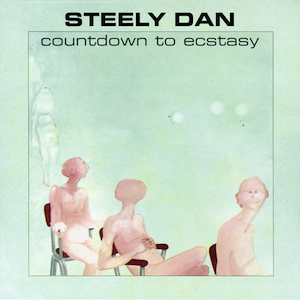
Steely Dan 2: Countdown To Ecstasy

While still a band with a rhythm section and everything, Countdown To Ecstasy has Steely Dan veering towards slick, if slightly. Donald Fagen is the only lead vocalist here, lending the album a little more cohesion and sameness.

The wonderful “Bodhitsattva” matches a big band swing to a spiritual plea, with terrific guitar throughout for a complete anachronism. “Razor Boy” sits on some island percussion and prominent vibes, with foreboding lyrics directed at somebody; it’s not clear. One would expect a title like “The Boston Rag” to be more upbeat, but that’s one of the points of the song, which meanders along, not really catching fire until the instrumental break. “Your Gold Teeth” is preloaded with the Steely Dan sound, riding one chord for the better part of seven minutes, with a few cacophonic Fender Rhodes runs here and a few modulations for the band to “stretch out”, as the liner notes sardonically remark.

Speaking of monotonous, “Show Biz Kids” rides in circles underneath guest star Rick Derringer’s slide guitar, with backing vocals comparing Las Vegas to “lost wages” until you’re ready to kill someone. (The song is also notable for a self-reference and a certain four-letter word.) The album finally gets another highlight with “My Old School”, a jaunty backhanded tribute to Bard College with crisp horns and just the right amount of cowbell. There’s something about “Pearl Of The Quarter” that reminds us of Richard Manuel singing “Lonesome Suzie” and “In A Station”. Maybe it’s the pedal steel; it’s certainly not the “voulez voulez voulez vous”. “King Of The World” is a lot of people’s favorite, but it gets awfully jittery after a while.

Again, it’s that Steely Dan “sound” that keeps us from loving this album, and the brand in general: too much electric piano and clean guitars. However, whenever somebody lets loose with a distorted lead (usually Denny Dias, or maybe it’s Jeff “Skunk” Baxter), anything with a little fuzz, grit, stank, whatever, we find ourselves more likely to tap our toes along. They were, after all, still a self-contained unit at this point, so Countdown To Ecstasy manages to surprise.

Steely Dan Countdown To Ecstasy (1973)—3

Wednesday, January 23, 2013

Rolling Stones 46: L.A. Friday

The official Stones Archive download series rolled on, following the initial Brussels Affair with a show previously mined for the Still Life album. They kept things vintage and interesting with L.A. Friday, a remaster of a mistitled bootleg from the summer tour that coincided with the Made In The Shade compilation. Notable for the first appearances of Ron Wood with the band, it shares some sequencing with Love You Live, which was mostly recorded a year later. But it’s not a duplicate at all. L.A. Friday offers a complete show—nearly two and a half hours, downloadable to two discs.

The band is generally terrific, and the sound is incredible. Fifteen minutes of “You Can’t Always Get What You Want” is a bit much, but if Keith can stay awake, so can we. The law of equal time states that a “Midnight Rambler” of equal length is required, but that one had better built-in dynamics anyway. Things don’t threaten to go off the rails until the second verse of “Happy”, but you can always count on Charlie to restore order. (Mick sounds a little drunk, though; he finds his sea legs by the time “Fingerprint File” rolls around.) There’s a slight detour in the middle of the second half, where Billy Preston gets to do two of his own songs, with the band backing him up. Ronnie is no Mick Taylor, but he’s in tune, and listening to him is more pleasant than watching him.

When L.A. Friday cooks, it’s excellent, but the slower songs don’t translate as well in the same environment. But the boys made sure to end the show loud and fast—despite the out-of-sync percussion that threatens to capsize “Sympathy For The Devil”, removing the menace and turning it into a ten-minute Rio shuffle. The set is still that much of a notch above Love You Live. The price was right, too. (Those who had to have a physical copy only had to wait a couple of years before it was officially released in a package with a DVD, filmed a different night but synced to the audio.)

Rolling Stones L.A. Friday (Live 1975) (2012)—

Monday, January 21, 2013

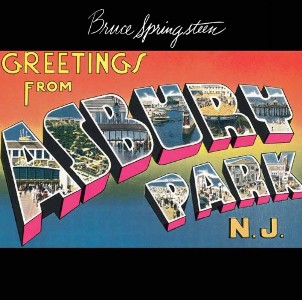
Bruce Springsteen 1: Greetings From Asbury Park

In our younger days, New Jersey was something to be endured while traveling between the New York metropolitan area and Delaware. And well before a certain John Bongiovi attempted to put himself forward as its poet laureate, another guy had been linked to the musical image of this much-maligned, easily insulted state.

The music of Bruce Springsteen was rammed into the ears of album-rock radio listeners, which meant that some of us were truly sick of him well before he became a national hero. His voice took some getting used to, and the saxophone got to be a little much. Between that and the plaudits of Rolling Stone magazine, you’d think the guy invented rock ‘n roll, and we kept wondering what we were missing. It wasn’t until the mild backlash of his eighth studio album that we began to see him in a better context. And since Bruce is a man who has crafted each of his albums just so, often at the expense of dozens of worthy songs, a forum like this can better approach his history, and give him some overdue appreciation. (Like he really needs it.)

He started out as another New Dylan, a sensitive kid with an acoustic guitar and songs overspilling with words. In fact, many of the songs on Greetings From Asbury Park, N.J. (branding him as a local boy right there) feature multiple rhymes within a single line, almost tongue-twisting but struggling to keep up, gasping for space. For instance, if you’re more familiar with the spacey version of “Blinded By The Light” as interpreted by Manfred Mann’s Earth Band, you may be surprised to find that this wordy song actually has more of a standard structure, and a guitar rhythm shared by the Doobie Brothers’ “Listen To The Music”. However, it also introduces the sax of Clarence Clemons. “Growin’ Up” is also loaded with internal rhymes, but it’s a little more concise, and more successful. “Mary Queen Of Arkansas” is taken at a much slower pace, almost too slow, with a bare accompaniment that threatens to run away from him in the closing seconds. “Does This Bus Stop At 82nd Street?” is a wonderful title, though the song isn’t much more of a flood of images. There’s a slowdown at the end that makes it very much of a setup for “Lost In The Flood”, a moody exploration of the apathy toward Vietnam vets and dead gang members. There’s a nice build through the track, too.

“The Angel” begins the second side very quietly, with a slow dense lyric seemingly about another motorcycle rider. That makes “For You” very welcome—a full band sound, an excellent arrangement, and well-balanced lyrics that seem more personal than observational. The saxophone comes back to the fore on “Spirit In The Night”—on the surface a portrait of noir-ish characters with wacky names, but really an authentic portrait of kids partying at a lake until the party has to end, as they all do. The album ends much like it starts, with a cavalcade of rhymes, mythmaking and swagger in “It’s Hard To Be A Saint In The City”.

For all the aforementioned drawbacks, Greetings From Asbury Park, N.J. holds together very well as a piece, but his inexperience is obvious. He’d learn as he went along, and those discovering him down the road will find some favorites here.

Bruce Springsteen Greetings From Asbury Park, N.J. (1973)—

Friday, January 18, 2013

Billy Joel 3: Piano Man

Two years living down an album he hated gave Billy Joel plenty of time to hone his chops in bars and on the road, and it was the latter that helped him get a deal with Columbia Records. He certainly sounds more confident on Piano Man, and dare we say a little tougher.

“Travellin’ Prayer” would be an ordinary country hoedown (complete with banjo, fiddle and jawbone) if not for the jazzy chords at the start. Somehow, it works. Despite its ubiquity, the title track is a very vivid portrait of the cocktail lounge crowd, whatever the hell a “real estate novelist” is. “Ain’t No Crime” could be accused of having a few clichés, but consider that this was 1973, and most sitcom theme songs hadn’t been written yet. “You’re My Home” is another excellent love song (his first such one, if you hadn’t heard “She’s Got A Way” yet) and we can forgive the line about his beloved being his “instant pleasure dome”; it’s not like her body is a wonderland or anything. As long as the title track was, he still puts another epic at the end of the first side. “The Ballad Of Billy The Kid” isn’t any more daring or out-of-place than Elton John’s view of the Old West, but there are enough Copland references and a cute twist that make it worth sitting through.

“Worse Comes To Worst” is a little annoying; the structure is ordinary (for him) and the wah-wah guitar just isn’t that cool. His vocals aren’t tough enough, but that’s remedied on “Stop In Nevada”, a portrait of a liberated woman with a suitably Elton-worthy string arrangement. “If I Only Had The Words (To Tell You)” rises above its parentheses to be memorable, as does “Somewhere Down The Line”, designed to rouse arena audiences. It’s particularly impressive that the final organ note on that song nicely sets up the intro of “Captain Jack”, the album’s other epic, and still a haunting one. Each verse provides a skewering of the teenage loser in Anytown, USA, each verse more damaging than the last. There might be a hint of Lennon in the vocal, and every white American male remembers the first time he heard the word “masturbate” on the radio. The most basic of chords make for a truly stirring chorus, and it fades away to end the album.

Piano Man flows very well, split as it is between “One Side” and “Another Side” on the original LP, with its stark cover. The plethora of session rats gives it a slickness, but it very much sounds like the Billy Joel people came to know. (The Legacy Edition includes the “legendary” radio broadcast from 1972 that got him signed to Columbia; seeing as it includes three songs never released in any form, plus lots of audible beer sipping between tracks, it’s a nice addition to the catalog.)

Billy Joel Piano Man (1973)—
2011 Legacy Edition: same as 1973, plus 14 extra tracks