Wednesday, October 30, 2013

Frank Zappa 22: Zoot Allures

Hindsight shows us that this was a transitional period for Frank. Henceforth all of his albums would be under his name, as opposed to rotating with some permutation of the Mothers. He was also suing his managers and record companies, so that put a lot of projects, already vulnerable to that day’s X-acto knife, in continual change.

The cover of Zoot Allures is misleading, since it depicts Frank and newest drummer Terry Bozzio alongside two guys who aren’t even on the album. The tracks themselves come from a small handful of sources; unfortunately, some incredible music is crammed between (or beneath) some vocals that are truly uncomfortable to endure.

“Wind Up Workin’ In A Gas Station” is a silly song, with that conceptual continuity to make it appear significant. The vocals are split between a falsetto and a “German” accent for added mystery. Luckily, it soon fades for “Black Napkins”, one of Frank’s best solos. It’s only four minutes long, which is too bad, since the next track is more than twice that. From a studious standpoint, “The Torture Never Stops” could be taken as another piece of social commentary, delivered in the up close ‘n personal voice he’d debuted on Over-Nite Sensation, over a slowwwww Bozzio beat and Frank on everything else (guitars, electric piano, bass). As a track it’s mesmerizing, and somewhere out there must be a mix of the song without the prominent female moans (allegedly recorded during a threesome, and used here to blur the line between pleasure and pain). When critics call Frank a misogynist with a sadistic streak, this is their ammunition. It doesn’t help that he follows it up with “Ms. Pinky”, a tribute to a sex doll that both the Police and Roxy Music did way better.

“Find Her Finer” is a fairly generic stroll in the same vein, driven by what was probably (for the time) a unique synth bass effect. This meanders along until the tentative introduction for “Friendly Little Finger”, in which a guitar solo is synchronized with an altogether different drum track. A brass arrangement of “Bringing In The Sheaves” sets up “Wonderful Wino”, which had loomed in the background for about six years; while folks might like that guitar tone, this is not the best version of the song. However, the instrumental title track is a truly marvelous piece of mystery, sadly fading into “Disco Boy”, built around a rhythm box and a “doody” motif. (It was something of a hit, naturally.)

It’s becoming tiresome to say—and it’s not going to be a popular opinion in this case—but Zoot Allures is another of those Zappa albums that just misses being worthwhile. With more instrumental tracks like “Black Napkins”, “Friendly Little Finger” and “Zoot Allures” in place of the vocals, it could have been another Hot Rats or Waka/Jawaka. Archeologically, it did point Frank toward the possibilities of generating product out of guitar solos, and showed him a new way to create something from other somethings.

Frank Zappa Zoot Allures (1976)—

Monday, October 28, 2013

Traffic 4: John Barleycorn Must Die

Steve Winwood is often associated with keyboards, but those who paid enough attention to Traffic and Blind Faith would have heard him on guitar as well. So it wasn’t altogether surprising that after Blind Faith stopped, he would start recording all by himself. (After all, Paul McCartney was doing it around the same time.)

Halfway through the process he decided that the songs needed a little something extra, so he called his old colleagues Jim Capaldi and Chris Wood to add drums and winds. That was all it took to turn John Barleycorn Must Die into a full-fledged Traffic album, less than two years after they’d split. Even without the psychedelia that cloaked their earlier work, it still evokes an aural image of guys playing in a room somewhere, probably in a house.

Side one is a contender for the title of Perfect Album Side. “Glad” lands on the front step with a thud, the piano dancing over its riff for eight bars, then stepping for the sax, coming back eight bars later. And back and forth they go, the sax even finding a wah-wah pedal along the way. The last two minutes are a little exploratory, a harbinger of the future if you will. All the time the song always seems on the verge of having lyrics, but that doesn’t happen until after “Freedom Rider” and its glum saxophone kicks in. The words are beyond our comprehension, but that doesn’t keep you from trying to sing along. A neat little transition quotes from “Glad”, giving way to a dual flute solo that brings to mind a more restrained Jethro Tull. Steve’s piano pounds away over the coda, and it all tumbles down into “Empty Pages”. This happy-sounding song is apparently about writer’s block, disguised as a love song. Or something.

The second side has a lot to live up to. “Stranger To Himself” is Winwood alone, except for a few bars of Capaldi harmony. It shows his able skills at arranging, playing the guitar off the piano, as well as the drums. There’s even a pretty dirty lead guitar all the way through. Then things slow way, way down. “John Barleycorn”, as explained on the cover, is an extended interpretation of an old English folk song about alcohol. Played on a high-capoed acoustic, its verses circle and circle under a flute, to the point where the story gets denser and denser. Finally, “Every Mother’s Son” has just enough Hammond to supply the “majestic” tag. It’s another mostly one-man performance, and our favorite part is when the drums forget to keep playing during the organ solo.

John Barleycorn Must Die arrived right about when English folk was getting an electric renaissance, and fits well alongside other Island artists of the time. But despite those rustic touches, there’s a thick coat of jazz, combining for one excellent rock album. The band was off to a fresh new start.

As with many classic albums, what they put out was what they had, and reissues haven’t brought forth anything forgotten from the sessions. The first (UK-only) upgrade added some live tracks and two brief session outtakes; the US version included only the outtakes. The Deluxe Edition had neither outtake, and used different live tracks, filling up the space with alternate mixes. It’s a good argument for preserving the original as it was.

Traffic John Barleycorn Must Die (1970)—
2001 remastered CD: same as 1970, plus 2 extra tracks
2011 Deluxe Edition: same as 1970, plus 10 extra tracks

Friday, October 25, 2013

Jimi Hendrix 20: South Saturn Delta

While First Rays Of The New Rising Sun attempted to present the final word on Jimi’s last work, that wasn’t to say the family was finished with theirs. As had happened in the previous decades, a handful of albums presented rare or unreleased material, culled from a multitude of sessions with all of his bands, in order to portray him as a well-rounded musician.

The first of these was South Saturn Delta, taking its name from a jazzy instrumental, complete with horn section. It’s a bold choice to make it a centerpiece, but apt when taken alongside the odd selection of alternates and outtakes. “Angel” appears twice, once in a studio jam with Mitch Mitchell labeled “Little Wing”, and then again in a more precise home demo. An alternate mix of “All Along The Watchtower” supposedly features Brian Jones more prominently, but nothing stands out as being revelatory. (His appreciation for John Wesley Harding is demonstrated further on a funky trial of “Drifter’s Escape”.) In the plus column, “Here He Comes (Lover Man)” is an expansion of his amped-up arrangement of “Rock Me Baby” as heard at Monterey, and while it’s apparently a composite of four takes, it’s still six minutes of fun. “Power Of Soul” and “Message To The Universe” present studio versions of Band Of Gypsys tunes, the former rescued from its Crash Landing alteration. Even more surprising is “Midnight Lightning”, a completely solo take.

At its best, South Saturn Delta helps to mop up some of the stray tracks from Rainbow Bridge and War Heroes, providing a new home for such nuggets as “Look Over Yonder”, “Pali Gap”, “Tax Free”, and “Midnight”, plus the nutty B-side “The Stars That Play With Laughing Sam’s Dice”. So it’s a decent companion to First Rays, which had only come out six months before. And half of the album is basically the original Experience, adding to the diversity. While schizophrenic, it’s nice to have, and stayed in print when the distribution rights changed yet again.

Jimi Hendrix South Saturn Delta (1997)—4

Thursday, October 24, 2013

Ginger Baker: Air Force

After Blind Faith imploded, Eric Clapton took solace by sitting in with the Plastic Ono Band and then Delaney & Bonnie & Friends. Ginger Baker saw no reason to stop, and convinced Steve Winwood and Ric Grech to stick around for an even bigger supergroup. Denny Laine, who hadn’t really done anything since singing “Go Now” with the Moody Blues, was brought along to support Winwood on vocals and guitar. Chris Wood from Traffic, Baker’s old boss Graham Bond, and Donovan sideman Harold McNair made up the horn section, while Nigerian drummer Remi Kabaka and Baker’s instructor Phil Seamen filled in the back line. Jeanette Jacobs of the girl group the Cake, who happened to be married to Chris Wood, provided helpful harmonies. The conglomerate was dubbed Ginger Baker’s Air Force, and shows were immediately booked.

The band’s second gig, at the Royal Albert Hall, was recorded by producer Jimmy Miller, and released mere months later as a double album with cover art resembling an inside-out Wheels Of Fire. (The American labels kindly credited vocals and instrumental solos where applicable.) Ginger opens the proceedings by warning the audience that they are about to hear some “very strange numbers.” The first of these is “Da Da Man”, credited to McNair, that stirs up an almost Santana-like frenzy over seven minutes. Winwood leads the singing on “Early In The Morning”, which seems to predict Traffic’s future. He also provides the vocals (with Jeanette) for the meter-challenged “Don’t Care”, which seems to go off the rails anytime the horns try a key change. “Toad” isn’t immediately recognizable as the players start it in a minor key and don’t really follow the original melody, but since we’re here for the drums, that becomes moot.

After 13 spellbinding minutes of Kabaka’s “Aiko Biaye”, Denny leads a horribly out-of-tune slog through “Man Of Constant Sorrow” that’s thankfully under four minutes. “Do What You Like” is well received; the horns attempt a few key changes and Ginger soon leaves behind the other percussionists to solo completely alone to the crowd’s delight. Ginger introduces the band members, and they go out with a jam called “Doin’ It”, credited to Baker and Grech, which ends with a reprise of “Do What You Like”.

Given the number of people and instruments on the stage, Ginger Baker’s Air Force is understandably muddy in places, but holds together well. This is especially astounding considering the pharmaceutical habits of certain band members, several of whom would be dead within a few years.

Winwood wasn’t planning on sticking around after the Albert Hall anyway, and by the time Ginger Baker’s Air Force 2 was recorded—this time in the studio—most of the band was different. The other drummers were gone, replaced by “Speedy” Acquaye on “African percussion”. Grech and Laine were on some tracks, as was Harold McNair, but two other horn and flute players dominated, as did two or three females who sang in unison. While it also featured a backwards cover, just like the live album, it simply doesn’t keep the momentum going, even over two sides.

Graham Bond is still here, and he bellows the songs that bookend the set: Pops Staples’ “Let Me Ride” and his own “12 Gates Of The City”. The ladies dominate a cover of Cream’s “Sweet Wine”, which opens like a Christmas song, “Do U No Hu Yor Phrenz R?”, which cruelly fades out and back in, and “We Free Kings”, which sports a laundry list of strange imagery in Ginger’s accent but not his voice. Denny revives “I Don’t Want To Go On Without You” from his Moody days, while “Toady” is a retread of the drum solo with insipid lyrics added. (Some countries sported an alternate track order with different tracks from the same sessions, including an unnecessary cover of “Sunshine Of Your Love”, the island lilt of Harold McNair’s “Caribbean Soup”, another song each from Laine and Grech, and an alternate of “We Free Kings” that more directly copies the Xmas song. These can be heard on the currently streaming version of the album, if you must.)

Both Air Force albums have been in and out of print over the years, but this was slightly rectified by 1998’s Do What You Like compilation, which augmented the standard versions of the two with two singles plus Baker’s 1972 album Stratavarious, which took his African interests even further via collaboration with Fela Kuti. (The tracks from the “other” version of the second album were not included.) The first album is still easier to digest.

Ginger Baker’s Air Force Ginger Baker’s Air Force (1970)—3
Ginger Baker’s Air Force
Ginger Baker’s Air Force 2 (1970)—2

Wednesday, October 23, 2013

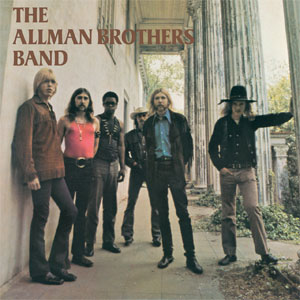
Allman Brothers 1: The Allman Brothers Band

A common misconception, which we admit to holding for some time, is that the Allman Brothers Band fit into the category of “Southern rock”. The truth is that bands like Lynyrd Skynyrd, Molly Hatchet, and the Marshall Tucker Band took the basic template of swamp living, dirt roads, and Confederate flags to another level, spawning any number of rednecks equally defensive of the Stars & Stripes as they are the flag atop the General Lee. Somehow, Kid Rock became a beacon of authenticity, turning his failed white rap identity into that of a yokel pimp unable to wash his hair, grow a full beard, or stay away from a Rock and Roll Hall of Fame dinner. But we digress.

While there are a few songs in their catalog that fit easily alongside “Free Bird”, “Can’t You See”, and other pickup truck anthems, the Allman Brothers Band were foremost a blues outfit that used jazz and psychedelia to color and expand the twelve-bar, three-chord format. Their self-titled debut demonstrates this ably on song after song.

The opening blast of “Don’t Want You No More” works as something of an overture, beginning with one door-slamming theme into another groove, and just when you think the vocals might kick in, it slows and shifts into the next track. “It’s Not My Cross To Bear” introduces the growl of Gregg Allman, not yet 22 but already spinning reels of sound from both the Hammond organ and his own throat. (Duane Allman gets most of the accolades for his slide guitar work, but some of the most exciting parts of the album are when he and Dickie Betts combine for harmonic riffs and solos.) “Black Hearted Woman” is another basic blues, except that the intro’s in 7/4 and most of the chords are complicated ninths. The Muddy Waters classic “Trouble No More” gets a definitive reading, with even an acoustic guitar expertly mixed in the sound picture.

“Every Hungry Woman” begins side two with a funky riff, before getting dangerously close to generic blues. Thankfully, it’s also a decent demonstration of the two drummers, and the next two songs lift the band above boring anybody. “Dreams” is a psychedelic shuffle in waltz time, spinning over the simplest ideas like the stream the boys are shown posing nekkid in on the gatefold. But the true climax is “Whipping Post”. Berry Oakley’s bass establishes the riff in 11/8 for the band to follow. The verses follow a standard meter, but it’s the instrumental parts, the real architecture, that make this such a mesmerizing performance that would only grow onstage.

At only 33 minutes, The Allman Brothers Band can seem occasionally slight, but each of the tracks succeeds, as if they’d been playing together for years. The album has a vibrant, live sound that has us thinking that it was recorded that way. We sure hope it was, as that would only add to the mystique.

The Allman Brothers Band The Allman Brothers Band (1969)—4

Monday, October 21, 2013

Jack Bruce: Songs For A Tailor and Things We Like

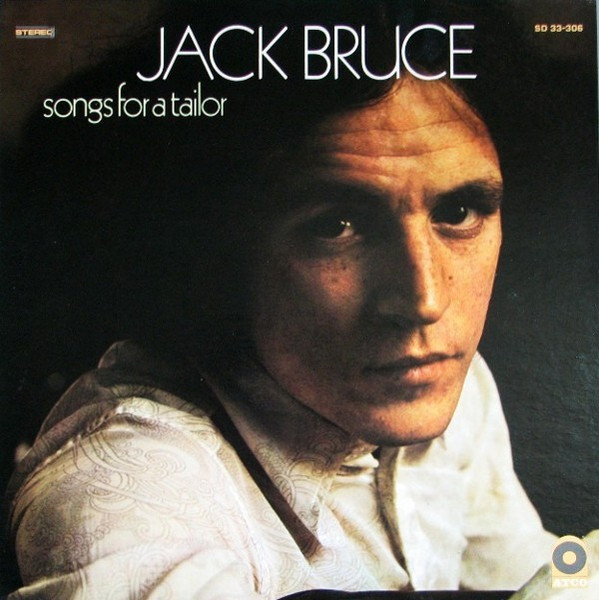
While Eric Clapton and Ginger Baker ran off to form Blind Faith, Jack Bruce got down to work on his own, recording with a jazzy horn section, as well as utilizing Cream lyricist Peter Brown and producer Felix Pappalardi. As a multi-instrumentalist, he could have easily recorded a one-man band album. Instead, Songs For A Tailor presented a grab bag of songs with a rotating supporting cast, including a young Chris Spedding, nodding to his earlier work with the jazz-influenced R&B band the Graham Bond Organisation.

Beatle fans would be curious to hear “Never Tell Your Mother She’s Out Of Tune”, as it credits George Harrison (under a pseudonym) with guitar; good luck hearing it. Mostly it’s an upbeat soul song without much depth, and horns bringing to mind a high school pep rally. Much better is “Theme For An Imaginary Western”, later made famous in Mountain’s heavier version, but still sounding just as grand. “Tickets To Waterfalls” is driven by an elaborate piano and organ arrangement, but the “poetic” lyrics, matched by his typically over-reaching voice, make it tough to really enjoy. A little better again is “Weird Of Hermiston”, first tried for Disraeli Gears but making its debut here. “Rope Ladder To The Moon”, with its percussive acoustic guitar and cellos, brings to mind “As You Said” somewhat.

Side two starts much the same as side one, with “The Ministry Of Bag” offering boogie and not much else. “He The Richmond” extends the 12-bar blues format with a little more strumming. “Boston Ball Game 1967” is just plain odd, with two sets of dueling lyrics sung virtually simultaneously over increasingly atonal horns. Luckily it’s short, making the Tolkien homage “To Isengard” all the more welcome—at least until the song switches to freakout mode. “The Clearout” was another discarded Cream idea, and is much too busy for its own good.

One wants to like this album, but maybe Jack’s ideas weren’t going to have as much mass appeal as Cream’s other singer. The album does have its defenders, who would likely enjoy the alternate mixes and one demo added to the remastered CD. But if you’re looking for a companion to Blind Faith, Songs For A Tailor ain’t it.

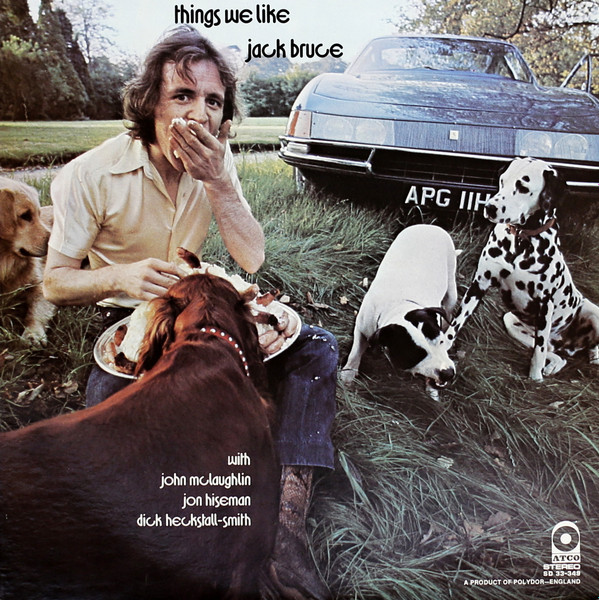
Still, it’s more accessible than the first solo album he’d recorded, back in 1968 in the last days of Cream but not released for another two years. Things We Like was a free jazz session, with Jack playing the double bass against Dick Heckstall-Smith on sax and Jon Hiseman on drums, both veterans of Graham Bond and John Mayall, and just starting out with Colosseum. John McLaughlin played on a few tracks as well, apparently so he could make enough in session fees to join Tony Williams in Lifetime; he makes a difference when he’s present. With the exception of Mel Tormé’s “Born To Be Blue”, this pet project sounds even more thousands of miles away from Cream, and is recommended only for jazz connoisseurs.

Jack Bruce Songs For A Tailor (1969)—
2003 remaster: same as 1969, plus 4 extra tracks
Jack Bruce Things We Like (1971)—2
2003 remaster: same as 1971, plus 1 extra track

Friday, October 18, 2013

CSN 9: CSN Box

While Neil Young had gone through his own ups and downs in the ‘80s, Crosby, Stills & Nash had an even worse ride. Crosby hit rock bottom, went to prison, and emerged clean and sober. Meanwhile, the other two kept their noses clean, more or less, and failed to excite anyone with their solo efforts. American Dream, which had Neil’s full involvement, was less than stellar but sold; 1990’s Live It Up was even worse.

But being a legacy act with a strong catalog, Atlantic was fully behind the idea of a CSN box set, particularly after the success of a similar Led Zeppelin package. Outside of the usual rarities and album cuts, the CSN set boldly incorporated solo and duet work by each of the members (save Neil, who was keeping his best stuff on ice for his own archival brick). The trio took extra care to sequence the wide-ranging tracks into a logical and somewhat chronological order.

Of course, the bulk of the first two discs comes from the extremely fertile cusp of the ‘70s, when all three were positively teeming with tunes. Most of the first album is here, some in mildly different takes or mixes. By the middle of the second disc, they’ve all started their actual solo albums, so the set practically creates an imaginary 1971 album by the trio. The best of everyone’s work from the mid- to late ‘70s also provides a nice reminder as to why we still cared. As is the case with many such sets, the excitement tails off at disc four, where such hits as “Southern Cross” and “Wasted On The Way” share space with some uninspiring ‘80s solo and group work, including a dull remake of “Dear Mr. Fantasy”, ending with the 1970 B-side version of “Find The Cost Of Freedom” to close the circle.

For true rarities, there’s their lush arrangement of McCartney’s “Blackbird” for three voices and guitar, an earlier “Song With No Words”, a true Déjà Vu outtake in “Horses Through A Rainstorm”, and the full nine-minute take of “Almost Cut My Hair” faded on the LP. One of the more daring experiments that works is a studio take of “The Lee Shore”, but with vocals that weren’t added until the ‘90s. Crosby & Nash duet on a nice version of Joni Mitchell’s “Urge For Going”, and all four come together for alternates of “See The Changes”, “Taken At All” and “Homeward Through The Haze”, for those CSNY albums that never happened.

Taken all together, it’s a fine set, complete with detailed notes for each track. Neil’s contributions, while scattered, are pretty essential for his diehard fans too. What still baffles after all these years is what to call the thing; the spines of the disc and the box itself read Crosby, Stills & Nash, while a stylized CSN on the cover, booklet and jewel cases suggests that’s the title. Both, of course, had already been used as album titles. Meanwhile, a two-disc distillation of the set called Carry On appeared in Europe, so it’s too bad they just couldn’t go with that.

Crosby, Stills & Nash Crosby, Stills & Nash (1991)—