Friday, January 31, 2014

Robyn Hitchcock 24: Shadow Cat

Robyn’s leftovers don’t necessarily guarantee buried treasure, You & Oblivion notwithstanding. Therefore fans have grown to be wary when such a collection surfaces. Shadow Cat lists its sources as being from the mid- to late ‘90s, which wasn’t his most fertile period, but luckily the gems overshadow the clunkers.

“For Debbie Reynolds” is a sketch along the lines of “Queen Elvis”, cut short by a ringing phone, and presumably left there. “Never Have To See You Again” is driven by electric chords, and punctuated by silly horns, this time in a good way. “Love Affair” shimmers like an orphan from I Often Dream Of Trains. Anybody who bought this would already be familiar with his rendition of “The Wind Cries Mary”; this demo adds an organ part for color. The exceedingly gentle “High On Yourself” is the highlight for any fans of Trains or Eye, with the priceless line “Let’s go shopping on painkillers”. “Because You’re Over” is a cappella with layered harmonies, but sent through a vocoder or something; as distracting as that is, at least it’s tuneful (which can’t be said about “Real Dot” four tracks later). “The Cat Walks Her Kind Of Line” is an intricate, descriptive instrumental.

Two songs had been available in slightly different forms already; “Statue With A Walkman” is a wonderful find, while a rough version of “The Green Boy” doesn’t grate too much. “Nothing But Time” is intricately picked and mixed with just the right amount of echo, so that even the sillier lines fade into the ether. He’s already written plenty of songs with the word in the title, and “Beautiful Shock” gets a boost from its suggested and literal “electricity”. “Baby-Doll” is mysterious and romantic, but the title track gets to close the program, something of a relative of “Trilobite”.

Shadow Cat didn’t get the widest distribution, even from his latest label. That’s too bad, because it’s one of the better ones from a lengthening period that doesn’t always have high points. Definitely recommended to those inclined.

Robyn Hitchcock Shadow Cat (2008)—3½
Tuesday, January 28, 2014

Bruce Springsteen 13: The Ghost Of Tom Joad

Lest anyone think he was going back to his classic sound, Bruce threw the industry another curve ball. While The Ghost Of Tom Joad was a return to form of sorts, that form was the introspective approach of Nebraska and Tunnel Of Love. These songs are quiet and intimate, demanding attention and not always getting them, portraits of broken men and shattered dreams. You know, the usual happy stuff.

He wisely begins the program with the title track, a blatant reference to the hero of The Grapes Of Wrath, already celebrated by the likes of Woody Guthrie. Starting with a blast of harmonica and swelling to a musical backing not unlike Dire Straits, it eases the listener in. However, even this low-key track is one of the louder songs on the album. A pair of doomed individuals revive the Nebraska connection; the narrator of “Straight Time” struggles with life outside prison, and the difference in occupation makes it clear he’s not the wayward shoe salesman on “Highway 29”. “Youngstown” is whispered in much the same mood until the band joins in after the first chorus, and nobody noticed that it follows the melody and structure of Bob Seger’s “Turn The Page”. That tale of hard times in Ohio is balanced against the sad plight of Mexican immigrants seeking their fortune cooking meth in “Sinaloa Cowboys”; somehow they evaded the border guard who narrates “The Line”, most likely because they weren’t a raven-haired beauty named Louisa.

One of those immigrants might have ended up smuggling cocaine to “Balboa Park”, and while the lyrics of “Dry Lightning” don’t suggest it, there’s still a south-of-the-border lilt to the accompaniment (and the vivid image of the “piss-yellow sun”). “The New Timer” exists to prove that there is no romance to riding the rails, with every “sir” aside bringing us back to Nebraska. Its bleakness enhances the hope running through “Across The Border”, and even its arrangement would make it a good place to end. But Bruce had more to say, with the lengthy anticlimax of “Galveston Bay” and the much shorter “My Best Was Never Good Enough”—a wonderful title, but unfortunately just a string of pointed clichés delivered in a cartoony voice.

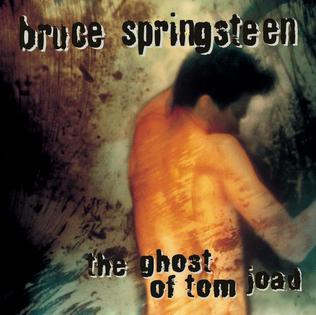
The Ghost Of Tom Joad is not the kind of album that gets blasted from car stereos, or would even get rotation in a record store. It took a lot of balls to release it at the height of the holiday buying season. That it’s not as pointedly bad as Human Touch keeps it from failing; we give him credit for creating music on his own terms, and remembering to keep it simple. His rhymes don’t always deliver on the stories he’s telling, but that can get worked out on the road. And it would, first on a solo tour, then later with a band. (Soozie Tyrell features prominently on the violin here, and would continue to do so.) In all, probably the worst thing we can say about the album is the cover art. And maybe the goatee. (Well, it was the ’90s.)

Bruce Springsteen The Ghost Of Tom Joad (1995)—3

Friday, January 24, 2014

Joe Jackson 15: Night And Day II

After a decade of relative commercial failure, it was just as uncomfortable to watch Joe Jackson begin the millennium with an album that pointedly referenced his last real hit. It’s always a ballsy move to revisit old glories, even more so when you give it a title like Night And Day II. On his own website he questions whether the title was a good idea, so maybe it’s best to think of it on its own, rather than a sequel—much like Harvest Moon only suggested a connection to Harvest.

In fact, anyone who has affection for the first Night And Day would do well not to look for a connection, because while the first album had its moments of brightness, most of the observations in Night And Day II are pretty dismal. One wonders why he insists on living in a city as ugly as the one he describes for 47 minutes—and this was a full year before 9/11.

With the exception of a string quartet, occasional bass, some percussion and some guest vocalists—which by now is a major red flag on any Joe Jackson album—this is a one-man operation. That means he also programmed all the drums himself. Where the earlier album utilized segues, here all the tracks are connected by the same high-hat pattern, no matter the tempo of the song. It starts in the “Prelude” and continues through “Hell Of A Town”, which references a catchphrase from Midnight Cowboy, begins to quote “Chinatown” and even talks about “steppin’ out” (not for the only time). “Stranger Than You” is the closest thing to a single, being the most upbeat track with the catchiest chorus. Any optimism suggested is smothered by the foreboding “Why”, with its fractured English sung by Iranian singer Sussan Deyhim. “Glamour And Pain” features vocals by the mysterious Dale De Vere, who looks strikingly familiar. (Based on the provided photo in the booklet, she would appear to be the artiste’s alter ego.) This lament of a “Superwhore” goes on a little long, broken up by occasional references to “Steppin’ Out”.

With a recurrent electric piano that resembles a busy signal, “Dear Mom” chases somebody’s sister around the city to eventual success but not much hope. Only three years after her appearance on a Metallica album, everybody’s favorite cracked chanteuse Marianne Faithfull takes her turn on “Love Got Lost”, which is one of the better tracks on the album, particularly in the chorus. “Just Because” begins with an extremely tense appearance by the string quartet, demonstrating the paranoid message of the already clichéd lyrical hook. The high-hat lets some Latin percussion come in for “Happyland”. A very pretty, very sad song about a notorious nightclub fire that killed 87 people in the Bronx ten years earlier, the line about “the hottest club in town” is just plain bad taste. The “Steppin’ Out” motif returns again throughout “Stay”, while slow chords and words bring him to settle on doing just that.

In the end, Night And Day II is another album made for a subdued setting, right along with most of his recent work. However, much like someone who’s been prescribed medication to temper a bipolar disorder, the mood never swings wide enough to make you want to spend any more time around the guy.

Joe Jackson Night And Day II (2000)—2½

Tuesday, January 21, 2014

Tom Waits 20: Real Gone

Well, here was something different. Tom Waits had already gained renown for making music out of “found sounds”, and since his eldest son had already started experimenting with turntables, his next album would feature loops built on sounds created by his own throat. The human beatbox is in charge most of the time, and there’s not a piano or any kind of keyboard to be found.

Real Gone is a long album, over an hour. There are songs here, but many of their potential charms are buried under heavy percussion. Even talented stalwarts such as Les Claypool and Marc Ribot struggle to be heard above the din. From time to time, a “song” does emerge; “Sins Of My Father” is the first one in the program, three songs in, but at over ten minutes, it too is easy to shake interest. The cacophony of the track that follows (“Shake It”, if you’re interested) slaps all the dust particles back into the air, with a voice so distorted that it’s impossible to follow with the lyrics (which are not necessarily in order in the CD booklet). That happens a few times on this album.

Another case in point: “The Day After Tomorrow” is a lovely lament, most likely written from the point of view of a soldier stuck in the Gulf. It comes at the end, with a mood not unlike Bob Dylan’s “Restless Farewell”. Then there’s 30 seconds of silence, and another minute’s worth of beatboxing in “Chickaboom”.

There are other wonderful moments on Real Gone, should you have the gumption to wade through an awful lot to get there. “Don’t Go Into That Barn” has clear antecedents on the Bone Machine and Mule Variations albums, leaving the concept to sound a little worn out. “How’s It Gonna End” is quiet and spooky enough to keep you asking the question in the title; the same goes for “Dead And Lovely”. “Trampled Rose” would go on to be part of the wildly popular collaboration between Robert Plant and Alison Krauss, following this original closely. “Green Grass” has an exquisite guitar intro that sadly doesn’t last through the rest of the song.

Such is the way with Real Gone. It’s not the best place to start, and he’s got plenty of other, better albums. Some people think this is one of his best, so maybe they’re right and we’re wrong.

Tom Waits Real Gone (2004)—2½

Saturday, January 18, 2014

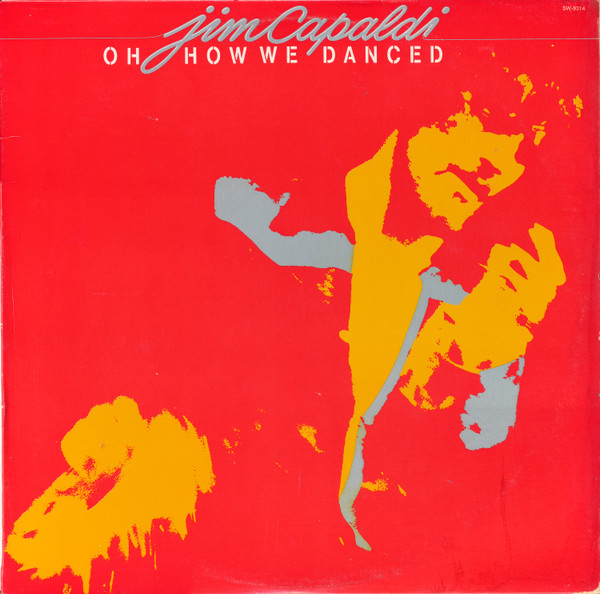
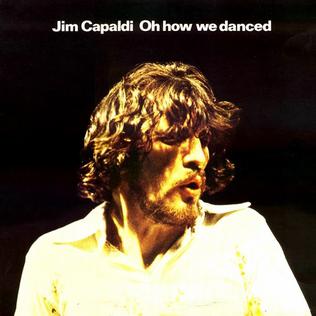
Jim Capaldi: Oh How We Danced

Because Steve Winwood was so dominant throughout every incarnation of the band, it can be easy to overlook Jim Capaldi’s contribution to Traffic, particularly in the years when he ceded the drumkit and limited himself to tambourine and the rarest lead vocal. But a simple glance at the song credits from each of their albums sees him listed as co-composer throughout. Obviously he was important enough to Steve to have him in the band, even when he was just banging a tambourine.

His first solo album apparently came about due to a Traffic stop (sorry, not sorry) due to Steve’s health issues, but Oh How We Danced is key to the larger story because much of it was recorded in Muscle Shoals, with lots of input from that band’s rhythm section, plus plenty of contributions from the rest of Traffic and consistent but not overly showy guitar work from Free’s Paul Kossoff. Musically it’s not very adventurous, but it is entertaining, and that’s the point.

“Eve” (pronounced “ee-vee”) is a sweet and simple love song that builds nicely from the quiet beginning, encompassing a guitar solo and before you know it there’s a horn section. “Big Thirst” has a co-write credit for Dave Mason, and foreshadows some of the moodier Traffic pieces to come. Along with moody strings, there’s a nice counterpoint with Sunny Leslie harmonizing on the choruses. While intended to boogie, “Love Is All You Can Try” deserves a better backing than what it gets, particularly with the track-length guitar solo fighting for space in the mix with Barry Beckett’s piano. “Last Day Of Dawn” is proto-disco, but redeems itself with the self-harmony on the choruses, and boy, is it catchy.

“Don’t Be A Hero” stays down and somber until Dave Mason’s guitar solo breaks in some harsh light, something of an extension of “Big Thirst”. The overly cheery “Open Your Heart” is a Traffic track wisely left over from Low Spark, but it fits well here, and Steve’s harmony is welcome. “How Much Can A Man Really Take?” features a much different band, including former members of Spooky Tooth and The Move, but Chris Wood and Reebop help keep it of a piece with the rest of the album, with Kossoff finally let loose. Finally, “Anniversary Song” is the Al Jolson number that gives the album its title, done here in the Muscle Shoals style, with another blast from Kossoff.

Oh How We Danced provides a nice bridge between Traffic albums, and not just because the rhythm section would soon become part of the fold. Best of all showcases Capaldi’s voice, all too overshadowed in his main gig. (The European reissue CD, in addition to using the cover art that was standard worldwide, includes the B-side “Going Down Slow All The Way” as a bonus track. It’s a simple recording, not much more than a piano and vocal demo with a bass drum and tambourine, but it’s effective.)

Jim Capaldi Oh How We Danced (1972)—3

Friday, January 17, 2014

Genesis 1: From Genesis To Revelation

Say the name “Genesis” in the context of music, and the reaction you get will depend on whom you ask. But positive or negative, the reasons will vary even further.

They started out as a teenage combo formed at a posh college puddin’ private school outside of London. Back then, they had a different guitarist, and were years away from meeting Phil Collins. With the exception of Peter Gabriel’s voice and the occasional Tony Banks piano flourish, From Genesis To Revelation doesn’t sound like the band they’d become. If anything, they sound a lot like the Bee Gees from the same period, with pretty string and horn arrangements tarting up the space.

The music is adventurous pop, and such tracks as “Where The Sour Turns To Sweet”, “The Silent Sun” and particularly “In The Wilderness” (with its “music, all I hear is music” chorus) are nothing to be ashamed of. Only the distorted introduction of “In The Beginning” gives a hint at the experimentation to follow; the rest of the tune is fairly straight, with phased effects on the acoustic. Their manager apparently had the idea to link the tracks and repeat themes, so there’s a hint at some of their hallmarks down the road.

Overall, it’s a nice album, fairly unobtrusive and not at all embarrassing. But it’s also a little ordinary. Nobody bought it when it was first issued, and only after key stages of the band’s worldwide success (as well as that of its lead singers) did it get wider exposure, getting its first release in the US in 1974, and eventually under different titles (such as In The Beginning and And The Word Was) and in different sequences, usually involving some of the contemporary singles. Pointedly, none of these have ever been sanctioned by the band.

Genesis From Genesis To Revelation (1969)—3

Tuesday, January 14, 2014

Jimi Hendrix 22: The Jimi Hendrix Experience

By the turn of the century, Jimi Hendrix had already been best-ofed and anthologized in a few handfuls of hits collections. The current trend was to tell an artist’s (or artists’) story via a box full of alternate, live and/or otherwise unreleased material. Despite having already seen two box sets of such material in the CD era, both had been deleted, so now there was another.

The Jimi Hendrix Experience wasn’t the best title for it, since the band of that name only appeared on about two-thirds of the contents. Still, there was something of an attempt to be chronological, though the first disc does jump around a bit. Rather beginning with the two songs from a concert in Paris—from October 1966, the earliest recordings of the Experience as a band—an alternate mix of “Purple Haze” comes first to entice the non-fanatics, among several outtakes from the debut. Among the more fascinating pieces are the spoken word section used for “Third Stone From The Sun”, isolated and extended for clarity and context, and an early take of “Burning Of The Midnight Lamp”, showing Jimi’s prowess on the harpsichord.

The other three discs proceed from there, with some of the more tantalizing tracks being restored mixes from Crash Landing, plus otherwise orphaned selections from some of the other posthumous albums. “It’s Too Bad” is a lengthy blues jam with Buddy Miles and organist Larry Young that’s a lot better than it reads. By the time you get to the fourth disc, you’re astounded by all the alternate versions of things that might or might not have become part of the fourth studio album.

The live material isn’t all new, coming from the Monterey Pop Festival show, the Stages box, Hendrix In The West, the Isle of Wight and some of the “official bootlegs” sold via mail order directly by the estate; still, it does a nice job of presenting the whole picture. In the end, The Jimi Hendrix Experience demonstrates just how easy it is to put together a set of rare Hendrix material. Indeed, thirteen years later, after Sony/Legacy had unleashed a whole pile of old and new material, the set re-appeared, with four extra songs of varying rarity mixed into the original sequence. You know, so everybody that cared had to buy it again.

Jimi Hendrix The Jimi Hendrix Experience (2000)—3
2013 reissue: same as 2000, plus 4 extra tracks