Friday, October 31, 2014

Who 25: Hits 50

The Who already had too many compilations clogging up shelves, but just like their brethren in the Rolling Stones, a 50th anniversary was apparently enough reason to make another one. Sporting a much more fitting cover (and title) than what the Stones did, The Who Hits 50! was also available in multiple editions, thankfully limited to two CD versions, plus vinyl and Blu-Ray for those with money to burn.

Both begin with “Zoot Suit”, when they were still the High Numbers, and move steadily through the singles. Once they hit the ‘70s, or disc two if you have the double, the selections have to balance between actual singles and key album tracks. Needless to say, the opportunity to simply replicate Meaty Beaty Big And Bouncy has been ignored, with not even all of those tracks represented.

The double disc takes the idea of “hits” to the extreme, seeming to think that anything released on a 45 counts. That’s why their version of “The Last Time” appears, as do “Dogs”, “Call Me Lightning”, “Postcard”, “Trick Of The Light”, “It’s Not Enough” (the non-hit from Endless Wire) and the pointless, clumsy edit of “Won’t Get Fooled Again”. (Kudos for including the long version of “Magic Bus” in glorious mono, and equal demerits for not including the longer, alternate “I’m A Boy”.)

The single disc isn’t too different from the other 37 single-disc CDs that have come out, except for how it finishes. Even though nobody liked it before, and it wasn’t even a hit, “Real Good Looking Boy” (the new song unleashed for their 40th anniversary) appears again, but the big selling point, so they say, is the first new Who track in eight years. “Be Lucky” is either an anthem of empowerment or a snide indictment of modern pop music, complete with an auto-tuned phrase; hardly a classic, but mostly harmless.

That one new track is the only reason why we’ve bothered giving this collection its own post. As good as the majority of the music is, The Who Hits 50! is docked half a point for redundancy. 2002’s The Ultimate Collection is still the best overview of their full career.

The Who The Who Hits 50! (2014)—

Tuesday, October 28, 2014

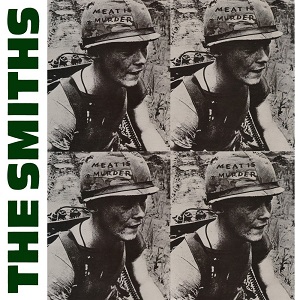
Smiths 3: Meat Is Murder

The Smiths seemed to save their most refined pop for their singles, making their albums a platform for grand statements less likely to hit the charts. And in those “Frankie Say Relax” times, could there have been a more bold attitude than Meat Is Murder?

“The Headmaster Ritual” is a strong opener, an excellent mix of groove and subtle changes, upon which Morrissey’s tale of schoolboy woe sits within a five-note range. “Rusholme Ruffians” is a rockabilly shuffle, a carefree decoration for a song filled with even more violence and fear. It’s not easy to follow the free-verse of the vocal, but we can assume that sound effect at the end is some kind of carnival game shutting down. There’s a similar retro-twang to “I Want The One I Can’t Have”; the band are credited with the album’s production, so the instruments are mixed better, but Morrissey still sounds like he’s singing in a closet, and we don’t mean that metaphorically. Just as muddy is “What She Said” with some near-metal bursts from Johnny Marr. The high-point is “That Joke Isn’t Funny Anymore”, which lives up to its archetypically lengthy title, and sports a fake fade.

In the US, “How Soon Is Now?” was added to the top of side two—a wise choice, since it not only made this stellar track more available, but improved the album as a whole. “Nowhere Fast” is the best rockabilly raveup here, with excellent, surprising rhymes to boot. While seductively sad, “Well I Wonder” is one of their least successful mopes, and the atmospheric rain over the end makes it even more maudlin than it needs to be. (Especially since the effect always ends up sounding like a toilet running or somebody filling same.) “Barbarism Begins At Home” isn’t much more than a groove that goes on for seven minutes; excellent as it is, and particularly that bass, it would have been better served as a B-side or an extended dance mix. And since the first album ended with a somber elegy for innocent victims, the title track uses buzzsaw sound effects and plaintive moos and bleats to illustrate Morrissey’s vegetarian stance.

Violence certainly pervades Meat Is Murder, whether perpetuated on students or farm animals, by teachers and parents, or between society classes. The Smiths certainly weren’t shy about confrontation, but they’d yet to learn how to really seduce their audience.

The Smiths Meat Is Murder (1985)—3

Friday, October 24, 2014

Joy Division 4: Substance

By the mid-‘80s, as New Order’s status in what used to be called college alternative grew, the legend of Joy Division grew with it. Their three albums were reissued, and a year after a New Order compilation of the same name, Substance collected many of the singles, 12-inch and EP tracks (more so if you got the CD, or certain countries’ edition of the cassette, which most consumers in 1988 were buying anyway) that hadn’t made it to Still.

Singles, by their very nature, had to be more immediate to make an impact, so most of the tracks sampled here are more upbeat, direct and gloom-free compared to much of Unknown Pleasures and Closer. Even more striking are the earliest songs, recorded with punk fervor while the band was still learning their instruments and Ian Curtis had yet to develop the lower-register croon that would become his signature. Listen to “Warsaw” and “Leaders Of Men” and try to convince yourself it’s the same guy on “Transmission” and the later 12-inch version of “She’s Lost Control”. However, the key selling point for the album is “Love Will Tear Us Apart”, the iconic single released just weeks after Ian hung himself. With near-jangling guitars, a bass line matching the synth note for note, the high-hat work coming this close to collapsing and Ian’s vocal blending gloom with pop, it was and remains a hell of a way to say goodbye.

Substance certainly fills in the Joy Division story, but it doesn’t close the book. Shortly after a New Order best-of came out in the ‘90s, so did one for the original band. Permanent offered a mostly chronological mix of single and album tracks, bookended by two different mixes of “Love Will Tear Us Apart”. For an even wider picture, the Heart And Soul box set presented “their entire studio output” on the first two discs, a third disc of further studio tracks, outtakes and BBC sessions, and a fourth disc sampling four live shows. (This pricey import was reissued, four years after its initial appearance, by Rhino.) Other compilations followed, one cramming songs from both bands onto one disc, others offering alternate mixes and more BBC material, but the choices remain the same as ever: 1) the two albums and the two compilations, 2) Permanent for the most succinct overview, or 3) the box set for virtually everything.

Joy Division Substance (1988)—
2015 remaster: same as 1988, plus 2 extra tracks
Joy Division Permanent (1995)—4
Joy Division
Heart And Soul (1997)—

Tuesday, October 21, 2014

Jimi Hendrix 26: People, Hell And Angels

Out of nowhere came People, Hell And Angels, another Hendrix vault compilation. Something of a counterpart to Valleys Of Neptune, it served up more studio takes that might have made up his fourth album, recorded in 1969 post-Noel and touching on the Band of Gypsys.

As should be clear by now, Jimi recorded several takes and arrangements of his works in progress, depending on his mood and who was around. So here’s another “Bleeding Heart” (this one slow), another “Hear My Train A Comin’” (more like the more familiar live versions), a decent “Earth Blues” with the Gypsys, and an early stab at “Izabella” with the expanded Woodstock band. Of the unfamiliar material, “Inside Out” comes from mid-1968, pre-Ladyland, a duet with Mitch embellished by Jimi’s own bass part and more guitar. Sadly too short is “Villanova Junction Blues”, otherwise recorded only in jams and at Woodstock.

The album also attempts to further “right” some of the liberties taken by Alan Douglas forty some years earlier. Along with a longer excerpt of “Easy Blues”, last heard on Nine To The Universe, “Somewhere” is rescued somewhat from Crash Landing, in a take featuring Stephen Stills on bass. (That album’s title track also appears in a different but unaltered take, while what used to be known as “Captain Coconut” is added as a bonus on the Target stores edition of the album, in all of its twenty-minute splendor.) “Hey Gypsy Boy” was first heard on Midnight Lightning, supposedly recorded the same day as “Let Me Move You”; while funky and fiery, it’s basically a showcase for vocalist/saxophonist Lonnie Youngblood, and therefore belongs on a collection of Hendrix session work. Similarly, “Mojo Man” is a completed track by sometime backup singer Arthur Allen to which Jimi added a lead part.

The Estate stated that People, Hell And Angels would be their final archival release of studio material; time would prove it wasn’t. We can recommend it as a worthy installment, along with most of the studio releases of the last two decades, but that doesn’t excuse the anachronistic cover art. Really, a pile of songs from 1969 and the best they could do was a shot from two years earlier?

Jimi Hendrix People, Hell And Angels (2013)—3

Friday, October 17, 2014

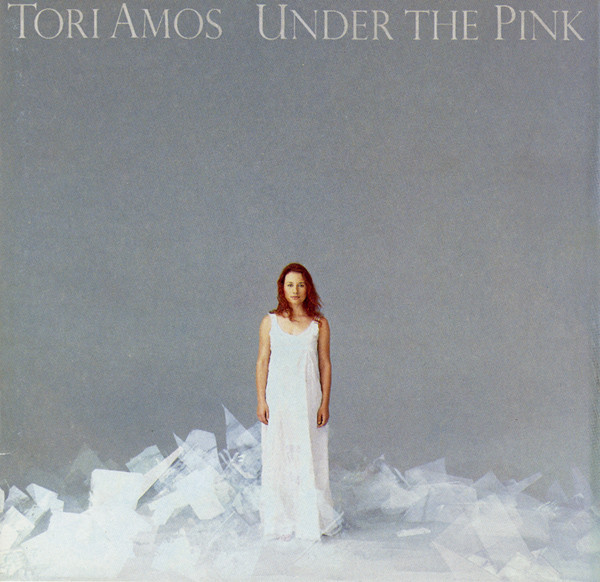
Tori Amos 2: Under The Pink

Riding high on the success of her real debut, playing songs to adoring young females as well as frat boy jocks who thought she was pretty hot, Tori Amos had a ready-made audience for her next album. Under The Pink arrived while her debut still had legs; her confidence showed in her experimentation with different keyboards and rhythms, but everything sounded enough like Little Earthquakes without being a retread.

Accurate or not, “Pretty Good Year” is an apt way to start, a piano-and-vocal piece exploding with drums and strings for the bridge. The familiar setting is knocked askew with the offbeat meter and guitar squeals under “God”, the provocative first single. A heavily “prepared” piano is the only accompaniment for “Bells For Her”, and it does indeed suggest distant, ancient church bells. After that drifts off, “Past The Mission” starts as a jaunty song, turning to a more somber chorus with hints of murder in the lyrics and doom in the voice of Trent Reznor in the harmonies. “Baker Baker” is a mournful twist on the nursery rhyme, pleading to be made “whole again”. She can tug heart strings when she wants to, so while “The Wrong Band” and “The Waitress” provide dark humor, they’re not as effective.

Of course, trying to decode her lyrics can take up a lot of time, so the power of a tune like “Cornflake Girl” makes up for what you haven’t figured out yet. The second half of the song, devoted to an extended piano solo and a soulful choir of women, still stands neck hairs. (As for her assertion that she’d “never been a cornflake girl”, YouTube says otherwise.) The balance of the album is devoted to lengthier epics, beginning with the remembrance of sexual awakening in “Icicle”. It’s in the same spot as “Mother” from the first album, from its occasionally solo to a distinct Kate Bush moment every time she sings “I should have”. “Cloud On My Tongue” is almost as hushed, but a little shorter and more stirring. Something in the “doot-doot-DOO” rhythm of “Space Dog” always reminded us of Otto singing along to his headphones on The Simpsons, so the other musical motif works better (even with yet another shout-out to Neil Gaiman). Finally, “Yes, Anastasia” is a nine-and-a-half-minute epic touching on the life of the titular tsarina, but probably violence in general.

So in this case, more of the same was a comfort. Under The Pink made an excellent follow-up, and to her credit, her next albums would go further away from the “girl and her piano” stereotype. She would retain a strong following, but never really sounded like this again. (The backlog of extras from the sessions wasn’t as deep as those for the first album, but the eventual expanded version of the album added seven rarities, one remix, and a handful of live performances cheered on by her faithful.)

Tori Amos Under The Pink (1994)—4
2015 Deluxe Edition: same as 1994, plus 15 extra tracks

Tuesday, October 14, 2014

Genesis 5: Selling England By The Pound

While working on their next opus, Genesis prepared a live LP to tide over fans. Live offered faithful, well-recorded renditions of five lengthy fan favorites, including an excellent take of “The Knife” with Phil Collins and Steve Hackett, neither of whom played on the original album track, which this supersedes. (“Supper’s Ready” was destined for the album but ultimately excluded, as the band had yet to figure out how to configure a three-sided live album.) The UK got the album first, while Americans had to wait until the following year, by which time their most accessible album to date had been released.

By “accessible”, we’re not suggesting that Selling England By The Pound sounds like their ‘80s blockbusters, but because there’s less emphasis on dark mythology and bizarre sexual encounters—at least not on the surface, anyway—what leaps from the speakers (or earbuds, or what have you) are the melodies, the songs, the hooks, demonstrated with the first three songs on the album. There is mythology of a sort, but as suggested by the album title, the songs present images of Britain that seem both archaic and modern. “Dancing With The Moonlit Knight” presents the first of many Anglo puns in its title, proceeding through lilting melodies and pastoral imagery to more violent passages, all suggesting some triumphant tale but disguising a seething indictment of commercialism. A menacing hum turns out to be an aural representation of a lawnmower, as the narrator of “I Know What I Like (In Your Wardrobe)” sings his defense of his simple life in the band’s first great, unlikely pop hit. (In another case of conceptual continuity, the phrase “the way I walk” will return in the Genesis saga.) It’s incredibly catchy, marching away to the sound of the lawnmower. “Firth Of Fifth” sports a gorgeous solo piano introduction, leading nearly seamlessly into the song proper, with driving drums, thick Hammond organ and fuzz guitar in unison with the bass. There’s a brief verse and what appears to be a bridge, but the meat of the song is in the instrumental sections. When the intro returns following the flute solo, check out Phil’s rolls, and the way Hackett ends up playing the same solo the flute played on guitar. Throughout, Tony Banks shows his deftness at the Mellotron. After a slight ritard, the verse returns for the song to fade on the piano. Those three tracks form such a majestic core that “More Fool Me” is easily overlooked. Its overall sound (and lovelorn content, odd for this band at the time) points towards the latter half of the decade, and not just because, as the sleeve pointed out, helpfully, “vocals: Phil”.

The second side is more challenging. Given the medieval red herrings on side one, it shouldn’t be too much of a shock that the participants in “The Battle Of Epping Forest” aren’t kilted, bearded warriors but London street gangs (think the Krays and their contemporaries). It gives Peter a chance to try out some more of his wacky voices, and indulge in the rapid rhymes that would take over his next opus. A title like “After The Ordeal” would tend to suggest some kind of continuity with the previous track, but is just an instrumental, mostly following a mandolin-like riff suggesting yet another ocean voyage, and a verse that was never written. It provides a sorbet before the final epic. (You know it’s going to be a big deal because of its plucked intro, similar to “Supper’s Ready”.) The story within “Cinema Show” isn’t much—Romeo and Juliet meeting up at the movies, with Romeo hoping for a matinee of their own afterwards—but the music develops and builds to again, something majestic. If you’re not paying close enough attention, the brief “Aisle Of Plenty” moves neatly from “Cinema Show” into a reprise of “Dancing With The Moonlit Knight.” (Clever boys, they.)

Genesis hadn’t figured out how to be consistent yet, but Selling England By The Pound will reward those who have stuck around this long. When combined with the previous two, the truly great pieces overshadow the less successful ones, and only improve with familiarity.

Genesis Live (1973)—3
Genesis
Selling England By The Pound (1973)—

Friday, October 10, 2014

Van Morrison 27: Too Long In Exile

Those who thought the last, double album was too damn long will be only slightly relieved with this single disc, except that, at 77-plus minutes, it’s the equivalent of a two-record set. Too Long In Exile is another case of Van throwing all his ideas at one bucket, from the new songs complaining about the music business to the covers of jazz and blues standards and, most astonishingly, remakes of his own music. (Well, just one, but still.)

The sound for much of the album continues from the last one, with Georgie Fame, Candy Dulfer and the rest of his usual suspects. The title track is lyrically vague but catchy, followed by the paranoid “Bigtime Operators”, a subject he’s not about to abandon anytime soon. “Lonely Avenue” is a terrific version of the Ray Charles classic, up until where he sneers the word “you” approximately 73 times (we counted) in eight out of twelve bars. “Ball & Chain” is a backhanded compliment, nicely arranged with a developed melody and tossed-off lyrics. Other Van experts have pointed out that “In The Forest” takes its melody from “Orangefield” and its content from similar evocations of his imagination. Meanwhile, “Till We Get The Healing Done” takes the changes from “Oh The Warm Feeling”, but its attack is a little too relentless over eight minutes to affect any actual healing.

While it undoubtedly helped sell the album, there’s no other excuse for this tepid rendition of “Gloria”, outside a John Lee Hooker album wherein the blues legend sings a pile of songs with modern ones. Meanwhile, the CD booklet helpfully offers a transcription of all the words, to emphasize every spelling of the name. After a half-decent take of “Good Morning Little Schoolgirl” (making, surprisingly, its first-ever appearance on any Van album), John Lee comes back to offer extemporaneous counterpoint to “Wasted Years”, which fades out while they’re still discussing them. And from here, the album actually gets better. “The Lonesome Road” and “Moody’s Mood For Love” are two excellent renditions of jazz standards, though we could do without the other singers taking a verse on the latter. “Close Enough For Jazz” is a sprightly instrumental featuring Van’s own deft acoustic guitar, while the equally toe-tapping “Before The World Was Made” sets a Yeats poem to somebody else’s music. The most interesting stretch on the album is reminiscent of the climax of Into The Music: here, he begins with “I’ll Take Care Of You” by Brook Benton, leads it via key change into an “Instrumental” with his own alto sax, then tells the band to go back to the first part, which he copyrights as “Tell Me What You Want”.

There’s an album’s worth of music here that would be considered good, even by his own standards. But putting “too long” in the title turns out to be somewhat ominous. Too Long In Exile instead becomes too much to take at once. Take all the covers—basically, “Lonely Avenue”, “Good Morning Little Schoolgirl” and everything from “The Lonesome Road” on—and you have a pretty solid set. Here they prove how ordinary the rest of the songs are.

Van Morrison Too Long In Exile (1993)—3