Friday, January 30, 2015

Smiths 4: The Queen Is Dead

The third LP (not counting compilations) by The Smiths has grown in such stature over the years that it hasn’t only topped the best-of lists of 1986, or even the whole decade. Some pundits have gone as far to declare that The Queen Is Dead is the greatest album of all time. While it’s clear those people haven’t heard Mean Business, opinion is one thing and fact altogether another. It’s a good album, but not great, and it should soon be clear why.

The title track is a terrific way to start, with a snippet from some little-known film Morrissey fetishized, cut off by galloping drums and a strong band performance driving the cutting lyrics. Here the guitar is more part of the sound than dominating it. “Frankly. Mr. Shankly” is something of an ‘80s version of “Take This Job And Shove It”, but with the knowing, parodic angle of the narrator. Any chance of “I Know It’s Over” being just another gloomy lament of unrequited love is dashed by beginning (and repeating) “Oh mother, I can feel the soil falling over my head.” In between, he does manage to stir some sympathy as well as empathy. The album’s clunker is “Never Had No One Ever”: it sounds too much like the song that precedes it, retreads the same territory, and is about three times as long as it needs to be. Here are some options: either incorporate some of the lyrics into other songs, or move it to the end of the side, change the arrangement, and make it only as long as it needs to recite the lyrics once, and done. To their credit, the side ends instead with “Cemetry Gates”, a jaunty stroll through said territory, where Our Hero sees the graves of people who’ve died and it seems so unfair that he wants to cry.

Side two, however, is enough to suggest that all those best-album-ever claims might be on to something. Two of their best singles dominate: “Bigmouth Strikes Again”, with its relentless attack and sped-up counterpart; and “The Boy With The Thorn In His Side”, a gorgeous lament decorated by Johnny Marr’s deft orchestration. “Vicar In A Tutu” returns to the rockabilly shuffle that dominated the previous album, and a much better pastiche too. “There Is A Light That Never Goes Out”, Mozzer’s own “My Way”, would have been a fine closer, that place is instead bestowed upon the one-liner of “Some Girls Are Bigger Than Others”. While countless songs utilize the fake ending, this one sports a fake beginning.

The Queen Is Dead was easily the band’s best album to date, and they knew it. Their confidence extended to the artwork, which challenged their apostles to squint at the tiny pink lettering on a dark green background. In many ways, it epitomizes what people both love and hate about the band today. Thus it made sense for a reissued, repackaged edition to appear a year after the album’s 30th anniversary. The double-disc expansion added a pile of demos slash early takes plus familiar B-sides. The seven-minute version of the title track is a joy, though the demo of “Never Had No One Never” is marred by a crazy trumpet solo and Morrissey’s laughing over the extended fade. Naturally any fanatic would want the Deluxe Edition, which added a DVD with a high-resolution mix of the album plus a short film, and a third CD touted as “live in Boston”. While actually recorded some thirty miles outside that city’s limits, and not the complete show, it sports a different setlist from the gig recorded two and a half months later and eventually released on Rank.

The Smiths The Queen Is Dead (1986)—4
2017 expanded edition: same as 1986, plus 13 extra tracks (Deluxe Edition adds another 13 tracks plus DVD)

Tuesday, January 27, 2015

Kinks 1: You Really Got Me

Often considered one of the best bands of the British Invasion, the Kinks began as just another London-based white R&B outfit. Then Ray Davies started writing songs for the band, and thus began a career and a rabid cult following. (We considered writing “kult”, but it’s too easy to overdo it on the letter K, so we’ll try to avoid that.)

By the end of the ‘60s, Ray (and the Kinks) would redefine the concept album, and continue to chase the perfect story through the ’70. But that was all in the future. Like everybody else who arrived in 1964, they have a discography that’s not easy to navigate. At home, their singles and LPs didn’t always overlap, and EPs were frequent. Here in the US, their label (Reprise) did their best to soak all they could out of what was available.

Their first American LP wisely took its name from their first hit single, and the resultant You Really Got Me merely presented the first British LP less three tracks. That hit single, one of the greatest rock ‘n roll tracks ever, is the best thing on the album, which leans more heavily on covers than Ray’s originals. And those are pretty good. While catchy, “So Mystifying” is a rewrite of “It’s All Over Now”, while “Just Can’t Go To Sleep” is a little better, despite its structural similarity to the more enduring “Stop Your Sobbing” on side two.

Dave Davies was a better guitar player than a singer, his fretwork giving Keith Richards a run for his money. “Beautiful Delilah”, “Long Tall Shorty” and “I’ve Been Driving On Bald Mountain” (the latter sporting a nice acoustic guitar, but coming two tracks after “Bald Headed Woman”, also foisted by producer and copyright holder Shel Talmy on the Who) spotlight his nasal, breathless yell. But Ray wasn’t much better on the covers; witness Bo Diddley’s “Cadillac”, “Too Much Monkey Business” and particularly the anemic take on “Got Love If You Want It”.

Obviously pushed into doing an album before they were ready, You Really Got Me is not a stellar debut on par with those of their countrymen. As London art school types go, at this juncture the Stones were a better band, with better material.

When Rhino reissued a handful of early Kinks albums in 1988, You Really Got Me retained its title, but replicated the British LP lineup, and added three early single tracks (including “Long Tall Sally”, which both precedes and pales to the Beatles’ version) to the CD. These days, all the bases are covered by the deluxe version of Kinks, which expands on the British update from 1998, with both mono and stereo versions of the album, timely singles and EP tracks, and a handful of BBC sessions. Taken all together, it’s a better representation of what the band, and especially Ray, could do.

The Kinks You Really Got Me (1964)—2½
Current CD equivalent: Kinks

Friday, January 23, 2015

Van Morrison 28: A Night In San Francisco

Right on schedule, another decade meant another live album from Van Morrison. A Night In San Francisco returns to the “show band and revue” mold of It’s Too Late To Stop Now, replacing the sweat with polish. His big band is bolstered by special guests, and each song tends to meander into quotes from other songs, some listed on the back cover, others buried within the individual credits. Georgie Fame is still prominent in the mix, as is a young vocalist named Brian Kennedy. More on him later.

Beginning with a sprightly “Did Ye Get Healed?”, he runs roughshod through “It’s All In The Game” before introducing special guest Candy Dulfer for “I’ve Been Working” and “I Forgot That Love Existed”, the latter quoting from “All Along The Watchtower” just at the end. “Vanlose Stairway” gets an excellent reading, despite too many backup singers echoing his every word. One of those is Brian Kennedy, who gets to sing most of “You Make Me Feel So Free” by himself, and duets with Van’s daughter Shana on “Beautiful Vision”. Van comes back and somehow takes “See Me Through” into a repetitive segment about soldiers of fortune and chain gangs, and into a decidedly funk-free “Thank You (Falettinme Be Mice Elf Agin)”. A cover of “Ain’t That Lovin’ You Baby” makes up for it. A couple of blues medleys are an excuse to drag Jimmy Witherspoon and Junior Wells out, before Brian Kennedy sings most of “Tupelo Honey” by himself. “Moondance” is played straight, with plenty of soloing, and wandering through “My Funny Valentine”.

That would be enough for one album, but there’s still another disc to go. Georgie Fame leads the band through “Jumpin’ With Symphony Sid” before Van pulls “It Fills You Up” out of mothballs. “I’ll Take Care Of You” (which closed the last album) is stretched out to 16 minutes via “It’s A Man’s, Man’s, Man’s World”. The emcee baits the crowd at the end, and the virtual encore is another long track using “Lonely Avenue” as a launch pad, quoting from other songs by Sly Stone, Roy Orbison and Van himself along the way, plus another appearance by Jimmy Witherspoon. “So Quiet In Here” makes a rough switch to Sam Cooke’s “That’s Where It’s At”. “In The Garden” is taken at about twice the original speed, wanders into “Real Real Gone” and has Brian Kennedy singing “You Send Me”. He also sings most of “Have I Told You Lately”, the crowd cheering Van when he returns to finish it. Finally, “Shakin’ All Over” moves into “Gloria” by way of a minute-long cameo by John Lee Hooker. (Because they could, a later upgrade of the album added a funky mesh of “Cleaning Windows” and “The Street Only Knew Your Name”.)

There is an awful lot of music here, and they would seem to have captured a good night, except that A Night In San Francisco is sourced from three shows. But it’s an exhausting listen, particularly if you’re not a fan of Brian Kennedy, and would much rather hear Van sing his own songs. Moreover, it’s not the type of thing you’ll play often, just because of how long it takes to get through it all.

Van Morrison A Night In San Francisco (1994)—3
2008 CD reissue: same as 1994, plus 1 extra track

Tuesday, January 20, 2015

Gene Clark 4: White Light

While he wasn’t as prolific as his previous bandmates, it seems that whenever Gene Clark had enough songs written, they were worth recording. That’s certainly the case with White Light, often referred to as Gene Clark due the title only appearing on the labels. Produced by Jesse Davis (temporarily shedding the “Ed”), it’s a lowkey volume of understated artistry, the highly poetic songs mostly speaking for themselves without any gratuitous embellishment or kowtowing to production tricks.

The album works best when it’s just his acoustic guitar and voice, as in “With Tomorrow” and “For A Spanish Guitar”. These alternate with more country-rock fare, like “The Virgin” and the title track, where most of the solos come from his own harmonica rather than the producer’s lead guitar. The unabashed love songs “Because Of You” and “Where My Love Lies Asleep” find a happy medium, the latter very much indebted to the Stones’ “No Expectations”. One surprise is his cover of “Tears Of Rage”, the Basement Tape tune that famously opened the Band’s first album. It’s followed in the same key, tempo, and instrumentation as “1975”, which must mean something.

White Light is worth hearing if you can find it. The Sundazed label, as well as A&M, has kept it in print, and the current streaming version adds five bonus tracks from a 2002 European CD, including an alternate mix of “Because Of You” and the most staid cover of “Stand By Me” you’ll ever hear.

Gene Clark White Light (1971)—3

Monday, January 19, 2015

Housekeeping Alert

In our constant quest to be all things to all people, we finally addressed David Bowie’s true debut album, which we didn’t bother covering six (!) years ago; it can be found in its proper chronological place in the archives. Also, we’ve gazed closer at several albums previously doubled up, and given each its own entry, as befits a comprehensive overview. If you don’t want to read those, here’s one of the greatest rare Bowie songs, courtesy of Ricky Gervais.

Friday, January 16, 2015

Frank Zappa 24: Studio Tan

The next album either released against Frank’s will or sequenced as heard, Studio Tan presented a sophisticated program of music primarily recorded roughly four years earlier, during several sessions involving large ensembles, one of which was credited the Abnuceals Emuukha Electric Symphony Orchestra, a name last heard on Lumpy Gravy. (For those who like conceptual continuity, this album consists of sides eight and three, respectively, of Läther. For those who don’t know what this means, we’ll try to explain it in due time.)

“The Adventures Of Greggary Peccary” is something of a sequel to “Billy The Mountain”, and not just because it mentions that character or even because it takes up a whole side. No, Greggary is an actual peccary (look it up) who runs a company with a stenographer pool and invents the calendar. The story is distracting enough, given Frank’s own smug narration alternating with his voice sped up to play Greggary’s part. Musically, it’s reminiscent of parts of Waka Jawaka and The Grand Wazoo, and covers all kinds of themes that had been worked on over the years. It’s certainly designed to tell a story, even if the story itself defeats its own purpose.

“Lemme Take You To The Beach” is dominated by another sped-up voice, returning to the teen spoofs of the old days over a surf parody, featuring none other than Grand Funk Railroad’s Don Brewer on bongos. Thankfully, the vocals end there. “Revised Music For Guitar & Low Budget Orchestra” is a shorter version of a piece originally heard way back on the Jean-Luc Ponty album. Finally, “RDNZL” (think a cross between “redundant” and “Rapunzel”) begins with some intricacy, before developing into another two-chord vamp over which Frank can play his guitar. Ruth Underwood shines on the vibes, as always, and George Duke gets to take a tasty solo.

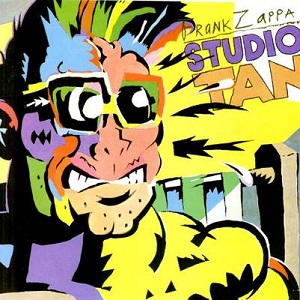
Studio Tan is not the best place to start with Zappa, and even the cover art (not commissioned by him, but eventually approved) should be an indication that this is something different. It likely makes more sense in a different context.

Frank Zappa Studio Tan (1978)—2½

Tuesday, January 13, 2015

Joni Mitchell 10: Don Juan’s Reckless Daughter

As if her contemporary jazz leanings weren’t enough of a challenge, now Joni unfurled a double album of music more experimental than anything she’d yet done. Don Juan’s Reckless Daughter tore apart song structure even farther than Hissing Of Summer Lawns did, almost daring listeners to try and keep up.

All double albums need to start with a fanfare of sorts, and this one does too. Beginning with the atmospheric guitars and wordless vocals of the “Overture”, there’s a sharp segue into “Cotton Avenue”, a fairly straightforward, snappy jazz lope. Jaco Pastorius plays bass throughout the album, and his approach dominates “Talk To Me”, which recalls parts of Hejira and includes an ill-advised chicken impression. (The recurrent 12-string has us thinking of Ralph Towner.) “Jericho” is reprised from its debut on Miles Of Aisles, given a more cohesive arrangement away from the L.A. Express.

Because it takes up all of side two, “Paprika Plains” is the centerpiece, a sixteen-minute piano improvisation with lyrics and painstakingly arranged orchestra. The first few minutes are wonderful, since we always love hearing Joni and her piano, but the final three minutes or so are a delightful resolution, when a rhythm section plus Wayne Shorter’s soprano sax joins in. Ambitious as it is, it still belongs here.

“Otis And Marlena” is more welcoming, more like the accessible Joni strums of recent albums, taking a sudden shift at the end to set up “The Tenth World”, several minutes of Latin percussion featuring vocals from Manolo Badrena of Weather Report. The percussion continues on “Dreamland”, but this time supports a better vocal arrangement from Joni herself.

Things get back to normal somewhat on the final side. The title track sports a guitar rhythm and counterpoints very close to that of “Coyote”, so much so that it almost seems like the same song. “Off Night Backstreet” does evoke a slightly urban atmosphere, and “The Silky Veils Of Ardor” is just Joni and her guitar (more than one, actually) in the same mood as the “Overture” nearly an hour earlier.

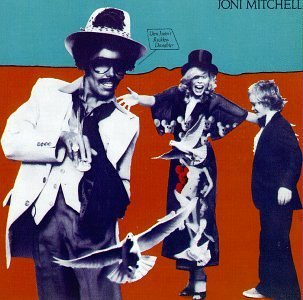
Initial reaction to Don Juan’s Reckless Daughter was less than kind, but just as with her previous “failure” (as some considered Hissing Of Summer Lawns was), there is some excellent music below the ornate wrapping. Some trimming here and there would easily have made it a stronger single album, but Joni always played by her own rules. (To wit: the original album cover included a photo of Joni in blackface as her “alter ego” Art Nouveau on the front, as well as a shot of young Joni in Native American garb on the back with a speech bubble reading “How”. When the album was remastered and reissued in 2024, new artwork was substituted with no fanfare.) Dive in and be rewarded.

Joni Mitchell Don Juan’s Reckless Daughter (1977)—3½