Tuesday, September 8, 2020

Bryan Ferry 4: In Your Mind

Seemingly freed from the shackles of Roxy Music, Bryan Ferry’s next solo album found him… writing original songs and recording them with various members of the band. There’s not a single wacky cover tune on In Your Mind, nor is there a single trace of camp or irony.

“This Is Tomorrow” is a fairly ordinary track, except for the instrumental bridges that hit other chords, while “All Night Operator” is proto-pub rock. “One Kiss” fades out on a drum pattern much like that which opens Bowie’s “Five Years”. With its prominent electric piano, “Love Me Madly Again” recalls the dirty skank of “Editions Of You”. It’s also the longest track, at over seven minutes. “Tokyo Joe” continues the vibe, though the “Oriental” touches in the strings are little overdone. “Party Doll” keeps up the dancing beat, and it’s not until “Rock Of Ages” that some transitory ambience, but even that gives way to another upbeat track. The title tracks provides a similar tease.

Except for the wall of saxophones—not provided by Andy Mackay, by the way—In Your Mind might as well be a Roxy Music album, following as well as it does from the more mainstream track they’d started to find. While it’s fairly ordinary, without a lot of variety, it’s also harmless.

Bryan Ferry In Your Mind (1977)—3

Friday, September 4, 2020

Genesis 19: Archive

With the band all but over, the longtime members of Genesis convened to compile a box set of rarities. Rather than cram all their incarnations into a single sprawling compilation, Genesis Archive 1967-75 wisely concentrated on the Peter Gabriel years. In an eccentric move, but ultimately a method that enhanced the listening experience, the program went backwards, kind of. (We’ll explain.)

The first two discs are devoted to the only professionally recorded live performance of The Lamb Lies Down On Broadway. The sound is terrific, the rhythm section and keyboards tight, and Peter’s occasional song introductions attempt to shed some light on the work’s thick plot. Because many of the songs as originally performed had less-than-stellar vocals due to the costumes he wore onstage, Peter re-recorded an indeterminate portion of the vocals specifically for this set. Steve Hackett allegedly redid some of his guitar parts too. Because (they said) the tape ran out for “It”, that song is included in its studio incarnation with all new vocals.

The third disc begins with five songs from a 1973 concert at London’s Rainbow Theatre—four from Selling England By The Pound, plus “Supper’s Ready”, the latter supposedly with new vocal parts as well. A BBC performance of “Stagnation” with the then-newly recruited Steve Hackett and Phil Collins is excellent. Three rare singles fill the rest of the disc. “Twilight Alehouse”—originally from the Foxtrot era but eventually released as the B-side to “I Know What I Like”—is unsettling in its portrait of an ordinary yet disturbed man (as opposed to fantasy or mythological creature) finding solace in alcohol, but the instrumental break is worth it. The standalone “Happy The Man” single sounds almost like a parody of Cat Stevens (despite the alarming rhyme “like a nun with a gun”). The drastically re-arranged, re-recorded single version of “Watcher Of The Skies” cuts out the entire Mellotron intro, sticks to the verses, and fades on a chant.

The fourth disc is the most challenging, simply because it goes way, way back to when they were just kids starting out, before Steve and Phil. Some of these are more historically than musically interesting; good luck enduring “Let Us Now Make Love” without cringing. A strings-less mix of “In The Wilderness” suggests that a stripped-down version of the debut might be of interest, as are such demos as “Dusk” and “She Is Beautiful”. A few tracks recorded for the BBC and nowhere else are also unique in that Peter shares some vocals with Tony Banks and Anthony Phillips. The bulk of the disc predates the first album, and includes even more straight pop and love songs than anything they’d do until the ‘80s.

Coming at a time when Peter was supposedly hard at work on his next album, the Genesis Archive reminded people who’d given up on the modern version of the band where they’d come from. It didn’t do Phil Collins any favors, unless you listen closely enough to the drums.

Genesis Genesis Archive 1967-75 (1998)—3½

Tuesday, September 1, 2020

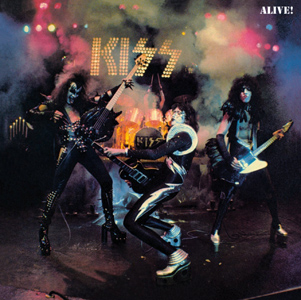
Kiss 4: Alive!

We’ve already alluded to the Casablanca label’s skill at losing money; suffice it to say that the next Kiss album came directly out of an economic strategy. A live album was supposed to be cheaper to record than a studio album, and while the spectacle, pyrotechnics, and other hallmarks of a Kiss concert could only be imagined while listening to a record, Alive! managed to convey all the excitement of actually being there.

Part of the Kiss branding was to deliver the songs onstage exactly as they were pressed onto vinyl, so there’s very little derivation from the gospel on these four sides. “Firehouse” doe gains an annoying siren over the end of the tune and “100,000 Years” is stretched to twelve minutes for a drum solo and several minutes of Paul exhorting and cajoling the crowd, but all the songs were familiar to fans from the three albums they already owned, and nobody complained. (Except Ace Frehley, whose desire to stretch his solos was indulged only on “She”.)

Only after years of rumor did Paul Stanley and Gene Simmons finally admit that while the songs on the album were indeed recorded in concert, much overdubbing afterwards covered all kinds of bugs common to live recording, such as missed notes, microphone placement, and the like. Even the crowd noise was enhanced in places. Besides, Paul’s intros and interjections, which scale the dizzying heights of unintentional hilarity, must be heard to be appreciated, whether in or out of context. (Fifty years later, two of the concerts were released without enhancements as part of a Super Deluxe Edition of Dressed To Kill.)

None of this takes away from the whole, which is that Alive! is still a classic live album, and one of the seminal examples of its era. The packaging is devoted to the cult of the fan, from the kids posing with the homemade banner on the back cover to the handwritten messages in the gatefold (opposite photos of the other fine Kiss albums for your collection). A deluxe eight-page color booklet only underscored just how awesome they were. This was not reproduced in future CD editions, unfortunately, which also continued to offer the program on two discs, despite being short enough to fit on just one. That didn’t happen until the fiftieth anniversary of the album, when—only weeks after that massive expansion of Dressed To Kill—a super deluxe edition packaged it with two other shows used to compile the album on two discs, plus a fourth with rehearsals and excerpts from a third, all of which presented the songs as performed, without overdubs. (A Blu-ray contained the original album in four hi-res mixes.)

Kiss Alive! (1975)—4
2025 50th Anniversary Super Deluxe Edition: same as 1975, plus 40 extra tracks (and Blu-ray)

Friday, August 28, 2020

Faces 7: Snakes And Ladders

It’s commonly known that once the Faces were done, Rod Stewart concentrated on his solo career and Ron Wood was asked to join the Rolling Stones (though he wouldn’t be a fully vested member of the corporation until 1990). Ian McLagan and Kenney Jones managed to shanghai Steve Marriott for a reformed Small Faces, to little excitement, and then that was really it.

Meanwhile, with both Rod and the band’s catalog on their roster, Warner Bros. compiled Snakes And Ladders, subjectively subtitled Best Of Faces to make the most of it. It’s an odd set; the cover art is a collage of photos featuring several shots of interim bassist Tetsu Yamauchi (who plays on exactly one track) but none of Ronnie Lane. More to the point, none of Ronnie’s lead vocals are included. Obviously, they knew where the money was.

The album opens with “Pool Hall Richard”, a standalone single and a decent rocker, then meanders oddly through the catalog, stopping at obvious hits like “Stay With Me” and “Ooh La La”. The instrumental “Pineapple And The Monkey” and “Around The Plynth” are particularly odd choices. Side two sports the mildly disco “You Can Make Me Dance, Sing Or Anything (Even Take The Dog For A Walk, Mend A Fuse, Fold Away The Ironing Board, Or Any Other Domestic Shortcomings)”, another standalone single, but only the original LP has the alternate single take of “Had Me A Real Good Time”.

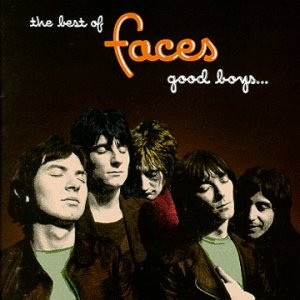
Only eight of the tracks were repeated on the superior Good Boys… When They're Asleep compilation, released 23 years later. This set moves chronologically, covering much more of the band’s breadth. It’s also a better tribute to Ronnie Lane, given the inclusion of “Debris”, “You’re So Rude”, and “Glad And Sorry”, though it pointedly hypes the connection to Rod’s solo career in the packaging. Along with “Pool Hall Richard” and “You Can Make Me Dance”, the set includes “Open To Ideas”, a soulful unreleased track from the band’s final sessions.

The set was spearheaded by Ian McLagan, whose enthusiasm also drove the next major archival release. Besides sporting the greatest box set title of all time, Five Guys Walk Into A Bar… provides an exhaustive look at the band on four discs. Less than half of the tracks were from the original albums (including the two singles and outtakes from Good Boys), filling up the balance with B-sides, alternate takes, rehearsals, live performances, BBC appearances, and unreleased stuff. Ten years later, 1970-1975: You Can Make Me Dance, Sing Or Anything… boxed up the original four albums, each bolstered with extras on the CD edition, and added a fifth disc of Stray Singles & B-Sides. And ten years after that, Faces At The BBC delivered eight hours of exactly that over eight CDs and one Blu-ray. There’s a lot of repetition, but you also get their reverent renditions of Christmas carols.

Between those sets, Faces are covered. Certainly no other band has gotten more mileage out of ellipses.

Faces Snakes And Ladders/Best Of Faces (1976)—3
Faces
The Best Of Faces: Good Boys… When They're Asleep (1999)—4
Faces
Five Guys Walk Into A Bar… (2004)—3½
Faces
1970-1975: You Can Make Me Dance, Sing Or Anything… (2015)—3½
Faces
Faces At The BBC: Complete BBC Concert & Session Recordings 1970-1973 (2024)—3

Tuesday, August 25, 2020

Faces 6: Mahoney’s Last Stand

This enjoyable Faces side project snuck out four years after it was recorded, the soundtrack for a film that didn’t get a wide release either. Mahoney’s Last Stand was the brainchild of an actor best known for a couple guest star appearances on episodes of the cult TV series The Prisoner, and detailed the trials and tribulations of a man trying to get back to nature—a concept very appealing to Ronnie Lane. He and fellow Face Ron Wood recorded these tracks in 1972 while apparently “waiting around for Rod Stewart to show up to the Ooh La La recording sessions.”

Some of the music is very much along the lines of what the Faces might have done if Woody and not Rod had been so dominant. “Tonight’s Number” is a virtual Faces track, with Ian McLagan and Kenney Jones on board, along with Jim Price and Bobby Keys on horns, plus Pete Townshend on one guitar. “Title One” is a similar one-chord jam with horns, but not other Faces or Pete. “‘Mona’ The Blues” is an acoustic remake of an outtake from the first Faces album, whereas the Motown-flavored “Car Radio” could’ve come from their second.

Scattered throughout both sides, the rest points the gypsy folk direction Ronnie would pursue on his own. “From The Late To The Early” only has one verse despite several runs through the chords, mostly letting Woody extemporize on various acoustic guitars. “Chicken Wire” is a banjo-driven workout, while “Chicken Wired” is a slightly slower take with vocals and electric guitar. “Hay Tumble” and “Rooster Funeral” are another one-chord strum and a bluesy melody respectively, both with Ric Grech on violin, and “Woody’s Thing” features Ian Stewart on piano. Each side ends with a take of the wistful “Just For A Moment”, the second with a vocal.

By the time the album finally came out, Woody had already joined the Stones, while the packaging didn’t make it clear that this wasn’t a fresh reunion, that wasn’t enough to make it a hit. In the decades since it has been reissued a few times on CD, as well as streaming, so it can be appreciated again.

Ron Wood & Ronnie Lane Mahoney’s Last Stand: Original Motion Picture Soundtrack (1976)—3

Friday, August 21, 2020

Talking Heads 10: Naked

We remember very well the atmosphere in which this album arrived; the aftermath of a cold winter, and whaddya mean there’s a new Talking Heads album? The few articles about the band that appeared in the wake of True Stories presented a trio generally flummoxed if not stymied by the dictatorial whims of David Byrne, and then the packaging for Naked included a photo of the entire band grinning amidst urban nightlife. Unlike the previous albums, where David Byrne hogged the songwriting, all four members contributed to creating the music. For the most part, however, the band is lost among the extra musicians, totaling in the dozens, throughout the tracks. Overall the mix disguises the message, and it ain’t pretty.

A funky horn section anchors “Blind”, and indeed David sings with more “soul” than ever, but don’t be fooled by the danceability. The horns also drive “Mr. Jones”—impossible to separate from the Dylan connotation—which sounds more like a straightforward Heads tune, but now filtered in the wake of Paul Simon’s mainstream African experiments. (Hindsight now points to the next Byrne project, but we’re getting ahead of ourselves again.) Eric Weisberg’s steel guitar lends a Hawaiian feel to the brassy “Totally Nude”, a celebration of living in the trees, though “Ruby Dear” suggests that paradise might be under threat. This is confirmed in “(Nothing But) Flowers”, a hilarious reversal of the ecological sentiments in “Big Yellow Taxi”, the narrator lamenting how his beloved strip malls have been replaced by fields and trees. Johnny Marr, liberated from the Smiths, shines all over this track.

The album was released in an election year following eight years of Reaganomics, and it shouldn’t be too much of a surprise that the band was disdainful of the state of the nation, and the metaphors in “The Democratic Circus” are barely hidden. The organic sound of the track is jarred by the robotic opening to “The Facts Of Life”, recalling the cold atmosphere of Fear Of Music and taking all the emotion out of procreation. A family bus trip from a child’s point of view appears to be the setting of “Mommy Daddy You And I”, but there’s an undercurrent of fear throughout the narrative. It’s daring to put a similar title next, and the mistrust between the lovers in “Big Daddy” continues the unsettling mood. “Bill” (not included on the LP, where some of the tracks are also shortened) is a similarly dangerous man, but more in the serial killer vein. “Cool Water”, which closes the album, is the most chilling tune here, from its foreboding guitar riff and increasingly tense rhythm. An English horn solo adds to the bleakness, and even the suggestion of relief provided by the title turns to an image of drowning in the very last seconds. (In this century, the feeling of dread is diluted by the addition of “Sax And Violins”, started for the album but only finished in 1991 for inclusion on the star-studded Until The End Of The World movie soundtrack.)

Like most albums that take time to sink in, Naked is possibly the band’s most challenging album. Once the melodies finally take and familiarity reigns, the lyrics show just how dark everything has become, wherever you look. No wonder they didn’t tour behind it.

Talking Heads Naked (1988)—3
1988 cassette and CD: “same” as above, plus 1 extra track
2006 DualDisc: same as 1988 CD, plus 1 extra track

Tuesday, August 18, 2020

Todd Rundgren 24: 2nd Wind

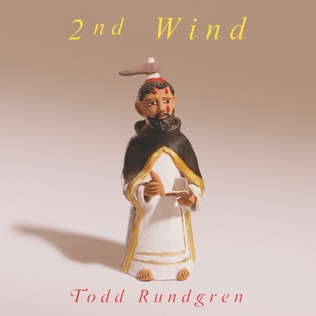
Given the span of time that preceded Nearly Human, Todd Rundgren was comparatively quick with a follow-up. Following the example of that album, 2nd Wind was recorded live in front of a theater audience, who are only heard applauding after one track. Unfortunately, the album also follows the adult contemporary sound to an uncomfortable result.

Once again the single opens the album, and “Change Myself” is mostly harmless if wimpy. “Love Science” comes off as yet another James Brown parody, and while “Who’s Sorry Now” has its moments, it’s dragged out way too long, even with the brevity of a lounge sax solo.
There’s a Broadway element to the presentation, which is enforced by the inclusion of three songs from the little-known musical Up Against It, most famous for being adapted from playwright Joe Orton’s rejected screenplay for the Beatles’ third, ultimately unmade film. While it has ancestors in Todd’s previous Gilbert & Sullivan’s flirtations, “The Smell Of Money” sticks out like the proverbial sore thumb, and “Love In Disguise” is excruciatingly mewled Lloyd Webber-style by two members of the ensemble in addition to Todd. “If I Have To Be Alone”, however, works as a classic Rundgren track, regardless of album, band, or concept.

Even after those are out of the way, the vibe continues, as proven by the over-meticulous but still compelling “Kindness”. “Public Servant” provides a welcome break from form, flirting with the political commentary that would surface in his writing soon. “Gaya’s Eyes” is an awfully long way to go to insist we save the planet before it’s too late. Except for the instrumentation, the title track seems to recall the earliest prog experiments with the original Utopia.

While still adding up to less than an hour, 2nd Wind is tiring in its length, most of the songs topping five minutes. The band consists of such Rundgren all-stars as Roger Powell and members of the Tubes, plus Ross Valory of Journey, who was probably thrilled with the paycheck. It’s too bad that such care and preparation went into something so underwhelming. (Cue gnashing of teeth and angry tirades from Todd diehards.)

Todd Rundgren 2nd Wind (1991)—2