Friday, January 29, 2021

Van Morrison 42: Born To Sing

At this point we wonder why we should bother assigning a rating to a 21st century Van Morrison album that doesn’t break any new ground or venture into a tangential genre. Born To Sing: No Plan B states the thesis in the title, and spends an hour proving it.

Just in case you’re not convinced, the CD booklet includes five pages of liner notes written by three separate writers, each praising the auteur to the heavens and marveling at his genius. Lyrics are included for each track, which is helpful given his increasingly mushmouthed approach, but suffice it to say he’s not above adding “shite” to a rhyme scheme, quoting Sartre, or railing about worldwide capitalism taking precedence over God-consciousness. Also, it’s one thing to hear him decry “phony pseudo jazz” in a verse, another to read it twice, and even more to imagine it sounding exactly like the song in progress.

But the notes for each track also detail who played what, and this is where we are impressed. Much of the piano lines come from Van’s fingers, and he often wails on his saxophone between verses. (Two other horn players are in the backup band, along with a keyboard player who doubles on trumpet.) He plays guitar on only the plodding John Lee Hooker pastiche “Pagan Heart”, which follows the equally lengthy but musically intriguing “If In Money We Trust”. “Close Enough For Jazz” adds words to a twenty-year-old instrumental, though “Retreat And View” merely inspires us to put on Astral Weeks to hear that phrase in “Beside You”. “End Of The Rainbow” does build nicely, and “Educating Archie” provides a shift in tempo for a closer.

While Born To Sing: No Plan B in neither overwhelming nor underwhelming, one could do a lot worse. And yes, he can still sing.

Van Morrison Born To Sing: No Plan B (2012)—3

Friday, January 22, 2021

Chrissie Hynde 2: Stockholm

One has to hand it to a veteran like Chrissie Hynde, determined to make music no matter who was listening, with whoever she happened to find compatibility. Named for the city where it was recorded, Stockholm was her first full-length album released under her own name, rather than a conglomeration dubbed the Pretenders.

And that’s a good thing, since outside of her iconic voice, this is the least Pretenders-sounding album since Get Close. Like that album, the focus this time is on pop, but in more of the ‘60s retro-soul slash Bacharach mode as revived lately by the likes of Mark Ronson. Most of that can be laid on producer Bjorn Yttling, supposedly a wunderkind of Swedish pop. The sound isn’t so much striking as it is repetitive. Every now and then there’s a departure, such as Neil Young’s trademark contribution to “Down The Wrong Way”; John McEnroe apparently offers the same for “A Plan Too Far”. “Tourniquet (Cynthia Ann)” takes an almost goth turn, while “You’re The One” has a hook that recalls Britney Spears’ “Toxic”.

So Stockholm is acceptable, but we suspect we’d prefer the straight rock approach to these lyrics. Seeing as they’re split between pining for someone or damning their insensitivity, we wonder whether anyone in particular inspired them. Her previous collaborator perhaps?

Chrissie Hynde Stockholm (2014)—3

Friday, January 15, 2021

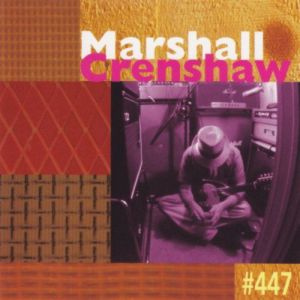
Marshall Crenshaw 10: #447

Even at a time when the major labels were throwing all kinds of money at hit artists, the smaller indies managed to keep their rosters afloat, even when the folks in question weren’t drawing in barrels full of cash. Marshall Crenshaw simply kept doing what he always did—writing and recording, touring on a small scale, repeat.

The drolly titled #447 also delivered what was expected. The now customary “Opening” is a sonic mishmash designed to confuse before the songs proper kick in. “Dime A Dozen Guy”, “Television Light”, and “Glad Goodbye” are all tuneful Crenshaw numbers, melding rockabilly with country and rhumba. But for the Mellotron, “T.M.D.” could have fallen off his first album, as could “Tell Me All About It” and “Right There In Front Of Me”. Guitar instrumentals had become part of his palette by now, and his progress is displayed on the highly picturesque “West Of Bald Knob”, the even jazzier “Eydie’s Tune”, and the closing “You Said What??”, the latter two noted as being from his soundtrack to a PBS documentary on Yogi Berra.

As with Miracle Of Science, #447 has a lo-fi but not amateurish sound, the auteur having mastered the complexities of economy. Save some spare contributions from others, he plays most of the instruments himself. And just as with the 9-Volt Years collection, we get to hear the sound of a man having fun making records. Even if they weren’t calling them that anymore. (Also like Miracle Of Science, the album was remastered two decades later, with a slight rejig that moved “T.M.D.” up to the middle of the program, or the end of side one, and added two recent tracks: the brand new original “Will Of The Wind”, and “Santa Fe”, by former Angry Samoan Gregg Turner.)

Marshall Crenshaw #447 (1999)—3
2022 Shiny-Cool reissue: same as 1999, plus 2 extra tracks

Friday, January 8, 2021

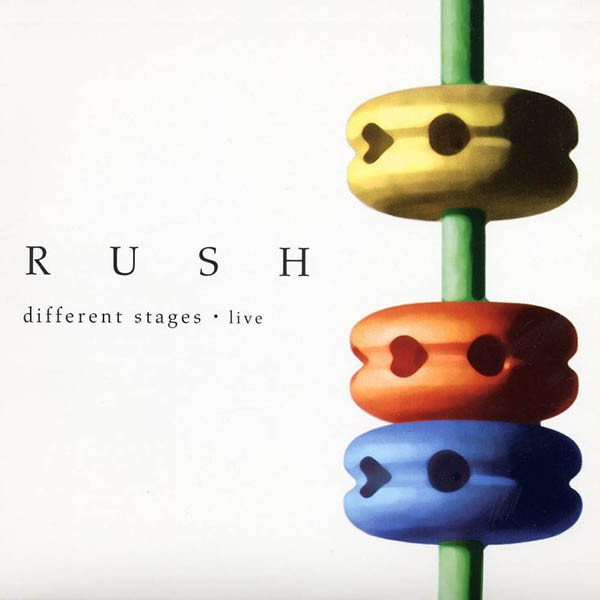
Rush 21: Different Stages

It was customary for Rush to follow four studio albums with a live album, but Different Stages was, well, different. First of all, it encompassed three full CDs—the first two devoted to music from the Test For Echo tour, with a few tracks from the Counterparts tour. These were even among the first “enhanced” CDs, providing a multimedia lightshow style program when inserted into certain computers.

Because the band is always so precise, the main indication that this is a live album is due to how loud the audience is mixed throughout the first two discs. There is a suggestion in the notes that some of the tapes may have been “messed with” to make a perfect representation, and Geddy’s growing dependence on sequencers for the keyboards while he’s singing and playing bass sometimes brings up sounds and voices that two hands and two feet simply can’t do themselves. (His detour in the middle of “Driven” is therefore a nice distraction.) Still, the extended jam (!) at the end of “Closer To The Heart” demonstrates that they still knew how to have fun. Most of the tunes on the first disc come from the Atlantic years, with detours to “Limelight” and “The Trees”. Then, they play the “2112” suite in its entirety for the first time onstage in years. The second disc stays in the recent past, save a surprise “Analog Kid”; unfortunately, they keep the rap section of “Roll The Bones”. “Leave That Thing Alone” segues into “The Rhythm Method – 1997”, a drum solo from a different date altogether. Then it’s back to the early ‘80s for a lengthy sequence of “Natural Science”, “The Spirit Of Radio”, “Tom Sawyer”, and “YYZ”.

The third disc goes back two decades to an hour’s worth of music excerpted from a show before a rather appreciative Hammersmith Odeon audience in 1978. It’s a good overview of the early years, the epics limited to “Xanadu” and “Cygnus X-1”. (The entire show would have to wait another two decades, until the 40th Anniversary Edition of A Farewell To Kings.) Get your magnifying glass out for the details in the artwork, where we see a modern-day Geddy scalping tickets, Alex being dragged off in a straitjacket, and Neil silently observing from the balcony.

Per their custom, it’s a good summation of the best aspects of their most recent phase, uneven as it was. As it turns out, this sprawling tour through the band’s history served a larger purpose. Coming in the aftermath of Neil Peart’s daughter’s death in a car accident, followed within a year by his wife’s death from cancer and his subsequent withdrawal from the band, Different Stages didn’t so much close a chapter as present a grand finale for the band.

Rush Different Stages (1998)—

Tuesday, January 5, 2021

Robbie Robertson 6: Testimony

After Levon Helm died, there were two surviving members of the Band. Garth Hudson never talks to anybody, but Robbie Robertson is always more than happy to tell the tale again. His autobiography, Testimony, was published in 2016, followed by a companion album.

While the book covers his life from birth through The Last Waltz, the album is much less organized, and in many ways unrelated. For one, it begins with a remix of the “title track”, from his 1987 debut solo album. From there it rambles throughout his performing career, throwing in a few early sides with Ronnie Hawkins and Levon & The Hawks, touching on the initial Dylan era with “Obviously 5 Believers” and a live “Rainy Day Women” from 1974. The Band itself is represented by previously released live versions, with the exception of “It Makes No Difference”, “Bessie Smith”, and “Out Of The Blue”—the latter two both rare instances of Robbie singing lead with the group. What’s called a “song sketch” of “Twilight” is pulled from one of the box sets he’d curated, and four further tracks are called from the solo albums.

There are other, better compilations of the Band, and definitive recordings with Dylan; a comprehensive Hawks collection would have been a better soundtrack for the book. It helps that the music is good, even if the thesis is unclear.

Robbie Robertson Testimony (2016)—

Friday, January 1, 2021

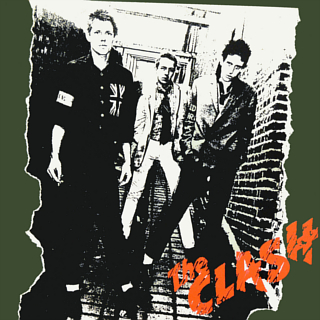
Clash 1: The Clash

Possibly the best and certainly one of the smartest bands of the original punk era was the Clash. Besides looking good, they had the chops to back up their lyrics, most of which began as indictments of contemporary society. But they didn’t happen organically; Joe Strummer was the chosen name of a former folkie who called himself Woody, and Mick Jones was an unabashed Stones fan, right down to his Keith Richard style. Every punk band needed an incompetent bass player, and Paul Simonon—who just reeked of cool—learned his instrument while they were recording their eponymous debut. (Drummer Terry Chimes quit before the album was released; he’s credited as “Tory Crimes” on the sleeve.)

The energy starts immediately on side one, with “Janie Jones” establishing Joe Strummer’s voice. “Remote Control” is sung nearly unison with Mick Jones, but it’s the power chords you notice. “I’m So Bored With The U.S.A.” fits the Sex Pistols mode, but cleverly changes key for the chorus. Speaking of clever, “White Riot” is a different recording of their first single, the lyrics going by so fast the social comment isn’t clear. “Hate And War” presents some of the power pop The Jam were trafficking in, while these ears hear “Deny” as a clear influence on the Pistols’ “Liar”. Former band member Keith Levene gets co-writing credit on “What’s My Name”; he would go on to join the former Johnny Rotten in PiL. And despite the title, “London’s Burning” mostly complains about traffic congestion.

“Career Opportunities” gets back to the concern of standard employment, with the armed forces as a lousy choice. “Cheat” amps up the anger with a lot of four-letter words and oddly flanged guitars, while “Protex Blue” is a sensitive recount of buying condoms. Just to show how well they stood out from the rest, their cover of the reggae hit “Police & Thieves” runs for six minutes, shows how far Paul Simonon had come on the bass, and points to their future. “48 Hours” goes by fairly quickly, and “Garageland” is a rather melodic riposte to those who questioned their talent.

Despite racking up huge sales as an import, The Clash wasn’t officially released in America until after the band’s second album. Even then, Epic had to tamper with it, rejigging the lineup, dropping five tracks, and adding six, some of which were recorded after that second album. The recent “Clash City Rockers” single now kicks off the very different side one, sending “Janie Jones” to start side two. In a perverse move, “Remote Control” is followed by “Complete Control”, written as an angry response to record company interference. The original single version of “White Riot” is followed by the more recent “(White Man In) Hammersmith Palais”, another excellent exercise in reggae. Their cover of Bobby Fuller’s “I Fought The Law” would become even bigger than the original, and “Jail Guitar Doors” demonstrates Joe’s knowledge of rock trivia, at least when it came to drug use.

The changes make the US release of The Clash slightly more musically diverse than the mostly straight punk of the UK version, but even with the repetition, both are key. When the catalog was remastered in 2000, both versions were reissued on CD; today, the UK version has become the worldwide standard.

The Clash The Clash (1977)—
The Clash
The Clash (US version) (1979)—

Friday, December 25, 2020

Paul McCartney 37: McCartney III

Never one to miss an opportunity to be musical, Paul McCartney emerged from the Covid-19 lockdown (or “rockdown”, as he called it) with enough material recorded in isolation to comprise McCartney III. Like its predecessors, it was performed in its entirety all by himself.

Technology has obviously come a long way in the decades since the more primitive approach of the first two installments. Most of the albums he’s put out this century have been largely one-man band operations, so this album isn’t too far removed from Chaos And Creation In The Backyard, Memory Almost Full, or New. But by doing everything himself save the engineering, he can always fall back on the insistence that it was never designed as an album in the first place. Maybe that’s why the album is as good as it is. (In a nice touch, the album is dedicated to the recently departed Eddie Klein, an Abbey Road veteran who worked on the first post-Beatle albums by John and George, and went on to build the home studio that Paul’s used since 1985.)

“Long Tailed Winter Bird” takes the most basic acoustic guitar riff and builds a five-minute jam out of it, for something of an extended overture. The first real song is “Find My Way”, the tossed-off verses well-balanced by the more melodic choruses, and a nice false ending too. “Pretty Boys” is another rewrite of “Early Days”, but this time focusing on young male models for some reason. A piano drives “Women And Wives”, which he repeatedly said was influenced by the vocal style of Leadbelly; it’s good that he’s finally exploring the lower end of his increasingly limited range. On paper “Lavatory Lil” screams embarrassment, and most listeners think they know which ex-wife is the inspiration, but the damn thing chugs. At over eight-and-a-half minutes, one would expect “Deep Deep Feeling” to wear out its welcome, yet it’s a wonderful showcase for his unquestionable prowess on guitar, bass, and piano, and the drums aren’t bad neither.

Placed earlier on the vinyl to better even out the two sides, “Slidin’” gets its riff from a soundcheck jam from a few years previous; indeed Rusty Anderson and Abe Laboriel Jr. are credited indirectly in the notes. It’s a good rocker that nicely finds lyrics to match the suggestion of the title. “The Kiss Of Venus” recalls “Two Magpies” from the third Fireman album, and introduces a harpsichord to match his rough vocal. (This is what we mean by suggesting he try not to hit those old high notes.) “Seize The Day” seems to be most inspired by the state of the world mid-pandemic, and it turns out to be one of his better anthems, helped by the more personal bridge. If anything, “Deep Down” is the closest the album comes to “Kreen-Akrore” or “Darkroom”. Along with the recurring “deep” in the title, it’s a half-decent groove that is underdeveloped and beaten into the ground. One of our correspondents suggested that he’s a little too old to be concerned with “partying”, and in this context we’d agree. The “Winter Bird” riff resurfaces to usher in “When Winter Comes”, brought out of mothballs from the same George Martin-helmed session that gave us “Calico Skies” and “Great Day”. (Naturally, nothing is simple anymore, as the album was released in a dizzying quantity of colored vinyl pressings and cover variations. Meanwhile, Japan got four bonus tracks in the form of three alternate versions plus the original jam that begat “Slidin’”.)

Not as homespun as McCartney, nor as experimental as McCartney II, McCartney III was nonetheless a welcome visitor at the end of a very trying calendar year. We would suggest that unless he intends to record with his band again, all future new albums should be prepared with only input from his immediate family and any resultant offspring not given to sugarcoating, even for a man pushing 80. (We’d also accept a completely stripped down acoustic guitar or piano album, maybe produced by Rick Rubin…?)

Of course, he had to go and risk wearing out the album’s welcome by continually reissuing it. Four months after its initial release, McCartney III Imagined presented the album remixed by various modern hip collaborators. A year later, McCartney I II III packaged all three of his numbered solo albums in a box of CDs or two choices of colored vinyl. And a year after that, three further multicolored vinyl options were made available for a limited time. Meanwhile, the Archive Collection program seemed to have ground to a halt.

Paul McCartney McCartney III (2020)—