Friday, August 12, 2022

Clash 5: Sandinista!

The one word that is common to just about every review of this album is “mess”. And it’s true: the fourth album by the Clash is a sloppy, sprawling mess. Without a Guy Stevens to throw chairs at them, they produced themselves, and instead threw just about everything they could find into the mix, from recordings in London, New York, and Jamaica. Having made friends with various of Ian Dury’s Blockheads, they were invited to contribute. Joe Strummer’s old busking partner Tymon Dogg brought his violin, and Mick Jones was dating Ellen Foley from “Paradise By The Dashboard Light”, so she was around too. (The band would go on to back her up on her next album.) The year before they’d convinced Epic to release London Calling as two records crammed into one sleeve, so they did the same with this album, and then some: six sides full of sound, if not necessarily music. London Calling ran just over an hour; Sandinista! is over twice that length.

During that year reggae and dub had made big impressions on the band, and while disco may have sucked, rap was appealing. That makes “The Magnificent Seven” so startling, with beats straight from Grandmaster Flash and a bubbling Chic bass line. (Norman Watt-Roy of the Blockheads is responsible for this and some of the funkier bass lines throughout the album; Paul Simonon does play, but not as loudly nor as proficiently.) Some dreamy keyboards and a Motown beat bring in “Hitsville U.K.”, which barely sounds like a Clash song since Ellen Foley’s vocals are mixed louder than Mick’s. Joe turns the blues song “Junco Partner” inside out to a wacky reggae backing, then Topper Headon takes his first lead vocal on “Ivan Meets G.I. Joe”, an upbeat track dominated by what sounds like the Space Invaders and Pac-Man arcade games at top volume. “The Leader” is the shortest song in the entire set, with some good rockabilly that actually sounds like the band for a change. It’s over before you know it, and is nudged aside by “Something About England”, which sounds like half of a big production, as if they loaded up the multitracks and forgot to raise the faders on the rhythm section for the first minute or so. There’s a strong lyric in there, but you can’t hear it.

Side two starts with another track unlike anything they’d done before. “Rebel Waltz” sports an intricately picked guitar line before a harpsichord(!) and other keyboards fill in under it—another strong tune distracted by the mix. Whatever gravitas it’s supposed to impart isn’t helped by “Look Here”, a Mose Allison tune mostly played straight but, again, smothered with atonal touches. With “The Crooked Beat”, Paul gets to follow up the threat laid down by “The Guns Of Brixton” on an even longer song layered in percussion devoid of meter or tempo. (In foreshadowing, the latter half of the track is basically a dub version. Stay tuned; we’ll explain.) Guitars return on “Somebody Got Murdered”, a starkly matter-of-fact statement heavily laden with futility. “One More Time” is a decent fusion of rock and reggae, but you have to juggle Joe’s fake accent with the highly nasal toasting from Mikey Dread. We fade to silence, and then we’re treated to “One More Dub”, an experiment that works.

After an aircheck of Joe calling into progressive New York radio station WBAI, “Lightning Strikes (Not Once But Twice)” is something of a retread of “The Magnificent Seven” but not as slick. It ends abruptly for “Up In Heaven (Not Only Here)”, which sounds like the Clash again, to take over. There’s an extended ending where the song begins to fade under some feedback, then comes back in before fading for good. “Corner Soul” is another one lost to a busy mix and even more Ellen Foley, but mixed lower. A tape of a street huckster opens and closes the otherwise steel drum-fueled “Let’s Go Crazy”, but the more obviously dub-influenced “If Music Could Talk” is an improvement. Then things go completely off the rails for “The Sound Of Sinners”, a completely unexpected gospel rave-up with Topper adding a nice harmony. There’s even a benediction of sorts at the end.

With that setup, side four almost sounds like where the album (or another one) should start, as the guitar siren of “Police On My Back” makes you think the Clash you’ve been used to have returned after all, but surprise! Eddy Grant wrote this song, before he rocked on down to Electric Avenue. “Midnight Log” is another brief one in the vein of “The Leader”, while “The Equaliser” is a mostly dub track of double length that sounds like it’s missing the main context. “The Call Up” was the danceable first single, an anti-draft protest that still takes up a lot of space. Its sentiment is continued in “Washington Bullets”, which gives the album its title and skewers every country that subscribes to the military industrial complex. In a poor mixing choice, the organ is absolutely pinned at the end of the track. “Broadway” could be Strummer’s Sinatra moment, or at least a prediction of the Replacements’ “Nightclub Jitters”, but the mix is too crazy, and just to make things interesting, the last minute is given over to Mickey Gallagher’s daughter’s rendition of “The Guns Of Brixton”. By now anyone would be justified in calling this the band’s White Album.

The Clash-ness continues at the top of side five on “Lose This Skin”, except that it’s written and caterwauled by Tymon Dogg, whose sawing violin predicts the Waterboys. Some clever helicopter effects via guitar open the extremely melodic “Charlie Don’t Surf”. It’s one of the better tracks here, but by now it’s clear they were struggling to fill six sides, as “Mensforth Hill” runs “Something About England” backwards, with posed dialogue on top. (Again, White Album.) After that “Junkie Slip” sounds like another one that should’ve been a B-side, and while “Kingston Advice” has promise, it’s literally torpedoed throughout by video game noises. Similar sound effects are used like percussion on “Street Parade”, which deserves better.

Side six is either loved or hated, considering that most of it recycles what’s come before. But first we have “Version City”, which opens with the sound of a sample from Mattel’s version of the Mellotron winding up under an unctuous announcer, a bad omen for how the rest of an otherwise decent song is treated. “Living In Fame” is a dub version of “If Music Could Talk” sung by Mikey Dread, but then the sample and announcer come in again and “Silicon On Sapphire” layers a conversation between computers (this is not a joke) over the track for “Washington Bullets”. “Version Pardner” takes us all the way back to “Junco Partner” on side one, and isn’t as jarring, but it’s just as random. Mickey Gallagher’s sons get into the act, singing “Career Opportunities” from the first album over a sprightly harpsichord-led arrangement. And where else can we go with a mellow instrumental of “Police & Thieves” (or maybe “If Music Could Talk”?) called “Shepherds Delight”, possibly due the bleating interjections, that suddenly switches to a slowed-down tape of a car driving off?

There’s nothing pointedly awful on Sandinista!—surely “Mensforth Hill” would have its supporters. Even the dub versions on side six would have made decent B-sides, and then people would be clamoring for them. Still, trying to shave the album to a stellar single disc is near-impossible. Call it the results of a busy year, and take time to see what rises to the top. If anything, the dub experiments heard on B-sides and Black Market Clash will not only make more sense, but improve in stature.

The Clash Sandinista! (1980)—3

Tuesday, August 9, 2022

Rickie Lee Jones 4: The Magazine

Her next “real” album took some time, but apparently Rickie Lee Jones found inspiration in Paris, and managed to kick whatever her addictions to record The Magazine. The producer is different, but the sound is still slick, with the reliable Steve Gadd drumming on several tracks and various members of Toto here and there. The big difference is the use of synthesizer, which is subtle, but pronounced in the all-digital recording.

“Prelude To Gravity” is a lovely piano instrumental with light strings, whereas “Gravity” itself crashes in with drums. It’s a very complicated song, with lots of tempo shifts and accents, and poetry we can’t begin to decipher. While it begins like a nursery rhyme, “Juke Box Fury” is more along the lines of her jazz-bo hits. It even has the same hackneyed horn part from her other albums, pinning the choruses, but her vocal blend at the end of each still kills. We’re amazed that “It Must Be Love” wasn’t a hit single, either by her or anybody else, since it’s one of the most perfectly mainstream songs she’d yet written, with just enough of the right ingredients to make it original. “Magazine” recalls the sadder stories from Pirates, and we’re not sure whether the narrator is waiting for a lover or a drug connection.

Those horns return “The Real End”, which seems like a more obvious choice for a single with its simple pre-chorus hook and matter-of-fact cynical lyrics about fleeting romance. There’s a stretch where she layers her own voice like horns, which would have been enough. “Deep Space”, subtitled “An Equestrienne In The Circus Of The Falling Star”, provides another welcome see-saw shift to quiet, especially before “Runaround”, which mentions the “Juke Box Fury”, and sounds like two different songs forced together. The album closes with three pieces called “Rorschachs”. The first is a very European instrumental with trilling guitars and mandolins and a hummed melody called “Theme For The Pope (Marrants D’eau Douce)”, which translates as “sweet water fools”. (There is a version out there sung as a duet with Sal Bernardi—yeah, him again—in French, and seem to describe some lost souls between Memphis and Nashville. We had to look this up, because the lyrics aren’t included on the original vinyl.) “The Unsigned Painting” begins with a lonesome plaint, which is brushed aside by a spoken impressionistic piece. This segues into the more musical “The Weird Beast”, which continues the strange imagery via interlocking vocals.

The album works best when she’s exploring, making the more adult contemporary ear candy seem out of place. The Magazine is impenetrable to be sure, but somehow she makes it all very compelling. The listener wants to understand the songs, and that makes it worthwhile. She’s unique, all right.

Rickie Lee Jones The Magazine (1984)—3

Friday, August 5, 2022

Elvis Costello 37: The Resurrection Of Rust

In 1972, an up-and-coming singer-songwriter named D.P. MacManus joined forces with a fellow aspirant named Allan Mayes in the latter’s combo, a folk-rock outfit dubbed Rusty. Eventually whittled down to the duo, the pair performed under that moniker for about 18 months in and around Liverpool before going their separate ways. In time MacManus would change his name to Elvis Costello, and while Mayes has continued to play music professionally in the decades since, he hasn’t attained a fraction of the acclaim or notoriety his erstwhile partner has.

Roughly fifty years after their initial collaboration, the two reunited to finally record what amounts to a six-song demo. The Resurrection Of Rust is supposedly drawn from their old repertoire, now with the added extra of having the Imposters backing them on each track. (As with Elvis’s last album, all the parts were recorded from various studios around the world, brought together in the mix. Thanks, Covid.) As a bonus, the prominent organ on the infectious “Surrender To The Rhythm” is contributed by Bob Andrews, who played on the original Brinsley Schwarz recording.

That song and the slower, soulful “Don’t Lose Your Grip On Love” are Nick Lowe covers—a writer who looms large in Costello’s history, and whose voice that of Mayes occasionally resembles—from the same album, while “I’m Ahead If I Can Quit While I’m Behind” was also covered by the Brinsleys back then. “Warm House (And An Hour Of Joy)” is a D.P. McManus original said to be a crowd-pleaser back then; here he sings it in his “precious” voice and harmonizes with himself as well as Mayes. “Maureen And Sam” is possibly the most intriguing song, since this original co-write would one day emerge heavily re-written as “Ghost Train”. In this incarnation, the subjects of the song are treated with much more pathos, with major-seventh chords to match. The staccato sections may have been part of the original arrangement, but here Elvis plays it way too heavy, and the canned applause halfway through distracts. The mood is lifted by their medley of Neil Young’s “Everybody Knows This Is Nowhere” and “Dance, Dance, Dance”; Elvis makes his long-awaited debut on electric violin here, in addition to the mandolin he trills here and elsewhere. (We’re pretty sure he wasn’t proficient on those in 1972. To make collectors even more irate, the Japanese version includes an actual Rusty demo from that year, the lo-fi “Silver Minute”.)

Pleasant as it is, the duo’s voices aren’t a natural blend—Elvis tends to emote to his nature, while Mayes sings low yet convincingly on his own. He’s the better guitarist, having spent all that time on the road playing covers, but Elvis nudges his own leads into the mix here and there. Nonetheless, The Resurrection Of Rust is a labor of love, and the mutual affection is evident in every note. A sequel would be welcome.

Rusty The Resurrection Of Rust (2022)—3

Friday, July 29, 2022

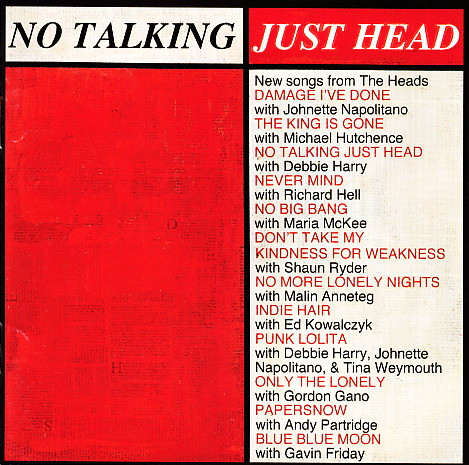
Talking Heads 12: No Talking, Just Head

You can’t blame them for trying.

The members of Talking Heads had grown tired of waiting for David Byrne to deign them with his presence again, so after five or so years they began recording together. Chris Frantz, Jerry Harrison, and Tina Weymouth had stayed busy producing other people, so they had several singers they could ask to sing for them, along with old friends from their CBGB days, when they started making music together again. Byrne had other ideas, and tried to sue them; the eventual project was credited to The Heads, with the album pointedly titled No Talking, Just Head.

No matter how they approached it, the deck was stacked against them. Sometimes an established band can find a new singer to take them to commercial heights, but not every band is AC/DC. Rather than sticking with one collaborator, the Heads assigned each of the 12 tracks on the album to somebody different. Each of the resulting songs is so different, it sounds like a mix tape of 12 different bands.

Johnette Napolitano of Concrete Blonde opens with the dark “Damage I’ve Done”, and would go on to tour with the trio to promote the album. Michael Hutchence of INXS (who would have their own issues trying to replace a singer) ironically makes one of his last appearances on an album on “The King Is Gone”, and Blondie’s Debbie Harry wails the profane title track. “Never Mind”, which seems to be based around the drums for their version of “Take Me To The River”, is a showcase for Richard Hell, while the frenetic “No Big Bang” is an odd pairing for the otherwise soulful Maria McKee. Shaun Ryder gets to do his Happy Mondays thing all over “Don’t Take My Kindness For Weakness”.

A still-unknown spoken word performer named Malin Anneteg recites the strange lyrics for “No More Lonely Nights”, while the singer from Live was still coasting on their hit album when he added “Indie Hair”. “Punk Lolita” might be the highlight of the album, with Debbie, Johnette, and Tina Weymouth trading fun rap-influenced vocals just like Tom Tom Club. Gordon Gano of Violent Femmes is lost in the mix of “Only The Lonely”, but there’s no mistaking Andy Partridge on “Papersnow”. Finally, cult figure Gavin Friday warbles “Blue Blue Moon”.

While Chris, Jerry, and Tina were all undoubtedly key to the success of Talking Heads, and contributed to the sound of the band, David Byrne’s vocals and lyrics were what resonated in millions of album sales. This goes both ways, as Byrne’s solo albums are nearly devoid of any music that sounds like the old band. No Talking, Just Head remains a curio, more interesting for fans of the individual singers.

The Heads No Talking, Just Head (1996)—2

Friday, July 22, 2022

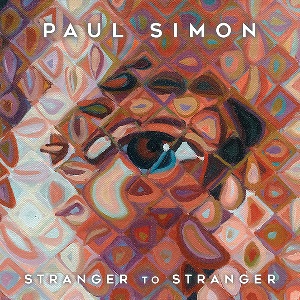
Paul Simon 18: Stranger To Stranger

For most of his post-Garfunkel career, Paul Simon has painstakingly created songs with the mildest suggestion of a rhythm as touchpoints. In his old age, with the ease and advancements of home recording, he doesn’t have to travel to other countries and observe other cultures for inspiration. He still could, of course; he just doesn’t have to.

Stranger To Stranger sounds like it was assembled on a computer, and we don’t mean that in a bad way. The sound is still fresh and pure, like thanks to the assistance of “his old partner Roy Halee”, which is how the credit actually reads. Many of the tracks involve multiple players and exotic instruments, but it still remains very much a solitary vision.

The first sound we hear is an Indian string instrument that the liner notes tells us sounded like “The Werewolf” to the auteur’s ears, so he wrote a song around it about doom and death. Sound effects abound, and the track is taken over by a gothic horror movie pipe organ by the end, along with more howls. “Wristband” is a very clever song that retains its humor past several listens, and manages to extend the idea of exclusive entry past its premise. “The Clock” is an instrumental built around a simple pulse, with some chimes, and is over too quickly. More complex rhythms and textures drive “Street Angel”, while a waltz of sorts propels the lilting title track. As predicted two tracks earlier, “In A Parade” finds the street angel in a hospital being diagnosed for mental disorders, with beats to match.

The engaging “Proof Of Love” is very reminiscent of his early ‘90s work, and apparently the noted Brazilian influence is why. “In The Garden Of Edie”—again, clever—is another instrumental that isn’t long enough. “The Riverbank” continues the musing on death, but over a mildly funky groove that isn’t down in the slightest. “Cool Papa Bell” would be mostly a tribute to a Negro League baseball legend, but is dominated by a tuba and spends more time reflecting on a certain twelve-letter epithet. The closing “Insomniac’s Lullaby” adds sound effects and Harry Partch instruments to a lovely guitar piece and meditation on sleeplessness. It’s more of a prayer than a lullaby, but it’s effective.

Stranger To Stranger is another winner in a career that’s slowly winding down. From time to time he leans on one of his spoken character voices rather than trying to find a melody, but the solo guitar pieces have us wishing he would do an instrumental album of same. He should also be commended for the album’s digestible length, at just over 37 minutes. (That said, a deluxe edition included a few extra tracks, starting with the exquisitely recorded “Horace And Pete”, the theme song for a Louis C.K. web series, which should have been on the main album. The oldie “Duncan” and “Wristband” come from a well-received performance on A Prairie Home Companion. “Guitar Piece 3” is a spooky interlude, while “New York Is My Home” is a collaboration with Dion DiMucci, also featured in the aforementioned web series.)

Paul Simon Stranger To Stranger (2016)—

Friday, July 15, 2022

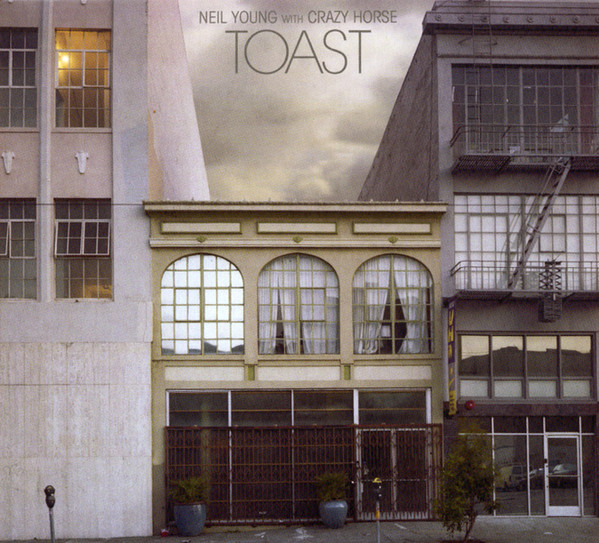
Neil Young 65: Toast

Remarkably, or maybe not, the first two “unreleased” albums Neil Young issued as part of his Archives’ Special Release Series have a similar history. Like Homegrown, Toast was started, abandoned, and then superseded by another album that didn’t directly relate to issues in his personal life. We may never know the full details of the “rough patch” that found Neil living in San Francisco while his wife and kids were back at the ranch, but apparently that experience colored the lyrics and his overall mood. At any rate, he began again with Booker T and the MG’s a few months later, and those sessions resulting in Are You Passionate? the following year.

Crazy Horse is definitely a different band than the MG’s in more ways than one, so one would think Toast (named after the studio where it was recorded) would have a more, shall we say, primitive sound. However, the earlier takes of the songs that made it to Passionate show that their soul-influenced arrangements were well in place before Booker T et al got hold of them. If anything, those tunes recall the Bluenotes, which also started as a Crazy Horse project before Neil replaced the rhythm section.

“Quit” lacks its subtitle, as well as Booker T’s organ, but it’s basically identical to the later take, right down to the female vocals. Knowing what we know now, it’s eerie to hear Pegi singing on it, but it stands out better here, without the sameness of the tracks on Passionate surrounding it. In contrast, “Standing In The Light Of Love” is total grunge, from the pounding riff to Neil’s strangled vocals, and much more what we expect from the Horse. It’s also one of those tracks that, amazingly, had stayed buried all this time, even after being revived in 2014. That said, “Goin’ Home” is still the best song of the batch, though this mix fades the song during the final solo, rather than coming to an abrupt halt, which we always liked. “Timberline” is another one of those legendary lost songs from the era, but this ragged take shows its shortcomings. The sloppiness doesn’t really match the desperation in the narrative about an unemployed logger, which needs more development. (We say this while being quite aware that it’s precisely the kind of track that people love from the Horse.)

A distinct improvement is “Gateway Of Love”, which was teased on the back cover of Passionate and played live with the Horse throughout that summer. It’s the only track we hear that has the “Latin influence” Poncho Sampedro mentioned in interviews about the shelved album; most of that is in the drums, while the bass could go either way. “How Ya Doin’?” is an odd title for what became “Mr. Disappointment”, since that question only surfaced in the later recording. This earlier version is sung in Neil’s natural voice, rather than the low rasp he adopted for the album. “Boom Boom Boom” is the same song as “She’s A Healer”, except that it’s longer and taken just a tad slower. Once again the eventual title features prominently in the lyrics, while the initial title does not. At thirteen minutes it does drag, but the jazzy bridge stands out more, and Tom Bray adds a trumpet, just as he would on the later album. Neil overdubbed a few stabs at a piano, and somebody’s playing the vibes and tapping bongos.

Toast is still unfinished as an album, and likely wouldn’t have wowed us had it come out instead back then. The disparate styles don’t cohere very well, but at least there are more dynamics, so it’s superior to Passionate, and will likely get more spins round our way. Moreover, his voice isn’t as strained here. It’s not as revelatory as Homegrown, and it hasn’t had as many decades of speculation to live up to, but once again we want to hear everything else he’s been sitting on.

Neil Young With Crazy Horse Toast (2022)—3

Tuesday, July 12, 2022

Brian Eno 23: The Ship

Ambient music and vocal music have been parts of various Eno albums, to be sure, but he’s rarely tried to meld them within the same piece. That changed with The Ship.

The title track is a lengthy meditation on the sinking of the Titanic. The subject is not a new obsession; back in the ‘70s Eno inaugurated his Obscure Records label with a neo-classical piece by Gavin Bryars called, yes, The Sinking Of The Titanic, which built on the idea that the orchestra on board kept playing while the boat sank. This intriguing piece incorporated taped voices and sound effects to approximate the effect of water, and so does Eno’s. After several minutes of setting a mood, he starts singing, slowly, in a very low register, and harmonized. When the voices arrive, they’re either fragmented, too low to discern, or approximate another language, until the piece fades on a repeated “wave after wave”.

The second half of the album is a suite in three parts titled “Fickle Sun”, said to be inspired by the further destruction of the first World War. The first part is almost as long as “The Ship”, but the music isn’t as soothing, with more ominous melodies in the background and the lyric punctuated by distant thuds that approach into loud clanging accompanied by brass. A churchy organ emerges, and the melody changes to a more major key. Soon the voice appears almost alone, with a female voice processed to sound like a telegraph, ending with some strings and more uncertainty. The second part, subtitled “The Hour Is Thin”, is a relatively brief, apparently computer-generated monologue read by the voice of Darth Maul, the live-action Tick, and the flatmate from Shaun Of The Dead over some otherwise pleasant piano plinking we’d prefer to hear alone. The surprising finale is a very reverent cover of the Velvet Underground’s “I’m Set Free”, helped by recent cohorts Jon Hopkins and Leo Abrahams. Whatever this has to do with the Titanic or the war is beyond us, but it’s shimmering and lovely.

Because of its length, The Ship is one of those Eno albums that sounds different every time you listen to it, thanks to all the layers and textures. And that’s probably what he wanted. It’s easy to get lost in.

Brian Eno The Ship (2016)—3