Sunday, July 26, 2009

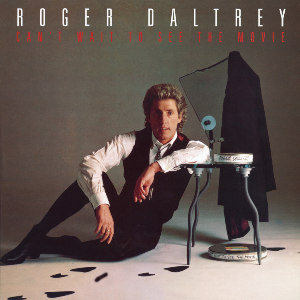
Roger Daltrey 8: Can’t Wait To See The Movie

While we can’t find the exact quote, we distinctly recall hearing an interview with Roger Daltrey around the time this album came out, saying that hearing the songs made him think, “I can’t wait to see the movie they’re from,” as if that were a good thing. Can’t Wait To See The Movie sounds like a stereotypically bad ‘80s movie soundtrack, all programmed drums, power chords, slapped and/or synth bass, and screaming saxes. As usual, he relied on outside songwriters for material, starting with his go-tos Russ Ballard and the otherwise unknown Kit Hain, and apparently Pete Townshend didn’t leave anything lying around for him, which is a shame.

Thinking back it seems like there were approximately a couple dozen different songs called “Hearts Of Fire” in those days, none of them very good. This one came very soon after a legendarily bad Bob Dylan cinematic vehicle, so at least there’s something of a tangential relation. “When The Thunder Comes” is overwrought with battlefield metaphors, while “Ready For Love” is nearly drowned out by a loud gospel-style choir. He wrote “Balance On Wires” himself with Don Snow, best known as the guy who replaced Paul Carrack in Squeeze; as one of the more understated tracks here it stands out, and in a good way, but it’s still too long at over six minutes. The choir returns to belt out the chorus of the sappy “Miracle Of Love” alongside him, but while he’s a decent actor, he simply can’t pull off the role of a sentimental fool.

Along the same basic theme, “The Price Of Love” is the long-awaited collaboration between schlockmeister tyrant David Foster and Night Ranger’s Jack Blades, who was a couple years away from Damn Yankees. (This was included on the soundtrack for that year’s Michael J. Fox vehicle The Secret Of My Success, which had a theme song written by the same pair, and performed by Night Ranger.) And while it may be that “The Heart Has Its Reasons”, that’s no excuse for aping the arpeggios of “Every Breath You Take” and its innumerable clones. Four writers are credited for “Alone In The Night”, one of whom wrote the lyrics for most of the songs from the Top Gun soundtrack. “Lover’s Storm” sports some good harmonies, but we can’t tell if those are by Roger or one of the ten people listed in bulk on the sleeve. Most curious is “Take Me Home”, a remake of a French song called “Cargo” from a few years before, with new lyrics.

The album was a sales dud, and rightfully so. Ironically, it did not include his cover version of Elton John’s “Don’t Let The Sun Go Down On Me”, as featured in the summer’s hit film The Lost Boys and on its soundtrack album—conveniently issued by the same label—which might have helped. Nor did it have “Quicksilver Lightning” from the year before, the theme for a Kevin Bacon movie nobody liked. These would have been prime candidates for inclusion when Can’t Wait To See The Movie was expanded in 2004 by the Wounded Bird label, which even fewer people needed.

Roger Daltrey Can’t Wait To See The Movie (1987)—1½

Friday, July 24, 2009

Bob Dylan 25: Saved

Anyone who saw the tour following Slow Train Coming knew that Bob’s new-found Christianity wasn’t a passing phase. In addition to the familiar songs from that album, he had a pile of new ones with similar themes, recorded quickly with the touring band, and thrust upon an increasingly dubious public.

Saved is not as strong as its predecessor, which isn’t fair to either. Much of the immediate criticism stemmed from the cover art, which was replaced on a later pressing with a more benign painting from the inner sleeve. “A Satisfied Mind” is a good warmup of a gospel song (known to anyone who had the second Byrds album), followed by the insistent title track. “Covenant Woman” is one of the better ones, something of an extension of “Precious Angel”. Unfortunately, “What Can I Do For You?” isn’t as successful. But the side closes with “Solid Rock”, a powerful number that keeps its evangelistic message beneath the groove. It’s a grower.

“Pressing On” doesn’t quite find its way over the lopsided rhythm, but he gives it a strong vocal delivery that encourages a growing dynamic sound. “In The Garden” could be sung by kids at Sunday school, provided they could get their heads around the verses; he wouldn’t truly nail it until he hooked up with Tom Petty and the Heartbreakers. “Saving Grace” is another contender for a gospel standard for anyone inclined to cover it. It would work very well outside of this album’s context, particularly since “Are You Ready?” doesn’t do much but repeat itself.

There are those that maintain that the recordings on Saved don’t do anywhere near as much justice to the songs as some of his live performances of the era. Indeed, Bob had allegedly compiled a live album around this time, to be called Solid Rock, but even his label was getting impatient for him to stick to rocking. It would take a future volume of The Bootleg Series to bring that music to light, including some of the other original songs he only performed on stage during that period. Beond that, the curious have these two albums to reconsider, or they can try 2003’s Dylan-endorsed tribute album that marketed the songs squarely at the contemporary Christian market.

Bob Dylan Saved (1980)—2½

Wednesday, July 22, 2009

Roxy Music 2: For Your Pleasure

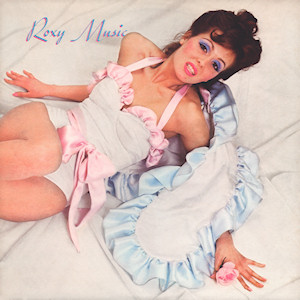
Even when you’re trying to stand out from a multicolored crowd, it’s important not to shake things up too much. Bryan Ferry knew that, so most of the elements that made Roxy Music’s debut so startling are still in place on For Your Pleasure, right down to the model on the cover and the band’s own poses in the gatefold.

A terrific opener, “Do The Strand” exhorts the listener to try the latest dance craze for a variety of bizarre reasons, the most compelling being that “rhododendron is a nice flower.” If you think “Beauty Queen” has a menacing undercurrent, you ain’t heard nothing yet, especially since it evens out once the song proper starts. Plus, that cool double-time section is lotsa fun (cute reference to “sea breezes” too). “Strictly Confidential” also seesaws between drama and lilting falsetto, dragging things somewhat. Luckily, “Editions Of You” revives the better moments of the first album, ponding away at the riff with Eno finally getting a chance to unleash his beeps and whoops. It provides something of a sorbet before the debauched horror of “In Every Dream Home A Heartache”, wherein the ladies’ man expresses his devotion to vinyl. It’s worth sticking around once Phil Manzanera lets loose on guitar, even through the fake fade. (The subject was tackled with a little more humor a few years on by the Police.)

Eno has more room to wander on “The Bogus Man”, a nine-minute groove on one note that still manages to stay interesting due to everybody’s input. Once that sputters away, “Gray Lagoons” sounds almost carefree, reviving some ‘50s elements and even breaking down for a harmonica solo. The title track brings the mood back to dark, first taking its sweet time to get rolling, then wandering around the piano for far too long to the end, culminating in Mellotron and Judi Dench.

For Your Pleasure has to compete with the first album, and while it’s not as striking, it’s still worthwhile. We want to like it, if that helps. Eno’s own opinion was clear when he said “tarah tarah” to the band for his own feathered path, yet the others would soldier on. (Though it took a while, the album was eventually expanded to include a bonus disc of outtakes, radio sessions, and the “Pyjamarama” single, with even more rehearsals and demos plus a DVD of TV performances in the Super Deluxe Edition.)

Roxy Music For Your Pleasure (1973)—3
2026 Deluxe Edition: same as 1973, plus 14 extra tracks (Super Deluxe Edition adds another 22 tracks plus DVD)

Tuesday, July 21, 2009

Roxy Music 1: Roxy Music

When they emerged, they were just plain goofy looking, and it’s hard to disagree today. Roxy Music was part greasy pompadour, part progressive, part glam, part outer space, and damn catchy. Looks weren’t everything; they had to sound good, and they did.

“Re-Make/Re-Model”, which opens their eponymous debut, might as well be the theme song to their imaginary TV series. After the sounds of a cocktail party, a piano establishes the rhythm before the band pounds it into submission. You can hear Bryan Ferry posing through his vocals, while Phil Manzanera solos like he’s trying to hit every fret on the neck at least five times. Andy Mackay honks his saxophone, and Brian Eno adds wacky synth effects seemingly at random. Everybody gets two bars to solo, including drummer Paul Thompson and bass player Graham Simpson, who would set a standard by leaving the band before the album was released.

The rest of the side does well to live up to the promise. “Ladytron” begins with a space landing and continues with an oboe solo before Ferry starts singing in a different key. Whether or not he’s trying to seduce a robot is just part of the fun, which continues big time on “If There Is Something”. Here the simple piano chording gets processed through a mildly country-western filter, then takes a darker turn through a descending riff wherein Ferry lists all the ways he’d show his affection, from climbing mountains to “growing potatoes by the score.” The music finds its way to a more comfortable resolution, and if you got the album in the US, the wondrous single “Virginia Plain” comes over the hill into Whoville like sleighbells. Elsewhere, “2HB” bubbles in next, with Casablanca references underscoring the actor’s initials in the title.

Side two isn’t quite as classic, and works a little too hard to be as epic. “The Bob (Medley)” is indeed a series of vignettes stuck together, with only the effects strewn throughout seeming to refer to the Battle of Britain (again, a pun of a title). A punk dirge makes up the first part, a heck of a chorus (“Too many times beautiful”) peeks out from somewhere, and peek from the other side of the window to a party we’re not invited to returns us to the dirge, and big tympani to end the suite. The lecherous creep in Ferry returns on “Chance Meeting”, his pitch leering over the piano while Manzanera unrolls sheets of distortion and feedback. “Would You Believe?” is a little more pleasant, a sweeter approach to seduction, even through the rave-up sax solo straight from the car hop. It’s a nice change of pace, since “Sea Breezes” is very slow and spare, Ferry sounding like a cross between Tiny Tim and Jeremy Hilary Boob. Another decent guitar solo sets up the middle section sung over the slowest drum solo you’ll ever hear. And just like closing credits, “Bitters End” sums up the cocktail party, our narrator sadly, drearily alone. Or something.

Until we can think of another word for it, Roxy Music is just plain goofy fun, particularly side one, which gets a major boost from “Virginia Plain”. That tune has gone on and off different reissues of the album, but sits squarely in sequence for the most recent super deluxe edition, along with demos, outtakes, BBC performances, and a DVD with video clips and the obligatory 5.1 surround mix by Steven Wilson.

Roxy Music Roxy Music (1972)—3½
2018 Deluxe Edition: same as 1972, plus 15 extra tracks (Super Deluxe Edition adds another 14 tracks plus DVD)

Monday, July 20, 2009

Bob Dylan 24: Slow Train Coming

First he went electric. Then he went soft. And now his fans were just as confused to find that Bob Dylan had become a born-again Christian. His concerts no longer featured any of his hits, but concentrated solely on his new original, spiritual material—nine of which would appear on Slow Train Coming—and featured long “raps” about Armageddon.

The cover art features some fairly obvious cross depictions, but for the most part the lyrics (on side one anyway) don’t pound the Gospel into your ears. “Gotta Serve Somebody” goes against the “a list is not a song” rule, but he can get away with it. The remarkable “Precious Angel” has a tension that builds, and fortunately is not ruined by the more gentle if direct “I Believe In You”. “Slow Train” was one of the first songs written after his conversion, and it’s a good one.

Side two doesn’t always register, starting with “Gotta Change My Way Of Thinking”, but has its moments. “Do Right To Me Baby (Do Unto Others)” is another rare excursion into odd tempos, while the fire and brimstone of “When You Gonna Wake Up” ruffled many feathers. “Man Gave Names To All The Animals” is essentially a kids’ song; it’s good, but not exactly the poetry we’d come to expect. The album closes with “When He Returns”; just voice and piano, it works because of that.

Part of the success of Slow Train Coming can be ascribed to the producer Jerry Wexler, whose legendary no-nonsense approach suited Bob’s needs just fine. And the band was great too: Barry Beckett of Muscle Shoals plays keyboards, Tim Drummond adds understated basslines, and the one-two punch of Mark Knopfler and Pick Withers of Dire Straits gives the album a sinuous sound. Even the horns don’t get in the way. The religious overtones notwithstanding, it is a strong album that should get more respect.

Bob Dylan Slow Train Coming (1979)—3

Friday, July 17, 2009

Bob Dylan 23: Masterpieces and Budokan

Back before Street-Legal had been recorded, Bob and his new band embarked on a massive tour that took them through Australia and the Far East before hitting Europe and America. To promote the Down Under leg, Columbia in Australia put together a three-record set of hits, live alternates and rarities called Masterpieces. It’s not the best overview, particularly in such cases as the Isle Of Wight version of “Like A Rolling Stone” instead of the single, but collectors would have been happy to have such rare sides as “Mixed-Up Confusion” (Bob goes electric in 1962!), “Can You Please Crawl Out Your Window?” from 1965, the amazing “Just Like Tom Thumb’s Blues” recorded live in Liverpool with the Hawks, the Desire outtake “Rita May”, the standalone single “George Jackson” and the solo piano version of “Spanish Is The Loving Tongue”.

The album has been reissued several times in the same countries, but has never been available as an official American release. Some, but not all, of the rarer tracks would be included on Biograph. (And like that set, the six sides were thematically arranged thusly: hits, live, rarities, protest, poetry and love songs.)

After the tour had moved on from Tokyo, Sony put together an official live album from the shows. Just as with happened around the same time with Cheap Trick, enough copies were sold as imports from Japan to compel Columbia into releasing it Stateside. Unfortunately, unlike Cheap Trick’s album of the same name, Bob’s At Budokan wasn’t very good. The band had retained a few members from Rolling Thunder but added backup singers and the sax and flutes from Wrecking Crew legend Teenage Steve Douglas. The result was slick, not unfairly derided as “Vegas”—Lou Reed had a similar approach the same year—and the retooling of the songs was ill-advised. Some tracks stand up, like the ferocious “It’s Alright Ma”, but you have to endure reggae versions of “Don’t Think Twice” and “Shelter From The Storm” to get to it. (“Knockin’ On Heaven’s Door” was also reggae, perhaps in a nod to Eric Clapton’s recent cover.) “Oh Sister” and “One More Cup Of Coffee”, two highlights from Desire, are pummeled here. At least he was smart enough not to screw with “Like A Rolling Stone”.

The LP did come with a poster—like all ‘70s double live albums should—and included, for the first time, lyrics on the inner sleeves. But these didn’t always match what was being sung, as in the drastically overhauled “Going, Going, Gone”. The audience claps politely throughout, but it’s still a sad waste of plastic.

Then, only 45 years later, somebody decided to commemorate the shows with a pricey package that, along with liner notes and other ephemera, presented the two remastered concerts as performed on four discs. The setlists are similar, each beginning with a startling instrumental arrangement of “A Hard Rain’s A-Gonna Fall”, followed by an obscure cover—“Repossession Blues” for the first show, “Love Her With A Feeling” for the second. Along with the debut of “Is Your Love In Vain?” and a gentle “Girl From The North Country”, some startling choices include “One Of Us Must Know”, “I Don’t Believe You”, “Tomorrow Is A Long Time”, a reworked “The Man In Me”, and a still-evolving “I Threw It All Away”. Nowadays, of course, we should be used to Bob rejigging song arrangements and playing with the phrasing, but that was heresy in 1978. (We also know now that the shows’ promoter insisted on choosing the songs that would be performed. Since Bob needed the money after an expensive film flop and a messy divorce, he agreed, but certainly needed to play them his way.)

Hearing the music in context—as performed—does fill out the listening experience, but this band simply wasn’t the best to suit the material. Hindsight shows us he was in transition; soon enough, he would write all-new songs that wouldn’t need horns onstage, yet had plenty of room for full-throated female backup singers.

Bob Dylan Masterpieces (1978)—3½
Bob Dylan
Bob Dylan At Budokan (1978)—2
Bob Dylan
The Complete Budokan 1978 (2023)—2½

Wednesday, July 15, 2009

Bob Dylan 22: Street-Legal

Street-Legal is something of a transitional album. While Bob had been surfing a wave of success for some time, his marriage was over and the movie he’d spent a year editing was lambasted. The songs that emerged on the album hint at some of the turmoil in his head; some of his most intricate rhyme schemes attempt to follow some equally intricate melodies against a band heavy on horns.

“Changing Of The Guards” has some suggestive imagery—“They shaved her head” being one favorite—but it’s mostly the debut of the “chick singers” that will be omnipresent for the next ten years. “New Pony” is a twelve-bar blues that thuds along while the ladies repeat “How much longer?” for no discernible reason. “No Time To Think” crams too many words in to the point where it’s hard to believe it’s really him. “Baby Stop Crying” ends the side with a musical foreboding of his live show, with updated arrangements of older songs fronted by a guy in a really bad jumpsuit torn between Elvis Presley and Neil Diamond.

Speaking of Elvis, “Is Your Love In Vain?” has echoes of “Can’t Help Falling In Love”. It also doesn’t sound like Bob, but is a good performance. “Señor (Tales Of Yankee Power)” is the highlight of the album, mostly because he doesn’t sound as much like he’s straining to be mysterious. “True Love Tends To Forget” is notable for that chord in the middle that always conjures the Looney Toons theme. “We Better Talk This Over” has something of a twang with an extra beat designed to discourage line-dancing. “Where Are You Tonight (Journey Through Dark Heat)”, despite the titular reference to “Absolutely Sweet Marie”, doesn’t register enough to make one want to play the album again.

It’s been said that this album has improved thanks to modern technology advances, but the sound doesn’t matter if the songs don’t work. Still, it’s not to suggest that Street-Legal is half-assed; it’s clear he was trying to say something, but he didn’t seem to know what that something was. He would find his way soon enough, and also find a way to confound his audience yet again.

Bob Dylan Street-Legal (1978)—2½