Monday, February 15, 2010

Pete Townshend 9: The Iron Man

Even though he’d proved he could be successful with any kind of song, for some reason Pete Townshend decided the only “albums” worth putting out had to have some kind of concept behind them. Coupled with his work as a book editor, this manifested itself in a half-baked album like The Iron Man, based on a children’s book by Ted Hughes.

Grandly subtitled “The Musical by Pete Townshend”, the album might have worked a little better had he chosen to sing all the songs himself, rather than “casting” the roles. As nice as it is to expose new listeners to Nina Simone and John Lee Hooker, they are ultimately distractions for those of us just wanting to hear Pete. And those are at least names we know; it’s difficult to say how much success the likes of Deborah Conway, Cleveland Watkiss and someone known only as “Chyna” (not the wrestler) can attribute to their work here.

The best moments are Pete’s, which can usually be taken outside of any concept. “I Won’t Run Anymore” has potential, as do “All Shall Be Well”, “Was There Life” and “A Fool Says…” The obvious single was “A Friend Is A Friend”, as it sounds most like a Pete song, but the addition of a kids’ chorus is never a good idea, even on a musical meant for children. His brother Simon sings all 42 seconds of “Man Machines”; a longer version included on a later reissue gives the track much more room to breathe.

The “superstar” turns are, frankly, embarrassing. John Lee Hooker gets two songs, neither of which fit his persona. “Over The Top” is expository, but “I Eat Heavy Metal” (with the choir adding “he eats heavy metal” after each line like a horrible Rankin-Bass production) is just plain cartoony. Surely, given his admiration of Miss Simone, he could have provided her with something more meaningful than “Fast Food”, particularly with the choir asserting “she wants food fast” in the Rankin-Bass style.

But most of the attention, of course, was given to the two songs that Roger Daltrey sings, with John Entwistle on bass, making for a Who reunion—on paper anyway. “Dig” is pleasant, if not exactly substantial, but “Fire”, an unrecognizable remake of the old Crazy World of Arthur Brown hit, is just plain stupid, and badly produced to boot, by the same guy whose biggest production credit is for “We Built This City”.

What we really wanted was for Pete to rock; he was certainly able to do that within the murky outline of White City. Wouldn’t it have been nice if he could have done that here too? He maintains today that he was forced to cut a lot of material because the label didn’t want a double album, but it’s hard to believe that we’d be missing anything.

Ultimately, The Iron Man was a resounding disappointment, with a libretto to match. A movie was eventually made, but without Pete’s songs. His dream of creating an actual musical from the material hasn’t quite come to fruition, though he wouldn’t abandon his Broadway dreams just yet.

Pete Townshend The Iron Man (1989)—2
2006 remaster: same as 1989, plus 3 extra tracks

Friday, February 12, 2010

Rolling Stones 16: Sticky Fingers

Or, the one with the zipper on the cover. Sticky Fingers is the third in the series of Great Stones Albums, following on from Beggars Banquet and Let It Bleed, and in many ways it’s a completion of the previous two, as the recording sessions overlap.

“Brown Sugar” and “Wild Horses” both come from a trip to Muscle Shoals, Alabama (as seen in the film Gimme Shelter), and show just how much the boys had grown—a classic riff with horns on the former, and a tender acoustic charmer on the latter. On side one, they come on either side of “Sway”, a great lost number with a sinister undertone that would be stolen 20 years later by the Black Crowes. “Can’t You Hear Me Knocking” starts simply enough with a snotty riff and a few funky verses and choruses, then changes gears for an extended solo guitar section that mutates and eventually resolves. It sounds spontaneous and structured at the same time. He may have only been in the band for a few years, but Mick Taylor more than made his mark on these albums. “You Gotta Move” is also from the Muscle Shoals sessions, and another straight country blues cover.

Side two doesn’t disappoint either. “Bitch” is an underrated classic that probably would have received more airplay with a different title. As ever, Charlie Watts bangs the drums like no one else. “I Got The Blues” is possibly the least impressive of the songs here, except for Billy Preston’s capably brief organ solo and Mick Jagger’s passionate yelling over the end. “Sister Morphine” is the oldest recording here, having been started during the Beggars Banquet era, and mostly written by Marianne Faithfull. Its spooky lyrics set the tone, matched by Ry Cooder’s bottleneck and Jack Nitzsche’s dungeon piano. “Dead Flowers” raises the mood a bit, a signature clever country song that’s a lot nastier than it sounds. The grand finale this time out is “Moonlight Mile”, a pretty thing with a Japanese feel and great atmosphere.

If you ever owned Sticky Fingers on vinyl, chances are you got so much mileage out of it that various other Stones albums have scraped back covers thanks to the zipper. And it’s another one to suggest that 1971 was one of the greatest years ever for rock albums.

Nearly 44 years later, after the band had finished milking their 50th anniversary, Sticky Fingers received the Deluxe Edition treatment. The two-disc expansion offered a few alternates of varying interest (“Brown Sugar” with Eric Clapton, an acoustic mix of “Wild Horses”, a longer “Bitch”) and some live performances, all the same arrangements from Get Yer Ya-Ya’s Out!, only with Nicky Hopkins and a horn section. Those who sprung for the more expensive Super Deluxe Edition got a DVD teaser of a 1971 London gig, a book and an official release of the classic Get Your Leeds Lungs Out bootleg, also the source of the obscure “Let It Rock” B-side.

The Rolling Stones Sticky Fingers (1971)—5
2015 Deluxe Edition: same as 1971, plus 10 extra tracks (Super Deluxe adds another 13 tracks and DVD)

Wednesday, February 10, 2010

Bob Dylan 36: The Bootleg Series

Just in time for his 50th(!!!) birthday came the unbelievable announcement that a box set full of previously unreleased Dylan tracks had been sanctioned and approved by both artist and label. Not only would this make Bob the first major artist worthy of two box sets, but the potential to finally hear some of this stuff in best-ever fidelity was enough to make fans drool.

And drool we did, when the bounty was revealed. The Bootleg Series box was dubbed “Volumes 1-3”, subtitled “Rare & Unreleased” from the years 1961 through 1991. Naturally half the stuff—most of the first two discs—comes from the first seven years of his career, but you expected that.

The first disc alone only goes up to 1963, with plenty of outtakes from his first three albums, a few publishing demos and even some live recordings. As many of these were known for years as published lyrics, it can be alternately fascinating and disappointing to hear the music underneath. Highlights include “Hard Times In New York Town”—a great place to start—and “No More Auction Block”, which gives a hint to the inspiration behind “Blowin’ In The Wind”. “House Carpenter” is a scary sea song, “Talkin’ Bear Mountain Picnic Massacre Blues” is his first real funny song (compared to “Talkin’ Hava Negila Blues”) and “Let Me Die In My Footsteps” may be repetitive but it’s effective. “Quit Your Low Down Ways” might have been left aside had people realized he’d stolen the yodel from Elvis. “Paths Of Victory” is an example of the type of song he’d soon leave behind, and “Moonshiner” is another nice one from the end of the protest era. The disc closes with “Last Thoughts On Woody Guthrie”, a poem read aloud to the Town Hall audience.

Things get very interesting on the second disc. “Seven Curses”, a powerful gallows pole song, and “Eternal Circle” show his increasing depth as a poet. “Suze (The Cough Song)” has a riff similar to “Nashville Skyline Rag”. “Mama You Been On My Mind” is from the end of the Another Side sessions, and it’s beautiful. The equally stunning “Farewell Angelina” comes from the Bringing It All Back Home sessions, and we’re guessing he left it out because he drops his pick halfway through. “Sitting On A Barbed Wire Fence” doesn’t live up to the promise of the lyrics we had for 20 years, while “It Takes A Lot To Laugh” is in its faster incarnation than the lazy take from the Highway 61 album. “I’ll Keep It With Mine” is a rehearsal that doesn’t quite make it, yet the phenomenal “She’s Your Lover Now” nearly gets to the end. “I Shall Be Released” was obviously left off the official Basement Tapes since the guitar is so woefully out of tune. We jump all the way ahead to the anticlimactic George Harrison take of “If Not For You”, followed by a lackluster “Wallflower”. “Nobody ‘Cept You” isn’t much of a loss either, but the strangest choices are the alternates of the alternate takes of the New York Blood On The Tracks songs. “Call Letter Blues” turned out to be “Meet Me In The Morning” with different lyrics, and while this mix of “Idiot Wind” is not as aching as the original, it’s still wonderful.

The third disc begins with a different “If You See Her, Say Hello”, then it’s off to Desire country. “Golden Loom” has lots of Emmylou, but “Catfish” is as dull as the ball game it describes. “Seven Days” is a live take from the end of Rolling Thunder. From here it’s a race to the finish. “Ye Shall Be Changed” is the first of the pretty good Christian songs. “You Changed My Life” and “Need A Woman” don’t do much, but “Angelina” has a mystery lacking from those albums. “Someone’s Got A Hold Of My Heart” isn’t much better than the song it became. “Tell Me” is annoying, but “Lord Protect My Child” makes up for it. “Foot Of Pride” is an evil rant, and “Blind Willie McTell” is almost as incredible as the fans would have you think. “When The Night Comes Falling From The Sky” also isn’t any better than the album track, but “Series Of Dreams” is a nice way to end it.

Having three CDs of legendary unreleased material made up for much of the sludge of the previous decade or so. “Farewell Angelina”, “Mama You Been On My Mind”, and “She’s Your Lover Now” made The Bootleg Series box worth the price of admission. Knowing that the set was cut down from a proposed four discs made us hope against hope that more volumes, as promised in the booklet, would soon be coming. As it turned out, they would, but we’d have to wait.

The most amazing thing about the set was the knowledge that as good as this stuff was, they weren’t considered worthy of release back when they were originally recorded. Some would say that this was due to Bob being his own worst editor, but the glass-half-full camp prefers to think of it as proof of his genius—even his leftovers are masterpieces.

Bob Dylan The Bootleg Series Volumes 1-3 (Rare & Unreleased) 1961-1991 (1991)—4

Monday, February 8, 2010

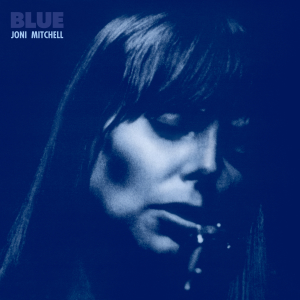
Joni Mitchell 4: Blue

Everybody’s Dummy holds a strong reverence for an artist’s First Four, as held up by such performers as Dire Straits and R.E.M., wherein their first four albums are essential (and fit conveniently on two 90-minute Maxells, just right for the average interstate car trip). With Blue, Joni Mitchell joins that pantheon, as if she needed any excuse. Everything that enticed listeners through Song To A Seagull, Clouds and Ladies Of The Canyon appears here, in a familiar package but without any redundancy.

So what’s so great about this album? For one, it’s her last folk album; after this she’d add a rhythm section, horns and more overt jazz touches with varying results, and her voice would begin its multi-octave descent. Blue is Joni as hopeless romantic, taking solace in her piano, guitar and dulcimer. “All I Want” sets it up: “I am on a lonely road and I am traveling/Looking for something, what can it be?” From there she takes us through several of her moods: the smitten “My Old Man”; the remorse of “Little Green” (written about the child she’d given up for adoption years before); the slightly hedonistic “Carey”; and the surrender of the title track. And that’s only side one.

Side two longs for a return to “California”, then immediately regrets her decision to take “This Flight Tonight”. “River” gets a lot of play thanks to numerous cover versions every December; look for the interpolation of “Jingle Bells” over the end. From here the album takes a decidedly melancholy and voyeuristic turn, closing with “A Case Of You” and “The Last Time I Saw Richard”, two songs that seem to be taken directly from conversations.

We mentioned that this was her last folk album; it’s a style to which many of her fans wish she would return. She certainly decided she’d done all she could with that voice, and wanted to move on. Fair enough. We’ve dipped our toes into some of her later albums, but there’s no denying the magic of those first four. In a just world, the angry young women of the ‘90s who worshipped at the shrines of Tori, Ani and Alanis have discovered her by now. Or at least, as one of our correspondents likes to say, adopted themselves a cat.

Joni Mitchell Blue (1971)—4½

Friday, February 5, 2010

Tom Petty 13: She’s The One

In a fantastic case of “whoops, I made an album,” Petty started with a couple of songs for a movie, and managed to stretch it into a full-length cohesive set by adding a couple of odd covers and some leftovers from Wildflowers.

As happens on all good soundtracks, She’s The One features a few variations on themes. The key song here is “Walls”, which appears in a “Circus” arrangement and again in a more straightforward rock version dubbed “No. 3”. Tom Petty is one of those rare individuals who can not only twist those same four chords into such a classic as “Walls”, but even have two different versions on the album both that good. If you’re listening closely enough, you can even hear it in the brief instrumental “Hope On Board”, pretty as it is.
The other major theme is “Angel Dream”, which we hear first in its “No. 4” incarnation, and again in a slightly stripped down “No. 2” take. It provides a tender, almost hopeful flipside to the questioning of “Walls”.

Overall it’s not the sunniest album, outside of the ode to “California”. “Grew Up Fast” and particularly the brief “Hope You Never” are filled with angry remorse, while “Supernatural Radio” and “Hung Up And Overdue” are epic glances into an unknown future. As for the covers, they’re an intriguing pair. On “Change The Locks”, he doesn’t have to stretch too far to sound exactly like Lucinda Williams. And Beck’s little-known “Asshole” goes along with the first verse of “Zero From Outer Space” to guarantee the album won’t be played around young children.

She’s The One is an unjustly overlooked chapter in both his canon and that of the Heartbreakers. And despite a few moments, the songs don’t feature all that much in the movie itself. So we must take it for what it is: a pretty decent Heartbreakers album.

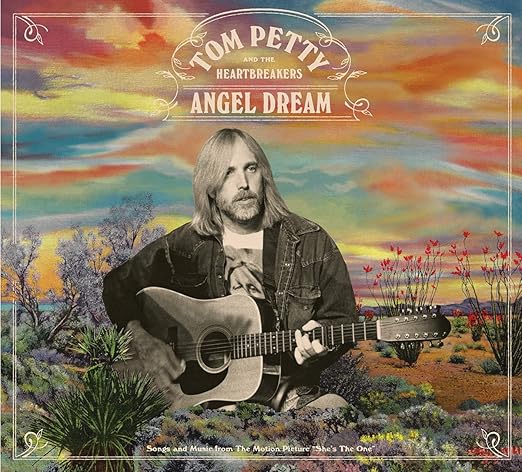
Apparently that wasn’t good enough for the estate, because after expanding the Wildflowers album and reclaiming some of the leftovers used here, somebody decided to “reimagine” the album with less emphasis on its purpose as a soundtrack, and with a new mix by Ryan Ulyate. Angel Dream—still retaining the original title as a subtitle—now begins with the “No. 2” version of its title song, reprised as the instrumental “French Disconnection” as the closer. We only get “Walls (No. 3)”, not the hit “Circus” version, though “Supernatural Radio” is extended by about a minute. “Airport” and “Hope On Board” are gone, but three unreleased songs are supposed to make up the difference. Interestingly, all three date from the 1992-1993 sessions with Stan Lynch, making them further outtakes from Wildflowers and not from the soundtrack period in the slightest. “One Of Life’s Little Mysteries” is an odd vaudeville experiment, and the weary “Thirteen Days” is a J.J. Cale cover, but “105 Degrees” is good fun, cheesy organ and all.

It’s a strikingly different listening experience, especially for those so familiar with the original sequence. Beginning with “Angel Dream” and “Grew Up Fast” makes it darker, and the rest of the sequence seems very random, particularly with not two but three covers in the lineup. Still, the songs stand up. But while new cover art was probably a given, what they used was frankly a swing and a miss.

Tom Petty and the Heartbreakers Songs And Music From The Motion Picture She’s The One (1996)—4
Tom Petty and the Heartbreakers
Angel Dream (2021)—3½

Wednesday, February 3, 2010

Tom Petty 12: Wildflowers

Tom Petty’s first album for his new label was a solo album, but in name only; Wildflowers features Mike Campbell on every track and Benmont Tench on most of them, with future Heartbreaker Steve Ferrone behind the kit in one hell of an audition. (Howie Epstein shows up here and there too. And so does Ringo!) Working with Rick Rubin suited Petty well, with more natural production that fit his simple style better than the boomy Jeff Lynne sound. Even using only three or four chords, he came up with some great new songs.

When we say great, we’re not kidding: “You Wreck Me” is a fun rocker; “It’s Good To Be King” does Mel Brooks proud; “Honey Bee” rides a basic riff down the white line; “Don’t Fade On Me” is a satisfying trip to the swamp. And if he’d only ever written the gorgeous “Wake Up Time” and nothing else in his long career, he could still be proud.

On top of that, there are ten other tracks to keep you busy. The title track has become a sentimental favorite over the years. “You Don’t Know How It Feels” follows a robotic drumbeat through harmonica breaks and a notorious reference to a joint that is still censored on corporate radio. “Time To Move On” and “Only A Broken Heart” are simple and perfect. “Cabin Down Below” and the horn-flavored “House In The Woods” (which hearkens back to George Harrison’s “Long, Long, Long” via Dylan’s “Sad-Eyed Lady Of The Lowlands”) make for excellent variety, while “Crawling Back To You” sounds something of a sequel to Springsteen’s “Spirit In The Night”. “Hard On Me” and “A Higher Place” sound like other songs we’ve heard before, but we haven’t placed them yet; hence their success.

While it has more of a produced studio vibe than Full Moon Fever—which was largely concocted in a garage—Wildflowers has a warm, comfortable feel throughout that’s not at all dated, unlike his first so-called solo album. Of course, he toured behind the album with the Heartbreakers. After all, who else could do these songs justice?

Even before his death, the album emerged as a critical and fan favorite, high above the rest of his catalog. In the last decade of his life he occasionally spoke of expanding the album to include songs he would’ve had he been allowed to put out a double. After years of teasing, Wildflowers & All The Rest finally emerged at the end of 2020, in several frustrating permutations.

The basic set added a disc of ten candidates for the double, four of which would end up in different mixes or takes on She’s The One. Some of these had never been heard before, like “Something Could Happen”, which features Stan Lynch on drums; unfortunately every reference to him in the liner notes is backhanded. “Leave Virginia Alone” and “Harry Green” suggest he was considering an album of characters a la Southern Accents; frankly, the dark confession of “Confusion Wheel” is more fitting. “Climb That Hill Blues” is a stark acoustic alternate to the familiar arrangement, while “Somewhere Under Heaven” is an early experiment with Mike Campbell before Rick Rubin came on board.

Two of those extras appear as demos, but these aren’t grainy cassette-quality boom box jobs. By this time Tom and Mike both had home studios with decent equipment, so these are all perfectly releaseable. To further the point, the Deluxe Edition added a disc of further solo home demos. Outside of the occasional shuffled verse or bridge, it’s amazing to hear how much of these songs were basically formed before he brought them to other players. (In fact, the original instrumental bridge for “Wildflowers” itself would form the basis for “To Find A Friend”.) A few songs never seemingly made it to the album sessions, such as the lovely “There Goes Angela (Dream Away)”, and “A Feeling Of Peace”, which already sounds very Heartbreakers-like. A tune now named “There’s A Break In The Rain” sports the chorus of what would be “Have Love Will Travel” a decade later.

A fourth disc presented a sprawling assortment of live versions, including songs not the original album, mostly recorded in the 21st century. It’s something of a companion to The Live Anthology, mixed and sequenced seamlessly, where you can only guess the age of the recording from the state of Tom’s voice. We’d’ve preferred the version of “Honey Bee” from Saturday Night Live with Dave Grohl on drums, but “Walls”, “Drivin’ Down To Georgia” (which was recorded after its appearance on that live set), an 11-minute exploration of “It’s Good To Be King”, and even a run through “Girl On LSD” help keep it interesting instead of just the album played faster.

A pricey and limited Super Deluxe Edition, available only via the official website, added another CD worth of leftovers from the sessions, mostly alternate takes, some including Stan on drums. (Kenny Aronoff plays on two tracks, while Ringo helms a version of the title track.) If only for the definitive studio take of “Girl On LSD”, as well as the acoustic B-sides “Only A Broken Heart” and “Cabin Down Below”, some of us would have preferred this disc in the Deluxe Edition over the live disc, even with the repeats from An American Treasure, but but again, nobody ever consults us on these things. Even the galloping “You Saw Me Comin’”, which previews “Don’t Fade On Me” via the similar outtakes on the Playback box, is worth more exposure. An early “House In The Woods” with Stan has a Dead-inspired mid-section that was thankfully jettisoned for the album, but it’s still cool to hear. (As if they listened to us, Finding Wildflowers (Alternate Versions) was a welcome standalone release the following spring. We’re guessing it offset all the unsold Wildflowers-themed candles, Xmas ornaments and whatnot on the online store shelves.)

The culmination of several years of work, Wildflowers & All The Rest is an excellent testament to both the man and the album. Should the estate tackle any other record to dig into, the bar has been set.

Tom Petty Wildflowers (1994)—4
2020 Wildflowers & All The Rest: same as 1994, plus 10 extra tracks (Deluxe Edition adds another 29; Super Deluxe another 15)
Tom Petty Finding Wildflowers (Alternate Versions) (2021)—3½
Monday, February 1, 2010

Tom Petty 11: Greatest Hits, Playback, Anthology

After he jumped ship to a new label, Petty’s old label felt entitled to put out a hits album. This being the modern age, of course, sixteen tracks fans already loved and owned were accompanied by two brand new ones. One of them, “Mary Jane’s Last Dance”, immediately became a huge hit and radio staple for the next fifteen years and counting. (So much so that the Red Hot Chili Peppers were criticized for the similarity of their “Dani California” to “Mary Jane”; Petty didn’t complain much, since he’d gotten away with copping the feel of “Waiting For The Sun” by the Jayhawks.) The other new song was a cover of Thunderclap Newman’s “Something In The Air”—close enough for a carbon copy.

Greatest Hits covered all the bases, despite the absence of anything from Let Me Up (I’ve Had Enough). It had strong legs for the rest of the century and well into the next one, but when it was reissued in 2008, “Something In The Air” was dropped in favor of “Stop Draggin’ My Heart Around”, the Stevie Nicks single featuring the Heartbreakers.

As Petty continued to have success elsewhere, MCA kept digging for gold on their own property. They really stretched themselves for Playback, a six-CD box set with three discs of album tracks, one disc of B-sides and two discs of outtakes. It was a nice idea; each of the discs comes in a little cardboard album-style sleeve with its own title, while the booklet includes an overview, track notes and individual credits. Splitting the tracks up between the familiar and the not-so keep the flow going, and some of the unheard tracks are pretty entertaining, from early Mudcrutch recordings, alternate takes like the original non-Stevie version of “Stop Draggin’” and a pile of final sessions with Stan Lynch for the Greatest Hits album. But none of the discs were filled to capacity; the three non-rarities discs in Playback could have been cut back to two just fine, a few B-sides were AWOL and even the outtakes discs might have worked better as one.

The idea of two discs of hits must have occurred to somebody in marketing, because at the century’s end appeared Anthology: Through The Years, featuring everything from Greatest Hits except “Something In The Air” and various album tracks that hadn’t made it to the box set. Some of the better selections for the time were “Stop Draggin’” (the Stevie version), “Waiting For Tonight” featuring the Bangles (inexcusably left off Full Moon Fever but included on Playback), and “Surrender”, an old Heartbreakers chestnut not recorded to Petty’s satisfaction until 2000.

So if you want to dive into the catalog, your work’s cut out for you. Start with the Greatest Hits or splurge for the Anthology. But that will only take you up to 1993; it would be a while before any collection covered the period to follow.

Tom Petty & The Heartbreakers Greatest Hits (1993)—4
2008 remastered CD: same as 1993, plus 1 extra track (and minus 1 track)
Tom Petty and the Heartbreakers Playback (1995)—3½
Tom Petty and the Heartbreakers
Anthology: Through The Years (2000)—4