Monday, January 10, 2011

Pink Floyd 13: Great Dance Songs, Works, Echoes

The chronology thus far makes this a good place to discuss the various Pink Floyd collections that have cropped up over the years. For a band who thrived as much as they did in the album format, one could be forgiven for thinking that a “greatest hits” album may not be the easiest thing to compile, but compile they did. And did. And did again.

Following the success of The Wall, the Floyd’s current label decided to put out a hits album of sorts. Cheekily titled A Collection Of Great Dance Songs, it’s something of an arbitrary collection of album tracks that may have been familiar to FM radio listeners. Starting with “One Of These Days” from Meddle, it sports a re-recording of “Money” and the complete “Sheep” from Animals. An excellent edit of “Shine On You Crazy Diamond” covers most of the first half to include all the verses before fading into “Wish You Were Here”. And “Another Brick In The Wall (Part II)” features the clean opening plus the schoolmaster’s coda. Yet despite the alternate mixes, it’s basically a sampler, and not a replacement for the LPs.
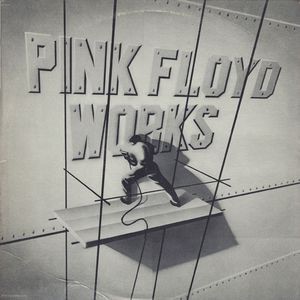
Not to be outdone, the band’s former American label soon put out Works, which also begins with “One Of These Days” before traveling back to the Syd days of “See Emily Play” and “Arnold Layne”. “Fearless” and “Free Four” show off their jaunty acoustic side, while “Set The Controls For The Heart Of The Sun” and “Several Species Of Furry Animals” appeal to the freaks. “Brain Damage” and “Eclipse” oddly end the first side, and the true rarity “Embryo” closes the set. That, plus various crossfades and alternate mixes make it interesting for fans, while newcomers will enjoy the earlier, lesser-known tracks.
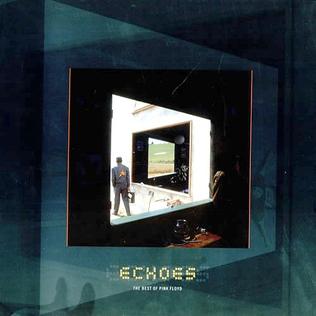
While the band members fought with each other through the nineties, their entry in the box set category was simply Shine On, which offered seven of their thirteen albums to date, plus the exclusive Early Singles, half of which had appeared on Relics. A much better overview of the band came in 2001 with the release of Echoes, offering over two-and-a-half hours of Floyd classics and deep cuts, some edited and/or crossfaded, covering nearly all the bases. Syd is featured on five tracks (as well as opening and closing the set), there are a few cuts from the two post-Roger albums, and there’s even the first CD appearance of “When The Tigers Broke Free” from the film of The Wall.

When the band started reissuing the albums again—and in some cases, expanding them—ten years later, a single-disc best of was commissioned, cheekily titled A Foot In The Door. Naturally it leans heavily on Dark Side, Wish You Were Here and The Wall, plus “See Emily Play” and a track each from the two non-Waters albums. The strangest inclusion is “The Fletcher Memorial Home”; a great song, but hardly a radio-friendly toe-tapper. Of all the compilations, Echoes is still the best place to start. (Of course, you could also go whole hog with either of two box sets of all fourteen studio albums, released only four years apart.)

Pink Floyd A Collection Of Great Dance Songs (1981)—3
Pink Floyd
Works (1983)—4
Pink Floyd
Shine On (1992)—4
Pink Floyd
Echoes: The Best Of Pink Floyd (2001)—4
Pink Floyd
The Best Of Pink Floyd: A Foot In The Door (2011)—3½

Friday, January 7, 2011

Tom Waits 3: Nighthawks At The Diner

As Tom’s reputation grew, part of his early dues involved warming up for such people as Frank Zappa, who had about as much use for him as the audience did. But he did gain attention as something of a comedian, a raconteur, and a real character. So he recorded his next album live in the studio cafĂ©-style, with a small audience of friends egging him on. (His producer says they had checkered tables with bowls of potato chips, and even had a stripper as the opening act.)

Nighthawks At The Diner presents his latest, Beat-inspired material in a relaxed setting that gives him and the band plenty of room to breathe. Several of the cuts are indexed as introductions to the successive songs, and in many cases they’re more entertaining than the songs themselves. As he sets up each performance, he spews a variety of hipster puns and wisecracks. (The best are those before “Eggs And Sausage”, where he describes the less-than-savory ingredients of the food in his beloved diners, and “Better Off Without A Wife”, a sly endorsement of solitude and self-pleasure.)

Sometimes the songs even live up to their introductions. In addition to the two mentioned above, “Emotional Weather Report” and “Warm Beer And Cold Women” offer hungover wordplay that in some cases you don’t “get” until he’s into his next line. The trouble is, it’s hard to keep up with him sometimes. As vivid as “Nighthawk Postcards (On Easy Street)” is, at eleven minutes of rambling prose that only rhymes on every other syllable it’s easy to be distracted. “Putnam County” is similarly dense, until you realize he’s describing a redneck bar in Tennessee, hundreds of miles away from seedy L.A.

Since he’s playing to a crowd, there aren’t any real tearjerkers like the ones on his first two albums, unless you count “Nobody”. The most surprising song is “Big Joe And Phantom 309”, an urban legend about a truck driver borrowed from Red Sovine and later appropriated by Pee-Wee Herman.

There’s a lot to take in on Nighthawks At The Diner, but for the most part it’s time well spent, since you can get something new out of the monologues—and even the actual songs—with each listen. He’d started to settle into his adopted role as the tipsy troubadour telling the truth from the wrong side of the tracks, shining a light on the other side of the Me Decade.

Tom Waits Nighthawks At The Diner (1975)—3

Wednesday, January 5, 2011

Mark Knopfler 2: Screenplaying

Not too long after the last Dire Straits studio album, Mark Knopfler compiled a collection of some of the film music work he’d done, focusing on four films, the soundtracks for which were all still in print. Screenplaying is arranged for feel more than history, making it a nice listen indeed.

Beginning with five tracks from 1984’s Cal, the mood is set with a distinctly Irish influence, with Uillean pipes and tin whistle accompanying Knopfler’s guitar and quiet accompaniment from some Dire Straits regulars. “Irish Boy” and “The Long Road” in particular provide a welcome contrast to the boomy sound of Brothers In Arms.

While Knopfler is credited as its composer, the entire soundtrack for 1989’s Last Exit To Brooklyn was performed solely by keyboard player Guy Fletcher, who joined the band in 1984 and has worked with Knopfler ever since. Here the harsh imagery of the film is illustrated by more pastoral if mournful passages.

“Pastoral” is a good word for the music from 1987’s The Princess Bride, arguably the music most recognizable to the average consumer. Five excerpts from the film evoke the adventure of the plot, with a few variations on the one song from the film, “Storybook Love”, which is not included in its vocal incarnation.

Overseas, however, it was his 1983 score for the Scottish film Local Hero that put him on the path to film composing. Some of its more Adult Contemporary cuts are included—namely “Boomtown” and anything featuring Mike Brecker’s saxophone—but thankfully the program ends with “Going Home”, which also closed Alchemy, as it did many Dire Straits concerts over the years.

In a few years’ time Mark Knopfler would release his first real solo album. He’s put out a handful of song-based albums since the turn of the century, alongside the occasional soundtrack work, and it doesn’t look like Dire Straits will return anytime soon. In the ears of consumers, he quit the band while he was ahead. So in many ways, Screenplaying serves as an epilogue to the Dire Straits story—a footnote, perhaps, but another perspective on what he was doing when the band was at its biggest. From here, it’s all firmly in the past.

Mark Knopfler Screenplaying (1993)—3½

Tuesday, January 4, 2011

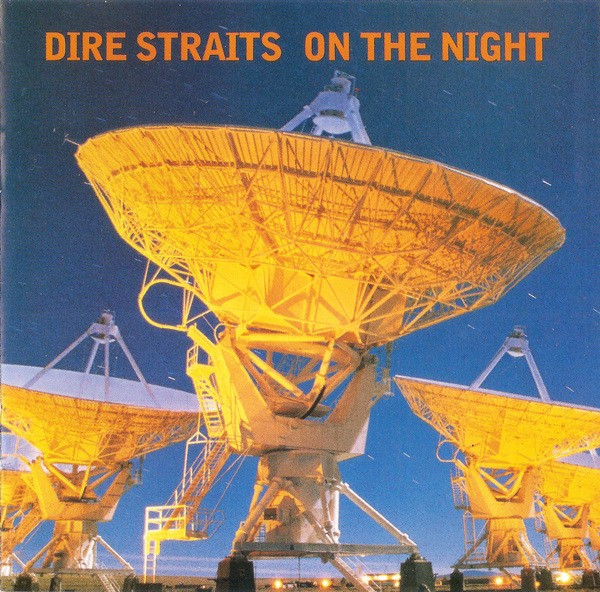
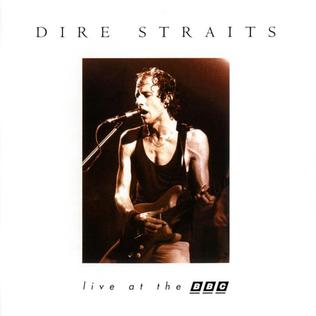
Dire Straits 9: On The Night and Live At The BBC

Despite lackluster reviews, On Every Street was a huge hit around the globe, and was followed by a massive world tour that kept the band on the road for over a year. Such an undertaking was likely done with the idea that it would never happen again, and to underline the finality of it all, the tour was documented on On The Night.

Everything is bigger since Alchemy, and even the Brothers In Arms tour, with nine guys now onstage. As he did on the album they were supporting, Paul Franklin adds prominent pedal steel throughout. This is noticeable right away, where “Calling Elvis” is stretched out to ten minutes. New drummer Chris Whitten, fresh from Paul McCartney’s world tour, pounds the skins. Twenty minutes are given over to “Romeo And Juliet” and “Private Investigations”, which of course had already been on Alchemy and not necessarily enhanced here. Everything else comes from the last two albums, and all are crowd-pleasers, but here they’re mostly longer with more guitar solos and interplay, some of which is intriguing and some of which is noodling. A song like “You And Your Friend” can set a mood on a home stereo, but pretty much plods in an arena. That said, the closing “Brothers In Arms” is positively majestic and moving.

In the UK where such things were more common, “Your Latest Trick” was released as a single, promoted as the Encores EP, sporting a hot pink photo negative of the On The Night cover, bolstered by three songs that weren’t on the album: “The Bug” (which actually came earlier in the set), and familiar Alchemy favorites “Solid Rock”, and “Local Hero—Wild Theme”. Some thirty years later, the Live 1978-1992 box set expanded the original album to two discs, adding three more lengthy repeats from Alchemy as well as another “Two Young Lovers”, two songs from On Every Street, but most interestingly, the ultra-rare “I Think I Love You Too Much”, which was performed at Knebworth in 1990 with guest Eric Clapton, and covered that year on an album by blind blues phenom Jeff Healey. (The Encores EP was repeated on its own.)

Just how far the band had come—or sunk, depending on your point of view—was soon underscored by the excellent and very welcome Live At The BBC. This late-century surprise combined a 1978 radio appearance by the initial quartet playing six songs from the first album, plus the rarity “What’s The Matter Baby”, cowritten with brother David Knopfler, and which sounds like a blueprint for “Lady Writer”. Fleshing out the disc is a 1980 TV performance of “Tunnel Of Love”, complete with both intros as eventually heard on Alchemy, that is worth the twelve minutes even after Mark’s guitar has gone way out of tune. Even with the addition of keyboards, they were very tight.

Dire Straits On The Night (1993)—2½
Dire Straits
Live At The BBC (1996)—3½

Monday, January 3, 2011

Todd Rundgren 10: Faithful

It was time for another song-based solo album, but Todd still needed a concept to keep him interested. Faithful got most of its notoriety for side one, note-for-note covers of classic records from the sixties.

Of course, being Todd, he just doesn’t tackle songs he likes—he picks those that originally came out of meticulous production. Which is why we get covers of “Good Vibrations”, two Beatle songs, and songs by Hendrix, Dylan and the Yardbirds. His point seems to be “I’m just as good as those guys, only now I have the technology to let me work faster!” Still, sixties nostalgia wasn’t exactly fashionable in 1976, so his decision to record these songs was certainly unique for the time.

Side two offers six originals, immediately more accessible than anything on his last three albums with or without Utopia (who play on the album in their latest incarnation). “Black Or White” begins with an intriguing guitar part that unfortunately descends in to a heavy rocker. “Love Of The Common Man” is all ‘70s pop, a style that would soon be called yacht rock. An interesting mix of reggae and salsa music, complete with bird whistles, “When I Pray” provides some toe tapping, thanks to a repeated wordless refrain that covers whatever the point of the song is. “ClichĂ©” delivers on the promise of that brief guitar heard at the top of the side, and the Philly soul gets an even longer workout on “The Verb ‘To Love’”, though that crazy cocktail piano solo would keep anyone from confusing this with Hall & Oates. But the sublime mood gets punctured by “Boogies (Hamburger Hell)”, a dopey joke song in support of vegetarians.

If he was trying to win back a mainstream audience, Faithful was the way to do it. But he was putting out material at breakneck speed, leading us to wonder whether he really needed to release absolutely every new idea he had.

Todd Rundgren Faithful (1976)—3

Sunday, January 2, 2011

Mick Jagger 3: Wandering Spirit

With everything supposedly hunky dory in Stones land—mostly because we hadn’t heard otherwise—a new Mick Jagger solo album was a little surprising, but not when you consider it came on the heels of a Keith Richards solo album. Plus, given the less-than-legendary legacy of his first two works on his own, anything wrapped in yet another photo of Mick on an unmade bed—shirtless this time—couldn’t bode well.

However, Wandering Spirit defied expectations by being, shall we say, Stonesy. Perhaps we can thank co-producer Rick Rubin for that; most of the tracks involve guitars, bass, drums, and traditional keyboards. “Wired All Night”, “Out Of Focus”, “Don’t Tear Me Up”, “Put Me In The Trash”, “Mother Of A Man” are only missing Keith’s riffing and Charlie’s swing. And the few trips outside genre could hardly be called attempts at sounding contemporary. Even “Sweet Thing”, with its sampled vinyl crackle and falsetto, has enough funk to rock. The title track has a terrific rockabilly feel, updated for shredding. “Hang On To Me Tonight” approaches lonesome country, but it’s bested by far by “Evening Gown”, which should have been a Stones track with Keith harmonies.

In addition, some covers divert from the all-Mick show. “Think” is a revved-up take of a song most might have known from James Brown, while “I’ve Been Lonely For So Long” is a Stax tune given a slight Jamaican feel in the vocal. But given the length of the album, we could have done without “Use Me”, which doesn’t add anything to Bill Withers’ classic original except bring Lenny Kravitz in to take a few verses.

The album’s strong enough to keep you interested all the way through the last two, wholly unexpected tracks. The minor-key “Angel In My Heart” is accompanied by harpsichord and strings, of all things, then he sings “Handsome Molly” in a brogue, with only a fiddle by his side.

He didn’t tour behind it, and there wasn’t any real gimmick to the album, so Wandering Spirit was received well and soon forgotten. It’s too bad, since it remains a strong album—certainly the best one he’d done on his own to date—and deserves wider appreciation.

Mick Jagger Wandering Spirit (1993)—3½

Saturday, January 1, 2011

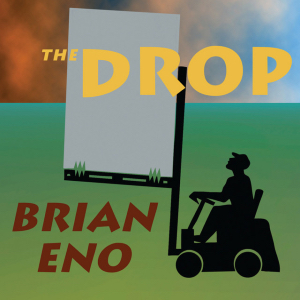
Brian Eno 16: Spinner and The Drop

In between production gigs, Eno occasionally entertained the odd commission. One such project was the soundtrack to a posthumous Derek Jarman film called Glitterbug—music for a film, if you will. Eno duly recorded some tracks and textures, then fobbed off the tapes to Jah Wobble, best known around these parts as the bass player in Public Image Ltd. The resultant album, Spinner, was credited to the pair, yet Eno avowed that he hadn’t heard the final product until it was pressed.

Such a half-assed approach only fuels the fire of his critics, and a lot of Spinner—save the tracks obviously overdubbed with bass and drums by Wobble—does seem as if the music is being created with zero human input. Still, tracks like “Where We Lived” and “Like Organza” will inspire comparisons to Apollo, while “Garden Recalled” previews parts of Radiohead’s Kid A. While the album has too much in the way of rhythm to be considered truly ambient, it’s also too easy to ignore.

Several minutes into Spinner’s final track, the music goes silent, emerging several minutes after that with a spooky, spacey piece based around rhythm box and a couple of electric pianos. This would emerge even longer as “Iced World” at the end of Eno’s next album. He described The Drop variously as jazz played by aliens, music that “nobody asked for,” or “music that nobody wants to listen to,” which of course begs the question why we should.

This time he apparently added the rhythms all by himself, and spread them about a variety of shortish pieces that, again, are just there, with the possible exception of “Swanky”, which at least sonically resembles its title. Much of the album is rather generic sounding, although “Dear World” does weave his droning voice into the mix. (The expanded reissue shortened “Iced World” by several minutes so it would fit on vinyl, and added two tracks from an earlier Japanese release, both of which were also included in the digital version. Meanwhile, the CD was augmented by a disc containing music from one of his art installations of the time. As for Spinner, its eventual upgrade ditched the “Iced World” preview in favor of a track each from Eno and Wobble, both decent.)

Eno/Wobble Spinner (1995)—2½
2020 expanded edition: same as 1995, plus 2 extra tracks (and minus 1 track)
Brian Eno The Drop (1997)—2
2014 expanded edition: same as 1997, plus 9 extra tracks