Friday, July 29, 2011

Velvet Underground 6: 1969 Live

In response to Lou Reed’s growing fame as a glam solo act, their original label decided to cash in on whatever they had left, compiling a two-record set from location tapes recorded at shows in Dallas and San Francisco. Taking care to highlight Lou’s name on the (hideous) cover art, at least the album generally known as 1969 could boast Maureen Tucker on drums, unlike the bootleg-quality live album from a couple years before.

What made 1969 more interesting, and essential to fans, was the inclusion of several unreleased songs exclusive to the set. “Lisa Says” and “Ocean” had been heard by a select few on Lou’s first solo album, but here were full-fledged band versions, the former with a jaunty bridge and the latter stretched to ten fascinating minutes. “Over You” and the odd “Sweet Bonnie Brown/It’s Just Too Much” medley are curious on their own, but “We’re Gonna Have A Real Good Time Together” crackles with energy. Many of the tracks are extended to jam length, and the key discovery to latecomers came in “New Age” and “Sweet Jane”, both in their original versions before being re-jigged for Loaded. (It was this version of “Sweet Jane” that the Cowboy Junkies covered in 1989, leading to their own success and an endorsement by a genuinely flattered Uncle Lou.)

The 1969 album was eventually reissued on CD, but separated into two budget-priced volumes, with an extra track on each. A proper rehaul is long overdue, but there have been two sequels of sorts. Come the turn of the century, when the archival boom helped boost sales in a dying industry, the Velvet Underground became the latest act to find themselves with an authorized “Bootleg Series”. The inaugural — and to date, only — volume in the series was culled from various safeties of cassettes recorded by guitarist (and eventual Reed sidekick) Robert Quine with his own personal tape recorder at a dozen shows from the same era as 1969. The Quine Tapes offers three discs chock full of the Velvets playing their little hearts out, complete with Maureen singing both “After Hours” and “I’m Sticking With You”, and three renditions of “Sister Ray” ranging from 24 to 38 minutes. One key rarity is “Follow The Leader”, otherwise known only from a mid-‘70s Lou solo album.

When the third album received its 45th anniversary treatment, the deluxe package included two discs of material from the San Francisco shows mined for 1969. A year later, The Complete Matrix Tapes presented all four sets sourced from the original tapes, for the best-yet sound of these odd but enjoyable recordings. Everything was familiar to fans by now, and songs are repeated, and but none of them sound identical. Well, maybe “There She Goes Again”, but that’s allowed.

The Velvet Underground 1969: The Velvet Underground Live With Lou Reed (1974)—4
1988 CD: same as 1974, plus 2 extra tracks
The Velvet Underground Bootleg Series Volume 1: The Quine Tapes (2001)—3
The Velvet Underground
The Complete Matrix Tapes (2015)—3½

Wednesday, July 27, 2011

Joe Jackson 8: Live 1980/86

Despite not being the most lucrative artist on their label, A&M was still willing to bankroll any ideas Joe Jackson had. First, 1987’s Will Power was an original, strictly symphonic work that combined orchestral instruments with guitar, saxophone, and electronic keyboards and challenged most listeners, with the exception of the exquisite “Nocturne” piano instrumental.

Much of the next year was dedicated to writing and recording the soundtrack to Francis Ford Coppola’s latest flop. Tucker: The Man And His Dream was also predominantly instrumental, based around forties swing, alternating between mood music and upbeat fanfares like “Toast Of The Town”. He’d certainly improved since Mike’s Murder.

But in the middle came the surprising release of a double live album. What makes Live 1980/86 so entertaining is given in the title—a side each from four different tours covering six years on the road. Each of the bands is different in some way, but all are tight as can be.

The first side is dedicated to the final show by the original Joe Jackson band, beginning with a tentative “One To One” before introducing the band and revving it up. An amazing performance of “Is She Really Going Out With Him?” (one of three here) spirals up into an extended vamp on the opening chords that manages to morph into a blistering “Don’t Wanna Be Like That”.

Sides two and three, recorded little over a year apart, are acknowledged in the excellent liner notes as being similar, but even the more contemporary pop sounds he’d developed manage to transform songs like “On Your Radio” and “Fools In Love”. The version of “A Slow Song”, which closes side three, is absolutely overflowing with emotion—again, described in the liner notes—the sax solo nicely replacing the calmer organ of the album version. (The crowd reaction provides a nice contrast to the included photo of the audience at a 1982 gig opening up for the Who, taken from the viewpoint of the singer, looking out over a stadium floor full of raised middle fingers.)

Side four—the only one not to feature the stalwart Graham Maby on bass—was the most recent tour captured at the time, and it’s the best side. Several songs are reworked here: “Be My Number Two” merges very nicely into “Breaking Us In Two” with a subdued nylon-string solo; “It’s Different For Girls” is transformed into an acoustic strum; “You Can’t Get What You Want” loses the horns without the energy; “Jumpin’ Jive” gets a rockin’ workout that must have been memorized by Brian Setzer; and “Steppin’ Out” becomes an atmospheric meditation as filtered through side two of Big World.

With almost two hours of music, Live 1980/86 is riveting and hardly tedious. Yes, there are actually three different versions of “Is She Really Going Out With Him?” on this album, and while the so-called “acoustic” and “a cappella” renditions are enjoyable in their own ways, the best is still the tense burner from 1980. As it should, Joe’s prowess on the piano is slowly revealed through the four sides.

Joe Jackson Will Power (1987)—2
Joe Jackson
Live 1980/86 (1988)—4
Joe Jackson
“Tucker: The Man And His Dream” The Original Motion Picture Soundtrack (1988)—3

Monday, July 25, 2011

Hannah Cranna: Better Lonely Days

For a few brief, shining years, the city of New Haven appeared to be on the verge of becoming the next Athens or Minneapolis in terms of a breeding ground for rock music. Its relative proximity to New York City as well as Boston made it a thriving scene for punk bands in the late ‘70s, which continued through the ‘80s with such bands as Miracle Legion and Those Melvins coming this close to capturing national attention.

As grunge became mainstream nationwide, some of the more cerebral musicians turned to power pop and alt.country for inspiration. That melodic equation is apparent all over Hannah Cranna’s Better Lonely Days. These songs, mostly of a romantic bent, are so crisp and catchy that you wonder why they hadn’t been written already. Strident rhythm guitars and tasteful leads drive most of the tracks, glued together by Beatlesque “ooh-la-la-la” harmonies.

The influences are fairly upfront—one song is even titled “Paul McCartney And Wings”, for crying out loud—but you’d be hard pressed to pinpoint any blatant steals. Nor will you notice that most of the songs are in G. Even with that, the sources are unexpected; “In The Sky” is adapted from an Emily Dickinson poem, while a modified arrangement of the Kinks classic “Waterloo Sunset” gives over a verse in favor of a thick solo.

The high point of the album is the stellar should’ve-been-a-smash “Hello”, which even gets away with a spoken interlude. Other standouts, like “Angeline”, “She Loves Me” and the title track, will also perk up weary ears.

They simply don’t make albums like Better Lonely Days anymore, and it would be awfully nice if someone did. As for the band itself, their self-titled follow-up sported some terrific songs and production by Badfinger’s Joey Molland, but unfortunately didn’t propel them much further than New Haven. After the turn of the century it seems they mutated into a variety of side projects, and the word on the street is that they’re recording again. If the new songs are anything like the ones on their debut, that would indeed be good news.

Hannah Cranna Better Lonely Days (1995)—4

Friday, July 22, 2011

Lou Reed 4: Rock ‘N Roll Animal

By now Lou was getting a reputation as the epitome of decadence, and he milked it for all it was worth. Onstage he abandoned the guitar, choosing to concentrate on singing and indulging in performance art. We haven’t found an exact date, but halfway through 1973 he morphed from the curls and whiteface—soon to be immortalized, and probably not coincidentally, by Frank N. Furter in The Rocky Horror Show—in favor of a buzz cut, lipstick and studded leather.

This is the image associated with Rock ‘N Roll Animal, a live album culled from a Christmastime show in New York City. Here the primitive sound of the Velvet Underground is nearly transformed into arena rock, beginning with the overblown (but still wonderful) extended intro to “Sweet Jane”. Guitars, played by a couple of guys who’d soon join Alice Cooper, intertwine over funky bass and keyboards before finally finding their way down to that immortal four-chord change as the singer walks on stage and the crowd goes nuts. A lengthy “Heroin” apes the dynamics of the original, but the guitar harmonies and fake Bach organ fugues have us wondering if the band bothered listening to the lyrics. “White Light/White Heat” delivers a nice, nasty crunch, with Steve Hunter doing his best Mick Ronson impression. “Lady Day” is fairly faithful to the album version (though Lou does scream his way through the lyrics, showing more emotion than he did on Berlin), but the extra funky “Rock And Roll” takes the song a little too far from its inspiration.

In order to keep their boy on the charts, only six months after the commercially successful Sally Can’t Dance, his label issued another six songs from the show as Lou Reed Live. Three songs from Transformer are set against two from Berlin and “I’m Waiting For The Man”, and while it’s always nice to hear “Sad Song”, the album doesn’t quite have the fire of the first installment. When, at the turn of the century, Rock ‘N Roll Animal was reissued with two bonus tracks, it merely begged the still-unanswered question: why don’t they just repackage the entire show and put the whole thing out in sequence? (Perhaps, at 87 minutes, it’s not economical to have on a double CD? Nonetheless, anyone wishing to compile a homemade version can do so, and find it preferable to hearing the albums separately.)

Lou Reed Rock ‘N Roll Animal (1974)—3½
2000 reissue: same as 1974, plus 2 extra tracks
Lou Reed Lou Reed Live (1975)—2½

Wednesday, July 20, 2011

Ben Folds 1: Ben Folds Five

Ben Folds is a strangely divisive performer—it seems people either love or hate him. His particular brand of geek-rock can be grating to naysayers, but his supporters are positively devoted to his pop craftsmanship in the tradition of early Elton John and Billy Joel through Joe Jackson and even Todd Rundgren.

He first got notice as the leader of the Ben Folds Five, a trio consisting of simply piano, distorted bass and drums with vocals and killer harmonies. (The joke in the band name was enough to either pull in or repel the curious.) Those who delved into their eponymous debut found a stellar pop gem with more hooks than your grandfather’s tackle box.

“Jackson Cannery” leads the pounding charge through a few dynamic changes to show the band’s chops, taken to an even higher level on “Philosophy”. The headbanging “Julianne” is one of the funnier songs to namecheck Axl Rose, nicely punctuated by flying dishes. “Where’s Summer B?” and “Alice Childress” are vivid portraits of the people in your neighborhood, particularly if you’re a twentysomething. His trademark sarcasm and skewering of pop culture first rears its head on “Underground”, which predicted the emo scene by about five years. At the same time, hearing “Video” today only shows how much MTV has changed.

Further eccentric characters emerge on “Sports & Wine” and particularly “Uncle Walter”; surely everybody knows an old codger who holds forth from the comfort of his easy chair? The best song on the album is “Best Imitation Of Myself”, with its poetic lyric and fantastic arrangement, and its sentiment is taken to a nastier level on “The Last Polka”, a blistering look at the end of a relationship, soon to be another Ben Folds trademark. But the most surprising moment is saved for last. It’s not until the repeat of the chorus of “Boxing” that the song is revealed to be an imaginary conversation between a former pugilist and Howard Cosell, and with the simple statement “boxing’s been good to me, Howard”, it’s not difficult to think of the shell of Muhammed Ali.

Ben Folds Five was released on an offshoot of the “indie” Caroline label, and it got enough attention to leapfrog them to a major label. But they were already paying their dues on the road, whipping sparse audiences into laughter while throwing piano stools at the keys.

Only 31 years later the album was reissued and expanded, with an extra disc titled Shelved First Attempt. This was the initial version of the debut, which was scrapped in favor of what did come out, and it’s easy to understand why. Very little of what made the Five so much fun is in evidence, with songs that are slower, almost sounding tired, and way too polite. There’s no bass distortion, no yelling, not as many harmonies, and only one piano slam, though there are guitar parts on “Julianne” that seem out of place after three decades without it. An early take of “Evaporated” in the middle of the album, along with “Boxing”, further slackens the energy. The intro to “Underground” is the same as what made the album, and the brief “Dick Holster” and “Eddie Walker” were already on Naked Baby Photos, but this version of “Emaline” is a different take, and actually the best thing on the disc.

Ben Folds Five Ben Folds Five (1995)—4
2026 30th Anniversary Edition: same as 1995, plus 11 extra tracks

Monday, July 18, 2011

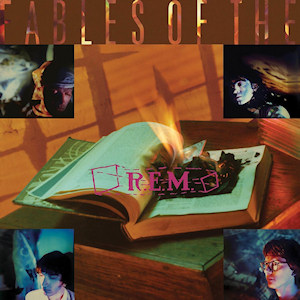
R.E.M. 3: Fables Of The Reconstruction

For their third album, the boys from Athens hooked up with legendary producer Joe Boyd (who’d worked with Pink Floyd, Nick Drake, Fairport Convention and the like) in London to record an album still infused with the mythology of the American South. The metallic jangle of the first two albums was a little blurred on Fables Of The Reconstruction, but in the process they managed to both satisfy their rabid fan base and grab a few new acolytes along the way.

A dissonant riff peals through throughout “Feeling Gravitys Pull”, which simmers with dread even after the strings come in. Also in a minor key, but providing the majestic feel common to the album is “Maps And Legends”, another one of those songs that’s just on the verge of meaning something. “Driver 8” was a moderate hit, with a jaunty video about trains to match. “Life And How To Live It” is as catchy as any song with buried vocals can be, while “Old Man Kensey” slows everything down for a tribute to a local oddball.

Even those who always hated R.E.M. can get behind the almost funky “Cant Get There From Here”, with words one can almost figure out, a catchy chorus and even a horn section that doesn’t get in the way. “Green Grow The Rushes” takes a folk melody to (supposedly) talk about Latin American foreign policy, and “Kohoutek” not only buries the lyric, but spells the title any number of ways. The claustrophobia returns on the tense “Auctioneer (Another Engine)”, which considers more trains. “Good Advices” provides a gentle respite (and good advice besides), and an ode to “Wendell Gee” brings it all home sweetly.

While the band was just on the edge to gaining mainstream success, Fables Of The Reconstruction managed to sound like nothing else that year, and increase the band’s mystique, to the point where it still remains a favorite. The 25th Anniversary Edition arrived right on time, and while it could have been packaged similar to the previous Deluxe Editions, it was from a different label, and R.E.M. isn’t about to make things easy for anybody. Instead of a concert recording, here they treat us to some demos of the candidates for the album before they flew to London to record. The demos appear in alphabetical order, which is almost certainly not the order in which they were captured; if we’re wrong, we’d be delighted. Peter Buck’s (brief) liner notes talk about how unprepared they were for this, the difficult third album. He doth protest too much, but far be it from him to let the truth get in the way of a good story. What’s truly amazing about these demos is how much of the album is already in place—guitar parts and lyrics alike. Bill beats a tattoo on “Feeling Gravitys Pull”, which someone (probably Joe Boyd) pulled into check by the time the album proper was recorded. And we do get “Throw Those Trolls Away”, which likely turned into “When I Was Young”, listed on the album’s original inner sleeve, but didn’t appear until the next album as the much-improved “I Believe”.

R.E.M. Fables Of The Reconstruction (1985)—4½
2010 25th Anniversary Edition: same as 1985, plus 14 extra tracks

Saturday, July 16, 2011

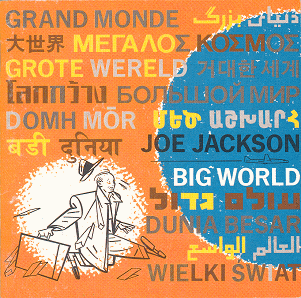
Joe Jackson 7: Big World

After a few years of genre-jumping, Joe Jackson returned to something resembling the rock of his first album, but with a twist. In a departure for the ultra-processing of the decade, he recorded the songs for Big World over a period of three days in front of an audience at a theater in New York City, using a compact band and four backup singers, Joe himself switching from piano to melodica to accordion as the songs dictate. He carefully edited out any crowd noise, but the result is an album that definitely sparkles with the energy of a live performance, rendering the experiment a success.

And if that wasn’t all, the original vinyl contained the songs on three sides of two records; the label on the fourth side reads “THERE IS NO MUSIC ON THIS SIDE.” (We played it anyway to make sure; there isn’t.) This effectively divides the album into three parts, which doesn’t always translate to the cassette or CD format.

Part One fades in with “Wild West”, complete with Clint Eastwood flute, but goes right for the throat in its questioning of The American Way. The theme continues in “Right And Wrong”, complete with timely baseball commentary for the local crowd. “(It’s A) Big World” aims for something grand, but meanders around an ersatz Arabian riff without actually going anywhere. “Precious Time” is a breathless cipher, but all is well with the driving, yearning “Tonight And Forever”, another song that should have been a smash hit single.

Part Two takes it down a notch or so, with four songs on the dreamier side. “Shanghai Sky” is a gorgeous meditation on the piano, repeating the theme to ask “how the world got so small”, and playing it again as it started. “Fifty Dollar Love Affair” puts us in the middle of a film noir scene, yet the action is contemporary. “We Can’t Live Together” starts low and sultry but winds up with the angst of the choruses and guitar solo. Then it’s back to politics with a stately study of the previous “Forty Years” and the evolving state of the world.

After that, Part Three seems slight, but its charms emerge. “Survival” pounds a riff into the floor with not a lot of substance to back it up, followed by “Soul Kiss”, which decries the dearth of substance in pop culture over nice piano work. “The Jet Set” is a humorous narrative by a typical ugly tourist, then “Tango Atlantico” uses the dance metaphor to ridicule Reagan and Thatcher. The nostalgia of “Home Town” has certainly added to its appeal over the years, plus it’s got a fantastic opening line: “Of all the stupid things I could have thought, this was the worst.” “Man In The Street” brings it all home by unleashing the Rock; strangely enough, it was recorded during rehearsals, with no audience present.

Despite peaking at #34 on the Billboard album chart, Big World was hardly the commercial or critical success it should have been. Today it endures as an authentic, BS-free artifact from the ‘80s, unknown to many. And to add insult to injury, it was out of print for years, making it a steal for anyone who found it in the used bin, but is currently available for streaming.

Joe Jackson Big World (1986)—4