Saturday, January 28, 2012

Paul Simon 1: The Paul Simon Songbook

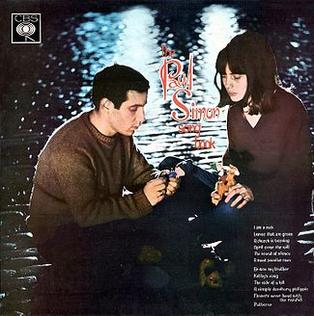
This album was always a curio, recorded completely solo in London between the first two Simon & Garfunkel albums, released only in England, and unavailable for the better part of thirty years on the directive of the artiste. He eventually got over it, and now we can wonder what the problem was. After all, hasn’t Paul Simon spent most of his career downplaying his partner’s superior voice and its importance to his songs?

Besides providing alternate versions of what would become several established Simon & Garfunkel favorites, The Paul Simon Songbook presents what was likely his repertoire whilst pounding the cobblestoned streets of London. Two songs had already appeared on the duo’s debut, five would be re-recorded for their second album, and four others would appear in some form on their third. For the pop music student, these are fascinating unplugged demos, and even works in progress.

The actual performances aside, it’s the truly rare material that makes this album so enticing. “A Church Is Burning” is an original protest song, and a good one, not to be confused with “The Sun Is Burning” on the S&G debut. They would perform it in occasional concerts, but for many years this was the only recording ever. “The Side Of A Hill” is mostly unknown, except that several lines would be reworked and used as a counterpoint to the main melody of “Scarborough Fair”. Similarly, “A Simple Desultory Philippic” here substitutes Lyndon Johnson for Robert McNamara in the spoken intro, and sports a markedly different accompaniment, mostly based on “Wake Up Little Susie” with a little “It’s Alright Ma” thrown in. The bridge still apes Dylan, but most of the people throughout the song would be replaced by other, dare we say better, and certainly more recognizable references.

It’s tempting to give The Paul Simon Songbook a higher rating, but only for the novelty of it. Each of the songs are arguably better in their more familiar, arranged incarnations; now that it’s universally available, even in the US of A, complete with two alternate takes, listeners can judge for themselves.

Paul Simon The Paul Simon Songbook (1965)—
2004 CD reissue: same as 1965, plus 2 extra tracks
Friday, January 27, 2012

Frank Zappa 2: Absolutely Free

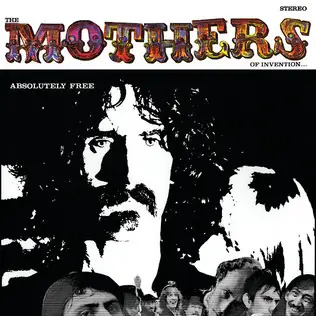
The Mothers had already changed since Freak Out!, having gained dedicated players in the sax and keyboard departments, and bolstering Jimmy Carl Black on drums with the more seasoned Billy Mundi. Absolutely Free was recorded over a four-day stretch, with its release delayed by arguments over the artwork. Frank felt the libretto was necessary to explain each of the elements in the album, each side of which was designated its own “oratorio”. At the very least, being able to read along would not only help people get all the words, but mostly be able to figure out where one song started and another ended without staring at their turntables.

A longtime live staple, “Plastic People” is far removed from its origins as “Louie Louie” with new lyrics. The track is, well, orchestrated, with the kinds of stops and starts (and seemingly improvised interjections) that would become a hallmark of his concerts. (The opening LBJ imitation came a full year before the Electric Flag used it on their first album.) Once that’s out of the way “The Duke Of Prunes” suite comes from an early orchestral composition, here given lyrics that skewer whatever romance might have been conjured by the melody. (To drive it home further, Frank insists on singing along with and thereby goading Ray Collins, who he considered an excellent R&B singer, into self-mockery.) The “Call Any Vegetable” suite follows, twice as long with an even more extended freak-out section pitting Frank’s guitar against Bunk Gardner’s soprano sax. Both contain buried references to Stravinsky, Holst and other composers.

After a side worth of songs about food, side two continues the derision as stated in “Plastic People”. “America Drinks” goes out of its way to be melodic and fight it simultaneously. “Status Back Baby” revives the pimply teenage subject matter from the first album, with some excellent changes, quotes from a pep rally, and a truly fantastic guitar solo. There’s a smooth transition into “Uncle Bernie’s Farm”, the ugliness of the “plasticity” disguised by the vocal delivery. Some overt “conceptual continuity” (the idea put forth that everything Frank Zappa did was connected somehow) appears with “Son Of Suzy Creamcheese”, a rhythmically intricate number. But the one that gets all the attention is “Brown Shoes Don’t Make It”. A horror movie disguised as a novelty song, it runs the musical gamut through vaudeville and TV commercials, nailing suburban hypocrisy and suggesting that every so-called pillar of the community harbors unclean thoughts about his daughters. Orchestral instruments play extremely modern music (not unlike what Brian Wilson was trying to do across town with Smile) and everybody gets a chance to weigh in. “America Drinks & Goes Home” presents a catchier version of the song that opened the side, a cocktail piano (and a cash register) tinkling away underneath a vo-de-oh-doh delivery sliding back and forth across the stereo picture as a brawl slowly escalates in the background. (The Stones would end up their next two albums this way, mimicking a band saying good night at the end of a gig.)

Absolutely Free is something of a transitional album; not as directly catchy as Freak Out!, it takes time for the challenging music to take hold. And before too long, he’d moved on to his next big ideas anyway. Of his earliest work, it’s possibly the most overlooked.

In an interesting move that unfortunately didn’t become standard, the CD version of Absolutely Free included the original single versions of “Big Leg Emma” and “Why Don’tcha Do Me Right?” Both pretty harmless, silly songs—though the latter sports a tasty distorto riff towards the end—they provide a break between what used to be sides one and two. It’s one of the few Zappa singles that got appended as bonus tracks.

The Mothers Of Invention Absolutely Free (1967)—
1989 Rykodisc CD: same as 1967, plus 2 extra tracks

Wednesday, January 25, 2012

Byrds 8: Ballad Of Easy Rider

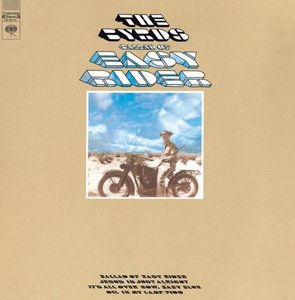
Somehow or another—although it’s fairly well documented on Wikipedia—the Byrds had another top 40 hit, this time in their latest evolution as country rockers. It happened to be the theme from a hit movie about a couple of bikers, so their label made sure to use it as the band’s next album’s title as well. (We still think the guy on the cover looks more like Teddy Roosevelt than either Dennis Hopper or Peter Fonda, but that’s just us.)

Ballad Of Easy Rider opens with that song, a two-minute snatch of melody stemming from a single line originally scribbled on a napkin by Bob Dylan. (Roger McGuinn tried to give him writing credit, but Bob refused.) It makes for a good start, but the promise doesn’t last.

Having carried the same lineup for two albums in a row, the song selection is more democratic in who sings what. As with the last album, the second song is about a dog, this time named “Fido”, and the music is a direct copy of the Manfred Mann version of “Quinn The Eskimo”. The bass player sings that, but at least Clarence White gets to sing and blaze on “Oil In My Lamp”. McGuinn’s quivering voice all over “Jack Tarr The Sailor” seems more like a spoof, and “Jesus Is Just Alright” isn’t more than a sketch that the Doobie Brothers would eventually fill out.

The very slow, mournful take on “It’s All Over Now, Baby Blue”—after all, it wouldn’t be a Byrds album without several Dylan covers, would it?—is pointless for the most part, but there is something in the way “it’s all over now” is repeated every chorus that makes the song so sad. The mood is continued on the even mournful “There Must Be Someone”, and Gene Parsons emerges as a strong singer. “Gunga Din” is pretty and simple, but one needs the liner notes to know what the hell it’s about (touring and prejudice, in case you were really interested). You can just hear Clarence revving up his picking on the fade. McGuinn revives a Woody Guthrie song for “Deportee (Plane Wreck At Los Gatos)” and wastes valuable plastic on “Armstrong, Aldrin And Collins”, which consists of a countdown and a brief folk-style stanza celebrating the men on the moon.

Since they were the Byrds in name only, maybe it’s not fair to be so rough on them. As it is, Ballad Of Easy Rider is harmless country-rock, but not very notable. The album still has its defenders today, and the expanded CD added a few extras, in addition to some repeats from the box set. The most interesting ones show off the prowess of the players, but there’s yet another Moog experiment that was right to stay in the vaults.

The Byrds Ballad Of Easy Rider (1969)—2
1997 CD reissue: same as 1969, plus 7 extra tracks

Tuesday, January 24, 2012

Gene Clark 3: Through The Morning, Through The Night

The Dillard & Clark duo kept the momentum going somewhat for a second album, though the songwriting collaboration between Gene Clark and Doug Dillard seemed to have dried up. Just to twist the branches of the family tree, drummer Jon Corneal came over from the Flying Burrito Brothers, which is where Bernie Leadon headed. (Former Byrd Chris Hillman and Sneaky Pete Kleinow wandered over from the Burritos as “special pickers” for the sessions.)

The drums make Through The Morning, Through The Night more country than bluegrass, and most of the program is devoted to covers as opposed to originals. “No Longer A Sweetheart Of Mine”, “I Bowed My Head And Cried Holy”, and “Roll In My Sweet Baby’s Arms” are fairly generic, while “Rocky Top”, while then only a couple years old, is sung by harmony singer Donna Washburn evoking a Hee Haw caricature. However, Gene’s take on the Everly Brothers’ “So Sad” is heartbreaking, and he does a passable Jim Reeves impression on “Four Walls”. The most surprising choice is the Beatles’ “Don’t Let Me Down”, utterly transformed into Gram Parsons’ vision of “Cosmic American Music”.

As for the handful of songs he actually wrote, the title track and “Polly” are up there with his best. (T Bone Burnett agreed, and had both recorded by Robert Plant and Alison Krauss for their smash collaboration Raising Sand.) “Kansas City Southern” is decent for a train song, but “Corner Street Bar” is unfortunately delivered in a corny ragtime style. We’re hoping that’s Doug singing, but the truth remains elusive.

We want to give it a better rating, but the seesawing in quality puts Through The Morning, Through The Night at a disadvantage to its predecessor. Gene must’ve thought so too, since he left Doug to run the expedition on his own soon after. The album is best heard in conjunction with the album before; Mobile Fidelity was the first label to combine them on a single disc, and a European-only reissue on A&M interspersed three rare single sides. Worth seeking out.

Dillard & Clark Through The Morning, Through The Night (1969)—

Monday, January 23, 2012

Simon & Garfunkel 1: Wednesday Morning, 3 A.M.

But for an odd whim by a hip producer, people may never have heard of Simon & Garfunkel, nor might the artists have recorded anything past this first album. They had had a few prior hits, in the late-‘50s as Tom and Jerry, even getting to appear on American Bandstand. A few years at college kept them busy when stardom failed to happen, and then when the folk music boom hit, the boys were right on top of it.

Armed with an acoustic guitar and sweet harmonies, the Mutt and Jeff of Forest Hills recorded their debut LP over a few weeks in March of 1964, in defiance of the British Invasion threatening the business. Of the twelve songs on Wednesday Morning, 3 A.M., five come from the pen of Paul Simon. “Bleecker Street” paints a portrait of that iconic avenue. “Sparrow” is an allegory of some sort, but “He Was My Brother” is more direct, a timely elegy for a Freedom Rider. The title track is the striking departure of the set, a monologue from a cheap apartment, made all the more pretentious by the reference to “pieces of silver”. But it would be “The Sound Of Silence” that would endure, an incredibly poetic piece of work striking for its imagery, Garfunkel’s sweet voice, and Simon’s monotonic bleat.

The rest of the album is a mixed bag that mostly comes across as folk-lite, and it’s no wonder that the album didn’t sell. Perhaps there weren’t a lot of songs for affluent Jewish kids to make commercial, which would explain why such spirituals as “You Can Tell The World” and “Go Tell It On The Mountain” appear, along with an arrangement from a Catholic mass. More direct, if naïve, are “The Sun Is Burning” and “Last Night I Had The Strangest Dream”, the latter sporting an ill-advised banjo. And in tribute to the kid from Minnesota, the boys harmonize on “The Times They Are A-Changin’” and even take a stab at “Peggy-O”, which Dylan had included on his first album.

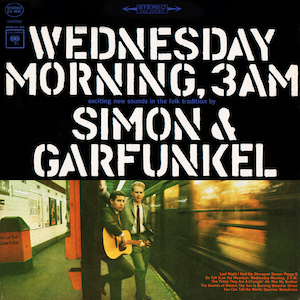
So Wednesday Morning, 3 A.M. is a very earnest collection of music that wasn’t about to change the world, but taken in context with what they would eventually achieve, it’s a nice snapshot. It’s certainly pleasant, and in places pretty. Given the dozens of similar records coming out at the time, we’ll leave it to the experts to rule whether these actually were “exciting new sounds in the folk tradition”.

Simon & Garfunkel Wednesday Morning, 3 A.M. (1964)—3
2001 CD reissue: same as 1964, plus 3 extra tracks

Friday, January 20, 2012

Crowded House 2: Temple Of Low Men

The first album by Crowded House deservedly brought singer/songwriter Neil Finn more sales and airplay than anything he’d done with Split Enz. The pressure was on for their follow-up, and the demands common to The Difficult Second Album tower over Temple Of Low Men. He gets right to the heart of the matter on “Mansion In The Slums”, ruminating on the double-edged sword of “success” and its enticements.

The songs fall generally in a minor key, suggesting personal turmoil, particularly on “I Feel Possessed” and “Into Temptation”. (While Neil has now been married to his wife Sharon going on thirty years, perhaps there was some “straying”, shall we say, during his trips around the globe.) Similarly, the sample of someone whispering “I need you… forgive me” at the start of “Kill Eye” only adds to the aural freakshow in the song.

The soaring “When You Come” (despite the suggestive title) and “Never Be The Same” boast aching hooks and fantastic harmonies, taken to an even greater level on the beaten determination to “Love This Life”. The mildly rockabilly “Sister Madly” sports a guitar solo by Richard Thompson in between wordplay designed to confound (“Sister madly waking up the dead/Systematically stepping on my head”). “In The Lowlands” seems to rise out of a rainstorm, with the narrator trying to reach a safe haven from wherever he is. All of which dovetails nicely with “Better Be Home Soon”, rewarding the patient listener with a melody, harmony and organ solo that earn the label “Classic Crowded House”.

With its explorations on temptation, guilt and insecurity, Temple Of Lo Mein (as we like to call it) has a much darker mood all around than the sunny singles from the debut, and could easily repel the casual listener. But that’s unfortunate, as they’d miss out on some great material. At ten tracks and only the slightest extra color from producer Mitchell Froom, it’s a compact gem. The album was not a commercial success, save perhaps “Better Be Home Soon”, and it didn’t help when the band had to make videos for the likes of “Into Temptation”, which pitted Neil’s earnest lyrics against Paul and Nick clowning in the background.

The Deluxe Edition includes a variety of demos of songs-in-progress (this time the sneak peek is for “Whispers And Moans”, which would transform somewhat before showing up on the next album). Half of the disc is devoted to live recordings, some of which had made onto B-sides. Three Byrds classics performed with Roger McGuinn put the band in a much more complimentary light than the guy they’re backing; the interplay amongst the trio, during and between songs, show just how much fun they must have been to see onstage.

Crowded House Temple Of Low Men (1988)—4
2016 Deluxe Edition: same as 1988, plus 21 extra tracks

Wednesday, January 18, 2012

Rolling Stones 42: A Bigger Bang

The last really solid Stones album was the hodgepodge of Tattoo You, from the days when they put out a new album every year or two. Wavering quality can be forgiven in a tight release schedule, so when eight years—that’s right, eight, the equivalent of two presidential terms—go by between studio albums, one hopes those geezers have something worth hearing. Of course, every album since their mid-‘80s hiatus had been heralded with PR to the effect that they’ve “got the old classic sound back”. Each of their last few has admittedly had their moments, while having to sit alongside with Mick’s regular attempts to sound “contemporary”.

On A Bigger Bang, the old bastards do keep it simple, mostly by not being afraid to sound like themselves. Most tracks were supposedly started by the trio of Mick, Keith and Charlie; Ronnie added some guitar after the fact, and any bass not later provided by Darryl Jones was handled by Mick or Keith. For the most part, the album does rock, without any clutter. “Rough Justice”, all two chords of it, was the best choice for a single. “Let Me Down Slow” and “It Won’t Take Long” are just as straightforward, and when they bring in the funk for “Rain Fall Down”, it’s a nice change of pace, despite some of the lyrics (“the bankers are wankers every Thursday night/They just vomit on the ground”. Huh?).

The obligatory ballad comes in “Streets Of Love”, and it’s not as bad as it threatens to be. “Back Of My Hand” is an interminable Delta blues number that according to the credits is mostly Mick. Luckily, “She Saw Me Coming” sounds like it was a long of fun to play in the studio. But the lovelorn lyrics of “Biggest Mistake” don’t ring true coming out of Mick’s mouth.

Keith finally sings lead on “This Place Is Empty”; it’s amazing how his voice has improved by taking it easy, though we’d love to know if anyone feels well and truly seduced when he coos “bare your breasts”. “Oh No, Not You Again” (which Charlie joked should have been the album’s title) gives Mick a chance to yell some of the dirty words censored off of earlier albums, but at this late date the shock value is nonexistent. Outside of rocking, “Dangerous Beauty” could either be about a romantic conquest or a public figure. “Laugh, I Nearly Died” slows things down to a sinuous groove that, dare we say, could be right out of 1978.

“Sweet Neo Con” got all the attention at the time, with its anti-Bush lyrics. The song itself is decent, with some nice twists, but the recently dubbed Sir Mick really shouldn’t try to be political. (And someone should have mixed out the harmonica soloing through half the song.) The wordy “Look What The Cat Dragged In” pulls out all the rhythmic stops they last touched on “Undercover Of The Night”. It’s odd to hear a man who once extolled the virtues of teenage girls now berating the same; I guess it’s different when they’re your own kids. “Driving Too Fast” keeps up the pace, and Keith gets the last word again on the underwhelming “Infamy” (as in “you got it in for me”; get it?) and there’s that harmonica again.

At over an hour, A Bigger Bang qualifies as another double album that with just the right pruning could have been a solid forty-minute program. It starts well, and it’s not a waste of plastic, but they’ve yet to experience the late-career renaissance that some of their peers have enjoyed. One wonders if they can, or will.

The Rolling Stones A Bigger Bang (2005)—3