Wednesday, December 12, 2012

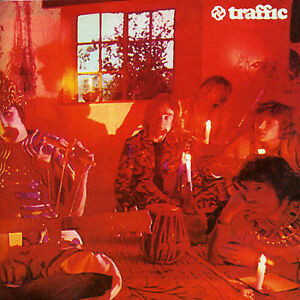
Traffic 1: Mr. Fantasy

Steve Winwood has a classic voice and undeniable talent on several instruments. Unfortunately, because he wasted those talents on pop for the better part of fifteen years, a lot of people may only think of him as the “Higher Love” or “Roll With It” guy. Then again, they might not know what to make of Traffic.

Traffic began as something of a British counterpart to The Band—four guys living in a house deep in the countryside, concocting their own brand of music. It was something of a departure for Winwood, whose R&B belt was now used to decorate more trippy fare. The singles “Paper Sun” and “Hole In My Shoe” are truly psychedelic, built around Dave Mason’s prominent sitar.

The Indian influence is mostly toned down on the band’s first album, which existed in four formats—Mr. Fantasy in the UK, and (initially) Heaven Is In Your Mind in the US, both in unique mono and stereo mixes. The American version gets points for including both of those singles, along with the B-side “Smiling Phases”, among a jumble of tracks from the British LP. The final track, cleverly titled “We’re A Fade, You Missed This”, is merely a reprised snippet from “Paper Sun”. While Everybody’s Dummy tends to concentrate on US releases, in this case, it’s the UK lineup that was not only standard from the ‘80s on, but is actually preferred.

“Heaven Is In Your Mind” opens side one with drastic panning thanks to producer Jimmy Miller. The vocals and drums swap channels with the piano and saxes throughout the track, a groovy little tune. The last minute or so is a jam, with lots of vocal contributions from everyone. That mood continues on “Berkshire Poppies”, which rotates between a nursery piano waltz, a speedy chorus and slower resolve, while the other guys try to distract Winwood’s vocal with raspberries and shouted asides. “House For Everyone” is truly odd, beginning with a wind-up effect edited perfectly into the intro, and a daffy lyric fitting the times. Things finally slow down for the exquisite “No Face, No Name, No Number”, a positively gorgeous ode to a mystery woman, gently played. “Dear Mr. Fantasy” is the song everybody knows, its three-chord structure sparking endless jams in bars around the world.

Jim Capaldi finally takes a lead vocal on “Dealer”, which suggests a drug connection but isn’t. The Indian sound comes back with a vengeance on “Utterly Simple”, complete with a ringing phone in the middle to usher in the obligatory philosophy lesson. “Coloured Rain” gets a churning treatment from the organ, guitar and sax, but “Hope I Never Find Me There” is another Dave Mason nursery rhyme. “Giving To You” is a jazz jam in a march tempo, bookended by loops of Chris Wood babbling. (The mono B-side version actually has an opening verse without the babbling.)

Mr. Fantasy provides at least one classic album side, though the second half does have something to recommend it as well. Overall there’s a cloud of mystery, given that the players likely switched instruments as the mood struck, and what some of us wouldn’t give to be a fly on the wall in that house.

Unfortunately, thanks to the shuffling way back when, no single package currently encompasses everything that was ever part of the album. A relatively recent British CD reissue offered the British stereo with the American mono, while in America, two CDs came out—one that added the singles to the British version, and one that simply added the two songs left off the US stereo, with a couple of rarities. Given the brevity of the original LPs, a double-disc Deluxe Edition—which their current label has done for just about everybody else—could easily contain all four versions, plus extraneous singles from the same period. And of course, if it turns out that some songs had identical mixes, there’s no need to have it four times.

Traffic Mr. Fantasy (1967)—4
2000 CD reissue: same as 1967, plus 5 extra tracks
Traffic Heaven Is In Your Mind (1968)—4
2000 CD reissue: same as 1967, plus 4 extra tracks

Monday, December 10, 2012

Van Morrison 13: Into The Music

It took a few false starts, but Van managed to close the decade with a masterpiece. Like all his greats, Into The Music takes a while to get into. And like all his greats, it’s full of romance and religion beneath the surface. It’s true Caledonia soul, mixing Irish folk touches with R&B, along with such instruments as harmonica, banjo and Dobro, Appalachian influences that reflect just how huge American country-western is in Ireland. Some prominent musicians appear in support: Robin Williamson of the Incredible String Band, Pee Wee Ellis from the James Brown band, and a couple of refugees from ECM Records and John McLaughlin. None seem extraneous. Even the ladies’ voices don’t get in the way.

He’s not really breaking any new ground at first listen. “Bright Side Of The Road” (which directly namechecks its relation to the modern R&B classic “Dark End Of The Street”) is a snappy starter, with the equally upbeat “Full Force Gale” following right along in an overt statement of thanksgiving. “Stepping Out Queen” is in the same punchy vein, with the addition of a violin sawing away in a premonition of several Waterboys albums a decade down the road. (The song seems to go somewhere else just before the fade, and one day it would be revealed that a second half of equal length was lopped off, which included a musical theme that would be used as both an instrumental and a melody within a few albums. An alternate take issued on a later expanded CD demonstrates the transition even better.) “Troubadours” removes us from the present, suitably, right up through the sharply constructed instrumental section, spotlighting pennywhistle, trumpet, and sax in that order, though the sax does drip of Adult Contemporary. (This is absent on the alternate on the aforementioned expansion, but it’s still not as good.) “Rolling Hills” goes deep into English folk country, the pounding drums notwithstanding, the side ends with the soulful goodtime “You Make Me Feel So Free”, which is a vast improvement on the framework of James Taylor’s recent hit “Your Smiling Face”.

Solid as side one is, the flip is a trip to the stratosphere and back. “Angeliou” starts out folky, repeating its lilting intro several times. For a full minute the only lyrics are the title, repeated melodically until pushing the song through rising changes under a meditation about “the month of May in the city of Paris”. His memories begin to wander, and his reverie becomes mostly spoken in hushed tones, just nudging the piece along. There’s a return to the title refrain, and more hints at something tantalizing that he’s not quite telling us. The song fades, but each piece that follows seems to lend some illumination. “And The Healing Has Begun” begins with the same progression as “Madame George”, and indeed takes us back to his hometown. Here is the genesis of the “yeah” asides that would permeate the ‘80s. Once he stops the band for a monologue it’s clear just what kind of healing he’s talking about, after a gig while the dirty old Van tries to get some. Our eavesdropping on his seduction technique is blocked by another fade, and diverted by a surprising cover. “It’s All In The Game” is a dramatic interpretation of the oldie, slowing down the tempo to a gentle 12/8 and ignoring the melody that came first. As he studies on the lyrics, he quiets the band and pulls the song into a glorious expression of ecstasy brought on by a simple love song, in a section of his own called “You Know What They’re Writing About”. (His repeated demand to “meet [him] down by the pylons” is another reference to his teenage days.)

Into The Music was easily his best album since the early ‘70s. It exudes joy and confidence without being pushy, and at fifty minutes, is a good length, too. Above all, it was a reminder of what made him such a legend in the first place.

Van Morrison Into The Music (1979)—5
2008 CD reissue: same as 1979, plus 2 extra tracks

Friday, December 7, 2012

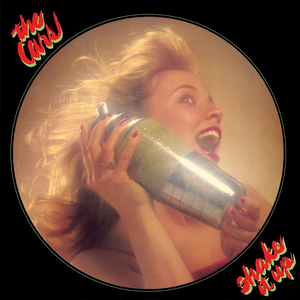
Cars 4: Shake It Up

Another year, another album, and the Cars were more or less on schedule. Having done it their (or Ric’s) own way on Panorama, Shake It Up was much more obvious in its quest for chart success. They even went back to putting a hot girl on the cover.

There was another wrinkle in their marketing scheme. A month before the album’s release, MTV debuted in a handful of markets across the United States. Being the good design students that they were, the band quickly got up to speed by accompanying their singles with eye-catching visuals. And if they could include more of the women they featured on their album covers, they were only enforcing their brand image.

The album is front-loaded with a pretty solid set of radio-friendly tunes. “Since You’re Gone” would gain a memorable video that played off the off-beat percussion at the start. The song covers familiar territory, and sports a strikingly distorto solo from Elliot in the break. The title track was about as dopey as they could get, so it’s no wonder it was a hit. While “I’m Not The One” wasn’t a single, it still was added to their greatest hits album a few years later, and used as humorous counterpoint in an Adam Sandler movie a decade or so after that. “Victim Of Love” is a title that pretty much everybody has used at one point or another; here Elliot gets to color the landscape with his Buddy Holly stylings. A huge radio hit where we grew up was “Cruiser”, a somewhat robotic song that still manages to sound like a band playing instead of a sequencer being programmed.

The second side only has four longish songs, each the epitome of cutting-edge New Wave, whatever that is. Fine as they are, neither “A Dream Away”, “This Could Be Love” nor “Think It Over” really stand out, but at least the just as generically titled “Maybe Baby” adds some galloping drums to prevent the album from ending on a thud.

The quality of the pop and the ubiquity of the videos helped make Shake It Up a hit, and deservedly so. The kids loved the band and knew what to expect, but in hindsight, it appeared as if things had become a little too routine. (The eventual expanded CD was packed to capacity, with the addition of “early” versions and demos, the unreleased “Midnight Dancer”, the remix of “I’m Not The One” that would grace their hits album, and a cover of “The Little Black Egg” recorded as a template for Bebe Buell.)

The Cars Shake It Up (1981)—3
2018 expanded edition: same as 1981, plus 8 extra tracks

Wednesday, December 5, 2012

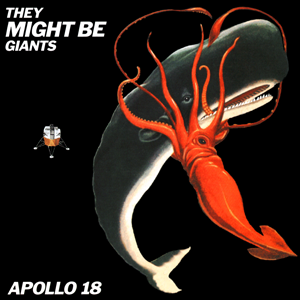
They Might Be Giants 5: Apollo 18

The public being as fickle as they are, TMBG’s fifth album didn’t exactly burn up the charts. It could be that the band had already converted their maximum density, and would have to rely on their cult audience. But that didn’t mean they were about to coast. Apollo 18 may not have as many memorable tracks as previous albums, but they pulled one gimmick to present something that literally hadn’t been done before.

“Dig My Grave” is a nice trashy opener, and while “I Palindrome I” isn’t as direct as “Weird Al” Yankovic’s “Bob”, it still has some memorable lines (beginning with “Someday Mother will die and I’ll get the money”). “She’s Actual Size” and “My Evil Twin” would appear to be opposing Johns talking about people they know, and neither really register in the wake of “Mammal”, a straightforward science lesson. “The Statue Got Me High” was a single, and sounded like one, but “Spider” is thoroughly wacky, and therefore more satisfying. This is particularly apparent when followed by “The Guitar”, an interminable track that shares so much with “The Lion Sleeps Tonight” that they were forced to add that title to the track and apply royalties accordingly. (R.E.M. would do the same later in the year for a much better song.) Much more entertaining is “Dinner Bell”, a dizzying litany of food and competing vocals over a jaunty piano.

“Narrow Your Eyes” provides an overdue return to the lost-love-with-alcohol song, which isn’t so obvious at first. “Hall Of Heads” would appear to be instrumental until a minute in with a shift to an entirely different melody. The brief “Which Describes How You’re Feeling” sounds like their old sound, which would make sense since it was one of their earliest songs. “See The Constellation” is upbeat and stupid, and while the intro suggests otherwise, “If I Wasn’t Shy” is pretty calm. It moves seamlessly into the hilarious situational horror of “Turn Around”. “Hypnotist Of Ladies” isn’t that exciting, but it doesn’t matter compared to what comes next.

The keen-eyed would have noticed that track 17 is called “Fingertips”, followed by track 38, the instrumental “Space Suit”. As it turns out, “Fingertips” is the overall title given to a series of 21 short songs, most only consisting of a single sentence or phrase, each a different melody. In today’s iTunes environment, each has its own title, but according to the original liner notes, they were designed to show up at random whenever the CD was played in shuffle mode. Therefore, it makes one wish such tracks as “I Hear The Wind Blow”, “Come On And Wreck My Car”, “Aren’t You The Guy Who Hit Me In The Eye?”, “Please Pass The Milk”, “Leave Me Alone”, “I Don’t Understand You”, “Mysterious Whisper”, “The Day That Love Came To Play” and “I’m Having A Heart Attack” were more than a few seconds long.

Using strict mathematics, it might be assumed that Apollo 18 is less than good. But as the highlights overshadow the lowlights, and the brevity of each of the “Fingertips” is so misleading, it becomes a worthy installment in their catalog.

They Might Be Giants Apollo 18 (1992)—

Monday, December 3, 2012

Suzanne Vega 6: Songs In Red And Gray

While it’s never nice to take pleasure in someone’s pain, this is a perfect example of a performer’s personal turmoil resulting in superior art. Songs In Red And Gray is her Blood On The Tracks—not that it’s even close to the excellence of that album—in that the songs seem to be directly related to her divorce from Mitchell Froom. To take the attitude of finding good in anything, once he took up with blowsy blonde Ally McBeal fixture Vonda Shepard, at least we could take solace that his muddled approach wouldn’t be ruining her albums anymore.

While the album is certainly folkier than the last couple, some of the production touches she picked up over the past decade are still in evidence. Much of that might be ascribed to producer Rupert Hine, best known in the ‘80s for his work with Tina Turner, The Fixx and Howard Jones. Thankfully, it doesn’t sound like any of them.

“Penitent” is a good starting point, suggesting displacement at a crossroads. The rhythm continues on “Widow’s Walk”, which expertly combines the traditional ballad stance of the widow on the shore with well-placed nautical metaphors. A more obvious touchstone is addressed in “(I’ll Never Be) Your Maggie May”, wherein our heroine insists that any young suitor would be better off chasing somebody else (with most of her male fans likely willing to take a chance on her anyway). Such an affair is picked apart in with surprising sexual reference in the extremely catchy “It Makes Me Wonder”. Irritation turns to sadness for “Soap And Water”, a heartbreaking lullaby of sorts for her daughter (“Daddy's a dark riddle/Mama's a headful of bees/You are my little kite/Carried away in the wayward breeze”). What happened in “Song In Red And Gray” isn’t as clear, but the unsettlement is tangible.

The lesser half of the album is set up by “Last Year’s Troubles”; unfortunately the techno beats in the mix distract from the cleverness in the words. “Priscilla” is a story that means more to her than us, but at least the sonics don’t irritate. That can’t be said of “If I Were A Weapon” (besides being titularly (?) similar to “(If You Were) In My Movie”, a song that wasn’t that good in the first place). The mystery of the sea returns somewhat with “Harbor Song”, describing an enigmatic dream. “Machine Ballerina” sports two basic melodic themes, one of which sounds like a typical Froom keyboard, the other barely displaying the bitterness in the accusation. “Solitaire” is a little too literal, and again, the scratchy mix is a tired gimmick. The album closes with a cover of a song by a Village fixture who ran a songwriting circle; her delivery makes it seem like one of her own.

Songs In Red And Gray is definitely a return to form, albeit tinged with the mixed emotions that inevitably follow a divorce and custody arrangements. Overall there are enough high points to keep the handful of misses from derailing it.

Suzanne Vega Songs In Red And Gray (2001)—

Sunday, December 2, 2012

King Crimson 18: Absent Lovers

Having already looked at both ends of the ‘70s version of the band, the next archival release from King Crimson covered the ‘80s version. Absent Lovers presents the final show of the tour supporting Three Of A Perfect Pair, which was also the last time these four musicians would play together for ten years. The show was originally recorded for radio broadcast, and promptly bootlegged, and while this official version is mixed from the original multitracks, some odd fades suggest that a boot might have been the source.

It’s no big deal, because the recording is crisp. After three albums and tours in this incarnation, they had the set pretty much down. After a lengthy introductory improv titled “Entry Of The Crims”, the disparate pieces come together into “Larks’ Tongues In Aspic Part III”, and off they go. As the vocalist, Adrian Belew takes the opportunity to engage the crowd in between songs, and his vocals are still a matter of personal taste. He even takes time at the end to individually acknowledge everyone on the tour crew. Outside of excellent versions of “Red” and “Larks’ Tongues In Aspic Part II” (both of which originally recorded in the ‘70s, so Bill Bruford gets to show how well he remembered them), the set leans heaviest on what was the new album and Discipline, with a few things from Beat, shuffling the pile and juxtaposing more familiar (read: better) songs with ones we overlooked.

And that right there is what makes the album worth it. While the three ‘80s albums sound very cold—partially because of the emphasis on electronics—onstage the pieces have a lot more room to breathe, which Robert Fripp insists is always better anyway. (He has even more to say, about prog and the music industry in general, in the booklet.)

Absent Lovers is a highly recommended introduction to that version of King Crimson, shedding some light onto that section of the catalog and the history. If one really wants to immerse oneself into the era, the On (And Off) The Road box set presents eleven CDs containing remastered versions of the three albums (with bonus tracks), live recordings, and outtakes, as well as Absent Lovers, along with DVDs and Blu-rays loaded with surround mixes and video content. For a smaller sampler, Sheltering Skies presented a 1982 show (from a French date in support of Roxy Music) that had already been released on VHS and DVD. Unique to this set are “Neal And Jack And Me” and “The Sheltering Sky”, plus another version of the latter from a show the day before. Be warned: Adrian Belew does a lot more mugging here.

King Crimson Absent Lovers—Live In Montreal 1984 (1998)—
King Crimson
Sheltering Skies (2024)—3

Saturday, December 1, 2012

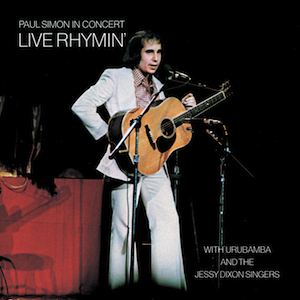
Paul Simon 4: Live Rhymin’

As affirmation that he was to be accepted as an artist on his own, and not just the shorter guy in a duo, Paul Simon’s tour supporting There Goes Rhymin’ Simon was commemorated with a live album. Its barely inspired title of Live Rhymin’, by which it’s generally known, can be excused considering all the words crammed onto the label for the credits.

The first three songs are solo acoustic performances of already-classics, then he brings out the Urubamba combo to support him for “El Condor Pasa” and “Duncan”, ably presenting the unique sounds of those recordings onstage. Their embellishments on “The Boxer” are a matter of personal taste, but we hear his extra verse for the song the first time here. The Jessy Dixon Singers were the other guests on the tour, and they come out to support “Mother And Child Reunion” and “Loves Me Like A Rock”, which they do well, and better than on “The Sound Of Silence”. Simon must have known he couldn’t do vocal justice for “Bridge Over Troubled Water”, so they help there too, though that didn’t stop him from emoting over the lengthy repeated coda. (He leaves them alone for “Jesus Is The Answer”, providing a bathroom break right in the middle of side two. Presumably they also supply the drums and organ on this part of the album; no issue has ever identified the players on each track.)

These days, Live Rhymin’ is seen as a stopgap commercial ploy, to fill the racks between the hit album and the next presumed masterpiece. Indeed, considering the success he’s had with big concert tours, it’s a harbinger, but still an intriguing snapshot of a time when his presentation was simpler. (It would be many years before the album was expanded, and well after his other solo albums got similar treatment, but rather than presenting a complete concert or equivalent sequence, the updated CD only added two tracks.)

Paul Simon with Urubamba and the Jessy Dixon Singers Paul Simon In Concert: Live Rhymin' (1974)—3
2011 CD reissue: same as 1974, plus 2 extra tracks