Saturday, July 27, 2013

Stephen Stills 8: Thoroughfare Gap

Compelled to keep making records, Stephen Stills followed the success of the CSN reunion with an album as disappointing as Illegal Stills and his lackluster half of Long May You Run. Apparently three albums in two years’ time wasn’t enough to convince him to slow down, as Thoroughfare Gap should have been allowed to bake a little longer (no pun intended, but we’ll take it anyway).

People flock to Stills for his prowess on the fretboard, so “You Can’t Dance Alone” is proof that he spent too much time hanging around the studios where the Bee Gees made their disco comeback; in fact, young Andy Gibb sings here, and elsewhere. The title track is a welcome detour back to the laidback country of the Manassas era, and based on some of the musicians listed it might even be of that vintage. “We Will Go On” begins with some “Dark Star”-type promise, but disco takes over and makes it tough to enjoy. “Beaucoup Yumbo” almost works despite itself, thought the N’awlins vibe is overseasoned by the strings. There’s a decent song hidden beneath the slick gloss of “What’s The Game”, but only if you like cowbells and guiros.

A fairly straight cover of the Allmans’ “Midnight Rider” doesn’t bring anything new to the table, but at least it delayed his annual insistence in singing a song written in Spanish until side two. From the title, “Woman Lleva” is sloppy; any high school student would know it should be “Mujer Lleva”, but that wouldn’t fit the meter. “Lowdown” has some dirty guitar over a dull groove and too big a choir, and it sounds like the limp cover of “Not Fade Away” was recorded immediately after. And though “Can’t Get No Booty” is likely meant as a joke, this kind of throwaway track is so unlike Stills that it simply reeks.

He may have been the main architect of the CSN sound, but left to his own devices, Stephen Stills simply couldn’t be trusted. Thoroughfare Gap didn’t even get reissued on CD until nearly 30 years later, crammed into a package with the previous two solo albums. It has not been missed.

Stephen Stills Thoroughfare Gap (1978)—2

Friday, July 26, 2013

Cars 6: Door To Door

The Cars were still coasting (sorry) on the success of Heartbeat City when their first compilation appeared. Greatest Hits pretty much delivered what it promised, each of the songs having actually been in the Billboard Top 40. The big attraction was “Tonight She Comes”, a quintessential Cars single; a remix of “I’m Not The One” was also included and issued as a single. For some reason the CD and cassette added “Heartbeat City”, which was never a hit, while “Hello Again” was ignored.

Presumably “Tonight She Comes” was all they completed, as the next year saw solo albums from Ric Ocasek, Elliot Easton and Ben Orr (who had a hit of his own with “Stay The Night”). Unfortunately all that time off didn’t rejuvenate the band, as displayed on the lackluster Door To Door.

The album begins with “Leave Or Stay”, which comes loaded with hooks and even that old burping synth sound from the first two albums. As it turns out, the song was left over from that first album. That might suggest the album is a return to their roots, so to speak, but then “You Are The Girl”, the first single, was such an inferior rewrite of “Tonight She Comes” that it worked against the album’s potential. With its slow beat and heavy fuzz, “Double Trouble” could almost pass for hair-metal, except for the synth solo, while the moody “Fine Line” barely sounds like them. “Everything You Say” is all Ben Orr pop, a minor key tune with a country-western that’s even more jarring than his sappy solo album. They get back to themselves for “Ta Ta Wayo Wayo”, another old song finally recorded.

“Strap Me In” improves on the “Double Trouble” formula for a classic Cars track, providing a welcome start to side two, a rush immediately capsized by the back-to-back naps of “Coming Up You” (left over from Shake It Up) and “Wound Up On You”. “Go Away” is inoffensive Ben pop, and the last we’ll hear from him. (Really, if he could only write songs, he might’ve had a more successful solo career.) The title track revs up the tempo for the last time too, and the proceedings end with the actual sound of a door slamming shut, fittingly.

By the time Door To Door came out, the band (and consumers alike) seemed to have lost interest, and they disbanded as soon as the obligatory tour finished. Up until the end of the century their legacy didn’t always get the respect it might have deserved; of course, dull Ocasek solo albums didn’t help. The others went on to session work and other gigs—Elliot even doing time in Creedence Clearwater Revisited—while Ocasek kept busy producing bands like Weezer and Guided By Voices. Even after every other ‘80s band reunited for various reasons, VH-1 or otherwise, the Cars held out, and hopes were dashed forever when Ben died in 2000.

The Cars Greatest Hits (1985)—4
The Cars
Door To Door (1987)—2

Wednesday, July 24, 2013

Sting 9: Sacred Love

It wasn’t a transition to vanilla as Phil Collins made in the same amount of time, but those of us who had enjoyed Sting’s earlier work, both on his own and with the Police, could only shrug with indifference when he deigned to make another album—his first in the new century. Not that we expected the yellow-haired punk from Outlandos to return, but then again, Sacred Love wasn’t designed to please us anyway. His crowd had become what used to be called adult contemporary, and they got just what they wanted.

The opener, “Inside”, is more of a litany than a lyric, but he does put a lot of energy into the vocal, and without laughing. Since it worked so well on the last album, “Send Your Love” expands on that Mideastern electro-pop sound, less so on the remix tacked onto the end of the CD, which is amazingly the shortest track on the album. “Whenever I Call Your Name” combines the litany gimmick of “Inside” (this time leaning heavily on the word “whenever”) with a duet sung with Mary J. Blige. Something of a return to a earlier sound comes in “Dead Man’s Rope”, with its Olde English guitar and feel—and then the reference to “Walking In Your Footsteps” seems almost obvious. There’s an intriguing story in “Never Coming Home”, of the end of a relationship; perhaps the arrangement was sped up to keep it from dragging, but the pace makes it hard to follow, and the effects are equally distracting.

If he’s going for style over substance, that’s fine; he makes beautiful wallpaper for his fans’ car stereos, and they’ll have been sucked in by now. But he insists on crafting stories, and they don’t always balance well. “Stolen Car (Take Me Dancing)” appears to be sung from the point of view of a private detective spying on a wayward husband—probably not any of the characters from the previous track—yet doesn’t quite make the transition to the chorus, which would have been better paired to other verses. “Forget About The Future” moves another apologetic lyric through another funky groove; this time the effect involves a scratchy 78, sent back to the present day via an actual harp flourish (the kind with strings, not the one you blow). There’s a crossfade into “This War”, an anti-Bush et al rant that actually rocks. That’s not Clapton on guitar, but it’s the effect he wanted, and it works. Unfortunately, that’s it for the rock, as “The Book Of My Life” (featuring Anoushka Shankar on sitar, as Ravi must not have been available) and the title track (with a reference to a “river in flood”) meander through the same rhythms.

We want to like Sacred Love, since history had previously shown that every less-than-stellar Sting album was followed by a better one. Instead, we can recommend it for fans of those albums, and shrug our shoulders along with those who gave up on him already.

Sting Sacred Love (2003)—2½

Monday, July 22, 2013

Beach Boys 20: Holland

Still trying to be relevant and chart-worthy, off the Beach Boys went to the Netherlands to do their first-ever studio recordings outside of California. Holland is another one of those Beach Boys albums held up as a forgotten masterpiece. Well, if they’re going to hold it up, we’re going to take aim at it.

Part of the problem is that they were still trying to wring blood from Brian’s stone. “Sail On Sailor” is worthy of his pen, even with the other hands in its composition. Blondie Chaplin takes the lead vocal on a truly great single. “Steamboat” is apparently a Dennis melody given lyrics by their manager, and is a plodding setup for the three-song “California Saga”. Here is an attempt to evoke the same Americana left abandoned on Smile, and an unlikely collaboration between Mike Love and Al Jardine. “Big Sur” sports a steel guitar and harmonica in waltz time, predicting “Piano Man” somewhat, and is most interesting in its minor sections. That segues into “The Beaks Of Eagles”, a lengthy poem recited over Al’s music, which would be a lot more enjoyable if they’d stuck to the choruses. Finally, “California” provides a more uptempo celebration of their home, with some overt references to “California Girls” and Pet Sounds, and baffling evocations of John Steinbeck and Country Joe & The Fish.

“Trader” is another decent, intricate backing with a dense Jack Rieley lyric foisted upon it; too bad Carl couldn’t have done more with this. A big surprise is “Leaving This Town”, wherein Blondie rises to the occasion again, this time over chords predicting “The Great Gig In The Sky”, split by a middle eight descended from “The Low Spark Of High Heeled Boys”. “Only With You” is a romantic Dennis tune sung by Carl, and it should be no surprise that the very basic lyrics come from Mike. (Well, better him than Rieley, who’d probably choose to mourn a lost falcon or something.) Brian’s final contribution—almost—was “Funky Pretty”, another good track sunk by wince-inducing lyrics mixing astrology and fairy tales.

Something of an explanation for this comes on the six-part suite, “Mount Vernon And Fairway”, included as a bonus 45, and now appended to the end of all CD versions of Holland. Apparently Brian wanted this to be the centerpiece of the album, but he was overruled, and it’s easy to see why. This really is a fairy tale, narrated by Rieley, about a magical kingdom where a lonely prince is both elated and devastated by the music he hears from a magical transistor radio. The music suggests another symphony, as Brian overlays pianos, organs and other keyboards, but Rieley’s delivery is worse than the story he’s narrating, and knowing what we know about Brian now, it comes off as a major cry for psychological help. “Better Get Back In Bed”, indeed.

So Holland’s highlights are provided by the non-Wilsons, seemingly. That’s probably why the ringers they brought in on Carl And The Passions left after the next tour. (More of what they brought to the table would one day be revealed on a comprehensive archival set.) Capitol, their original label, soon released the Endless Summer compilation, which helped sell the band as a nostalgia act, keeping them on the road and out of the studio (for the most) part for a few years. Going forward, their albums would have even less to recommend them, with what few hits coming from the oddest of places. Except, of course, anytime a new compilation reminded listeners of fun in the sun.

The Beach Boys Holland (1973)—2½

Friday, July 19, 2013

Traffic 3: Last Exit

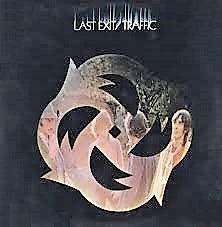
Despite a lot of activity in a short time, Traffic was suddenly no more—Dave Mason left again, followed by Steve Winwood, who was already on his way to another project. Last Exit provided an odd collection of leftovers under a half-baked title. (The US/UK differences returned again, with a different front cover depending on the country. The same photo of Winwood eating an apple was used for all back covers, along with an admittedly clever depiction of their now “broken” logo.)

The clear highlights are “Shanghai Noodle Factory” and “Medicated Goo”, both sides of the same single, with excellent guitar work by Winwood. Both are funky in their own ways, if a little nonsensical. “Withering Tree” has a nice autumnal quality in their folk mode. “Just For You” was a B-side from a Dave Mason solo single the rest of the band played on, and “Something’s Got A Hold Of My Toe”, excellent title aside, appears to be an unfinished jam.

However, side two doesn’t catch fire, consisting of two lengthy covers, recorded live, that give Chris Wood a chance to wander, and Steve to wail in his R&B voice. The organ/woodwinds/drums combo has its moments, coming off more jazzy than ever, but they aren’t well represented here.

Clearly a grasp for profits from the record label, Last Exit has remained in print, though its best songs (mentioned above) can be found on any number of compilations. In other words, it can be overlooked. (In fact, only six months later Best Of Traffic included them, along with about half of the American version of the first album, some of which were singles in the UK anyway.)

Traffic Last Exit (1969)—2½
Traffic
Best Of Traffic (1969)—4

Wednesday, July 17, 2013

Van Morrison 18: A Sense Of Wonder

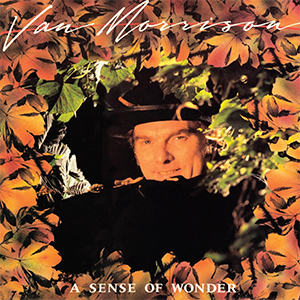
Was Van Morrison still relevant in the ‘80s? It’s a question only his fans can answer, and if you really want to trip them up, start with the cover photo of A Sense Of Wonder, depicting the Belfast Cowboy peeking through a tunnel of leaves, and smiling, which doesn’t lend comfort so much as make one nervous. (Elsewhere he poses somberly in an outfit that resembles that of a bullfighter, so maybe he should let the music do the talking.)

The album wanders closer to his Celtic roots, with still more references to writers and poets. To wit, “Tore Down A La Rimbaud” was a daring choice for a single, mostly because people knew neither how to pronounce it nor what it meant. Catchy as it is, the backing continues on “Ancient Of Days” in a forced 6/4 meter, rubbing it in too much. The instrumental “Evening Meditation” follows the same template as “Scandinavia”, with Van humming along on top for a nice change. “The Master’s Eyes” begins with a neat guitar part that’s not at all as smooth as the rest of the album, giving something of an R&B touch to set up the cover of Ray Charles’ “What Would I Do”.

The second side almost suggests that it began as a suite. The title track (with its “didn’t I come to give you a sense of wonder” recalling “didn’t I blow your mind this time”) is a lengthy wander through mystical territory, and he seems to have finally found his coat. The monologue near the end incorporates some references in the prose included as part of the liner notes, which have something to do with the Irish-flavored instrumental “Boffyflow And Spike”. Another cover, this time of Mose Allison’s “If You Only Knew”, was allegedly included because a musical interpretation of a Yeats poem was blocked by that estate. Which is too bad, because “Let The Slave”, a musical interpretation of a Blake poem, is fascinating. (Things must’ve been cleared up eventually, as a version of Yeats’ “Crazy Jane On God” dominated by the backing vocalists was included on the expanded CD, along with an alternate of the title track.) Finally, “A New Kind Of Man” brings the program to a close with a soulful, could’ve-been-a-hit-single if it were a different decade.

A Sense Of Wonder is a nice, inoffensive album, just on the verge of breaking through to more. Maybe he’d get the recipe right the next time. After all, he was probably going to keep making albums, right?

Van Morrison A Sense Of Wonder (1985)—3
2008 CD reissue: same as 1985, plus 2 extra tracks

Tuesday, July 16, 2013

Crosby & Nash 4: Live and Another Stoney Evening

Presumably to cash in on the reunited CSN’s success, the mustachioed majority of the triad found themselves on a live album to cash in on their time away. Crosby-Nash Live appeared only months after CSN, offering a grab bag of performances from two tours backed by the same guys keeping busy until James Taylor or Jackson Browne called. While the album does offer glimpses of a Crosby yet to be completely derailed by drugs, this duo really weren’t meant to rock. (Well, maybe Crosby, but certainly not Nash.) The best moments are the quietest ones—“Simple Man”, “Page 43”, for example—than the revved-up renditions of “I Used To Be A King”, “Lee Shore” and “Déjà Vu”, the latter of which sounds like they were trying to emulate Miles Davis (whose Bitches Brew-era recording of “Guinnevere” was still in the vaults at that time).

The best live albums show performers in their best element, or at least enhance the songs known inside and out from their studio albums. While not a complete waste of vinyl, Crosby-Nash Live doesn’t fulfill either goal.

Many years later, after their other ABC albums got the digital treatment, Crosby-Nash Live was duly remixed and remastered, and bolstered by two more Crosby performances: a welcome “Bittersweet” and the mega-rare “King Of The Mountain”, which begins with an exploratory, occasionally atonal piano solo, and continues to fight against it.

Before that, however, proof for why we should care about these guys—and why their shows were widely bootlegged in the good old days—arrived via a surprising source. Released in the late ‘90s on the Grateful Dead label, of all things, Another Stoney Evening presented a show similar but not identical to a notorious 1971 bootleg. This is “wooden music” start to finish, the boys strumming songs together and apart, some of which the crowd knew from the CSN albums and their solo albums, and some that hadn’t made it to an album yet. Therefore we here virtual premieres of “Where Will I Be”, “Stranger’s Room”, “Southbound Train” and “Immigration Man”. In-jokes aside, it’s a very intimate show, with none of the sterility of that other live album.

David Crosby/Graham Nash Crosby-Nash Live (1977)—2
2000 remastered CD: same as 1977, plus 2 extra tracks
Crosby-Nash Another Stoney Evening (1998)—3½