Wednesday, August 7, 2013

Billy Joel 10: The Nylon Curtain

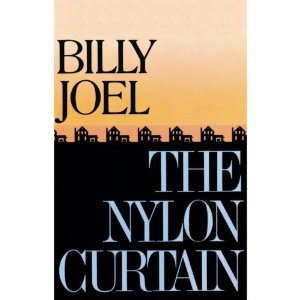
The summation provided by Songs In The Attic bought Billy some time for his next album, which turned out to be somewhat ambitious. We haven’t been able to find any contemporary reference that explains the title, but The Nylon Curtain would appear to have something to do with suburbia, as demonstrated by the aerial photo of a typical Levittown neighborhood on the inner sleeve. (Meanwhile, Rush beat him to the marketplace by two weeks with their own rendition.)

This time he was trying to be topical, and he does so right off the bat with “Allentown”. That he can get such a catchy hit out of a song decrying unemployment is a testament to his skill, his phrasing of “an American flag” notwithstanding. But a whole album of protest songs wouldn’t fly, so the next track reveals the other overriding touchpoint: the Beatles. “Laura” is a suitably nasty song about co-dependency, with a Ringo stroll, descending chords into sevenths, bathroom echo added to the Lennonesque sneer, and even a Harrisonian guitar solo. A lovely baroque flourish frames the song, a true hidden gem kept off the radio by a certain seven-letter adjective. “Pressure” was the most contemporary sounding track for the time, so it was the first single (and his first expensive video for the MTV age). But the song that got the most attention at the time was “Goodnight Saigon”, a tribute to Vietnam War veterans, which was an increasingly popular topic at the time. It’s one of those songs that can either inspire chills (for its realism) or ridicule (the helicopter effects) but it’s a strong statement from a guy who got through the era on a deferment.

Side two is just as musically rich. “She’s Right On Time” is an honorary holiday classic, thanks to its passing references to Christmas trees. Like “Laura” it’s framed by a pretty little piece, which turns up in the middle eight, and the harmonies come right off Abbey Road. “A Room Of Our Own” borders on being more of a list than a lyric, saved by some unexpected juxtapositions. The electric piano keeps it contemporary, but those guitar stabs in the pre-chorus are truly Fab. The Lennon voice returns on “Surprises”, a psychedelic portension of doom, taken way over the top in “Scandinavian Skies”. Here the nightmare strings of “Strawberry Fields” and “I Am The Walrus” accompany a series of airplane trips through various European cities, suggesting World War II but mostly lysergic wordplay. “Where’s The Orchestra?” stretches another metaphor to the brink, this time in the setting of a theater finale. In fact, it was about 20 years after the album was out that we realized that the melody of “Allentown” is played over the fading chords.

Due in part to its emulation of Beatle songcraft, The Nylon Curtain has certainly held up over the years. It’s the one Billy Joel album to get if you want more than just the hits, and has a lot to do with why we can’t hate the guy. When he’s good, he’s very good, and so is this album.

Billy Joel The Nylon Curtain (1982)—4
Monday, August 5, 2013

CSN 6: Daylight Again

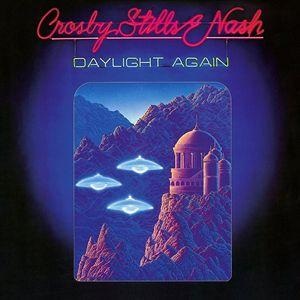
The story behind Daylight Again is, basically, Crosby was getting too far gone to be a viable partner in the CSN law firm. However, when Stills and Nash started working together without him, various powers that were suggested that maybe something couldn’t be done to make it seem like the three Laurel Canyon musketeers were right there together in one place, and thus facilitate at least a top 40 album, if the top ten was to be considered too greedy.

Even if you weren’t an ‘80s record executive, such logic would make sense. Besides, these guys weren’t doing much on their own anyway. A five-year gap since the last CSN album was nothing compared to the chasm that separated Déjà Vu and CSN, as if anyone was paying attention to any of the solo albums that had sprouted up in the same time.

Stills had been working with a guy named Michael Stergis, whom, despite his songwriting and instrumental credits all over Daylight Again, doesn’t seem to have parlayed that into anything worth creating a Wikipedia page over. “Turn Your Back On Love” is about as bland yet inoffensive as we might hope from Stills at this point. “Wasted On The Way” is Nash’s subtle summary of the previous ten years, all high harmonies lamenting what could have been. Despite itself, “Southern Cross” is the highlight of the album, a simple acoustic strum evoking both the tranquility of the sea and “Back In Black”, which it resembles chord-wise. (Go ahead; listen to them back to back, and damn, if they don’t mesh perfectly.) Nash gets tough on “Into The Darkness”, sung to the syncopation of a basic riff, but it’s eclipsed by one of the songs Crosby actually managed to finish. “Delta” is a positively gorgeous song, proving that even at his least coherent, he had the gift of song. It always seems more of an epic than it is.

Stills was still writing songs, so we get the back-to-back splendor of “Since I Met You” and “Too Much Love To Hide”, both of which are far more interesting musically than they are lyrically; in fact, Nash’s enthusiastic harmonies only underscore how average these songs really are. “Song For Susan” is hardly a substitute for “Our House”, but Nash puts a lot into it, so it’s a good effort. Stills finally slows down long enough to remind us that “You Are Alive”, a good setup for Crosby’s only other contribution, a cover of “Might As Well Have A Good Time” by a couple of fellow travelers. It’s pretty, which helps. To bring everything back home, the title track is basically a new intro welded to the front of “Find The Cost Of Freedom”, now with Art Garfunkel helping out (according to the credits, but good luck picking him out) just in case Crosby couldn’t cut it.

The usual suspects are all here—Joe Vitale, George “Chocolate” Perry, Craig Doerge, Michael Finnigan. The credits also list other vocalists on several tracks, covering up the initial and general absence of Crosby. Meanwhile, he and Nash don’t add anything instrumentally to the album, underscoring just how non-collaborative Daylight Again was. It’s not a bad album, but it certainly isn’t very exciting. Those two singles were successful enough to send the boys on the road, which resulted in the Allies live album, which was released very quickly compared to usual pace. It included two studio tracks: the hideous “War Games” and “Raise A Voice”, the latter of which would one day be appended to Daylight Again with three other outtakes of vague interest.

Crosby, Stills & Nash Daylight Again (1982)—3
2006 remastered CD: same as 1982, plus 4 extra tracks

Sunday, August 4, 2013

CSN 5: Replay

Naturally Atlantic was hoping for another Crosby, Stills & Nash album, but this point only Stills and Nash were working together, so this odd little mix was compiled, according to the back cover note, for Ahmet Ertegun, to whom they could never say no. Astute scholars will already know that they had released only that one album as a trio since 1974, so Replay goes outside the box by including tracks from various solo and duo albums, some of which actually do feature all three on vocals. To their credit, none of the selections had already appeared on So Far, though a couple of the Stills solo and Crosby/Nash tracks had been on previous best-ofs. (Lost yet?)

Since this was a CSN production, “Carry On” is included in a new mix that lops off the “Questions” coda in favor of a new solo and drums that loops back to the chorus. Two Nash songs each from the first album and CSN provide balance with songs from three different Stills solo albums, while “I Give You Give Blind” loses its frenetic string arrangement but still jars. Crosby is represented solely by “Shadow Captain” and the “To The Last Whale” suite with Nash.

Replay isn’t essential, but it’s very cohesive given the disparate sources, from other labels even, and does provide something of a intro to those lesser-known albums. They even managed to get a Joni Mitchell painting for the cover.

Crosby, Stills & Nash Replay (1980)—3
Current availability: streaming only

Friday, August 2, 2013

Joe Jackson 13: Symphony No. 1

In absolute defiance of commercial salvation, Joe decided to write and record a symphony. This wasn’t an orchestral album, like the otherwise ignored Will Power, nor was it particularly “classical”. If anything, Symphony No. 1 resembles the electronic keyboard-based pieces one might find on an ECM album, and certainly on his most recent non-rock releases. Along with his own keyboards, the usual JJ combo is heard, with special guests Terence Blanchard on saxophone and stunt guitarist Steve Vai.

While he’s someone who’s said he hated the idea of concept albums, the four movements are supposed to represent the stages of life. Maybe so, but the album is best enjoyed without context. It’s also an improvement over his last two albums, which tried to bridge big musical ideas and modern lyrics. Because no words are sung or spoken here, the music is left to speak for itself. It almost qualifies as “night music”.

Normally an album like this would be relegated to the opening paragraph of a larger review devoted to a subsequent album, but because Symphony No. 1 was such a pleasant surprise—especially given the arduous task of trying to sum up Night Music and Heaven & Hell—it garners more than a footnote. Whether or not it’s a bona fide symphony is moot, though it did win the first-ever Grammy for Best Pop Instrumental Album. Rather, it’s quite enjoyable, and deserving of wider exposure. We almost feel like we owe the guy an apology.

Joe Jackson Symphony No. 1 (1999)—3

Wednesday, July 31, 2013

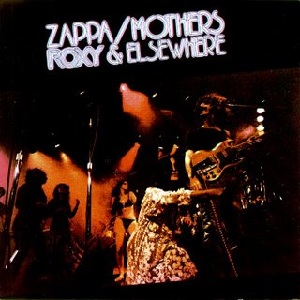
Frank Zappa 19: Roxy & Elsewhere

By now Frank had assembled another crack band that was both versatile enough to handle the scores thrown at him, as well as shift gears in and out of improvisation. The band followed the usual formula—horn section, dual drummers and keyboards—but offered some new secret weapons. First, there was Ruth Underwood on percussion. While that might suggest she banged tambourines and shook maracas, her forte was mallets, which struck any number of vibraphones, marimbas and such. Then there was Napoleon Murphy Brock, proficient on sax and vocals. Both shine on Roxy & Elsewhere, a mostly live double album. (George Duke wasn’t such a secret weapon, but he’s key to the quality, as are drummers Ralph Humphrey and future Genesis go-to Chester Thompson.)

Of course, Frank’s in charge, so he’s the one setting up each new song. “Penguin In Bondage” gets a typically suggestive setup to slightly illuminate the arcane references within the lyrics. “Pygmy Twylyte” is a funky setup for the lengthy “Dummy Up” routine, featuring the return of Jeff Simmons, who’d notoriously quit amidst 200 Motels. In all, a long way to go to make fun of people who’d smoke anything for a kick. He gets downright nostalgic on “Village Of The Sun”, a look back at a dive he used to play in the early ‘60s, set to a “Hey Love” groove. “Echidna’s Arf (Of You)” is a wildly intricate instrumental piece, sliding right into “Don’t You Ever Wash That Thing?”, reminiscent of the big-band sound of the Waka/Jawaka and Grand Wazoo albums. The stops and starts seem designed for Frank’s introduction of Ruth’s amazing dexterity.

By now his affection for bad ‘50s monster movies was renowned, and it could be said that his two-minute setup for “Cheepnis” is more entertaining than the song itself, but it is one of the band’s better routines. (The brains behind Mystery Science Theater 3000 made it imperative to work as many Zappa references as possible into episodes through the entire series run.) It’s a good thematic bridge to “Son Of Orange County”, which slows down that theme to a crawl, and incorporates a then-current reference to Nixon. And just to show how things haven’t changed, “More Trouble Every Day” reprises the “riot song” from the first Mothers album.

For years now, the Zappa estate has been dangling the possibility of an expanded Roxy & Elsewhere, with even more music from the shows, and most excitedly for fans, a DVD with the visuals. This would undoubtedly help with one’s enjoyment of “Be-Bop Tango (Of The Old Jazzman’s Church)”. Another challenging instrumental, it took up side four of the original album. While not exactly reminiscent of what the layman might recognize as a tango, it presents more musical pyrotechnics until getting derailed by scatting and ridicule of jazz improv, which is to set up the audience participation portion of the show. Zappa concerts often thrived (throve?) on audience participation, but in this case audience members are invited to dance in accompaniment to the improvised music. You read that right—we’re supposed to listen to people dancing, and enjoy it.

With a little editing, Roxy & Elsewhere could be excellent; as it is, it’s merely good, but one of the better Zappa releases, and another good place for newbies to start. The title was apt, as the original live performances were overdubbed and augmented with music from other locations—one reason why the legend persisted of the original run. The shows were filmed, but it took four decades for sync problems to be worked out. As the film neared completion, Roxy By Proxy presented a raw mix of performances from the shows, and in some ways it’s superior, with more music, minimal comedy, early versions of “Inca Roads”, “T’Mershi D’Ween”, “RDNZL”, and “Dupree’s Paradise”, and a medley of “King Kong”, “Chunga’s Revenge”, and “Mr. Green Genes”. Roxy—The Movie finally came out as DVD or Blu-ray bundled with a soundtrack CD, and eventually The Roxy Performances delivered all four shows, complete, on seven CDs, with rehearsal, soundcheck, and studio recordings, including the basic tracks of the “Yellow Snow” suite (through “Father O’Blivion”) on Apostrophe. (If that wasn’t enough to experience this band, Halloween 73 presented two entire shows from Chicago plus rehearsals from about six weeks earlier on four discs, and also condensed to one “highlights” disc.)

Zappa/Mothers Roxy & Elsewhere (1974)—3½
Zappa/Mothers
Roxy By Proxy (2014)—4
Zappa/Mothers
The Roxy Performances (2018)—3½

Monday, July 29, 2013

Big Star 8: Nothing Can Hurt Me

In 2012, every rock snob’s favorite power pop band got the feature-length documentary treatment. Advance promotion was helped by the soundtrack album, released first as a double-vinyl Record Store Day exclusive before the CD version came out.

Nothing Can Hurt Me is something of a Big Star sampler, representing all three albums, with the twist that all the tracks are previously unreleased versions. In some cases, they’re alternate or rough mixes from the original sessions; in others, songs are labeled “movie mix, 2012”, prepared specifically for the film by the band’s original engineer. Just to make things even more interesting, some studio chatter is included, along with a “demo” of “O My Soul”, a pedal steel-heavy take of “Try Again” credited to Rock City (aka Big Star before they were Big Star) and a couple of solo Alex Chilton and Chris Bell tracks.

Considering that the Rhino box set served up a whole pile of alternates to justify duplicating song titles, it really is something of a stretch to do it yet again. That said, Big Star fans are fervent, and very likely musicians themselves, so the chance to hear alternate mixes of songs they’ve memorized—maybe to decipher a mumbled lyric or pick apart how the instruments were layered in the studio—is always welcome. Some of us can’t hear enough variations on “I Am The Cosmos” anyway.

If you’re a Big Star fan and you’ve yet to see Nothing Can Hurt Me, either get the DVD now or put it in your Netflix queue. You’ll be glad you did, and don’t be ashamed to wipe your eyes here and there.

Big Star Nothing Can Hurt Me: Original Soundtrack (2013)—3

Sunday, July 28, 2013

Graham Nash 3: Earth & Sky

The momentum that led up to 1977’s decent Crosby, Stills & Nash studio reunion didn’t carry over for Crosby, who was too wasted to create, or for Stills, who recorded despite himself. Graham Nash remained the sanest of the three, newly married and fathered, and worked on pet projects like fighting unsafe nuclear energy.

He also corralled various veterans of recent CSN-related bands to record Earth & Sky, an album that has all but vanished from the face of the planet save used record stores and YouTube. It’s not a horrible album, but’s it’s not very exciting either. Given the usual crew—David Lindley, Russ Kunkel, Craig Doerge, Joe Vitale, Danny Kortchmar—the music is typical Southern California via Miami; lots of Hawaiian shirts and Colombian sky candy. Crosby is credited but all but inaudible.

The title track is catchy, but “Love Has Come”, which follows, is practically identical. “Out On The Island” is a recasting of “Another Sleep Song” until the chorus. “Barrel Of Pain (Half-Life)” is a successful attempt to rock, and a surprising high point is “T.V. Guide”, with ambitious piano and dramatic strings, and less than two minutes. Elsewhere it’s sensitive songs about beautiful children, care for the environment, and misplace hope for the new decade. In other words, this is what people did between Jackson Browne albums.

One wants to like Earth & Sky on the sole basis that it’s not hideous, but it only provides more strength for the argument of CSN’s sum being greater than the parts. Yet at 35 minutes, this was Graham’s longest solo album yet.

Graham Nash Earth & Sky (1980)—2½