Tuesday, August 25, 2015

Grateful Dead 2: Anthem Of The Sun

As the Dead gained notoriety for their free-form live performances, they faced the challenge of translating that energy to albums. Apparently they didn’t have the pull at the label to just release a live album, nor the technical ability to record something of releasable quality. Therefore, Anthem Of The Sun consisted of various live recordings edited and embellished in the studio, with all the locations dutifully listed on the back cover.

While the album can seem random at points, there is structure within. “That’s It For The Other One” begins with a plaintive Garcia melody, eventually exploding into a jam that leads into another melody led by Bob Weir, back to the Garcia part and ending with a very avant-garde collage of prepared piano and percussion. Because the track is listed as having four parts, the listener can have fun trying to guess where each one lies. The seamless transition to “New Potato Caboose”, another lengthy jam, might be hard to spot, while the shorter “Born Cross-Eyed” had been a single. Either way, without clear breaks between tracks, the listener might be surprised when the side ends.

Side two lists only two tracks, which were often played together anyway. “Alligator” sports a prominent kazoo at the start, which is gratefully retired not too far into the song. Piano from new member Tom Constanten better fills out the first half of the song, before the switch to a live performance, exhortations for audience members to clap their hands, instrumental solos and more consolidated boogie. Sharp ears will recognize the melody from Donovan’s “There Is A Mountain”, soon to be appropriated by the Allman Brothers. Despite its title, “Caution (Do Not Stop On Tracks)” is possibly closest to the blues influences on the first album, being an extensive exploration on the single idea of something a gypsy woman said. It ends the album with extensive feedback, which would be a feature of future live albums, often listed as a separate track.

While ramshackle, Anthem Of The Sun does hold together as an album, hinting at how they really sounded in their true element. These songs would only develop further in performance, as the bonus tracks on the expanded CD demonstrate. None of those were included on the inevitable 50th anniversary set, which combined the album’s original mix with its early ‘70s remix, along with a previously unreleased Winterland show from October 1967, and the earliest known recording with Mickey Hart known to date. (For those seeking the original shows that were used to make up the album, some of those have become officially available, among those listed below.)

The Grateful Dead Anthem Of The Sun (1968)—3
2003 CD reissue: same as 1967, plus 4 extra tracks
2018 50th Anniversary Deluxe Edition: same as 1968, plus 12 extra tracks
     Archival releases of same vintage:
     • Dick's Picks Volume Twenty-Two (2001)
     • Download Series Vol. 6 (2005)
     • Road Trips Vol. 2, No. 2 (2009)
     • 30 Trips Around The Sun: The Definitive Live Story 1965-1995 (2015)
     • Carousel Ballroom, San Francisco, CA, 2/14/68 (2026)

Sunday, August 23, 2015

Roger McGuinn 2: Peace On You

Whatever charms his first solo album had didn’t translate to sales, so his label dictated that Roger McGuinn submit to someone else producing his follow-up, and probably bring in some ringers too. In addition to Al Kooper, Dan Fogelberg—who contributed a song apiece—and Flo & Eddie (the latter’s last name spelt wrong), the musicians on Peace On You included Paul Harris and Al Perkins (most recently found in Manassas), Donnie Dacus (who’d soon be found around Stephen Stills himself), and the rhythm section of Russ Kunkel and Lee Sklar (next stop: Crosby & Nash), with the whole proceedings helmed by Bill Halverson (who’d already been associated with CSN). Even the back cover included hype-style liner notes reminding the consumer who he was and what he did, basically saying his name wasn’t enough anymore.

The joke in Charlie Rich’s “Peace On You” gets lost in its arrangement, and more so because it’s the title track. The lonesome “Without You” puts a drag on the proceedings, even with Donnie Dacus soloing constantly. Dacus himself contributed “Going To The Country”, which has promise in its picking, but he didn’t bother to write a chorus. Al Kooper’s “(Please Not) One More Time” is slathered in adult contemporary pop touches, but “Same Old Sound” is mostly notable because we finally hear the trademark 12-string play a solo.

“Do What You Want To Do” is a slightly better Allman Brothers homage from Dacus, but “Together” is more lovelorn moping that seesaws between downbeat picking and ill-advised double-time choruses. “Better Change” is the Fogelberg contribution, and a lot tougher than we expected it would be. “Gate Of Horn” is a tribute to the storied Chicago folk club where he fell in love with the genre, sadly shackled to a vaudeville-style arrangement that speeds up and slows down at various points. “The Lady” finally sounds like classic McGuinn, and about time as it’s the last track.

The problem with loading the deck with all-star talent is that they swamp the tracks, so that if not for his trademark nasal twang—which does become tiresome after a while—one might not know Peace On You was a Roger McGuinn album, even on the songs he did write, usually with Jacques Levy. Instead, it resembles Stephen Stills once he started to run out of gas, and maybe the same players had something to do with it. (The eventual Sundazed reissue added a bonus track in an earlier version of “Rock & Roll Time”, which would be redone two albums later.)

Roger McGuinn Peace On You (1974)—2
2004 Sundazed reissue: same as 1974, plus 1 extra track

Saturday, August 22, 2015

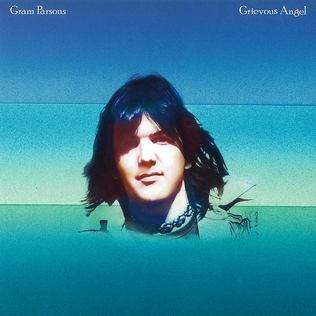
Gram Parsons 2: Grievous Angel

By the time Grievous Angel came out, its auteur was dead, just short of the magical age of 27. This has had a lot to do with Gram Parsons’ hagiographical status, but the key to the album—and its success—is Emmylou Harris, who harmonizes on nearly every track. Having many of the same solid players on board, none of whom were as debilitated by drink and drugs as he was, helped too.

For all its Nashville trappings, “Return Of The Grievous Angel” is not your ordinary country song, loaded with sly imagery and changes. “Hearts On Fire” is another weeper, Emmylou’s control tempering his wavering. The uptempo “I Can’t Dance” has some tasty guitar work but is just a brief tangent. “Brass Buttons” is a lovely sad lament, and “$1000 Wedding” is even more heartbreaking; both are excellent cases for his songwriting.

The atmosphere changes abruptly for “Medley Live From Northern Quebec”, which isn’t a medley at all but “Cash On The Barrelhead” followed by his own “Hickory Wind” with canned crowd noise and fake patter added in, basically used to keep the album over half an hour. “Love Hurts” was tackled a full year before Nazareth got to it, and here it’s milked for all the tears it can wring. “Ooh Las Vegas” is a jaunty rewrite of “Mystery Train” written with Ric Grech and left over from the first album, while “In My Hour Of Darkness”, written with Emmylou is stately and profound, ultimately lifting the album above its older brother.

And that was pretty much it for Gram Parsons, though his music certainly endured. Warner Bros. thoughtfully paired GP with Grievous Angel on a two-fer cassette in the ‘80s, then issued them together on a single CD in 1990, providing excellent value for fans old and new. In 2006, in time for what would have been his 60th birthday, The Complete Reprise Sessions put each album on its own disc with interview snippets afterwards, and added a third disc of alternate takes.

Gram Parsons Grievous Angel (1974)—3½

Friday, August 21, 2015

Rush 5: All The World’s A Stage

In the ‘70s, bands released double live albums. It was the law, and we can count on one hand the bands that didn’t conform.

For all their individual philosophies, Rush followed rules, and so All The World’s A Stage captures them in the wake of 2112 in front of an appreciative hometown crowd. They wisely begin with some of their more compact radio hits—“Fly By Night” somehow melding into “In The Mood”, complete with cowbell. The dynamics within “Lakeside Park” make a good transition to the abbreviated performance of the “2112” suite (which is just as well, since it’s unlikely they would have allowed Alex Lifeson to tune his guitar at length to approximate the “Discovery” section). Besides, they had to make way for twelve minutes’ worth of “By-Tor And The Snow Dog”. A medley of “Working Man” and “Finding My Way” sets up a five-minute drum solo by Neil Peart, introduced by Geddy Lee as “The Professor”. Throughout, the sound is clean, Geddy’s Rickenbacker punching through the mix and the crowd’s cheering and whistling. If there’s an embarrassing moment on the album, it would only be the final seconds where we can hear the band “congratulating” each other for a great show, and slamming a door.

The band viewed All The World’s A Stage as a transition to their next chapter, which would likely be revealed soon enough. For now, they seemed to have found their way.

Rush All The World’s A Stage (1976)—3

Tuesday, August 18, 2015

Paul Buchanan: Mid Air

Blue Nile fans have learned to take any crumb from the band whenever they can get it, since one never knows when we’ll hear from them again. But most songwriters insist that when the muse deigns to strike, it’s best to do what she says.

Paul Buchanan has long been the face and voice of the band, both musically and promotionally, so a solo album is a surprising move. Mid Air is a expectedly quiet set of sad songs, mostly based on the piano with very little ornamentation. Many of the songs sound alike, and that’s not necessarily a bad thing. His lyrics have always been about mood more than meaning, and since there’s usually some sort of ache involved, the meaning becomes the mood.

The title track, “Half A World” and “Cars In The Garden” would have been welcome interludes on any Blue Nile album, while “Newsroom”, the shortest of these short songs, shows the first derivation from the same octave. It doesn’t take much imagination to hear the percussion that isn’t on “Buy A Motor Car”, and “Two Children” manages to shift focus and delivery in each verse. “Tuesday” begins with a melody familiar from several Lionel Richie ballads, but he finds his own by the end of the first verse. The pretty instrumental “Fin De Siècle” provides a break from the spoken heartbreak, and “After Dark”, which tops out at a whopping four minutes, ends with a hint of his trademark “yeah yeah” and a touch of trumpet.

Mid Air seems like a set of demos, and that’s fine. That alone keeps it from falling victim to the comparatively heavy-handed production that made the last two Blue Nile albums less than perfect. If the fourteen tracks here aren’t enough, one can always seek out the double-disc version, which adds another ten variations and exclusives. And if eight years is all we have to wait for another album from Paul Buchanan, so be it. Hopefully he’ll still be around.

Paul Buchanan Mid Air (2012)—3

Friday, August 14, 2015

Bruce Springsteen 17: Devils & Dust

After thirty years in the business, Bruce Springsteen seemed to finally have the confidence to follow his own path, wherever it took him. While predominantly solo and acoustic, Devils & Dust isn’t as easily shoehorned into the same category as Nebraska and The Ghost Of Tom Joad, but it would likely feel that way for anybody who jumped back on the bandwagon after The Rising. Chances are, however, they’d get into this album faster.

What helps is the sequencing, so that there’s never danger of getting stuck in a rut. The title track builds from a quiet strum to a fleshed-out track, leading well into the driving rock in “All The Way Home”. It’s a startling switch to the dusty landscape and blatant sex in “Reno”, and back to the more conventional “Long Time Comin’” (wherein he still intends to “get buck naked”). “Black Cowboys” and “Maria’s Bed” stay on the quiet side, until the latter bursts its seams with mandolins, chanted backup vocals and a country echo of “Mary’s Place”.

The second half of the album isn’t as well-paced, staying mostly within the same tempo and intensity. “Silver Palomino” continues the country theme, and there’s something in “Jesus Was An Only Son” that sounds like Tom Waits. “Leah” is a simple love song, and “The Hitter” seems most like a descendant of Nebraska, with the boxer talking to his ma. One song with a lot of potential is “All I’m Thinkin’ About”, another love song but sung in a near-falsetto with a hushed backing. Just as hushed, but more complicated, is “Metamoros Banks”, following a traveler’s journey backwards, so Bruce says, from his demise to the hope that made him set out.

Devils & Dust succeeds as a departure from the Springsteen norm. Only one E Streeter is here, and it isn’t Clarence, while his main foil is co-producer Brendan O’Brien. Steve Jordan plays whatever drums are heard, and of course Patti’s everywhere. It takes a while to sink in, but ultimately satisfies.

Bruce Springsteen Devils & Dust (2005)—3

Tuesday, August 11, 2015

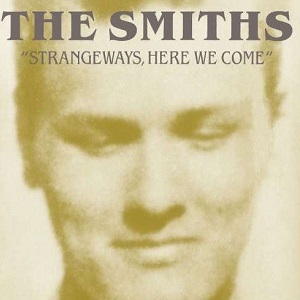
Smiths 7: Strangeways, Here We Come

Lots of bands break up for stupid reasons, and most of them involve lack of communication, miscommunication, or somebody’s ego. While the end of the Smiths wasn’t as dramatic as that of the Beatles, which had lots of factors, or even Aerosmith, who really did argue over spilt milk, if Morrissey had only let Johnny Marr take some (very much earned) time off, they might have had a better epitaph than Strangeways, Here We Come.

The songwriters consider it their best work, and it’s pointless to dispute an opinion, but it’s not one we share. The best songs are in the middle, so before you get there you must navigate the baroqueness of “A Rush And A Push And The Land Is Ours”, which has no guitars on it. They do return on “I Started Something I Couldn’t Finish”, which also repeats a growling “rrr” from the track before. “Death Of A Disco Dancer” starts well, with a White Album groove and even a developed Morrissey melody, but the last three minutes escalate into a pointless jam that could have been faded earlier. But on an already short album, the two-minute perfection of “Girlfriend In A Coma” stands out, particularly because the narrator is not the usual Morrissey fop. That guy returns on “Stop Me If You Think You’ve Heard This One Before”, another classic should’ve-been-the-first-single with great guitars and slightly, only slightly dated keyboard tinkles.

While it wasn’t their longest title, “Last Night I Dreamt That Somebody Loved Me” is just begging to be ridiculed, but that would show ignorance of its magnitude. Beginning with a lengthy piano dirge over what sounds like a soccer riot, it gives way to an even more sweeping main section, showing Marr at his orchestral best. For wordplay, “Unhappy Birthday” doesn’t quite live up to its title, but it’s an awfully sour lyric against a sprightly 12-string gallop. That’s good, because the bile is not spared on “Paint A Vulgar Picture”, a diatribe against the continual exploitation of pop idols, though the “Reissue! Repackage!” lines are hollow considering the compilations the band released in its lifetime and since. Besides repeating a motif from side one, “Death At One’s Elbow” is an undercooked rockabilly strum that should have waited to be a B-side, but since most of their B-sides were better than their album tracks… well, never mind. The fitting finale, and their best album ender save compilations, is “I Won’t Share You”, which says much more about the Morrissey-Marr relationship than either would admit.

While it wasn’t planned that way, Strangeways, Here We Come was indeed the last Smiths album, and they were over almost as soon as they began. It’s too bad, because it didn’t have to end like this, and although the experimentation here doesn’t always work, it does show promise for whatever they might have done next. Or not. The momentum they’d built over the past couple of years had to run out sometime.

The Smiths Strangeways, Here We Come (1987)—3½